


HDMI Cable Market Size 2025-2029
The HDMI cable market size is forecast to increase by USD 898.8 million, at a CAGR of 4.9% between 2024 and 2029.
- The market is experiencing significant growth, driven by the increasing penetration of smart devices and the growing popularity of HDMI 2.1. The proliferation of smart TVs, gaming consoles, and PCs has led to a rise in demand for high-definition multimedia interfaces. HDMI 2.1, the latest version, offers enhanced features such as 8K resolution, high dynamic range, and variable refresh rate, making it the go-to choice for premium audio-visual experiences. However, the market faces challenges, primarily the availability of counterfeit HDMI cables. These substandard cables can negatively impact the performance and lifespan of devices, leading to consumer dissatisfaction and potential reputational damage for brands.
- Manufacturers must prioritize quality control measures and invest in technologies to differentiate their offerings and build trust with consumers. Additionally, collaboration between industry players and regulatory bodies can help establish standards and certifications to mitigate the risk of counterfeit products. In the automotive sector, the integration of HDMI technology in in-car infotainment systems is gaining traction. Similarly, in the healthcare industry, HDMI cables are used for medical imaging and diagnostic equipment, highlighting the versatility and importance of this technology in various applications. As the market continues to evolve, companies must stay abreast of emerging trends and consumer preferences to capitalize on opportunities and navigate challenges effectively.
What will be the Size of the HDMI Cable Market during the forecast period?
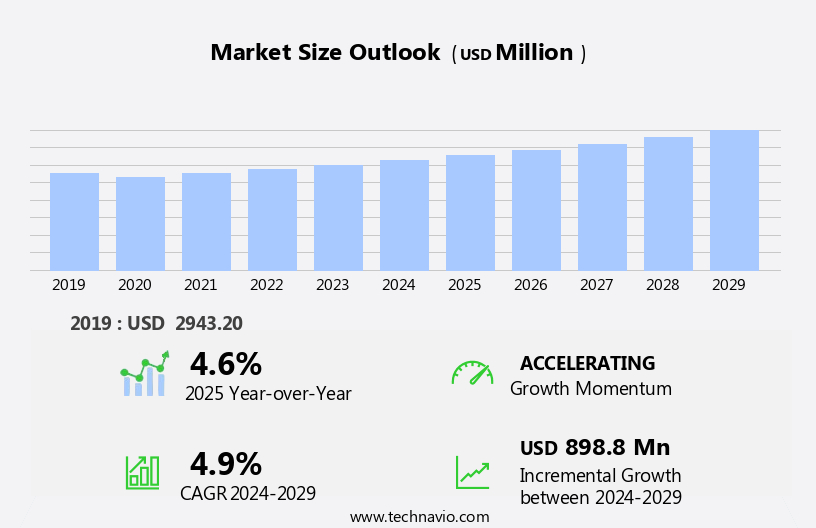
Explore in-depth regional segment analysis with market size data - historical 2019-2023 and forecasts 2025-2029 - in the full report.
Request Free Sample
- The market exhibits dynamic trends, with distribution channels continuously evolving to cater to consumer demand for high-performance cables. Audio synchronization remains a crucial aspect, ensuring immaculate alignment between video and audio signals. Energy efficiency is another significant factor, with ultra-high speed HDMI cables offering reduced power consumption. Cable performance and audio quality are key considerations for business users, particularly those utilizing large display sizes and demanding response times. Cable compatibility, signal compression, and color gamut are essential features for ensuring seamless video input and output across various devices.
- User manuals and technical support are essential for optimizing cable functionality, while video signal processing mitigates audio delay and video latency. Cable certification ensures product lifespan and audio fidelity, addressing environmental concerns through cable recycling. High-speed HDMI cables cater to diverse video sources, display resolutions, and aspect ratios, enabling businesses to adapt to evolving technology.
How is this HDMI Cable Industry segmented?
The HDMI cable industry research report provides comprehensive data (region-wise segment analysis), with forecasts and estimates in "USD million" for the period 2025-2029, as well as historical data from 2019-2023 for the following segments.
- Type
- Standard
- High-speed
- Ultra-high-speed
- Distribution Channel
- Offline
- Online
- Grade Type
- HDMI 1.4
- HDMI 2.0
- HDMI 2.1
- Geography
- North America
- US
- Canada
- Europe
- France
- Germany
- UK
- APAC
- Australia
- China
- India
- Japan
- South Korea
- Rest of World (ROW)
- North America
By Type Insights
The standard segment is estimated to witness significant growth during the forecast period. HDMI cables, first introduced in 2010, have revolutionized the audiovisual industry with their versatile features. These cables, supporting standard and high-definition resolutions up to 8K, cater to various applications such as professional audiovisual systems, automotive displays, and commercial installations. HDMI cables come in different lengths and terminations, including braided for added durability, and are essential for connecting display devices like televisions, monitors, and projectors. HDMI technology is not limited to home entertainment; it also plays a crucial role in professional settings. HDMI cables ensure signal integrity and high data transfer rates, enabling seamless communication between devices.
Moreover, HDMI cables are integral to home theater systems, gaming consoles, and streaming devices. They offer features like Ethernet over HDMI for internet connectivity, gold-plated connectors for improved conductivity, and HDMI switches for managing multiple devices. HDMI extenders and matrix switchers extend the cable's reach and allow for cable routing and management. HDMI technology continues to evolve, with advancements in 4K resolution, HDR, and ARC (Audio Return Channel) for enhanced audio capabilities.
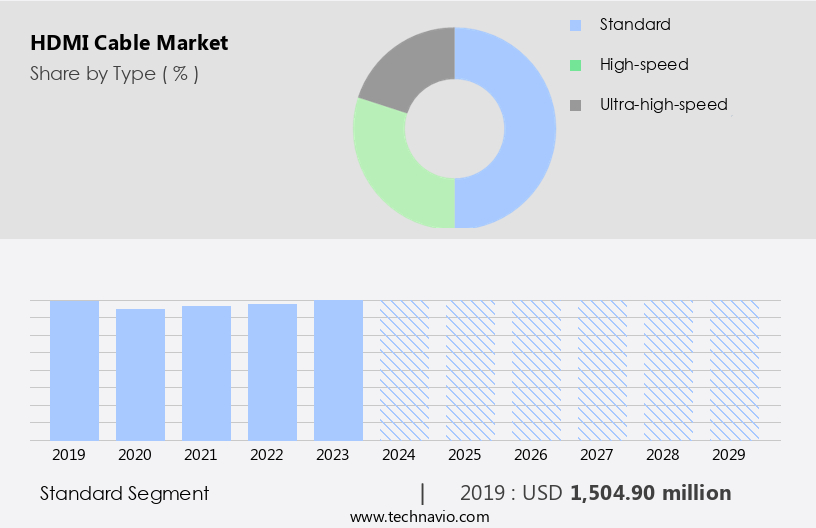
The Standard segment was valued at USD 1.50 billion in 2019 and showed a gradual increase during the forecast period.
The HDMI Cable Market is expanding rapidly due to advancements in home entertainment and connectivity solutions. Consumers seek high-performance cables with optimal cable length to suit various setups. The demand for braided cables is increasing as they enhance cable durability, making them more resistant to wear and tear. Proper cable termination ensures seamless signal transmission, while diverse cable connectors cater to different devices. High-quality HDMI receivers improve audio-visual experiences, supporting modern televisions (TVs) and Blu-ray players.
The HDMI Cable Market continues to advance with cutting-edge features that enhance audiovisual quality. HDMI with eARC is revolutionizing home entertainment, enabling high-quality digital audio output with seamless transmission. This technology supports multichannel audio, delivering rich and engaging surround sound experiences for movies, gaming, and music. Consumers prioritize cables that maximize performance while maintaining compatibility with the latest devices. A well-designed user manual plays a crucial role in helping users optimize their setup, ensuring clarity on installation and troubleshooting.
Regional Analysis
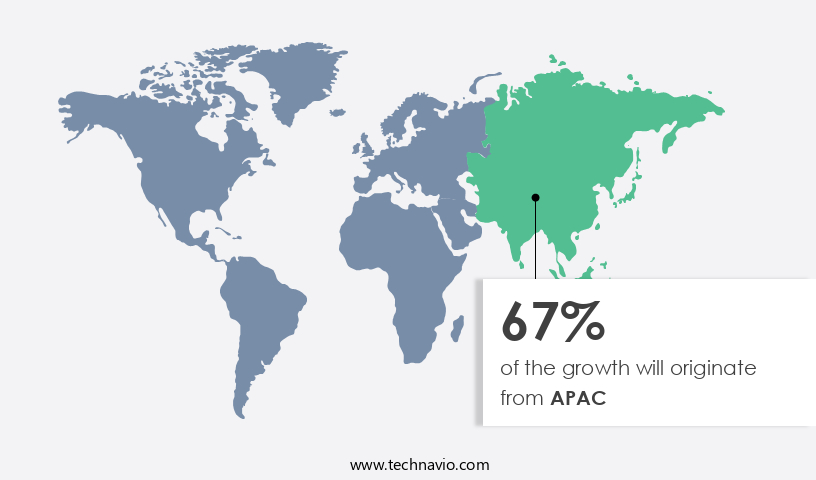
APAC is estimated to contribute 67% to the growth of the global market during the forecast period. Technavio's analysts have elaborately explained the regional trends and drivers that shape the market during the forecast period.
The market encompasses various applications, including HDMI adapters, professional audiovisual systems, automotive applications, live events, commercial displays, and televisions. HDMI cables are integral to connecting audio receivers, display devices, set-top boxes, gaming consoles, and other AV equipment. The market is driven by the increasing adoption of 4K and 8K resolutions for enhanced viewing experiences, particularly in professional audiovisual systems and home theater setups. Braided cables offer improved durability, while gold-plated connectors ensure signal integrity. HDMI cables are also utilized in broadcast equipment, digital signage, video conferencing, and streaming devices. In the automotive sector, HDMI cables enable seamless connectivity between various in-car entertainment systems.
The APAC region is expected to dominate the market due to the growing demand for HD TVs and the increasing popularity of gaming consoles in countries like India, China, Japan, South Korea, and Thailand. China, as a manufacturing hub, is the largest market in APAC, with significant contributions from TV set shipments and strategic partnerships. HDMI cables are also essential for cable installation in commercial displays, presentation systems, and medical imaging equipment. Additionally, HDMI extenders, switches, and matrix switchers facilitate cable routing and signal distribution in complex installations. EMI shielding and data transfer rate are crucial factors influencing the choice of HDMI cables in various applications.
The market is witnessing significant growth due to the increasing demand for high-resolution displays, enhanced gaming experiences, and advanced connectivity solutions. The market is diverse, catering to various applications, from professional audiovisual systems to automotive applications, and is expected to continue evolving with advancements in technology and emerging trends. It is used extensively in live events, video conferencing, digital signage, and broadcast equipment.
Market Dynamics
Our researchers analyzed the data with 2024 as the base year, along with the key drivers, trends, and challenges. A holistic analysis of drivers will help companies refine their marketing strategies to gain a competitive advantage.
What are the HDMI Cable market drivers leading to the rise in the adoption of Industry?
- The proliferation of smart devices is the primary catalyst fueling market growth. The market has experienced notable growth due to the increasing integration of smart devices into modern lifestyles. Devices such as smart TVs, smartphones, gaming consoles, streaming devices, laptops, and more, have become commonplace in homes and workplaces, leading to a heightened demand for superior audiovisual connectivity. HDMI cables play a crucial role in enabling seamless communication between these devices and displays, delivering high-definition video and rich audio experiences. To ensure optimal performance, it is essential to maintain signal integrity during data transfer. HDMI cables provide uncompressed HD audio and video signals, ensuring the delivery of outstanding audiovisual quality.
- Moreover, advancements in technology have led to the development of additional features such as HDMI switches, splitters, cable management systems, EMI shielding, Ethernet over HDMI, and digital media players, catering to various user requirements. These innovations have further enhanced the user experience by enabling features such as multi-device connectivity, improved cable organization, and advanced signal management. As the market continues to evolve, it is expected that these trends will persist, driving the growth of the market.
What are the HDMI Cable market trends shaping the Industry?
- The increasing prevalence of HDMI 2.1 signifies a significant market trend. This advanced technology boasts enhanced capabilities, including higher resolution and faster data transfer rates, making it a must-have for modern audiovisual systems. The High-Definition Multimedia Interface (HDMI) market is experiencing significant growth due to the increasing popularity of HDMI 2.1. This latest HDMI version offers advanced features and capabilities to cater to the demands of consumers seeking high-definition and ultra-high-definition video. HDMI 2.1 supports greater frame rates of 120Hz and 240Hz, as well as resolutions of 4K, 8K, and even 10K. HDMI technology is not only transforming consumer entertainment but also impacting various industries. For instance, gaming consoles are leveraging HDMI 2.1 to provide enhanced gaming experiences.
- In the professional AV equipment sector, HDMI extenders and matrix switchers are essential for cable flexibility and routing. Gold-plated HDMI connectors ensure reliable signal transmission, while HDMI transmitters and receivers facilitate seamless transmission between devices. HDMI 2.1 is revolutionizing the way we consume and distribute audio and video content. Its advanced capabilities are driving innovation across various industries, from gaming and entertainment to professional AV equipment and beyond. The future of HDMI technology is promising, with continued advancements expected to further enhance the user experience.
How does HDMI Cable market face challenges during its growth?
- The proliferation of counterfeit goods poses a significant challenge to the industry's growth trajectory. HDMI cables are essential for transmitting high-definition audio and video signals between devices. However, the market is plagued by the issue of counterfeit HDMI cables, which pose a significant threat to consumers, manufacturers, and the industry as a whole. These cables, designed to mimic authentic products, often fail to meet the required specifications and offer inferior performance. The use of substandard materials and construction techniques in counterfeit HDMI cables can lead to poor signal transmission, communication issues, and reduced durability. Moreover, they may not comply with industry standards, resulting in audio or visual artifacts or a complete loss of communication.
- The use of counterfeit cables can negatively impact these applications, potentially causing significant inconvenience and financial losses. HDMI adapters, cable terminations, and connectors are crucial components of cable installation in various industries, including automotive applications and audio receivers. The use of counterfeit HDMI cables can compromise the integrity of these installations, leading to potential safety hazards and system malfunctions. The prevalence of counterfeit HDMI cables is a concerning issue that requires attention from all stakeholders.
Exclusive Customer Landscape
The HDMI cable market forecasting report includes the adoption lifecycle of the market, covering from the innovator's stage to the laggard's stage. It focuses on adoption rates in different regions based on penetration. Furthermore, the HDMI cable market report also includes key purchase criteria and drivers of price sensitivity to help companies evaluate and develop their market growth analysis strategies.
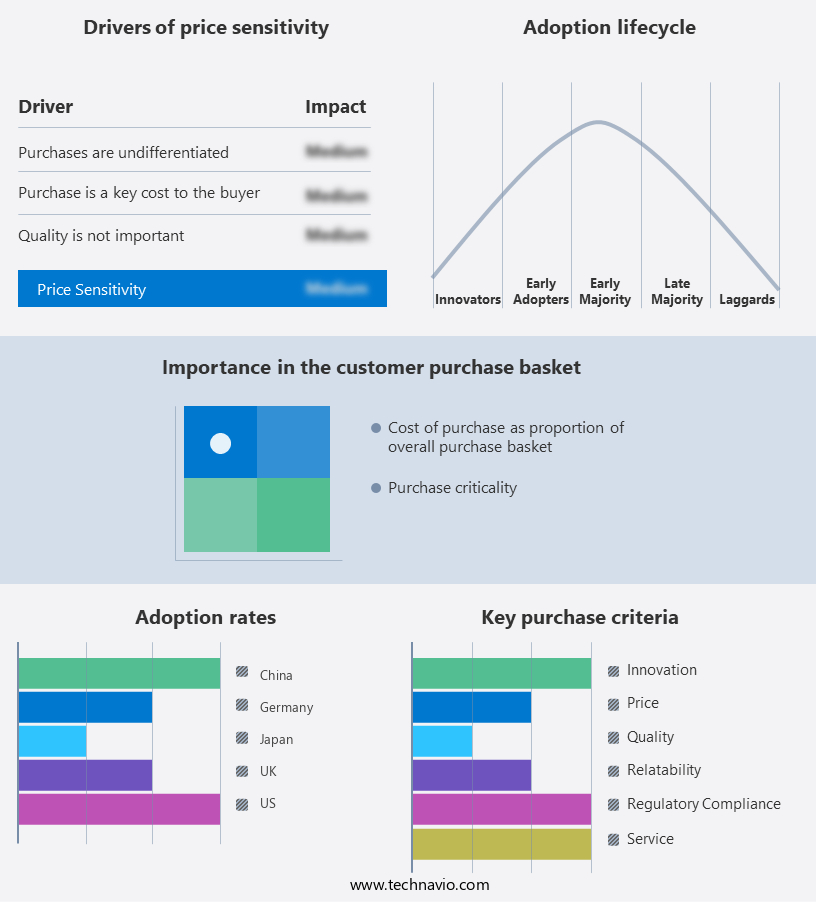
Customer Landscape
Key Companies & Market Insights
Companies are implementing various strategies, such as strategic alliances, HDMI cable market forecast, partnerships, mergers and acquisitions, geographical expansion, and product/service launches, to enhance their presence in the industry.
Amphenol Communications Solutions - The company specializes in HDMI cable solutions, providing a range of products including HDMI connectors and ruggedized HDMI cables.
The industry research and growth report includes detailed analyses of the competitive landscape of the market and information about key companies, including:
- Amphenol Communications Solutions
- Aten International Co. Ltd.
- Belkin International Inc.
- Best Buy Co. Inc.
- Broadcom Inc.
- Ce Link
- Cheng Uei Precision Industry Co. Ltd.
- Dell Technologies Inc.
- Eaton Corp. plc
- Hitachi Ltd.
- Honeywell International Inc.
- Intel Corp.
- Koninklijke Philips NV
- Kramer Electronics Ltd.
- Molex LLC
- Nordost
- Panasonic Holdings Corp.
- RGB Systems Inc.
- Sony Group Corp.
- Tragant Handels und Beteiligungs GmbH Co.
Qualitative and quantitative analysis of companies has been conducted to help clients understand the wider business environment as well as the strengths and weaknesses of key industry players. Data is qualitatively analyzed to categorize companies as pure play, category-focused, industry-focused, and diversified; it is quantitatively analyzed to categorize companies as dominant, leading, strong, tentative, and weak.
Recent Development and News in HDMI Cable Market
- In February 2023, HDMI Forum, an industry consortium, introduced the new HDMI 2.1 specification, offering enhanced features such as 8K resolution, variable refresh rate, and eARC for improved audio transmission (HDMI Forum press release). This upgrade aims to cater to the evolving demands of the consumer electronics market.
- In May 2024, Samsung Electronics and LG Display announced a strategic partnership to develop next-generation HDMI cables with advanced features, including faster data transfer rates and improved power efficiency (Samsung Newsroom). This collaboration intends to strengthen their positions in the market and meet the increasing demands for high-performance connectivity solutions.
- In October 2024, Huawei Technologies Co. Ltd. acquired a significant stake in a leading HDMI cable manufacturer, Belkin International, expanding its presence in the consumer electronics market and gaining access to Belkin's extensive distribution network (Bloomberg). This strategic move positions Huawei to offer a more comprehensive range of products and services to its customers.
- In January 2025, the European Union approved new regulations mandating the use of energy-efficient HDMI cables in electronic devices sold within the region (European Commission press release). This initiative aims to reduce energy consumption and carbon emissions, setting a global trend for eco-friendly connectivity solutions.
Research Analyst Overview
The market continues to evolve, driven by advancements in technology and expanding applications across various sectors. HDMI adapters enable seamless connectivity between different devices, including gaming consoles, streaming devices, and professional audiovisual equipment. The demand for longer cable lengths and higher resolutions, such as 8K and 4K, necessitates the development of more flexible and durable cables, featuring gold-plated connectors and braided shielding for improved signal integrity. HDMI extenders extend cable reach, allowing for cable installation in larger spaces, while HDMI matrix switchers facilitate the routing of multiple HDMI sources to multiple displays. The automotive industry utilizes HDMI for in-car entertainment systems, and live events and commercial displays rely on HDMI for high-definition video and audio.
HDMI technology is also integral to home theater systems, presentation systems, video conferencing, digital signage, broadcast equipment, and medical imaging. The ongoing development of Ethernet over HDMI and data transfer rate enhancements further expands the capabilities of HDMI, ensuring its continued relevance in the evolving audiovisual landscape. Cable management solutions, such as HDMI splitters and switches, ensure efficient use of resources and maintain a clutter-free setup. The integration of HDMI technology in various applications underscores its dynamic nature and the importance of ongoing innovation to meet the ever-evolving demands of the market.
The HDMI Cable Market is evolving with new technologies enhancing audiovisual experiences. Rigorous cable testing ensures reliability in transmitting signals from the video source to displays with optimal display resolution, response time, display size, and display aspect ratio. Low video input lag is crucial for gamers and content creators. Manufacturers consider the environmental impact, designing durable cables with minimal waste. Detailed user manuals provide guidance, while customer reviews influence buying decisions.
Dive into Technavio's strong research methodology, blending expert interviews, extensive data synthesis, and validated models for unparalleled HDMI Cable Market insights. See full methodology.
|
Market Scope |
|
|
Report Coverage |
Details |
|
Page number |
224 |
|
Base year |
2024 |
|
Historic period |
2019-2023 |
|
Forecast period |
2025-2029 |
|
Growth momentum & CAGR |
Accelerate at a CAGR of 4.9% |
|
Market growth 2025-2029 |
USD 898.8 million |
|
Market structure |
Fragmented |
|
YoY growth 2024-2025(%) |
4.6 |
|
Key countries |
US, China, Japan, India, South Korea, Germany, Canada, UK, France, and Australia |
|
Competitive landscape |
Leading Companies, Market Positioning of Companies, Competitive Strategies, and Industry Risks |
What are the Key Data Covered in this HDMI Cable Market Research and Growth Report?
- CAGR of the HDMI Cable industry during the forecast period
- Detailed information on factors that will drive the growth and forecasting between 2025 and 2029
- Precise estimation of the size of the market and its contribution of the industry in focus to the parent market
- Accurate predictions about upcoming growth and trends and changes in consumer behaviour
- Growth of the market across APAC, North America, Europe, South America, and Middle East and Africa
- Thorough analysis of the market's competitive landscape and detailed information about companies
- Comprehensive analysis of factors that will challenge the hdmi cable market growth of industry companies
We can help! Our analysts can customize this hdmi cable market research report to meet your requirements.
 RIA -
RIA - 
