


Healthcare Logistics Market Analysis, Size, and Forecast 2026-2030: APAC (China, Japan, and India), North America (US, Canada, and Mexico), Europe (Germany, UK, and France), Middle East and Africa (UAE, Saudi Arabia, and South Africa), South America (Brazil and Argentina), and Rest of World (ROW)

Healthcare Logistics Market Analysis, Size, and Forecast 2026-2030:
APAC (China, Japan, and India), North America (US, Canada, and Mexico), Europe (Germany, UK, and France), Middle East and Africa (UAE, Saudi Arabia, and South Africa), South America (Brazil and Argentina), and Rest of World (ROW)

Published: Mar 2026 292 Pages SKU: IRTNTR41077

Market Overview at a Glance

$159.92 B
Market Opportunity
14.4%
CAGR 2025 - 2030
43.3%
APAC Growth
$83.59 B
Pharmaceutical products segment 2024

Healthcare Logistics Market Size 2026-2030

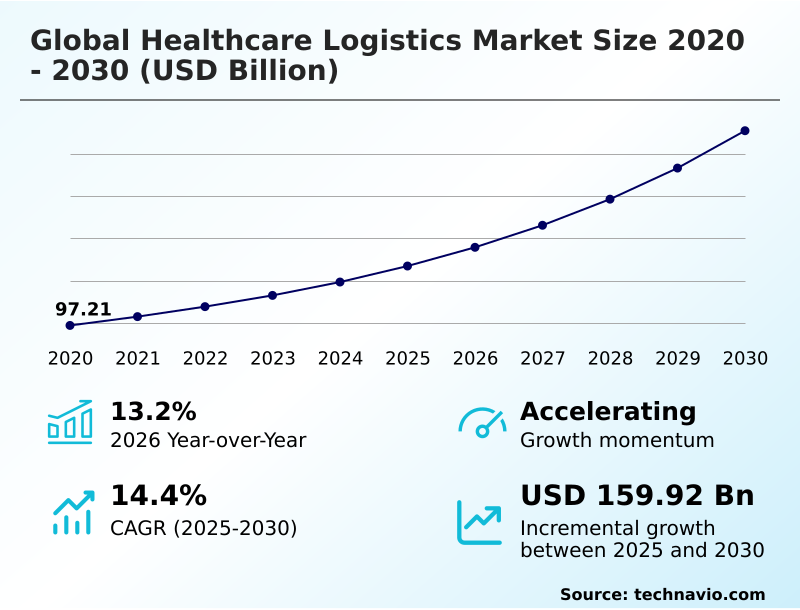
The healthcare logistics market size is valued to increase by USD 159.92 billion, at a CAGR of 14.4% from 2025 to 2030. Expansion of biopharmaceutical production and cold chain requirements will drive the healthcare logistics market.

Major Market Trends & Insights

  • APAC dominated the market and accounted for a 43.3% growth during the forecast period.
  • By Product - Pharmaceutical products segment was valued at USD 83.59 billion in 2024
  • By Service - Transportation segment accounted for the largest market revenue share in 2024

Market Size & Forecast

  • Market Opportunities: USD 230.13 billion
  • Market Future Opportunities: USD 159.92 billion
  • CAGR from 2025 to 2030 : 14.4%

Market Summary

  • The healthcare logistics market is defined by its critical role in connecting patients with life-saving treatments through a highly regulated and complex supply chain. Growth is propelled by the rise in biopharmaceutical production and the increasing demand for temperature-sensitive biologics, which necessitates advanced cold chain logistics.
  • A key trend is the digitalization of the supply chain, where IoT in healthcare logistics provides real-time temperature monitoring and enhances supply chain visibility. For instance, a specialty pharmaceutical firm leverages a third-party logistics provider's digital platform to manage direct-to-patient logistics for a new oncology drug.
  • This ensures gdp compliance across multiple transit points, maintains a secure chain of custody, and provides auditable data trails for regulators. However, the industry grapples with the high capital costs of building gxp compliant facilities and the persistent challenge of navigating fragmented global regulatory frameworks.
  • Strategic outsourcing and technology adoption are becoming essential for companies to maintain a competitive edge and ensure the safe, timely delivery of medical products. This evolution underscores a market shift towards integrated, resilient, and patient-centric supply chain models that can support next-generation therapies and expanding global healthcare needs.

What will be the Size of the Healthcare Logistics Market during the forecast period?
Get Key Insights on Market Forecast (PDF) Request Free Sample

How is the Healthcare Logistics Market Segmented?

The healthcare logistics industry research report provides comprehensive data (region-wise segment analysis), with forecasts and estimates in "USD million" for the period 2026-2030, as well as historical data from 2020-2024 for the following segments.

  • Product
    • Pharmaceutical products
    • Medical devices
  • Service
    • Transportation
    • Warehousing
  • Type
    • Non-cold chain
    • Cold chain
  • Geography
    • APAC
      • China
      • Japan
      • India
    • North America
      • US
      • Canada
      • Mexico
    • Europe
      • Germany
      • UK
      • France
    • Middle East and Africa
      • UAE
      • Saudi Arabia
      • South Africa
    • South America
      • Brazil
      • Argentina
    • Rest of World (ROW)

By Product Insights

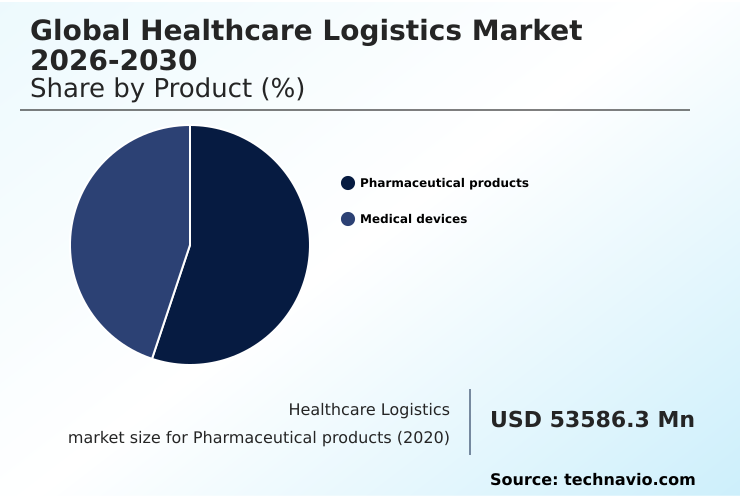
The pharmaceutical products segment is estimated to witness significant growth during the forecast period.

The pharmaceutical products segment is driven by the complexities of the modern pharmaceutical supply chain.

A significant driver is the increasing dominance of biologics, with over 80% of new drugs being temperature-sensitive, necessitating advanced biopharmaceutical logistics and specialized pharmaceutical distribution services.

This shift demands robust temperature-controlled transport and precise temperature-sensitive shipping for everything from clinical trials to specialty pharmacy logistics.

Managing biologics transportation and cell and gene therapy logistics requires a mix of active cooling containers and passive thermal packaging, supported by pharma-grade warehousing with appropriate cold chain packaging to ensure product integrity for specialty drug distribution from manufacturing to the end user.
Request Free Sample

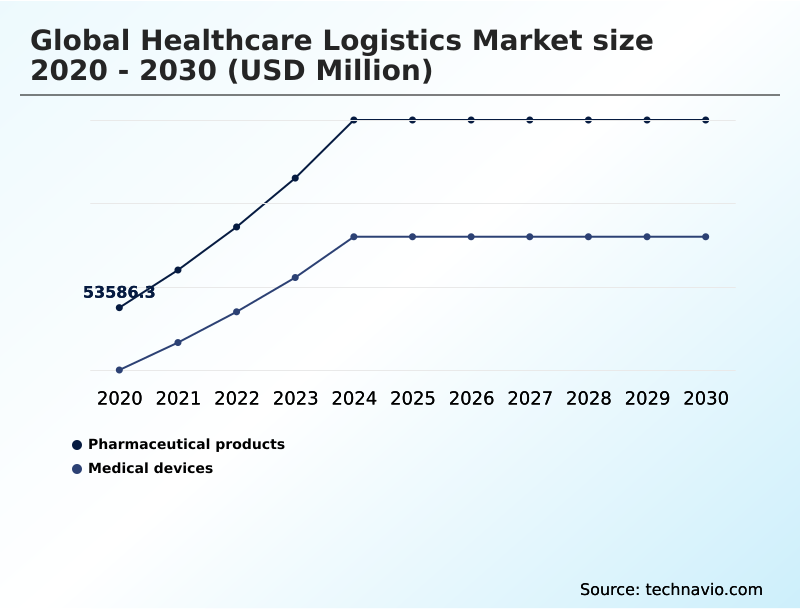
The Pharmaceutical products segment was valued at USD 83.59 billion in 2024 and showed a gradual increase during the forecast period.
Request Free Sample

Regional Analysis

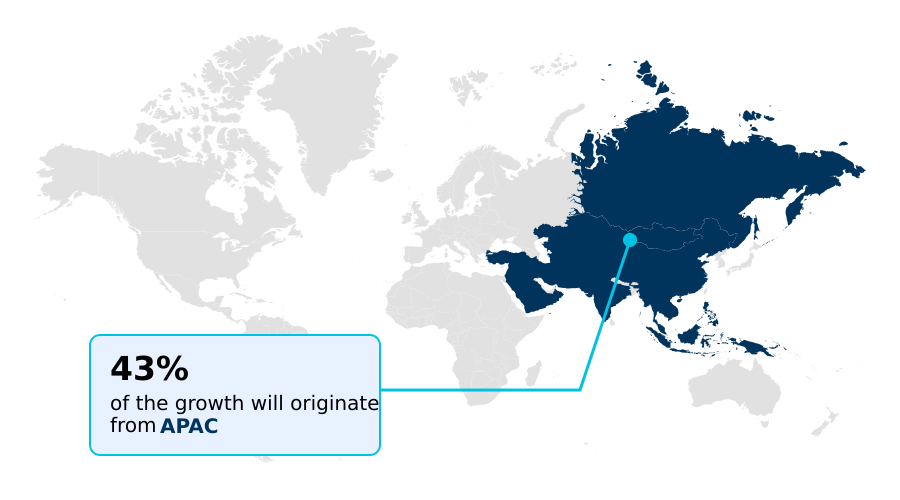
APAC is estimated to contribute 43.3% to the growth of the global market during the forecast period.Technavio’s analysts have elaborately explained the regional trends and drivers that shape the market during the forecast period.
See How Healthcare Logistics Market Demand is Rising in APAC Request Free Sample

The geographic landscape of the healthcare logistics market is shifting, with APAC emerging as the primary engine for incremental growth, projected to contribute 43.3% of the global expansion.

This acceleration, marked by a regional growth rate of 15.7%, is fueled by expanding medical infrastructure and manufacturing capabilities. Healthcare logistics providers are heavily investing in cold chain logistics and modern healthcare warehousing in the region to support this demand.

In contrast, North America remains a mature but highly advanced market, prioritizing ultra-low temperature shipping and cryogenic storage solutions for advanced therapies. Key activities include optimizing last-mile healthcare delivery and enhancing supply chain traceability through serialized product tracking.

Establishing a robust GxP-compliant network with advanced healthcare distribution centers and insulated shipping containers is a strategic focus across all regions to manage complex global pharma air freight and clinical supply management.

Market Dynamics

Our researchers analyzed the data with 2025 as the base year, along with the key drivers, trends, and challenges. A holistic analysis of drivers will help companies refine their marketing strategies to gain a competitive advantage.

  • Navigating the modern healthcare supply chain requires a deep understanding of both operational and financial risks, where the cost of cold chain logistics failure can be catastrophic. The central question for many organizations is how to ensure gdp compliance in shipping, a non-negotiable standard that dictates infrastructure and process design.
  • This is particularly acute when addressing the challenges in last-mile pharma delivery, where environmental control is most vulnerable. Adhering to the best practices for clinical trial logistics is paramount for R&D success, while new commercial models highlight the benefits of direct-to-patient drug delivery, which enhances patient access but adds logistical complexity.
  • Effective temperature monitoring for vaccine distribution has become a global benchmark for supply chain performance. The role of iot in pharmaceutical logistics is transformative, enabling the real-time data flow needed for implementing serialization for drug traceability to combat counterfeiting. Decision-makers are constantly comparing active vs passive cold chain shipping to balance cost and risk.
  • This complexity drives the trend of outsourcing pharmaceutical logistics services, making the process of choosing a 3pl for healthcare a critical strategic decision. Furthermore, companies are focused on managing logistics for medical device launches and promoting sustainability in healthcare supply chains. They must also address emerging cybersecurity risks in logistics platforms while optimizing warehouse design for pharma.
  • The landscape is further complicated by cross-border healthcare logistics regulations and the unique needs of logistics for over-the-counter products. Finally, automated warehousing in pharma distribution and advances in cryogenic shipping technology are enabling efficiency gains, demonstrating how technology-driven risk mitigation in pharma transport can improve outcomes by more than 30% compared to traditional methods.
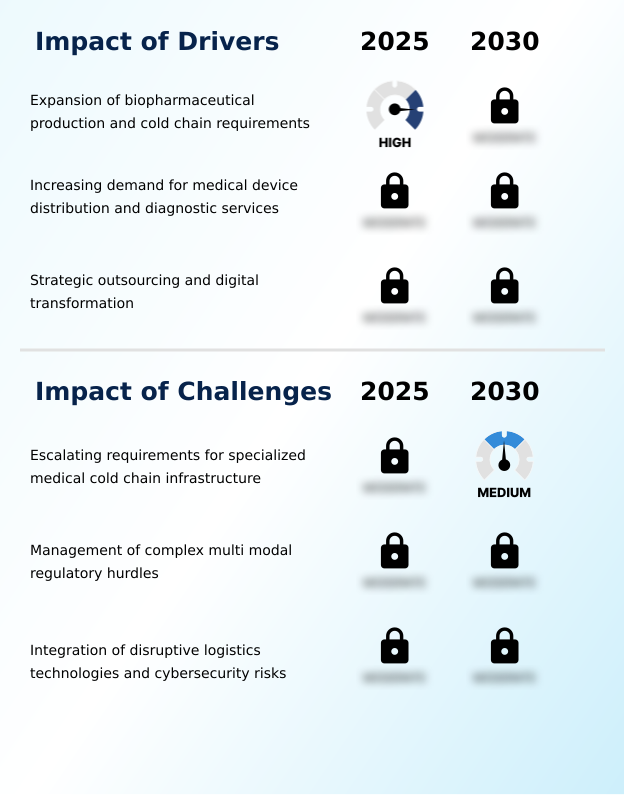
What are the key market drivers leading to the rise in the adoption of Healthcare Logistics Industry?

  • The expansion of biopharmaceutical production, coupled with increasingly stringent cold chain requirements, serves as a primary driver for the market's growth.

  • Market growth is fundamentally driven by the expansion of biopharmaceutical production and the increasing demand for sophisticated medical device distribution.
  • The surge in exports, such as the 25% increase in medical devices from one major economy, creates a substantial need for reliable pharma freight forwarding and integrated healthcare logistics.
  • This has catalyzed a strong trend toward pharma logistics outsourcing, as healthcare companies seek to mitigate supply chain risks and focus on core competencies.
  • Outsourcing partners offering end-to-end logistics solutions have demonstrated the ability to reduce disruption-related costs by up to 80%.
  • This value proposition is accelerating the adoption of models like direct-to-patient logistics and specialized clinical trial logistics, which rely on efficient cross-dock facility operations and optimized medical supply chain management to support home healthcare logistics and ensure drug traceability solutions.

What are the market trends shaping the Healthcare Logistics Industry?

  • The integration of artificial intelligence and predictive analytics is an emerging trend. It is poised to drive significant efficiency gains throughout the healthcare logistics market.

  • Key trends are reshaping the healthcare logistics landscape, with a primary focus on digitalization and infrastructure specialization. The integration of digital twin simulations is enabling proactive logistics network optimization, allowing companies to model disruptions before they occur.
  • This push for greater supply chain visibility is complemented by the deployment of supply chain automation in warehousing, where some leading contract logistics providers have automated over 50% of their sites. Furthermore, iot in healthcare logistics facilitates real-time temperature monitoring crucial for final-mile delivery. This trend towards patient-centric logistics is supported by advanced digital logistics platforms.
  • While still nascent, the value of AI is becoming apparent, with nearly 5% of organizations reporting measurable benefits from pilots, signaling a broader move toward data-driven supply chain resilience and specialized white glove services.

What challenges does the Healthcare Logistics Industry face during its growth?

  • Escalating requirements for specialized medical cold chain infrastructure present a significant challenge to the industry's growth and operational scalability.

  • The market faces significant challenges, primarily the high capital expenditure for specialized infrastructure and the complexity of navigating global regulations. Ensuring gdp compliance requires massive investments in gxp compliant facilities with controlled-room temperature zones, as seen in new centers spanning over 15,000 square meters.
  • The integration of technology also introduces logistics risk management issues, prompting firms to invest heavily—in one case, over $1.1 billion—to enhance supply chain security and harmonize digital systems post-merger. Managing logistics compliance across borders demands constant vigilance and specialized regulatory compliance services.
  • Furthermore, maintaining a secure chain of custody requires sophisticated thermal monitoring and cold chain validation, adding layers of operational cost and complexity, particularly for sensitive specimen transport. This pressure necessitates a robust logistics quality management framework.

Exclusive Technavio Analysis on Customer Landscape

The healthcare logistics market forecasting report includes the adoption lifecycle of the market, covering from the innovator’s stage to the laggard’s stage. It focuses on adoption rates in different regions based on penetration. Furthermore, the healthcare logistics market report also includes key purchase criteria and drivers of price sensitivity to help companies evaluate and develop their market growth analysis strategies.
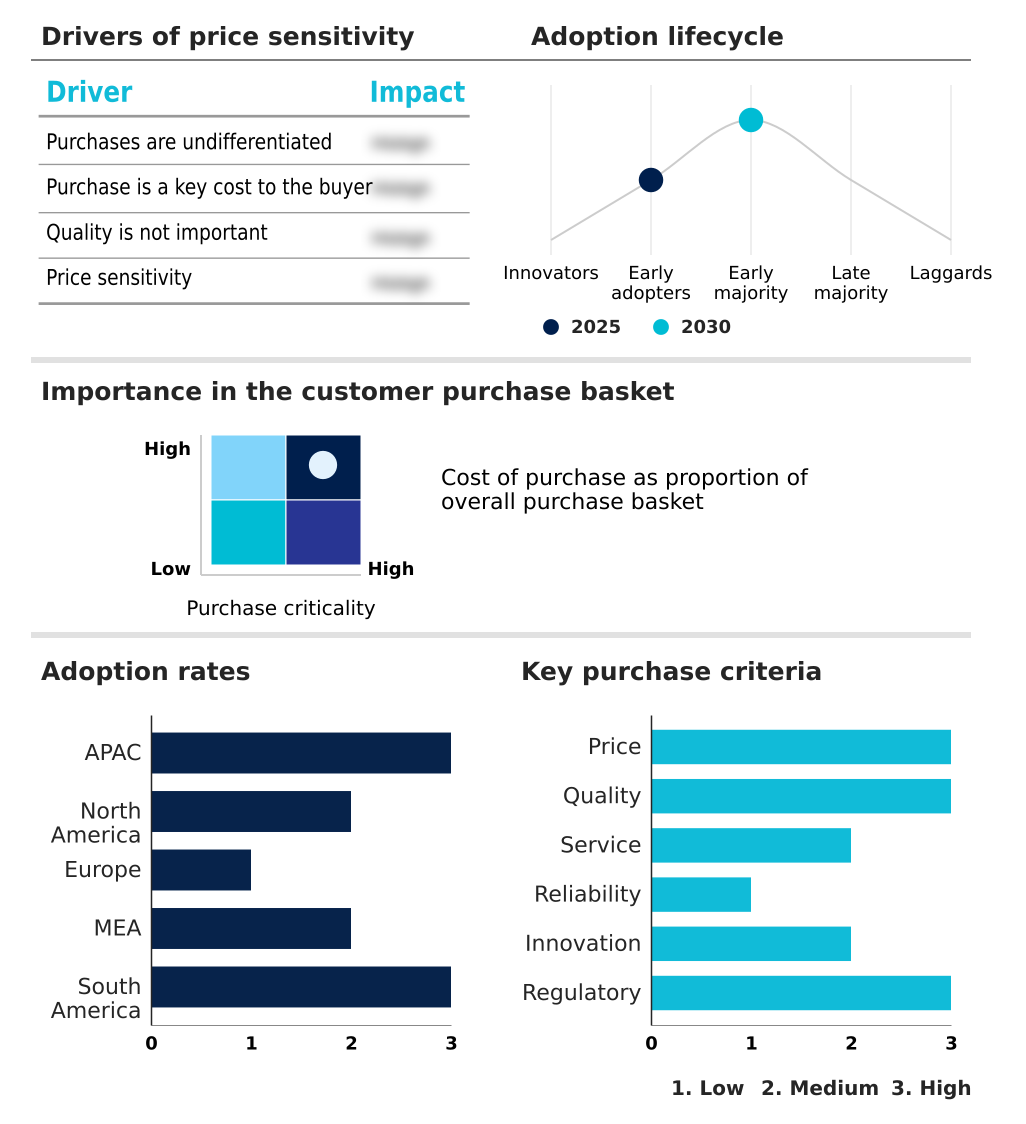
Customer Landscape of Healthcare Logistics Industry

Competitive Landscape

Companies are implementing various strategies, such as strategic alliances, healthcare logistics market forecast, partnerships, mergers and acquisitions, geographical expansion, and product/service launches, to enhance their presence in the industry.

AP Moller Maersk AS - Delivers comprehensive, temperature-controlled solutions for biopharma, medical devices, and clinical trials, supported by an extensive global network for advanced therapies.

The industry research and growth report includes detailed analyses of the competitive landscape of the market and information about key companies, including:

  • AP Moller Maersk AS
  • Biocair
  • C H Robinson Worldwide Inc.
  • CEVA Logistics SA
  • Dachser SE
  • DHL International GmbH
  • DSV AS
  • Expeditors International Inc.
  • FedEx Corp.
  • GEODIS
  • GXO Logistics Inc.
  • Hellmann Worldwide Logistics
  • Kintetsu World Express Inc.
  • KLN Logistics Group Ltd.
  • Kuehne Nagel Management AG
  • Nippon Express Holdings Inc.
  • Schenker AG
  • Thermo Fisher Scientific Inc.
  • United Parcel Service Inc.
  • Yusen Logistics Co. Ltd.

Qualitative and quantitative analysis of companies has been conducted to help clients understand the wider business environment as well as the strengths and weaknesses of key industry players. Data is qualitatively analyzed to categorize companies as pure play, category-focused, industry-focused, and diversified; it is quantitatively analyzed to categorize companies as dominant, leading, strong, tentative, and weak.

Recent Development and News in Healthcare logistics market

  • In November 2025, United Parcel Service of America Inc. completed its acquisition of Andlauer Healthcare Group Inc. for approximately $1.6 billion, significantly enhancing its specialized healthcare logistics and cold chain capabilities across North America.
  • In March 2025, GXO Logistics Inc. secured a landmark $2.5 billion contract to manage the National Health Service Supply Chain in England, representing the largest single contract in the company's history.
  • In April 2025, CEVA Logistics AG launched a new pharmaceutical-dedicated facility in Strasbourg, France, designed to bridge European and global distribution standards and enhance end-to-end traceability for medical goods.
  • In May 2025, DSV AS finalized the integration of DB Schenker, a move that doubled its network size and workforce, necessitating a five-year, $1.1 billion investment into harmonizing digital platforms and bolstering cybersecurity.

Dive into Technavio’s robust research methodology, blending expert interviews, extensive data synthesis, and validated models for unparalleled Healthcare Logistics Market insights. See full methodology.

Market Scope
Page number 292
Base year 2025
Historic period 2020-2024
Forecast period 2026-2030
Growth momentum & CAGR Accelerate at a CAGR of 14.4%
Market growth 2026-2030 USD 159918.2 million
Market structure Fragmented
YoY growth 2025-2026(%) 13.2%
Key countries China, Japan, India, South Korea, Australia, Singapore, US, Canada, Mexico, Germany, UK, France, Italy, Spain, The Netherlands, UAE, Saudi Arabia, South Africa, Qatar, Egypt, Brazil, Argentina and Chile
Competitive landscape Leading Companies, Market Positioning of Companies, Competitive Strategies, and Industry Risks

Request Free Sample

Research Analyst Overview

  • The healthcare logistics market is undergoing a significant transformation, driven by the need for end-to-end logistics solutions that can manage an increasingly complex pharmaceutical supply chain. The rise of high-value biologics necessitates specialized biopharmaceutical logistics, pushing investments in gxp compliant facilities and advanced cryogenic storage solutions.
  • Success in this space depends on flawless execution, from initial pharma freight forwarding to direct-to-patient logistics. Companies are leveraging digital twin simulations and real-time temperature monitoring to enhance supply chain visibility and ensure a secure chain of custody.
  • For instance, strategic outsourcing to partners with a robust GxP-compliant network has been shown to reduce supply chain disruption costs by as much as 80%. This underscores the importance of logistics risk management.
  • The focus is shifting towards integrated systems that optimize healthcare warehousing and logistics network optimization, incorporating everything from returnable packaging systems and white glove services for medical device distribution to sophisticated specimen transport for clinical trial logistics and clinical supply management. Providers that master final-mile delivery while ensuring gdp compliance will capture significant market share.

What are the Key Data Covered in this Healthcare Logistics Market Research and Growth Report?

  • What is the expected growth of the Healthcare Logistics Market between 2026 and 2030?

    • USD 159.92 billion, at a CAGR of 14.4%

  • What segmentation does the market report cover?

    • The report is segmented by Product (Pharmaceutical products, and Medical devices), Service (Transportation, and Warehousing), Type (Non-cold chain, and Cold chain) and Geography (APAC, North America, Europe, Middle East and Africa, South America)

  • Which regions are analyzed in the report?

    • APAC, North America, Europe, Middle East and Africa and South America

  • What are the key growth drivers and market challenges?

    • Expansion of biopharmaceutical production and cold chain requirements, Escalating requirements for specialized medical cold chain infrastructure

  • Who are the major players in the Healthcare Logistics Market?

    • AP Moller Maersk AS, Biocair, C H Robinson Worldwide Inc., CEVA Logistics SA, Dachser SE, DHL International GmbH, DSV AS, Expeditors International Inc., FedEx Corp., GEODIS, GXO Logistics Inc., Hellmann Worldwide Logistics, Kintetsu World Express Inc., KLN Logistics Group Ltd., Kuehne Nagel Management AG, Nippon Express Holdings Inc., Schenker AG, Thermo Fisher Scientific Inc., United Parcel Service Inc. and Yusen Logistics Co. Ltd.

Market Research Insights

  • The dynamics of medical supply chain management are increasingly shaped by strategic investments in technology and infrastructure. Leading healthcare logistics providers are achieving significant operational gains; for example, targeted investments in digital logistics platforms have been shown to reduce supply chain disruptions by up to 80%.
  • As patient-centric logistics models become more prevalent, supply chain automation is critical, with some major contract logistics providers now deploying robotics in over 50% of their global sites to enhance final-mile delivery.
  • The emphasis on supply chain resilience is driving the adoption of predictive analytics and iot in healthcare logistics, even as initial pilots show that nearly 5% of organizations are achieving measurable value. This technological push is essential for managing temperature-sensitive shipping and ensuring the integrity of high-value biologics and therapies.

We can help! Our analysts can customize this healthcare logistics market research report to meet your requirements.

Get in touch

1. Executive Summary

1.1 Market overview

Executive Summary - Chart on Market Overview
Executive Summary - Data Table on Market Overview
Executive Summary - Chart on Global Market Characteristics
Executive Summary - Chart on Market by Geography
Executive Summary - Chart on Market Segmentation by Product
Executive Summary - Chart on Market Segmentation by Service
Executive Summary - Chart on Market Segmentation by Type
Executive Summary - Chart on Incremental Growth
Executive Summary - Data Table on Incremental Growth
Executive Summary - Chart on Company Market Positioning

2. Technavio Analysis

2.1 Analysis of price sensitivity, lifecycle, customer purchase basket, adoption rates, and purchase criteria

2.2 Criticality of inputs and Factors of differentiation

Chart on Overview on criticality of inputs and factors of differentiation

2.3 Factors of disruption

Chart on Overview on factors of disruption

2.4 Impact of drivers and challenges

Chart on Impact of drivers and challenges in 2025 and 2030

3. Market Landscape

3.1 Market ecosystem

Chart on Parent Market
Data Table on - Parent Market

3.2 Market characteristics

Chart on Market characteristics analysis

3.3 Value chain analysis

Chart on Value chain analysis

4. Market Sizing

4.1 Market definition

Data Table on Offerings of companies included in the market definition

4.2 Market segment analysis

Market segments

4.3 Market size 2025

4.4 Market outlook: Forecast for 2025-2030

Chart on Global - Market size and forecast 2025-2030 ($ million)
Data Table on Global - Market size and forecast 2025-2030 ($ million)
Chart on Global Market: Year-over-year growth 2025-2030 (%)
Data Table on Global Market: Year-over-year growth 2025-2030 (%)

5. Historic Market Size

5.1 Global Healthcare Logistics Market 2020 - 2024

Historic Market Size - Data Table on Global Healthcare Logistics Market 2020 - 2024 ($ million)

5.2 Product segment analysis 2020 - 2024

Historic Market Size - Product Segment 2020 - 2024 ($ million)

5.3 Service segment analysis 2020 - 2024

Historic Market Size - Service Segment 2020 - 2024 ($ million)

5.4 Type segment analysis 2020 - 2024

Historic Market Size - Type Segment 2020 - 2024 ($ million)

5.5 Geography segment analysis 2020 - 2024

Historic Market Size - Geography Segment 2020 - 2024 ($ million)

5.6 Country segment analysis 2020 - 2024

Historic Market Size - Country Segment 2020 - 2024 ($ million)

6. Qualitative Analysis

6.1 Impact of AI on Global Healthcare Logistics Market

6.2 Impact of geopolitical conflicts on Global Healthcare Logistics Market

7. Five Forces Analysis

7.1 Five forces summary

Five forces analysis - Comparison between 2025 and 2030

7.2 Bargaining power of buyers

Bargaining power of buyers - Impact of key factors 2025 and 2030

7.3 Bargaining power of suppliers

Bargaining power of suppliers - Impact of key factors in 2025 and 2030

7.4 Threat of new entrants

Threat of new entrants - Impact of key factors in 2025 and 2030

7.5 Threat of substitutes

Threat of substitutes - Impact of key factors in 2025 and 2030

7.6 Threat of rivalry

Threat of rivalry - Impact of key factors in 2025 and 2030

7.7 Market condition

Chart on Market condition - Five forces 2025 and 2030

8. Market Segmentation by Product

8.1 Market segments

Chart on Product - Market share 2025-2030 (%)
Data Table on Product - Market share 2025-2030 (%)

8.2 Comparison by Product

Chart on Comparison by Product
Data Table on Comparison by Product

8.3 Pharmaceutical products - Market size and forecast 2025-2030

Chart on Pharmaceutical products - Market size and forecast 2025-2030 ($ million)
Data Table on Pharmaceutical products - Market size and forecast 2025-2030 ($ million)
Chart on Pharmaceutical products - Year-over-year growth 2025-2030 (%)
Data Table on Pharmaceutical products - Year-over-year growth 2025-2030 (%)

8.4 Medical devices - Market size and forecast 2025-2030

Chart on Medical devices - Market size and forecast 2025-2030 ($ million)
Data Table on Medical devices - Market size and forecast 2025-2030 ($ million)
Chart on Medical devices - Year-over-year growth 2025-2030 (%)
Data Table on Medical devices - Year-over-year growth 2025-2030 (%)

8.5 Market opportunity by Product

Market opportunity by Product ($ million)
Data Table on Market opportunity by Product ($ million)

9. Market Segmentation by Service

9.1 Market segments

Chart on Service - Market share 2025-2030 (%)
Data Table on Service - Market share 2025-2030 (%)

9.2 Comparison by Service

Chart on Comparison by Service
Data Table on Comparison by Service

9.3 Transportation - Market size and forecast 2025-2030

Chart on Transportation - Market size and forecast 2025-2030 ($ million)
Data Table on Transportation - Market size and forecast 2025-2030 ($ million)
Chart on Transportation - Year-over-year growth 2025-2030 (%)
Data Table on Transportation - Year-over-year growth 2025-2030 (%)

9.4 Warehousing - Market size and forecast 2025-2030

Chart on Warehousing - Market size and forecast 2025-2030 ($ million)
Data Table on Warehousing - Market size and forecast 2025-2030 ($ million)
Chart on Warehousing - Year-over-year growth 2025-2030 (%)
Data Table on Warehousing - Year-over-year growth 2025-2030 (%)

9.5 Market opportunity by Service

Market opportunity by Service ($ million)
Data Table on Market opportunity by Service ($ million)

10. Market Segmentation by Type

10.1 Market segments

Chart on Type - Market share 2025-2030 (%)
Data Table on Type - Market share 2025-2030 (%)

10.2 Comparison by Type

Chart on Comparison by Type
Data Table on Comparison by Type

10.3 Non-cold chain - Market size and forecast 2025-2030

Chart on Non-cold chain - Market size and forecast 2025-2030 ($ million)
Data Table on Non-cold chain - Market size and forecast 2025-2030 ($ million)
Chart on Non-cold chain - Year-over-year growth 2025-2030 (%)
Data Table on Non-cold chain - Year-over-year growth 2025-2030 (%)

10.4 Cold chain - Market size and forecast 2025-2030

Chart on Cold chain - Market size and forecast 2025-2030 ($ million)
Data Table on Cold chain - Market size and forecast 2025-2030 ($ million)
Chart on Cold chain - Year-over-year growth 2025-2030 (%)
Data Table on Cold chain - Year-over-year growth 2025-2030 (%)

10.5 Market opportunity by Type

Market opportunity by Type ($ million)
Data Table on Market opportunity by Type ($ million)

11. Customer Landscape

11.1 Customer landscape overview

Analysis of price sensitivity, lifecycle, customer purchase basket, adoption rates, and purchase criteria

12. Geographic Landscape

12.1 Geographic segmentation

Chart on Market share by geography 2025-2030 (%)
Data Table on Market share by geography 2025-2030 (%)

12.2 Geographic comparison

Chart on Geographic comparison
Data Table on Geographic comparison

12.3 APAC - Market size and forecast 2025-2030

Chart on APAC - Market size and forecast 2025-2030 ($ million)
Data Table on APAC - Market size and forecast 2025-2030 ($ million)
Chart on APAC - Year-over-year growth 2025-2030 (%)
Data Table on APAC - Year-over-year growth 2025-2030 (%)
Chart on Regional Comparison - APAC
Data Table on Regional Comparison - APAC

12.3.1 China - Market size and forecast 2025-2030

Chart on China - Market size and forecast 2025-2030 ($ million)
Data Table on China - Market size and forecast 2025-2030 ($ million)
Chart on China - Year-over-year growth 2025-2030 (%)
Data Table on China - Year-over-year growth 2025-2030 (%)

12.3.2 Japan - Market size and forecast 2025-2030

Chart on Japan - Market size and forecast 2025-2030 ($ million)
Data Table on Japan - Market size and forecast 2025-2030 ($ million)
Chart on Japan - Year-over-year growth 2025-2030 (%)
Data Table on Japan - Year-over-year growth 2025-2030 (%)

12.3.3 India - Market size and forecast 2025-2030

Chart on India - Market size and forecast 2025-2030 ($ million)
Data Table on India - Market size and forecast 2025-2030 ($ million)
Chart on India - Year-over-year growth 2025-2030 (%)
Data Table on India - Year-over-year growth 2025-2030 (%)

12.3.4 South Korea - Market size and forecast 2025-2030

Chart on South Korea - Market size and forecast 2025-2030 ($ million)
Data Table on South Korea - Market size and forecast 2025-2030 ($ million)
Chart on South Korea - Year-over-year growth 2025-2030 (%)
Data Table on South Korea - Year-over-year growth 2025-2030 (%)

12.3.5 Australia - Market size and forecast 2025-2030

Chart on Australia - Market size and forecast 2025-2030 ($ million)
Data Table on Australia - Market size and forecast 2025-2030 ($ million)
Chart on Australia - Year-over-year growth 2025-2030 (%)
Data Table on Australia - Year-over-year growth 2025-2030 (%)

12.3.6 Singapore - Market size and forecast 2025-2030

Chart on Singapore - Market size and forecast 2025-2030 ($ million)
Data Table on Singapore - Market size and forecast 2025-2030 ($ million)
Chart on Singapore - Year-over-year growth 2025-2030 (%)
Data Table on Singapore - Year-over-year growth 2025-2030 (%)

12.4 North America - Market size and forecast 2025-2030

Chart on North America - Market size and forecast 2025-2030 ($ million)
Data Table on North America - Market size and forecast 2025-2030 ($ million)
Chart on North America - Year-over-year growth 2025-2030 (%)
Data Table on North America - Year-over-year growth 2025-2030 (%)
Chart on Regional Comparison - North America
Data Table on Regional Comparison - North America

12.4.1 US - Market size and forecast 2025-2030

Chart on US - Market size and forecast 2025-2030 ($ million)
Data Table on US - Market size and forecast 2025-2030 ($ million)
Chart on US - Year-over-year growth 2025-2030 (%)
Data Table on US - Year-over-year growth 2025-2030 (%)

12.4.2 Canada - Market size and forecast 2025-2030

Chart on Canada - Market size and forecast 2025-2030 ($ million)
Data Table on Canada - Market size and forecast 2025-2030 ($ million)
Chart on Canada - Year-over-year growth 2025-2030 (%)
Data Table on Canada - Year-over-year growth 2025-2030 (%)

12.4.3 Mexico - Market size and forecast 2025-2030

Chart on Mexico - Market size and forecast 2025-2030 ($ million)
Data Table on Mexico - Market size and forecast 2025-2030 ($ million)
Chart on Mexico - Year-over-year growth 2025-2030 (%)
Data Table on Mexico - Year-over-year growth 2025-2030 (%)

12.5 Europe - Market size and forecast 2025-2030

Chart on Europe - Market size and forecast 2025-2030 ($ million)
Data Table on Europe - Market size and forecast 2025-2030 ($ million)
Chart on Europe - Year-over-year growth 2025-2030 (%)
Data Table on Europe - Year-over-year growth 2025-2030 (%)
Chart on Regional Comparison - Europe
Data Table on Regional Comparison - Europe

12.5.1 Germany - Market size and forecast 2025-2030

Chart on Germany - Market size and forecast 2025-2030 ($ million)
Data Table on Germany - Market size and forecast 2025-2030 ($ million)
Chart on Germany - Year-over-year growth 2025-2030 (%)
Data Table on Germany - Year-over-year growth 2025-2030 (%)

12.5.2 UK - Market size and forecast 2025-2030

Chart on UK - Market size and forecast 2025-2030 ($ million)
Data Table on UK - Market size and forecast 2025-2030 ($ million)
Chart on UK - Year-over-year growth 2025-2030 (%)
Data Table on UK - Year-over-year growth 2025-2030 (%)

12.5.3 France - Market size and forecast 2025-2030

Chart on France - Market size and forecast 2025-2030 ($ million)
Data Table on France - Market size and forecast 2025-2030 ($ million)
Chart on France - Year-over-year growth 2025-2030 (%)
Data Table on France - Year-over-year growth 2025-2030 (%)

12.5.4 Italy - Market size and forecast 2025-2030

Chart on Italy - Market size and forecast 2025-2030 ($ million)
Data Table on Italy - Market size and forecast 2025-2030 ($ million)
Chart on Italy - Year-over-year growth 2025-2030 (%)
Data Table on Italy - Year-over-year growth 2025-2030 (%)

12.5.5 Spain - Market size and forecast 2025-2030

Chart on Spain - Market size and forecast 2025-2030 ($ million)
Data Table on Spain - Market size and forecast 2025-2030 ($ million)
Chart on Spain - Year-over-year growth 2025-2030 (%)
Data Table on Spain - Year-over-year growth 2025-2030 (%)

12.5.6 The Netherlands - Market size and forecast 2025-2030

Chart on The Netherlands - Market size and forecast 2025-2030 ($ million)
Data Table on The Netherlands - Market size and forecast 2025-2030 ($ million)
Chart on The Netherlands - Year-over-year growth 2025-2030 (%)
Data Table on The Netherlands - Year-over-year growth 2025-2030 (%)

12.6 Middle East and Africa - Market size and forecast 2025-2030

Chart on Middle East and Africa - Market size and forecast 2025-2030 ($ million)
Data Table on Middle East and Africa - Market size and forecast 2025-2030 ($ million)
Chart on Middle East and Africa - Year-over-year growth 2025-2030 (%)
Data Table on Middle East and Africa - Year-over-year growth 2025-2030 (%)
Chart on Regional Comparison - Middle East and Africa
Data Table on Regional Comparison - Middle East and Africa

12.6.1 UAE - Market size and forecast 2025-2030

Chart on UAE - Market size and forecast 2025-2030 ($ million)
Data Table on UAE - Market size and forecast 2025-2030 ($ million)
Chart on UAE - Year-over-year growth 2025-2030 (%)
Data Table on UAE - Year-over-year growth 2025-2030 (%)

12.6.2 Saudi Arabia - Market size and forecast 2025-2030

Chart on Saudi Arabia - Market size and forecast 2025-2030 ($ million)
Data Table on Saudi Arabia - Market size and forecast 2025-2030 ($ million)
Chart on Saudi Arabia - Year-over-year growth 2025-2030 (%)
Data Table on Saudi Arabia - Year-over-year growth 2025-2030 (%)

12.6.3 South Africa - Market size and forecast 2025-2030

Chart on South Africa - Market size and forecast 2025-2030 ($ million)
Data Table on South Africa - Market size and forecast 2025-2030 ($ million)
Chart on South Africa - Year-over-year growth 2025-2030 (%)
Data Table on South Africa - Year-over-year growth 2025-2030 (%)

12.6.4 Qatar - Market size and forecast 2025-2030

Chart on Qatar - Market size and forecast 2025-2030 ($ million)
Data Table on Qatar - Market size and forecast 2025-2030 ($ million)
Chart on Qatar - Year-over-year growth 2025-2030 (%)
Data Table on Qatar - Year-over-year growth 2025-2030 (%)

12.6.5 Egypt - Market size and forecast 2025-2030

Chart on Egypt - Market size and forecast 2025-2030 ($ million)
Data Table on Egypt - Market size and forecast 2025-2030 ($ million)
Chart on Egypt - Year-over-year growth 2025-2030 (%)
Data Table on Egypt - Year-over-year growth 2025-2030 (%)

12.7 South America - Market size and forecast 2025-2030

Chart on South America - Market size and forecast 2025-2030 ($ million)
Data Table on South America - Market size and forecast 2025-2030 ($ million)
Chart on South America - Year-over-year growth 2025-2030 (%)
Data Table on South America - Year-over-year growth 2025-2030 (%)
Chart on Regional Comparison - South America
Data Table on Regional Comparison - South America

12.7.1 Brazil - Market size and forecast 2025-2030

Chart on Brazil - Market size and forecast 2025-2030 ($ million)
Data Table on Brazil - Market size and forecast 2025-2030 ($ million)
Chart on Brazil - Year-over-year growth 2025-2030 (%)
Data Table on Brazil - Year-over-year growth 2025-2030 (%)

12.7.2 Argentina - Market size and forecast 2025-2030

Chart on Argentina - Market size and forecast 2025-2030 ($ million)
Data Table on Argentina - Market size and forecast 2025-2030 ($ million)
Chart on Argentina - Year-over-year growth 2025-2030 (%)
Data Table on Argentina - Year-over-year growth 2025-2030 (%)

12.7.3 Chile - Market size and forecast 2025-2030

Chart on Chile - Market size and forecast 2025-2030 ($ million)
Data Table on Chile - Market size and forecast 2025-2030 ($ million)
Chart on Chile - Year-over-year growth 2025-2030 (%)
Data Table on Chile - Year-over-year growth 2025-2030 (%)

12.8 Market opportunity by geography

Market opportunity by geography ($ million)
Data Tables on Market opportunity by geography ($ million)

13. Drivers, Challenges, and Opportunity

13.1 Market drivers

Expansion of biopharmaceutical production and cold chain requirements
Increasing demand for medical device distribution and diagnostic services
Strategic outsourcing and digital transformation

13.2 Market challenges

Escalating requirements for specialized medical cold chain infrastructure
Management of complex multi modal regulatory hurdles
Integration of disruptive logistics technologies and cybersecurity risks

13.3 Impact of drivers and challenges

Impact of drivers and challenges in 2025 and 2030

13.4 Market opportunities

Integration of AI and predictive analytics
Expansion of specialized infrastructure and regional fulfillment hubs
Dominance of pure play contract logistics and large-scale service mandate

14. Competitive Landscape

14.1 Overview

14.2

Overview on criticality of inputs and factors of differentiation

14.3 Landscape disruption

Overview on factors of disruption

14.4 Industry risks

Impact of key risks on business

15. Competitive Analysis

15.1 Companies profiled

Companies covered

15.2 Company ranking index

15.3 Market positioning of companies

Matrix on companies position and classification

15.4 AP Moller Maersk AS

AP Moller Maersk AS - Overview
AP Moller Maersk AS - Business segments
AP Moller Maersk AS - Key news
AP Moller Maersk AS - Key offerings
AP Moller Maersk AS - Segment focus
SWOT

15.5 C H Robinson Worldwide Inc.

C H Robinson Worldwide Inc. - Overview
C H Robinson Worldwide Inc. - Business segments
C H Robinson Worldwide Inc. - Key news
C H Robinson Worldwide Inc. - Key offerings
C H Robinson Worldwide Inc. - Segment focus
SWOT

15.6 CEVA Logistics SA

CEVA Logistics SA - Overview
CEVA Logistics SA - Product / Service
CEVA Logistics SA - Key news
CEVA Logistics SA - Key offerings
SWOT

15.7 DHL International GmbH

DHL International GmbH - Overview
DHL International GmbH - Business segments
DHL International GmbH - Key news
DHL International GmbH - Key offerings
DHL International GmbH - Segment focus
SWOT

15.8 DSV AS

DSV AS - Overview
DSV AS - Business segments
DSV AS - Key offerings
DSV AS - Segment focus
SWOT

15.9 FedEx Corp.

FedEx Corp. - Overview
FedEx Corp. - Business segments
FedEx Corp. - Key news
FedEx Corp. - Key offerings
FedEx Corp. - Segment focus
SWOT

15.10 GEODIS

GEODIS - Overview
GEODIS - Product / Service
GEODIS - Key offerings
SWOT

15.11 Hellmann Worldwide Logistics

Hellmann Worldwide Logistics - Overview
Hellmann Worldwide Logistics - Product / Service
Hellmann Worldwide Logistics - Key offerings
SWOT

15.12 KLN Logistics Group Ltd.

KLN Logistics Group Ltd. - Overview
KLN Logistics Group Ltd. - Business segments
KLN Logistics Group Ltd. - Key offerings
KLN Logistics Group Ltd. - Segment focus
SWOT

15.13 Kuehne Nagel Management AG

Kuehne Nagel Management AG - Overview
Kuehne Nagel Management AG - Business segments
Kuehne Nagel Management AG - Key news
Kuehne Nagel Management AG - Key offerings
Kuehne Nagel Management AG - Segment focus
SWOT

15.14 Nippon Express Holdings Inc.

Nippon Express Holdings Inc. - Overview
Nippon Express Holdings Inc. - Business segments
Nippon Express Holdings Inc. - Key news
Nippon Express Holdings Inc. - Key offerings
Nippon Express Holdings Inc. - Segment focus
SWOT

15.15 Schenker AG

Schenker AG - Overview
Schenker AG - Product / Service
Schenker AG - Key offerings
SWOT

15.16 Thermo Fisher Scientific Inc.

Thermo Fisher Scientific Inc. - Overview
Thermo Fisher Scientific Inc. - Business segments
Thermo Fisher Scientific Inc. - Key news
Thermo Fisher Scientific Inc. - Key offerings
Thermo Fisher Scientific Inc. - Segment focus
SWOT

15.17 United Parcel Service Inc.

United Parcel Service Inc. - Overview
United Parcel Service Inc. - Business segments
United Parcel Service Inc. - Key news
United Parcel Service Inc. - Key offerings
United Parcel Service Inc. - Segment focus
SWOT

15.18 Yusen Logistics Co. Ltd.

Yusen Logistics Co. Ltd. - Overview
Yusen Logistics Co. Ltd. - Product / Service
Yusen Logistics Co. Ltd. - Key offerings
SWOT

16. Appendix

16.1 Scope of the report

Market definition
Objectives
Notes and caveats

16.2 Inclusions and exclusions checklist

Inclusions checklist
Exclusions checklist

16.3 Currency conversion rates for US$

16.4 Research methodology

16.5 Data procurement

Information sources

16.6 Data validation

16.7 Validation techniques employed for market sizing

16.8 Data synthesis

16.9 360 degree market analysis

16.10 List of abbreviations

Research Methodology

Technavio presents a detailed picture of the market by way of study, synthesis, and summation of data from multiple sources. The analysts have presented the various facets of the market with a particular focus on identifying the key industry influencers. The data thus presented is comprehensive, reliable, and the result of extensive research, both primary and secondary.

INFORMATION SOURCES

Primary sources

  • Manufacturers and suppliers
  • Channel partners
  • Industry experts
  • Strategic decision makers

Secondary sources

  • Industry journals and periodicals
  • Government data
  • Financial reports of key industry players
  • Historical data
  • Press releases

DATA ANALYSIS

Data Synthesis

  • Collation of data
  • Estimation of key figures
  • Analysis of derived insights

Data Validation

  • Triangulation with data models
  • Reference against proprietary databases
  • Corroboration with industry experts

REPORT WRITING

Qualitative

  • Market drivers
  • Market challenges
  • Market trends
  • Five forces analysis

Quantitative

  • Market size and forecast
  • Market segmentation
  • Geographical insights
  • Competitive landscape

Interested in this report?

Get your sample now to see our research methodology and insights!

Download Now

Frequently Asked Questions

Healthcare Logistics market growth will increase by USD 159918.2 million during 2026-2030.

The Healthcare Logistics market is expected to grow at a CAGR of 14.4% during 2026-2030.

Healthcare Logistics market is segmented by Product (Pharmaceutical products, Medical devices) Service (Transportation, Warehousing) Type (Non-cold chain, Cold chain)

AP Moller Maersk AS, Biocair, C H Robinson Worldwide Inc., CEVA Logistics SA, Dachser SE, DHL International GmbH, DSV AS, Expeditors International Inc., FedEx Corp., GEODIS, GXO Logistics Inc., Hellmann Worldwide Logistics, Kintetsu World Express Inc., KLN Logistics Group Ltd., Kuehne Nagel Management AG, Nippon Express Holdings Inc., Schenker AG, Thermo Fisher Scientific Inc., United Parcel Service Inc., Yusen Logistics Co. Ltd. are a few of the key vendors in the Healthcare Logistics market.

APAC will register the highest growth rate of 43.3% among the other regions. Therefore, the Healthcare Logistics market in APAC is expected to garner significant business opportunities for the vendors during the forecast period.

China, Japan, India, South Korea, Australia, Singapore, US, Canada, Mexico, Germany, UK, France, Italy, Spain, The Netherlands, UAE, Saudi Arabia, South Africa, Qatar, Egypt, Brazil, Argentina, Chile

  • Expansion of biopharmaceutical production and cold chain requirements is the driving factor this market.

The Healthcare Logistics market vendors should focus on grabbing business opportunities from the Product segment as it accounted for the largest market share in the base year.
RIA - Research AI Assistant
Ask RIA
