



Heat Exchanger Market Size 2024-2028
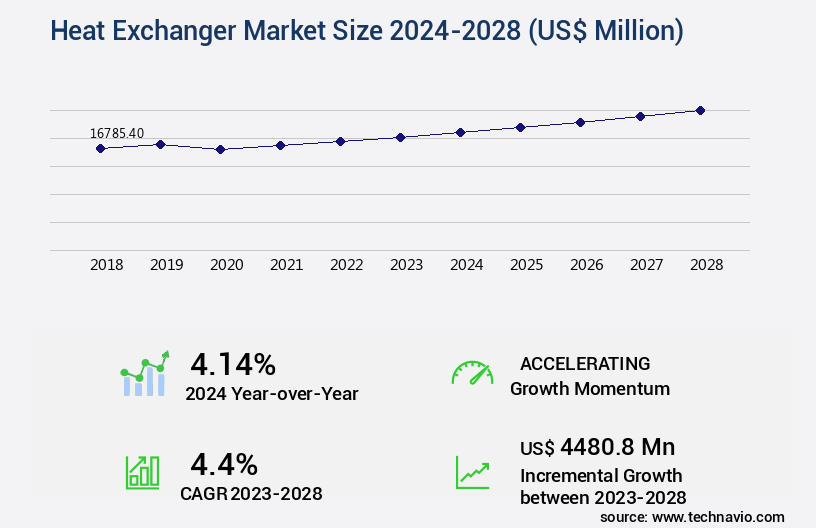
The heat exchanger market size is valued to increase USD 4.48 billion, at a CAGR of 4.4% from 2023 to 2028. Rising demand from the water and wastewater industry will drive the heat exchanger market.
Major Market Trends & Insights
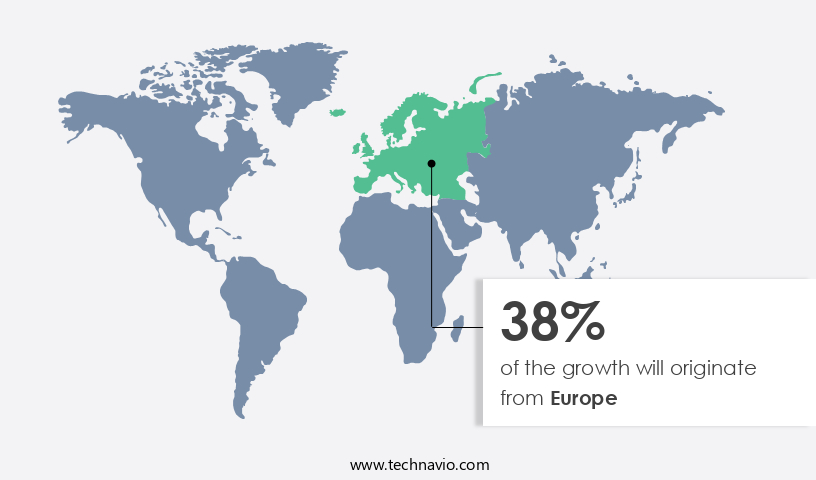
- Europe dominated the market and accounted for a 38% growth during the forecast period.
- By End-user - Chemical segment was valued at USD 4.19 billion in 2022
- By Product - Shell and tube segment accounted for the largest market revenue share in 2022
Market Size & Forecast
- Market Opportunities: USD 37.85 million
- Market Future Opportunities: USD 4480.80 million
- CAGR from 2023 to 2028 : 4.4%
Market Summary
- The market experiences continuous expansion, driven by the increasing demand from sectors such as power generation, oil and gas, and chemical processing. Technological innovations in heat exchanger design, including the integration of advanced materials and improved thermal efficiency, fuel market growth. However, the issue of fouling, which reduces heat transfer efficiency and increases operational costs, poses a significant challenge. According to a recent industry report, The market was valued at USD33.5 billion in 2020, illustrating its substantial size and influence.
- Despite this, the industry faces ongoing pressure to optimize energy usage and minimize environmental impact, necessitating further advancements in heat exchanger technology.
What will be the Size of the Heat Exchanger Market during the forecast period?
Get Key Insights on Market Forecast (PDF) Request Free Sample
How is the Heat Exchanger Market Segmented ?
The heat exchanger industry research report provides comprehensive data (region-wise segment analysis), with forecasts and estimates in "USD million" for the period 2024-2028, as well as historical data from 2018-2022 for the following segments.
- End-user
- Chemical
- Fuel processing
- HVAC
- Others
- Product
- Shell and tube
- Plate and frame
- Cooling tower
- Air cooled
- Others
- Material
- Metal
- Alloys
- Others
- End-User
- Industrial
- Commercial
- Residential
- Geography
- North America
- US
- Canada
- Europe
- France
- Germany
- Italy
- UK
- Middle East and Africa
- Egypt
- Oman
- UAE
- APAC
- China
- India
- Japan
- South America
- Argentina
- Brazil
- Rest of World (ROW)
- North America
By End-user Insights
The chemical segment is estimated to witness significant growth during the forecast period.
In the dynamic and evolving chemical process industries, heat exchangers play a pivotal role due to the diverse temperature needs of various chemical streams. These essential heat transfer devices are employed for heating and cooling of base, intermediate, and final products, as well as heat recovery and tempering of reactors and containers. The chemical industry's stringent requirements demand heat exchangers that are resistant to corrosion and prevent cross-contamination. To meet these demands, manufacturers focus on designing TEMA and ASME-certified heat exchangers, which undergo rigorous testing for thermal performance, fouling factor determination, and pressure drop calculation. Heat exchanger design involves various optimization techniques such as flow rate optimization, counterflow and parallel flow exchanger selection, and fin efficiency analysis.
Advanced technologies like CFD heat exchanger simulations and thermal design software are employed to enhance heat transfer efficiency and minimize energy consumption. Material selection criteria are based on factors like thermal stress analysis, vibration analysis, and temperature distribution. Maintenance practices include cleaning procedures, heat exchanger sizing, and leak detection methods. Surface area calculation and heat duty calculation are crucial aspects of heat exchanger design and operation. Scale formation control and corrosion prevention are ongoing concerns in the industry, with fluid dynamics simulation and thermal stress analysis playing essential roles. The compact heat exchanger design enhances the heat transfer area while minimizing the footprint.
Overall, the market continues to evolve, with a focus on improving energy efficiency metrics and reducing manufacturing processes' environmental impact.
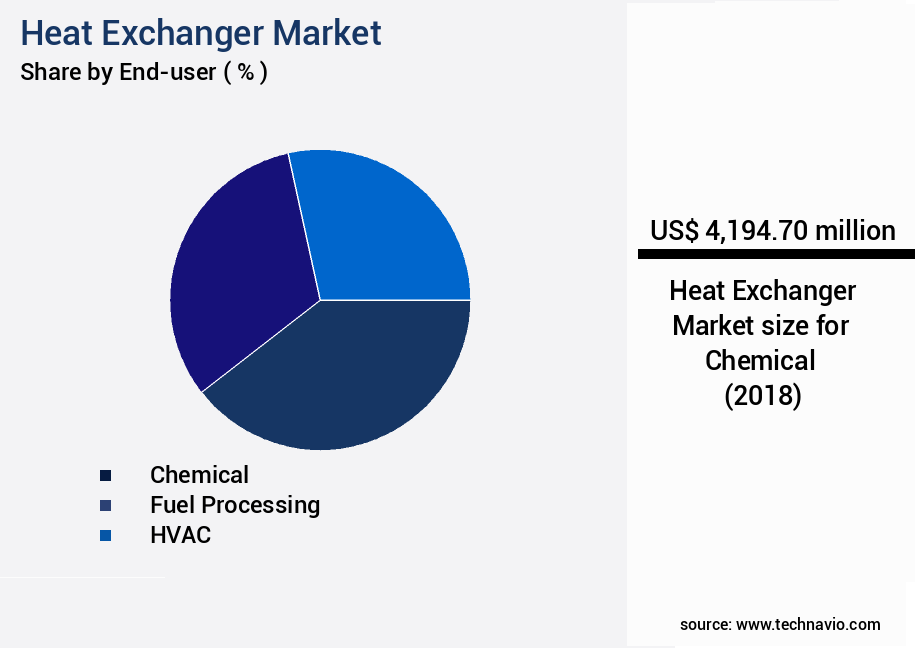
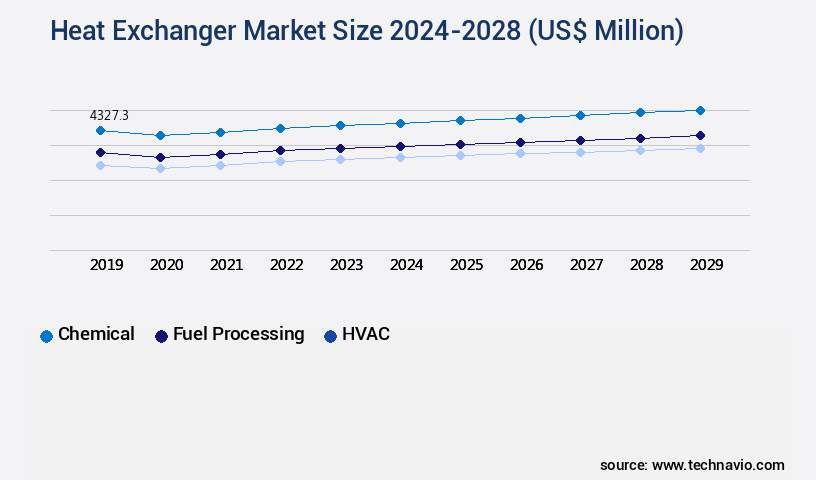
The Chemical segment was valued at USD 4.19 billion in 2018 and showed a gradual increase during the forecast period.
Regional Analysis
Europe is estimated to contribute 38% to the growth of the global market during the forecast period.Technavio’s analysts have elaborately explained the regional trends and drivers that shape the market during the forecast period.
See How Heat Exchanger Market Demand is Rising in Europe Request Free Sample
The European the market experiences significant growth, driven by the replacement of outdated units with more efficient models and expanding industries such as nuclear power generation and renewable energy, particularly in wind turbines. Major contributors to this market include the UK, Germany, and France, with Germany leading in the food and beverage sector, a highly competitive industry on the global stage known for producing healthy, high-quality, and safe food products.
The automotive industry also significantly contributes to the market's expansion. As a professional, I can confirm that the market in Europe is a robust and evolving sector, with the food and beverage and automotive industries playing crucial roles in its continued growth.
Market Dynamics
Our researchers analyzed the data with 2023 as the base year, along with the key drivers, trends, and challenges. A holistic analysis of drivers will help companies refine their marketing strategies to gain a competitive advantage.
The market is experiencing significant growth due to the increasing demand for energy efficiency and cost savings in various industries. Heat exchangers play a crucial role in optimizing heat transfer between two fluids, making them essential in numerous applications such as power generation, oil and gas, chemical processing, and food and beverage industries. Heat exchanger design is a critical aspect of this market, with a focus on plate heat exchangers and compact heat exchanger designs for their superior thermal performance. Advanced Computational Fluid Dynamics (CFD) simulation is utilized to predict heat exchanger performance, ensuring efficient heat transfer and minimizing fouling on the shell side. Heat transfer fluid selection and thermal analysis are also essential factors in heat exchanger design. Advanced materials, such as titanium and stainless steel, are used to improve heat exchanger efficiency and ensure corrosion control. Reducing heat exchanger pressure and implementing improved cleaning methods are other strategies for minimizing fouling and extending the life cycle cost of these systems. Heat exchanger network synthesis and tube bundle design are crucial for optimizing the overall performance of these systems. The impact of flow rate on heat transfer and the effect of baffle arrangement are also critical considerations in designing and operating efficient heat exchangers. Heat exchanger maintenance schedules are essential to ensure the longevity and optimal performance of these systems. Ultimately, The market continues to evolve, driven by advancements in technology and the need for energy efficiency and cost savings.
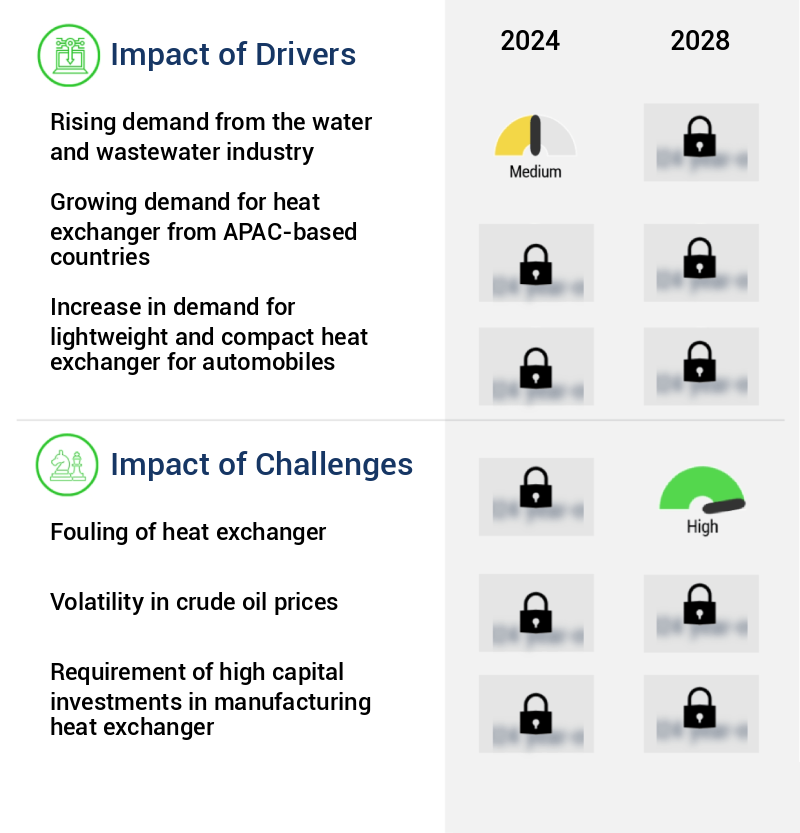
What are the key market drivers leading to the rise in the adoption of Heat Exchanger Industry?
- The water and wastewater industry's increasing demand serves as the primary driver for market growth.
- The water and wastewater industry is witnessing a significant demand for heat exchangers, driven by the increasing emphasis on energy efficiency and sustainability. Heat exchangers are essential for recovering waste heat from wastewater and transforming it into a usable resource for building services. One such innovation is the Therm-Liner system by the UHRIG Group, which extracts heat from wastewater and transfers it to a heating circuit, offering an eco-friendly alternative to traditional heating methods. These systems can fulfill up to 60% of a building's heating and cooling requirements, conserving fossil fuels and decreasing CO2 emissions. The growing importance of reducing carbon footprints and achieving net-zero targets further fuels the demand for heat exchangers.
- This technology's adoption is not confined to the water and wastewater sector alone; it is increasingly being utilized across various industries, including manufacturing, power generation, and oil and gas. The integration of heat exchangers enables organizations to optimize their energy usage, minimize greenhouse gas emissions, and contribute to a more sustainable future.
What are the market trends shaping the Heat Exchanger Industry?
- The design of heat exchangers is currently undergoing significant technological advances, representing a notable market trend.
- Heat exchanger designs have evolved significantly in recent years, focusing on maximizing efficiency while minimizing energy loss during the heat exchange process. One such design is Alfa Laval's Compabloc plate heat exchanger. This innovative plate heat exchanger combines several technological advantages into a compact unit. The corrugated plate patterns generate high turbulence, leading to overall heat transfer coefficients that are three to five times greater than traditional shell and tube heat exchangers. Moreover, the heat exchanger minimizes fouling, enabling the use of corrosion-resistant exotic metals without incurring excessive costs.
- The design's efficiency and durability make it a preferred choice across various industries, including food and beverage, pharmaceuticals, and oil and gas. By optimizing heat transfer and minimizing energy loss, plate heat exchangers contribute to cost savings and environmental sustainability.
What challenges does the Heat Exchanger Industry face during its growth?
- The fouling of heat exchangers poses a significant challenge to industrial growth, as this phenomenon reduces heat transfer efficiency and increases operational costs due to the need for frequent cleaning or replacement.
- Heat exchanger maintenance is a critical aspect of industrial operations, with fouling being a significant challenge. Fouling refers to the accumulation of unwanted deposits on heat transfer surfaces, which narrows the flow area and increases resistance to heat transfer. Consequently, this leads to reduced exchanger efficiency, operational issues, and increased pressure drop. The extent of fouling depends on the fluid properties and heat exchanger operating conditions. For instance, the presence of suspended solids, organic matter, or inorganic salts in the fluid can enhance fouling rates. Similarly, high temperatures, long residence times, and low fluid velocities can exacerbate fouling issues.
- In contrast, using cleaner feedwater or implementing proper cleaning procedures can mitigate fouling. Moreover, fouling can manifest in various forms, including scale, biofouling, and corrosion fouling. Scale fouling results from the precipitation of minerals, while biofouling involves the growth of microorganisms. Corrosion fouling arises from the reaction between the fluid and the heat exchanger material. Understanding the nature of fouling and its impact on heat exchanger performance is essential for optimizing operations and minimizing costs. By implementing preventive measures and employing advanced technologies, such as self-cleaning heat exchangers, operators can mitigate fouling and maintain optimal heat transfer efficiency.
Exclusive Technavio Analysis on Customer Landscape
The heat exchanger market forecasting report includes the adoption lifecycle of the market, covering from the innovator’s stage to the laggard’s stage. It focuses on adoption rates in different regions based on penetration. Furthermore, the heat exchanger market report also includes key purchase criteria and drivers of price sensitivity to help companies evaluate and develop their market growth analysis strategies.
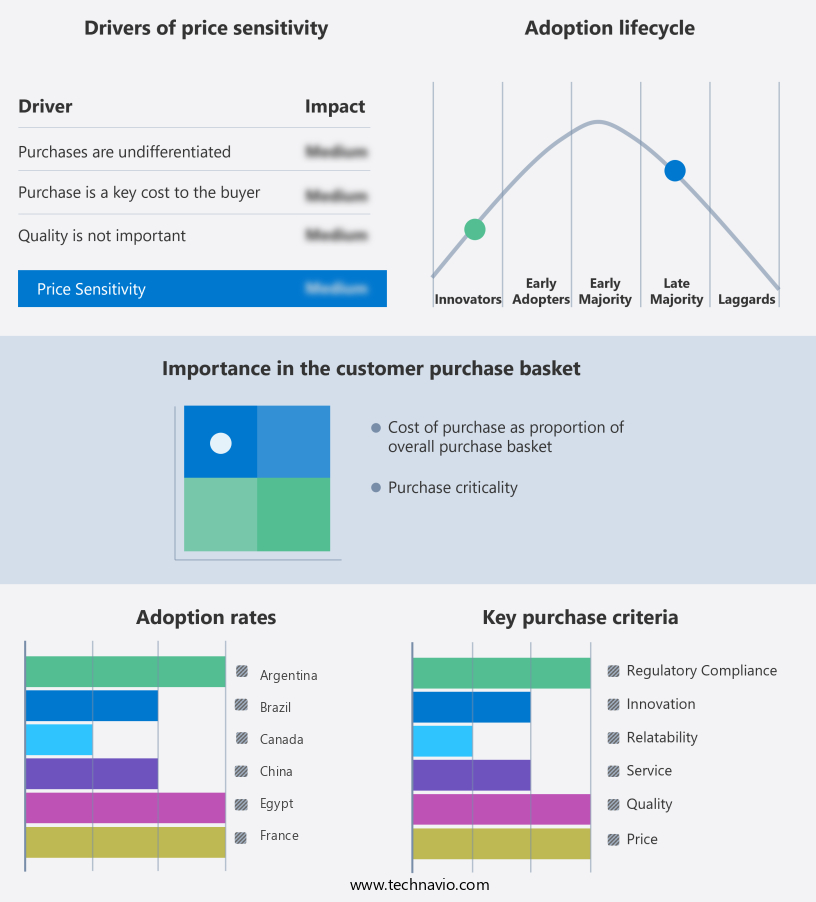
Customer Landscape of Heat Exchanger Industry
Competitive Landscape
Companies are implementing various strategies, such as strategic alliances, heat exchanger market forecast, partnerships, mergers and acquisitions, geographical expansion, and product/service launches, to enhance their presence in the industry.
Alfa Laval AB - This company specializes in manufacturing various heat exchanger types, including plate heat exchangers with brazed, fusion bonded, gasketed plate and frame, and welded plate designs. These heat exchangers facilitate efficient heat transfer in industrial processes.
The industry research and growth report includes detailed analyses of the competitive landscape of the market and information about key companies, including:
- Alfa Laval AB
- API Heat Transfer Inc.
- Barriquand Technologies Thermiques
- Danfoss A/S
- Doosan Corporation
- Funke Warmeaustauscher Apparatebau GmbH
- Guntner GmbH & Co. KG
- Hisaka Works Ltd.
- HRS Heat Exchangers Ltd.
- Kelvion Holding GmbH
- Koch Heat Transfer Company
- Linde Plc
- Modine Manufacturing Company
- SPX FLOW Inc.
- SWEP International AB
- Thermax Limited
- THT Heat Transfer Technology Inc.
- Tranter Inc.
- Vahterus Oy
- Xylem Inc.
Qualitative and quantitative analysis of companies has been conducted to help clients understand the wider business environment as well as the strengths and weaknesses of key industry players. Data is qualitatively analyzed to categorize companies as pure play, category-focused, industry-focused, and diversified; it is quantitatively analyzed to categorize companies as dominant, leading, strong, tentative, and weak.
Recent Development and News in Heat Exchanger Market
- In January 2024, Alfa Laval, a leading heat exchanger manufacturer, announced the launch of its new AlfaLaval Compabloc Evo plate heat exchanger series, featuring improved thermal efficiency and easier maintenance (Alfa Laval Press Release, 2024). In March 2024, Shell and Siemens Energy entered into a strategic partnership to jointly develop and market heat exchanger solutions for the oil and gas industry, aiming to reduce carbon emissions (Shell and Siemens Energy Press Release, 2024). In April 2025, SPX Flow, a global supplier of engineered solutions, completed the acquisition of the heat exchanger business from Evoqua Water Technologies LLC, expanding its product portfolio and market reach (SPX Flow Press Release, 2025). In May 2025, the European Union approved the revised Ecodesign Regulation, which includes new energy efficiency requirements for heat exchangers, set to take effect in 2027 (European Commission Press Release, 2025).
Dive into Technavio’s robust research methodology, blending expert interviews, extensive data synthesis, and validated models for unparalleled Heat Exchanger Market insights. See full methodology.
|
Market Scope |
|
|
Report Coverage |
Details |
|
Page number |
186 |
|
Base year |
2023 |
|
Historic period |
2018-2022 |
|
Forecast period |
2024-2028 |
|
Growth momentum & CAGR |
Accelerate at a CAGR of 4.4% |
|
Market growth 2024-2028 |
USD 4480.8 million |
|
Market structure |
Fragmented |
|
YoY growth 2023-2024(%) |
4.14 |
|
Key countries |
US, Canada, Germany, UK, Italy, France, China, India, Japan, Egypt, Oman, Argentina, UAE, and Brazil |
|
Competitive landscape |
Leading Companies, Market Positioning of Companies, Competitive Strategies, and Industry Risks |
Research Analyst Overview
- The market continues to evolve, driven by the diverse applications across various sectors such as oil and gas, power generation, and chemical processing. With the increasing focus on energy efficiency and cost savings, the demand for advanced heat exchanger technologies is on the rise. For instance, a leading energy company reported a 15% increase in energy efficiency by implementing optimization techniques in their crossflow heat exchanger system. Heat exchanger design and selection criteria are critical factors in ensuring optimal performance. Surface area calculation, material selection, and thermal design software play significant roles in the design process.
- Advanced techniques such as CFD heat exchanger simulations, thermal stress analysis, and fluid dynamics simulations are essential for predicting heat transfer performance and optimizing flow rate. Heat exchanger maintenance is a crucial aspect of ensuring continued effectiveness. Cleaning procedures, vibration analysis, and leak detection methods are essential for maintaining thermal performance and preventing corrosion. Thermal performance testing, fouling factor determination, and pressure drop calculation are integral to identifying potential issues and optimizing heat exchanger performance. Manufacturing processes, including the selection of materials and manufacturing techniques, significantly impact the overall efficiency and cost of heat exchangers.
- Compact heat exchangers and plate heat exchangers are increasingly popular due to their smaller footprint and higher heat transfer coefficients. Energy efficiency metrics, such as fin efficiency analysis and heat duty calculation, are essential for evaluating the overall performance of heat exchanger networks. The market is expected to grow at a robust rate, with industry experts projecting a 7% annual growth rate over the next decade. The continuous unfolding of market activities and evolving patterns underscore the importance of staying abreast of the latest trends and technologies in heat exchanger design and optimization.
What are the Key Data Covered in this Heat Exchanger Market Research and Growth Report?
-
What is the expected growth of the Heat Exchanger Market between 2024 and 2028?
-
USD 4.48 billion, at a CAGR of 4.4%
-
-
What segmentation does the market report cover?
-
The report is segmented by End-user (Chemical, Fuel processing, HVAC, and Others), Product (Shell and tube, Plate and frame, Cooling tower, Air cooled, and Others), Geography (Europe, APAC, North America, South America, and Middle East and Africa), Material (Metal, Alloys, and Others), and End-User (Industrial, Commercial, and Residential)
-
-
Which regions are analyzed in the report?
-
Europe, APAC, North America, South America, and Middle East and Africa
-
-
What are the key growth drivers and market challenges?
-
Rising demand from the water and wastewater industry, Fouling of heat exchanger
-
-
Who are the major players in the Heat Exchanger Market?
-
Alfa Laval AB, API Heat Transfer Inc., Barriquand Technologies Thermiques, Danfoss A/S, Doosan Corporation, Funke Warmeaustauscher Apparatebau GmbH, Guntner GmbH & Co. KG, Hisaka Works Ltd., HRS Heat Exchangers Ltd., Kelvion Holding GmbH, Koch Heat Transfer Company, Linde Plc, Modine Manufacturing Company, SPX FLOW Inc., SWEP International AB, Thermax Limited, THT Heat Transfer Technology Inc., Tranter Inc., Vahterus Oy, and Xylem Inc.
-
Market Research Insights
- The market for heat exchangers is a dynamic and ever-evolving industry, driven by the constant demand for efficient thermal management and waste heat recovery solutions. Two significant trends shape this market: the increasing adoption of heat transfer augmentation technologies and the growing focus on two-phase flow applications. For instance, heat transfer fluids and surface enhancement techniques have gained traction in various industries, leading to a notable increase in sales for heat exchanger manufacturers. In fact, industry analysts anticipate a growth rate of approximately 5% per year in the coming years, as businesses seek to optimize their energy usage and reduce thermal resistance.
- Moreover, advancements in heat exchanger design, such as extended surface designs and numerical modeling, have enabled improved overall heat transfer performance, even in complex processes with challenging flow regimes. This has led to significant energy conservation benefits and reduced process integration costs for numerous industries. One example of this trend can be seen in the chemical sector, where a leading manufacturer reported a 15% reduction in energy consumption by implementing a new heat exchanger design featuring advanced tube pitch optimization and material compatibility improvements. This not only reduced their operational costs but also contributed to their environmental sustainability efforts.
- In summary, the market continues to evolve, with a focus on enhancing thermal management and waste heat recovery through innovative technologies and design improvements. The industry's growth is expected to remain steady, offering opportunities for manufacturers to capitalize on the ongoing demand for efficient and cost-effective thermal solutions.
We can help! Our analysts can customize this heat exchanger market research report to meet your requirements.
 RIA -
RIA - 
