



Vietnam Hotel Market Size 2026-2030
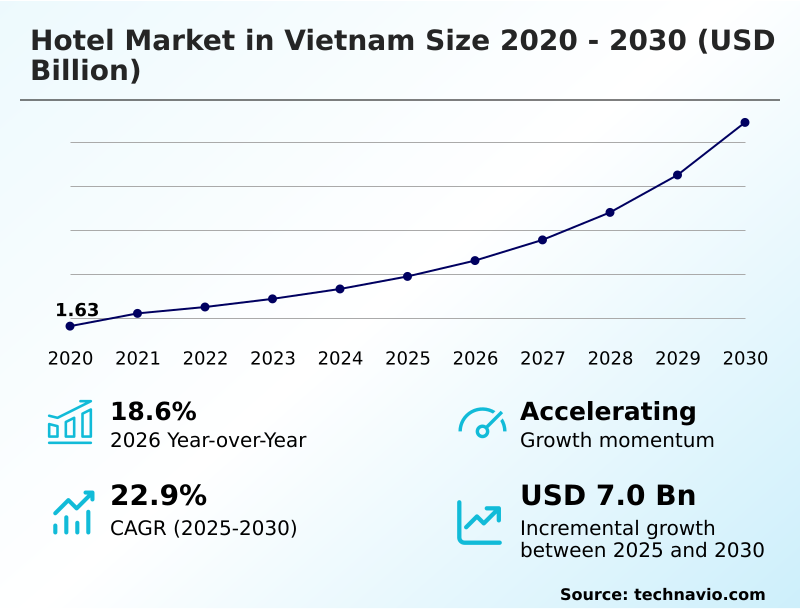
The vietnam hotel market size is valued to increase by USD 7.00 billion, at a CAGR of 22.9% from 2025 to 2030. Growing affordability and rising disposable income is augmenting market growth will drive the vietnam hotel market.
Major Market Trends & Insights
- By Application - Tourist accommodation segment was valued at USD 2.42 billion in 2024
- By Type - Chain hotels segment accounted for the largest market revenue share in 2024
Market Size & Forecast
- Market Opportunities: USD 9.25 billion
- Market Future Opportunities: USD 7.00 billion
- CAGR from 2025 to 2030 : 22.9%
Market Summary
- The hotel market in Vietnam is characterized by its dynamic expansion, fueled by a robust tourism sector and increasing business travel. Accommodations range from luxury resorts to budget-friendly options, catering to a diverse clientele. Growth is supported by government initiatives promoting tourism and significant foreign investment in hospitality infrastructure.
- Key drivers include rising domestic disposable incomes and Vietnam's growing appeal as a global travel destination. For instance, a hotel chain might implement a dynamic pricing strategy using a centralized property management system to adjust room rates in real time based on occupancy levels, local events, and competitor pricing, thereby maximizing revenue per available room.
- However, the market also contends with challenges such as intense competition, the need for a skilled workforce, and the importance of sustainability. The integration of technology, including online travel agency platforms and smart room features, is reshaping guest experiences and operational efficiency, making digital adoption a critical factor for success.
- The continued evolution of traveler preferences toward experiential and sustainable tourism is also influencing development strategies across the sector.
What will be the Size of the Vietnam Hotel Market during the forecast period?
Get Key Insights on Market Forecast (PDF) Get Free Sample
How is the Vietnam Hotel Market Segmented?
The vietnam hotel industry research report provides comprehensive data (region-wise segment analysis), with forecasts and estimates in "USD million" for the period 2026-2030, as well as historical data from 2020-2024 for the following segments.
- Application
- Tourist accommodation
- Official business
- Type
- Chain hotels
- Independent hotels
- Service
- Service apartments
- Mid and upper mid-scale hotels
- Budget and economy hotels
- Luxury hotels
- Geography
- APAC
By Application Insights
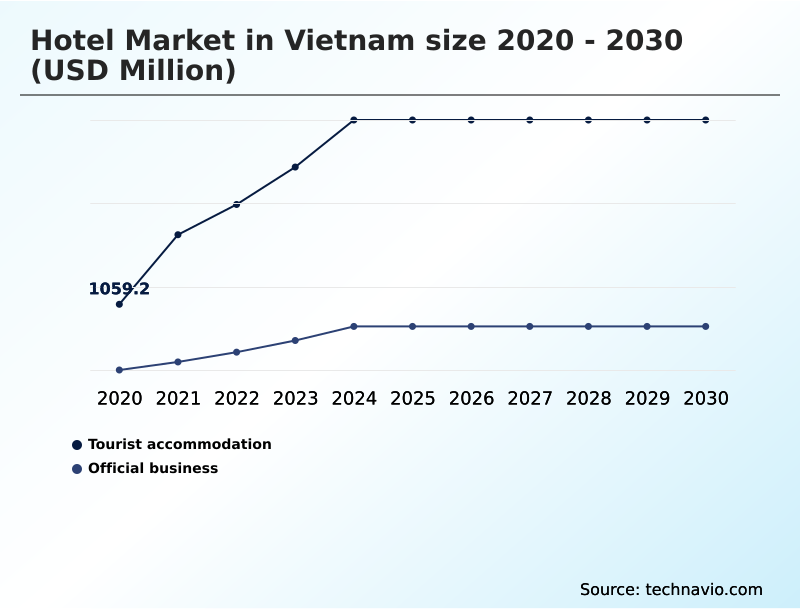
The tourist accommodation segment is estimated to witness significant growth during the forecast period.
The tourist accommodation segment is shaped by a strategic focus on experiential tourism and the rising popularity of all-inclusive packages.
Hotels are leveraging sophisticated yield management and demand forecasting to optimize occupancy rate and pricing, especially in properties offering extensive resort and spa services.
Success in this area hinges on effective asset management and curating unique culinary tourism experiences that enhance food and beverage services. A thorough competitive set analysis is crucial for positioning.
Furthermore, building a robust guest loyalty program and adhering to stringent health and safety protocols have become essential for retaining travelers, with properties that excel in these areas showing a guest return rate that is 15% higher than their segment peers.
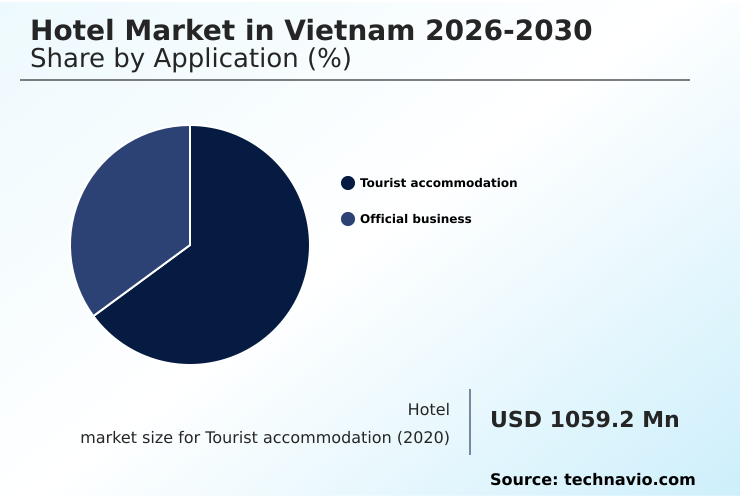
The Tourist accommodation segment was valued at USD 2.42 billion in 2024 and showed a gradual increase during the forecast period.
Market Dynamics
Our researchers analyzed the data with 2025 as the base year, along with the key drivers, trends, and challenges. A holistic analysis of drivers will help companies refine their marketing strategies to gain a competitive advantage.
- Strategic decision-making in the hotel market in vietnam 2026-2030 requires a deep understanding of multiple interconnected factors. The impact of dynamic pricing on hotel revenue is a critical area of focus, directly influencing budget hotel revenue management tactics. Simultaneously, the industry is grappling with implementing contactless check-in for luxury hotels, driven by new health and safety standards in post-pandemic travel.
- The role of AI in personalized guest experiences is moving from a novelty to a necessity, prompting new strategies for increasing direct hotel bookings and reducing reliance on third parties. This involves leveraging data analytics for hotel marketing and managing guest reviews across multiple platforms to build brand reputation.
- Operationally, improving hotel operational efficiency with iot solutions and deploying energy efficiency solutions for large hotels are key to managing costs. A core strategic choice involves the comparison of hotel franchise vs management models, which has significant implications for brand control and profitability. The legal aspects of hotel management agreements have become more complex, requiring careful navigation.
- Technology integration, such as integrating pms with crm for better guest data, has become standard practice. Effective loyalty programs for chain hotels are being redesigned to offer more value, while digital marketing roi for boutique hotels is under constant scrutiny.
- Finally, comprehensive hotel asset valuation and investment analysis, alongside robust sustainability reporting for hospitality industry and programs for training hotel staff for enhanced service quality, are essential for long-term success. Firms that excel at luxury resort amenity and service differentiation are seeing guest satisfaction scores nearly 20% higher than segment averages.
What are the key market drivers leading to the rise in the adoption of Vietnam Hotel Industry?
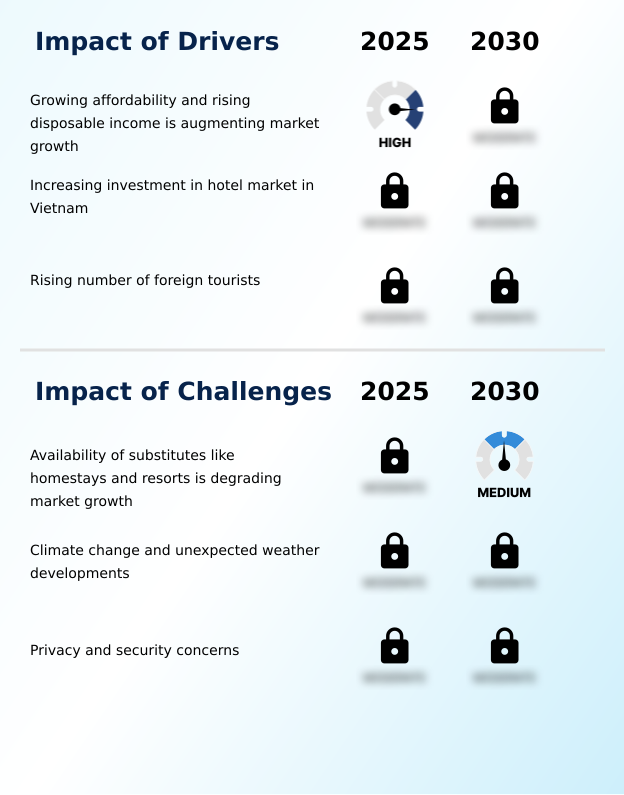
- Growing consumer affordability, supported by rising disposable incomes, serves as a primary driver augmenting market growth.
- Economic growth is a primary driver, enabling operators to improve both the average daily rate and revenue per available room. The expansion of bleisure travel and demand for extended stay lodging supports consistent performance.
- Hotels are adopting advanced property management system software integrated with a revenue management system to execute dynamic pricing strategy adjustments in real time, increasing off-peak revenue by over 20%.
- Managing ota commission rates through effective channel management software is a key focus.
- To differentiate, properties are offering more personalized guest services and expanding facilities for meetings incentives conferences exhibitions, which requires detailed capital expenditure planning and streamlined front office operations.
What are the market trends shaping the Vietnam Hotel Industry?
- The increasing adoption of social media and widespread internet access are fundamentally accelerating market development. These digital trends are reshaping how consumers engage with and procure hospitality services.
- Digital transformation is a dominant trend, with operators implementing smart room technology and contactless check-in to elevate the guest experience platform. These innovations, often featuring mobile key technology and voice-activated controls, reduce guest wait times by up to 40%.
- The shift to digital also impacts distribution, with a focus on driving traffic to a direct booking engine to reduce reliance on online travel agency channels. Effective customer relationship management and proactive reputation management are critical, leveraging guest feedback analysis and targeted social media marketing.
- A cohesive content marketing strategy, often involving influencer collaboration, is now standard for enhancing brand visibility and can improve direct conversion rates by 15%.
What challenges does the Vietnam Hotel Industry face during its growth?
- The increasing availability of lodging substitutes, such as homestays and private rentals, presents a significant challenge to traditional market growth.
- The market faces challenges from alternative lodging like serviced apartments and the niche boutique hotel concept. These substitutes often operate with more flexible models, bypassing the rigid brand standard compliance and franchise agreement or management contract structures of traditional hotels. This competitive pressure requires incumbents to focus on operational excellence in housekeeping management and value-added concierge services.
- Furthermore, rising labor cost management pressures necessitate investments in staff training and development. To counter, many are emphasizing unique local experiences, like the heritage hotel model, and optimizing supply chain procurement to improve margins, with some achieving a 5% reduction in operational costs through strategic sourcing.
Exclusive Technavio Analysis on Customer Landscape
The vietnam hotel market forecasting report includes the adoption lifecycle of the market, covering from the innovator’s stage to the laggard’s stage. It focuses on adoption rates in different regions based on penetration. Furthermore, the vietnam hotel market report also includes key purchase criteria and drivers of price sensitivity to help companies evaluate and develop their market growth analysis strategies.
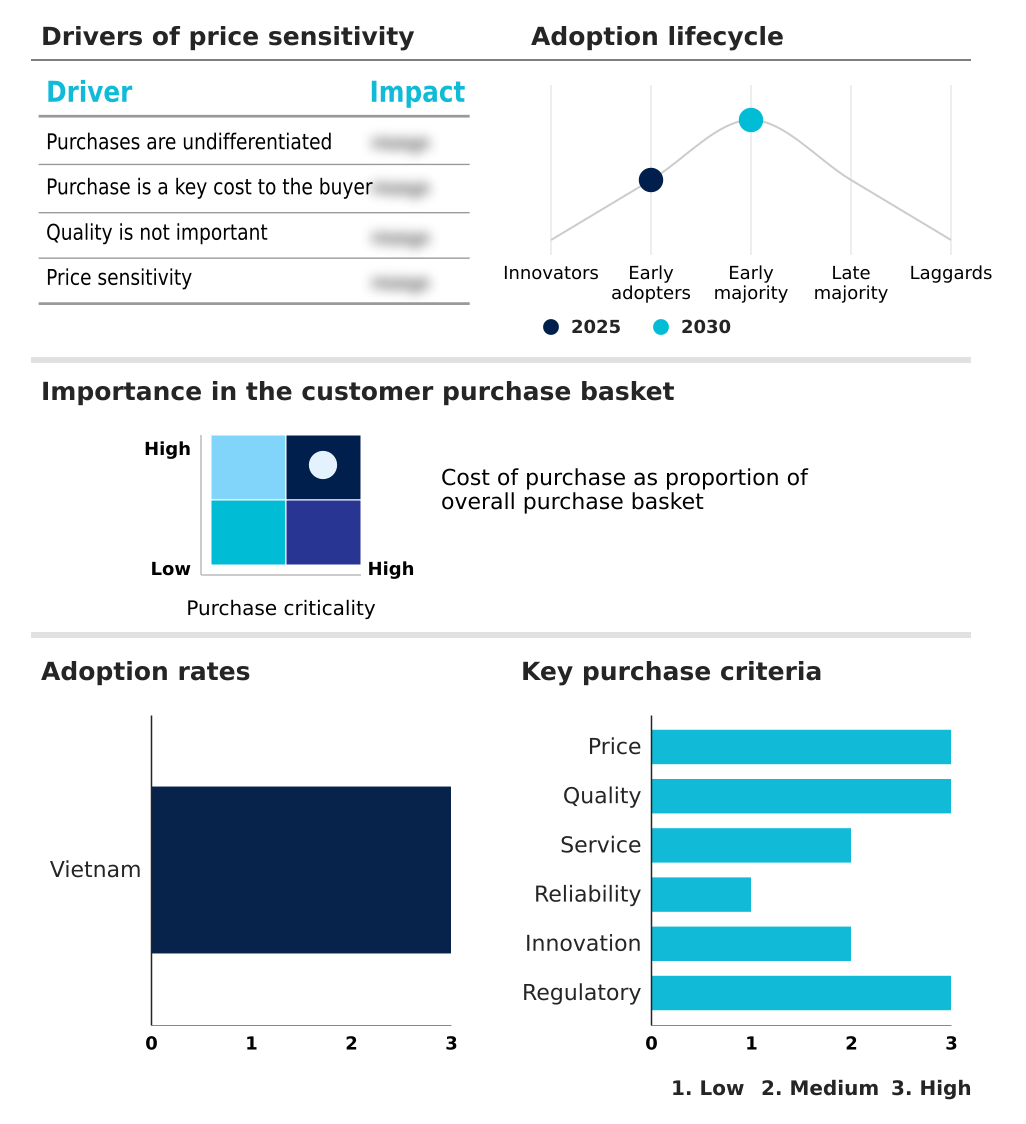
Customer Landscape of Vietnam Hotel Industry
Competitive Landscape
Companies are implementing various strategies, such as strategic alliances, vietnam hotel market forecast, partnerships, mergers and acquisitions, geographical expansion, and product/service launches, to enhance their presence in the industry.
Accor SA - Vendors provide a diversified portfolio of hospitality services, spanning from economy lodging to premium, full-service hotel and resort management.
The industry research and growth report includes detailed analyses of the competitive landscape of the market and information about key companies, including:
- Accor SA
- Best Western International
- Four Seasons Hotels Ltd.
- Fusion Hotel Group
- Hilton Worldwide Holdings Inc.
- Hyatt Hotels Corp.
- InterContinental Hotels Group
- Mandarin Oriental Ltd.
- Marriott International Inc.
- Melia Hotels International SA
- Minor International PCL
- Muong Thanh Hospitality
- Radisson Hotel Group
- Saigontourist Group
- Silk Path Hotels Group
- Six Senses Hotels Resorts Spas
- The Ascott Ltd.
- Vinpearl
- Wink Hotels
- Wyndham Hotels and Resorts
Qualitative and quantitative analysis of companies has been conducted to help clients understand the wider business environment as well as the strengths and weaknesses of key industry players. Data is qualitatively analyzed to categorize companies as pure play, category-focused, industry-focused, and diversified; it is quantitatively analyzed to categorize companies as dominant, leading, strong, tentative, and weak.
Recent Development and News in Vietnam hotel market
- In May, 2025, Vinpearl announced a significant investment in upgrading its smart room technology across its resort portfolio, aiming to enhance the personalized guest experience and improve operational efficiency.
- In March, 2025, Accor entered a strategic partnership with a major local developer to launch a new series of mid-scale hotels in secondary cities, expanding its footprint beyond primary tourist hubs.
- In October, 2024, The Ascott Ltd. acquired a portfolio of serviced apartments in Ho Chi Minh City, strengthening its position in the long-stay corporate travel segment and capitalizing on growing business demand.
- In January, 2025, the Vietnamese government announced a new visa-waiver policy for several key source markets, a move designed to boost international tourist arrivals and support the hospitality sector.
Dive into Technavio’s robust research methodology, blending expert interviews, extensive data synthesis, and validated models for unparalleled Vietnam Hotel Market insights. See full methodology.
| Market Scope | |
|---|---|
| Page number | 175 |
| Base year | 2025 |
| Historic period | 2020-2024 |
| Forecast period | 2026-2030 |
| Growth momentum & CAGR | Accelerate at a CAGR of 22.9% |
| Market growth 2026-2030 | USD 6996.1 million |
| Market structure | Fragmented |
| YoY growth 2025-2026(%) | 18.6% |
| Key countries | Vietnam |
| Competitive landscape | Leading Companies, Market Positioning of Companies, Competitive Strategies, and Industry Risks |
Research Analyst Overview
- The hotel market in Vietnam 2026-2030 is defined by the complex interplay between technology adoption and operational fundamentals. Boardroom decisions increasingly focus on optimizing asset management through a robust property management system and sophisticated yield management techniques.
- The effective use of a direct booking engine, supported by a cohesive customer relationship management strategy and reputation management on platforms, is critical for controlling distribution costs away from an online travel agency.
- Success hinges on balancing a dynamic pricing strategy with the delivery of high-quality food and beverage services and resort and spa services, which are key to maintaining a high average daily rate. The implementation of smart room technology and contactless check-in enhances the guest experience platform, while efficient housekeeping management and front office operations ensure service consistency.
- Adherence to strict health and safety protocols, sustainability practices like water conservation, and a proactive waste reduction program are now standard. Hotels that integrate their point of sale system and channel management software effectively have reported a 10% increase in ancillary revenue.
- Strategic decisions around a franchise agreement versus a management contract continue to shape the landscape, influencing everything from staff training and development to preventive maintenance schedules.
What are the Key Data Covered in this Vietnam Hotel Market Research and Growth Report?
-
What is the expected growth of the Vietnam Hotel Market between 2026 and 2030?
-
USD 7.00 billion, at a CAGR of 22.9%
-
-
What segmentation does the market report cover?
-
The report is segmented by Application (Tourist accommodation, and Official business), Type (Chain hotels, and Independent hotels), Service (Service apartments, Mid and upper mid-scale hotels, Budget and economy hotels, and Luxury hotels) and Geography (APAC)
-
-
Which regions are analyzed in the report?
-
APAC
-
-
What are the key growth drivers and market challenges?
-
Growing affordability and rising disposable income is augmenting market growth, Availability of substitutes like homestays and resorts is degrading market growth
-
-
Who are the major players in the Vietnam Hotel Market?
-
Accor SA, Best Western International, Four Seasons Hotels Ltd., Fusion Hotel Group, Hilton Worldwide Holdings Inc., Hyatt Hotels Corp., InterContinental Hotels Group, Mandarin Oriental Ltd., Marriott International Inc., Melia Hotels International SA, Minor International PCL, Muong Thanh Hospitality, Radisson Hotel Group, Saigontourist Group, Silk Path Hotels Group, Six Senses Hotels Resorts Spas, The Ascott Ltd., Vinpearl, Wink Hotels and Wyndham Hotels and Resorts
-
Market Research Insights
- Market dynamics are increasingly influenced by a strategic shift towards personalized guest services and experiential tourism. Hotels leveraging a customer data platform to inform their content marketing strategy report a 25% higher engagement rate on promotional campaigns. The rise of the boutique hotel concept and specialized offerings like wellness tourism is compelling larger chains to innovate.
- For instance, operators that implement a comprehensive revenue management system integrated with demand forecasting tools achieve up to a 12% uplift in occupancy during shoulder seasons compared to competitors. Furthermore, effective management of OTA commission rates remains a central operational focus, with a clear correlation between a robust direct booking strategy and improved profit margins.
We can help! Our analysts can customize this vietnam hotel market research report to meet your requirements.
 RIA -
RIA - 
