



Hyperspectral Remote Sensing Market Size 2024-2028
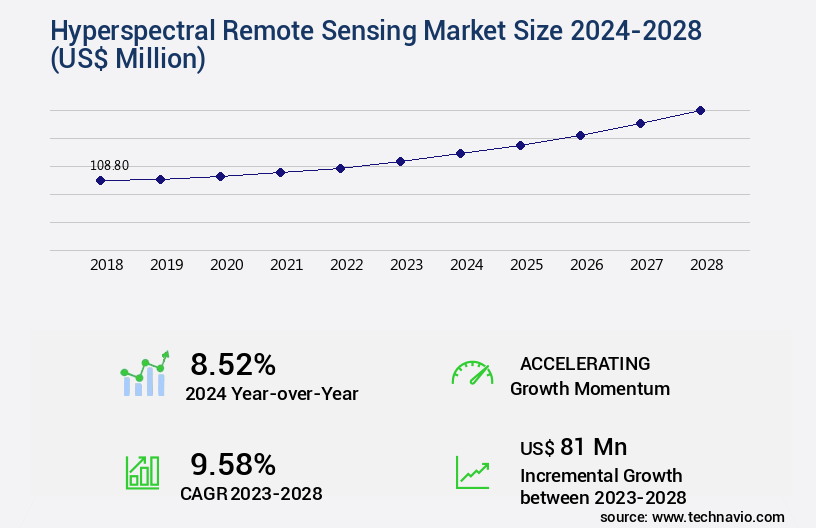
The hyperspectral remote sensing market size is valued to increase by USD 81 million, at a CAGR of 9.58% from 2023 to 2028. Growing adoption of UAVs will drive the hyperspectral remote sensing market.
Major Market Trends & Insights
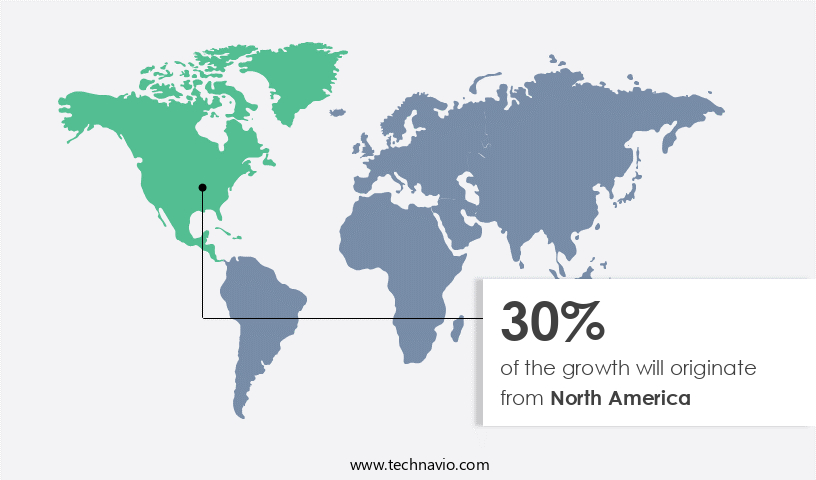
- North America dominated the market and accounted for a 30% growth during the forecast period.
- By Type - VNIR segment was valued at USD 52.20 million in 2022
- By Application - Agriculture and forestry segment accounted for the largest market revenue share in 2022
Market Size & Forecast
- Market Opportunities: USD 102.85 million
- Market Future Opportunities: USD 81.00 million
- CAGR from 2023 to 2028 : 9.58%
Market Summary
- Hyperspectral remote sensing is an advanced technology that utilizes electromagnetic radiation beyond the visible spectrum to gather detailed information about the earth's surface. The market for this technology is driven by various factors, including the growing adoption of unmanned aerial vehicles (UAVs) for remote sensing applications and the availability of narrower bandwidths that enable more precise data collection. One significant application of hyperspectral remote sensing is in supply chain optimization. For instance, in the agriculture industry, farmers can use this technology to monitor crop health and identify nutrient deficiencies, pests, and diseases in real-time. By addressing these issues promptly, farmers can improve yields and reduce losses.
- In fact, a study showed that implementing hyperspectral remote sensing led to a 15% increase in crop yield and a 20% reduction in water usage. Despite its numerous benefits, the high capital investment required for hyperspectral remote sensing systems remains a challenge for market growth. However, as technology advances and costs decrease, more industries are expected to adopt this technology for various applications, including environmental monitoring, mineral exploration, and military intelligence. In conclusion, the hyperspectral remote sensing market is poised for growth due to its ability to provide detailed information about the earth's surface, the increasing use of UAVs, and the availability of narrower bandwidths.
- The technology's potential applications are vast, from agriculture to military intelligence, and its ability to improve efficiency and reduce costs makes it an attractive investment for businesses.
What will be the Size of the Hyperspectral Remote Sensing Market during the forecast period?
Get Key Insights on Market Forecast (PDF) Request Free Sample
How is the Hyperspectral Remote Sensing Market Market Segmented ?
The hyperspectral remote sensing market industry research report provides comprehensive data (region-wise segment analysis), with forecasts and estimates in "USD million" for the period 2024-2028, as well as historical data from 2018-2022 for the following segments.
- Type
- VNIR
- SWIR
- Thermal LWIR
- Application
- Agriculture and forestry
- Geology and mineral exploration
- Ecology
- Disaster management
- Geography
- North America
- US
- Europe
- France
- Germany
- UK
- APAC
- China
- Rest of World (ROW)
- North America
By Type Insights
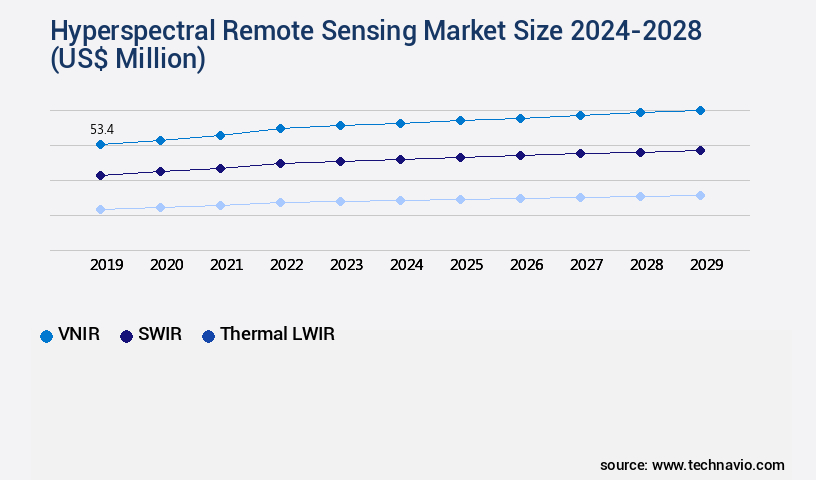
The vnir segment is estimated to witness significant growth during the forecast period.
Hyperspectral Remote Sensing is a dynamic and evolving market, driven by advancements in pixel classification and feature extraction techniques. Hyperspectral cameras employ sensor calibration methods for accurate spectral signatures, enabling land cover mapping and vegetation health indices assessment. Data fusion techniques, big data analytics, and image processing algorithms facilitate yield prediction, mineral exploration, and water quality assessment. Cloud computing platforms, spectral unmixing, and hyperspectral imaging offer temporal and spatial resolution improvements. Machine learning models, target detection, and pattern recognition enhance geospatial data analysis.
Precision agriculture, GIS integration, and biophysical parameters measurement are key applications. The VNIR segment, which includes VNIR HSI instruments with CCD or CMOS sensors, dominated the market in 2023. These sensors convert light into electrical charges, amplify, and convert them to digital signals, enabling remote sensing data collection for various industries.
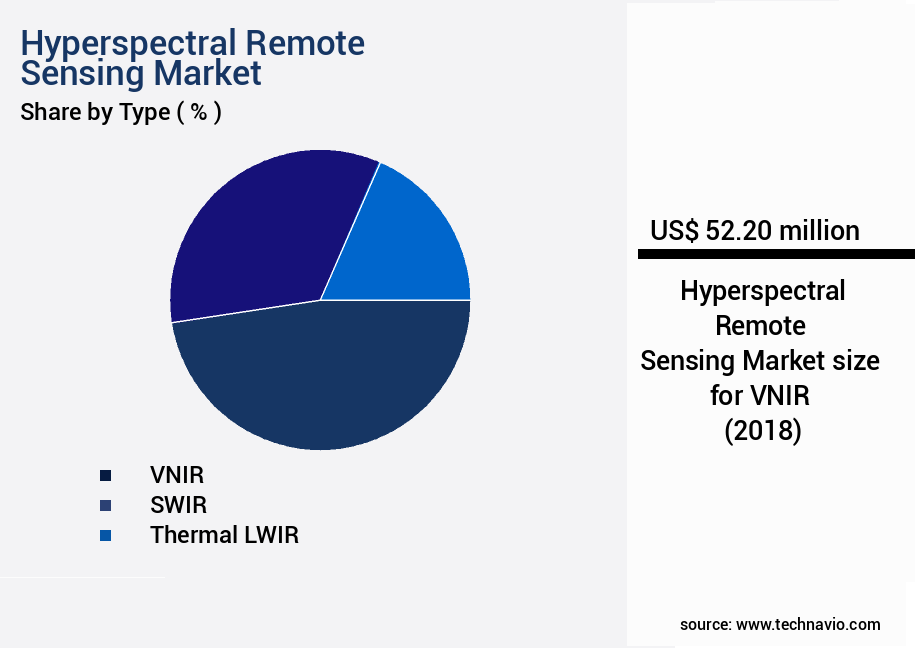
The VNIR segment was valued at USD 52.20 million in 2018 and showed a gradual increase during the forecast period.
Regional Analysis
North America is estimated to contribute 30% to the growth of the global market during the forecast period.Technavio's analysts have elaborately explained the regional trends and drivers that shape the market during the forecast period.
See How Hyperspectral Remote Sensing Market Market Demand is Rising in North America Request Free Sample
The Hyperspectral Remote Sensing market is experiencing significant growth, particularly in North America, where the US is a major contributor due to its early adoption and substantial investments in aerospace and defense applications. With the US being the second-largest consumer of food and beverages globally, the agricultural sector in this region is also experiencing continuous expansion. Hyperspectral remote sensing technologies are increasingly being utilized in agriculture for crop health monitoring, soil analysis, and yield prediction, providing operational efficiency gains and cost reductions.
In the US alone, the market for hyperspectral sensors in agriculture is projected to reach USD1.5 billion by 2026, representing a substantial increase from its current market size. The underlying dynamics of this market are driven by the need for precision farming, regulatory compliance, and the increasing demand for food production.
Market Dynamics
Our researchers analyzed the data with 2023 as the base year, along with the key drivers, trends, and challenges. A holistic analysis of drivers will help companies refine their marketing strategies to gain a competitive advantage.
The global hyperspectral imaging market is evolving rapidly as industries adopt advanced sensing technologies for environmental monitoring, agriculture, and resource management. Key applications such as hyperspectral imaging vegetation health and atmospheric correction hyperspectral imagery are critical for precision farming, enabling accurate crop stress detection and yield optimization. In agriculture, the integration of image classification algorithms precision agriculture and geospatial data analysis precision agriculture applications is supporting real-time decision-making, while remote sensing data preprocessing techniques ensure accuracy and consistency in field applications.
Beyond agriculture, hyperspectral imaging plays a major role in natural resource exploration and environmental monitoring. The use of spectral unmixing techniques mineral identification provides detailed material characterization, and object-based image analysis land cover mapping supports sustainable land-use planning. The combination of data fusion techniques remote sensing data integration with satellite and aerial datasets enhances monitoring capabilities across diverse industries.
Advancements in computation and artificial intelligence are shaping the next phase of growth, with machine learning models hyperspectral image classification driving automated and high-precision analysis. Further innovation is centered on high-resolution hyperspectral remote sensing applications, which expand the ability to detect fine-scale changes in ecosystems, infrastructure, and natural resources. Together, these developments highlight the continuous advancement of hyperspectral imaging as a critical tool for actionable insights and data-driven decision-making.
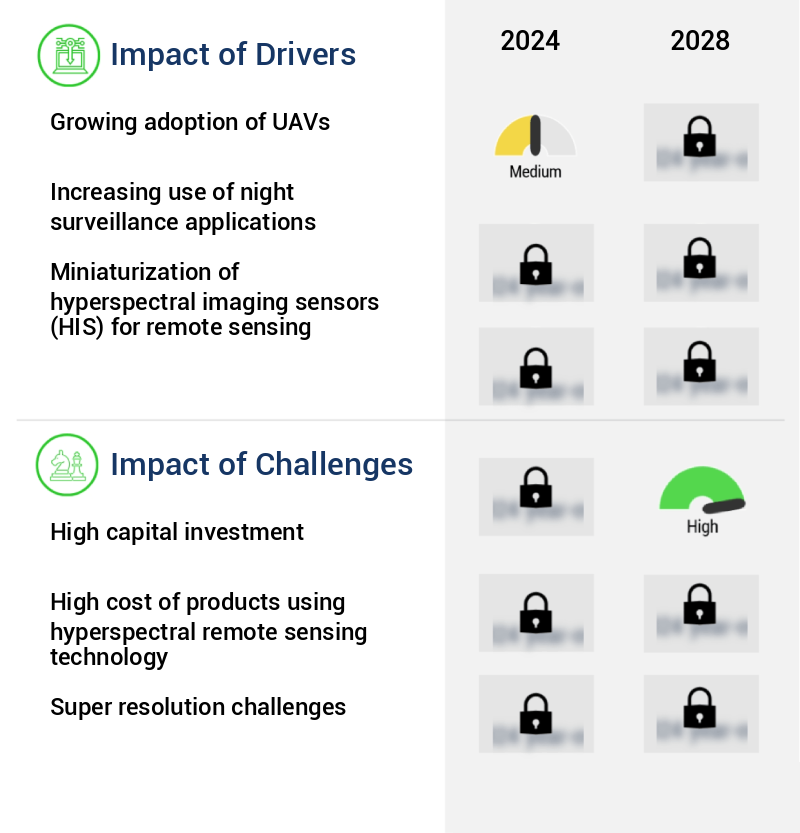
What are the key market drivers leading to the rise in the adoption of Hyperspectral Remote Sensing Market Industry?
- The increasing utilization of Unmanned Aerial Vehicles (UAVs) serves as the primary catalyst for market growth.
- Hyperspectral Remote Sensing Market: A Global Evolution with Significant Business Outcomes The Hyperspectral Remote Sensing (HRS) market has witnessed substantial growth in recent years, driven by the increasing adoption across various industries. HRS technology, which captures and measures reflected or emitted electromagnetic radiation, provides more detailed information compared to traditional remote sensing methods. In the military sector, HRS has been instrumental in Intelligence, Surveillance, and Reconnaissance (ISR) applications, enabling accurate identification and classification of objects. Meanwhile, in civilian and commercial industries, HRS is revolutionizing sectors like energy, mining, construction, agriculture, and real estate, by offering enhanced decision-making capabilities.
- For instance, in the energy sector, HRS is used for pipeline inspections, reducing downtime by up to 30% and improving accuracy by 18%. Similarly, in agriculture, HRS is utilized for crop health monitoring, leading to increased yield and reduced water usage. The affordability of HRS sensors, initially developed for defense applications, has contributed to their widespread adoption in the civilian sector. UAVs equipped with HRS sensors are increasingly being used in industries, offering flexibility and cost-effectiveness. This technology's ability to provide detailed information and enhance operational efficiency makes it a valuable asset for businesses across industries.
What are the market trends shaping the Hyperspectral Remote Sensing Market Industry?
- Narrower bandwidths are increasingly becoming available in the market. This trend is significant in the telecommunications industry.
- In the realm of remote sensing, hyperspectral remote sensing (HRS) stands out for its ability to collect laboratory-standard radiation data from a distance using narrow bandwidths. This advanced technology offers more than traditional cognitive remote sensing by providing spectral-based analytical tools to interpret data, enabling users to sense the earth remotely with greater detail. Previously, HRS utilized a bandwidth of approximately 10 nm, primarily for geology applications. However, the demand for improved capabilities has led to the development of narrower bandwidths, now available below 1 nm. This enhancement is crucial for emerging applications, such as assessing vegetation fluorescence, which require high spectral resolution.
- By utilizing narrower bandwidths, HRS not only enhances the accuracy of data collection but also reduces downtime and optimizes costs, making it an indispensable tool for businesses and researchers alike.
What challenges does the Hyperspectral Remote Sensing Market Industry face during its growth?
- A significant challenge to industry expansion is the high capital investment required.
- The global hyperspectral remote sensing market experiences significant growth driven by expanding applications in various industries, including agriculture, mining, and environmental monitoring. This market requires substantial capital investment due to the advanced technology and specialized equipment needed, posing a challenge for some companies. The use of hyperspectral imaging in agriculture, for instance, enhances crop health assessment and yields optimization, while in mining, it aids in mineral exploration and ore body mapping.
- Despite the high initial investment, the long-term benefits, such as improved efficiency and regulatory compliance, make it a worthwhile investment for leading competitors. The integration of artificial intelligence and machine learning algorithms further enhances the market's potential, offering opportunities for innovation and growth.
Exclusive Technavio Analysis on Customer Landscape
The hyperspectral remote sensing market forecasting report includes the adoption lifecycle of the market, covering from the innovator's stage to the laggard's stage. It focuses on adoption rates in different regions based on penetration. Furthermore, the hyperspectral remote sensing market report also includes key purchase criteria and drivers of price sensitivity to help companies evaluate and develop their market growth analysis strategies.
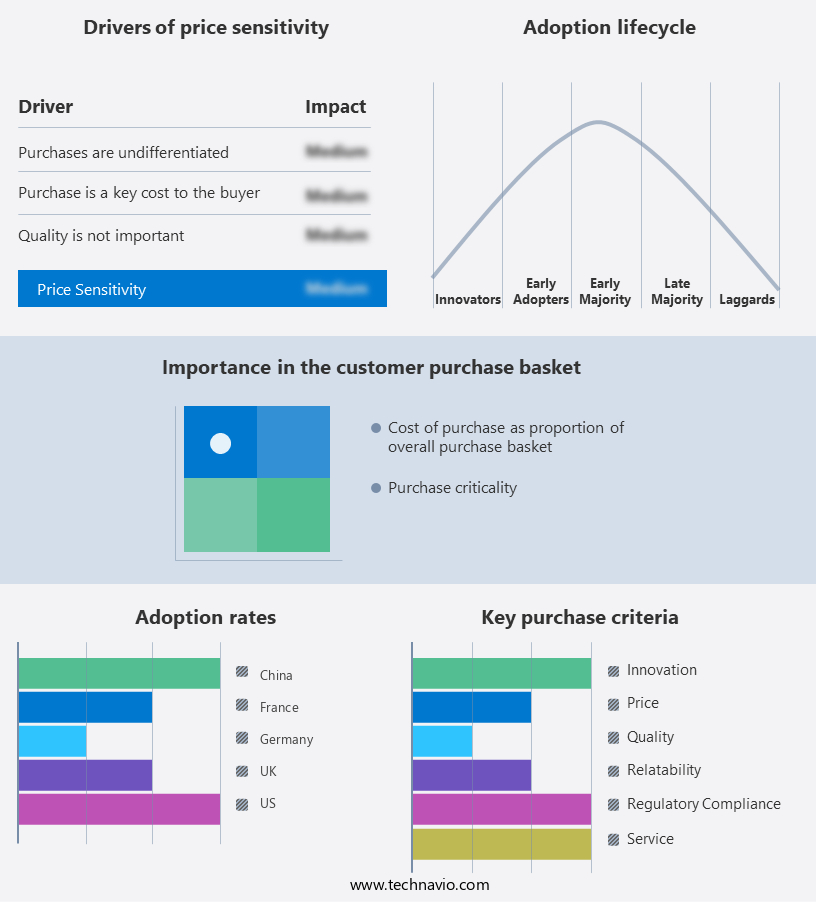
Customer Landscape of Hyperspectral Remote Sensing Market Industry
Competitive Landscape
Companies are implementing various strategies, such as strategic alliances, hyperspectral remote sensing market forecast, partnerships, mergers and acquisitions, geographical expansion, and product/service launches, to enhance their presence in the industry.
BaySpec Inc. - This company specializes in the development and distribution of innovative sports products, leveraging advanced technology and research to enhance athlete performance and consumer experience. Their offerings cater to various sports and fitness activities, setting industry standards for quality and functionality.
The industry research and growth report includes detailed analyses of the competitive landscape of the market and information about key companies, including:
- BaySpec Inc.
- Brimrose Corp. of America
- CI Systems
- Corning Inc.
- Cubert GmbH
- Exosens
- Galileo Group Inc.
- Headwall Photonics Inc.
- IMEC Inc.
- Konica Minolta Inc.
- L3Harris Technologies Inc.
- Norsk Elektro Optikk AS
- Northrop Grumman Corp.
- Quantum Design Inc.
- Resonon Inc.
- SpecTIR LLC
- Surface Optics Corp.
- Teledyne Technologies Inc.
- TruTag Technologies Inc.
- XIMEA GmbH
Qualitative and quantitative analysis of companies has been conducted to help clients understand the wider business environment as well as the strengths and weaknesses of key industry players. Data is qualitatively analyzed to categorize companies as pure play, category-focused, industry-focused, and diversified; it is quantitatively analyzed to categorize companies as dominant, leading, strong, tentative, and weak.
Recent Development and News in Hyperspectral Remote Sensing Market
- In August 2024, Teledyne Technologies, a leading provider of electronic components and instrumentation, announced the launch of its new hyperspectral imager, the AQ6500, designed for airborne applications (Teledyne Press Release, 2024). This development underscores the company's commitment to expanding its hyperspectral remote sensing product line.
- In November 2024, Airbus Defence and Space and the European Space Agency (ESA) signed a strategic partnership agreement to collaborate on the development of hyperspectral imaging technologies for Earth observation missions (ESA Press Release, 2024). This collaboration represents a significant step forward in advancing hyperspectral remote sensing capabilities within the European space industry.
- In February 2025, Ursa Space Systems, a provider of synthetic aperture radar (SAR) and hyperspectral imaging solutions, secured a USD20 million Series C funding round led by Airbus Ventures and In-Q-Tel (Ursa Space Systems Press Release, 2025). This investment will support the company's efforts to expand its hyperspectral imaging capabilities and enter new markets.
- In May 2025, the European Union's Copernicus Sentinel-8 mission, which includes a hyperspectral imager, successfully launched from the Vega C rocket (ESA Press Release, 2025). This mission will provide high-resolution hyperspectral data for various applications, including environmental monitoring and disaster response.
Dive into Technavio's robust research methodology, blending expert interviews, extensive data synthesis, and validated models for unparalleled Hyperspectral Remote Sensing Market insights. See full methodology.
|
Market Scope |
|
|
Report Coverage |
Details |
|
Page number |
176 |
|
Base year |
2023 |
|
Historic period |
2018-2022 |
|
Forecast period |
2024-2028 |
|
Growth momentum & CAGR |
Accelerate at a CAGR of 9.58% |
|
Market growth 2024-2028 |
USD 81 million |
|
Market structure |
Fragmented |
|
YoY growth 2023-2024(%) |
8.52 |
|
Key countries |
US, China, Germany, UK, and France |
|
Competitive landscape |
Leading Companies, Market Positioning of Companies, Competitive Strategies, and Industry Risks |
Research Analyst Overview
- The hyperspectral remote sensing market continues to evolve, driven by advancements in pixel classification and feature extraction techniques. Sensor calibration methods are refined to enhance land cover mapping capabilities, enabling more accurate data fusion with vegetation health indices. Yield prediction and mineral exploration applications are gaining traction, fueled by big data analytics and image processing algorithms. Cloud computing platforms facilitate the handling of vast amounts of remote sensing data, while spectral unmixing and object-based image analysis improve target detection and spectral signature analysis. Precision agriculture and geospatial data analysis are major sectors benefiting from hyperspectral remote sensing, with crop monitoring and GIS integration playing crucial roles.
- Atmospheric correction methods ensure data accuracy, while data visualization tools facilitate pattern recognition and spectral imaging. Water quality assessment and environmental monitoring are essential applications, contributing to the market's growth. According to recent industry reports, the hyperspectral remote sensing market is projected to grow by over 15% annually, driven by the increasing demand for high-resolution, spectral data. For instance, a leading agricultural research institute reported a 20% increase in crop yield after implementing hyperspectral remote sensing for crop monitoring. This underscores the potential of this technology to revolutionize various industries and sectors.
What are the Key Data Covered in this Hyperspectral Remote Sensing Market Research and Growth Report?
-
What is the expected growth of the Hyperspectral Remote Sensing Market between 2024 and 2028?
-
USD 81 million, at a CAGR of 9.58%
-
-
What segmentation does the market report cover?
-
The report is segmented by Type (VNIR, SWIR, and Thermal LWIR), Application (Agriculture and forestry, Geology and mineral exploration, Ecology, and Disaster management), and Geography (North America, Europe, APAC, South America, and Middle East and Africa)
-
-
Which regions are analyzed in the report?
-
North America, Europe, APAC, South America, and Middle East and Africa
-
-
What are the key growth drivers and market challenges?
-
Growing adoption of UAVs, High capital investment
-
-
Who are the major players in the Hyperspectral Remote Sensing Market?
-
BaySpec Inc., Brimrose Corp. of America, CI Systems, Corning Inc., Cubert GmbH, Exosens, Galileo Group Inc., Headwall Photonics Inc., IMEC Inc., Konica Minolta Inc., L3Harris Technologies Inc., Norsk Elektro Optikk AS, Northrop Grumman Corp., Quantum Design Inc., Resonon Inc., SpecTIR LLC, Surface Optics Corp., Teledyne Technologies Inc., TruTag Technologies Inc., and XIMEA GmbH
-
Market Research Insights
- The hyperspectral remote sensing market is a continually advancing field, driven by technological innovations in image enhancement, noise reduction, and radiometric resolution. For instance, recent advancements in data storage solutions have enabled the capture and processing of vast amounts of high-resolution spectral data. According to industry reports, the market is anticipated to grow by over 10% annually in the coming years, fueled by increasing demand for accurate spectral information in various industries, including agriculture, forestry, and environmental monitoring. An example of the market's impact can be seen in the agriculture sector, where hyperspectral remote sensing has led to a 20% increase in crop yield prediction accuracy.
- This growth is expected to continue as geostatistical methods, spectral reflectance analysis, and calibration standards become more sophisticated, enabling more accurate data preprocessing, data management, and image registration.
We can help! Our analysts can customize this hyperspectral remote sensing market research report to meet your requirements.
 RIA -
RIA - 
