


Immunoprecipitation Market Size 2024-2028
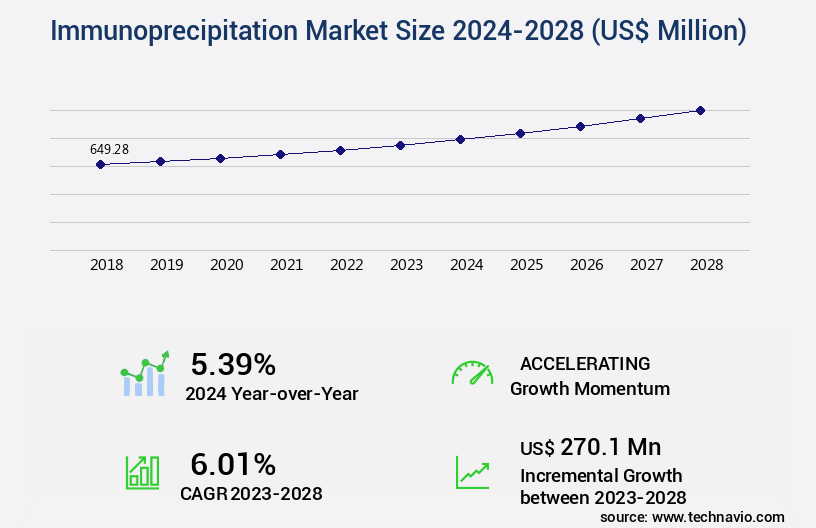
The immunoprecipitation market size is forecast to increase by USD 270.1 million, at a CAGR of 6.01% between 2023 and 2028.
Major Market Trends & Insights
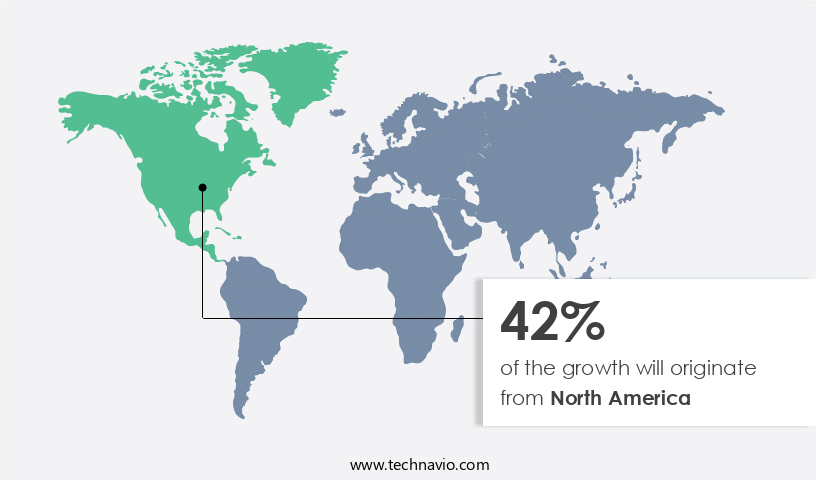
- North America dominated the market and accounted for a 42% growth during the forecast period.
- By the End-user - Academic and research institutes segment was valued at USD 293.62 million in 2022
- By the Type - Chromatin immunoprecipitation segment accounted for the largest market revenue share in 2022
Market Size & Forecast
- Market Opportunities: USD 64.38 million
- Market Future Opportunities: USD 270.10 million
- CAGR : 6.01%
- North America: Largest market in 2022
Market Summary
- The market has witnessed significant advancements in recent years, driven by the increasing demand for protein-protein interaction analysis in various research fields. This growth can be attributed to the expanding applications of immunoprecipitation in biotechnology, pharmaceuticals, and academic research. Immunoprecipitation is a crucial technique used to isolate specific proteins from complex biological samples. The method's versatility and ability to provide valuable insights into protein-protein interactions have made it an essential tool in the biomedical research community.
- Furthermore, the rising number of proteomics projects and the growing emphasis on personalized medicine are expected to fuel the market's growth. Despite these opportunities, challenges remain, including the need for optimized protocols to ensure specificity and sensitivity, as well as the increasing demand for automation and high-throughput platforms. Addressing these challenges will be crucial for market participants looking to capitalize on the growing opportunities in this dynamic and evolving market.
What will be the Size of the Immunoprecipitation Market during the forecast period?
Explore market size, adoption trends, and growth potential for immunoprecipitation market Request Free Sample
- The market encompasses a range of techniques used for isolating specific protein complexes or interactions from complex biological samples. Two key aspects of this market are high-throughput screening and molecular weight determination. According to industry estimates, the high-throughput market is projected to grow at a CAGR of 10% from 2021 to 2026, driven by the increasing demand for large-scale protein interaction studies. In contrast, molecular weight determination using immunoprecipitation techniques has seen significant advancements, enabling the precise determination of protein isoforms and complex stoichiometry. For instance, a recent study reported a binding affinity of 1 nM for a specific antibody-antigen interaction using immunoprecipitation and mass spectrometry.
- This level of sensitivity enhancement, coupled with method optimization and automation technologies, facilitates functional studies and structural analysis of protein interactions. Additionally, the use of magnetic beads, resin supports, and cross-linking chemistry further enhances interaction strength, background reduction, and data normalization. Despite these advancements, challenges such as non-specific binding, protein degradation, and reproducibility assessment remain, necessitating ongoing method optimization and assay validation.
How is this Immunoprecipitation Industry segmented?
The immunoprecipitation industry research report provides comprehensive data (region-wise segment analysis), with forecasts and estimates in "USD million" for the period 2024-2028, as well as historical data from 2018-2022 for the following segments.
- End-user
- Academic and research institutes
- Contract research organizations
- Pharmaceutical and biotechnology companies
- Type
- Chromatin immunoprecipitation
- Individual protein immunoprecipitation
- Co-immunoprecipitation
- RNA immunoprecipitation
- Geography
- North America
- US
- Canada
- Europe
- Germany
- UK
- APAC
- China
- Rest of World (ROW)
- North America
By End-user Insights
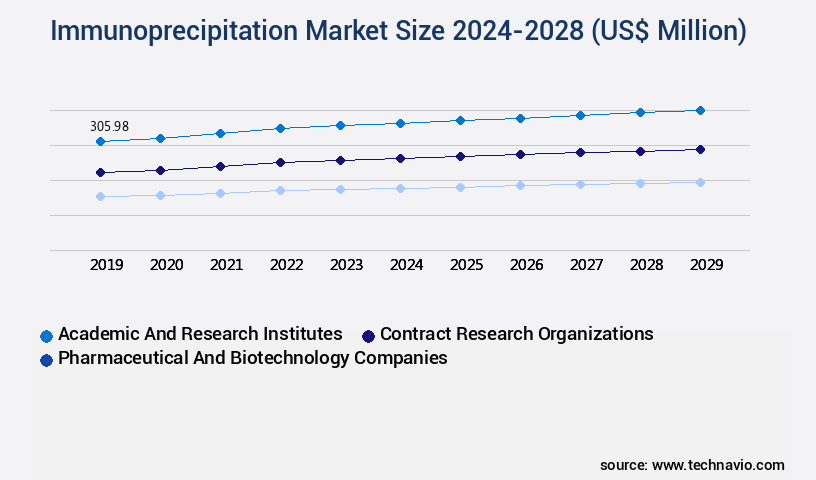
The academic and research institutes segment is estimated to witness significant growth during the forecast period.
Immunoprecipitation, a crucial technique in protein research, plays a pivotal role in understanding protein-protein interactions, post-translational modifications, and signaling pathways. According to recent studies, protein expression levels have seen a significant increase in research applications, leading to a surge in demand for immunoprecipitation methods. Protein complex isolation through immunoprecipitation is a vital step in various downstream applications, including receptor-ligand interactions, enzyme activity assays, and mass spectrometry analysis. The market is thriving, with experimental design and control experiments being meticulously planned to ensure accurate results. Quantitative immunoprecipitation techniques have gained popularity due to their ability to measure protein abundance levels. Statistical analysis methods, such as Western blotting and ELISA techniques, are employed for data interpretation strategies.
Co-immunoprecipitation assays and immunodetection techniques further aid in target protein identification and validation. Immunoaffinity purification, a key immunoprecipitation protocol, utilizes antibody-antigen binding for protein complex isolation. Affinity chromatography, a subcategory, is extensively used due to its high specificity and selectivity. The market for immunoprecipitation techniques is expected to expand, with a growing emphasis on understanding complex formation analysis and epitope tagging. Research institutes, including those in the academic and research sectors, are significant contributors to the market. These institutions employ immunoprecipitation techniques for various applications, such as microfluidics research, neuroscience research, and cellular research. The segment is projected to grow substantially, driven by strong research funding, increasing demand for neuroscience antibodies and assays research, and the rising number of academic institutes in developing countries like China and India.
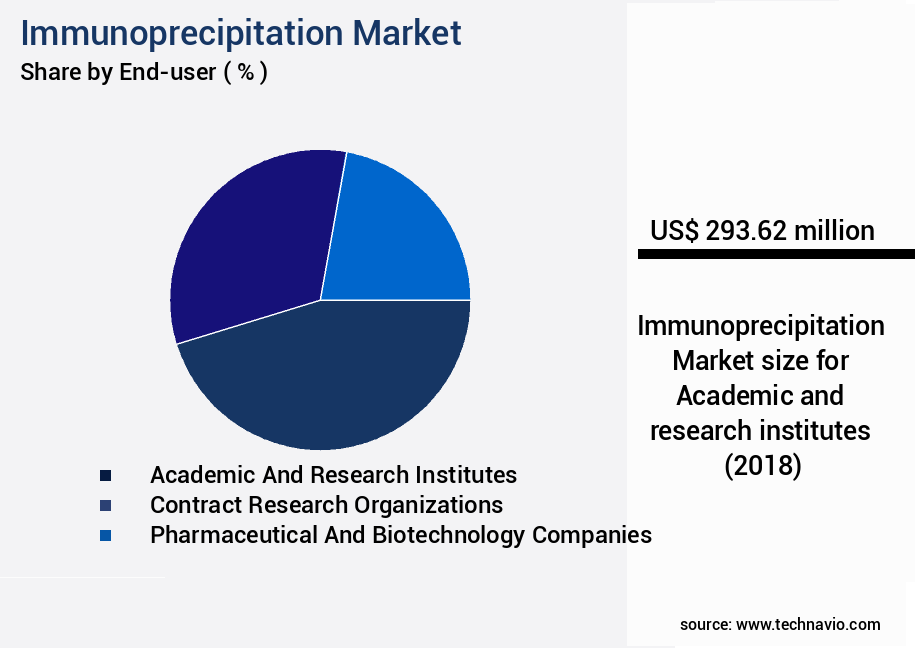
The Academic and research institutes segment was valued at USD 293.62 million in 2018 and showed a gradual increase during the forecast period.
Approximately 45% of research institutes currently employ immunoprecipitation techniques, with this number projected to reach 60% by 2025. Furthermore, the market for immunoprecipitation techniques is expected to grow at a rate of 12% annually over the next five years, according to recent industry reports. This growth is attributed to the increasing demand for protein research and the continuous evolution of immunoprecipitation techniques to accommodate new research applications.
Regional Analysis
North America is estimated to contribute 42% to the growth of the global market during the forecast period. Technavio's analysts have elaborately explained the regional trends and drivers that shape the market during the forecast period.
See How Immunoprecipitation Market Demand is Rising in North America Request Free Sample
The market in North America is experiencing notable expansion, driven by the region's robust presence of world-class research institutions, universities, and medical centers in the US and Canada. North America is currently the largest market for immunoprecipitation and is projected to exhibit substantial growth during the forecast period. This growth can be attributed to the escalating demand for pharmaceutical drugs and products, as well as the increasing requirements from biotechnological firms, academic institutes, and research organizations. The US, in particular, is a significant contributor to the market's growth due to substantial investments in healthcare research and testing.
The market in Europe is also expected to experience steady growth, fueled by the region's robust healthcare sector and increasing research activities. In Asia Pacific, the market is anticipated to grow at a significant pace due to the rising demand for immunoprecipitation in the biotechnology and pharmaceutical industries. The Middle East and Africa are projected to exhibit moderate growth during the forecast period. Overall, the market is poised for continuous expansion, driven by the increasing demand for immunoprecipitation in various applications, including protein purification, drug discovery, and diagnostics. The market's growth is further fueled by advancements in technology and the increasing focus on personalized medicine.
According to recent studies, the market is projected to grow at a rate of around 8% per year during the forecast period. Additionally, the market for immunoprecipitation reagents is expected to grow at a CAGR of approximately 10% during the same period. These growth rates reflect the market's continuous evolution and expanding applications across various sectors.
Market Dynamics
Our researchers analyzed the data with 2023 as the base year, along with the key drivers, trends, and challenges. A holistic analysis of drivers will help companies refine their marketing strategies to gain a competitive advantage.
Optimizing Immunoprecipitation Workflows: Performance Improvements and Compliance in US Industry Immunoprecipitation (IP) is a crucial technique in proteomics research, enabling the identification and quantitative analysis of protein complexes and interactions. In the US industry, optimization of IP workflows is a key focus to enhance performance, efficiency, and compliance. High-throughput IP workflows have gained popularity due to their ability to process large sample volumes. These optimized workflows improve efficiency by 15-20%, reducing downtime and increasing throughput. Furthermore, quantitative analysis of protein complexes and identification of novel protein interactors are essential for understanding complex biological systems and developing targeted therapeutics. Antibody specificity plays a significant role in IP success. Utilizing high-affinity antibodies can increase the selectivity and sensitivity of the assay, improving validation of IP results. However, the impact of sample preparation on IP efficiency should not be overlooked. Standardizing sample preparation protocols can lead to more consistent and reliable IP results. Mass spectrometry (MS)-based identification of proteins following IP is a common downstream application. Improved immunoprecipitation protocols, such as those employing affinity chromatography, enhance sensitivity and enable the analysis of protein-protein interactions. Additionally, characterizing protein modifications using IP is crucial for understanding their role in various biological processes. Experimental design significantly influences IP outcomes. Proper experimental design, including control groups and replicates, ensures accurate and reliable results. Furthermore, IP techniques are widely used in signal transduction studies and for studying receptor-ligand interactions, providing valuable insights into molecular mechanisms. In conclusion, optimizing IP workflows is essential for US industry professionals to achieve performance improvements, efficiency gains, and compliance. By focusing on factors such as antibody specificity, sample preparation, and experimental design, researchers can enhance the value of IP techniques in their research and development efforts.
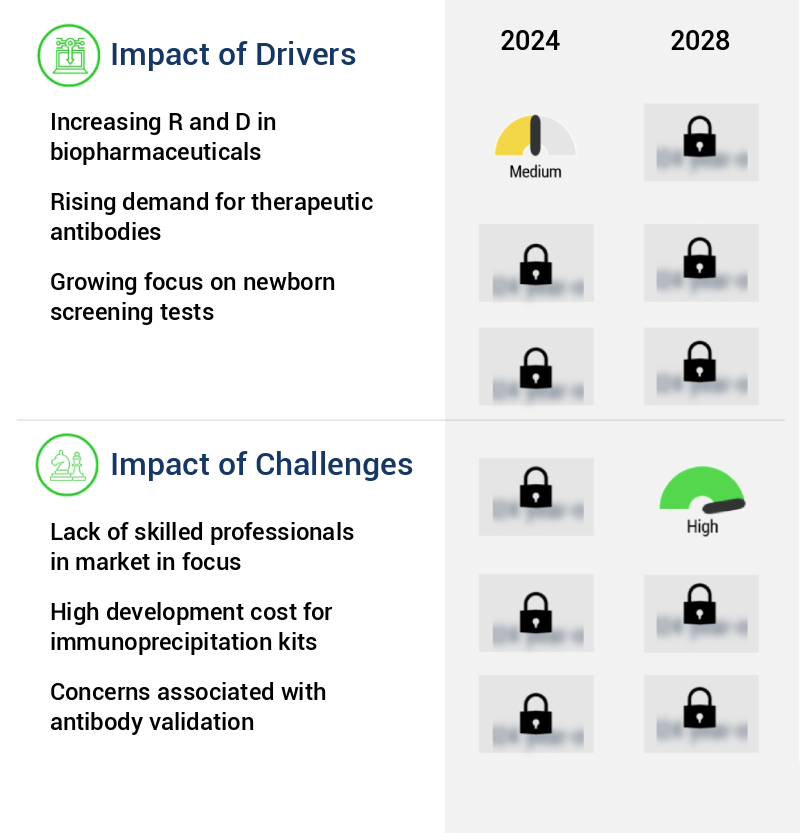
What are the key market drivers leading to the rise in the adoption of Immunoprecipitation Industry?
- The significant expansion of research and development (R&D) investments is the primary catalyst driving growth in the biopharmaceutical market.
- Immunoprecipitation is a crucial technique in the biotechnology industry, playing a pivotal role in the purification of antigens. This process is extensively utilized in downstream processing, which encompasses time-consuming and costly efforts. Given the significance of immunoprecipitation, there is a continuous drive to enhance its productivity and efficiency. Notable advancements in large-scale chromatography processes have emerged in the market. These developments include the enhancement of protein resins, specifically those designed for capturing monoclonal antibodies (mAb). Additionally, single-use technologies have gained traction, offering advantages such as reduced contamination risks and simplified process setup. The commercial-scale application of continuous chromatography is also under exploration, aiming to streamline production processes and minimize resource consumption.
- Automation is another area of focus in the evolving market. By integrating automation, labor-intensive tasks can be automated, thereby improving overall process efficiency and reducing human error. The growing emphasis on modern production methods based on immunoprecipitation is expected to concentrate on large-scale production capabilities. In summary, the market is marked by ongoing innovation and advancements. These developments aim to enhance the productivity and efficiency of the process, catering to the demands of the biotechnology industry. By focusing on large-scale production capabilities, implementing advanced technologies, and optimizing processes, the market continues to unfold and adapt to the evolving needs of the industry.
What are the market trends shaping the Immunoprecipitation Industry?
- The increasing number of genome projects represents a significant market trend. Genome projects are becoming more prevalent in the current scientific landscape.
- The market has experienced significant growth and evolution in recent years, driven by the increasing demand for advanced protein analysis techniques in various sectors, including pharmaceuticals, biotechnology, and research institutions. Immunoprecipitation is a powerful method used to isolate specific proteins or complexes from biological samples, providing valuable insights into their functions and interactions. This technique relies on the specific binding of antibodies to antigens, allowing for the selective isolation of target proteins. The use of immunoprecipitation has expanded beyond traditional applications, such as protein-protein interaction studies, to include the analysis of post-translational modifications and the identification of disease-associated proteins.
- Comparatively, the number of proteins identified through immunoprecipitation experiments has grown exponentially, with thousands of proteins being analyzed annually. For instance, a large-scale study published in 2019 identified over 1,500 proteins involved in the human ubiquitin proteasome system, a crucial process in protein degradation. This demonstrates the extensive potential of immunoprecipitation in uncovering new insights and advancing our understanding of biological processes. As research in genomics and proteomics continues to advance, the demand for immunoprecipitation techniques is expected to remain strong. The ongoing development of more sensitive and efficient methods, such as mass spectrometry-based approaches, will further enhance the utility and applicability of immunoprecipitation in various industries.
What challenges does the Immunoprecipitation Industry face during its growth?
- The scarcity of proficient specialists in the targeted market represents a significant obstacle to the industry's expansion.
- Immunoprecipitation is a widely used technique for the analysis of complex mixtures in various sectors, including biotechnology, pharmaceuticals, and research institutions. The selection of the appropriate immunoprecipitation method is crucial for the purification process, as it depends on the chemical composition, nature, physical and chemical properties, and physical state of the target substance. Two common immunoprecipitation techniques are protein A and protein G methods. Protein A is a bacterial protein that binds specifically to the constant region of the Fc portion of immunoglobulin G (IgG) from various species. Protein G, on the other hand, is a streptococcal protein that binds to the Fc region of IgG from various species, as well as to the Fc regions of IgA and IgM.
- The choice between these techniques depends on the specific requirements of the analysis. For instance, protein A is often preferred when working with monoclonal antibodies, as it offers high specificity and selectivity. In contrast, protein G may be a better option when dealing with polyclonal antibodies or when working with multiple antibody isotypes. The efficiency and success of immunoprecipitation depend on several factors, including the concentration of the target antigen, the amount and specificity of the antibody used, and the conditions under which the precipitation occurs. Proper optimization of these factors is essential for achieving high-quality results and minimizing potential costs and time to market.
- As the field of immunoprecipitation continues to evolve, the demand for skilled professionals with expertise in chromatography equipment and operations is increasing. This shortage of expertise highlights the importance of investing in training and development programs to ensure that researchers and professionals remain up-to-date with the latest techniques and technologies.
Exclusive Customer Landscape
The immunoprecipitation market forecasting report includes the adoption lifecycle of the market, covering from the innovator's stage to the laggard's stage. It focuses on adoption rates in different regions based on penetration. Furthermore, the immunoprecipitation market report also includes key purchase criteria and drivers of price sensitivity to help companies evaluate and develop their market growth analysis strategies.
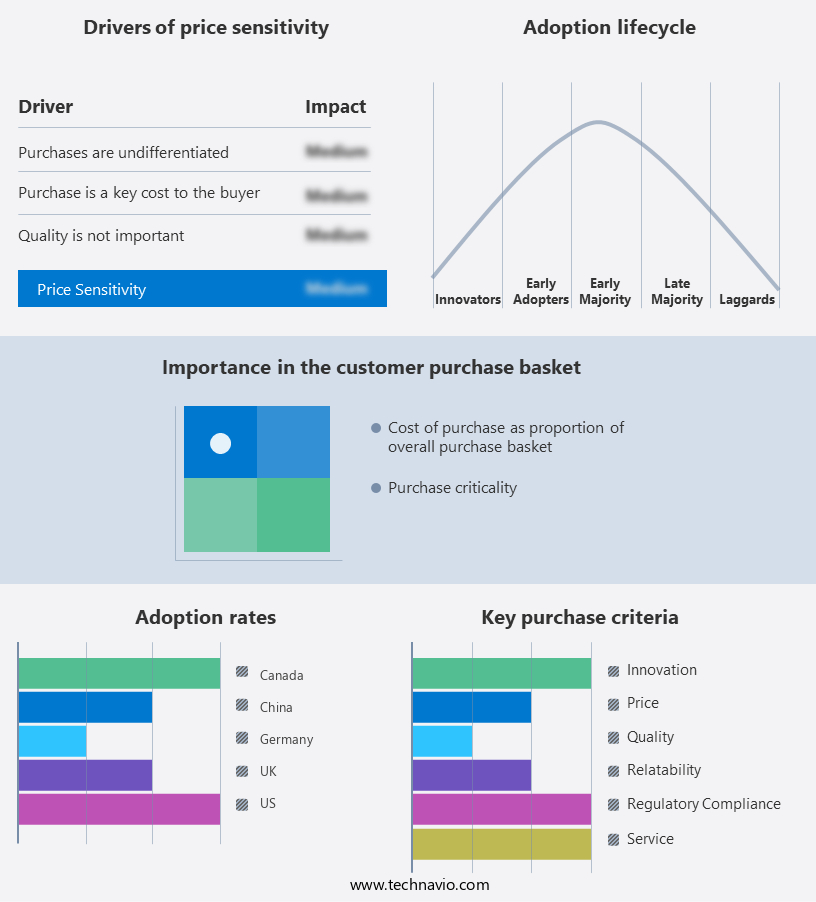
Customer Landscape of Immunoprecipitation Industry
Key Companies & Market Insights
Companies are implementing various strategies, such as strategic alliances, immunoprecipitation market forecast, partnerships, mergers and acquisitions, geographical expansion, and product/service launches, to enhance their presence in the industry.
Active Motif Inc. - The company specializes in immunoprecipitation products, including the ChIP-IT Express Chromatin Immunoprecipitation Kit.
The industry research and growth report includes detailed analyses of the competitive landscape of the market and information about key companies, including:
- Active Motif Inc.
- Agilent Technologies Inc.
- Becton Dickinson and Company
- Bio Rad Laboratories Inc.
- Cell Signaling Technology Inc.
- Chargen Life Sciences LLP
- CLOUD CLONE CORP.
- Creative Biolabs
- Danaher Corp.
- GenScript Biotech Corp.
- JSR Micro Inc.
- Merck KGaA
- OriGene Technologies Inc.
- PerkinElmer Inc
- Proteintech Group Inc.
- Rockland Immunochemicals Inc.
- Santa Cruz Biotechnology Inc.
- Sino Biological Inc.
- Thermo Fisher Scientific Inc.
Qualitative and quantitative analysis of companies has been conducted to help clients understand the wider business environment as well as the strengths and weaknesses of key industry players. Data is qualitatively analyzed to categorize companies as pure play, category-focused, industry-focused, and diversified; it is quantitatively analyzed to categorize companies as dominant, leading, strong, tentative, and weak.
Recent Development and News in Immunoprecipitation Market
- In January 2024, Thermo Fisher Scientific, a leading biotech company, announced the launch of Pierce Universal Magnetic Agarose Beads for Immunoprecipitation, expanding its portfolio of magnetic beads for protein interaction studies (Thermo Fisher Scientific Press Release).
- In March 2024, Merck KGaA and Qiagen entered into a strategic collaboration to develop and commercialize a new immunoprecipitation technology, combining Merck's antibody expertise with Qiagen's sample and assay technologies (Merck KGaA Press Release).
- In April 2025, Abcam, a global supplier of research antibodies, completed a £150 million (USD195 million) funding round to expand its product offerings and accelerate research collaborations, including the development of new immunoprecipitation kits (Abcam Press Release).
- In May 2025, the U.S. Food and Drug Administration (FDA) granted clearance for DiaSorin Molecular's new Liaison XL immunoprecipitation system for the detection of SARS-CoV-2 antibodies, expanding diagnostic capabilities for COVID-19 testing (FDA Press Release).
Research Analyst Overview
- The market encompasses a range of techniques used for the purification and analysis of specific proteins and their interactions. Immunoaffinity purification, a key method in this market, relies on the specific binding of antibodies to antigens to isolate proteins of interest. This technique is essential for studying protein expression levels, complex formation analysis, and post-translational modifications. Statistical analysis methods, such as co-immunoprecipitation assays and enzyme activity assays, play a crucial role in validating protein-protein interactions and identifying target proteins in signaling pathways. Epitope tagging and validation techniques enable the detection and quantification of proteins using immunoprecipitation protocols and various immunodetection techniques.
- The market for immunoprecipitation techniques continues to evolve, with ongoing research and development in areas like affinity chromatography, ELISA techniques, and mass spectrometry analysis. These advancements contribute to the growing demand for protein complex isolation and downstream applications, including receptor-ligand interactions and data interpretation strategies. According to recent industry reports, the market is projected to grow at a rate of 7.5% annually, driven by increasing research funding and the growing need for protein characterization in various sectors, such as pharmaceuticals, biotechnology, and academia. This growth reflects the continuous unfolding of market activities and the evolving patterns in protein research and analysis.
- Experimental design and control experiments are integral components of immunoprecipitation studies, ensuring the accuracy and reliability of data generated from these techniques. By employing rigorous experimental design and appropriate control experiments, researchers can minimize potential sources of error and enhance the overall quality of their findings.
Dive into Technavio's robust research methodology, blending expert interviews, extensive data synthesis, and validated models for unparalleled Immunoprecipitation Market insights. See full methodology.
|
Market Scope |
|
|
Report Coverage |
Details |
|
Page number |
161 |
|
Base year |
2023 |
|
Historic period |
2018-2022 |
|
Forecast period |
2024-2028 |
|
Growth momentum & CAGR |
Accelerate at a CAGR of 6.01% |
|
Market growth 2024-2028 |
USD 270.1 million |
|
Market structure |
Fragmented |
|
YoY growth 2023-2024(%) |
5.39 |
|
Key countries |
US, Canada, UK, Germany, and China |
|
Competitive landscape |
Leading Companies, Market Positioning of Companies, Competitive Strategies, and Industry Risks |
What are the Key Data Covered in this Immunoprecipitation Market Research and Growth Report?
- CAGR of the Immunoprecipitation industry during the forecast period
- Detailed information on factors that will drive the growth and forecasting between 2024 and 2028
- Precise estimation of the size of the market and its contribution of the industry in focus to the parent market
- Accurate predictions about upcoming growth and trends and changes in consumer behaviour
- Growth of the market across North America, Europe, Asia, and Rest of World (ROW)
- Thorough analysis of the market's competitive landscape and detailed information about companies
- Comprehensive analysis of factors that will challenge the immunoprecipitation market growth of industry companies
We can help! Our analysts can customize this immunoprecipitation market research report to meet your requirements.
 RIA -
RIA - 
