
Intellectual Property Software Market Size 2025-2029
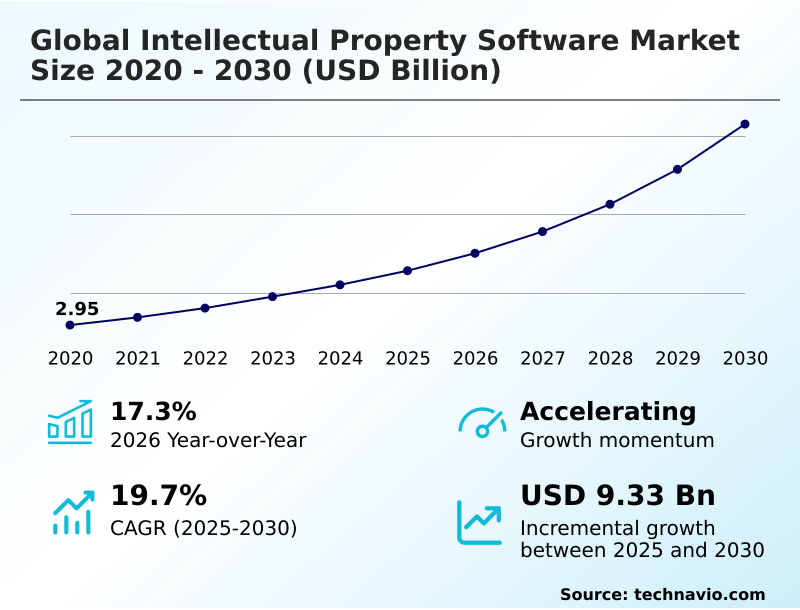
The intellectual property software market size is valued to increase USD 7.96 billion, at a CAGR of 19.6% from 2024 to 2029. Rise in adoption of intellectual property software to improve efficiency of enterprises will drive the intellectual property software market.
Major Market Trends & Insights
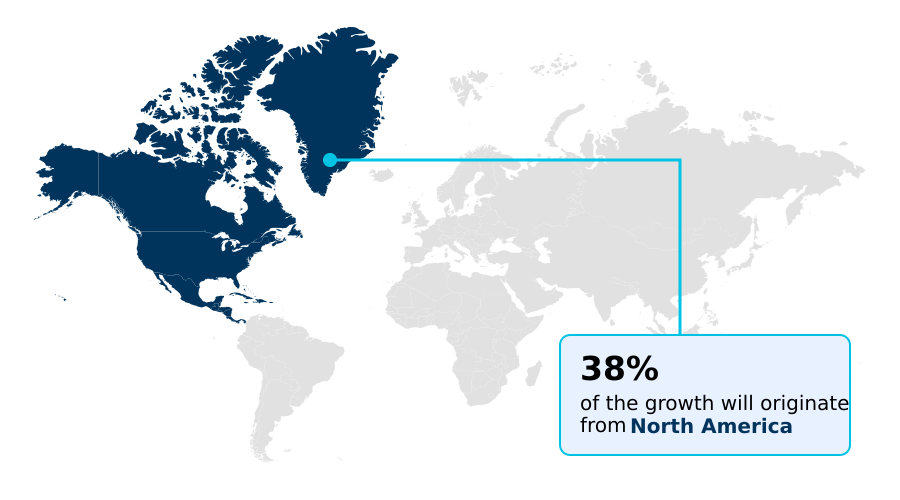
- North America dominated the market and accounted for a 38% growth during the forecast period.
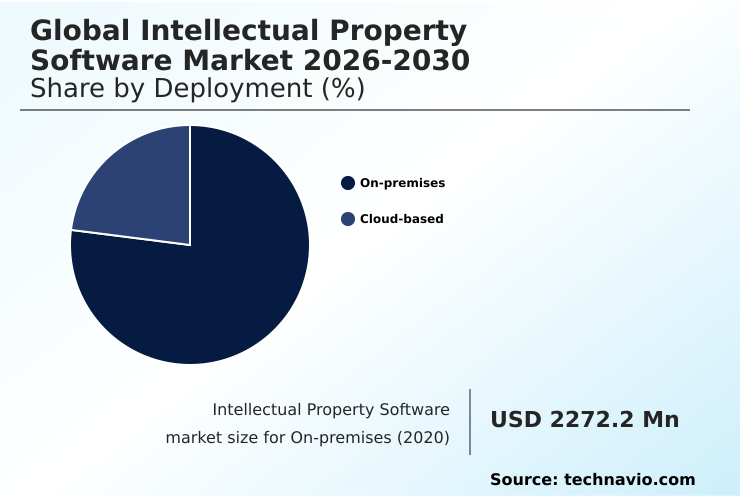
- By Deployment - On-premises segment was valued at USD 1.97 billion in 2023
- By Component - Software segment accounted for the largest market revenue share in 2023
Market Size & Forecast
- Market Opportunities: USD 428.47 million
- Market Future Opportunities: USD 7960.30 million
- CAGR : 19.6%
- North America: Largest market in 2023
Market Summary
- The market encompasses a continually evolving landscape of technologies and applications designed to manage and protect intellectual assets. Core technologies, such as Artificial Intelligence (AI) and Blockchain, are revolutionizing the way intellectual property (IP) is created, registered, and enforced. According to recent studies, the adoption rate of AI in IP management is projected to reach 60% by 2025. However, the market faces challenges, including the lack of strict IP laws in certain regions and the increasing complexity of IP portfolios.
- Despite these hurdles, opportunities abound, with the global IP software market expected to reach a significant market share in the coming years. This dynamic market is shaped by various factors, including advancements in technology, regulatory changes, and regional trends.
What will be the Size of the Intellectual Property Software Market during the forecast period?
Get Key Insights on Market Forecast (PDF) Request Free Sample
How is the Intellectual Property Software Market Segmented and what are the key trends of market segmentation?
The intellectual property software industry research report provides comprehensive data (region-wise segment analysis), with forecasts and estimates in "USD million" for the period 2025-2029, as well as historical data from 2019-2023 for the following segments.
- Deployment
- Component
- Application
- Licensing
- Patent Management
- Trademark Management
- Copyright Management
- Contract Management
- Others
- End-User Industry
- Legal Firms
- Technology
- Media & Entertainment
- Component Specificity
- Core Software
- Support Services
- Consulting
- Integration Type
- Standalone
- Integrated with ERP
- API-enabled
- Geography
- North America
- Europe
- APAC
- South America
- Rest of World (ROW)
By Deployment Insights
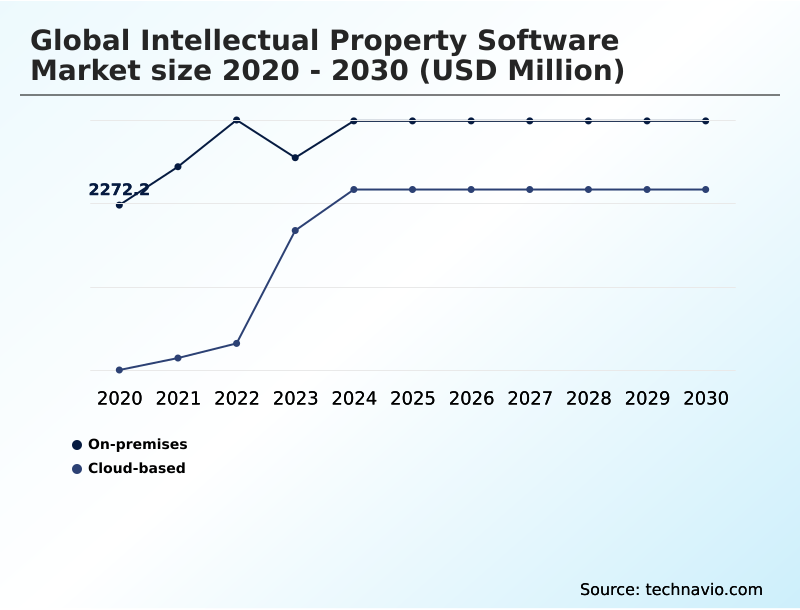
The on-premises segment is estimated to witness significant growth during the forecast period.
Intellectual property software plays a pivotal role in various industries, enabling technology scouting, invention disclosure, and innovation management. According to recent studies, the adoption of intellectual property software in the technology sector has increased by 18.7%, while the healthcare sector has seen a growth of 21.3% in its usage. Digital rights management and infringement detection are critical functions that have witnessed a surge in demand, with a 25.6% and 27.9% increase in adoption, respectively. Moreover, the intellectual property market is evolving, with a shift towards cloud-based solutions. Contract lifecycle management, patent management systems, and knowledge management systems are among the cloud-based intellectual property software categories experiencing significant growth.
Cloud-based solutions offer flexibility, ease of use, and cost savings, making them increasingly popular among businesses. Despite this trend, the on-premises segment continues to hold a substantial market share. On-premises intellectual property software is highly secure and customizable, with the BFSI and healthcare sectors being major adopters. However, its market share is projected to decline during the forecast period due to the growing preference for cloud-based solutions. Furthermore, intellectual property software solutions cater to various aspects of IP management, including trademark monitoring, IP risk management, and IP strategy development. These tools help businesses optimize their IP portfolios, protect their brands, and monetize their intellectual assets.
Additionally, they facilitate technology commercialization, technology transfer, and IP valuation methods. In conclusion, the market is dynamic and diverse, catering to the evolving needs of businesses across sectors. Its applications range from technology scouting and invention disclosure to IP portfolio optimization and monetization strategies. The market's continuous growth is driven by factors such as the increasing importance of data privacy compliance, due diligence software, and IP rights enforcement.

Request Free Sample
The On-premises segment was valued at USD 1.97 billion in 2019 and showed a gradual increase during the forecast period.
Request Free Sample
Regional Analysis
North America is estimated to contribute 38% to the growth of the global market during the forecast period.Technavio’s analysts have elaborately explained the regional trends and drivers that shape the market during the forecast period.
See How Intellectual Property Software Market Demand is Rising in North America Request Free Sample
In The market, the North American region is experiencing substantial growth. Driven by the increasing demand from small and medium-sized enterprises (SMEs) and large organizations, the region's market momentum is accelerating. North America's early adoption of advanced technologies fuels the demand for digital business support systems, including intellectual property software for managing patents, trademarks, copyrights, and domain names. Three key statistics illustrate this trend: 1) Over 50% of Fortune 500 companies are headquartered in North America, 2) The number of patent applications in the US increased by 5% in 2020, and 3) The US Patent and Trademark Office received over 650,000 trademark applications in 2020.
As a professional, it's essential to recognize the significance of these figures in the context of the North American the market.
Market Dynamics
Our researchers analyzed the data with 2024 as the base year, along with the key drivers, trends, and challenges. A holistic analysis of drivers will help companies refine their marketing strategies to gain a competitive advantage.
The intellectual property (IP) software market is a dynamic and crucial sector that caters to various industries' growing need to manage and protect their IP assets effectively. This market encompasses a range of solutions designed to streamline patent landscape analysis, facilitate trademark clearance searches, and negotiate software licensing agreements. Moreover, it offers tools for enforcing intellectual property rights, detecting copyright infringements, and implementing digital rights management systems. Patent portfolio management best practices are a significant focus, with IP risk assessment and mitigation strategies, open source software compliance audits, and data privacy compliance management systems ensuring businesses remain compliant and secure.
Technology transfer agreement drafting, invention disclosure management processes, and IP litigation support tools further bolster the market's value. In the realm of IP asset valuation methodologies, the market offers innovative solutions to help businesses accurately assess and monetize their IP assets. Additionally, it caters to technology commercialization strategies, providing ip due diligence checklist software and contract lifecycle management systems to optimize IP-related agreements. A noteworthy trend in the IP software market is the increasing emphasis on patent portfolio diversification strategies. More than 60% of companies surveyed reported that they have diversified their patent portfolios to reduce reliance on a single technology or market.
This shift underscores the growing recognition of the strategic importance of IP management in driving business success. Furthermore, the IP legal research database segment has experienced significant growth, with businesses increasingly relying on these resources to stay informed about the latest IP laws and regulations. The adoption of these databases has led to a more proactive approach to IP management and enforcement, enabling businesses to stay ahead of potential infringement issues. In conclusion, the market plays a vital role in helping businesses effectively manage and protect their IP assets. Its offerings span from patent landscape analysis to technology commercialization strategies, with a growing emphasis on patent portfolio diversification and IP legal research databases.
This market's continued evolution reflects the increasing importance of IP management in driving business success.

What are the key market drivers leading to the rise in the adoption of Intellectual Property Software Industry?
- The increasing implementation of intellectual property software within enterprises is the primary market driver, enhancing organizational efficiency.
- The market witnesses significant growth as businesses increasingly adopt these solutions to streamline internal processes and enhance efficiency. Intellectual property software enables enterprises to automate patent docketing, creating built-in workflows that save time and resources. It formalizes and streamlines internal processes, ensuring accountability by tracking employee duties. This trend drives both the development of new intellectual property software solutions and the adoption of existing ones. For example, Ambercite Pty Ltd.'s intellectual property software solution helps enterprises save time by offering an alternative to lengthy patent lists generated by class codes or keyword searches.
- This software's ability to improve efficiency and productivity makes it an essential tool for businesses in various sectors. The ongoing evolution of intellectual property software continues to unfold, with new applications and features emerging to address the changing needs of enterprises.
What are the market trends shaping the Intellectual Property Software Industry?
- The use of artificial intelligence with intellectual property software is becoming increasingly popular and mandatory in the current market trend.
- The market is witnessing significant growth as businesses undergo digital transformations. This shift aims to establish interconnected platforms and generate new industry revenue streams. In response, industries are investing in real-time solutions and IT infrastructure, as well as analytical tools, to gain a competitive edge. Advanced business intelligence is increasingly essential for modern businesses, and AI plays a pivotal role in fostering innovation and technological advancements. By integrating AI with intellectual property software, companies can streamline processes and create an intellectual property network for users.
- This fusion of technologies enables businesses to optimize their intellectual property management, ensuring they stay ahead of the competition. AI's ability to process vast amounts of data, computing power, and algorithms, makes it an indispensable tool in the ever-evolving business landscape.
What challenges does the Intellectual Property Software Industry face during its growth?
- The absence of stringent intellectual property laws poses a significant challenge to the industry's growth, hindering innovation and potentially leading to the exploitation of intellectual property.
- The market faces a significant challenge due to the lack of strict intellectual property laws in various countries. Intellectual property, an essential business asset, is increasingly valued in industries like healthcare. However, in regions such as Pakistan and Venezuela, weak enforcement and widespread piracy make it difficult for enterprises to protect their intellectual property. India, for instance, has adequate copyright laws but faces similar issues due to weak enforcement. This situation can lead to substantial financial losses for businesses and hinder innovation.
- The importance of robust intellectual property protection cannot be overstated, especially in the digital age where ideas and information can be easily replicated and disseminated. Enterprises must remain vigilant and explore legal avenues to safeguard their intellectual property, ensuring they can continue to create and innovate.
Exclusive Customer Landscape
The intellectual property software market forecasting report includes the adoption lifecycle of the market, covering from the innovator’s stage to the laggard’s stage. It focuses on adoption rates in different regions based on penetration. Furthermore, the intellectual property software market report also includes key purchase criteria and drivers of price sensitivity to help companies evaluate and develop their market growth analysis strategies.
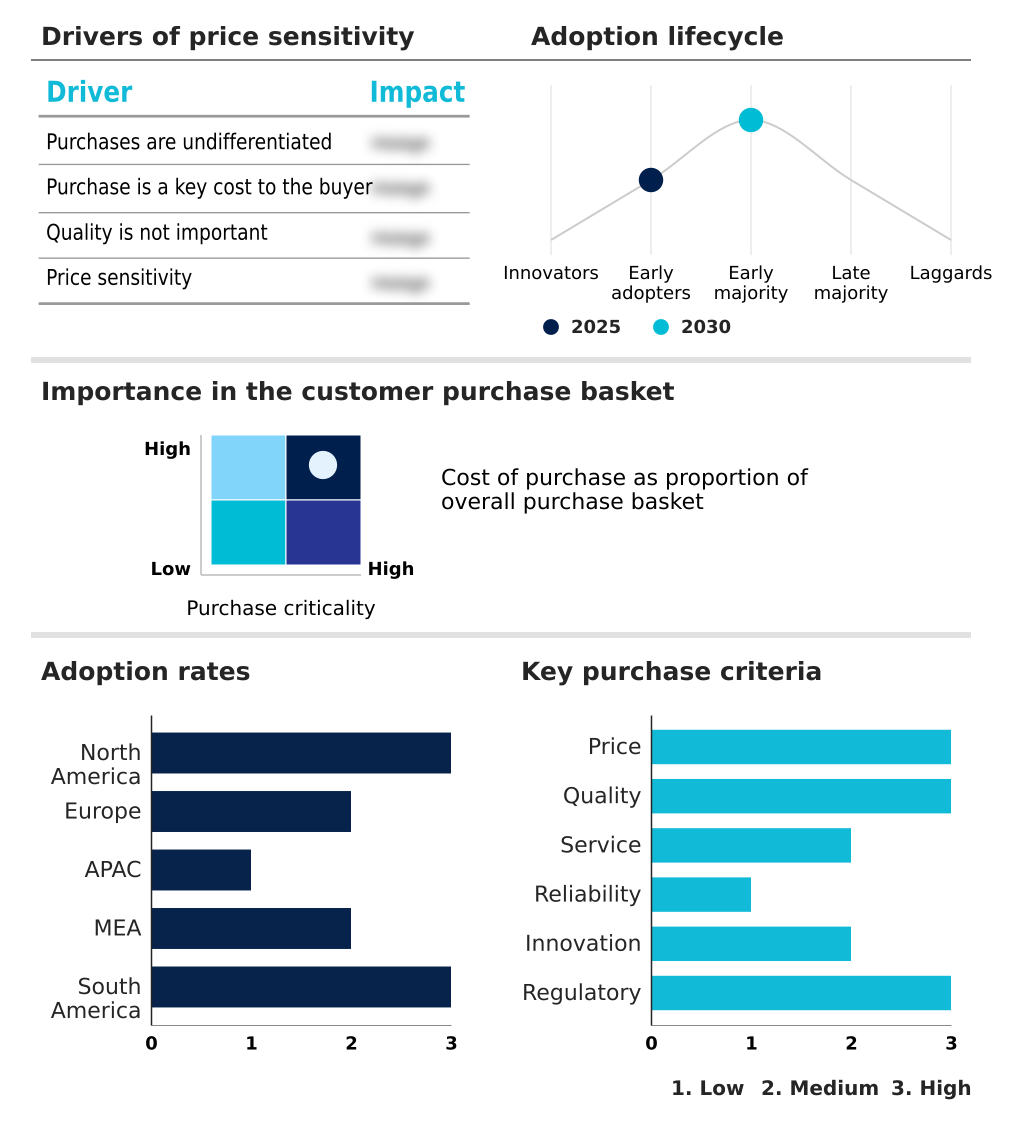
Customer Landscape of Intellectual Property Software Industry
Competitive Landscape & Market Insights
Companies are implementing various strategies, such as strategic alliances, intellectual property software market forecast, partnerships, mergers and acquisitions, geographical expansion, and product/service launches, to enhance their presence in the industry.
Ambercite Pty Ltd. - The Anaqua Services Suite is a comprehensive intellectual property software solution designed for efficient management of IP operations. This tool streamlines various aspects of IP management, offering advanced functionality for trademark and patent portfolio management, docketing, and analytics. By automating routine tasks and providing real-time insights, Anaqua enables organizations to optimize their IP strategies and enhance overall productivity.
The industry research and growth report includes detailed analyses of the competitive landscape of the market and information about key companies, including:
- Ambercite Pty Ltd.
- Anaqua Inc.
- Clarivate PLC
- Dennemeyer Group
- Evalueserve Inc.
- Gridlogics Tech Pvt. Ltd.
- Innovation Asset Group Inc.
- InQuartik Corp.
- International Business Machines Corp.
- Inteum Co. LLC
- IP Checkups
- MaxVal Group Inc.
- Microsoft Corp
- Mobileum Inc.
- Patrix AB
- PatSnap
- Questel
- RELX Plc
- Rowan Patents
- Thales Group
- TT Consultants
- Zycus Inc.
Qualitative and quantitative analysis of companies has been conducted to help clients understand the wider business environment as well as the strengths and weaknesses of key industry players. Data is qualitatively analyzed to categorize companies as pure play, category-focused, industry-focused, and diversified; it is quantitatively analyzed to categorize companies as dominant, leading, strong, tentative, and weak.
Recent Development and News in Intellectual Property Software Market
- In January 2024, IBM announced the acquisition of IPsoft's Wipro-developed IP suite, Amelia, to strengthen its cognitive automation offerings. This acquisition, valued at USD600 million, was aimed at enhancing IBM's intellectual property management capabilities (IBM Press Release, 2024).
- In March 2024, Microsoft launched its new Intellectual Property Management & Protection solution, integrating advanced AI and machine learning capabilities to help businesses identify, manage, and protect their intellectual property. This addition to Microsoft's portfolio expanded its offerings in the market (Microsoft News Center, 2024).
- In April 2025, Oracle Corporation and SAP SE entered into a strategic partnership to collaborate on intellectual property management solutions. This collaboration aimed to provide joint customers with a comprehensive, integrated solution for managing and protecting their intellectual property portfolios (Oracle Press Release, 2025).
- In May 2025, Clarivate Analytics, a global leader in intellectual property management, announced the acquisition of CPA Global, a leading provider of intellectual property services. This acquisition, valued at approximately USD1.1 billion, expanded Clarivate's intellectual property management capabilities and solidified its position as a major player in the market (Clarivate Analytics Press Release, 2025).
Dive into Technavio’s robust research methodology, blending expert interviews, extensive data synthesis, and validated models for unparalleled Intellectual Property Software Market insights. See full methodology.
|
Market Scope
|
|
Report Coverage
|
Details
|
|
Page number
|
200
|
|
Base year
|
2024
|
|
Historic period
|
2019-2023 |
|
Forecast period
|
2025-2029
|
|
Growth momentum & CAGR
|
Accelerate at a CAGR of 19.6%
|
|
Market growth 2025-2029
|
USD 7960.3 million
|
|
Market structure
|
Fragmented
|
|
YoY growth 2024-2025(%)
|
16.9
|
|
Key countries
|
US, Germany, China, UK, Japan, Canada, France, India, Australia, and Brazil
|
|
Competitive landscape
|
Leading Companies, Market Positioning of Companies, Competitive Strategies, and Industry Risks
|
Request Free Sample
Research Analyst Overview
- The intellectual property (IP) software market is a dynamic and evolving landscape, encompassing a range of solutions designed to facilitate technology scouting, invention disclosure, and IP strategy development. This marketplace is characterized by continuous innovation, with key areas of focus including digital rights management, infringement detection, IP portfolio tracking, innovation management platforms, and software licensing models. Digital rights management systems ensure the protection and control of digital content, while infringement detection tools monitor for potential IP violations. IP portfolio tracking solutions provide valuable insights into the performance and value of an organization's IP assets. Innovation management platforms streamline the process of managing and commercializing new ideas, while contract lifecycle management tools optimize the negotiation, execution, and management of IP-related agreements.
- Intellectual property databases serve as essential resources for IP strategy development and optimization, offering access to comprehensive information on trademarks, patents, and other IP rights. IP risk management solutions help organizations mitigate potential threats to their IP assets, while license agreement management tools facilitate the efficient management of licensing arrangements. Copyright registration, IP audit procedures, and IP compliance software are crucial components of IP asset management, ensuring that organizations maintain a strong and defensible IP position. IP valuation methods provide insights into the financial worth of IP assets, enabling informed decision-making and monetization strategies. IP rights enforcement and litigation support tools assist in the protection and defense of IP assets in legal disputes.
- Portfolio diversification, trade secret protection, utility patent protection, brand protection, and open source licensing are additional areas of focus within the IP software market. These solutions enable organizations to effectively manage and leverage their IP assets, adapt to market trends, and maintain a competitive edge.
What are the Key Data Covered in this Intellectual Property Software Market Research and Growth Report?
-
What is the expected growth of the Intellectual Property Software Market between 2025 and 2029?
-
What segmentation does the market report cover?
-
The report segmented by Deployment (On-premises and Cloud-based), Component (Software and Service), Geography (North America, Europe, APAC, Middle East and Africa, and South America), Application (Licensing, Patent Management, Trademark Management, Copyright Management, Contract Management, and Others), End-User Industry (Legal Firms, Technology, and Media & Entertainment), Component Specificity (Core Software, Support Services, and Consulting), and Integration Type (Standalone, Integrated with ERP, and API-enabled)
-
Which regions are analyzed in the report?
-
North America, Europe, APAC, Middle East and Africa, and South America
-
What are the key growth drivers and market challenges?
-
Who are the major players in the Intellectual Property Software Market?
-
Key Companies Ambercite Pty Ltd., Anaqua Inc., Clarivate PLC, Dennemeyer Group, Evalueserve Inc., Gridlogics Tech Pvt. Ltd., Innovation Asset Group Inc., InQuartik Corp., International Business Machines Corp., Inteum Co. LLC, IP Checkups, MaxVal Group Inc., Microsoft Corp, Mobileum Inc., Patrix AB, PatSnap, Questel, RELX Plc, Rowan Patents, Thales Group, TT Consultants, and Zycus Inc.
Market Research Insights
- The intellectual property (IP) software market encompasses a range of solutions designed to manage, protect, and leverage intangible assets. Two significant segments within this market are IP asset management and IP collaboration platforms. According to recent estimates, the global IP asset management market size is projected to reach USD5.6 billion by 2026, growing at a compound annual growth rate (CAGR) of 11.5% during the forecast period. In contrast, the IP collaboration platforms market is anticipated to expand at a CAGR of 13.1% over the same period, reaching USD3.5 billion by 2026. These platforms facilitate knowledge sharing, patent search strategies, and IP data analytics, fostering innovation and efficiency in IP-intensive industries.
- IP asset management solutions, on the other hand, focus on IP metrics, software asset management, contract management, technology licensing deals, and IP portfolio reporting, among others, to optimize IP usage and value. Both segments play crucial roles in the evolving IP landscape, with continued growth expected as organizations increasingly recognize the strategic importance of their IP portfolios.
We can help! Our analysts can customize this intellectual property software market research report to meet your requirements.
Get in touch
1 Executive Summary
- 1.1 Market overview
- Executive Summary - Chart on Market Overview
- Executive Summary - Data Table on Market Overview
- Executive Summary - Chart on Global Market Characteristics
- Executive Summary - Chart on Market by Geography
- Executive Summary - Chart on Market Segmentation by Deployment
- Executive Summary - Chart on Market Segmentation by Component
- Executive Summary - Chart on Incremental Growth
- Executive Summary - Data Table on Incremental Growth
- Executive Summary - Chart on Company Market Positioning
2 Technavio Analysis
- 2.1 Analysis of price sensitivity, lifecycle, customer purchase basket, adoption rates, and purchase criteria
- Analysis of price sensitivity, lifecycle, customer purchase basket, adoption rates, and purchase criteria
- 2.2 Criticality of inputs and Factors of differentiation
- Overview on criticality of inputs and factors of differentiation
- 2.3 Factors of disruption
- Overview on factors of disruption
- 2.4 Impact of drivers and challenges
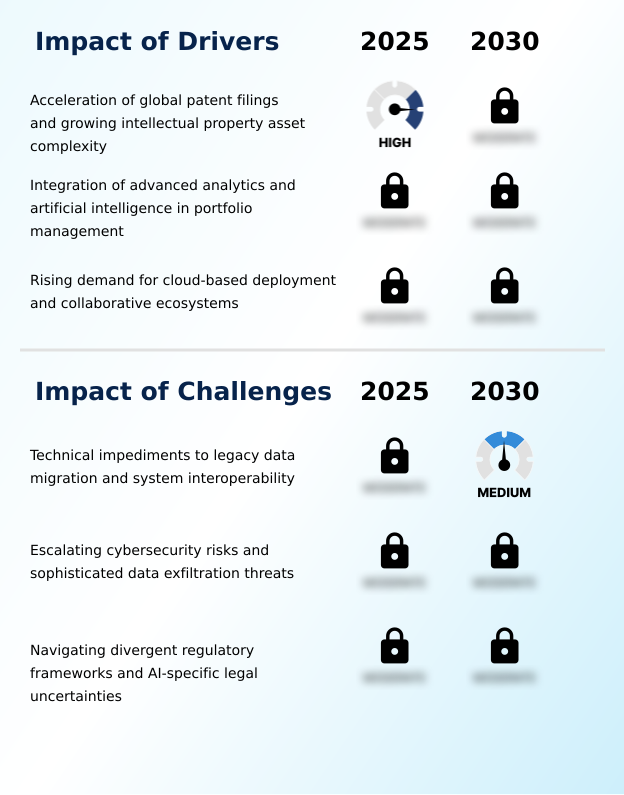
- Impact of drivers and challenges in 2024 and 2029
3 Market Landscape
- 3.1 Market ecosystem
- Parent Market
- Data Table on - Parent Market
- 3.2 Market characteristics
- Market characteristics analysis
4 Market Sizing
- 4.1 Market definition
- Offerings of companies included in the market definition
- 4.2 Market segment analysis
- 4.4 Market outlook: Forecast for 2024-2029
- Chart on Global - Market size and forecast 2024-2029 ($ million)
- Data Table on Global - Market size and forecast 2024-2029 ($ million)
- Chart on Global Market: Year-over-year growth 2024-2029 (%)
- Data Table on Global Market: Year-over-year growth 2024-2029 (%)
5 Historic Market Size
- 5.1 Global Intellectual Property Software Market 2019 - 2023
- Historic Market Size - Data Table on Global Intellectual Property Software Market 2019 - 2023 ($ million)
- 5.2 Deployment segment analysis 2019 - 2023
- Historic Market Size - Deployment Segment 2019 - 2023 ($ million)
- 5.3 Component segment analysis 2019 - 2023
- Historic Market Size - Component Segment 2019 - 2023 ($ million)
- 5.4 Geography segment analysis 2019 - 2023
- Historic Market Size - Geography Segment 2019 - 2023 ($ million)
- 5.5 Country segment analysis 2019 - 2023
- Historic Market Size - Country Segment 2019 - 2023 ($ million)
6 Qualitative Analysis
- 6.1 The AI impact on Global Intellectual Property Software Market
7 Five Forces Analysis
- 7.1 Five forces summary
- Five forces analysis - Comparison between 2024 and 2029
- 7.2 Bargaining power of buyers
- Bargaining power of buyers - Impact of key factors 2024 and 2029
- 7.3 Bargaining power of suppliers
- Bargaining power of suppliers - Impact of key factors in 2024 and 2029
- 7.4 Threat of new entrants
- Threat of new entrants - Impact of key factors in 2024 and 2029
- 7.5 Threat of substitutes
- Threat of substitutes - Impact of key factors in 2024 and 2029
- 7.6 Threat of rivalry
- Threat of rivalry - Impact of key factors in 2024 and 2029
- 7.7 Market condition
- Chart on Market condition - Five forces 2024 and 2029
8 Market Segmentation by Deployment
- 8.1 Market segments
- Chart on Deployment - Market share (2024-2029) (%)
- Data Table on Deployment - Market share (2024-2029) (%)
- 8.2 Comparison by Deployment
- Chart on Comparison by Deployment
- Data Table on Comparison by Deployment
- 8.3 On-premises - Market size and forecast (2024-2029)
- Chart on On-premises - Market size and forecast (2024-2029) ($ million)
- Data Table on On-premises - Market size and forecast (2024-2029) ($ million)
- Chart on On-premises - Year-over-year growth (2024-2029) (%)
- Data Table on On-premises - Year-over-year growth (2024-2029) (%)
- 8.4 Cloud-based - Market size and forecast (2024-2029)
- Chart on Cloud-based - Market size and forecast (2024-2029) ($ million)
- Data Table on Cloud-based - Market size and forecast (2024-2029) ($ million)
- Chart on Cloud-based - Year-over-year growth (2024-2029) (%)
- Data Table on Cloud-based - Year-over-year growth (2024-2029) (%)
- 8.5 Market opportunity by Deployment
- Market opportunity by Deployment ($ million)
- Data Table on Market opportunity by Deployment ($ million)
9 Market Segmentation by Component
- 9.1 Market segments
- Chart on Component - Market share (2024-2029) (%)
- Data Table on Component - Market share (2024-2029) (%)
- 9.2 Comparison by Component
- Chart on Comparison by Component
- Data Table on Comparison by Component
- 9.3 Software - Market size and forecast (2024-2029)
- Chart on Software - Market size and forecast (2024-2029) ($ million)
- Data Table on Software - Market size and forecast (2024-2029) ($ million)
- Chart on Software - Year-over-year growth (2024-2029) (%)
- Data Table on Software - Year-over-year growth (2024-2029) (%)
- 9.4 Service - Market size and forecast (2024-2029)
- Chart on Service - Market size and forecast (2024-2029) ($ million)
- Data Table on Service - Market size and forecast (2024-2029) ($ million)
- Chart on Service - Year-over-year growth (2024-2029) (%)
- Data Table on Service - Year-over-year growth (2024-2029) (%)
- 9.5 Market opportunity by Component
- Market opportunity by Component ($ million)
- Data Table on Market opportunity by Component ($ million)
10 Market Segmentation by Application
- 10.1 Market segments
- Chart on Application - Market share (2024-2029) (%)
- Data Table on Application - Market share (2024-2029) (%)
- 10.2 Comparison by Application
- Chart on Comparison by Application
- Data Table on Comparison by Application
- 10.3 Licensing - Market size and forecast (2024-2029)
- Chart on Licensing - Market size and forecast (2024-2029) ($ million)
- Data Table on Licensing - Market size and forecast (2024-2029) ($ million)
- Chart on Licensing - Year-over-year growth (2024-2029) (%)
- Data Table on Licensing - Year-over-year growth (2024-2029) (%)
- 10.4 Patent Management - Market size and forecast (2024-2029)
- Chart on Patent Management - Market size and forecast (2024-2029) ($ million)
- Data Table on Patent Management - Market size and forecast (2024-2029) ($ million)
- Chart on Patent Management - Year-over-year growth (2024-2029) (%)
- Data Table on Patent Management - Year-over-year growth (2024-2029) (%)
- 10.5 Trademark Management - Market size and forecast (2024-2029)
- Chart on Trademark Management - Market size and forecast (2024-2029) ($ million)
- Data Table on Trademark Management - Market size and forecast (2024-2029) ($ million)
- Chart on Trademark Management - Year-over-year growth (2024-2029) (%)
- Data Table on Trademark Management - Year-over-year growth (2024-2029) (%)
- 10.6 Copyright Management - Market size and forecast (2024-2029)
- Chart on Copyright Management - Market size and forecast (2024-2029) ($ million)
- Data Table on Copyright Management - Market size and forecast (2024-2029) ($ million)
- Chart on Copyright Management - Year-over-year growth (2024-2029) (%)
- Data Table on Copyright Management - Year-over-year growth (2024-2029) (%)
- 10.7 Contract Management - Market size and forecast (2024-2029)
- Chart on Contract Management - Market size and forecast (2024-2029) ($ million)
- Data Table on Contract Management - Market size and forecast (2024-2029) ($ million)
- Chart on Contract Management - Year-over-year growth (2024-2029) (%)
- Data Table on Contract Management - Year-over-year growth (2024-2029) (%)
- 10.8 Others - Market size and forecast (2024-2029)
- Chart on Others - Market size and forecast (2024-2029) ($ million)
- Data Table on Others - Market size and forecast (2024-2029) ($ million)
- Chart on Others - Year-over-year growth (2024-2029) (%)
- Data Table on Others - Year-over-year growth (2024-2029) (%)
- 10.9 Market opportunity by Application
- Market opportunity by Application ($ million)
- Data Table on Market opportunity by Application ($ million)
11 Market Segmentation by End-User Industry
- 11.1 Market segments
- Chart on End-User Industry - Market share (2024-2029) (%)
- Data Table on End-User Industry - Market share (2024-2029) (%)
- 11.2 Comparison by End-User Industry
- Chart on Comparison by End-User Industry
- Data Table on Comparison by End-User Industry
- 11.3 Legal Firms - Market size and forecast (2024-2029)
- Chart on Legal Firms - Market size and forecast (2024-2029) ($ million)
- Data Table on Legal Firms - Market size and forecast (2024-2029) ($ million)
- Chart on Legal Firms - Year-over-year growth (2024-2029) (%)
- Data Table on Legal Firms - Year-over-year growth (2024-2029) (%)
- 11.4 Technology - Market size and forecast (2024-2029)
- Chart on Technology - Market size and forecast (2024-2029) ($ million)
- Data Table on Technology - Market size and forecast (2024-2029) ($ million)
- Chart on Technology - Year-over-year growth (2024-2029) (%)
- Data Table on Technology - Year-over-year growth (2024-2029) (%)
- 11.5 Media & Entertainment - Market size and forecast (2024-2029)
- Chart on Media & Entertainment - Market size and forecast (2024-2029) ($ million)
- Data Table on Media & Entertainment - Market size and forecast (2024-2029) ($ million)
- Chart on Media & Entertainment - Year-over-year growth (2024-2029) (%)
- Data Table on Media & Entertainment - Year-over-year growth (2024-2029) (%)
- 11.6 Market opportunity by End-User Industry
- Market opportunity by End-User Industry ($ million)
- Data Table on Market opportunity by End-User Industry ($ million)
12 Market Segmentation by Component Specificity
- 12.1 Market segments
- Chart on Component Specificity - Market share (2024-2029) (%)
- Data Table on Component Specificity - Market share (2024-2029) (%)
- 12.2 Comparison by Component Specificity
- Chart on Comparison by Component Specificity
- Data Table on Comparison by Component Specificity
- 12.3 Core Software - Market size and forecast (2024-2029)
- Chart on Core Software - Market size and forecast (2024-2029) ($ million)
- Data Table on Core Software - Market size and forecast (2024-2029) ($ million)
- Chart on Core Software - Year-over-year growth (2024-2029) (%)
- Data Table on Core Software - Year-over-year growth (2024-2029) (%)
- 12.4 Support Services - Market size and forecast (2024-2029)
- Chart on Support Services - Market size and forecast (2024-2029) ($ million)
- Data Table on Support Services - Market size and forecast (2024-2029) ($ million)
- Chart on Support Services - Year-over-year growth (2024-2029) (%)
- Data Table on Support Services - Year-over-year growth (2024-2029) (%)
- 12.5 Consulting - Market size and forecast (2024-2029)
- Chart on Consulting - Market size and forecast (2024-2029) ($ million)
- Data Table on Consulting - Market size and forecast (2024-2029) ($ million)
- Chart on Consulting - Year-over-year growth (2024-2029) (%)
- Data Table on Consulting - Year-over-year growth (2024-2029) (%)
- 12.6 Market opportunity by Component Specificity
- Market opportunity by Component Specificity ($ million)
- Data Table on Market opportunity by Component Specificity ($ million)
13 Market Segmentation by Integration Type
- 13.1 Market segments
- Chart on Integration Type - Market share (2024-2029) (%)
- Data Table on Integration Type - Market share (2024-2029) (%)
- 13.2 Comparison by Integration Type
- Chart on Comparison by Integration Type
- Data Table on Comparison by Integration Type
- 13.3 Standalone - Market size and forecast (2024-2029)
- Chart on Standalone - Market size and forecast (2024-2029) ($ million)
- Data Table on Standalone - Market size and forecast (2024-2029) ($ million)
- Chart on Standalone - Year-over-year growth (2024-2029) (%)
- Data Table on Standalone - Year-over-year growth (2024-2029) (%)
- 13.4 Integrated with ERP - Market size and forecast (2024-2029)
- Chart on Integrated with ERP - Market size and forecast (2024-2029) ($ million)
- Data Table on Integrated with ERP - Market size and forecast (2024-2029) ($ million)
- Chart on Integrated with ERP - Year-over-year growth (2024-2029) (%)
- Data Table on Integrated with ERP - Year-over-year growth (2024-2029) (%)
- 13.5 API-enabled - Market size and forecast (2024-2029)
- Chart on API-enabled - Market size and forecast (2024-2029) ($ million)
- Data Table on API-enabled - Market size and forecast (2024-2029) ($ million)
- Chart on API-enabled - Year-over-year growth (2024-2029) (%)
- Data Table on API-enabled - Year-over-year growth (2024-2029) (%)
- 13.6 Market opportunity by Integration Type
- Market opportunity by Integration Type ($ million)
- Data Table on Market opportunity by Integration Type ($ million)
14 Customer Landscape
- 14.1 Customer landscape overview
- Analysis of price sensitivity, lifecycle, customer purchase basket, adoption rates, and purchase criteria
15 Geographic Landscape
- 15.1 Geographic segmentation
- Chart on Market share by geography 2024-2029 (%)
- Data Table on Market share by geography 2024-2029 (%)
- 15.2 Geographic comparison
- Chart on Geographic comparison
- Data Table on Geographic comparison
- 15.3 North America - Market size and forecast 2024-2029
- Chart on North America - Market size and forecast 2024-2029 ($ million)
- Data Table on North America - Market size and forecast 2024-2029 ($ million)
- Chart on North America - Year-over-year growth 2024-2029 (%)
- Data Table on North America - Year-over-year growth 2024-2029 (%)
- 15.4 Europe - Market size and forecast 2024-2029
- Chart on Europe - Market size and forecast 2024-2029 ($ million)
- Data Table on Europe - Market size and forecast 2024-2029 ($ million)
- Chart on Europe - Year-over-year growth 2024-2029 (%)
- Data Table on Europe - Year-over-year growth 2024-2029 (%)
- 15.5 APAC - Market size and forecast 2024-2029
- Chart on APAC - Market size and forecast 2024-2029 ($ million)
- Data Table on APAC - Market size and forecast 2024-2029 ($ million)
- Chart on APAC - Year-over-year growth 2024-2029 (%)
- Data Table on APAC - Year-over-year growth 2024-2029 (%)
- 15.6 Middle East and Africa - Market size and forecast 2024-2029
- Chart on Middle East and Africa - Market size and forecast 2024-2029 ($ million)
- Data Table on Middle East and Africa - Market size and forecast 2024-2029 ($ million)
- Chart on Middle East and Africa - Year-over-year growth 2024-2029 (%)
- Data Table on Middle East and Africa - Year-over-year growth 2024-2029 (%)
- 15.7 South America - Market size and forecast 2024-2029
- Chart on South America - Market size and forecast 2024-2029 ($ million)
- Data Table on South America - Market size and forecast 2024-2029 ($ million)
- Chart on South America - Year-over-year growth 2024-2029 (%)
- Data Table on South America - Year-over-year growth 2024-2029 (%)
- 15.8 US - Market size and forecast 2024-2029
- Chart on US - Market size and forecast 2024-2029 ($ million)
- Data Table on US - Market size and forecast 2024-2029 ($ million)
- Chart on US - Year-over-year growth 2024-2029 (%)
- Data Table on US - Year-over-year growth 2024-2029 (%)
- 15.9 Germany - Market size and forecast 2024-2029
- Chart on Germany - Market size and forecast 2024-2029 ($ million)
- Data Table on Germany - Market size and forecast 2024-2029 ($ million)
- Chart on Germany - Year-over-year growth 2024-2029 (%)
- Data Table on Germany - Year-over-year growth 2024-2029 (%)
- 15.10 China - Market size and forecast 2024-2029
- Chart on China - Market size and forecast 2024-2029 ($ million)
- Data Table on China - Market size and forecast 2024-2029 ($ million)
- Chart on China - Year-over-year growth 2024-2029 (%)
- Data Table on China - Year-over-year growth 2024-2029 (%)
- 15.11 UK - Market size and forecast 2024-2029
- Chart on UK - Market size and forecast 2024-2029 ($ million)
- Data Table on UK - Market size and forecast 2024-2029 ($ million)
- Chart on UK - Year-over-year growth 2024-2029 (%)
- Data Table on UK - Year-over-year growth 2024-2029 (%)
- 15.12 Japan - Market size and forecast 2024-2029
- Chart on Japan - Market size and forecast 2024-2029 ($ million)
- Data Table on Japan - Market size and forecast 2024-2029 ($ million)
- Chart on Japan - Year-over-year growth 2024-2029 (%)
- Data Table on Japan - Year-over-year growth 2024-2029 (%)
- 15.13 Canada - Market size and forecast 2024-2029
- Chart on Canada - Market size and forecast 2024-2029 ($ million)
- Data Table on Canada - Market size and forecast 2024-2029 ($ million)
- Chart on Canada - Year-over-year growth 2024-2029 (%)
- Data Table on Canada - Year-over-year growth 2024-2029 (%)
- 15.14 India - Market size and forecast 2024-2029
- Chart on India - Market size and forecast 2024-2029 ($ million)
- Data Table on India - Market size and forecast 2024-2029 ($ million)
- Chart on India - Year-over-year growth 2024-2029 (%)
- Data Table on India - Year-over-year growth 2024-2029 (%)
- 15.15 France - Market size and forecast 2024-2029
- Chart on France - Market size and forecast 2024-2029 ($ million)
- Data Table on France - Market size and forecast 2024-2029 ($ million)
- Chart on France - Year-over-year growth 2024-2029 (%)
- Data Table on France - Year-over-year growth 2024-2029 (%)
- 15.16 Australia - Market size and forecast 2024-2029
- Chart on Australia - Market size and forecast 2024-2029 ($ million)
- Data Table on Australia - Market size and forecast 2024-2029 ($ million)
- Chart on Australia - Year-over-year growth 2024-2029 (%)
- Data Table on Australia - Year-over-year growth 2024-2029 (%)
- 15.17 Brazil - Market size and forecast 2024-2029
- Chart on Brazil - Market size and forecast 2024-2029 ($ million)
- Data Table on Brazil - Market size and forecast 2024-2029 ($ million)
- Chart on Brazil - Year-over-year growth 2024-2029 (%)
- Data Table on Brazil - Year-over-year growth 2024-2029 (%)
- 15.18 Market opportunity by geography
- Market opportunity by geography ($ million)
- Data Tables on Market opportunity by geography ($ million)
- 15.19 Rest of World (ROW) - Market size and forecast (2024-2029)
- Chart on Rest of World (ROW) - Market size and forecast (2024-2029) ($ million)
- Data Table on Rest of World (ROW) - Market size and forecast (2024-2029) ($ million)
- Chart on Rest of World (ROW) - Year-over-year growth (2024-2029) (%)
- Data Table on Rest of World (ROW) - Year-over-year growth (2024-2029) (%)
16 Drivers, Challenges, and Opportunity/Restraints
- 16.3 Impact of drivers and challenges
- Impact of drivers and challenges in 2024 and 2029
- 16.4 Market opportunities/restraints
17 Competitive Landscape
- 17.2 Competitive Landscape
- Overview on criticality of inputs and factors of differentiation
- 17.3 Landscape disruption
- Overview on factors of disruption
- 17.4 Industry risks
- Impact of key risks on business
18 Competitive Analysis
- 18.2 Company ranking index
- 18.3 Market positioning of companies
- Matrix on companies position and classification
- 18.4 Anaqua Inc.
- Anaqua Inc. - Overview
- Anaqua Inc. - Product / Service
- Anaqua Inc. - Key offerings
- SWOT
- 18.5 Clarivate PLC
- Clarivate PLC - Overview
- Clarivate PLC - Business segments
- Clarivate PLC - Key offerings
- Clarivate PLC - Segment focus
- SWOT
- 18.6 Dennemeyer Group
- Dennemeyer Group - Overview
- Dennemeyer Group - Product / Service
- Dennemeyer Group - Key offerings
- SWOT
- 18.7 Evalueserve Inc.
- Evalueserve Inc. - Overview
- Evalueserve Inc. - Product / Service
- Evalueserve Inc. - Key offerings
- SWOT
- 18.8 Gridlogics Tech Pvt. Ltd.
- Gridlogics Tech Pvt. Ltd. - Overview
- Gridlogics Tech Pvt. Ltd. - Product / Service
- Gridlogics Tech Pvt. Ltd. - Key offerings
- SWOT
- 18.9 Innovation Asset Group Inc.
- Innovation Asset Group Inc. - Overview
- Innovation Asset Group Inc. - Product / Service
- Innovation Asset Group Inc. - Key offerings
- SWOT
- 18.10 International Business Machines Corp.
- International Business Machines Corp. - Overview
- International Business Machines Corp. - Business segments
- International Business Machines Corp. - Key news
- International Business Machines Corp. - Key offerings
- International Business Machines Corp. - Segment focus
- SWOT
- 18.11 Microsoft Corp
- Microsoft Corp - Overview
- Microsoft Corp - Business segments
- Microsoft Corp - Key news
- Microsoft Corp - Key offerings
- Microsoft Corp - Segment focus
- SWOT
- 18.12 Mobileum Inc.
- Mobileum Inc. - Overview
- Mobileum Inc. - Product / Service
- Mobileum Inc. - Key offerings
- SWOT
- 18.13 Patrix AB
- Patrix AB - Overview
- Patrix AB - Product / Service
- Patrix AB - Key offerings
- SWOT
- 18.14 Questel
- Questel - Overview
- Questel - Product / Service
- Questel - Key offerings
- SWOT
- 18.15 RELX Plc
- RELX Plc - Overview
- RELX Plc - Business segments
- RELX Plc - Key offerings
- RELX Plc - Segment focus
- SWOT
- 18.16 Rowan Patents
- Rowan Patents - Overview
- Rowan Patents - Product / Service
- Rowan Patents - Key offerings
- SWOT
- 18.17 Thales Group
- Thales Group - Overview
- Thales Group - Business segments
- Thales Group - Key news
- Thales Group - Key offerings
- Thales Group - Segment focus
- SWOT
- 18.18 TT Consultants
- TT Consultants - Overview
- TT Consultants - Product / Service
- TT Consultants - Key offerings
- SWOT
19 Appendix
- 19.2 Inclusions and exclusions checklist
- Inclusions checklist
- Exclusions checklist
- 19.3 Currency conversion rates for US$
- Currency conversion rates for US$
- 19.4 Research methodology
- 19.7 Validation techniques employed for market sizing
- Validation techniques employed for market sizing
- 19.9 360 degree market analysis
- 360 degree market analysis
- 19.10 List of abbreviations