


Iot Platform Market Analysis North America, Europe, APAC, Middle East and Africa, South America - US, China, Germany, Japan, UK - Size and Forecast 2024-2028

Iot Platform Market Analysis North America, Europe, APAC, Middle East and Africa, South America - US, China, Germany, Japan, UK - Size and Forecast 2024-2028

Published: Jun 2024 197 Pages SKU: IRTNTR44432

Market Overview at a Glance

$20.72 B
Market Opportunity
26.06%
CAGR
21.6
YoY growth 2023-2024(%)

IoT Platform Market Size 2024-2028

The iot platform market size is forecast to increase by USD 20.72 billion, at a CAGR of 26.06% between 2023 and 2028.

  • The Internet of Things (IoT) platform market is experiencing significant growth, driven by the large-scale benefits of using IoT devices in various industries. The integration of IoT technology is revolutionizing business operations, enabling real-time data collection, analysis, and automation. This leads to increased efficiency, cost savings, and improved customer experiences. However, the market faces challenges as well. The development of open Wi-Fi networks, while beneficial for connectivity, also poses security risks. Ensuring data privacy and security is becoming increasingly important as more devices become connected.
  • Additionally, the complexity of managing and integrating multiple IoT devices and platforms can be a significant challenge for organizations. Addressing these challenges requires a strategic approach, including robust security measures and effective device management solutions. Companies seeking to capitalize on the opportunities presented by the market must focus on delivering secure, user-friendly, and scalable solutions to meet the evolving needs of their customers.

What will be the Size of the IoT Platform Market during the forecast period?
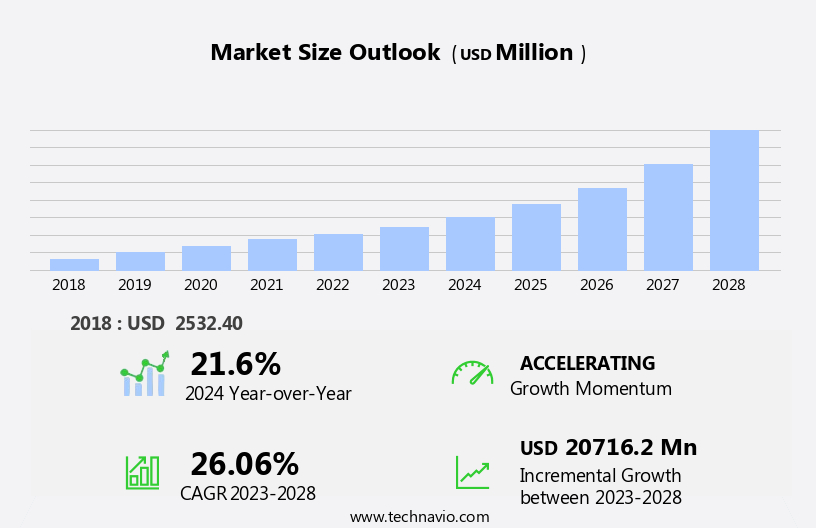
IoT Platform Market Size

Explore in-depth regional segment analysis with market size data - historical 2018-2022 and forecasts 2024-2028 - in the full report.  
Request Free Sample

The Internet of Things (IoT) platform market continues to evolve, driven by the increasing deployment of wireless sensors and the adoption of open-source platforms. The integration of application programming interfaces (APIs) and system architecture designs into the software development lifecycle facilitates seamless network bandwidth optimization and real-time data streaming. Proprietary platform solutions offer advanced features, while low-power wide-area networks ensure power consumption metrics are maintained. Data storage infrastructure and data analytics pipelines are crucial components, requiring data aggregation protocols and cross-platform compatibility for effective data integration strategies. Cloud platform integration and IoT device authentication are essential for secure data handling.

Predictive maintenance models and firmware updates processes rely on data visualization dashboards and machine learning algorithms for efficient analysis. Network latency reduction and sensor network topology optimization are ongoing efforts to enhance system performance. Hardware compatibility issues persist, necessitating edge computing gateways and device provisioning processes. Security protocols implementation and data governance frameworks are crucial for safeguarding sensitive information. Remote device management and monitoring systems enable real-time system scalability testing and data encryption techniques for enhanced security. APIs and network connectivity standards continue to evolve, ensuring continuous integration and improvement in the IoT ecosystem. The market's dynamics remain fluid, with ongoing innovation and development shaping its future applications across various sectors.

How is this IoT Platform Industry segmented?

The iot platform industry research report provides comprehensive data (region-wise segment analysis), with forecasts and estimates in "USD million" for the period 2024-2028, as well as historical data from 2018-2022 for the following segments.

  • End-user
    • Manufacturing
    • Retail
    • Healthcare
    • ICT
    • Others
  • Deployment
    • Public cloud
    • Private cloud
    • Hybrid
  • Geography
    • North America
      • US
    • Europe
      • Germany
      • UK
    • APAC
      • China
      • Japan
    • Rest of World (ROW)

By End-user Insights

The manufacturing segment is estimated to witness significant growth during the forecast period.

In the IoT market, device interoperability and cross-platform compatibility are crucial for seamless integration of various machines and devices into the Internet of Things ecosystem. Data storage infrastructure and analytics pipelines enable businesses to derive valuable insights from the massive data generated by these connected devices. Power consumption metrics and firmware updates are essential considerations for managing the energy efficiency and maintenance of IoT devices. Predictive maintenance models and real-time data streaming help optimize operations and improve productivity. Manufacturing segments are increasingly adopting IoT technology for inventory management and performance optimization. However, challenges such as heavy investments, security concerns, lack of standardization, and interoperability issues persist.

Open-source platform adoption and API connectivity standards facilitate collaboration and ease of integration. Data visualization dashboards and edge computing gateways provide actionable insights for businesses. Network bandwidth optimization and low-power wide-area networks are essential for efficient data transmission and extended battery life of IoT devices. Cloud platform integration and data governance frameworks ensure secure data access and management. IoT device authentication and security protocols implementation are vital for safeguarding data and maintaining privacy. Network latency reduction and sensor network topology optimization are essential for real-time data processing and analysis. Hardware compatibility issues and system scalability testing are ongoing challenges for IoT device manufacturers.

Machine learning algorithms and remote device management systems enable predictive maintenance and proactive troubleshooting. Data integration strategies and system architecture design are essential for seamless data flow and efficient processing. Overall, the IoT market is evolving rapidly, with a focus on improving interoperability, security, and efficiency.
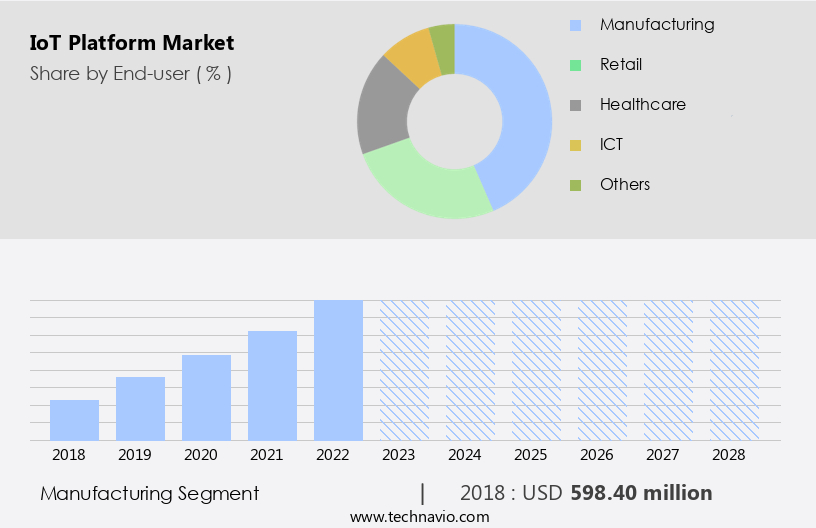
IoT Platform Market Size

Request Free Sample

The Manufacturing segment was valued at USD 598.40 billion in 2018 and showed a gradual increase during the forecast period.

Regional Analysis

APAC is estimated to contribute 42% to the growth of the global market during the forecast period. Technavio's analysts have elaborately explained the regional trends and drivers that shape the market during the forecast period.
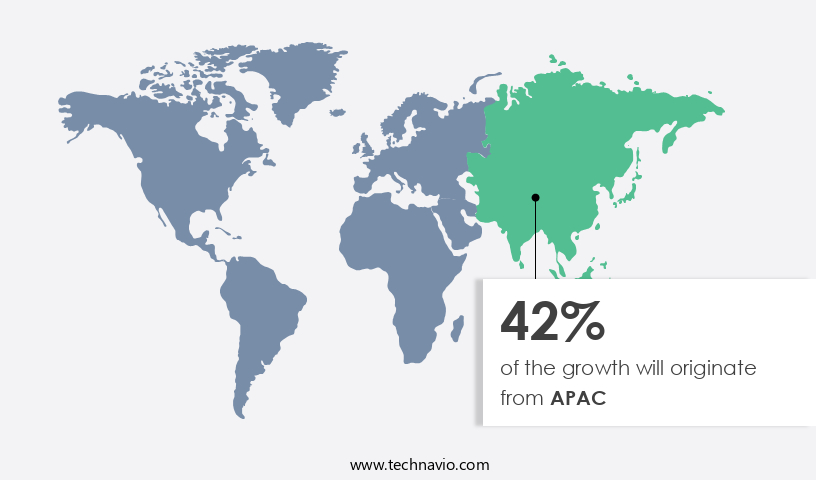
IoT Platform Market Share by Geography

 Request Free Sample

The market in North America is experiencing significant growth, fueled by the expanding industrial, automotive, and healthcare sectors. These industries are adopting IoT solutions to enhance operational efficiency and gain a competitive edge. The federal government's legislation, including the Affordable Care Act and the HITECH Act, is accelerating the adoption of advanced technologies such as telehealth, mHealth, and nanomedicine, to improve patient care. The region's IoT market growth is further propelled by the expansion of mobile network infrastructure and the increasing adoption of cloud computing. IoT devices require substantial data storage infrastructure and analytics pipelines to process and analyze data in real-time.

Cross-platform compatibility and data visualization dashboards enable seamless data aggregation and integration with various systems. Power consumption metrics and predictive maintenance models are crucial for managing IoT devices' performance and longevity. Firmware updates and data security are essential considerations for IoT platform providers. Open-source platforms and application programming interfaces offer flexibility and customization, while system architecture design and software development lifecycle ensure scalability and reliability. Network bandwidth optimization and low-power wide-area networks are essential for efficient data transmission and reducing power consumption. Device provisioning and authentication processes ensure secure connectivity and data privacy. Security protocols implementation and network latency reduction are critical for maintaining system performance and reliability.

Sensor network topology, hardware compatibility issues, and edge computing gateways are essential considerations for IoT platform design. Data governance frameworks, remote device management, and remote monitoring systems enable real-time data streaming and machine learning algorithms for actionable insights. System scalability testing, data encryption techniques, and api connectivity standards ensure platform reliability and security.

Market Dynamics

Our researchers analyzed the data with 2023 as the base year, along with the key drivers, trends, and challenges. A holistic analysis of drivers will help companies refine their marketing strategies to gain a competitive advantage.

What are the key market drivers leading to the rise in the adoption of IoT Platform Industry?

  • The significant advantages derived from large-scale IoT device implementation serve as the primary catalyst fueling market growth. 
  • The Internet of Things (IoT) market is experiencing significant growth due to the increasing adoption of connected devices across various industries. According to recent estimates, over 35 billion devices are expected to be part of this interconnected ecosystem in 2021. IoT devices collect data from sensors and actuators in real-time, transmitting it to a centralized location for analysis. This data enables informed decision-making and drives operational efficiency. Device interoperability and cross-platform compatibility are crucial considerations for organizations implementing IoT solutions. Data storage infrastructure, data analytics pipelines, and data visualization dashboards are essential components of an effective IoT strategy. Power consumption metrics and predictive maintenance models are also vital for optimizing device performance and reducing downtime.
  • Firmware updates and data aggregation protocols are essential for maintaining the security and reliability of IoT devices. The IoT landscape integrates various technologies, including data communication, data storage, hardware design, and data mining. Its advantages, such as real-time data processing, improved efficiency, and enhanced productivity, make it a trending topic in the global technology arena. 

What are the market trends shaping the IoT Platform Industry?

  • Open Wi-Fi network development is gaining significant traction in the current market. This trend reflects the increasing demand for accessible and convenient wireless connectivity solutions.
  • The Internet of Things (IoT) market is experiencing significant growth, driven by the deployment of wireless sensors and open-source platform adoption. This technological shift is leading to an increase in real-time data streaming and network bandwidth optimization. System architecture design and software development lifecycle are crucial aspects of IoT, with application programming interfaces (APIs) playing a vital role in facilitating seamless communication between various components. Proprietary platform solutions are also gaining traction due to their ability to offer customized features and enhanced security. The use of low-power wide-area networks (LPWANs) is becoming increasingly popular for IoT applications, as they enable long-range connectivity with minimal power consumption.
  • These advancements are contributing to the expansion of the IoT market, with applications spanning various industries and sectors. Network connectivity is a key challenge in the IoT landscape, with the need for reliable and efficient communication between devices and the cloud. The adoption of open-source platforms and the development of APIs are helping to address this issue, allowing for interoperability and easier integration of new devices and services. In conclusion, the IoT market is witnessing dynamic growth, driven by the deployment of wireless sensors, open-source platform adoption, and the use of LPWANs. System architecture design and software development lifecycle are essential components of IoT, with APIs playing a crucial role in facilitating seamless communication between various components.
  • The market's continued expansion is expected to bring about numerous opportunities and challenges, requiring a collaborative effort from industry players, researchers, and policymakers.

What challenges does the IoT Platform Industry face during its growth?

  • The escalating concerns over privacy and security represent a significant challenge to the expansion of various industries. 
  • The Internet of Things (IoT) market faces significant challenges in ensuring security for device provisioning and data integration. IoT devices require secure authentication and implementation of robust security protocols to prevent cyberattacks. Network latency reduction and optimizing sensor network topology are also crucial to maintain seamless communication between devices. Hardware compatibility issues can hinder the integration of various devices into a unified cloud platform. Edge computing gateways offer a solution by processing data locally before sending it to the cloud, reducing the amount of data transmitted and improving overall system performance.
  • Security remains a major concern for both consumers and enterprises, as hacking IoT devices can result in serious consequences, such as blackouts or exposure of sensitive information. Ensuring secure device provisioning and data integration strategies, along with the implementation of advanced security protocols, is essential to build consumer trust and drive market growth.

Exclusive Customer Landscape

The iot platform market forecasting report includes the adoption lifecycle of the market, covering from the innovator's stage to the laggard's stage. It focuses on adoption rates in different regions based on penetration. Furthermore, the iot platform market report also includes key purchase criteria and drivers of price sensitivity to help companies evaluate and develop their market growth analysis strategies.
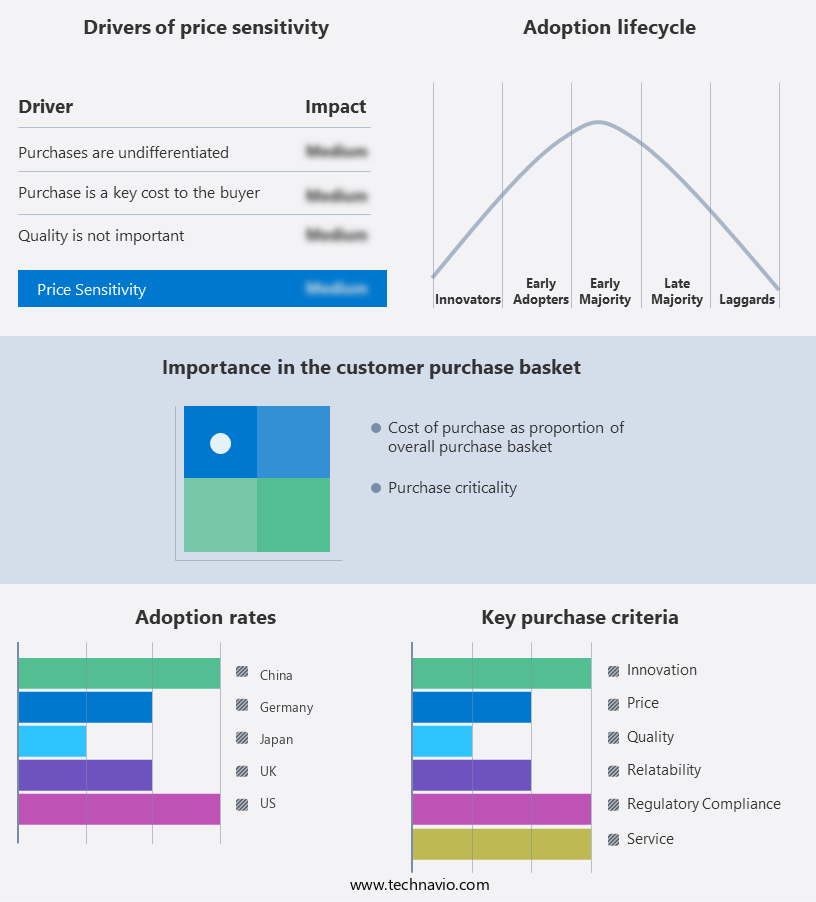
IoT Platform Market Share by Geography

 Customer Landscape

Key Companies & Market Insights

Companies are implementing various strategies, such as strategic alliances, iot platform market forecast, partnerships, mergers and acquisitions, geographical expansion, and product/service launches, to enhance their presence in the industry.

Accenture Plc - The Accenture Insights Platform is a leading Internet of Things (IoT) solution that enables businesses to analyze and optimize their connected devices and operations in real-time. 

The industry research and growth report includes detailed analyses of the competitive landscape of the market and information about key companies, including:

  • Accenture Plc
  • Alphabet Inc.
  • Amazon.com Inc.
  • AT and T Inc.
  • Axiros GmbH
  • Cisco Systems Inc.
  • Davra
  • Echelon Solutions Group
  • General Electric Co.
  • Huawei Technologies Co. Ltd.
  • Intel Corp.
  • International Business Machines Corp.
  • Microsoft Corp.
  • Nokia Corp.
  • PTC Inc.
  • Salesforce Inc.
  • Samsung Electronics Co. Ltd.
  • SAP SE
  • Siemens AG
  • Wipro Ltd.

Qualitative and quantitative analysis of companies has been conducted to help clients understand the wider business environment as well as the strengths and weaknesses of key industry players. Data is qualitatively analyzed to categorize companies as pure play, category-focused, industry-focused, and diversified; it is quantitatively analyzed to categorize companies as dominant, leading, strong, tentative, and weak.

Recent Development and News in IoT Platform Market

  • In January 2024, IBM announced the acquisition of Sigfox's IoT services business, expanding its footprint in the low-power, wide-area network (LPWAN) segment (IBM Press Release).
  • In March 2024, Microsoft and Amazon Web Services (AWS) formed a strategic partnership, allowing seamless integration of their respective IoT platforms, Azure IoT and AWS IoT, to cater to enterprise customers (Microsoft Blog).
  • In April 2024, Siemens and Google Cloud entered into a collaboration to develop an IoT operating system, MindSphere Edge, aimed at enhancing industrial IoT applications with edge computing capabilities (Siemens Press Release).
  • In May 2025, PTC secured a strategic investment of USD500 million from Koch Industries, further strengthening its position in the market (PTC Press Release). These developments underscore the ongoing consolidation, strategic partnerships, and investment in the market, driving innovation and growth.

Research Analyst Overview

  • The Internet of Things (IoT) platform market is experiencing dynamic growth, driven by the increasing adoption of RESTful API services for seamless data exchange between devices and applications. Data quality assessment is paramount, with network security measures and data privacy compliance ensuring the protection of sensitive information. Predictive analytics deployment and system uptime monitoring enable proactive problem-solving, while MQTT protocol support and alerting and notification systems facilitate real-time communication. User interface design plays a crucial role in ensuring user-friendly experiences, with statistical data analysis and actuator control systems enabling data-driven decision making. Scalability architecture, sensor data processing, and websocket communication optimize system performance, reducing cloud infrastructure costs.
  • Time series forecasting, hardware lifecycle management, and decision support systems further enhance operational efficiency. Security vulnerability testing, regression modeling techniques, software version control, clustering algorithms application, anomaly detection methods, and data modeling techniques are essential components of robust IoT platform solutions. System performance tuning and CoAP protocol usage ensure optimal network communication, enabling businesses to harness the full potential of IoT technologies.

Dive into Technavio's robust research methodology, blending expert interviews, extensive data synthesis, and validated models for unparalleled IoT Platform Market insights. See full methodology.

Market Scope

Report Coverage

Details

Page number

197

Base year

2023

Historic period

2018-2022

Forecast period

2024-2028

Growth momentum & CAGR

Accelerate at a CAGR of 26.06%

Market growth 2024-2028

USD 20716.2 million

Market structure

Fragmented

YoY growth 2023-2024(%)

21.6

Key countries

US, China, Germany, Japan, and UK

Competitive landscape

Leading Companies, Market Positioning of Companies, Competitive Strategies, and Industry Risks

Request Free Sample

What are the Key Data Covered in this IoT Platform Market Research and Growth Report?

  • CAGR of the IoT Platform industry during the forecast period
  • Detailed information on factors that will drive the growth and forecasting between 2024 and 2028
  • Precise estimation of the size of the market and its contribution of the industry in focus to the parent market
  • Accurate predictions about upcoming growth and trends and changes in consumer behaviour
  • Growth of the market across North America, Europe, APAC, Middle East and Africa, and South America
  • Thorough analysis of the market's competitive landscape and detailed information about companies
  • Comprehensive analysis of factors that will challenge the iot platform market growth of industry companies

We can help! Our analysts can customize this iot platform market research report to meet your requirements.

Get in touch

1 Executive Summary

  • 1.1 Market overview
    • Executive Summary - Chart on Market Overview
    • Executive Summary - Data Table on Market Overview
    • Executive Summary - Chart on Global Market Characteristics
    • Executive Summary - Chart on Market by Geography
    • Executive Summary - Chart on Market Segmentation by End-user
    • Executive Summary - Chart on Market Segmentation by Deployment
    • Executive Summary - Chart on Incremental Growth
    • Executive Summary - Data Table on Incremental Growth
    • Executive Summary - Chart on Company Market Positioning

2 Market Landscape

  • 2.1 Market ecosystem
    • Parent Market
    • Data Table on - Parent Market
  • 2.2 Market characteristics
    • Market characteristics analysis
  • 2.3 Value chain analysis
    • Value Chain Analysis

3 Market Sizing

  • 3.1 Market definition
    • Offerings of companies included in the market definition
  • 3.2 Market segment analysis
    • Market segments
  • 3.3 Market size 2023
    • 3.4 Market outlook: Forecast for 2023-2028
      • Chart on Global - Market size and forecast 2023-2028 ($ million)
      • Data Table on Global - Market size and forecast 2023-2028 ($ million)
      • Chart on Global Market: Year-over-year growth 2023-2028 (%)
      • Data Table on Global Market: Year-over-year growth 2023-2028 (%)

    4 Historic Market Size

    • 4.1 Global IoT Platform Market 2018 - 2022
      • Historic Market Size - Data Table on Global IoT Platform Market 2018 - 2022 ($ million)
    • 4.2 End-user segment analysis 2018 - 2022
      • Historic Market Size - End-user Segment 2018 - 2022 ($ million)
    • 4.3 Deployment segment analysis 2018 - 2022
      • Historic Market Size - Deployment Segment 2018 - 2022 ($ million)
    • 4.4 Geography segment analysis 2018 - 2022
      • Historic Market Size - Geography Segment 2018 - 2022 ($ million)
    • 4.5 Country segment analysis 2018 - 2022
      • Historic Market Size - Country Segment 2018 - 2022 ($ million)

    5 Five Forces Analysis

    • 5.1 Five forces summary
      • Five forces analysis - Comparison between 2023 and 2028
    • 5.2 Bargaining power of buyers
      • Bargaining power of buyers - Impact of key factors 2023 and 2028
    • 5.3 Bargaining power of suppliers
      • Bargaining power of suppliers - Impact of key factors in 2023 and 2028
    • 5.4 Threat of new entrants
      • Threat of new entrants - Impact of key factors in 2023 and 2028
    • 5.5 Threat of substitutes
      • Threat of substitutes - Impact of key factors in 2023 and 2028
    • 5.6 Threat of rivalry
      • Threat of rivalry - Impact of key factors in 2023 and 2028
    • 5.7 Market condition
      • Chart on Market condition - Five forces 2023 and 2028

    6 Market Segmentation by End-user

    • 6.1 Market segments
      • Chart on End-user - Market share 2023-2028 (%)
      • Data Table on End-user - Market share 2023-2028 (%)
    • 6.2 Comparison by End-user
      • Chart on Comparison by End-user
      • Data Table on Comparison by End-user
    • 6.3 Manufacturing - Market size and forecast 2023-2028
      • Chart on Manufacturing - Market size and forecast 2023-2028 ($ million)
      • Data Table on Manufacturing - Market size and forecast 2023-2028 ($ million)
      • Chart on Manufacturing - Year-over-year growth 2023-2028 (%)
      • Data Table on Manufacturing - Year-over-year growth 2023-2028 (%)
    • 6.4 Retail - Market size and forecast 2023-2028
      • Chart on Retail - Market size and forecast 2023-2028 ($ million)
      • Data Table on Retail - Market size and forecast 2023-2028 ($ million)
      • Chart on Retail - Year-over-year growth 2023-2028 (%)
      • Data Table on Retail - Year-over-year growth 2023-2028 (%)
    • 6.5 Healthcare - Market size and forecast 2023-2028
      • Chart on Healthcare - Market size and forecast 2023-2028 ($ million)
      • Data Table on Healthcare - Market size and forecast 2023-2028 ($ million)
      • Chart on Healthcare - Year-over-year growth 2023-2028 (%)
      • Data Table on Healthcare - Year-over-year growth 2023-2028 (%)
    • 6.6 ICT - Market size and forecast 2023-2028
      • Chart on ICT - Market size and forecast 2023-2028 ($ million)
      • Data Table on ICT - Market size and forecast 2023-2028 ($ million)
      • Chart on ICT - Year-over-year growth 2023-2028 (%)
      • Data Table on ICT - Year-over-year growth 2023-2028 (%)
    • 6.7 Others - Market size and forecast 2023-2028
      • Chart on Others - Market size and forecast 2023-2028 ($ million)
      • Data Table on Others - Market size and forecast 2023-2028 ($ million)
      • Chart on Others - Year-over-year growth 2023-2028 (%)
      • Data Table on Others - Year-over-year growth 2023-2028 (%)
    • 6.8 Market opportunity by End-user
      • Market opportunity by End-user ($ million)
      • Data Table on Market opportunity by End-user ($ million)

    7 Market Segmentation by Deployment

    • 7.1 Market segments
      • Chart on Deployment - Market share 2023-2028 (%)
      • Data Table on Deployment - Market share 2023-2028 (%)
    • 7.2 Comparison by Deployment
      • Chart on Comparison by Deployment
      • Data Table on Comparison by Deployment
    • 7.3 Public cloud - Market size and forecast 2023-2028
      • Chart on Public cloud - Market size and forecast 2023-2028 ($ million)
      • Data Table on Public cloud - Market size and forecast 2023-2028 ($ million)
      • Chart on Public cloud - Year-over-year growth 2023-2028 (%)
      • Data Table on Public cloud - Year-over-year growth 2023-2028 (%)
    • 7.4 Private cloud - Market size and forecast 2023-2028
      • Chart on Private cloud - Market size and forecast 2023-2028 ($ million)
      • Data Table on Private cloud - Market size and forecast 2023-2028 ($ million)
      • Chart on Private cloud - Year-over-year growth 2023-2028 (%)
      • Data Table on Private cloud - Year-over-year growth 2023-2028 (%)
    • 7.5 Hybrid - Market size and forecast 2023-2028
      • Chart on Hybrid - Market size and forecast 2023-2028 ($ million)
      • Data Table on Hybrid - Market size and forecast 2023-2028 ($ million)
      • Chart on Hybrid - Year-over-year growth 2023-2028 (%)
      • Data Table on Hybrid - Year-over-year growth 2023-2028 (%)
    • 7.6 Market opportunity by Deployment
      • Market opportunity by Deployment ($ million)
      • Data Table on Market opportunity by Deployment ($ million)

    8 Customer Landscape

    • 8.1 Customer landscape overview
      • Analysis of price sensitivity, lifecycle, customer purchase basket, adoption rates, and purchase criteria

    9 Geographic Landscape

    • 9.1 Geographic segmentation
      • Chart on Market share by geography 2023-2028 (%)
      • Data Table on Market share by geography 2023-2028 (%)
    • 9.2 Geographic comparison
      • Chart on Geographic comparison
      • Data Table on Geographic comparison
    • 9.3 North America - Market size and forecast 2023-2028
      • Chart on North America - Market size and forecast 2023-2028 ($ million)
      • Data Table on North America - Market size and forecast 2023-2028 ($ million)
      • Chart on North America - Year-over-year growth 2023-2028 (%)
      • Data Table on North America - Year-over-year growth 2023-2028 (%)
    • 9.4 Europe - Market size and forecast 2023-2028
      • Chart on Europe - Market size and forecast 2023-2028 ($ million)
      • Data Table on Europe - Market size and forecast 2023-2028 ($ million)
      • Chart on Europe - Year-over-year growth 2023-2028 (%)
      • Data Table on Europe - Year-over-year growth 2023-2028 (%)
    • 9.5 APAC - Market size and forecast 2023-2028
      • Chart on APAC - Market size and forecast 2023-2028 ($ million)
      • Data Table on APAC - Market size and forecast 2023-2028 ($ million)
      • Chart on APAC - Year-over-year growth 2023-2028 (%)
      • Data Table on APAC - Year-over-year growth 2023-2028 (%)
    • 9.6 Middle East and Africa - Market size and forecast 2023-2028
      • Chart on Middle East and Africa - Market size and forecast 2023-2028 ($ million)
      • Data Table on Middle East and Africa - Market size and forecast 2023-2028 ($ million)
      • Chart on Middle East and Africa - Year-over-year growth 2023-2028 (%)
      • Data Table on Middle East and Africa - Year-over-year growth 2023-2028 (%)
    • 9.7 South America - Market size and forecast 2023-2028
      • Chart on South America - Market size and forecast 2023-2028 ($ million)
      • Data Table on South America - Market size and forecast 2023-2028 ($ million)
      • Chart on South America - Year-over-year growth 2023-2028 (%)
      • Data Table on South America - Year-over-year growth 2023-2028 (%)
    • 9.8 US - Market size and forecast 2023-2028
      • Chart on US - Market size and forecast 2023-2028 ($ million)
      • Data Table on US - Market size and forecast 2023-2028 ($ million)
      • Chart on US - Year-over-year growth 2023-2028 (%)
      • Data Table on US - Year-over-year growth 2023-2028 (%)
    • 9.9 China - Market size and forecast 2023-2028
      • Chart on China - Market size and forecast 2023-2028 ($ million)
      • Data Table on China - Market size and forecast 2023-2028 ($ million)
      • Chart on China - Year-over-year growth 2023-2028 (%)
      • Data Table on China - Year-over-year growth 2023-2028 (%)
    • 9.10 Germany - Market size and forecast 2023-2028
      • Chart on Germany - Market size and forecast 2023-2028 ($ million)
      • Data Table on Germany - Market size and forecast 2023-2028 ($ million)
      • Chart on Germany - Year-over-year growth 2023-2028 (%)
      • Data Table on Germany - Year-over-year growth 2023-2028 (%)
    • 9.11 Japan - Market size and forecast 2023-2028
      • Chart on Japan - Market size and forecast 2023-2028 ($ million)
      • Data Table on Japan - Market size and forecast 2023-2028 ($ million)
      • Chart on Japan - Year-over-year growth 2023-2028 (%)
      • Data Table on Japan - Year-over-year growth 2023-2028 (%)
    • 9.12 UK - Market size and forecast 2023-2028
      • Chart on UK - Market size and forecast 2023-2028 ($ million)
      • Data Table on UK - Market size and forecast 2023-2028 ($ million)
      • Chart on UK - Year-over-year growth 2023-2028 (%)
      • Data Table on UK - Year-over-year growth 2023-2028 (%)
    • 9.13 Market opportunity by geography
      • Market opportunity by geography ($ million)
      • Data Tables on Market opportunity by geography ($ million)

    10 Drivers, Challenges, and Opportunity/Restraints

    • 10.1 Market drivers
      • 10.2 Market challenges
        • 10.3 Impact of drivers and challenges
          • Impact of drivers and challenges in 2023 and 2028
        • 10.4 Market opportunities/restraints

          11 Competitive Landscape

          • 11.1 Overview
            • 11.2 Competitive Landscape
              • Overview on criticality of inputs and factors of differentiation
            • 11.3 Landscape disruption
              • Overview on factors of disruption
            • 11.4 Industry risks
              • Impact of key risks on business

            12 Competitive Analysis

            • 12.1 Companies profiled
              • Companies covered
            • 12.2 Market positioning of companies
              • Matrix on companies position and classification
            • 12.3 Accenture Plc
              • Accenture Plc - Overview
              • Accenture Plc - Business segments
              • Accenture Plc - Key news
              • Accenture Plc - Key offerings
              • Accenture Plc - Segment focus
            • 12.4 Alphabet Inc.
              • Alphabet Inc. - Overview
              • Alphabet Inc. - Business segments
              • Alphabet Inc. - Key offerings
              • Alphabet Inc. - Segment focus
            • 12.5 Amazon.com Inc.
              • Amazon.com Inc. - Overview
              • Amazon.com Inc. - Business segments
              • Amazon.com Inc. - Key news
              • Amazon.com Inc. - Key offerings
              • Amazon.com Inc. - Segment focus
            • 12.6 AT and T Inc.
              • AT and T Inc. - Overview
              • AT and T Inc. - Business segments
              • AT and T Inc. - Key news
              • AT and T Inc. - Key offerings
              • AT and T Inc. - Segment focus
            • 12.7 Cisco Systems Inc.
              • Cisco Systems Inc. - Overview
              • Cisco Systems Inc. - Business segments
              • Cisco Systems Inc. - Key news
              • Cisco Systems Inc. - Key offerings
              • Cisco Systems Inc. - Segment focus
            • 12.8 General Electric Co.
              • General Electric Co. - Overview
              • General Electric Co. - Business segments
              • General Electric Co. - Key news
              • General Electric Co. - Key offerings
              • General Electric Co. - Segment focus
            • 12.9 Huawei Technologies Co. Ltd.
              • Huawei Technologies Co. Ltd. - Overview
              • Huawei Technologies Co. Ltd. - Product / Service
              • Huawei Technologies Co. Ltd. - Key news
              • Huawei Technologies Co. Ltd. - Key offerings
            • 12.10 Intel Corp.
              • Intel Corp. - Overview
              • Intel Corp. - Business segments
              • Intel Corp. - Key news
              • Intel Corp. - Key offerings
              • Intel Corp. - Segment focus
            • 12.11 International Business Machines Corp.
              • International Business Machines Corp. - Overview
              • International Business Machines Corp. - Business segments
              • International Business Machines Corp. - Key news
              • International Business Machines Corp. - Key offerings
              • International Business Machines Corp. - Segment focus
            • 12.12 Microsoft Corp.
              • Microsoft Corp. - Overview
              • Microsoft Corp. - Business segments
              • Microsoft Corp. - Key news
              • Microsoft Corp. - Key offerings
              • Microsoft Corp. - Segment focus
            • 12.13 Nokia Corp.
              • Nokia Corp. - Overview
              • Nokia Corp. - Business segments
              • Nokia Corp. - Key news
              • Nokia Corp. - Key offerings
              • Nokia Corp. - Segment focus
            • 12.14 Salesforce Inc.
              • Salesforce Inc. - Overview
              • Salesforce Inc. - Product / Service
              • Salesforce Inc. - Key news
              • Salesforce Inc. - Key offerings
            • 12.15 Samsung Electronics Co. Ltd.
              • Samsung Electronics Co. Ltd. - Overview
              • Samsung Electronics Co. Ltd. - Business segments
              • Samsung Electronics Co. Ltd. - Key news
              • Samsung Electronics Co. Ltd. - Key offerings
              • Samsung Electronics Co. Ltd. - Segment focus
            • 12.16 SAP SE
              • SAP SE - Overview
              • SAP SE - Business segments
              • SAP SE - Key news
              • SAP SE - Key offerings
              • SAP SE - Segment focus
            • 12.17 Siemens AG
              • Siemens AG - Overview
              • Siemens AG - Business segments
              • Siemens AG - Key news
              • Siemens AG - Key offerings
              • Siemens AG - Segment focus

            13 Appendix

            • 13.1 Scope of the report
              • 13.2 Inclusions and exclusions checklist
                • Inclusions checklist
                • Exclusions checklist
              • 13.3 Currency conversion rates for US$
                • Currency conversion rates for US$
              • 13.4 Research methodology
                • Research methodology
              • 13.5 Data procurement
                • Information sources
              • 13.6 Data validation
                • Data validation
              • 13.7 Validation techniques employed for market sizing
                • Validation techniques employed for market sizing
              • 13.8 Data synthesis
                • Data synthesis
              • 13.9 360 degree market analysis
                • 360 degree market analysis
              • 13.10 List of abbreviations
                • List of abbreviations

              Research Methodology

              Technavio presents a detailed picture of the market by way of study, synthesis, and summation of data from multiple sources. The analysts have presented the various facets of the market with a particular focus on identifying the key industry influencers. The data thus presented is comprehensive, reliable, and the result of extensive research, both primary and secondary.

              INFORMATION SOURCES

              Primary sources

              • Manufacturers and suppliers
              • Channel partners
              • Industry experts
              • Strategic decision makers

              Secondary sources

              • Industry journals and periodicals
              • Government data
              • Financial reports of key industry players
              • Historical data
              • Press releases

              DATA ANALYSIS

              Data Synthesis

              • Collation of data
              • Estimation of key figures
              • Analysis of derived insights

              Data Validation

              • Triangulation with data models
              • Reference against proprietary databases
              • Corroboration with industry experts

              REPORT WRITING

              Qualitative

              • Market drivers
              • Market challenges
              • Market trends
              • Five forces analysis

              Quantitative

              • Market size and forecast
              • Market segmentation
              • Geographical insights
              • Competitive landscape

              Interested in this report?

              Get your sample now to see our research methodology and insights!

              Download Now

              Frequently Asked Questions

              IoT Platform market growth will increase by $ 20716.2 mn during 2024-2028.

              The IoT Platform market is expected to grow at a CAGR of 26.06% during 2024-2028.

              IoT Platform market is segmented by End-user( Manufacturing, Retail, Healthcare, ICT, Others) Deployment( Public cloud, Private cloud, Hybrid, MEA, South America)

              Accenture Plc, Alphabet Inc., Amazon.com Inc., AT and T Inc., Axiros GmbH, Cisco Systems Inc., Davra, Echelon Solutions Group, General Electric Co., Huawei Technologies Co. Ltd., Intel Corp., International Business Machines Corp., Microsoft Corp., Nokia Corp., PTC Inc., Salesforce Inc., Samsung Electronics Co. Ltd., SAP SE, Siemens AG, Wipro Ltd. are a few of the key vendors in the IoT Platform market.

              APAC will register the highest growth rate of 42% among the other regions. Therefore, the IoT Platform market in APAC is expected to garner significant business opportunities for the vendors during the forecast period.

              US, China, Germany, Japan, UK

              • Large-scale benefits of using IoT devicesThe growing emphasis on a connected environment has resulted in IoT being one of the most rapidly growing markets. An estimated 35 billion devices were expected to be a part of this connected environment in 2021. IoT devices collect data through sensors and actuators is the driving factor this market.
              • transmitting it to a centralized location on a real-time basis. This empowers the end-user to make informed decisions. The adoption of IoT devices is rising across market segments such as consumer electronics is the driving factor this market.
              • automotive is the driving factor this market.
              • and medical. An increasing number of organizations is the driving factor this market.
              • industries is the driving factor this market.
              • and technologists are adopting the IoT because of its potential applications and numerous advantages. IoT integrates technologies such as data communication is the driving factor this market.
              • data storage is the driving factor this market.
              • hardware design is the driving factor this market.
              • and mining and is the latest trend in the global technology arena. IoT connects essential electronic objects like cars is the driving factor this market.
              • TVs is the driving factor this market.
              • laptops is the driving factor this market.
              • coffee makers is the driving factor this market.
              • automated door locks is the driving factor this market.
              • mobile phones is the driving factor this market.
              • and even entire industrial process control to the Internet. High convenience: Being integrated as a part of a connected environment enables a person to transfer personal preferences to electronic devices. This helps reduce manual effort is the driving factor this market.
              • removes errors is the driving factor this market.
              • and makes work hassle-free. The application of the IoT network is possible in homes or offices is the driving factor this market.
              • making appliances more responsive to external conditions. For instance is the driving factor this market.
              • in a home environment having one device connected to the IoT network enables the air conditioner to set the temperature desired by the user is the driving factor this market.
              • while the workstation automatically detects a person mood to play music accordingly or play the user favorite music as soon as the person steps indoors. The individual can also switch off kitchen appliances such as microwaves and ovens from any location in the house.Improved decision-making: Using the IoT network can help resolve any supply chain issues is the driving factor this market.
              • improving the entire chain network altogether. Sensors fitted in the storage areas allow real-time monitoring of stock is the driving factor this market.
              • be it groceries at home or inventories at companies. On reaching a pre-set value is the driving factor this market.
              • the concerned individual is immediately alerted about the status. The technology can also help create self-analyzing devices that enable people to make decisions beforehand and save them from stock-outs is the driving factor this market.
              • delays is the driving factor this market.
              • and wastages. Improved handling of emergencies: At the time of a crisis or disaster is the driving factor this market.
              • being connected through IoT devices can be highly beneficial and can play the role of a lifesaver. For instance is the driving factor this market.
              • being connected to the IoT network with an individual mobile device can help track the whereabouts remotely during emergencies. Drones can also be connected to this network to assess the level of damage in disaster-hit areas and can help in providing supplies. During the COVID-19 crisis is the driving factor this market.
              • the Japanese company is the driving factor this market.
              • Terra Drone Corp. (Terra Drone) is the driving factor this market.
              • employed drones to transport supplies in China. Governments and law enforcement throughout China is the driving factor this market.
              • France is the driving factor this market.
              • Spain is the driving factor this market.
              • and the US are also using drones to monitor and ensure compliance with lockdown orders imposed due to the disease. Drones are also being used to spray disinfecting chemicals in some public spaces and on vehicles traveling between COVID-19-impacted areas. Improves quality of life: The IoT network helps to enhance the quality of life at home or at the workplace. Being connected to this network through IoT devices allows a coffee machine to prepare coffee as soon as the alarm rings. Based on use is the driving factor this market.
              • the desired file opens on the computer as soon as the user sits at his workstation. Being connected to the IoT network thus offers a smarter and more modernized lifestyle to people with its timely solutions and self-operating ways. For instance is the driving factor this market.
              • Wi-Fi-enabled "hue" lightbulbs can be programmed to turn on and off using a smartphone or a tablet. This creates an awareness of energy conservation. In addition is the driving factor this market.
              • the use of smart locks allows end-users to use mobile devices as the key to lock and unlock doors from remote locations. Remote access: The advent of IoT technology has led to concepts such as connected homes is the driving factor this market.
              • smart kitchens is the driving factor this market.
              • and connected offices becoming a reality. People can use their smartphones and tablets to control appliances such as toasters is the driving factor this market.
              • doors is the driving factor this market.
              • ovens is the driving factor this market.
              • fridges is the driving factor this market.
              • and other electronic devices that can connect to the network. Regardless of the brand or the operating system of the devices is the driving factor this market.
              • they can be connected is the driving factor this market.
              • giving remote access to the user. This helps reduce the complexity of managing different devices from different places to a large extent. In addition is the driving factor this market.
              • during the COVID-19 crisis is the driving factor this market.
              • IoT technology is helping in remote condition monitoring and management of assets. Furthermore is the driving factor this market.
              • it is used for monitoring the health (vital signs) of patients with COVID-19. Commercial benefit: Using IoT networks is the driving factor this market.
              • both large enterprises and SMEs can improve their efficiency levels and productivity. The technology is used for efficient inventory control and managing customer queries is the driving factor this market.
              • among others. The use of such unconventional business models and processes can help companies enhance profit margins and gain a competitive edge in the market. The above-mentioned advantages of using IoT devices are encouraging consumers to purchase more devices that can be connected to each other over the IoT network and share information. This IoT network and the devices are connected to each other using the IoT platform as a medium. This is the driving factor this market.
              • in turn is the driving factor this market.
              • will create scalable market opportunities for the IoT platform market on a global scale.This is the driving factor this market.
              • the above-mentioned benefits associated with using IoT devices will fuel the growth of the global IoT platform market during the forecast period. is the driving factor this market.

              The IoT Platform market vendors should focus on grabbing business opportunities from the Manufacturing segment as it accounted for the largest market share in the base year.
