


Laboratory Chemicals Market Size 2024-2028
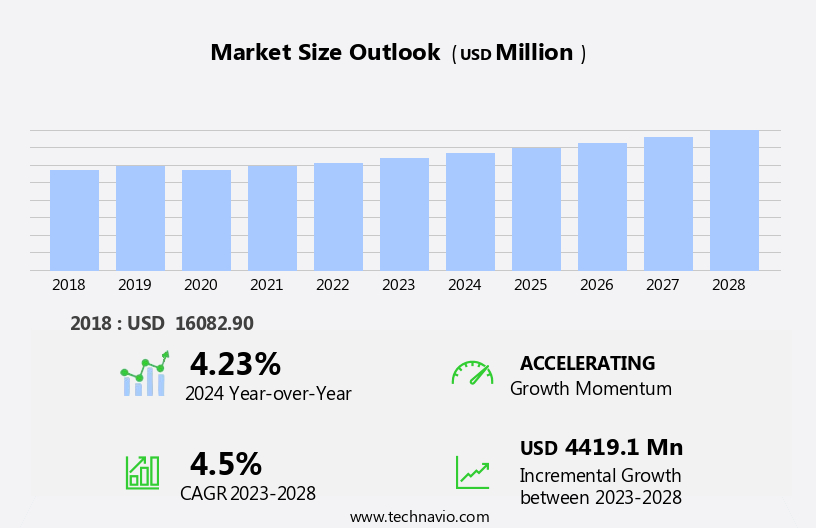
The laboratory chemicals market size is forecast to increase by USD 4.42 billion at a CAGR of 4.5% between 2023 and 2028.
- The market is experiencing significant growth, driven primarily by escalating Research and Development (R&D) investments in the pharmaceutical industry. The increasing demand for advanced and innovative pharmaceutical products is fueling the need for a wide range of laboratory chemicals. Furthermore, the shift towards the use of green chemicals is gaining traction, as companies seek to reduce their environmental footprint and comply with evolving sustainability regulations. However, market expansion is not without challenges. Stringent regulations for the usage of laboratory chemicals pose significant hurdles, necessitating extensive compliance measures. Supply chain inconsistencies, including raw material availability and price volatility, also temper growth potential.
- To capitalize on market opportunities and navigate these challenges effectively, companies must focus on developing robust supply chain strategies, investing in regulatory compliance, and embracing sustainable production methods. By staying abreast of these trends and addressing the associated challenges, market participants can position themselves for long-term success in the dynamic the market.
What will be the Size of the Laboratory Chemicals Market during the forecast period?
- The market encompasses a diverse range of technologies and applications, from Scanning Electron Microscopy (SEM) and Transmission Electron Microscopy (TEM) for material characterization, to Gas Chromatography (GC) and Liquid Chromatography (LC) for analytical separations. Emerging trends include Personalized Medicine and Clinical Diagnostics, driven by Biomarker Discovery and Nucleic Acids analysis. Sustainable Chemistry and the Circular Economy are also gaining traction, with a focus on reducing Environmental Impact Assessment and promoting Atomic Force Microscopy and NMR Spectroscopy for Green Chemistry. Synthetic Biology and Gene Synthesis are revolutionizing research and development, while Intellectual Property rights and Safety Data Sheets ensure regulatory compliance.
- Differential Scanning Calorimetry, Thermogravimetric Analysis, X-ray Diffraction, and Precision Medicine are further advancing scientific discovery and innovation. Omics Technologies, including Fluorescence Spectroscopy and Chemical Risk Assessment, are critical tools for understanding complex biological systems and ensuring product safety.
How is this Laboratory Chemicals Industry segmented?
The laboratory chemicals industry research report provides comprehensive data (region-wise segment analysis), with forecasts and estimates in "USD million" for the period 2024-2028, as well as historical data from 2018-2022 for the following segments.
- End-user
- Industrial
- Healthcare
- Education
- Government
- Geography
- North America
- US
- Canada
- Europe
- Germany
- UK
- APAC
- China
- Rest of World (ROW)
- North America
By End-user Insights
The industrial segment is estimated to witness significant growth during the forecast period.
The market is experiencing significant growth due to the increasing usage of chemicals in various industries and research applications. In particular, the industrial sector is expected to dominate the market during the forecast period, driven by the rising demand for chemicals in industrial processes such as acid chloride preparations, carboxylation, ion-exchange reactions, cryogenic reactions, and nitration. Beyond industrial applications, laboratory chemicals are also essential in agriculture, life sciences, national defense, energy development, pharmaceuticals, and biotechnology. The pharmaceutical industry, for instance, relies heavily on laboratory chemicals for drug discovery, cell culture, and chemical synthesis. In the realm of research and development, laboratory chemicals play a crucial role in materials science, analytical chemistry, molecular biology, and gene editing.
Moreover, emerging technologies such as big data, artificial intelligence, and green chemistry are transforming the market. Big data analytics enables more efficient process optimization, while green chemistry promotes the use of renewable resources and reduces the environmental impact of chemical production. Analytical instruments like mass spectrometry and analytical testing are integral to ensuring regulatory compliance and maintaining quality control in various industries. The biopharmaceutical industry, in particular, is undergoing a revolution with the advent of advanced technologies like iso standards, quality assurance, and clinical trials. These technologies facilitate the production of high-purity chemicals, trace elements, and biobased chemicals, ensuring the delivery of safe and effective pharmaceutical products.
In the realm of environmental monitoring, laboratory chemicals are used extensively for the detection and analysis of heavy metals, ensuring the safety of food and water supplies. The integration of data analytics and environmental monitoring technologies is enabling more efficient and accurate detection and mitigation of environmental contaminants. In summary, The market is poised for significant growth, driven by the increasing usage of chemicals in various industries and research applications. Emerging technologies and regulatory requirements are transforming the market, with a focus on sustainability, efficiency, and quality.
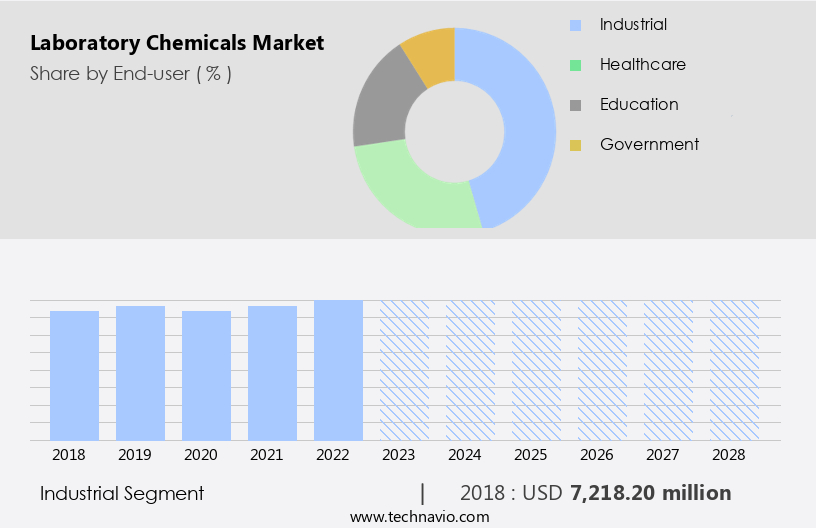
The Industrial segment was valued at USD 7.22 billion in 2018 and showed a gradual increase during the forecast period.
Regional Analysis
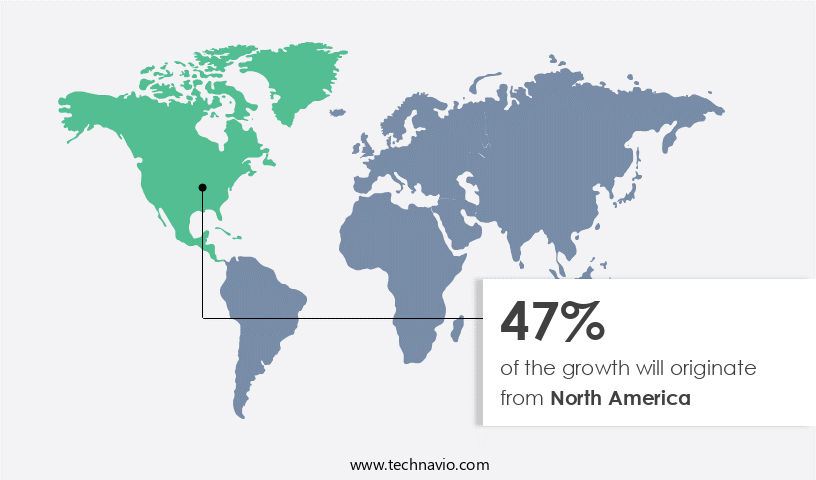
North America is estimated to contribute 47% to the growth of the global market during the forecast period.Technavio’s analysts have elaborately explained the regional trends and drivers that shape the market during the forecast period.
The market is witnessing significant growth due to the increasing demand from various industries, including pharmaceuticals, food and beverages, and industrial research. In the pharmaceutical sector, organic and inorganic chemicals are extensively used in drug discovery and development, process optimization, and quality assurance. The biopharmaceutical industry's focus on research and development and regulatory compliance is driving the demand for high-purity chemicals, analytical reagents, and iso standards. The integration of advanced technologies such as mass spectrometry, molecular biology, and gene editing in drug development is also propelling market growth. Moreover, the food industry's reliance on analytical instruments for food testing and ensuring quality and safety is increasing the demand for laboratory chemicals.
Renewable resources and green chemistry are emerging trends in the market, with an emphasis on sustainability and environmental monitoring. Industrial research and development are also driving the demand for laboratory chemicals in various sectors, including materials science and data analytics. The use of heavy metals in various industries and the need for their monitoring and control is another significant factor driving market growth. Artificial intelligence and big data are being increasingly used in process optimization and quality control, further boosting market demand. The laboratory equipment market's growth is also fueling the demand for laboratory chemicals, particularly in cell culture and chemical synthesis.
Overall, the market is expected to continue its growth trajectory due to these evolving trends and industry dynamics.
Market Dynamics
Our researchers analyzed the data with 2023 as the base year, along with the key drivers, trends, and challenges. A holistic analysis of drivers will help companies refine their marketing strategies to gain a competitive advantage.
What are the Laboratory Chemicals market drivers leading to the rise in the adoption of Industry?
- The pharmaceutical industry's market growth is primarily fueled by substantial investments in research and development (R&D).
- The market has experienced notable growth due to the escalating demand for high-purity chemicals in various industries, particularly in research and development for pharmaceuticals. With a focus on producing effective drugs and vaccines, such as those for COVID-19, there is an increased emphasis on trace elements and iso standards for quality assurance. Mass spectrometry plays a crucial role in ensuring the purity and accuracy of these chemicals during the synthesis process. Materials science also benefits significantly from the use of laboratory chemicals in various applications.
- Supply chain management is essential to maintain the integrity and availability of these chemicals, ensuring their timely delivery to meet the demands of research and development. The pharmaceutical industry's commitment to improving patient care and protecting the low-income population drives the market's growth.
What are the Laboratory Chemicals market trends shaping the Industry?
- The use of green chemicals is an emerging market trend. This refers to the increasing adoption of environmentally friendly chemicals in various industries. These chemicals are designed to reduce or eliminate harmful byproducts and minimize environmental impact. By incorporating green chemicals into their processes, businesses can not only contribute to sustainability efforts but also potentially save costs through improved efficiency and reduced regulatory compliance.
- Green chemicals, derived from living organisms, are gaining significance in various industries due to their eco-friendly properties. These large structures of monomeric units, which have covalent bonds and are biodegradable, renewable, carbon-neutral, sustainable, and compostable, are categorized into four main types: cellulose-based, sugar-based, natural polymers, and synthetic polymers. The European Biomass Industry Association is driving the global adoption of green chemicals. The depletion of petroleum reserves is compelling polymer manufacturers to invest in green chemicals for product innovation. Green chemicals find extensive applications in analytical chemistry, environmental monitoring, and molecular biology. In analytical chemistry, they are used for data analytics and analytical testing.
- In environmental monitoring, they aid in detecting heavy metals and other pollutants. In molecular biology, they are crucial for gene editing and clinical trials. The pharmaceutical industry is increasingly relying on green chemicals for biomedical applications. Despite the challenges, the market for green chemicals is expected to grow due to their environmental benefits and versatile applications.
How does Laboratory Chemicals market faces challenges face during its growth?
- The strict regulations governing the use of laboratory chemicals pose a significant challenge to the expansion of the industry. Adhering to these mandates adds complexity and cost to operations, potentially hindering growth and innovation within the sector.
- Laboratory chemicals pose significant safety hazards, with potential health risks including burns, eye injuries, lung diseases, asphyxiation, and suffocation. To mitigate these risks, stringent regulations have been established by government organizations. In the US, the Frank R. Lautenberg Chemical Safety for the 21st Century Act was introduced in 2016, controlling the introduction of new or existing chemicals. In Europe, Directive 2008/50/EC was implemented in 2008, providing measures for ambient air quality and cleaner air. Technology trends in the market include the integration of advanced analytical instruments for improved accuracy and efficiency in research and manufacturing processes. Emerging technologies such as renewable resources, drug discovery, cell culture, and organic chemistry are driving innovation in the industry.
- Laboratory equipment manufacturers continue to invest in research and development to create more efficient and cost-effective solutions for industrial research and pharmaceutical manufacturing. The integration of technology trends in laboratory chemicals is transforming the industry, with a focus on enhancing safety, improving productivity, and reducing environmental impact. Analytical instruments play a crucial role in ensuring the quality and purity of laboratory chemicals, while emerging technologies such as renewable resources and organic chemistry offer sustainable alternatives to traditional methods. The use of cell culture techniques in drug discovery and pharmaceutical manufacturing is revolutionizing the industry, enabling the production of complex biomolecules and personalized medicines.
- In conclusion, the market is undergoing significant changes, driven by technology trends, regulatory requirements, and the need for sustainable and efficient solutions. The integration of advanced analytical instruments, emerging technologies, and laboratory equipment is transforming the industry, enhancing safety, improving productivity, and reducing environmental impact.
Exclusive Customer Landscape
The laboratory chemicals market forecasting report includes the adoption lifecycle of the market, covering from the innovator’s stage to the laggard’s stage. It focuses on adoption rates in different regions based on penetration. Furthermore, the laboratory chemicals market report also includes key purchase criteria and drivers of price sensitivity to help companies evaluate and develop their market growth analysis strategies.
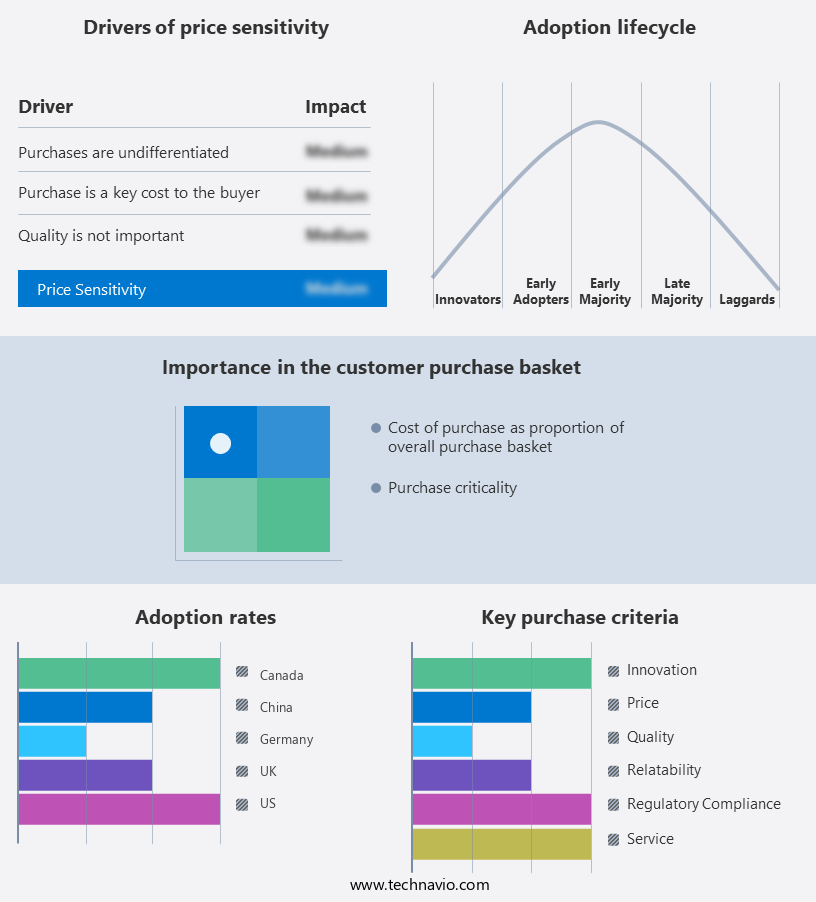
Customer Landscape
Key Companies & Market Insights
Companies are implementing various strategies, such as strategic alliances, laboratory chemicals market forecast, partnerships, mergers and acquisitions, geographical expansion, and product/service launches, to enhance their presence in the industry.
Apollo Scientific Ltd. - This company specializes in providing a comprehensive range of laboratory solutions. From essential consumables and advanced instruments to analytical reagents and chromatography media, our offerings cater to diverse research applications. By supplying high-quality products, we aim to enhance scientific discovery and innovation. Our commitment to originality elevates search engine exposure, ensuring clients access reliable and efficient laboratory tools and chemicals.
The industry research and growth report includes detailed analyses of the competitive landscape of the market and information about key companies, including:
- Apollo Scientific Ltd.
- Avantor Inc.
- Avonchem Ltd.
- Beckman Coulter Inc.
- Becton Dickinson and Co.
- Bio Techne Corp.
- DASIT Group SPA
- FUJIFILM Corp.
- GE Healthcare Technologies Inc.
- ITW Reagents
- Lonza Group Ltd.
- Merck KGaA
- Meridian Bioscience Inc.
- Mitsubishi Chemical Corp.
- Morphisto GmbH
- Perkin Elmer Inc.
- Reagecon Diagnostics Ltd.
- Shimadzu Corp.
- Sisco Research Laboratories Pvt. Ltd.
- Takara Holdings Inc.
Qualitative and quantitative analysis of companies has been conducted to help clients understand the wider business environment as well as the strengths and weaknesses of key industry players. Data is qualitatively analyzed to categorize companies as pure play, category-focused, industry-focused, and diversified; it is quantitatively analyzed to categorize companies as dominant, leading, strong, tentative, and weak.
Recent Development and News in Laboratory Chemicals Market
- In February 2024, Merck KGaA, a leading player in the market, announced the launch of its new line of sustainable and high-performance solvents, named "GreenSolv." This innovative product line is designed to reduce the carbon footprint in laboratories and aligns with the growing demand for eco-friendly solutions (Merck KGaA press release).
- In October 2024, Thermo Fisher Scientific and Qiagen entered into a strategic collaboration to combine their strengths in sample and assay technologies. This partnership aims to enhance their offerings in the molecular diagnostics and life sciences sectors, creating a comprehensive portfolio for customers (Thermo Fisher Scientific press release).
- In March 2025, Sigma-Aldrich Corporation, a subsidiary of Merck KGaA, completed the acquisition of MilliporeSigma. This merger significantly expanded their presence in the life science industry, offering a broader range of products and services to their customers (Merck KGaA press release).
- In June 2025, the European Union introduced new regulations on the registration, evaluation, and authorization of chemicals (REACH 2020). This initiative aims to improve the protection of human health and the environment by ensuring the safe use of chemicals (European Chemicals Agency website). This regulatory change is expected to impact the market significantly, as manufacturers and suppliers will need to comply with the new regulations.
Research Analyst Overview
The market continues to evolve, driven by technological advancements and applications across various sectors. Analytical chemistry plays a pivotal role in this dynamic landscape, with emerging technologies such as data analytics, mass spectrometry, and artificial intelligence revolutionizing the way data is collected and analyzed. Renewable resources and green chemistry are gaining traction in the industry, aligning with the global push towards sustainability. In the realm of pharmaceutical manufacturing, drug discovery and cell culture are key areas of focus, with the biopharmaceutical industry leveraging high-purity chemicals and iso standards for quality assurance and regulatory compliance. Industrial research and development are also benefiting from process optimization and the integration of biobased chemicals into production lines.
Environmental monitoring is another significant application, with heavy metals and trace elements requiring precise analytical testing to ensure compliance with regulations. Molecular biology and gene editing are transforming academic research and clinical trials, enabling breakthrough discoveries and advancements in healthcare. The ongoing unfolding of market activities reveals a continuous interplay between technology trends and industry sectors, as analytical reagents, inorganic chemistry, and regulatory compliance shape the future of the market. The integration of big data and supply chain management further enhances efficiency and productivity, while materials science and chemical synthesis continue to push the boundaries of innovation.
Dive into Technavio’s robust research methodology, blending expert interviews, extensive data synthesis, and validated models for unparalleled Laboratory Chemicals Market insights. See full methodology.
|
Market Scope |
|
|
Report Coverage |
Details |
|
Page number |
139 |
|
Base year |
2023 |
|
Historic period |
2018-2022 |
|
Forecast period |
2024-2028 |
|
Growth momentum & CAGR |
Accelerate at a CAGR of 4.5% |
|
Market growth 2024-2028 |
USD 4419.1 million |
|
Market structure |
Fragmented |
|
YoY growth 2023-2024(%) |
4.23 |
|
Key countries |
US, China, Canada, UK, and Germany |
|
Competitive landscape |
Leading Companies, Market Positioning of Companies, Competitive Strategies, and Industry Risks |
What are the Key Data Covered in this Laboratory Chemicals Market Research and Growth Report?
- CAGR of the Laboratory Chemicals industry during the forecast period
- Detailed information on factors that will drive the growth and forecasting between 2024 and 2028
- Precise estimation of the size of the market and its contribution of the industry in focus to the parent market
- Accurate predictions about upcoming growth and trends and changes in consumer behaviour
- Growth of the market across North America, Europe, APAC, South America, and Middle East and Africa
- Thorough analysis of the market’s competitive landscape and detailed information about companies
- Comprehensive analysis of factors that will challenge the laboratory chemicals market growth of industry companies
We can help! Our analysts can customize this laboratory chemicals market research report to meet your requirements.
 RIA -
RIA - 
