



Language Learning Games Market Size 2025-2029
The language learning games market size is forecast to increase by USD 13.73 billion, at a CAGR of 33.5% between 2024 and 2029.
- The market is experiencing significant growth, driven by the increasing number of language learning games available and the increase in adoption of language learning applications by corporates. These tools are becoming essential for businesses seeking to expand their global reach and enhance cross-cultural communication. Additionally, the rising popularity of mobile technologies among students is fueling market expansion, as game-based education apps and platforms become more accessible and convenient. However, a notable challenge lies in the limited language coverage in game content, which may hinder the market's growth potential. Companies like Duolingo, Babbel, and Rosetta Stone are capitalizing on this trend by expanding their offerings to cater to a diverse range of languages. Corporations, in turn, are integrating these applications into their training programs to foster multilingual workforces.
- Despite this progress, addressing the language coverage gap remains a crucial priority for market players to effectively cater to the evolving needs of consumers and businesses alike. Digital education solutions, including interactive whiteboards, digital content, and cloud-based solutions, are enhancing student engagement. By focusing on expanding language offerings and privacy measures, these companies can seize opportunities in the burgeoning language learning market and stay competitive in an increasingly globalized world.
What will be the Size of the Language Learning Games Market during the forecast period?
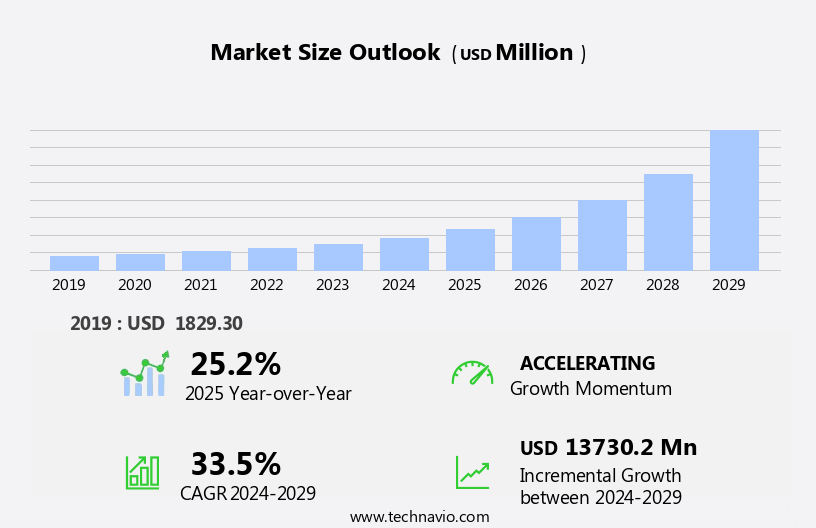
- The market encompasses various genres, including word games, memory games, puzzle games, logic games, trivia games, and adventure games. User research plays a crucial role in game design, informing the incorporation of social interaction, cognitive science, and cross-cultural communication. Game designers employ agile development, mastery learning, and iterative design to create interactive simulations and scenario-based learning experiences. A/B testing and personalized feedback cater to diverse learning styles and cultural sensitivity.
- Real-world scenarios and role-playing games (RPGs) foster strategic thinking and motivation. Language diversity and multilingual support are essential features, reflecting the global reach of these educational tools. Cognitive science theories, such as spaced repetition, underpin effective language acquisition. Virtual worlds and action games provide deep learning experiences, enhancing user engagement. Moreover, with the advancements in technology and the increasing importance of language skills, language learning games, including board games, play a crucial role in fostering language acquisition among children in a fun and interactive way, which will drive the segment's growth during the forecast period.
How is this Language Learning Games Industry segmented?
The language learning games industry research report provides comprehensive data (region-wise segment analysis), with forecasts and estimates in "USD million" for the period 2025-2029, as well as historical data from 2019-2023 for the following segments.
- End-user
- Kids
- Adults
- Type
- Multi language choices
- One language choice
- Platform
- Mobile apps
- Desktop software
- Web-based platforms
- Gaming consoles
- VR and AR
- Geography
- North America
- US
- Canada
- Europe
- France
- Germany
- Italy
- UK
- APAC
- China
- India
- Japan
- South Korea
- Rest of World (ROW)
- North America
By End-user Insights
The kids segment is estimated to witness significant growth during the forecast period. The market encompasses digital platforms designed to teach and enhance language skills through interactive and engaging experiences. This market caters to various demographics, including higher education, corporate training, and K-12 and early childhood education. Data analytics plays a crucial role in personalizing learning paths and assessing progress, while gamification design principles, such as rewards systems, competitive challenges, and character development, boost motivation and engagement. Virtual reality (VR) and augmented reality (AR) technologies offer deep experiences, enhancing language acquisition by simulating real-life situations. Interactive storytelling and speech recognition technology facilitate vocabulary development and pronunciation training. Gamified learning, with its adaptive assessment tools and adaptive learning principles, aligns with educational psychology theories and promotes problem-solving skills and critical thinking.
Language proficiency tests and certification programs provide summative assessments, ensuring learners meet specific language competency levels. Educational resources, such as mobile apps and educational software, offer accessibility features and cross-platform compatibility, catering to diverse learning styles and needs. Collaboration skills and communication skills are fostered through multiplayer gameplay and user interface design. Machine learning (ML) and artificial intelligence (AI) technologies enable formative assessments, offering real-time feedback and personalized learning experiences. Curriculum alignment and translation services cater to the needs of diverse learners and educational institutions. Cultural immersion and age-appropriate content ensure a rich and inclusive learning experience. The market continues to evolve, with trends towards STEM education, cognitive psychology, and behavioral science integration, aiming to create an effective learning environment.
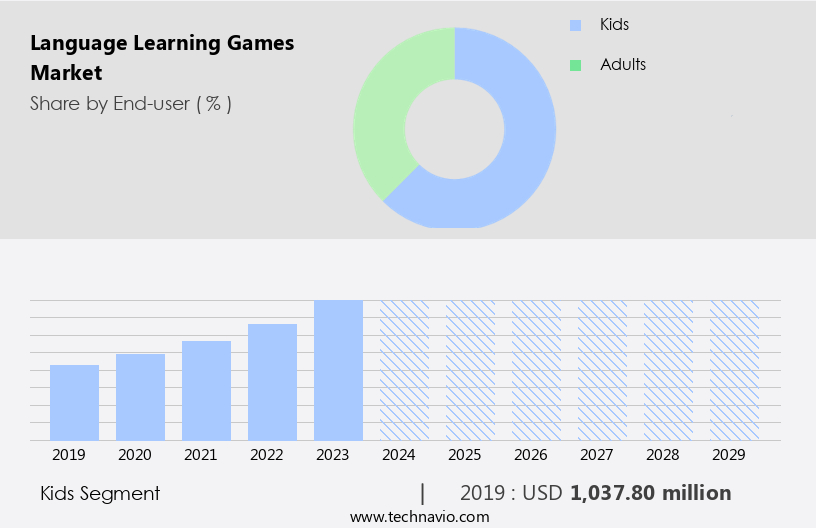
The Kids segment was valued at USD 1.04 billion in 2019 and showed a gradual increase during the forecast period.
Regional Analysis
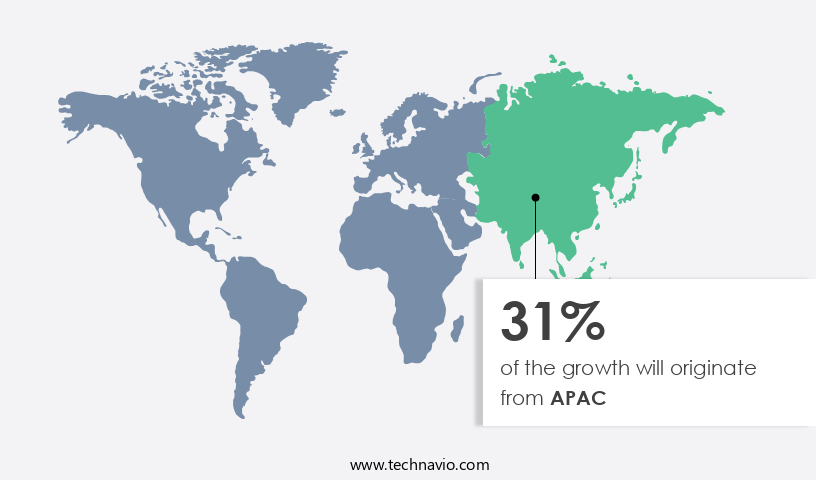
APAC is estimated to contribute 31% to the growth of the global market during the forecast period. Technavio's analysts have elaborately explained the regional trends and drivers that shape the market during the forecast period.
The North American market is experiencing steady growth due to the rising demand for language acquisition tools and the convenience of mobile applications. Companies in this sector offer various language learning services, including free subscriptions ranging from one to three months, to attract more subscribers. For example, Rosetta Stone, a leading language learning company in North America, provides three-month free subscriptions for students to learn any of the 22 languages they offer. Key factors fueling market expansion in the US include the introduction of innovative products, easy access to digital platforms, and increasing awareness and adoption of diverse language learning games.
These tools integrate educational content, gamification design principles, interactive storytelling, and rewards systems to enhance language acquisition. They also incorporate critical thinking skills, problem-solving abilities, and user interface design to create engaging learning paths and competitive challenges. Additionally, they offer formative and summative assessments, game-based learning, and adaptive learning to cater to individual learning styles and needs. Language proficiency tests, pronunciation training, and translation services are also available to ensure comprehensive language learning experiences. Educational psychology, cognitive psychology, and behavioral science principles are integrated into the design of these tools to optimize learning outcomes. Cross-platform compatibility, cultural immersion, age-appropriate content, and collaboration skills are essential features that cater to diverse user needs.
Mobile app development, curriculum alignment, and personalized learning are also crucial aspects of these language learning games. Artificial intelligence and machine learning technologies are increasingly being employed to provide deep experiences, adaptive learning, and formative assessments. Accessibility features ensure that language learning is accessible to all, regardless of physical or cognitive abilities. Overall, the North American market is a dynamic and evolving space that offers a range of innovative solutions to meet the diverse needs of learners.
Market Dynamics
Our researchers analyzed the data with 2024 as the base year, along with the key drivers, trends, and challenges. A holistic analysis of drivers will help companies refine their marketing strategies to gain a competitive advantage.
What are the Language Learning Games market drivers leading to the rise in the adoption of Industry?
- The proliferation of language learning games serves as the primary catalyst for market growth. The market is experiencing significant growth due to the increasing availability and sophistication of these educational tools. With advancements in mobile app development and cognitive psychology, language learning games are becoming more accessible and effective for adult education. These games offer deep experiences that align with curriculum requirements, providing age-appropriate content and fostering collaboration skills, communication skills, and digital literacy. Augmented reality technology adds an extra layer of engagement, while cross-platform compatibility ensures accessibility. Cultural immersion is a key benefit, allowing learners to explore new languages and cultures in a safe and interactive environment.
- Personalized learning features enable users to progress at their own pace, enhancing the overall learning experience.
What are the Language Learning Games market trends shaping the Industry?
- Corporate adoption of language learning applications is on the rise, representing a significant market trend. This trend reflects the increasing importance of global communication and business expansion in today's interconnected world. The market is experiencing significant growth due to the increasing recognition of digital citizenship and the importance of effective communication in a globalized business environment. Corporations are investing in language learning applications as part of their employee training and professional development programs, as multinational companies operate in an international marketplace. These games provide an interactive and engaging way to develop critical thinking skills, vocabulary, and speech recognition, making language learning more accessible and enjoyable. Data analytics plays a crucial role in language learning games, allowing for personalized learning paths and competitive challenges based on individual progress. Virtual reality (VR) technology is also being integrated into language learning games, offering deep learning experiences.
- Educational resources and interactive storytelling are essential components, providing users with a rewarding and engaging learning experience. User interface design is essential in language learning games, ensuring an intuitive and effective learning environment. Learning paths and competitive challenges keep users motivated and engaged, while language assessment tools provide valuable feedback and progress tracking. Speech recognition technology enhances the learning experience by allowing users to practice pronunciation and listening skills in a realistic and interactive way. The market is experiencing growth due to the increasing importance of effective communication in a globalized business environment. These games offer a fun and interactive way to develop critical thinking skills, vocabulary, and speech recognition, making language learning more accessible and enjoyable for individuals and corporations alike.
- Data analytics, VR technology, and user interface design are essential components that enhance the learning experience and drive market growth.
How does Language Learning Games market face challenges during its growth?
- The limited language coverage in video game content poses a significant challenge to the industry's growth, as it hinders the expansion of potential player bases and market opportunities. The market faces a significant limitation in the scope of languages offered by many platforms. Most game-based language learning solutions primarily focus on popular languages like English, Spanish, French, and Mandarin, leaving learners of less commonly taught languages with limited options. This language selection constraint hampers the market's ability to cater to a diverse and global user base. The primary reason for this issue lies in the substantial resources and development costs needed to create high-quality content in multiple languages. Each language requires customized gameplay, voiceovers, culturally relevant context, and localized learning paths, making it resource-intensive for developers to expand their language offerings.
- To address this challenge, gamification design principles, such as formative assessment, character development, progress tracking, and game-based assessment, can be employed to enhance the learning experience in the languages currently offered. Additionally, collaboration with translation services and incorporating game mechanics like pronunciation training and language proficiency tests can help cater to a broader user base. Incorporating these strategies into game design can lead to a more engaging and effective learning experience, ultimately expanding the market's reach and potential impact on language acquisition in both K-12 education and corporate training.
Exclusive Customer Landscape
The language learning games market forecasting report includes the adoption lifecycle of the market, covering from the innovator's stage to the laggard's stage. It focuses on adoption rates in different regions based on penetration. Furthermore, the language learning games market report also includes key purchase criteria and drivers of price sensitivity to help companies evaluate and develop their market growth analysis strategies.
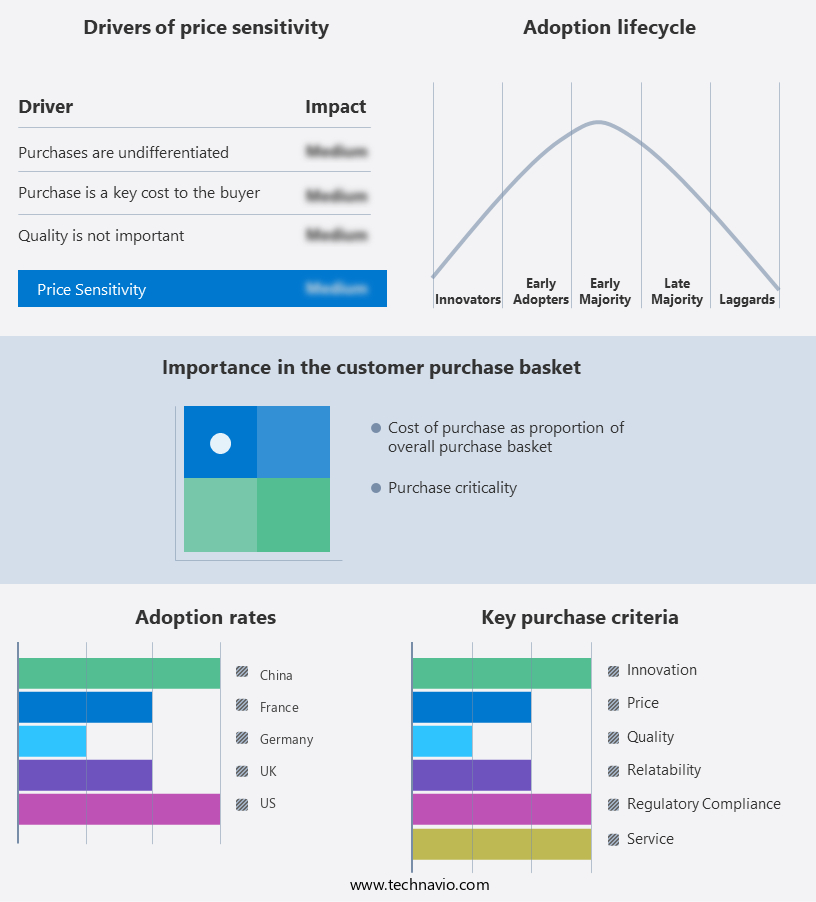
Customer Landscape
Key Companies & Market Insights
Companies are implementing various strategies, such as strategic alliances, language learning games market forecast, partnerships, mergers and acquisitions, geographical expansion, and product/service launches, to enhance their presence in the industry.
ATI Studios SRL - The company specializes in language learning games, providing innovative solutions through proprietary apps designed to support children with developmental challenges.
The industry research and growth report includes detailed analyses of the competitive landscape of the market and information about key companies, including:
- ATI Studios SRL
- Benesse Holdings Inc.
- Chegg Inc.
- Duolingo Inc.
- GeekSLP
- HelloTalk
- InFluent
- Innovative Language Learning LLC
- IXL Learning Inc.
- McGraw Hill LLC
- Memrise Ltd.
- MONKIMUN Inc.
- NetDragon Websoft Holdings Ltd.
- New Oriental Education and Technology Group Inc.
- Sierra Entertainment Inc.
- Sign School Technologies LLC
- Simon and Schuster Inc.
- SMARTSTUDY
- Smooth HQ
- Tripod Technology GmbH
Qualitative and quantitative analysis of companies has been conducted to help clients understand the wider business environment as well as the strengths and weaknesses of key industry players. Data is qualitatively analyzed to categorize companies as pure play, category-focused, industry-focused, and diversified; it is quantitatively analyzed to categorize companies as dominant, leading, strong, tentative, and weak.
Recent Development and News in Language Learning Games Market
- In February 2023, Rosetta Stone, a leading language learning solutions provider, introduced its new gamified language learning application, "Rosetta Stone World Explorers," designed for children aged 6-12. This innovative product launch aims to make language learning fun and engaging for younger users (Rosetta Stone Press Release, 2023).
- In May 2024, Duolingo, the popular language learning platform, announced a major strategic partnership with Microsoft to integrate Duolingo's language learning tools into Microsoft Teams. This collaboration will allow businesses to offer their employees access to language learning resources directly within their work communication platform (Duolingo Press Release, 2024).
- In October 2024, Epic Games, known for Fortnite, raised a significant USD 1 billion investment round to expand its reach into the education sector. The funding will be used to develop and scale Epic's educational offerings, including its language learning game, "Rocket League: Languages" (Bloomberg, 2024).
- In January 2025, the European Union announced a new initiative to promote language learning through gamification. The "European Language Gaming Network" will support the development of language learning games and collaborate with game developers to create engaging and effective educational games for EU citizens (European Commission Press Release, 2025).
Research Analyst Overview
The market continues to evolve, integrating advanced technologies and innovative approaches to cater to diverse sectors. Digital citizenship and data analytics play a crucial role in creating personalized learning experiences. Virtual reality (VR) and critical thinking skills are seamlessly integrated into educational content, enriching higher education and language assessment. Interactive storytelling, rewards systems, and serious games engage learners, enhancing user interface design and learning paths. Competitive challenges and vocabulary development promote active participation, while speech recognition and gamification design principles facilitate language acquisition. K-12 and early childhood education benefit from game-based learning, formative assessment, and game mechanics. Steam education and pronunciation training are essential components of deep experiences, with summative assessment and multiplayer gameplay fostering collaboration skills.
Augmented reality (AR) and accessibility features cater to diverse learning needs, aligning curriculum and enhancing user experience design. Artificial intelligence (AI) and machine learning (ML) are transforming language learning through adaptive learning and assessment tools. Cultural immersion, age-appropriate content, and collaboration skills are essential components of educational software, promoting communication skills and digital literacy. Personalized learning is the future of language education, with continuous innovation shaping the market landscape.
Dive into Technavio's strong research methodology, blending expert interviews, extensive data synthesis, and validated models for unparalleled Language Learning Games Market insights. See full methodology.
|
Market Scope |
|
|
Report Coverage |
Details |
|
Page number |
217 |
|
Base year |
2024 |
|
Historic period |
2019-2023 |
|
Forecast period |
2025-2029 |
|
Growth momentum & CAGR |
Accelerate at a CAGR of 33.5% |
|
Market growth 2025-2029 |
USD 13.73 billion |
|
Market structure |
Fragmented |
|
YoY growth 2024-2025(%) |
25.2 |
|
Key countries |
US, Germany, China, UK, France, Japan, Canada, India, Italy, and South Korea |
|
Competitive landscape |
Leading Companies, Market Positioning of Companies, Competitive Strategies, and Industry Risks |
What are the Key Data Covered in this Language Learning Games Market Research and Growth Report?
- CAGR of the Language Learning Games industry during the forecast period
- Detailed information on factors that will drive the growth and forecasting between 2025 and 2029
- Precise estimation of the size of the market and its contribution of the industry in focus to the parent market
- Accurate predictions about upcoming growth and trends and changes in consumer behaviour
- Growth of the market across North America, Europe, APAC, Middle East and Africa, and South America
- Thorough analysis of the market's competitive landscape and detailed information about companies
- Comprehensive analysis of factors that will challenge the language learning games market growth of industry companies
We can help! Our analysts can customize this language learning games market research report to meet your requirements.
 RIA -
RIA - 
