


Lead Acid Battery Recycling Market Size 2025-2029
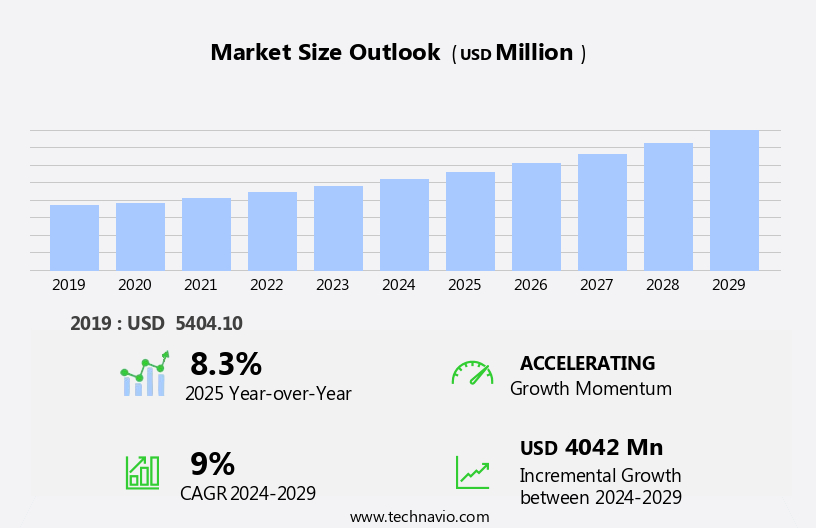
The lead acid battery recycling market size is forecast to increase by USD 4.04 billion at a CAGR of 9% between 2024 and 2029.
- The market is experiencing significant growth, driven primarily by the increasing demand for electric vehicles (EVs) and the subsequent rise in the generation of used lead-acid batteries. These batteries, which are commonly used in EVs and traditional vehicles, represent a valuable source of secondary raw materials, including lead, sulfuric acid, and plastic. However, the market faces challenges that must be addressed to fully capitalize on this opportunity. Regulatory hurdles impact adoption, as various governments and international organizations impose stringent regulations on the recycling process to ensure environmental sustainability and worker safety. Additionally, supply chain inconsistencies temper growth potential due to the fragmented nature of the industry and the need for standardized processes and quality control measures.
- Safety issues related to the storage and transportation of disposed lead-acid batteries also pose a significant challenge, requiring robust logistical solutions and continuous risk management efforts. Companies seeking to capitalize on this market must navigate these challenges effectively by investing in research and development, collaborating with stakeholders, and implementing best practices for safety and sustainability. By doing so, they can seize the opportunity to contribute to a circular economy for lead-acid batteries, reduce environmental impact, and generate significant revenue.
What will be the Size of the Lead Acid Battery Recycling Market during the forecast period?
- The market in the US is driven by the increasing demand for new batteries in various sectors, including electronic gadgets, automobiles, and industrial applications. With the rise of battery electric vehicles and the renewable energy sector, the market for lead acid batteries is experiencing significant growth. These batteries, which contain hazardous materials such as sulphuric acid, are essential for energy storage systems and portable energy sources. Urbanization and industrialization have led to an increase in the generation of waste batteries, creating opportunities for refining processes using aqueous chemical solutions. The transportation sector, particularly in the automotive industry, continues to be a major consumer of lead acid batteries, with applications ranging from automotive batteries to golf carts.
- Consumer electronics, including UPs, also rely on lead acid batteries for power backup. Advanced battery technologies, such as sodium sulfur batteries and lithium-ion batteries, are gaining popularity, but lead acid batteries remain a cost-effective and reliable option. The green economy and the push for cleaner energy sources are further boosting the market for lead acid battery recycling.
How is this Lead Acid Battery Recycling Industry segmented?
The lead acid battery recycling industry research report provides comprehensive data (region-wise segment analysis), with forecasts and estimates in "USD million" for the period 2025-2029, as well as historical data from 2019-2023 for the following segments.
- Type
- FLA batteries
- Sealed lead acid batteries
- Method
- Collection and separation
- Hydrometallurgical process
- Pyro-metallurgical process
- Neutralization acid
- Geography
- North America
- US
- Canada
- Europe
- France
- Germany
- Italy
- UK
- APAC
- China
- India
- Japan
- South Korea
- Rest of World (ROW)
- North America
By Type Insights
The fla batteries segment is estimated to witness significant growth during the forecast period.
Lead acid batteries, specifically Flat Plate (FLA) batteries, are the most widely used type in various applications due to their cost-effectiveness. FLA batteries contain sulfuric acid electrolyte, making up one-third of the solution, with water comprising the rest. This type of battery, which has been in use for decades, is available in various sizes and types. The market for FLA batteries is driven by environmental concerns, regulatory pressures, and economic benefits of sustainable practices. These batteries are extensively used in automotive, industrial, and stationary power systems. In the automotive sector, they power electric and hybrid vehicles, while in industries, they serve as a reliable energy source for numerous applications.
In the context of urbanization and industrialization, FLA batteries play a crucial role in energy storage systems, portable energy sources, and transportation. Moreover, the recycling of lead acid batteries, particularly through processes like hydrometallurgy and pyro metallurgical methods, is essential for the circular economy. This process involves the refining of the batteries, extracting valuable materials such as lead, sulfuric acid, and other metals, and producing new batteries. The recycling rate of SLAB (Scrap Lead Acid Batteries) is high, making it an environmentally friendly solution. FLA batteries are also used in cleaner energy applications, such as renewable energy systems, telecommunication networks, and military installations.
The batteries' versatility and durability make them suitable for use in various sectors, including transportation, automotive, robotics, and even in advanced battery technologies like sodium-sulfur batteries. However, the proper disposal of FLA batteries is essential due to their hazardous metal content, including lead and sulfuric acid. Strict environment protection norms mandate the implementation of automation and advanced technologies for the safe and efficient disposal of these batteries. Despite the challenges, the market for FLA batteries continues to evolve, driven by the growing demand for cleaner energy, electric vehicles, and advanced battery technologies.
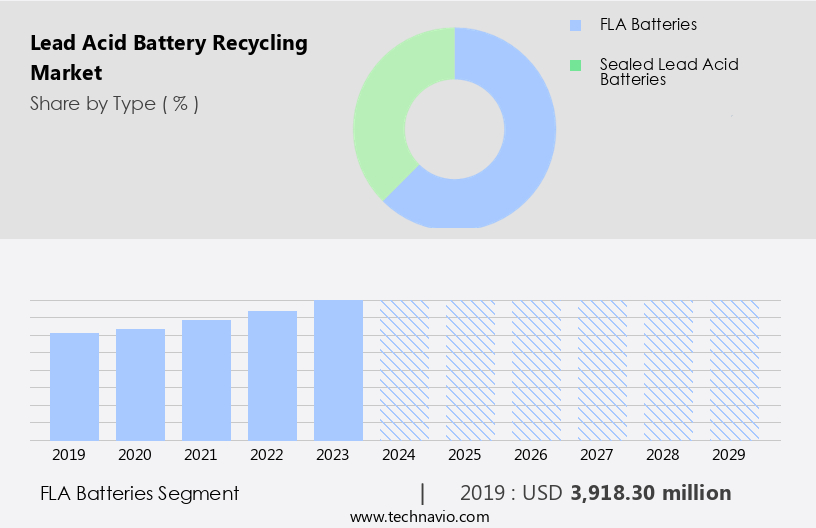
The FLA batteries segment was valued at USD 3.92 billion in 2019 and showed a gradual increase during the forecast period.
Regional Analysis
APAC is estimated to contribute 37% to the growth of the global market during the forecast period.Technavio’s analysts have elaborately explained the regional trends and drivers that shape the market during the forecast period.
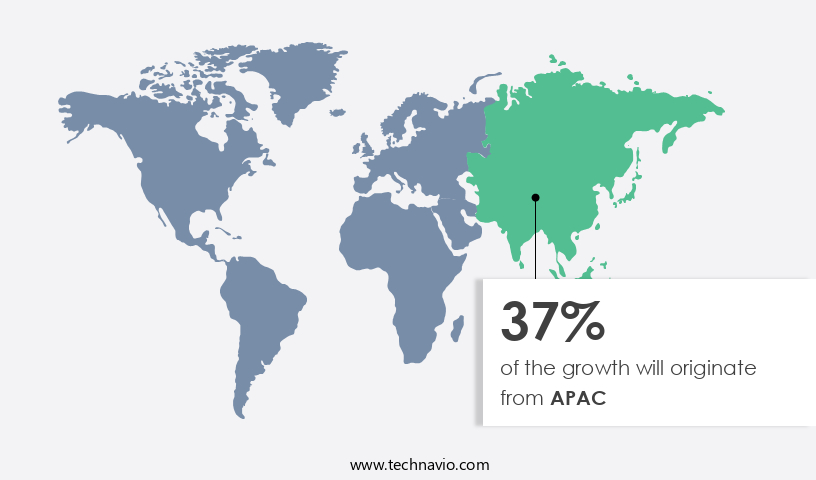
The market is significantly influenced by several factors. In APAC, which is the largest consumer of secondary batteries, the market is driven by the presence of numerous lead acid battery manufacturers and the production of lead acid battery-powered equipment and automobiles. The region's population and improving living standards have led to increased consumption of lead acid batteries in industries such as consumer electronics, automotive, and energy storage. Environmental concerns over the improper disposal of lead acid batteries have also contributed to the market's growth. These batteries contain hazardous materials like sulphuric acid and lead, which can cause harm to the nervous system and pollute the environment if not disposed of properly.
As a result, there is a growing emphasis on proper disposal and recycling. The recycling process involves refining and extracting lead and sulphuric acid from waste batteries using chemical processes like hydrometallurgy and pyro metallurgical methods. These processes yield a high recycling rate for SLAB (scrap lead-acid batteries). The recovered lead can be used to produce new batteries or lead products, while sulphuric acid can be used in various industries, including energy storage and sewage water systems. Lead acid batteries are also used in transportation applications, such as railroad crossings and electric vehicles, and in military installations for weapon systems and submarines.
With the increasing adoption of battery electric vehicles and the transition towards cleaner energy, the demand for lead acid batteries is expected to surge. Additionally, advanced battery technologies like sodium-sulphur batteries and lithium-ion batteries are also being developed, but lead acid batteries still dominate due to their affordability and reliability. The recycling of lead acid batteries not only helps in reducing pollution but also conserves natural resources, as lead is a finite resource. Proper disposal and recycling of these batteries are essential to ensure human health and public safety. Automakers and automation companies are also investing in automation and robotic systems to streamline the recycling process and increase efficiency.
In conclusion, the market is a critical component of the circular economy and plays a significant role in reducing pollution and conserving resources. With the increasing demand for lead acid batteries in various industries and the need for proper disposal and recycling, the market is expected to continue growing.
Market Dynamics
Our researchers analyzed the data with 2024 as the base year, along with the key drivers, trends, and challenges. A holistic analysis of drivers will help companies refine their marketing strategies to gain a competitive advantage.
What are the Lead Acid Battery Recycling market drivers leading to the rise in the adoption of Industry?
- The significant surge in demand for electric vehicles (EVs) serves as the primary catalyst for market growth.
- The global shift towards sustainable transportation solutions has driven the demand for electric vehicles (EVs) and hybrid vehicles, leading to a significant increase in the usage of lead acid batteries. As automotive batteries continue to be a crucial component in these vehicles, the need for their proper disposal and recycling has gained importance due to their hazardous metal content. Robotics and automation have revolutionized the market, ensuring efficient and safe processes. These advanced technologies enable the recovery of valuable materials such as lead, sulfuric acid, and rare earth metals. The toxicity of lead acid batteries necessitates adherence to strict environment protection norms during the recycling process.
- The rise in the adoption of EVs and hybrid vehicles, along with the increasing popularity of electric public transport, is expected to fuel the growth of the market. The market is witnessing a surge in demand due to the increasing focus on reducing carbon emissions and the need for sustainable energy solutions. The recycling of lead acid batteries not only ensures the proper disposal of hazardous materials but also contributes to the circular economy by recovering valuable resources for reuse.
What are the Lead Acid Battery Recycling market trends shaping the Industry?
- Battery recycling is an emerging trend in stewardship collaborations, with an increasing focus on sustainable solutions for managing used batteries. Professionals anticipate a rise in such collaborations to address the growing demand for effective and eco-friendly methods in battery disposal.
- Lead acid battery recycling is a crucial aspect of sustainable waste management, particularly for the disposal of used batteries containing hazardous materials. This process involves the refining of sulphuric acid and the recovery of lead from waste batteries, which can be reused to manufacture new batteries or employed as a portable energy source or energy storage system. The increasing urbanization and industrialization, coupled with the growing popularity of battery electric vehicles, have led to a surge in the demand for lead acid batteries. As a result, there is a pressing need for effective and responsible recycling practices to mitigate environmental hazards and ensure regulatory compliance.
- Stewardship collaborations, such as Extended Producer Responsibility (EPR) programs and industry-led initiatives, play a vital role in managing the entire lifecycle of lead acid batteries. Manufacturers participate in EPR programs, taking responsibility for the recycling of their products, while industry associations and organizations collaborate on initiatives to promote responsible recycling practices. These collaborative efforts contribute significantly to environmental sustainability, resource recovery, and the circular economy.
How does Lead Acid Battery Recycling market faces challenges face during its growth?
- The storage and transportation of disposed lead-acid batteries pose significant safety challenges, which represent a key impediment to the growth of the industry.
- The market encounters significant challenges in the area of logistics. The collection and disposal of used lead acid batteries are essential stages in the recycling process. However, transporting these batteries for proper disposal presents a major issue due to their hazardous components, such as lead and sulfuric acid. Inadequate safety measures during storage and transportation can lead to leaks and spills, increasing the risk of exposure to these harmful substances. Unsafe handling may result in soil and water contamination with lead and sulfuric acid, posing threats to both human health and the environment. The hydrometallurgical process, which includes smelting, roasting, calcination, and refining, is used to recycle lead acid batteries.
- This process is crucial for extracting valuable metals, including lead, from the batteries. Other applications of recycled lead include the production of new lead acid batteries, battery-powered vehicles, and various industrial uses. Additionally, lead is used in military installations, railroad crossings, and cleaner energy sources like solar panels. Despite the challenges, the importance of lead acid battery recycling in promoting sustainability and reducing the environmental impact of battery production cannot be overstated. Aqua Metals, a leading player in the advanced lead recycling industry, is pioneering innovative technologies to address these logistical challenges and improve the overall recycling process.
Exclusive Customer Landscape
The lead acid battery recycling market forecasting report includes the adoption lifecycle of the market, covering from the innovator’s stage to the laggard’s stage. It focuses on adoption rates in different regions based on penetration. Furthermore, the lead acid battery recycling market report also includes key purchase criteria and drivers of price sensitivity to help companies evaluate and develop their market growth analysis strategies.
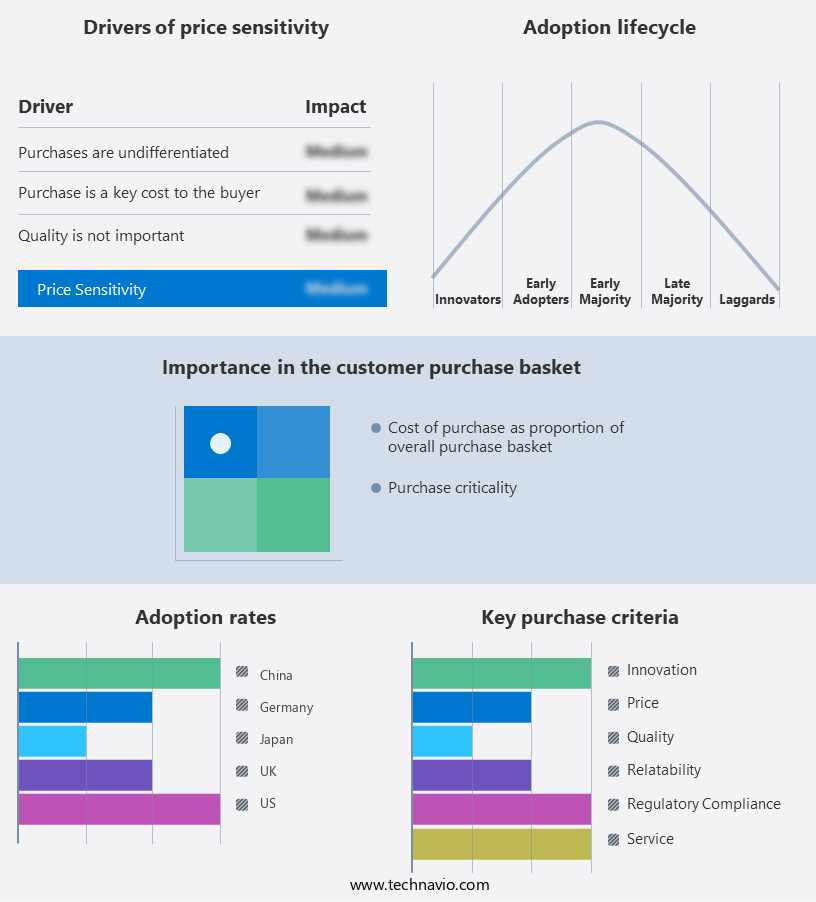
Customer Landscape
Key Companies & Market Insights
Companies are implementing various strategies, such as strategic alliances, lead acid battery recycling market forecast, partnerships, mergers and acquisitions, geographical expansion, and product/service launches, to enhance their presence in the industry.
ACE Green Recycling Inc. - The company's lead acid battery recycling program, such as ACE Green Recycling, delivers sustainable end-of-life solutions. Through innovative processes, this initiative ensures the responsible disposal and reclamation of used lead acid batteries. By transforming waste into valuable resources, this program contributes to environmental stewardship and resource conservation. The recycling process minimizes the need for new raw materials, reducing the industry's ecological footprint. This commitment to sustainability aligns with our mission to promote a circular economy and create a more sustainable future.
The industry research and growth report includes detailed analyses of the competitive landscape of the market and information about key companies, including:
- ACE Green Recycling Inc.
- Aqua Metals Inc.
- Aurubis AG
- Battery Recyclers of America
- Campine n.v.
- COM2 RECYCLING SOLUTIONS
- Contemporary Amperex Technology Co. Ltd.
- Ecobat LLC
- EnerSys
- ENGITEC TECHNOLOGIES SPA
- Enva
- Exide Industries Ltd.
- Gopher Resource LLC
- Gravita India Ltd.
- Raw Materials Co. Inc.
- Teck Resources Ltd.
- Terrapure Environmental
- The Doe Run Resources Corp.
- Tianneng Group
- Umicore SA
Qualitative and quantitative analysis of companies has been conducted to help clients understand the wider business environment as well as the strengths and weaknesses of key industry players. Data is qualitatively analyzed to categorize companies as pure play, category-focused, industry-focused, and diversified; it is quantitatively analyzed to categorize companies as dominant, leading, strong, tentative, and weak.
Recent Development and News in Lead Acid Battery Recycling Market
- In February 2023, Necsel, a leading provider of recycling technology for lithium-ion batteries, announced its expansion into the lead-acid battery recycling market through a strategic partnership with Recycling Technologies (RT). This collaboration aims to combine Necsel's advanced battery recycling technology with RT's expertise in lead-acid battery recycling, creating a more efficient and sustainable process for recycling both lithium-ion and lead-acid batteries (PR Newswire).
- In April 2024, Exide Technologies, a global leader in stored electrical energy solutions, completed the acquisition of battery recycling company, RSR Technologies. This acquisition significantly expanded Exide's recycling capabilities and market presence, enabling the company to process over 100,000 metric tons of lead-acid batteries annually (Business Wire).
- In July 2024, the European Union passed the Battery Regulation, which sets strict targets for the collection, treatment, recycling, and recycling quotas for batteries. This regulation is expected to drive significant growth in the lead-acid battery recycling market, as it mandates a minimum recycling rate of 45% for lead-acid batteries by 2030 (European Parliament and Council of the European Union).
- In October 2025, Clarios, a global leader in battery manufacturing and recycling, unveiled its new recycling facility in Europe, capable of processing 10,000 metric tons of lead-acid batteries per year. This facility utilizes advanced recycling technology, allowing Clarios to recover over 95% of the lead and 80% of the plastic from used batteries (Clarios Press Release).
Research Analyst Overview
The market is a dynamic and evolving sector that plays a crucial role in managing the disposal of waste batteries and hazardous materials. This market is driven by various factors, including the increasing usage of battery electric vehicles (BEVs) and other portable energy sources, urbanization, and industrialization. Sewage water systems and battery electric vehicles are significant contributors to the generation of waste batteries. These batteries contain sulphuric acid, a hazardous material that requires proper disposal to prevent environmental pollution and potential health risks. The recycling of lead acid batteries is essential in extracting valuable materials, such as lead, sulphuric acid, and other metals, which can be used to produce new batteries or other industrial applications.
The automotive industry is a significant consumer of lead acid batteries, with automobiles and military installations being major users. However, the transition to cleaner energy sources, such as lithium-ion batteries, is expected to impact the demand for lead acid batteries in the automotive sector. On the other hand, the telecommunications industry and other sectors that require reliable energy storage systems continue to rely on lead acid batteries. The recycling process involves several stages, including refining, hydrometallurgical process, and pyro metallurgical process. The refining process separates lead from the battery plates, while the hydrometallurgical process extracts metals from the aqueous chemical solution.
The pyro metallurgical process is used to extract metals from the slag generated during the refining process. The recycling rate of lead acid batteries is a critical metric in the industry. According to data, the global lead acid battery recycling rate was estimated to be around 99% in 2020. This high recycling rate is due to the economic viability of the recycling process and the increasing awareness of the importance of proper disposal of waste batteries. The market for lead acid battery recycling is also influenced by environmental protection norms and public health concerns. The toxicity of lead and other hazardous metals contained in waste batteries necessitates proper disposal and recycling to prevent health risks and environmental pollution.
Advanced battery technologies, such as sodium-sulphur batteries and lithium-ion batteries, are emerging as alternatives to lead acid batteries. These batteries offer higher energy density and longer cycle life, making them attractive for various applications. However, the recycling of these batteries poses unique challenges, and research is ongoing to develop cost-effective and environmentally sustainable recycling processes. In conclusion, the market is a dynamic and evolving sector that plays a crucial role in managing the disposal of waste batteries and hazardous materials. The market is influenced by various factors, including the transition to cleaner energy sources, environmental protection norms, and the development of advanced battery technologies.
Proper disposal and recycling of lead acid batteries are essential to prevent environmental pollution and potential health risks while extracting valuable materials for reuse.
Dive into Technavio’s robust research methodology, blending expert interviews, extensive data synthesis, and validated models for unparalleled Lead Acid Battery Recycling Market insights. See full methodology.
|
Market Scope |
|
|
Report Coverage |
Details |
|
Page number |
205 |
|
Base year |
2024 |
|
Historic period |
2019-2023 |
|
Forecast period |
2025-2029 |
|
Growth momentum & CAGR |
Accelerate at a CAGR of 9% |
|
Market growth 2025-2029 |
USD 4042 million |
|
Market structure |
Fragmented |
|
YoY growth 2024-2025(%) |
8.3 |
|
Key countries |
US, China, Germany, Canada, UK, Japan, France, Italy, India, and South Korea |
|
Competitive landscape |
Leading Companies, Market Positioning of Companies, Competitive Strategies, and Industry Risks |
What are the Key Data Covered in this Lead Acid Battery Recycling Market Research and Growth Report?
- CAGR of the Lead Acid Battery Recycling industry during the forecast period
- Detailed information on factors that will drive the growth and forecasting between 2025 and 2029
- Precise estimation of the size of the market and its contribution of the industry in focus to the parent market
- Accurate predictions about upcoming growth and trends and changes in consumer behaviour
- Growth of the market across APAC, Europe, North America, South America, and Middle East and Africa
- Thorough analysis of the market’s competitive landscape and detailed information about companies
- Comprehensive analysis of factors that will challenge the lead acid battery recycling market growth of industry companies
We can help! Our analysts can customize this lead acid battery recycling market research report to meet your requirements.
 RIA -
RIA - 
