



Luxury Hotel Market Size 2026-2030
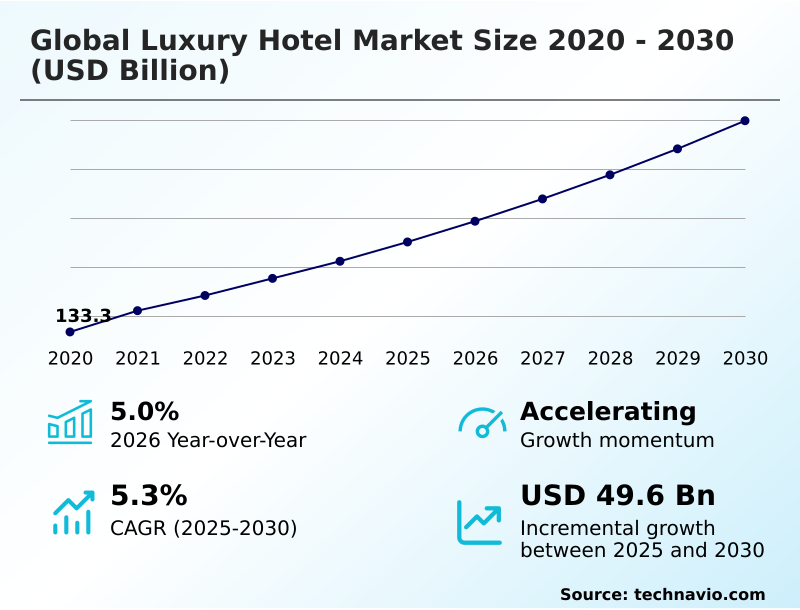
The luxury hotel market size is valued to increase by USD 49.60 billion, at a CAGR of 5.3% from 2025 to 2030. Ascendancy of experiential and transformative travel will drive the luxury hotel market.
Major Market Trends & Insights
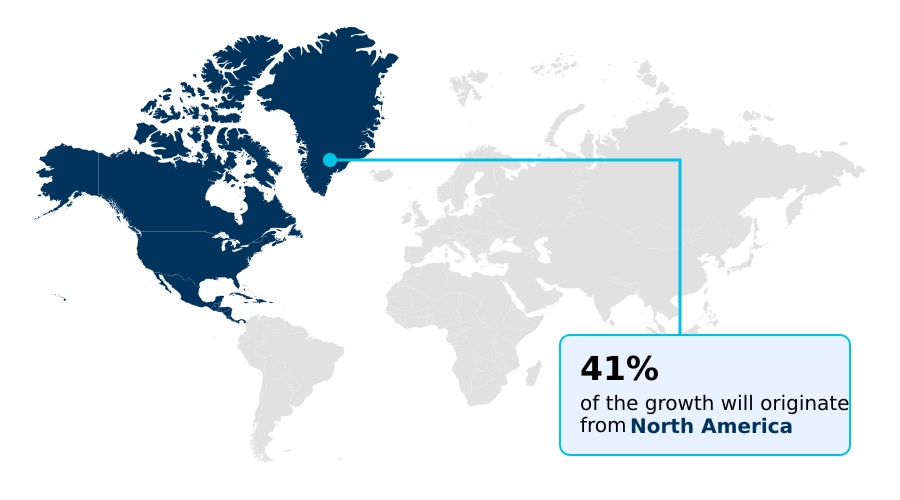
- North America dominated the market and accounted for a 40.9% growth during the forecast period.
- By Type - Upscale segment was valued at USD 78.55 billion in 2024
- By Ownership - Chain segment accounted for the largest market revenue share in 2024
Market Size & Forecast
- Market Opportunities: USD 86.40 billion
- Market Future Opportunities: USD 49.60 billion
- CAGR from 2025 to 2030 : 5.3%
Market Summary
- The luxury hotel market is undergoing a significant transformation, moving beyond opulent accommodations to deliver highly curated and memorable moments. This shift is driven by a new generation of affluent consumers who prioritize transformative journeys, holistic wellness integration, and authentic cultural immersion over traditional displays of wealth.
- In response, operators are leveraging sophisticated guest feedback analytics and property management systems to implement a guest-centric operating model. This involves not only smart room automation and digital concierge services but also a deep commitment to sustainable hospitality practices.
- For instance, a hotel chain might use its customer data platform integration to analyze booking patterns and on-site spending, enabling predictive guest analytics that inform everything from bespoke experience curation to dynamic pricing models.
- This data-driven approach allows for the optimization of ancillary revenue strategy and direct booking channels, ensuring a seamless guest journey while improving operational metrics like revenue per available room and occupancy rates. The emphasis is on creating a unique brand narrative rooted in service excellence, conscious luxury, and deep, localized cultural engagement.
What will be the Size of the Luxury Hotel Market during the forecast period?
Get Key Insights on Market Forecast (PDF) Get Free Sample
How is the Luxury Hotel Market Segmented?
The luxury hotel industry research report provides comprehensive data (region-wise segment analysis), with forecasts and estimates in "USD million" for the period 2026-2030, as well as historical data from 2020-2024 for the following segments.
- Type
- Upscale
- Upper-upscale
- Luxury
- Ownership
- Chain
- Independent
- Mode of booking
- Direct booking
- Online travel agencies
- Travel agents
- Geography
- North America
- US
- Canada
- Mexico
- Europe
- Germany
- UK
- France
- APAC
- China
- Japan
- India
- Middle East and Africa
- UAE
- Saudi Arabia
- South Africa
- South America
- Brazil
- Argentina
- Colombia
- Rest of World (ROW)
- North America
By Type Insights
The upscale segment is estimated to witness significant growth during the forecast period.
The upscale segment is evolving beyond traditional full-service models, driven by the need to deliver unique value propositions.
A key focus is asset management strategy, optimizing properties through preventive maintenance scheduling and investments in event space technology and water conservation systems.
Success in this tier depends on effective culinary program innovation and offering unique benefits like exclusive access partnerships. There's also a growing niche for concepts like digital detoxification retreats.
Operationally, talent acquisition and retention is a major focus, addressed through leadership development programs and clear service recovery procedures.
Adherence to sustainability reporting standards and implementation of energy management solutions are becoming brand differentiators, with hotels that adopt such measures reporting up to a 15% improvement in operational efficiency. This requires strong cultural sensitivity training among staff.
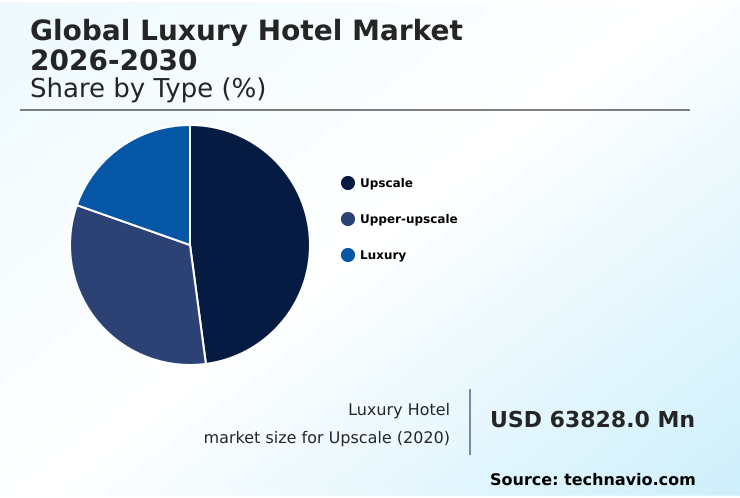
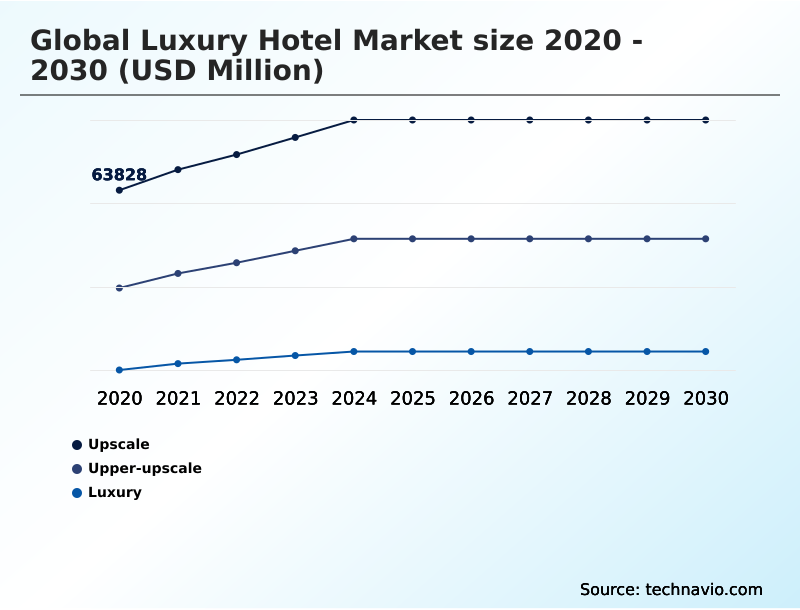
The Upscale segment was valued at USD 78.55 billion in 2024 and showed a gradual increase during the forecast period.
Regional Analysis
North America is estimated to contribute 40.9% to the growth of the global market during the forecast period.Technavio’s analysts have elaborately explained the regional trends and drivers that shape the market during the forecast period.
See How Luxury Hotel Market Demand is Rising in North America Get Free Sample
The geographic landscape of the luxury hotel market is diversifying, with significant investment flowing into both established and emerging destinations.
In North America, which accounts for over 40% of the incremental growth, a focus on predictive guest analytics and online reputation management is crucial for maintaining market share.
European properties are pioneering front-of-house automation to enhance back-of-house efficiency, contributing to multi-property operational synergy. Across APAC, localized cultural immersion and premium amenity sourcing are key differentiators. Technology like advanced in-room entertainment systems and biometric access control is becoming standard.
These initiatives are underpinned by strong privacy and data security frameworks and crisis management protocols. Effective cross-channel marketing attribution and staff empowerment training are critical for success in all regions.
Market Dynamics
Our researchers analyzed the data with 2025 as the base year, along with the key drivers, trends, and challenges. A holistic analysis of drivers will help companies refine their marketing strategies to gain a competitive advantage.
- The global luxury hotel market 2026-2030 is navigating a complex landscape where success hinges on mastering sophisticated operational and strategic capabilities. A key focus is on integrating AI for personalized guest services, which moves beyond basic amenities to anticipate and fulfill individual desires.
- This is directly tied to improving direct booking ratio through loyalty, as personalized offers and recognition foster a stronger connection than third-party channels can provide. Firms are actively measuring ROI of wellness program investments, recognizing that holistic well-being is a powerful differentiator.
- Concurrently, understanding technology's role in sustainable hotel operations is critical for brand reputation and long-term cost management, with some properties reducing energy consumption by over 20% through smart systems. Key performance indicators like strategies for enhancing guest satisfaction scores and optimizing RevPAR with dynamic pricing algorithms are constantly being refined.
- Operators face the challenges of implementing smart room technology at scale while balancing technology with the human touch. Success involves developing bespoke experiential travel packages and creating unique culinary experiences for guests, which requires training staff for exceptional service delivery. This ecosystem is managed through vigilance in managing online reputation across digital platforms and leveraging customer data for marketing campaigns.
- The supply chain is also under scrutiny, with a focus on sourcing local and sustainable premium amenities. The ultimate goal is designing hotels for transformative guest journeys, using analytics for predicting guest needs and preferences while ensuring compliance with data privacy regulations in hospitality.
- Efficiently monetizing non-room revenue streams effectively and maintaining brand consistency in global portfolios are crucial, as are approaches to reducing staff turnover rates.
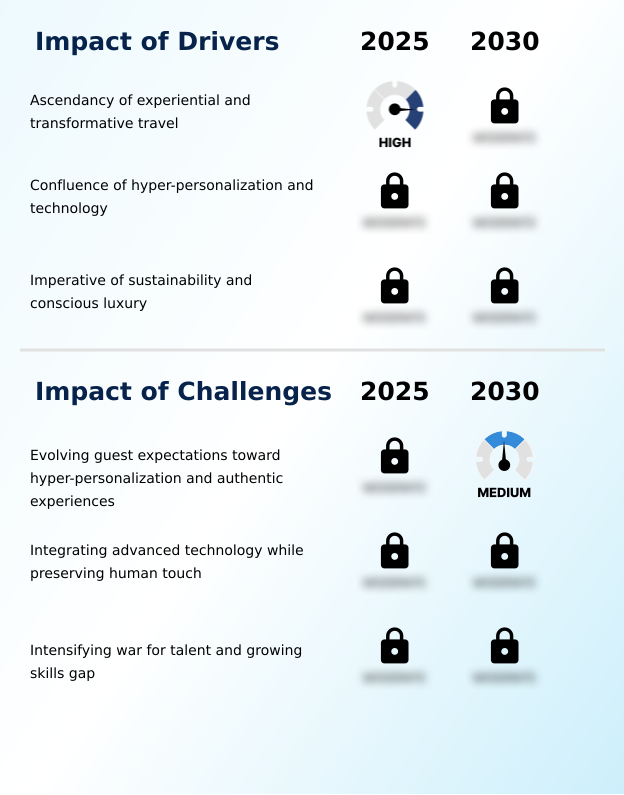
What are the key market drivers leading to the rise in the adoption of Luxury Hotel Industry?
- The ascendancy of experiential and transformative travel, where consumers prioritize unique life experiences over material goods, serves as a primary driver for the market.
- Market expansion is propelled by sophisticated strategies designed to maximize profitability and guest loyalty. Effective direct booking channel optimization, supported by a tiered loyalty program architecture, has become critical, reducing reliance on intermediaries by over 20% for some brands.
- Central to this is bespoke experience curation and detailed guest journey mapping that informs every touchpoint. A modern revenue management system facilitates average daily rate optimization, while a commitment to a service excellence framework boosts Net Promoter Score tracking.
- The rise of bleisure traveler amenities and a focus on sustainable hospitality practices are key to flagship property development and boutique hotel positioning. Ultimately, this focus on customer lifetime value modeling is a core driver of sustained financial performance.
What are the market trends shaping the Luxury Hotel Industry?
- The market is increasingly defined by the trend toward ultra-personalized and exclusive experiential journeys, a shift that moves beyond traditional luxury to offer unique, curated life experiences for discerning travelers.
- The evolution of the luxury hospitality sector is marked by deep technological integration aimed at enhancing ultra-luxury service delivery. A guest-centric operating model is now standard, supported by a robust guest experience platform that enables AI-driven itinerary planning and experiential travel design. Leading properties are deploying smart room automation and contactless check-in technology to streamline operations.
- The use of a hyper-personalization engine, powered by customer data platform integration, allows for unprecedented customization. This trend extends to holistic wellness integration and even branded residence management, reflecting a conscious luxury philosophy. Properties leveraging a digital concierge service report guest engagement increases of up to 40%, while those with integrated platforms see a 15% improvement in repeat booking rates.
What challenges does the Luxury Hotel Industry face during its growth?
- A primary challenge affecting industry growth is meeting evolving guest expectations for hyper-personalized services and authentic local experiences.
- A primary challenge lies in balancing operational costs with escalating guest expectations, necessitating advanced analytical tools. Properties utilize a property management system integrated with guest feedback analytics to inform service improvements and ancillary revenue strategy. Implementing a dynamic pricing model is essential for revenue per available room growth, while a robust mobile guest application can increase direct engagement.
- However, ensuring consistent quality requires rigorous brand standard auditing and investment in transformative wellness programs and farm-to-table sourcing. The complexity of occupancy rate forecasting and total revenue per available room analysis demands skilled personnel.
- Moreover, maintaining high standards in art and design curation and adhering to supply chain ethics adds operational pressure, with inefficient systems leading to a potential 10% variance in profitability.
Exclusive Technavio Analysis on Customer Landscape
The luxury hotel market forecasting report includes the adoption lifecycle of the market, covering from the innovator’s stage to the laggard’s stage. It focuses on adoption rates in different regions based on penetration. Furthermore, the luxury hotel market report also includes key purchase criteria and drivers of price sensitivity to help companies evaluate and develop their market growth analysis strategies.
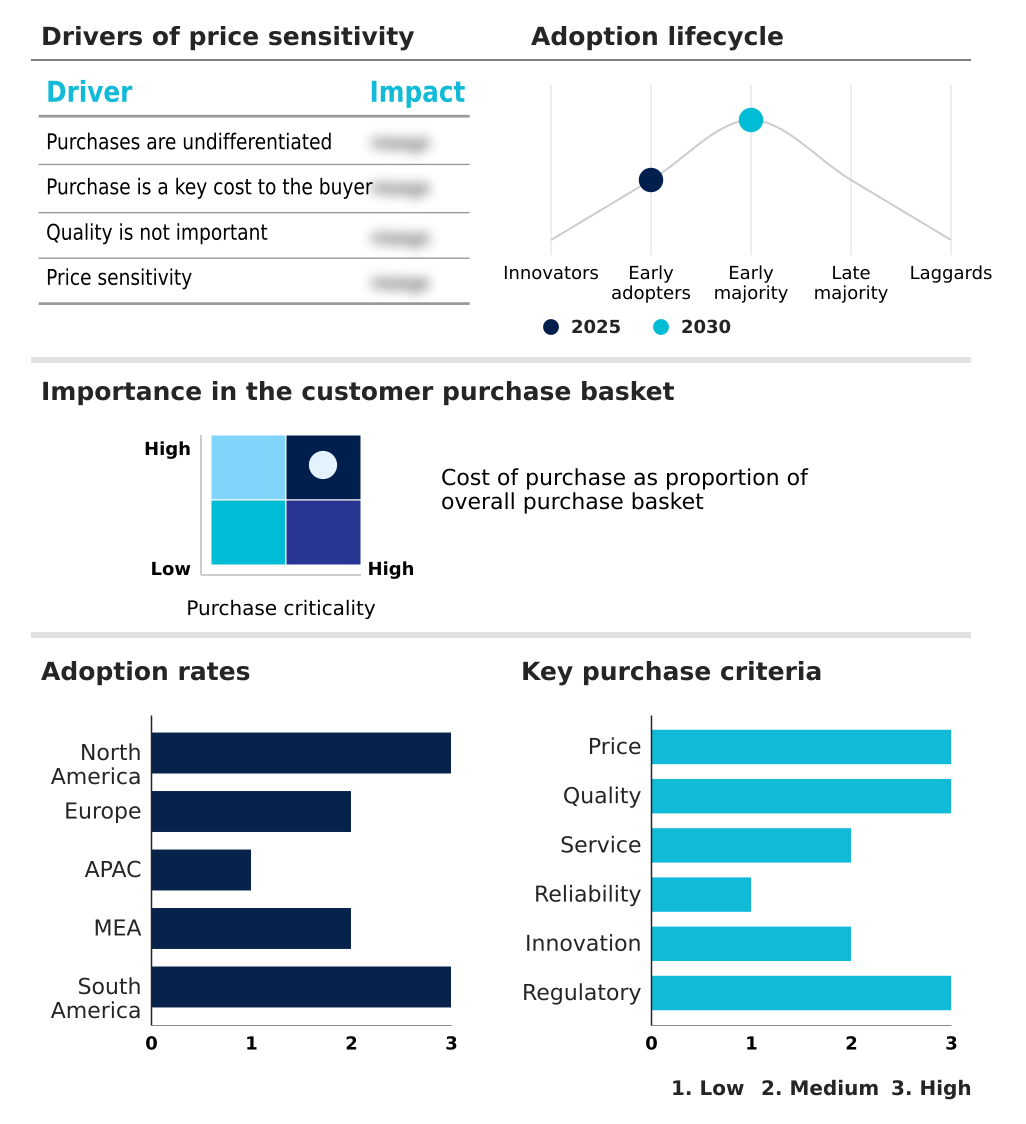
Customer Landscape of Luxury Hotel Industry
Competitive Landscape
Companies are implementing various strategies, such as strategic alliances, luxury hotel market forecast, partnerships, mergers and acquisitions, geographical expansion, and product/service launches, to enhance their presence in the industry.
Accor S.A. - Delivering premium hospitality and extensive global reach, key offerings center on a portfolio of distinguished luxury hotel brands.
The industry research and growth report includes detailed analyses of the competitive landscape of the market and information about key companies, including:
- Accor S.A.
- Aman Group S.a.r.l.
- Best Western International
- Choice Hotels International
- Dorchester Collection
- Four Seasons Hotels Ltd.
- Hilton Worldwide Holdings Inc.
- Hyatt Hotels Corp.
- InterContinental Hotels Group
- ITC Ltd.
- Jumeirah International LLC
- Kempinski Hotels SA
- Kerzner International Ltd.
- LVMH Moet Hennessy
- Mandarin Oriental Ltd.
- Marriott International Inc.
- Rosewood Hotel Group
- Shangri La Asia Ltd.
- The Oberoi Group
- Wyndham Hotels and Resorts
Qualitative and quantitative analysis of companies has been conducted to help clients understand the wider business environment as well as the strengths and weaknesses of key industry players. Data is qualitatively analyzed to categorize companies as pure play, category-focused, industry-focused, and diversified; it is quantitatively analyzed to categorize companies as dominant, leading, strong, tentative, and weak.
Recent Development and News in Luxury hotel market
- In August 2025, Hilton Worldwide Holdings Inc. announced plans to open over 150 new luxury and lifestyle hotels, significantly expanding its high-end portfolio which includes brands like Waldorf Astoria and Conrad.
- In March 2025, Aman Group S.a.r.l. launched its Aman Sabbatical series, an initiative offering extended stays with personalized itineraries focused on deep cultural immersion and skill development.
- In February 2025, Marriott International Inc. announced the planned global rollout of its AI-driven Curated Connections platform, designed to create hyper-personalized itineraries for guests by connecting them with local experts and exclusive experiences.
- In February 2025, Mandarin Oriental Hotel Group announced it will manage a new luxury hotel in Suzhou, China, expanding its presence in the strategic Yangtze River Delta region.
Dive into Technavio’s robust research methodology, blending expert interviews, extensive data synthesis, and validated models for unparalleled Luxury Hotel Market insights. See full methodology.
| Market Scope | |
|---|---|
| Page number | 283 |
| Base year | 2025 |
| Historic period | 2020-2024 |
| Forecast period | 2026-2030 |
| Growth momentum & CAGR | Accelerate at a CAGR of 5.3% |
| Market growth 2026-2030 | USD 49597.2 million |
| Market structure | Fragmented |
| YoY growth 2025-2026(%) | 5.0% |
| Key countries | US, Canada, Mexico, Germany, UK, France, Italy, Spain, The Netherlands, China, Japan, India, South Korea, Australia, Indonesia, UAE, Saudi Arabia, South Africa, Israel, Turkey, Brazil, Argentina and Colombia |
| Competitive landscape | Leading Companies, Market Positioning of Companies, Competitive Strategies, and Industry Risks |
Research Analyst Overview
- The luxury hotel market is defined by a strategic pivot towards technology-driven personalization and operational excellence. A modern guest experience platform serves as the central nervous system, enabling everything from a hyper-personalization engine to AI-driven itinerary planning and contactless check-in technology.
- The industry's boardroom focus is increasingly on the return on investment from customer data platform integration, which directly impacts the effectiveness of direct booking channel optimization and the architecture of loyalty programs. For example, operators using predictive guest analytics have demonstrated a capacity to increase ancillary spend per guest by up to 25%.
- This data-centric approach supports a comprehensive service excellence framework, sustainable hospitality practices, and innovative transformative wellness programs. Success now depends on mastering the entire ecosystem, from the property management system and revenue management system to guest journey mapping and bespoke experience curation, ensuring a seamless and highly differentiated offering in a competitive landscape.
What are the Key Data Covered in this Luxury Hotel Market Research and Growth Report?
-
What is the expected growth of the Luxury Hotel Market between 2026 and 2030?
-
USD 49.60 billion, at a CAGR of 5.3%
-
-
What segmentation does the market report cover?
-
The report is segmented by Type (Upscale, Upper-upscale, and Luxury), Ownership (Chain, and Independent), Mode of Booking (Direct booking, Online travel agencies, and Travel agents) and Geography (North America, Europe, APAC, Middle East and Africa, South America)
-
-
Which regions are analyzed in the report?
-
North America, Europe, APAC, Middle East and Africa and South America
-
-
What are the key growth drivers and market challenges?
-
Ascendancy of experiential and transformative travel, Evolving guest expectations toward hyper-personalization and authentic experiences
-
-
Who are the major players in the Luxury Hotel Market?
-
Accor S.A., Aman Group S.a.r.l., Best Western International, Choice Hotels International, Dorchester Collection, Four Seasons Hotels Ltd., Hilton Worldwide Holdings Inc., Hyatt Hotels Corp., InterContinental Hotels Group, ITC Ltd., Jumeirah International LLC, Kempinski Hotels SA, Kerzner International Ltd., LVMH Moet Hennessy, Mandarin Oriental Ltd., Marriott International Inc., Rosewood Hotel Group, Shangri La Asia Ltd., The Oberoi Group and Wyndham Hotels and Resorts
-
Market Research Insights
- Market dynamics are increasingly shaped by the sophisticated use of technology to enhance ultra-luxury service delivery and operational agility. A guest-centric operating model, supported by advanced analytics for customer lifetime value modeling, enables operators to achieve a 15% higher retention rate compared to traditional methods.
- Experiential travel design is no longer a niche but a core offering, with holistic wellness integration driving a significant portion of ancillary revenue. The shift toward a conscious luxury philosophy is measurable, with properties holding recognized sustainability reporting standards seeing a 10% improvement in Net Promoter Score tracking.
- Furthermore, the strategic focus on branded residence management and providing unique bleisure traveler amenities has diversified revenue streams, reducing reliance on fluctuating occupancy rate forecasting and stabilizing financial performance across portfolios.
We can help! Our analysts can customize this luxury hotel market research report to meet your requirements.
 RIA -
RIA - 
