



Business Travel Market Size 2026-2030
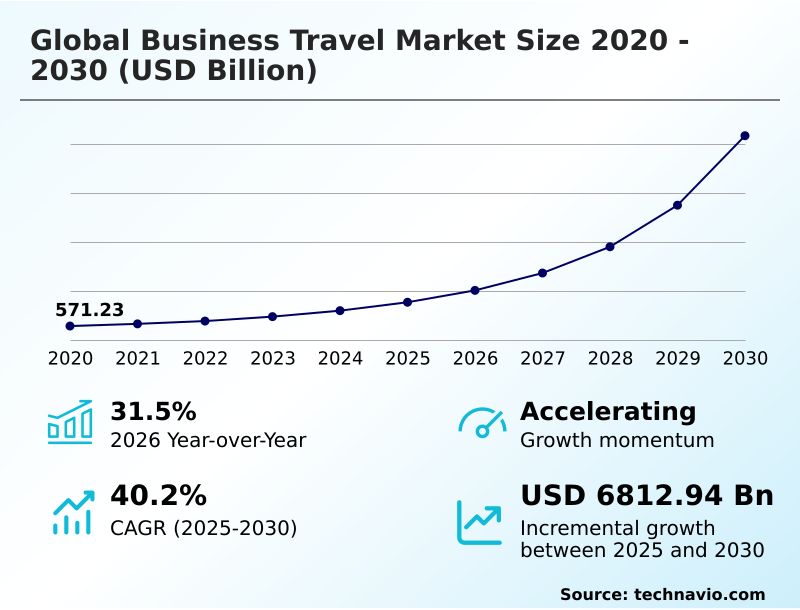
The business travel market size is valued to increase by USD 6,812.94 billion, at a CAGR of 40.2% from 2025 to 2030. Agentic AI and industrialization of zero-touch travel management systems will drive the business travel market.
Major Market Trends & Insights
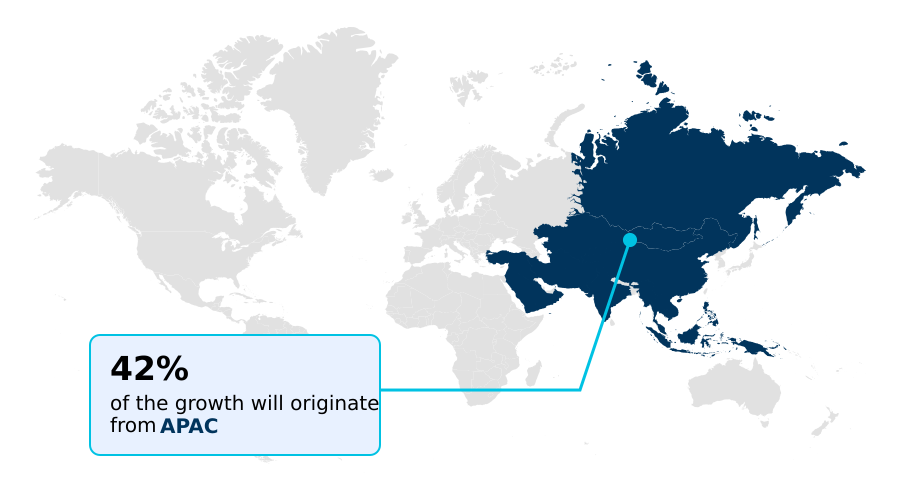
- APAC dominated the market and accounted for a 42.2% growth during the forecast period.
- By Application - Marketing segment was valued at USD 425.35 billion in 2024
- By End-user - Corporate segment accounted for the largest market revenue share in 2024
Market Size & Forecast
- Market Opportunities: USD 7,786.04 billion
- Market Future Opportunities: USD 6,812.94 billion
- CAGR from 2025 to 2030 : 40.2%
Market Summary
- The business travel market is undergoing a structural shift, moving from a cost-center framework to a strategic enabler of growth and talent retention. This transition is defined by the industrialization of agentic artificial intelligence and the adoption of zero-touch travel management systems that automate logistical decisions.
- For instance, a multinational firm launching a new product can utilize a platform that coordinates travel for its sales, marketing, and technical teams across different regions. This system would use generative AI itinerary planning to proactively book flights and accommodations that align with both dynamic corporate policies and sustainability targets, leveraging carbon-transparent procurement and new distribution capability.
- This move toward purposeful travel logistics is driven by the need for a higher travel return on investment, where every trip is justified by measurable outcomes. The integration of multi-departmental risk ecosystems and robust duty of care 2.0 protocols further ensures traveler safety in an environment of increasing geopolitical volatility, making corporate mobility both resilient and efficient.
- Advanced AI-enhanced expense reconciliation and biometric security integration are becoming standard, reflecting a market-wide pivot toward frictionless, data-driven operations.
What will be the Size of the Business Travel Market during the forecast period?
Get Key Insights on Market Forecast (PDF) Get Free Sample
How is the Business Travel Market Segmented?
The business travel industry research report provides comprehensive data (region-wise segment analysis), with forecasts and estimates in "USD million" for the period 2026-2030, as well as historical data from 2020-2024 for the following segments.
- Application
- Marketing
- Internal meeting
- Trade show
- Product launch
- End-user
- Corporate
- Government
- Service type
- Accommodation
- Transportation
- Meetings and events
- Geography
- APAC
- China
- Japan
- India
- Europe
- Germany
- UK
- France
- North America
- US
- Canada
- Mexico
- South America
- Brazil
- Argentina
- Middle East and Africa
- UAE
- Saudi Arabia
- South Africa
- Rest of World (ROW)
- APAC
By Application Insights
The marketing segment is estimated to witness significant growth during the forecast period.
The marketing segment is defined by the strategic necessity of high-touch client engagement and brand storytelling, moving beyond digital outreach. Corporations are reinvesting in face-to-face marketing travel, using purposeful travel logistics to differentiate their value propositions.
This includes specialized travel for account management and relationship building, where physical presence fosters trust. Analyst data indicates marketing-driven travel budgets are expected to rise by 5% as firms prioritize territorial expansion and utilize phygital event experiences.
This shift underscores the belief that mobility remains a critical tool for capturing market share, supported by corporate mobility solutions and integrated travel and expense platforms that optimize travel return on investment through better data-driven supplier negotiations and real-time traveler tracking.
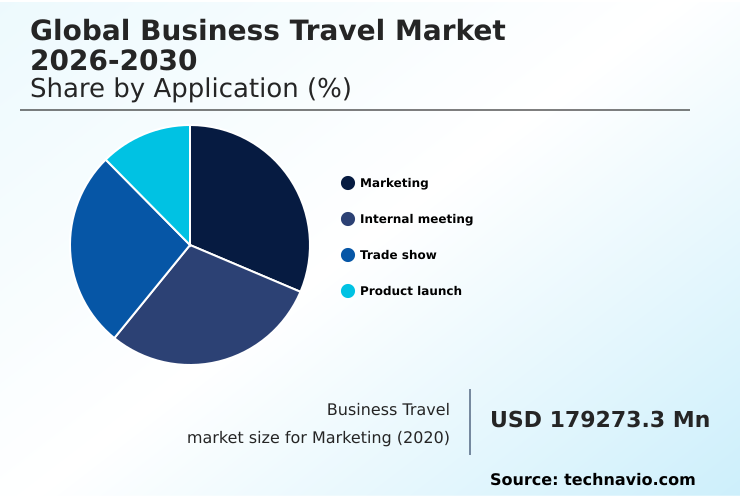
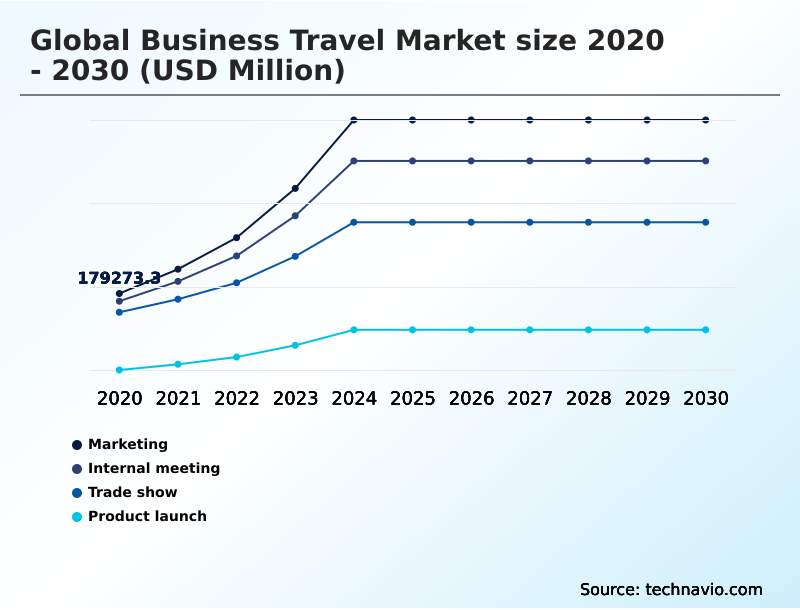
The Marketing segment was valued at USD 425.35 billion in 2024 and showed a gradual increase during the forecast period.
Regional Analysis
APAC is estimated to contribute 42.2% to the growth of the global market during the forecast period.Technavio’s analysts have elaborately explained the regional trends and drivers that shape the market during the forecast period.
See How Business Travel Market Demand is Rising in APAC Get Free Sample
The geographic landscape of the business travel market is diversifying, with distinct regional priorities shaping technology adoption. In APAC, where 65% of Indian corporations anticipate rising travel volumes, the focus is on mobile-first management tools and rapid infrastructure expansion.
Europe leads in sustainability, with corporate budgets expanding by 5.8% amid the enforcement of the corporate sustainability reporting directive, driving high-speed rail integration and the use of carbon-tracking software.
North America remains a hub for technological innovation, focusing on proactive disruption management and predictive analytics for travel. Across these regions, the demand for eco-certified accommodation networks and unified risk management is universal.
This is creating opportunities for providers offering multi-modal transportation solutions that cater to both cost and carbon-conscious policies.
Market Dynamics
Our researchers analyzed the data with 2025 as the base year, along with the key drivers, trends, and challenges. A holistic analysis of drivers will help companies refine their marketing strategies to gain a competitive advantage.
- The modern business travel landscape requires a strategic re-evaluation of its core components, moving far beyond simple booking and expense management. A primary consideration is understanding the impact of NDC on corporate booking, which promises richer content but also introduces complexity that firms must navigate.
- This complexity is balanced against the need to demonstrate a clear ROI of purposeful business travel, where the cost of travel vs virtual collaboration is constantly weighed. The integration of AI in travel disruption management is now critical for operational resilience, proactively re-routing employees affected by delays.
- Concurrently, formalizing a bleisure policy and duty of care has become a key tool for talent retention, though it requires sophisticated risk management for geopolitical instability. Sustainability is a non-negotiable boardroom topic, focusing on managing scope 3 travel emissions and integrating SAF into corporate travel programs. This is where a clear strategy comparing high-speed rail versus short-haul flights becomes vital.
- Operationally, the push is toward tech for zero-touch expense reporting, supported by biometrics for seamless airport transit. To manage structural inflation, data analytics for supplier negotiation has become essential, with firms leveraging such tools reporting up to 15% more favorable terms.
- This data-driven approach, essential for balancing cost control with traveler satisfaction, also underpins carbon tracking for ESG reporting and ensures automated policy compliance in T&E.
- Ultimately, the market is moving toward a model where agentic AI for proactive booking, robust duty of care in high-risk zones, and generative AI for personalized itineraries are standard, all while navigating the impact of inflation on travel budgets and optimizing multi-modal transportation routes.
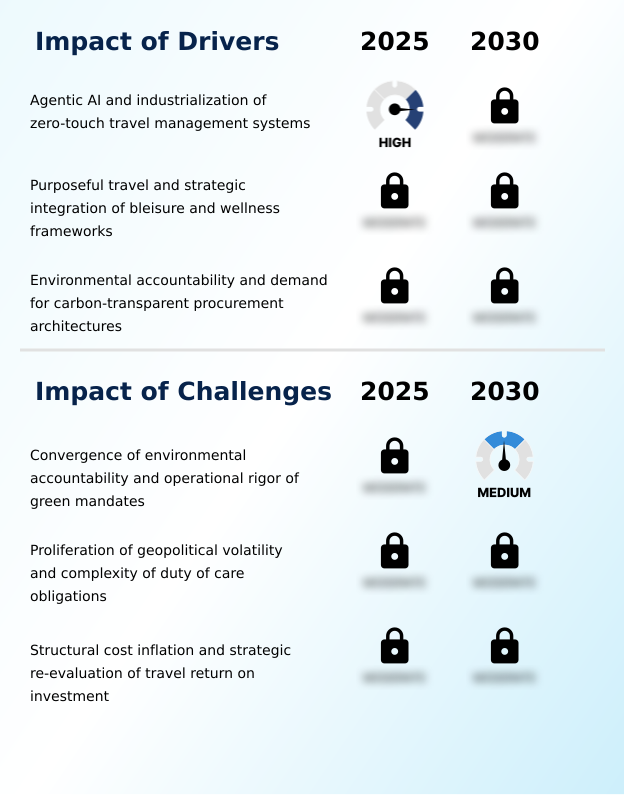
What are the key market drivers leading to the rise in the adoption of Business Travel Industry?
- A key driver for the market is the adoption of agentic AI and the industrialization of zero-touch travel management systems.
- Key market drivers are reshaping business travel around efficiency, employee well-being, and environmental accountability. The transition toward agentic artificial intelligence is central, with 65% of travel professionals prioritizing investment in technologies that enable zero-touch travel management and proactive disruption management.
- Simultaneously, the rise of purposeful travel and strategic integration of bleisure travel frameworks are transforming corporate culture, as 68% of companies report increased blended travel. This focus on employee wellness frameworks is a direct response to talent retention challenges.
- The third major driver is the demand for carbon-transparent procurement, compelling the use of carbon-tracking software and eco-certified accommodation networks. This sustainability focus is influencing booking behavior, with some platforms seeing a 10% shift to lower-emission options.
What are the market trends shaping the Business Travel Industry?
- A key market trend is the institutionalization of multi-departmental risk ecosystems. This moves beyond isolated travel safety protocols to integrated Duty of Care 2.0 frameworks.
- Market trends are pushing the business travel industry toward highly integrated, intelligent systems. The institutionalization of multi-departmental risk ecosystems represents a move toward proactive safety, where unified risk management and real-time traveler tracking are standard. This trend is complemented by the rapid adoption of AI-enhanced expense reconciliation, creating seamless financial workflows.
- Such platforms have demonstrated the ability to reduce expense processing errors by over 90%. Another major trend is the strategic expansion of high-speed rail integration, driven by modal shift policies aimed at sustainability. In some European corridors, this has led to over 70% of corporate travelers choosing rail over air for short-haul journeys.
- These shifts are supported by automated policy compliance and phygital experiences at events.
What challenges does the Business Travel Industry face during its growth?
- A key challenge affecting industry growth is the convergence of environmental accountability with the operational rigor of green mandates.
- The business travel market faces complex challenges at the intersection of regulation, security, and economics. The convergence of environmental accountability and the operational rigor of green mandates forces companies to justify the carbon footprint of every trip, often leading to a strategic reduction in travel volume.
- Geopolitical volatility strains corporate duty of care obligations, expanding the definition of employee safety to include digital and health resilience. The most immediate challenge is structural cost inflation, with nearly 60% of travel managers struggling to balance costs against traveler satisfaction as room rates are projected to rise by 5%.
- This pressure is compounded by AI-powered booking leakage, which can undermine negotiated corporate discounts by as much as 20%, threatening travel return on investment.
Exclusive Technavio Analysis on Customer Landscape
The business travel market forecasting report includes the adoption lifecycle of the market, covering from the innovator’s stage to the laggard’s stage. It focuses on adoption rates in different regions based on penetration. Furthermore, the business travel market report also includes key purchase criteria and drivers of price sensitivity to help companies evaluate and develop their market growth analysis strategies.
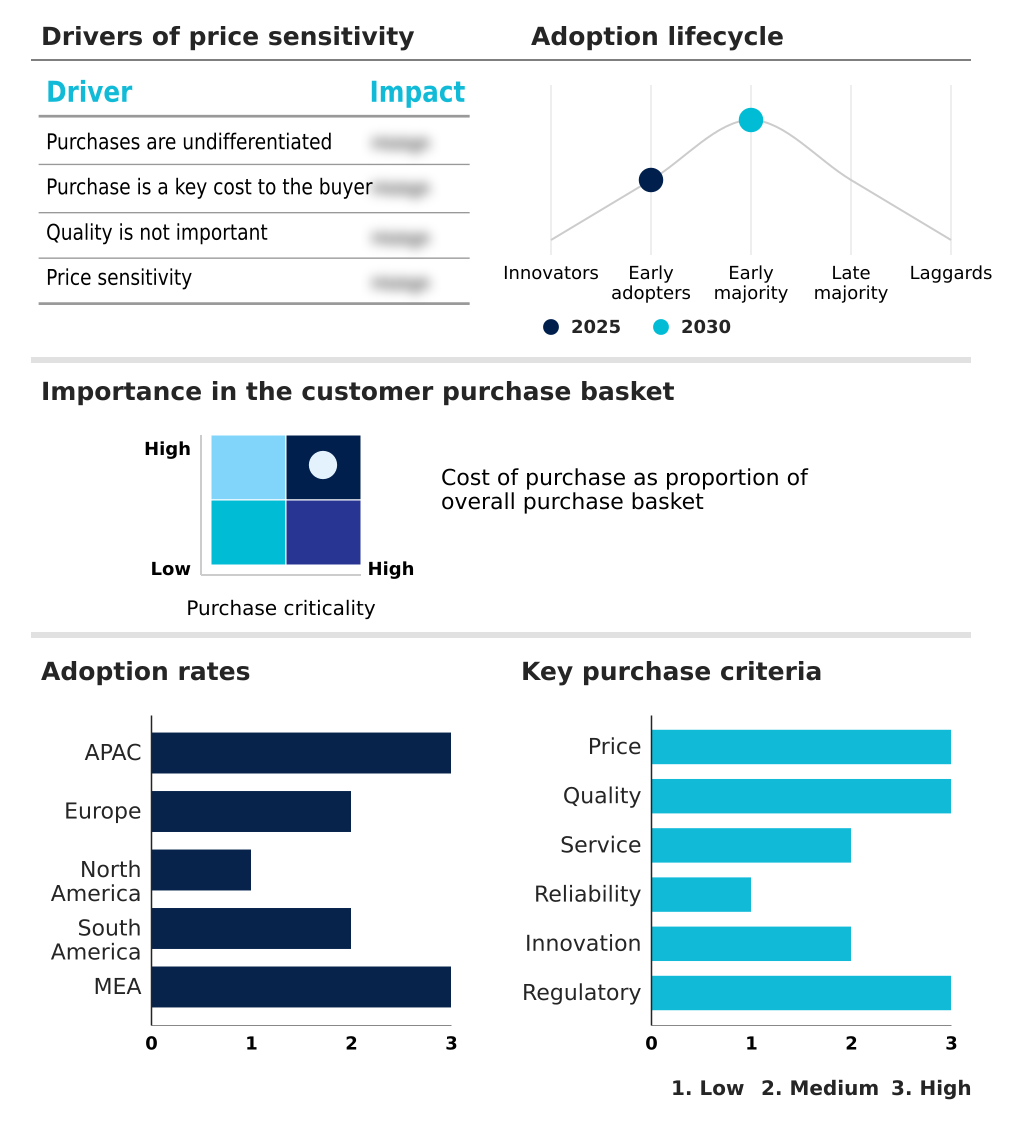
Customer Landscape of Business Travel Industry
Competitive Landscape
Companies are implementing various strategies, such as strategic alliances, business travel market forecast, partnerships, mergers and acquisitions, geographical expansion, and product/service launches, to enhance their presence in the industry.
Airbnb Inc. - Vendors provide integrated corporate travel management, leveraging technology for expense control, data-driven insights, and enhanced traveler duty-of-care through advanced software-defined platforms.
The industry research and growth report includes detailed analyses of the competitive landscape of the market and information about key companies, including:
- Airbnb Inc.
- ATPI Group
- BCD Travel
- Booking Holdings Inc.
- Brex Payments LLC
- Concur Technologies Inc.
- Corporate Travel Management Ltd
- Coupa Software Inc.
- CWT
- Direct Travel Inc.
- Emburse Inc.
- FCM Travel Solutions
- FROSCH International Travel LLC
- Gant Travel Ltd
- Global Business Travel Group
- Omega World Travel Inc.
- Ramp Business Corp.
- Travel Leaders Group Holdings
- Travelator Inc.
- World Travel Inc.
Qualitative and quantitative analysis of companies has been conducted to help clients understand the wider business environment as well as the strengths and weaknesses of key industry players. Data is qualitatively analyzed to categorize companies as pure play, category-focused, industry-focused, and diversified; it is quantitatively analyzed to categorize companies as dominant, leading, strong, tentative, and weak.
Recent Development and News in Business travel market
- In October 2024, BCD Travel announced a strategic partnership with Riskline to deploy a next-generation travel risk management ecosystem, integrating real-time intelligence to enhance duty of care for corporate clients.
- In November 2024, American Express Global Business Travel finalized its acquisition of CWT, a move designed to accelerate the deployment of generative AI across its software ecosystem and consolidate its global service footprint.
- In February 2025, Direct Travel completed the global rollout of its Avenir Travel Edition, a unified travel management platform developed with Spotnana to centralize policy and data visibility for multinational corporations.
- In April 2025, SAP Concur announced the integration of new AI-powered features into its platform, enabling automated auditing of expense reports and ensuring 100% compliance with corporate travel policies.
Dive into Technavio’s robust research methodology, blending expert interviews, extensive data synthesis, and validated models for unparalleled Business Travel Market insights. See full methodology.
| Market Scope | |
|---|---|
| Page number | 288 |
| Base year | 2025 |
| Historic period | 2020-2024 |
| Forecast period | 2026-2030 |
| Growth momentum & CAGR | Accelerate at a CAGR of 40.2% |
| Market growth 2026-2030 | USD 6812940.7 million |
| Market structure | Fragmented |
| YoY growth 2025-2026(%) | 31.5% |
| Key countries | China, Japan, India, South Korea, Australia, Indonesia, Germany, UK, France, Italy, Spain, The Netherlands, US, Canada, Mexico, Brazil, Argentina, Chile, UAE, Saudi Arabia, South Africa, Turkey and Israel |
| Competitive landscape | Leading Companies, Market Positioning of Companies, Competitive Strategies, and Industry Risks |
Research Analyst Overview
- The business travel market is evolving into a technologically sophisticated ecosystem where operational efficiency and strategic value are paramount. This shift is powered by agentic artificial intelligence, which enables zero-touch travel management and generative AI itinerary planning for optimized corporate mobility.
- A key trend driving boardroom decisions is the mandatory adherence to the corporate sustainability reporting directive, which necessitates carbon-transparent procurement and comprehensive scope 3 emissions tracking. This has elevated the importance of sustainable aviation fuel and modal shift policies that favor high-speed rail integration. Firms that implement AI-enhanced expense reconciliation have reported a reduction in processing times by over 40%.
- The landscape is also defined by a focus on security, with multi-departmental risk ecosystems, robust duty of care 2.0 protocols, and geopolitical volatility monitoring becoming standard.
- Innovations such as biometric security integration, contactless payment systems, and digital wallet integration are creating a frictionless traveler experience, while the adoption of new distribution capability and bleisure travel frameworks addresses both commercial and employee-centric objectives, ensuring a higher travel return on investment amidst structural cost inflation.
What are the Key Data Covered in this Business Travel Market Research and Growth Report?
-
What is the expected growth of the Business Travel Market between 2026 and 2030?
-
USD 6,812.94 billion, at a CAGR of 40.2%
-
-
What segmentation does the market report cover?
-
The report is segmented by Application (Marketing, Internal meeting, Trade show, and Product launch), End-user (Corporate, and Government), Service Type (Accommodation, Transportation, and Meetings and events) and Geography (APAC, Europe, North America, South America, Middle East and Africa)
-
-
Which regions are analyzed in the report?
-
APAC, Europe, North America, South America and Middle East and Africa
-
-
What are the key growth drivers and market challenges?
-
Agentic AI and industrialization of zero-touch travel management systems, Convergence of environmental accountability and operational rigor of green mandates
-
-
Who are the major players in the Business Travel Market?
-
Airbnb Inc., ATPI Group, BCD Travel, Booking Holdings Inc., Brex Payments LLC, Concur Technologies Inc., Corporate Travel Management Ltd, Coupa Software Inc., CWT, Direct Travel Inc., Emburse Inc., FCM Travel Solutions, FROSCH International Travel LLC, Gant Travel Ltd, Global Business Travel Group, Omega World Travel Inc., Ramp Business Corp., Travel Leaders Group Holdings, Travelator Inc. and World Travel Inc.
-
Market Research Insights
- The dynamics of the business travel market are shaped by the convergence of technology, employee well-being, and fiscal discipline. While 68% of corporations observe a rise in blended business and leisure trips, nearly 60% of travel managers cite balancing cost controls with traveler satisfaction as their top challenge.
- This tension drives the adoption of integrated travel and expense platforms that deliver seamless financial workflows and automated policy compliance. The implementation of predictive analytics for travel allows for optimized booking windows, reducing airfare costs by an average of 12% for compliant users. Furthermore, proactive disruption management systems are becoming critical, offering corporate mobility solutions that enhance operational resilience.
- These platforms support employee wellness frameworks and provide the data for strategic, data-driven supplier negotiations, reflecting a shift toward a more holistic management approach.
We can help! Our analysts can customize this business travel market research report to meet your requirements.
 RIA -
RIA - 
