



Luxury Travel Market Size 2026-2030
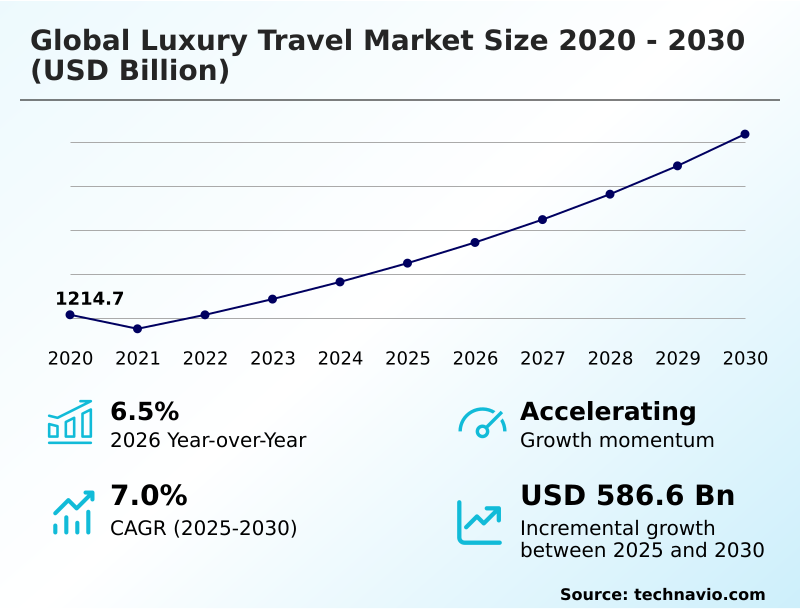
The luxury travel market size is valued to increase by USD 586.6 billion, at a CAGR of 7% from 2025 to 2030. Rising demand for hyper-personalization and experiential exclusivity will drive the luxury travel market.
Major Market Trends & Insights
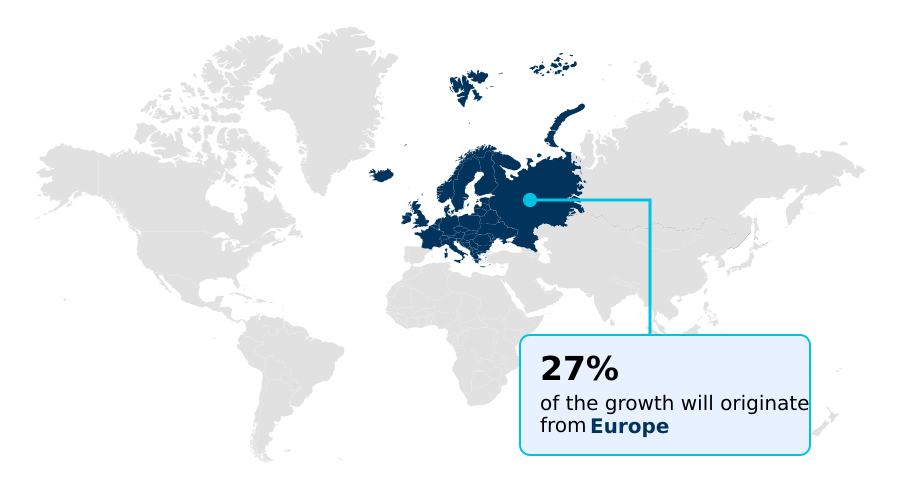
- Europe dominated the market and accounted for a 27.3% growth during the forecast period.
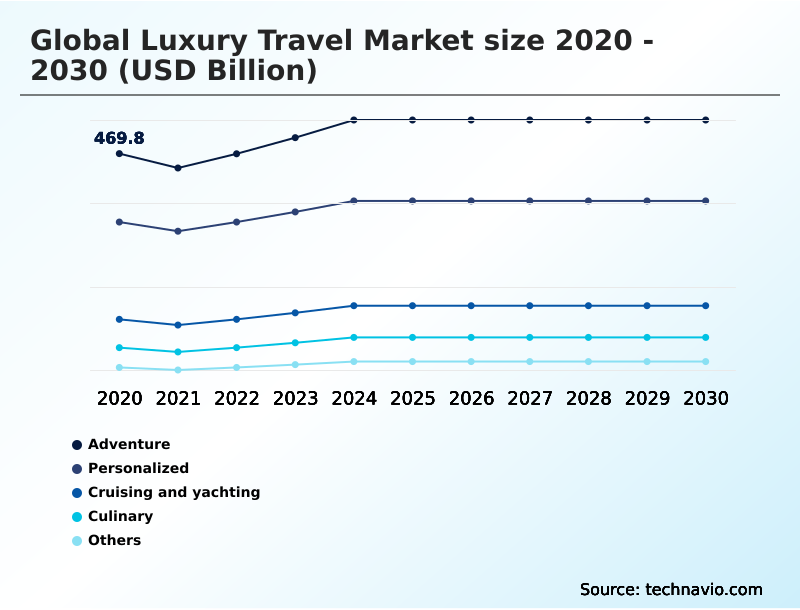
- By Type - Adventure segment was valued at USD 529.2 billion in 2024
- By Consumer - Domestic segment accounted for the largest market revenue share in 2024
Market Size & Forecast
- Market Opportunities: USD 821.2 billion
- Market Future Opportunities: USD 586.6 billion
- CAGR from 2025 to 2030 : 7%
Market Summary
- The luxury travel market is undergoing a profound transformation, driven by a consumer shift from material opulence toward experiential enrichment and hyper-personalization. This has compelled providers of ultra-luxury hotels and premium small group tours to develop highly bespoke itineraries and curated journeys that offer deep cultural immersion.
- The integration of advanced technology, such as autonomous agentic AI for logistics and biometric preference-mapping for in-suite comfort, is becoming a key differentiator. A premier hospitality group, for instance, can leverage data to anticipate the needs of a client on a multi-generational travel excursion, seamlessly arranging everything from private aviation to specific dietary requirements across multiple destinations.
- Simultaneously, the industry is navigating significant headwinds, including geopolitical volatility and persistent labor shortages. The push for ESG compliance is also reshaping operations, fostering innovations in sustainable aviation and the development of eco-luxury lodges that support regenerative travel, a concept gaining significant traction among a conscientious affluent clientele.
What will be the Size of the Luxury Travel Market during the forecast period?
Get Key Insights on Market Forecast (PDF) Get Free Sample
How is the Luxury Travel Market Segmented?
The luxury travel industry research report provides comprehensive data (region-wise segment analysis), with forecasts and estimates in "USD billion" for the period 2026-2030, as well as historical data from 2020-2024 for the following segments.
- Type
- Adventure
- Personalized
- Cruising and yachting
- Culinary
- Others
- Consumer
- Domestic
- International
- Age group
- Gen X
- Baby boomers
- Millennials
- Seniors
- Geography
- Europe
- Germany
- UK
- France
- North America
- US
- Canada
- Mexico
- APAC
- China
- Japan
- India
- Middle East and Africa
- UAE
- Saudi Arabia
- South Africa
- South America
- Brazil
- Argentina
- Rest of World (ROW)
- Europe
By Type Insights
The adventure segment is estimated to witness significant growth during the forecast period.
The luxury adventure sub-segment is shifting from conventional sightseeing toward high-intensity, transformative journeys. Modern adventure luxury trips prioritize cultural immersion and exclusive access to remote locations, often requiring private jet expeditions or specialized private guided tours.
There is a growing demand for eco-luxury lodges and high-end seclusion on private island retreats that blend rugged exploration with five-star comfort, contributing to a 6.5% year-over-year growth rate.
This trend is underscored by a focus on wellness, with many curated journeys incorporating preventive health and medical-wellness programs.
The market is increasingly defined by consumers seeking unique experiences such as luxury safaris, impact travel, or combining adventure with remote work in sophisticated workations, reflecting a shift toward experiential capital.
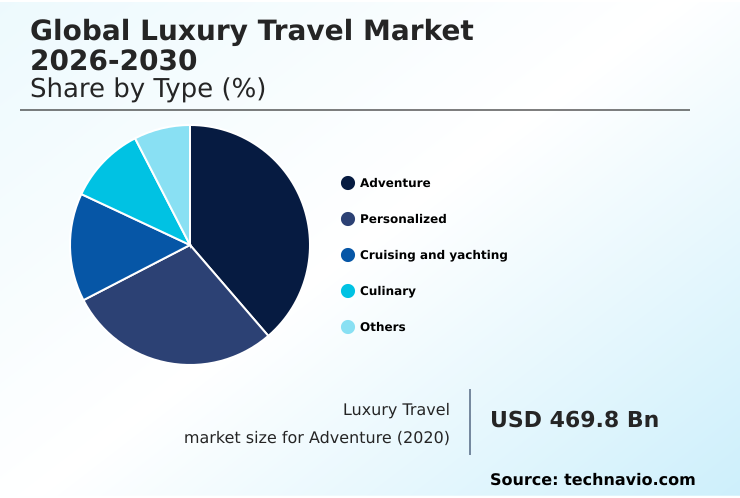
The Adventure segment was valued at USD 529.2 billion in 2024 and showed a gradual increase during the forecast period.
Regional Analysis
Europe is estimated to contribute 27.3% to the growth of the global market during the forecast period.Technavio’s analysts have elaborately explained the regional trends and drivers that shape the market during the forecast period.
See How Luxury Travel Market Demand is Rising in Europe Get Free Sample
The geographic landscape of luxury travel is diversifying, with APAC and the Middle East and Africa showing the fastest growth trajectories at 7.3% and 7.7%, respectively.
While Europe and North America remain foundational markets, this expansion is driven by a new demographic of travelers seeking novel experiences like gastro-tourism and philanthropic travel.
The market for maritime voyages, including expedition-style vessels and all-inclusive luxury cruise options, is expanding globally. The rise of culinary travel and bleisure travel is also influencing destination choices.
Service providers are leveraging advanced technologies to manage complex logistics for luxury river cruising and other specialized offerings, ensuring a high standard of service that incorporates preventive health and wellness, regardless of the destination's remoteness.
Market Dynamics
Our researchers analyzed the data with 2025 as the base year, along with the key drivers, trends, and challenges. A holistic analysis of drivers will help companies refine their marketing strategies to gain a competitive advantage.
- A comprehensive analysis of the global luxury travel market 2026-2030 reveals complex interdependencies. The impact of geopolitical volatility on luxury travel is a primary concern for operators, often creating ripple effects that influence the demand for private aviation in high-end travel.
- Simultaneously, the role of AI in personalized luxury travel is becoming central to strategy, as companies navigate data privacy concerns in luxury travel tech to deliver hyper-personalization in bespoke travel itineraries.
- ESG compliance challenges in luxury hospitality are forcing a reevaluation of supply chains and promoting trends in sustainable luxury travel experiences, including the development of regenerative travel models in eco-lodges. The growth of wellness tourism in luxury market is significant, with a strong focus on integrating holistic wellness in resort stays.
- The industry also faces internal pressures, such as the challenges of labor shortages in luxury hotels and the impact of inflation on luxury travel costs, which affect everything from the luxury cruise market vs private yacht charters to culinary tourism's role in luxury itineraries.
- Navigating regulatory fragmentation in tourism is critical, as is understanding how slow travel's influence on heritage destinations, the rise of solo female luxury travel, and the demand for adventure tourism in remote luxury locations are reshaping service design and multi-generational travel package customization.
- Providers that successfully balance these factors are seeing customer satisfaction scores improve by a margin nearly double that of those who do not.
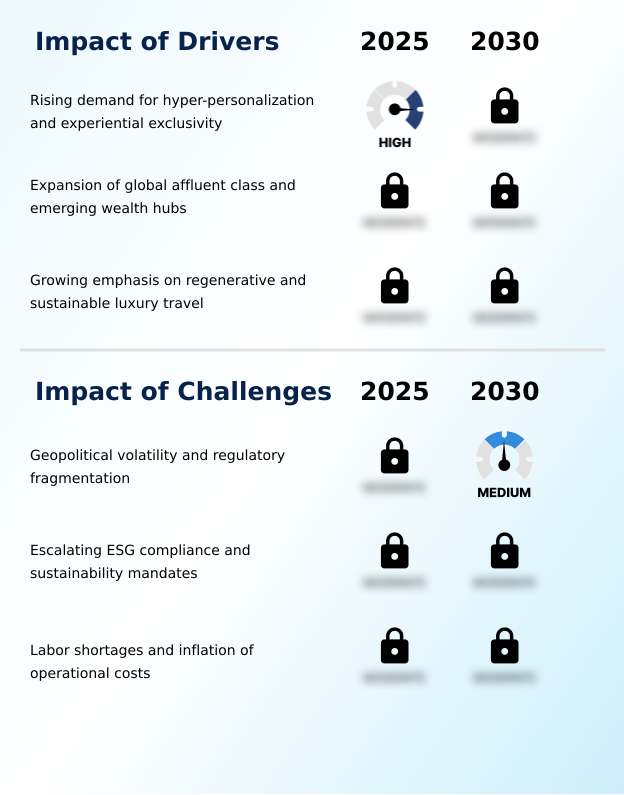
What are the key market drivers leading to the rise in the adoption of Luxury Travel Industry?
- The rising demand for hyper-personalization and experiential exclusivity is a primary driver propelling growth across the luxury travel market.
- The market is propelled by a shift toward experiential enrichment and hyper-personalization, with consumers seeking experiential exclusivity.
- This has fueled demand for regenerative travel and sustainable luxury, contributing to a landscape where 70% of affluent travelers consider sustainability in their decisions.
- The proliferation of private aviation and demand for bespoke itineraries have enabled access to remote cultural heritage sites. Operators offering curated journeys to ultra-luxury hotels and private villa rentals report a 10% year-over-year increase in repeat business.
- The ability to deliver these customized experiences, from regenerative tourism projects to exclusive yacht charters for multi-generational travel, is a critical differentiator, sustaining high margins.
What are the market trends shaping the Luxury Travel Industry?
- A significant market trend is the emergence of quiet luxury, which prioritizes low-density seclusion and understated elegance. Affluent travelers are increasingly seeking private, tranquil environments over conspicuous displays of wealth.
- A defining trend is the pivot toward quiet luxury and low-density seclusion, where travelers seek understated sanctuary stays over conspicuous displays. This movement has amplified demand for wellness-oriented retreats that integrate holistic wellness protocols, with some operators seeing a 25% increase in bookings for such packages.
- The evolution of slow travel focuses on reimagined heritage icons and meaningful immersion, often supported by a digital concierge for a seamless experience. Properties emphasizing circular design and contactless services are gaining traction. Innovations like biometric preference-mapping are elevating personalization, while the rise of indigenous-led tourism and high-end staycations reflects a desire for authenticity and restorative tranquility.
What challenges does the Luxury Travel Industry face during its growth?
- Geopolitical volatility and the fragmentation of international travel regulations present a primary challenge, disrupting travel corridors and impacting market stability.
- Persistent challenges include geopolitical volatility, disrupting travel corridors, and the operational pressures of labor shortages, which can increase staffing costs by up to 15%. Escalating ESG compliance mandates are forcing providers to innovate, particularly in areas like carbon-neutral transportation, while scrutiny over all-in pricing transparency is increasing.
- The industry grapples with inflation, leading to the use of dynamic pricing models that can impact demand for tailor-made holidays and premium small group tours. Despite these hurdles, niche segments like medical tourism and astro-tourism are growing. Operators of eco-friendly tours must balance these external pressures with high service expectations, especially from the growing solo luxury travel demographic.
Exclusive Technavio Analysis on Customer Landscape
The luxury travel market forecasting report includes the adoption lifecycle of the market, covering from the innovator’s stage to the laggard’s stage. It focuses on adoption rates in different regions based on penetration. Furthermore, the luxury travel market report also includes key purchase criteria and drivers of price sensitivity to help companies evaluate and develop their market growth analysis strategies.
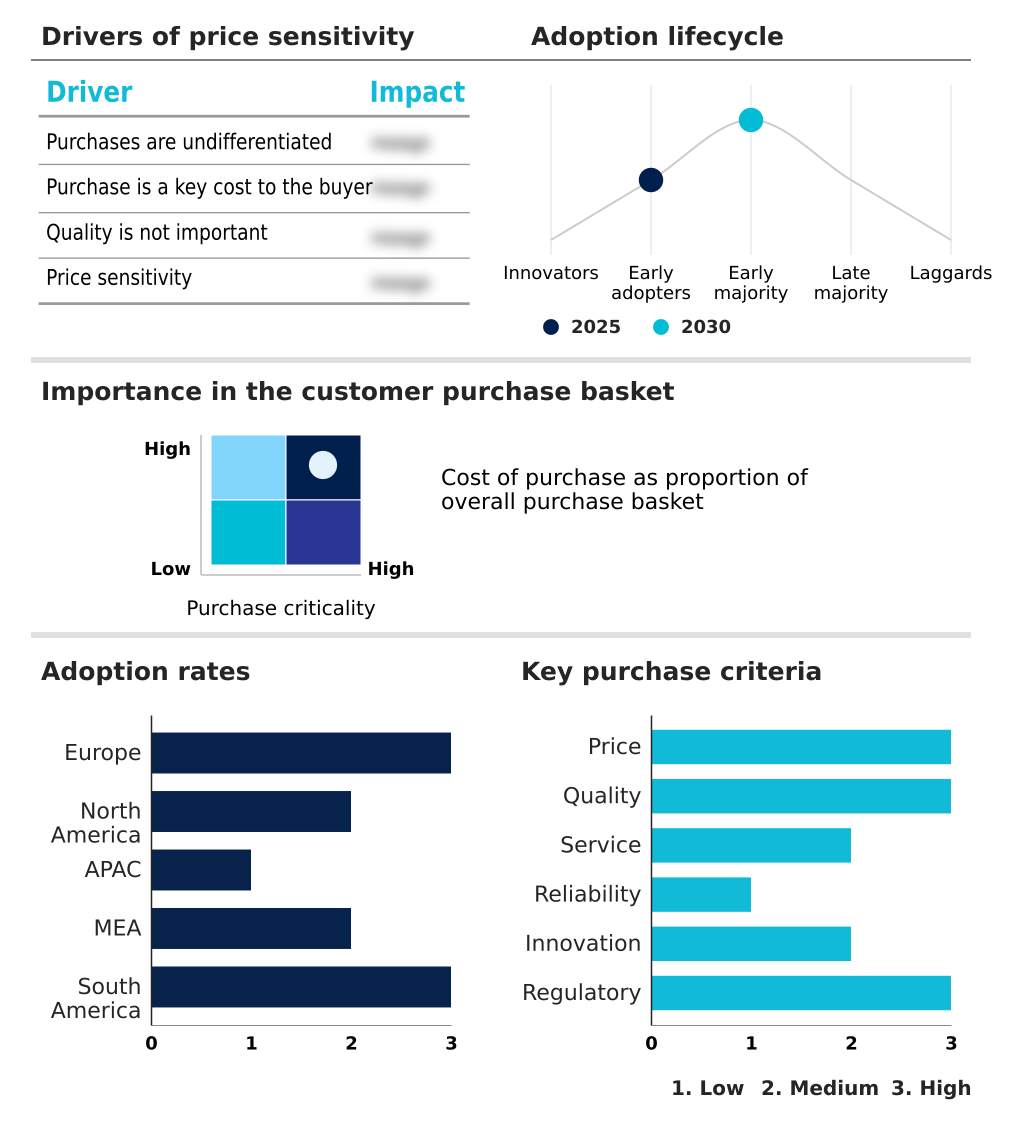
Customer Landscape of Luxury Travel Industry
Competitive Landscape
Companies are implementing various strategies, such as strategic alliances, luxury travel market forecast, partnerships, mergers and acquisitions, geographical expansion, and product/service launches, to enhance their presence in the industry.
Atlantis Resorts - The company landscape includes global hospitality leaders and specialized niche operators providing curated experiential travel, bespoke tours, and ultra-luxury accommodation and transport services.
The industry research and growth report includes detailed analyses of the competitive landscape of the market and information about key companies, including:
- Atlantis Resorts
- Black Tomato Group Ltd.
- Classic Journeys LLC
- Classic Vacations LLC
- Exeter International Inc.
- Exodus Travels Ltd.
- Four Seasons Hotels Ltd.
- G Adventures Inc.
- Indigenous Tourism BC
- Intrepid Group Pty Ltd.
- Kensington Tours Ltd.
- Regent Seven Seas Cruises
- Remote Lands Inc.
- Responsible Travel
- Scott Dunn Ltd.
- Tauck Inc.
- TCS World Travel Inc.
- Thomas Cook Tourism
- Travelopia Group
- TUI AG
Qualitative and quantitative analysis of companies has been conducted to help clients understand the wider business environment as well as the strengths and weaknesses of key industry players. Data is qualitatively analyzed to categorize companies as pure play, category-focused, industry-focused, and diversified; it is quantitatively analyzed to categorize companies as dominant, leading, strong, tentative, and weak.
Recent Development and News in Luxury travel market
- In May 2025, Lindblad Expeditions signed a multi-year charter deal with Transcend Cruises to launch new European river expeditions aboard a brand-new river ship for voyages beginning in 2026.
- In December 2025, Intrepid Travel announced 13 new European trips and experiences for 2026, including glamping in Greece, hiking in Albania, and solar eclipse viewing opportunities.
- In December 2025, Intrepid Travel acquired Wild Bush Luxury, expanding its premium small-group and private travel offerings with high-end African safari experiences.
- In January 2026, Classic Journeys issued a Cuba travel update confirming its legal, fully compliant Cuba journeys remain uninterrupted despite recent U.S. policy announcements.
Dive into Technavio’s robust research methodology, blending expert interviews, extensive data synthesis, and validated models for unparalleled Luxury Travel Market insights. See full methodology.
| Market Scope | |
|---|---|
| Page number | 301 |
| Base year | 2025 |
| Historic period | 2020-2024 |
| Forecast period | 2026-2030 |
| Growth momentum & CAGR | Accelerate at a CAGR of 7% |
| Market growth 2026-2030 | USD 586.6 billion |
| Market structure | Fragmented |
| YoY growth 2025-2026(%) | 6.5% |
| Key countries | Germany, UK, France, Italy, Spain, The Netherlands, US, Canada, Mexico, China, Japan, India, South Korea, Australia, Indonesia, UAE, Saudi Arabia, South Africa, Turkey, Israel, Brazil, Argentina and Chile |
| Competitive landscape | Leading Companies, Market Positioning of Companies, Competitive Strategies, and Industry Risks |
Research Analyst Overview
- The luxury travel market is defined by a decisive shift toward experiential exclusivity and hyper-personalization, compelling service providers to innovate beyond traditional opulence. Demand for curated journeys, bespoke itineraries, and sanctuary stays in ultra-luxury hotels is driving the industry.
- Key trends such as quiet luxury, slow travel, and a focus on holistic wellness are reshaping product strategies, leading to the development of low-density seclusion offerings and regenerative travel models in eco-luxury lodges. The integration of advanced technologies like autonomous agentic AI and biometric preference-mapping is critical for delivering seamless, personalized experiences.
- This is particularly relevant in segments like private aviation, maritime voyages, and private jet expeditions. However, the industry grapples with significant challenges, including geopolitical volatility, stringent ESG compliance, and persistent labor shortages.
- The bargaining power of buyers remains a high-impact factor, influencing everything from the pricing of an all-inclusive luxury cruise to the features included in tailor-made holidays, forcing operators to continuously justify their premium positioning through unique value propositions.
What are the Key Data Covered in this Luxury Travel Market Research and Growth Report?
-
What is the expected growth of the Luxury Travel Market between 2026 and 2030?
-
USD 586.6 billion, at a CAGR of 7%
-
-
What segmentation does the market report cover?
-
The report is segmented by Type (Adventure, Personalized, Cruising and yachting, Culinary, and Others), Consumer (Domestic, and International), Age Group (Gen X, Baby boomers, Millennials, and Seniors) and Geography (Europe, North America, APAC, Middle East and Africa, South America)
-
-
Which regions are analyzed in the report?
-
Europe, North America, APAC, Middle East and Africa and South America
-
-
What are the key growth drivers and market challenges?
-
Rising demand for hyper-personalization and experiential exclusivity, Geopolitical volatility and regulatory fragmentation
-
-
Who are the major players in the Luxury Travel Market?
-
Atlantis Resorts, Black Tomato Group Ltd., Classic Journeys LLC, Classic Vacations LLC, Exeter International Inc., Exodus Travels Ltd., Four Seasons Hotels Ltd., G Adventures Inc., Indigenous Tourism BC, Intrepid Group Pty Ltd., Kensington Tours Ltd., Regent Seven Seas Cruises, Remote Lands Inc., Responsible Travel, Scott Dunn Ltd., Tauck Inc., TCS World Travel Inc., Thomas Cook Tourism, Travelopia Group and TUI AG
-
Market Research Insights
- Market dynamics are increasingly shaped by the pursuit of experiential enrichment and transformative journeys. Affluent consumers are prioritizing sustainable luxury and high-end seclusion, driving demand for unique offerings like private villa rentals and exclusive yacht charters. This shift is supported by advanced digital concierge services and innovations in biometric technology to enhance personalization.
- While Europe accounts for over 27% of the incremental growth opportunity, the market remains price-sensitive, with this factor having a high impact on purchasing decisions. Operators are thus focused on creating value through exclusive access and curated experiences, including wellness-oriented retreats and regenerative tourism projects, to justify premium positioning and cultivate loyalty among discerning travelers.
We can help! Our analysts can customize this luxury travel market research report to meet your requirements.
 RIA -
RIA - 
