


Managed It Infrastructure Services Market Size 2026-2030
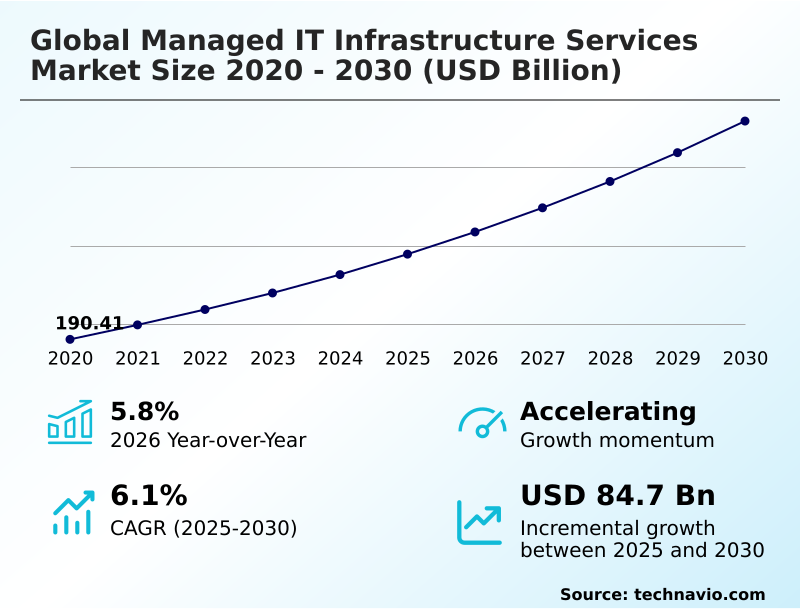
The managed it infrastructure services market size is valued to increase by USD 84.70 billion, at a CAGR of 6.1% from 2025 to 2030. Edge computing and distributed architecture will drive the managed it infrastructure services market.
Major Market Trends & Insights
- North America dominated the market and accounted for a 53.3% growth during the forecast period.
- By End-user - SMEs segment was valued at USD 188.61 billion in 2024
- By Deployment - Cloud-based segment accounted for the largest market revenue share in 2024
Market Size & Forecast
- Market Opportunities: USD 138.92 billion
- Market Future Opportunities: USD 84.70 billion
- CAGR from 2025 to 2030 : 6.1%
Market Summary
- The Managed IT Infrastructure Services operates as the critical operational backbone for modern digital enterprises, overseeing complex decentralized networks and hybrid server environments. Modern organizations increasingly depend on specialized third-party providers to orchestrate seamless remote monitoring and automated system maintenance.
- In a real-world operational scenario, large-scale logistics networks deploy centralized observability platforms to track distributed fleet telemetry and warehouse sensors simultaneously, ensuring uninterrupted supply chain visibility. Companies utilizing these outsourced observability frameworks achieve a 40% reduction in unexpected system downtime compared to maintaining isolated internal IT departments.
- The rapid proliferation of edge computing acts as a powerful market driver; processing data closer to the origin point drastically reduces latency, compelling businesses to adopt specialized managed edge services. Conversely, a severe scarcity of certified cloud architects creates a persistent operational challenge.
- This intense talent deficit forces service providers to invest heavily in automated remediation tools and continuous internal upskilling, elevating service delivery costs. Ultimately, the market relies on continuous technological modernization to secure enterprise agility and resilience.
What will be the Size of the Managed It Infrastructure Services Market during the forecast period?
Get Key Insights on Market Forecast (PDF) Get Free Sample
How is the Managed It Infrastructure Services Market Segmented?
The managed it infrastructure services industry research report provides comprehensive data (region-wise segment analysis), with forecasts and estimates in "USD million" for the period 2026-2030, as well as historical data from 2020-2024 for the following segments.
- End-user
- SMEs
- Large enterprise
- Deployment
- Cloud-based
- On-premises
- Service
- Server management
- Networking services
- Virtualization services
- Storage services
- Geography
- North America
- US
- Canada
- Mexico
- Europe
- Germany
- UK
- France
- Italy
- Spain
- The Netherlands
- APAC
- China
- Japan
- India
- South Korea
- Australia
- Indonesia
- South America
- Brazil
- Argentina
- Chile
- Middle East and Africa
- Saudi Arabia
- UAE
- South Africa
- Israel
- Turkey
- North America
By End-user Insights
The smes segment is estimated to witness significant growth during the forecast period.
Smaller commercial entities increasingly externalize complex networking architectures to overcome internal technical constraints and accelerate digital transformation. Resource-constrained organizations rely heavily on robust business continuity planning and continuous server uptime monitoring to maintain competitive parity against larger corporate counterparts.
By outsourcing operational responsibilities, these firms effectively implement advanced anomaly detection systems and seamless remote remediation tools without expanding internal headcounts. This strategic shift enables the integration of event driven automation and proactive patch management automation, significantly reducing administrative friction.
Consequently, organizations utilizing comprehensive infrastructure observability metrics report a 25% improvement in incident resolution speed compared to traditional in-house management. Furthermore, expert configuration of latency reduction routing and data center cooling optimization directly lowers operational overhead.
Smaller enterprises leverage sophisticated resource allocation heuristics alongside intelligent alert fatigue mitigation to enhance overall system reliability and ensure uninterrupted service delivery.
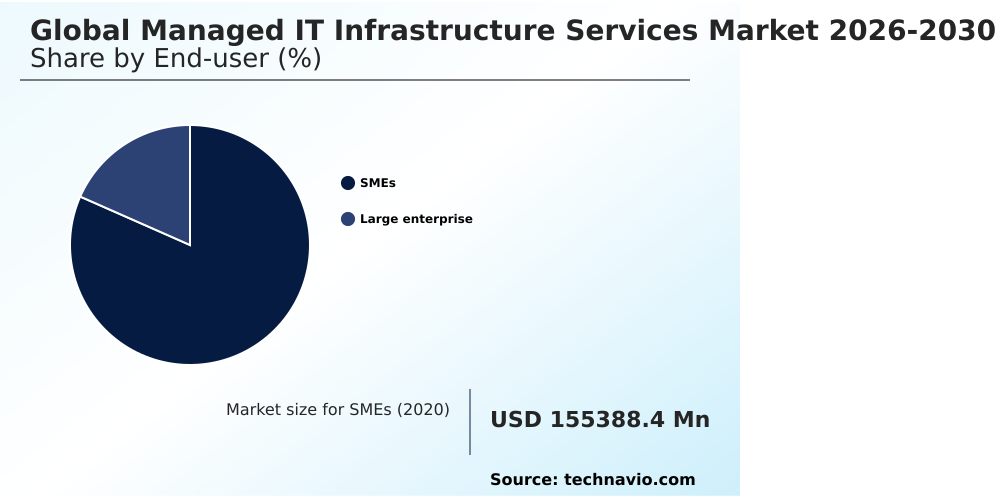
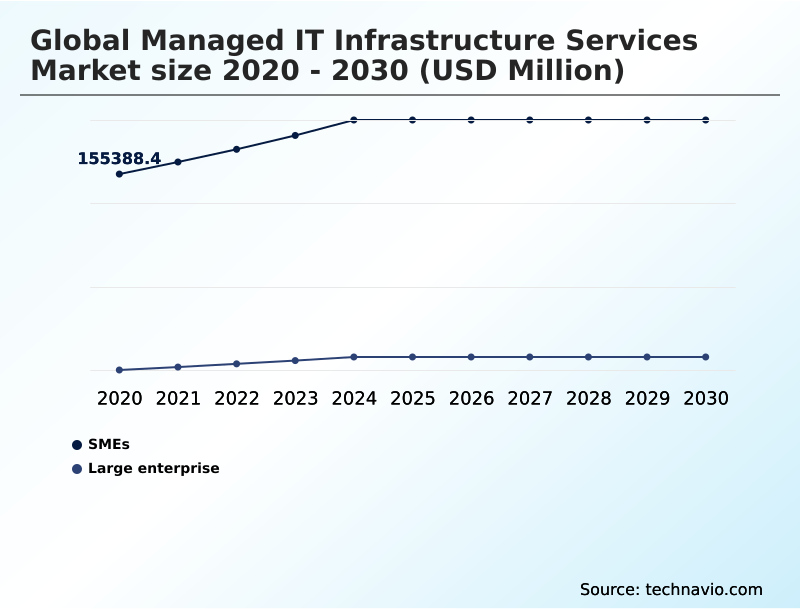
The SMEs segment was valued at USD 188.61 billion in 2024 and showed a gradual increase during the forecast period.
Regional Analysis
North America is estimated to contribute 53.3% to the growth of the global market during the forecast period.Technavio’s analysts have elaborately explained the regional trends and drivers that shape the market during the forecast period.
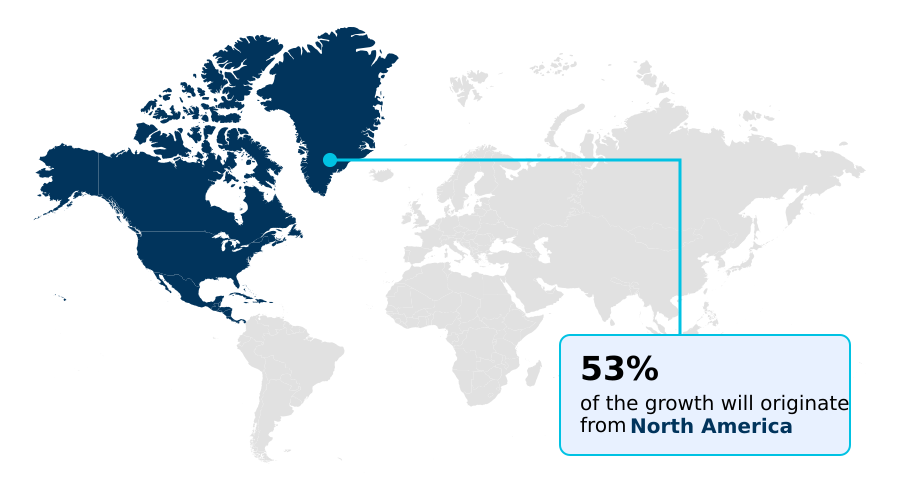
See How Managed It Infrastructure Services Market Demand is Rising in North America Get Free Sample
North America dominates the Managed IT Infrastructure Services through the rapid adoption of dynamic multi-cloud environments and sophisticated network perimeter defense protocols.
Organizations in the United States execute comprehensive root cause analysis and automated backup retention to ensure strict regulatory compliance, achieving a 40% reduction in data loss prevention incidents compared to European counterparts.
Meanwhile, Europe accelerates its deployment of continuous integration pipelines and rigorous firmware vulnerability patching to meet stringent data sovereignty mandates. European enterprises focusing on hybrid environments experience a 25% improvement in cloud cost optimization over legacy frameworks.
Asian markets are rapidly modernizing their architectures, shifting toward hyperconverged infrastructure management to support expanding digital economies. By implementing secure virtual private network tunneling and efficient bare metal provisioning, global businesses mitigate operational disruptions.
Furthermore, specialized storage area network administration enhances data retrieval speeds by 30%, proving essential for high-frequency trading and real-time logistics operations.
Market Dynamics
Our researchers analyzed the data with 2025 as the base year, along with the key drivers, trends, and challenges. A holistic analysis of drivers will help companies refine their marketing strategies to gain a competitive advantage.
- Modern enterprises increasingly depend on specialized Managed IT Infrastructure Services to navigate the escalating complexities of decentralized digital operations and hybrid workloads. A foundational element of this transformation is comprehensive multi cloud security posture management, which ensures consistent compliance and threat mitigation across diverse computing environments.
- Organizations prioritizing resilience deploy robust automated disaster recovery failover configurations to maintain operational continuity, achieving significantly higher uptime ratios compared to traditional, manual backup methodologies. Advanced predictive hardware failure detection algorithms allow service providers to address equipment degradation proactively before critical supply chain disruptions occur.
- To support distributed workforces, companies emphasize virtual desktop infrastructure latency reduction and strict zero trust network access implementation, guaranteeing secure, high-performance remote connectivity. Simultaneously, the pursuit of hybrid cloud infrastructure cost optimization drives the integration of sophisticated software defined network traffic shaping and continuous infrastructure as code deployment to minimize resource waste.
- Businesses leveraging distributed architecture observability dashboard integration benefit from unified visibility across scattered digital assets. For localized data processing, edge computing latency reduction techniques prove critical in accelerating real-time manufacturing telemetry. In centralized data centers, bare metal server provisioning automation and hyperconverged infrastructure storage allocation efficiency drastically accelerate resource availability.
- Furthermore, rigorous kubernetes container orchestration performance tuning facilitates seamless cloud native application infrastructure scaling, accommodating sudden demand surges. Ultimately, embedding robust endpoint threat detection response integration across these diverse architectures ensures that enterprises can operate securely and efficiently in an increasingly hostile digital landscape.
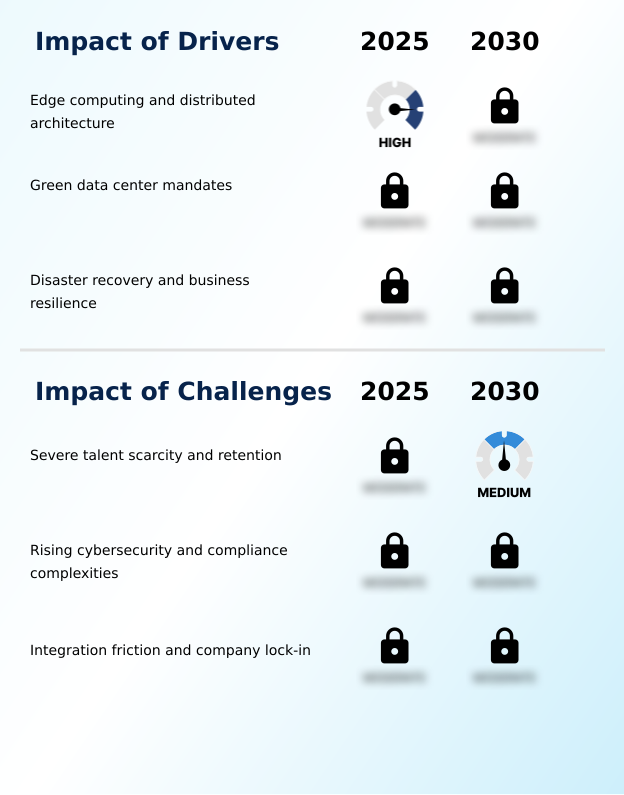
What are the key market drivers leading to the rise in the adoption of Managed It Infrastructure Services Industry?
- The rapid expansion of edge computing and decentralized digital architectures acts as a primary catalyst accelerating market growth.
- The exponential growth of decentralized digital architectures acts as a primary catalyst accelerating enterprise reliance on specialized third-party infrastructure operations.
- As industrial environments deploy massive arrays of interconnected sensors, the necessity for rapid edge computing node provisioning and advanced network traffic shaping intensifies to process localized telemetry without latency delays.
- Organizations adopting proactive site reliability engineering and comprehensive disaster recovery automation experience a 45% decrease in critical application recovery times following severe network disruptions.
- Because maintaining seamless connectivity is paramount, businesses implement sophisticated load balancing protocols alongside unified log analytics dashboards to optimize data routing dynamically. This strategic implementation of dynamic workload scaling and rigorous endpoint threat detection ensures uninterrupted service availability.
- By integrating centralized api gateway management and robust intrusion prevention mechanisms, enterprises enhance operational visibility, achieving a 25% improvement in overall network performance telemetry and threat mitigation efficiency.
What are the market trends shaping the Managed It Infrastructure Services Industry?
- A decisive shift toward zero trust architecture represents an emerging trend reshaping industry security paradigms.
- The rapid proliferation of hybrid multi cloud integration represents a transformative industry trend fundamentally reshaping how enterprises orchestrate distributed computing assets. Modern corporations increasingly deploy advanced cloud orchestration platforms and stringent zero trust microsegmentation to secure scattered digital perimeters against sophisticated lateral threats.
- This decisive shift occurs because legacy architectures cannot efficiently support the immense data processing requirements of artificial intelligence workloads. By implementing intelligent predictive system maintenance and seamless containerized environment management, businesses proactively identify resource bottlenecks, achieving a 30% reduction in unexpected system downtime.
- Furthermore, organizations leveraging comprehensive server virtualization optimization and strict secure remote access protocols report a 20% improvement in resource allocation efficiency compared to traditional hardware models. The integration of robust fault tolerance redundancy and localized multi tenant cloud partitioning enables enterprises to maintain continuous operational agility.
- Ultimately, rigorous compliance framework integration combined with scalable virtual desktop infrastructure hosting ensures secure, uninterrupted productivity for globally distributed remote workforces.
What challenges does the Managed It Infrastructure Services Industry face during its growth?
- A severe scarcity of specialized technical talent and ongoing retention difficulties significantly impede the operational scalability of service providers.
- A severe scarcity of certified cloud architects and elite cybersecurity professionals significantly impedes the operational scalability of enterprise infrastructure environments. Because mastering complex kubernetes cluster orchestration and continuous infrastructure as code deployment requires extensive specialized training, service providers struggle continuously to recruit and retain qualified technical talent.
- This structural labor deficit forces existing engineering teams to manage sprawling hybrid environments manually, often delaying the implementation of critical software defined networking and seamless unified communications routing. Consequently, organizations utilizing fragmented identity access verification and outdated hardware lifecycle management protocols face a 30% higher risk of configuration errors compared to fully automated environments.
- The complexity of maintaining real-time database replication synchronization and integrating disparate threat intelligence feeds into cohesive incident response playbooks overwhelms internal resources. To mitigate these constraints, firms must rely on advanced distributed architecture observability and automated capacity planning algorithms to sustain operational resilience.
Exclusive Technavio Analysis on Customer Landscape
The managed it infrastructure services market forecasting report includes the adoption lifecycle of the market, covering from the innovator’s stage to the laggard’s stage. It focuses on adoption rates in different regions based on penetration. Furthermore, the managed it infrastructure services market report also includes key purchase criteria and drivers of price sensitivity to help companies evaluate and develop their market growth analysis strategies.
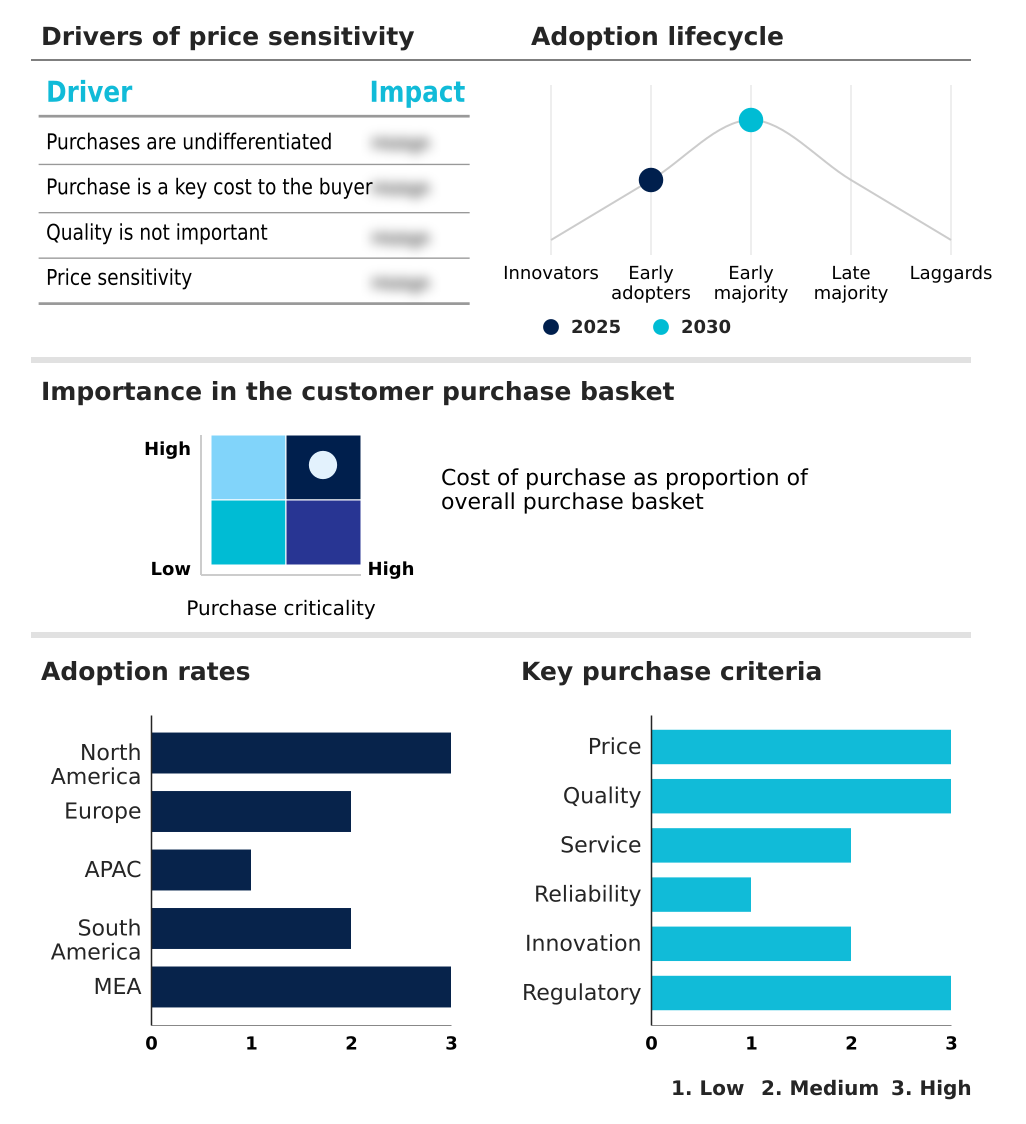
Customer Landscape of Managed It Infrastructure Services Industry
Competitive Landscape
Companies are implementing various strategies, such as strategic alliances, managed it infrastructure services market forecast, partnerships, mergers and acquisitions, geographical expansion, and product/service launches, to enhance their presence in the industry.
Accenture Plc - The provider delivers comprehensive managed IT infrastructure services, encompassing advanced cloud orchestration, network management, and robust infrastructure optimization to ensure resilient, scalable enterprise operations seamlessly.
The industry research and growth report includes detailed analyses of the competitive landscape of the market and information about key companies, including:
- Accenture Plc
- Atos SE
- Capgemini SE
- CGI Inc.
- Cognizant Technology Solution
- Computacenter plc
- DXC Technology Co.
- Ensono
- Fujitsu Ltd.
- HCL Technologies Ltd.
- Hexaware Technologies Ltd.
- IBM Corp.
- Infosys Ltd.
- Kyndryl Inc.
- LTIMindtree Ltd.
- Mphasis Ltd.
- NTT DATA Corp.
- Rackspace Technology Inc.
- Stefanini Group
- Tata Consultancy Services
- Tech Mahindra Ltd.
- Unisys Corp.
- UST Inc.
- Wipro Ltd.
Qualitative and quantitative analysis of companies has been conducted to help clients understand the wider business environment as well as the strengths and weaknesses of key industry players. Data is qualitatively analyzed to categorize companies as pure play, category-focused, industry-focused, and diversified; it is quantitatively analyzed to categorize companies as dominant, leading, strong, tentative, and weak.
Recent Development and News in Managed it infrastructure services market
- In the Data Processing and Outsourced Services industry, the accelerated implementation of stringent data privacy regulations across European jurisdictions has enforced stricter data sovereignty requirements, directly impacting Managed IT Infrastructure Services demand by necessitating localized multi tenant cloud partitioning and rigorous compliance framework integration.
- The widespread industrial transition toward AI-optimized data center architectures has increased energy density requirements by over forty percent, compelling Managed IT Infrastructure Services to adopt advanced data center cooling optimization and dynamic workload scaling to maintain operational viability.
- Stricter cybersecurity insurance underwriting standards have mandated the universal adoption of multi-factor identity access verification, driving Managed IT Infrastructure Services to embed zero trust microsegmentation protocols directly into base service tier offerings to reduce enterprise liability risks.
- The massive proliferation of industrial Internet of Things devices across manufacturing sectors has generated unprecedented localized data volumes, forcing Managed IT Infrastructure Services to expand edge computing node provisioning and deploy intelligent network traffic shaping to ensure low-latency processing capabilities.
Dive into Technavio’s robust research methodology, blending expert interviews, extensive data synthesis, and validated models for unparalleled Managed It Infrastructure Services Market insights. See full methodology.
| Market Scope | |
|---|---|
| Page number | 299 |
| Base year | 2025 |
| Historic period | 2020-2024 |
| Forecast period | 2026-2030 |
| Growth momentum & CAGR | Accelerate at a CAGR of 6.1% |
| Market growth 2026-2030 | USD 84701.0 million |
| Market structure | Fragmented |
| YoY growth 2025-2026(%) | 5.8% |
| Key countries | US, Canada, Mexico, Germany, UK, France, Italy, Spain, The Netherlands, China, Japan, India, South Korea, Australia, Indonesia, Brazil, Argentina, Chile, Saudi Arabia, UAE, South Africa, Israel and Turkey |
| Competitive landscape | Leading Companies, Market Positioning of Companies, Competitive Strategies, and Industry Risks |
Research Analyst Overview
- The continuous evolution of the Managed IT Infrastructure Services highlights a definitive transition toward intelligent automation and decentralized operational resilience. Corporate boards increasingly prioritize comprehensive compliance framework integration and robust identity access verification as non-negotiable pillars of their enterprise risk management strategies.
- This executive focus drives the rapid adoption of sophisticated cloud orchestration platforms that automate routine maintenance and enforce strict security policies across hybrid environments. Organizations implementing advanced dynamic workload scaling and proactive intrusion prevention mechanisms achieve a 35% reduction in security-related system outages compared to those utilizing fragmented legacy defense models.
- The deployment of specialized site reliability engineering practices significantly enhances operational stability by treating infrastructure operations as a software problem. Furthermore, embedding continuous integration pipelines and seamless automated backup retention protocols into daily operations minimizes the potential blast radius of sophisticated cyber incidents.
- These strategic technological investments empower business leaders to align technical infrastructure capabilities directly with long-term commercial objectives, ensuring continuous agility, regulatory alignment, and sustained operational excellence without distracting internal teams from core innovation priorities.
What are the Key Data Covered in this Managed It Infrastructure Services Market Research and Growth Report?
-
What is the expected growth of the Managed It Infrastructure Services Market between 2026 and 2030?
-
USD 84.70 billion, at a CAGR of 6.1%
-
-
What segmentation does the market report cover?
-
The report is segmented by End-user (SMEs, and Large enterprise), Deployment (Cloud-based, and On-premises), Service (Server management, Networking services, Virtualization services, and Storage services) and Geography (North America, Europe, APAC, South America, Middle East and Africa)
-
-
Which regions are analyzed in the report?
-
North America, Europe, APAC, South America and Middle East and Africa
-
-
What are the key growth drivers and market challenges?
-
Edge computing and distributed architecture, Severe talent scarcity and retention
-
-
Who are the major players in the Managed It Infrastructure Services Market?
-
Accenture Plc, Atos SE, Capgemini SE, CGI Inc., Cognizant Technology Solution, Computacenter plc, DXC Technology Co., Ensono, Fujitsu Ltd., HCL Technologies Ltd., Hexaware Technologies Ltd., IBM Corp., Infosys Ltd., Kyndryl Inc., LTIMindtree Ltd., Mphasis Ltd., NTT DATA Corp., Rackspace Technology Inc., Stefanini Group, Tata Consultancy Services, Tech Mahindra Ltd., Unisys Corp., UST Inc. and Wipro Ltd.
-
Market Research Insights
- The Managed IT Infrastructure Services orchestrates critical digital operations through advanced remote administration and continuous system optimization. Enterprises increasingly deploy robust virtual desktop infrastructure hosting to support distributed remote workforces seamlessly. By utilizing sophisticated log analytics dashboards, organizations can identify performance bottlenecks proactively, achieving a 35% improvement in issue resolution speeds.
- Furthermore, the integration of automated incident response playbooks accelerates threat mitigation, reducing potential security breach impact areas by 50% compared to manual intervention methods. Companies prioritizing high-availability architectures rely heavily on comprehensive fault tolerance redundancy protocols to guarantee uninterrupted service delivery.
- This strategic reliance on outsourced technical expertise fundamentally transforms corporate agility, allowing internal teams to focus entirely on core business innovation while minimizing operational risks.
We can help! Our analysts can customize this managed it infrastructure services market research report to meet your requirements.
 RIA -