
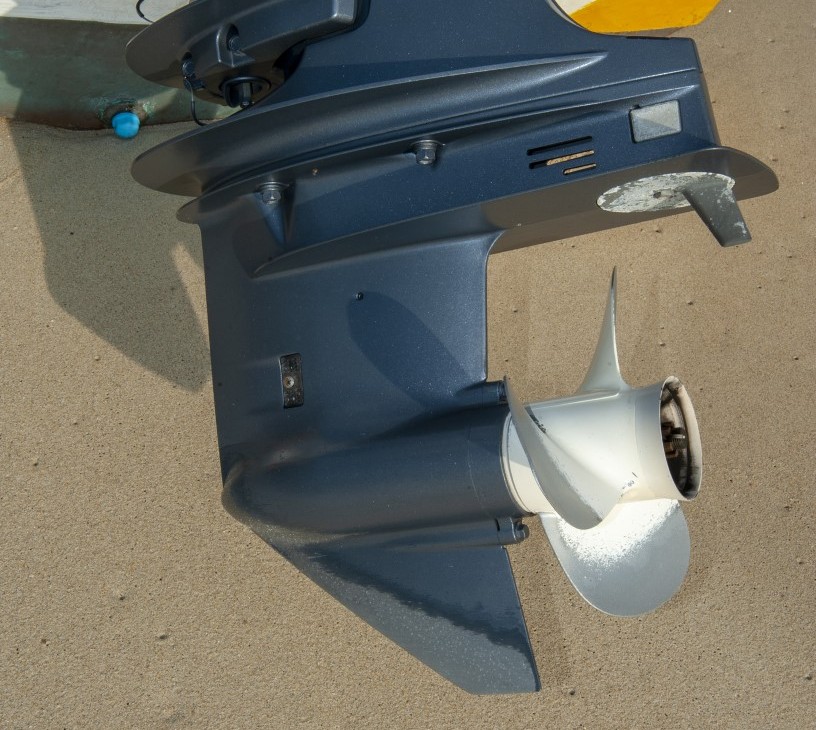


Marine Outboard Engines Market Size 2026-2030
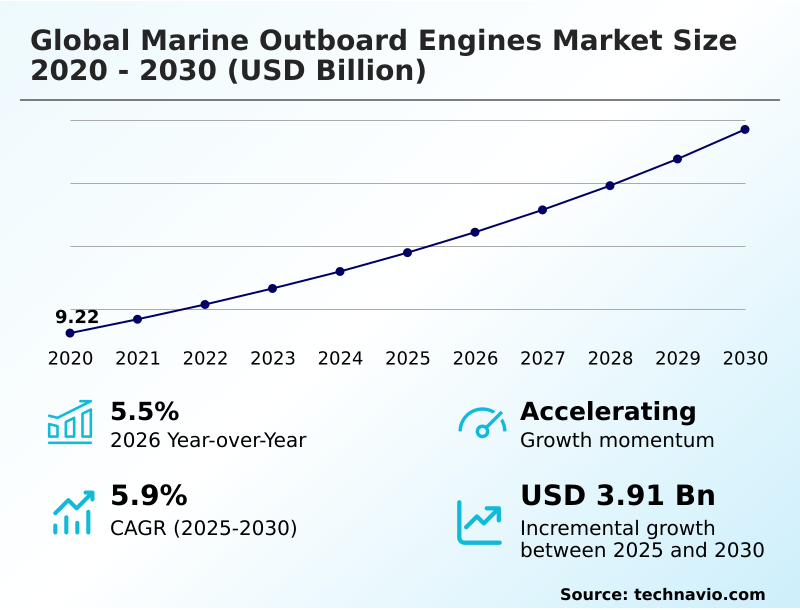
The marine outboard engines market size is valued to increase by USD 3.91 billion, at a CAGR of 5.9% from 2025 to 2030. Surge in demand for high-horsepower and performance-oriented propulsion will drive the marine outboard engines market.
Major Market Trends & Insights
- North America dominated the market and accounted for a 40.2% growth during the forecast period.
- By Power Rating - Low-power segment was valued at USD 5.02 billion in 2024
- By Type - 2-stroke segment accounted for the largest market revenue share in 2024
Market Size & Forecast
- Market Opportunities: USD 6.47 billion
- Market Future Opportunities: USD 3.91 billion
- CAGR from 2025 to 2030 : 5.9%
Market Summary
- The marine outboard engines market is undergoing a significant technological evolution, balancing the persistent demand for high-power performance with a critical need for sustainability. A key driver is the structural shift in boat design, where larger vessels increasingly favor outboard configurations, fueling a race for more powerful and efficient engines.
- This has led to the development of sophisticated propulsion systems that offer enhanced torque and speed. Concurrently, the industry is navigating a transition toward cleaner energy, with manufacturers investing heavily in electric, hybrid, and alternative fuel technologies to comply with stringent global emissions standards. This move is reshaping product portfolios, particularly in the low-to-mid-power segments.
- For instance, a boat-building OEM must now manage a complex supply chain that sources both advanced V10 combustion blocks for offshore models and integrated battery-electric systems for smaller tenders, all while ensuring seamless digital connectivity across the entire fleet.
- This dual focus on raw power and eco-friendly innovation, coupled with the integration of smart, user-friendly control systems, defines the competitive landscape and presents both challenges and opportunities for market participants. The market is also characterized by a trend toward premiumization, where aesthetic design and digital features become as crucial as mechanical reliability.
What will be the Size of the Marine Outboard Engines Market during the forecast period?
Get Key Insights on Market Forecast (PDF) Get Free Sample
How is the Marine Outboard Engines Market Segmented?
The marine outboard engines industry research report provides comprehensive data (region-wise segment analysis), with forecasts and estimates in "USD million" for the period 2026-2030, as well as historical data from 2020-2024 for the following segments.
- Power rating
- Low-power
- Mid-power
- High-power
- Type
- 2-stroke
- 4-stroke
- Product type
- Recreational vessels
- Fishing vessels
- Special purpose boats
- Variant
- Electric
- Manual
- Geography
- North America
- US
- Canada
- Mexico
- Europe
- UK
- Germany
- France
- APAC
- Japan
- China
- Australia
- South America
- Brazil
- Argentina
- Middle East and Africa
- UAE
- Saudi Arabia
- South Africa
- Rest of World (ROW)
- North America
By Power Rating Insights
The low-power segment is estimated to witness significant growth during the forecast period.
The low-power segment is undergoing a significant transformation, driven by the rapid advancement of electric propulsion systems. Historically a realm of small combustion engines, this category is now the primary entry point for zero-emission marine solutions.
The focus is on small boat propulsion for tenders and dinghies, where portable outboard motors with a low outboard motor weight are prized.
Innovations in trolling motor technology and integrated battery system design are central to this shift, with some systems offering a 25% improvement in portable energy density.
This trend is accelerated by regulations on inland waterways, creating exclusive markets for low-power electric outboards and inflatable boat motors while also fueling repowering applications for older small craft.
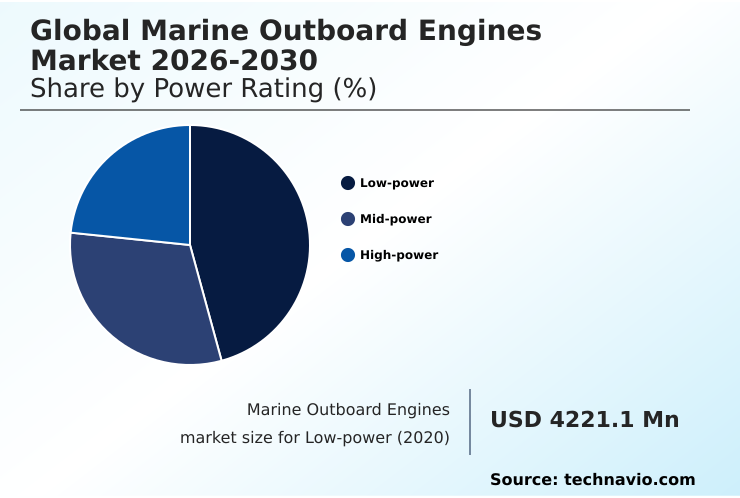
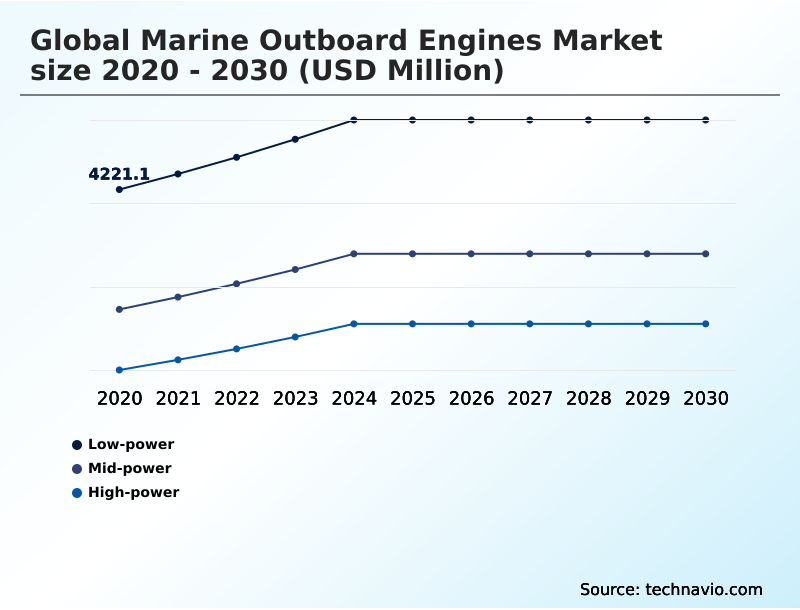
The Low-power segment was valued at USD 5.02 billion in 2024 and showed a gradual increase during the forecast period.
Regional Analysis
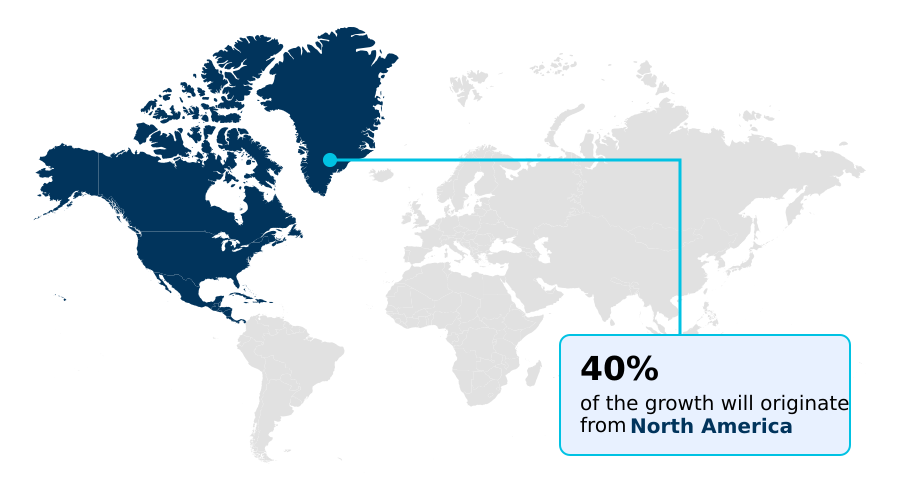
North America is estimated to contribute 40.2% to the growth of the global market during the forecast period.Technavio’s analysts have elaborately explained the regional trends and drivers that shape the market during the forecast period.
See How Marine Outboard Engines Market Demand is Rising in North America Get Free Sample
The geographic landscape of the marine outboard engines market is diverse, with North America driving demand for high-horsepower solutions and sophisticated connected engine technology.
In this region, large center-console boats often feature multi-engine installations of powerful four-stroke outboard engines, and the adoption of smart boat technology is high.
Europe, conversely, leads the push for sustainable marine propulsion technology, with strict regulations fostering innovation in electric and hybrid systems, especially for inland waterways.
In contrast, many parts of Asia and South America rely on rugged, easy-to-maintain commercial-grade outboards for fishing and transport.
The seamless outboard engine integration with vessel systems is a universal trend, impacting everything from pontoon boat motors to offshore vessels across all regions. This regional divergence requires manufacturers to maintain varied product portfolios.
Market Dynamics
Our researchers analyzed the data with 2025 as the base year, along with the key drivers, trends, and challenges. A holistic analysis of drivers will help companies refine their marketing strategies to gain a competitive advantage.
- The modern marine consumer is increasingly sophisticated, driving detailed inquiries that shape market development. A frequent topic of discussion is the high horsepower outboard engine comparison, where buyers weigh the performance benefits of new large-displacement engines against the cost of repowering a boat. For those upgrading from inboard to outboard engine configurations, the decision involves complex structural and financial analysis.
- In the small boat sector, consumers seek the best electric outboard for dinghy use, prioritizing weight and range over raw power. Meanwhile, the debate over four stroke vs two stroke outboard engines persists in commercial and utility applications, where durability often outweighs emissions concerns. The market is responding with innovations that address specific pain points.
- The introduction of joystick docking for single engine boats has revolutionized vessel handling for the mass market, with some boat builders reporting that this feature reduces factory rigging time by half compared to installing traditional hydraulic systems with bow thrusters. The clear benefits of digital throttle shift—smoother operation and better fuel economy—are making it a standard feature.
- Looking ahead, hydrogen outboard engine developments signal a potential long-term solution for decarbonizing high-power applications. For today's owner, practical concerns like the proper maintenance schedule for four stroke outboards and finding the right outboard motor for saltwater fishing remain critical purchasing considerations.
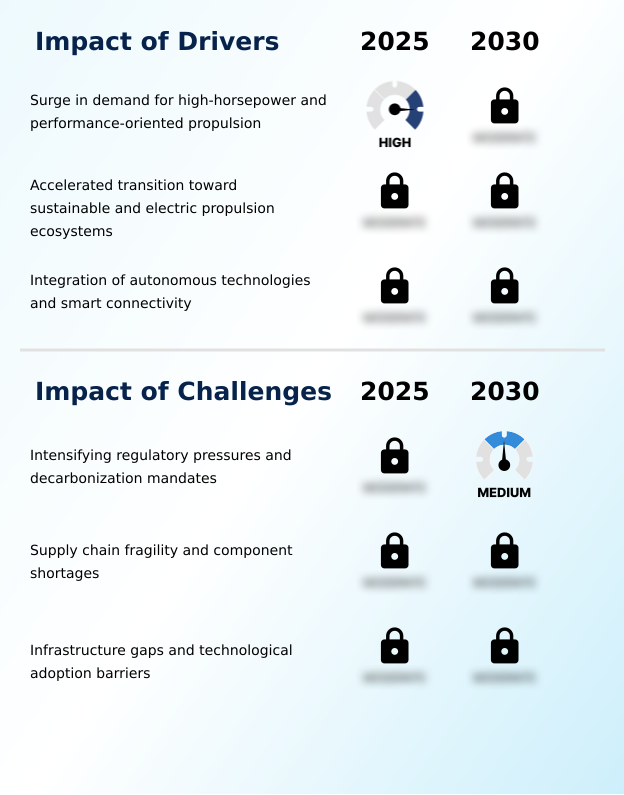
What are the key market drivers leading to the rise in the adoption of Marine Outboard Engines Industry?
- A surge in demand for high-horsepower and performance-oriented propulsion systems is a key driver for the market's growth.
- A primary driver is the escalating consumer demand for high-horsepower outboards, especially in North America, where engine output has increased by an average of 25% on new builds over the last five years.
- This is underpinned by a structural shift in boat design favoring outboard power, a key factor in recreational boating trends. The quest for greater outboard engine horsepower has led to powerful engines providing superior center-console boat power.
- Simultaneously, the accelerating transition toward sustainable marine propulsion is a critical driver, with advanced four-stroke engine technology improving marine engine fuel efficiency by over 15% compared to older models.
- This is advancing recreational vessel propulsion while increasing the need for high-output alternators to power modern onboard electronics.
What are the market trends shaping the Marine Outboard Engines Industry?
- A strategic shift toward high-performance engineering and aesthetic premiumization is emerging as a defining market trend. This involves the convergence of powerful propulsion systems with luxury-focused design elements.
- A dominant trend is the convergence of high-performance engineering with luxury design, driving demand for premium outboard engine aesthetics. This premiumization is evolving the outboard into a status symbol, where luxury boat engines must deliver massive torque while complementing sophisticated hull designs.
- The integration of advanced vessel control systems and digital throttle and shift improves boat engine performance by up to 10% in terms of fuel mapping. This is exemplified by the democratization of autonomous vessel control technologies like the joystick piloting system, which can reduce docking time by 30% in challenging conditions.
- These systems improve outboard motor reliability and are engineered into lightweight outboard design formats.
What challenges does the Marine Outboard Engines Industry face during its growth?
- Intensifying regulatory pressures and decarbonization mandates present a key challenge affecting the industry's growth.
- The market faces formidable challenges from intensifying marine engine emissions standards, which mandate a costly transition toward alternative fuel propulsion. This requires significant R&D investment in new marine powertrain solutions, such as the hydrogen-powered outboard, where development costs can be 50% higher than for conventional engines. Supply chain fragility for critical electronic components remains a persistent issue, causing production delays.
- For legacy systems like the direct-injection two-stroke and commercial fishing engines, maintaining outboard motor reliability is paramount while ensuring compliance. Furthermore, improving saltwater corrosion resistance and achieving an optimal marine engine power-to-weight ratio are continuous engineering challenges impacting cost and performance.
Exclusive Technavio Analysis on Customer Landscape
The marine outboard engines market forecasting report includes the adoption lifecycle of the market, covering from the innovator’s stage to the laggard’s stage. It focuses on adoption rates in different regions based on penetration. Furthermore, the marine outboard engines market report also includes key purchase criteria and drivers of price sensitivity to help companies evaluate and develop their market growth analysis strategies.
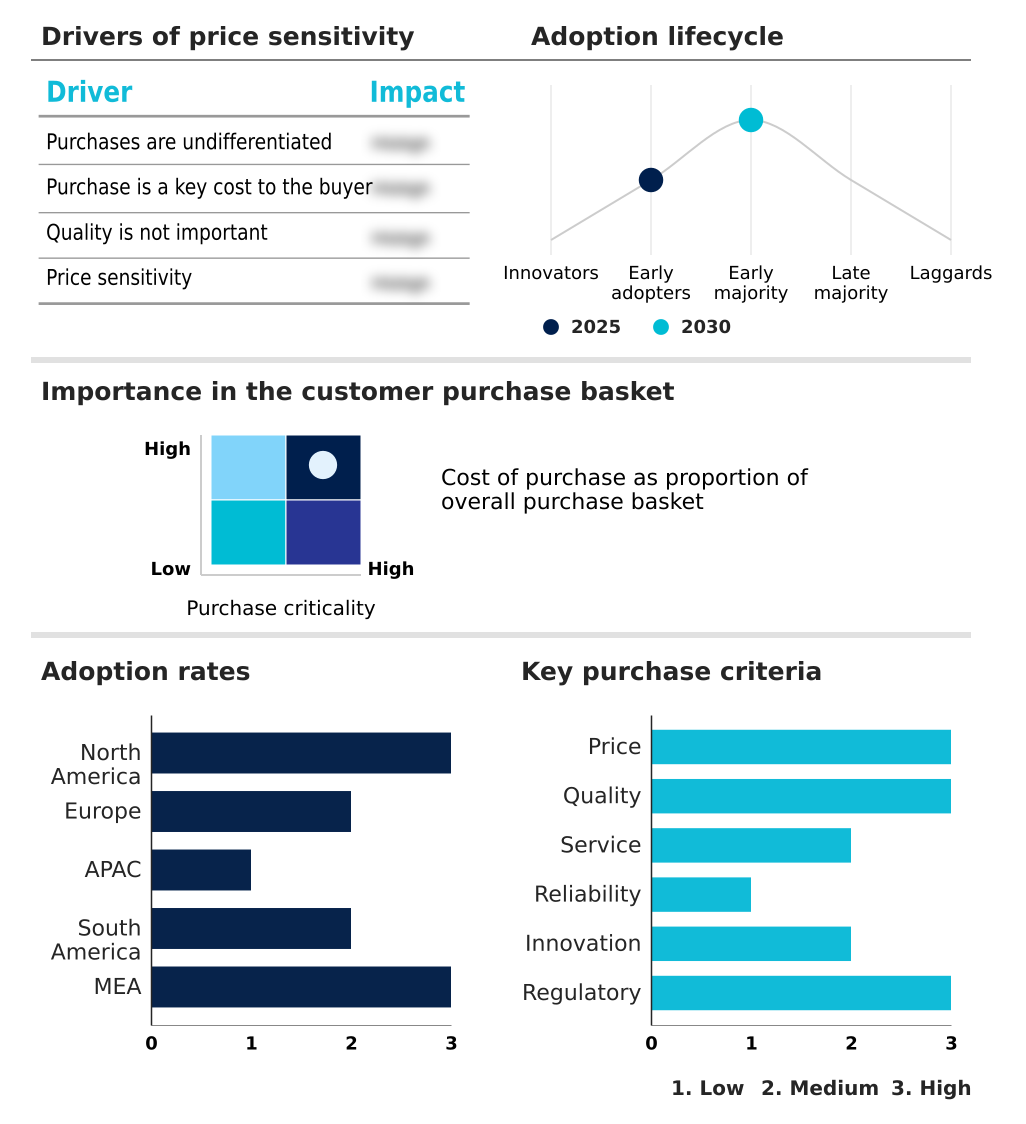
Customer Landscape of Marine Outboard Engines Industry
Competitive Landscape
Companies are implementing various strategies, such as strategic alliances, marine outboard engines market forecast, partnerships, mergers and acquisitions, geographical expansion, and product/service launches, to enhance their presence in the industry.
Bombardier Recreational Inc. - Offerings comprise self-contained propulsion systems that combine an engine, gearbox, and propeller into a single unit for external boat mounting, delivering both thrust and steering control.
The industry research and growth report includes detailed analyses of the competitive landscape of the market and information about key companies, including:
- Bombardier Recreational Inc.
- Brunswick Corp.
- ePropulsion
- Greaves Cotton Ltd.
- Honda Motor Co. Ltd.
- Mahindra and Mahindra Ltd.
- Mercury Marine.
- Mitsubishi Heavy Ltd.
- Ray Electric Outboards
- Suzhou Parsun Power Machine Co Ltd.
- Suzuki Motor Corp.
- Tohatsu Corp.
- Torqeedo GmbH
- Volvo Penta AB
- WeiChai Holding Group Co. Ltd.
- Yamaha Motor Co. Ltd.
- Yanmar Holdings Co. Ltd.
Qualitative and quantitative analysis of companies has been conducted to help clients understand the wider business environment as well as the strengths and weaknesses of key industry players. Data is qualitatively analyzed to categorize companies as pure play, category-focused, industry-focused, and diversified; it is quantitatively analyzed to categorize companies as dominant, leading, strong, tentative, and weak.
Recent Development and News in Marine outboard engines market
- In January, 2025, ePropulsion commercially released the eLite 500W electric outboard, an ultra-portable motor with a built-in battery and quick-release mechanism targeting the tender and light dinghy market.
- In February, 2025, Yamaha Marine displayed a hydrogen-powered outboard prototype at the Miami International Boat Show, adapting its XTO Offshore engine architecture to demonstrate a zero-carbon pathway for high-horsepower applications.
- In February, 2025, Mercury Marine launched its Joystick Piloting system for Single-Engine vessels, making advanced docking and maneuvering technology accessible to the high-volume pontoon and smaller fishing boat segments.
- In February, 2025, Honda Marine unveiled its refreshed mid-to-high power outboards, including the BF150 and BF250, featuring the new Noble Motion Form design and integrated flush-mount electronic throttle controls.
Dive into Technavio’s robust research methodology, blending expert interviews, extensive data synthesis, and validated models for unparalleled Marine Outboard Engines Market insights. See full methodology.
| Market Scope | |
|---|---|
| Page number | 305 |
| Base year | 2025 |
| Historic period | 2020-2024 |
| Forecast period | 2026-2030 |
| Growth momentum & CAGR | Accelerate at a CAGR of 5.9% |
| Market growth 2026-2030 | USD 3914.2 million |
| Market structure | Fragmented |
| YoY growth 2025-2026(%) | 5.5% |
| Key countries | US, Canada, Mexico, UK, Germany, France, Italy, Spain, The Netherlands, Japan, China, Australia, India, South Korea, Indonesia, Brazil, Argentina, Chile, UAE, Saudi Arabia, South Africa, Turkey and Egypt |
| Competitive landscape | Leading Companies, Market Positioning of Companies, Competitive Strategies, and Industry Risks |
Research Analyst Overview
- The strategic imperative for leadership in the marine outboard engines market now hinges on a complex balancing act. Boardrooms are allocating significant capital to advance four-stroke engine technology, particularly in the development of high-horsepower outboards like new v10 outboard engines to capture the high-margin offshore segment. This requires mastery of high-torque propulsion and engineering multi-engine installations.
- Simultaneously, regulatory pressure demands investment in electric propulsion systems and alternative fuel propulsion, including the experimental hydrogen-powered outboard. This has forced a re-evaluation of commercial-grade outboards and even the niche direct-injection two-stroke market. This strategic bifurcation strains R&D budgets, with some firms dedicating over 30% more capital to clean-tech R&D compared to five years ago.
- Success now depends on managing this dual portfolio, from low-power electric outboards with an integrated battery system to advanced autonomous vessel control. Innovations in joystick piloting system and digital throttle and shift, particularly the single-engine joystick, are critical for market penetration, as is developing connected engine technology, lightweight outboard design, and high-output alternators for modern recreational vessel propulsion.
- Mastering repowering applications with portable outboard motors and trolling motor technology remains vital for market share.
What are the Key Data Covered in this Marine Outboard Engines Market Research and Growth Report?
-
What is the expected growth of the Marine Outboard Engines Market between 2026 and 2030?
-
USD 3.91 billion, at a CAGR of 5.9%
-
-
What segmentation does the market report cover?
-
The report is segmented by Power Rating (Low-power, Mid-power, and High-power), Type (2-stroke, and 4-stroke), Product Type (Recreational vessels, Fishing vessels, and Special purpose boats), Variant (Electric, and Manual) and Geography (North America, Europe, APAC, South America, Middle East and Africa)
-
-
Which regions are analyzed in the report?
-
North America, Europe, APAC, South America and Middle East and Africa
-
-
What are the key growth drivers and market challenges?
-
Surge in demand for high-horsepower and performance-oriented propulsion, Intensifying regulatory pressures and decarbonization mandates
-
-
Who are the major players in the Marine Outboard Engines Market?
-
Bombardier Recreational Inc., Brunswick Corp., ePropulsion, Greaves Cotton Ltd., Honda Motor Co. Ltd., Mahindra and Mahindra Ltd., Mercury Marine., Mitsubishi Heavy Ltd., Ray Electric Outboards, Suzhou Parsun Power Machine Co Ltd., Suzuki Motor Corp., Tohatsu Corp., Torqeedo GmbH, Volvo Penta AB, WeiChai Holding Group Co. Ltd., Yamaha Motor Co. Ltd. and Yanmar Holdings Co. Ltd.
-
Market Research Insights
- Market dynamics are shaped by a dual focus on enhancing boat engine performance and improving outboard motor reliability. The integration of advanced vessel control systems is a key trend, with joystick piloting systems proven to reduce docking-related incidents by over 40%. As recreational boating trends lean toward larger, more complex vessels, outboard engine maintenance and diagnostics are becoming digitized.
- This adoption of smart boat technology offers a clear return, as systems that optimize marine engine fuel efficiency can reduce annual operating costs by up to 15%. This technological shift, coupled with a focus on meeting new marine engine emissions standards, is fundamentally changing how manufacturers approach outboard engine integration and overall marine powertrain solutions.
We can help! Our analysts can customize this marine outboard engines market research report to meet your requirements.
 RIA -
RIA - 
