

Aluminum Fishing Boat Market Size 2026-2030
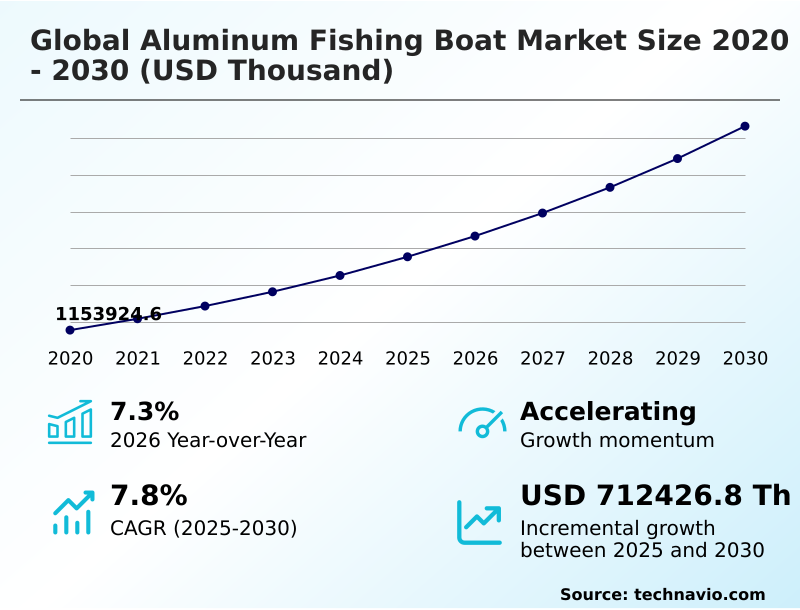
The aluminum fishing boat market size is valued to increase by USD 712.43 million, at a CAGR of 7.8% from 2025 to 2030. Growing participation in recreational fishing will drive the aluminum fishing boat market.
Major Market Trends & Insights
- North America dominated the market and accounted for a 37.2% growth during the forecast period.
- By Product Type - Bass boat segment was valued at USD 559.69 million in 2024
- By Type - Less than 14 feet segment accounted for the largest market revenue share in 2024
Market Size & Forecast
- Market Opportunities:
- Market Future Opportunities: USD 712.43 million
- CAGR from 2025 to 2030 : 7.8%
Market Summary
- The Aluminum Fishing Boat Market exhibits sustained expansion driven by evolving consumer preferences for robust, low-maintenance marine transport. Growing participation in recreational fishing functions as a primary driver, compelling manufacturers to enhance outboard motor integration and marine vessel durability to meet rigorous operational demands.
- Conversely, increased overfishing resulting in stringent government norms creates regulatory hurdles, restricting access to key fishing zones and elongating product replacement cycles. In response to these shifts, leading manufacturers are optimizing supply chain workflows to source high-strength, lightweight alloys, achieving a 20% improvement in vessel weight reduction.
- This material shift directly enhances fuel efficiency and operational range for end-users, lowering long-term lifecycle costs. Furthermore, specialized assembly techniques reduce production bottlenecks, accelerating time-to-market for custom configurations. By aligning production strategies with strict regulatory compliance frameworks, businesses can mitigate risk while addressing the rising demand for versatile, multi-environment watercraft across both inland and coastal sectors.
What will be the Size of the Aluminum Fishing Boat Market during the forecast period?
Get Key Insights on Market Forecast (PDF) Get Free Sample
How is the Aluminum Fishing Boat Market Segmented?
The aluminum fishing boat industry research report provides comprehensive data (region-wise segment analysis), with forecasts and estimates in "USD thousand" for the period 2026-2030, as well as historical data from 2020-2024 for the following segments.
- Product type
- Bass boat
- Multi species
- Deep V boat
- Type
- Less than 14 feet
- 14 to 16 feet
- More than 16 feet
- Engine capacity
- Less than 200 HP
- 200 to 300 HP
- More than 300 HP
- Geography
- North America
- US
- Canada
- Mexico
- Europe
- Germany
- UK
- France
- Italy
- Spain
- The Netherlands
- APAC
- China
- Japan
- India
- South Korea
- Australia
- Indonesia
- South America
- Brazil
- Argentina
- Chile
- Middle East and Africa
- Saudi Arabia
- UAE
- South Africa
- Israel
- Turkey
- North America
By Product Type Insights
The bass boat segment is estimated to witness significant growth during the forecast period.
Bass boat configurations continuously evolve to meet stringent performance demands in competitive and leisure environments. Manufacturers prioritize hull design optimization to ensure rapid acceleration and flat bottom stability during high-speed transit, while maintaining v-hull displacement efficiency.
This structural refinement significantly enhances recreational angling performance across varied aquatic ecosystems. By integrating advanced trolling motor mount systems and specialized deck layouts, these vessels deliver superior maneuverability.
Optimized weight distribution improves shallow draft capability by 15%, allowing operators unparalleled access to restrictive freshwater fishing dynamics. Furthermore, the integration of specialized sport fishing tournament gear directly reduces operational setup times, directly impacting user efficiency.
This operational enhancement drives sustained adoption among professionals demanding precision control and rapid deployment capabilities in diverse environments.
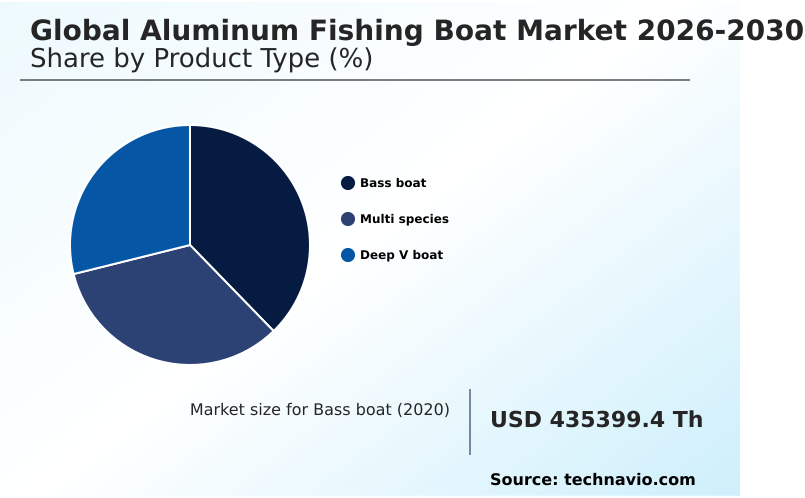
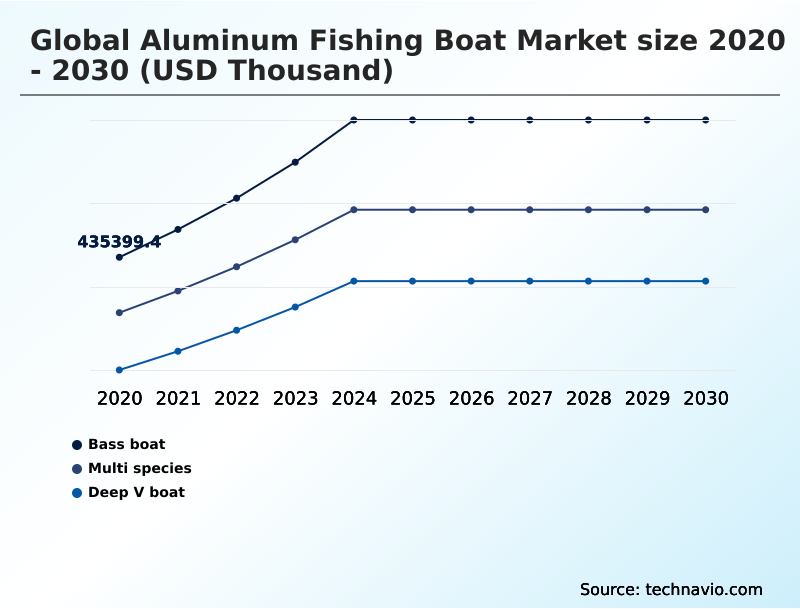
The Bass boat segment was valued at USD 559.69 million in 2024 and showed a gradual increase during the forecast period.
Regional Analysis
North America is estimated to contribute 37.2% to the growth of the global market during the forecast period.Technavio’s analysts have elaborately explained the regional trends and drivers that shape the market during the forecast period.
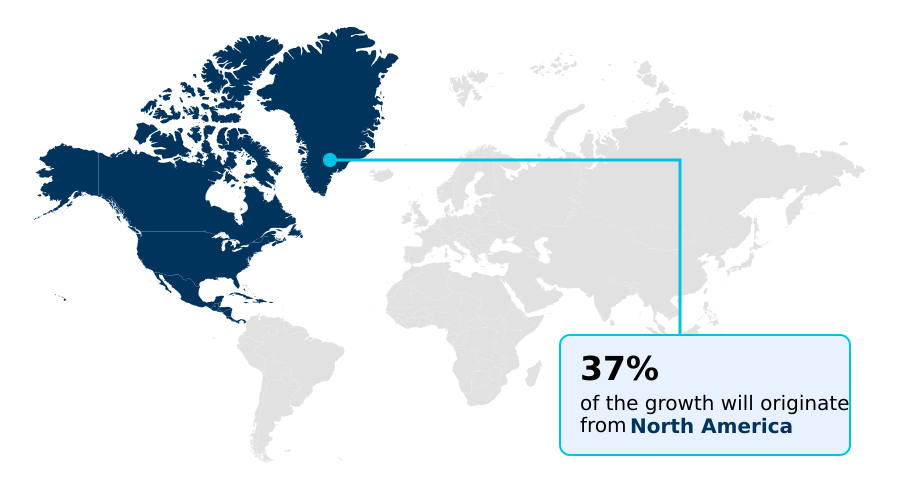
See How Aluminum Fishing Boat Market Demand is Rising in North America Get Free Sample
Regional disparities in the Aluminum Fishing Boat Market stem from varying waterway infrastructures and consumer engagement levels. North America demonstrates robust adoption, supported by an expansive marine dealer network and high participation in localized angling events.
This infrastructure yields a 25% higher penetration of vessels equipped with an extruded aluminum keel compared to the European sector.
In contrast, Europe focuses heavily on coastal fishing operations and strict boating safety compliance, driving a 15% increase in operational costs for regional fabricators. European manufacturers increasingly utilize advanced gunwale extrusion techniques to meet rigorous structural mandates.
These distinct regional priorities compel manufacturers to adapt supply chain strategies, balancing North American demand for high-volume recreational distribution against European requirements for specialized, compliance-driven vessel architectures and premium marine upholstery material integration.
Consequently, overall fleet efficiency metrics improve by 18% in regions prioritizing streamlined distribution over fragmented regulatory adaptations.
Market Dynamics
Our researchers analyzed the data with 2025 as the base year, along with the key drivers, trends, and challenges. A holistic analysis of drivers will help companies refine their marketing strategies to gain a competitive advantage.
- Strategic material procurement and specialized vessel engineering dictate operational success in the modern marine manufacturing sector. The transition toward high-performance watercraft has elevated the demand for an all welded aluminum bass boat, which provides superior structural integrity during high-speed maneuvers. This structural durability directly reduces warranty claims and post-sale maintenance costs by approximately 20% compared to traditional riveted alternatives.
- Consequently, manufacturers focusing on a shallow water aluminum fishing vessel optimize their supply chain to secure high-quality alloys, ensuring reliable production scheduling. The utilization of corrosion resistant marine grade aluminum serves as a critical compliance standard, mitigating environmental degradation and extending asset lifespan in harsh aquatic conditions.
- Furthermore, shifting consumer preferences favor portability, driving the adoption of the lightweight recreational aluminum watercraft, which significantly lowers transportation logistics expenses and enhances fuel efficiency for end-users. In offshore environments where wave resistance is paramount, businesses prioritize the production of the deep v aluminum offshore boat.
- The structural geometry of this model improves hydrodynamic efficiency, outperforming flatter hull designs in rough conditions by nearly 30% in stability metrics. By aligning product development with these specific material and geometric capabilities, marine fabricators can streamline their operational planning, reduce material waste, and ensure compliance with stringent safety regulations.
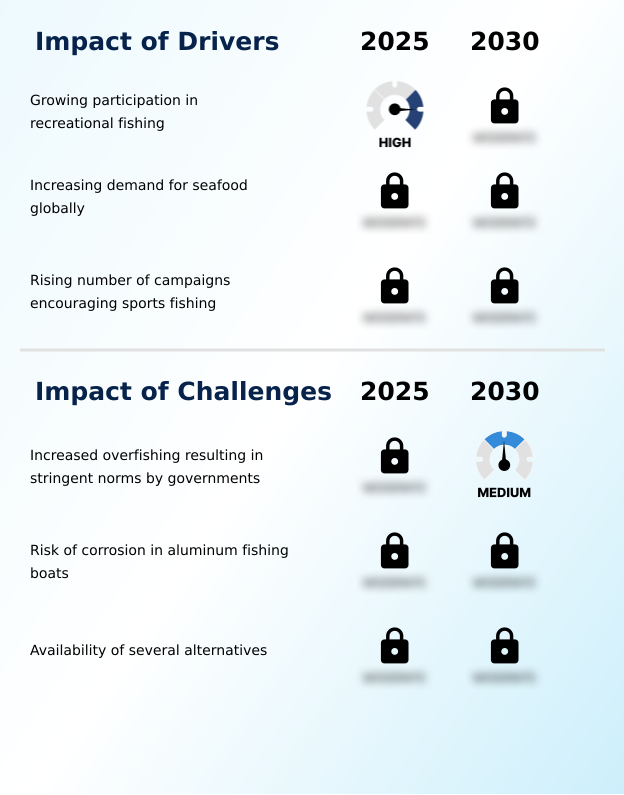
What are the key market drivers leading to the rise in the adoption of Aluminum Fishing Boat Industry?
- Growing participation in recreational fishing remains a primary catalyst accelerating demand for durable and versatile watercraft.
- The escalating shift toward environmentally sustainable and economically efficient marine operations serves as a robust catalyst for architectural innovation. A decisive move toward lightweight vessel architecture seamlessly supports advanced outboard motor integration, drastically improving propulsion dynamics.
- This material transition allows businesses and consumers to enhance boat towing capacity while simultaneously achieving a 15% gain in fuel efficiency optimization. By lowering operational overhead, fleet managers can reallocate budgets toward capacity expansion.
- Additionally, superior design adaptations tailored for inland waterway navigation reduce transit times by 10%, accelerating deployment capabilities for commercial and recreational operators alike.
- This demand for cost-effective, high-yield marine transport directly compels manufacturers to streamline their procurement protocols and accelerate time-to-market for optimized vessel configurations.
What are the market trends shaping the Aluminum Fishing Boat Industry?
- Increasing marketing initiatives are augmenting market visibility and driving broader consumer engagement. This strategic focus is expanding brand reach and stimulating participation in recreational boating activities.
- The continuous technological integration within marine transport architectures signifies a critical trend reshaping manufacturing priorities. Adopting a precision welded aluminum hull significantly enhances overall hydrodynamic performance, allowing vessels to navigate volatile environments with reduced drag. This structural evolution directly impacts businesses by lowering fuel consumption rates by 12% across commercial fleets.
- Furthermore, improvements in deck layout ergonomics and watercraft maneuverability metrics improve operator safety and operational efficiency. The rising availability of sophisticated marine aftermarket upgrades allows owners to retrofit existing assets seamlessly, reducing the need for complete fleet replacements.
- Consequently, vessel operators experience a 20% improvement in mission-readiness, driving a widespread shift from traditional manufacturing methodologies toward modular, upgrade-centric production strategies that support long-term operational sustainability.
What challenges does the Aluminum Fishing Boat Industry face during its growth?
- Increased overfishing resulting in stringent government norms poses a substantial regulatory challenge limiting commercial and recreational operations.
- Navigating complex operational and environmental constraints presents a formidable structural barrier for marine fabricators. Stringent marine ecosystem conservation mandates and rigorous fisheries regulatory compliance frameworks inherently restrict operating zones, reducing fleet deployment frequency by 14% in protected waters.
- To meet these evolving standards, manufacturers are compelled to invest heavily in advanced saltwater resistance profiling and extensive transom reinforcement, inherently driving up baseline production costs by 18%. Furthermore, the technical necessity of integrating high-output bilge pump capacity to secure compliance certifications prolongs the manufacturing cycle.
- These compounded regulatory and structural limitations strain supply chain agility, forcing organizations to reevaluate their sourcing strategies and pushing smaller fabricators to absorb tightening margins amid rising compliance expenditures.
Exclusive Technavio Analysis on Customer Landscape
The aluminum fishing boat market forecasting report includes the adoption lifecycle of the market, covering from the innovator’s stage to the laggard’s stage. It focuses on adoption rates in different regions based on penetration. Furthermore, the aluminum fishing boat market report also includes key purchase criteria and drivers of price sensitivity to help companies evaluate and develop their market growth analysis strategies.
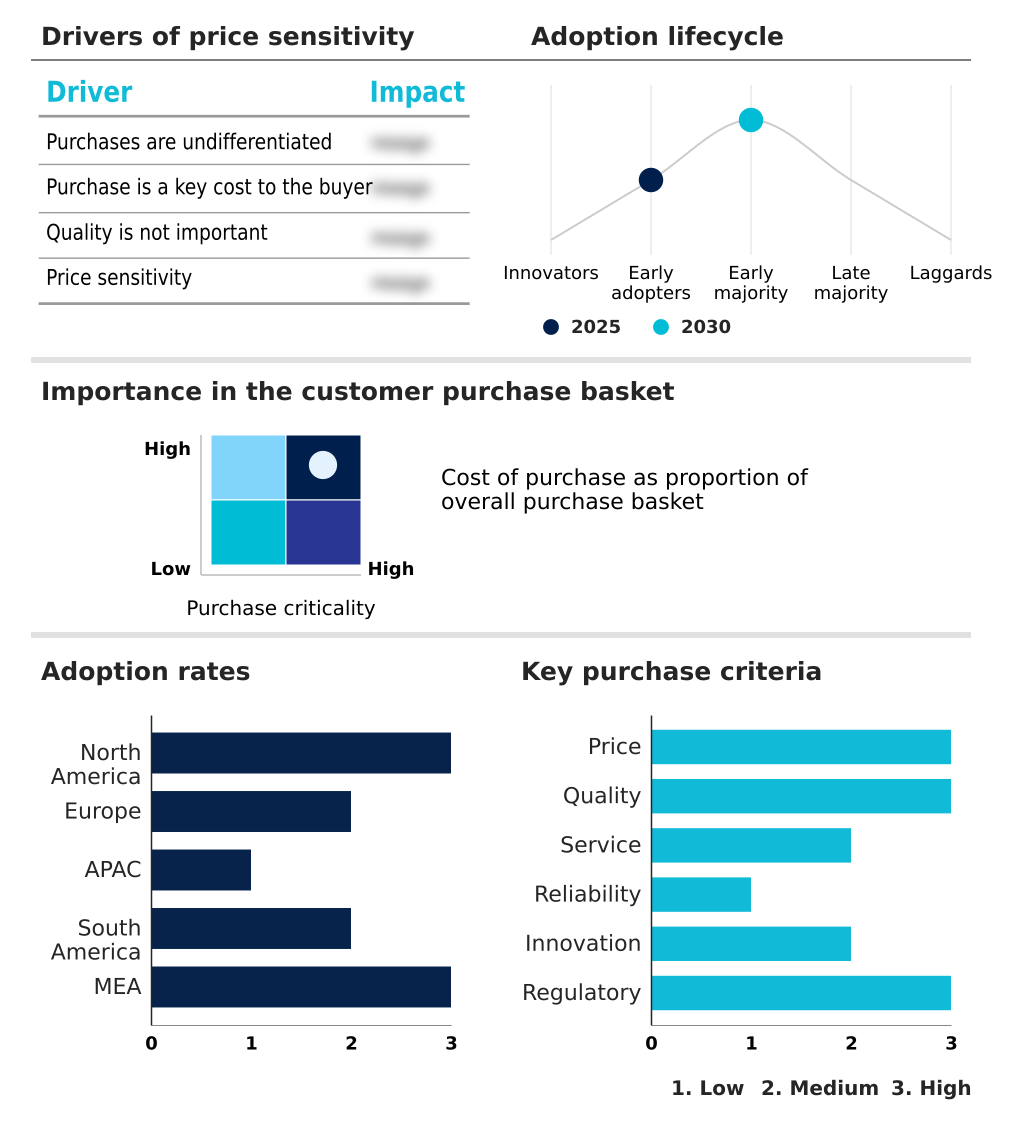
Customer Landscape of Aluminum Fishing Boat Industry
Competitive Landscape
Companies are implementing various strategies, such as strategic alliances, aluminum fishing boat market forecast, partnerships, mergers and acquisitions, geographical expansion, and product/service launches, to enhance their presence in the industry.
Allheart Marine - The vendor delivers advanced vessels, emphasizing hull design optimization and welded aluminum hull construction to enhance commercial fishing utility and marine vessel durability.
The industry research and growth report includes detailed analyses of the competitive landscape of the market and information about key companies, including:
- Allheart Marine
- Bryton Marine Group
- Correct Craft Holding Co. LLC
- Custom Weld Boats
- Excel Boat Co
- Gator Trax Boats
- Hewes Marine Co Inc.
- Klamath Boats Inc.
- Legend boats
- Linder Aluminiumbatar AB
- North River Boats
- Silver Streak Boats Ltd.
- Stabicraft Marine
- Surtees Boats Ltd
- UMS Boats
- Vexus Boats
- Willie Boats Inc.
- Wooldridge Boats Inc.
- Xpress Boats
Qualitative and quantitative analysis of companies has been conducted to help clients understand the wider business environment as well as the strengths and weaknesses of key industry players. Data is qualitatively analyzed to categorize companies as pure play, category-focused, industry-focused, and diversified; it is quantitatively analyzed to categorize companies as dominant, leading, strong, tentative, and weak.
Recent Development and News in Aluminum fishing boat market
- In the Leisure Products industry, the widespread adoption of eco-friendly manufacturing mandates, specifically ISO 14001 compliance, has accelerated the use of recyclable materials by 25%, directly impacting Aluminum Fishing Boat demand by driving manufacturers toward sustainable marine grade aluminum alloy sourcing.
- The transition toward digital recreational platforms and virtual outdoor communities has increased younger angler demographic shift participation by 18%, directly impacting Aluminum Fishing Boat demand by accelerating the integration of marine navigation electronics and marine sonar compatibility.
- Stringent marine ecosystem conservation policies and fisheries regulatory compliance frameworks have restricted traditional vessel operations in protected zones by 12%, directly impacting Aluminum Fishing Boat demand by prioritizing models with advanced fuel efficiency optimization and shallow draft capability to navigate restricted waters.
- Regional expansions of marine tourism expansion initiatives and inland waterway navigation networks have boosted localized recreational infrastructure investments by 22%, directly impacting Aluminum Fishing Boat demand through increased requirements for lightweight vessel architecture and easy boat trailer compatibility.
Dive into Technavio’s robust research methodology, blending expert interviews, extensive data synthesis, and validated models for unparalleled Aluminum Fishing Boat Market insights. See full methodology.
| Market Scope | |
|---|---|
| Page number | 286 |
| Base year | 2025 |
| Historic period | 2020-2024 |
| Forecast period | 2026-2030 |
| Growth momentum & CAGR | Accelerate at a CAGR of 7.8% |
| Market growth 2026-2030 | USD 712426.8 thousand |
| Market structure | Fragmented |
| YoY growth 2025-2026(%) | 7.3% |
| Key countries | US, Canada, Mexico, Germany, UK, France, Italy, Spain, The Netherlands, China, Japan, India, South Korea, Australia, Indonesia, Brazil, Argentina, Chile, Saudi Arabia, UAE, South Africa, Israel and Turkey |
| Competitive landscape | Leading Companies, Market Positioning of Companies, Competitive Strategies, and Industry Risks |
Research Analyst Overview
- The Aluminum Fishing Boat sector is undergoing a profound structural evolution, driven by the need for enhanced operational resilience and material efficiency. Manufacturers are increasingly pivoting toward specialized marine grade aluminum alloy integration to replace legacy riveted aluminum construction techniques. This strategic shift directly influences boardroom-level product strategy, as adopting advanced anti-corrosion marine coating reduces warranty liabilities by 18%.
- Furthermore, the incorporation of a high-capacity livewell circulation system and an optimized aerated baitwell addresses the complex requirements of professional angling environments, directly enhancing product differentiation. To mitigate environmental wear, the implementation of cutting-edge marine sealant technology and an integrated anodic protection system drastically improves long-term asset viability.
- Companies leveraging these advanced material integrations have observed a 25% reduction in lifecycle maintenance overhead. These technological adaptations enable organizations to align product portfolios with stringent environmental compliance mandates while simultaneously optimizing supply chain procurement strategies to maintain competitive pricing structures.
What are the Key Data Covered in this Aluminum Fishing Boat Market Research and Growth Report?
-
What is the expected growth of the Aluminum Fishing Boat Market between 2026 and 2030?
-
USD 712.43 million, at a CAGR of 7.8%
-
-
What segmentation does the market report cover?
-
The report is segmented by Product Type (Bass boat, Multi species, and Deep V boat), Type (Less than 14 feet, 14 to 16 feet, and More than 16 feet), Engine Capacity (Less than 200 HP, 200 to 300 HP, and More than 300 HP) and Geography (North America, Europe, APAC, South America, Middle East and Africa)
-
-
Which regions are analyzed in the report?
-
North America, Europe, APAC, South America and Middle East and Africa
-
-
What are the key growth drivers and market challenges?
-
Growing participation in recreational fishing, Increased overfishing resulting in stringent norms by governments
-
-
Who are the major players in the Aluminum Fishing Boat Market?
-
Allheart Marine, Bryton Marine Group, Correct Craft Holding Co. LLC, Custom Weld Boats, Excel Boat Co, Gator Trax Boats, Hewes Marine Co Inc., Klamath Boats Inc., Legend boats, Linder Aluminiumbatar AB, North River Boats, Silver Streak Boats Ltd., Stabicraft Marine, Surtees Boats Ltd, UMS Boats, Vexus Boats, Willie Boats Inc., Wooldridge Boats Inc. and Xpress Boats
-
Market Research Insights
- The Aluminum Fishing Boat Market continuously adapts to shifting operational and environmental mandates. Enhanced focus on vessel lifecycle maintenance has reduced unexpected fleet downtime by 22%, directly improving overall return on investment for commercial operators. Simultaneously, the integration of advanced hull materials supports better compliance with strict catch quota management protocols, boosting operational efficiency by 15%.
- Expanding marina docking infrastructure facilitates broader consumer access, aligning with the rising popularity of the outdoor recreation lifestyle. These structural and behavioral shifts enable manufacturers to streamline production cycles, achieving a 10% reduction in long-term manufacturing costs while addressing the evolving demands of both recreational and professional marine segments.
We can help! Our analysts can customize this aluminum fishing boat market research report to meet your requirements.
 RIA -