
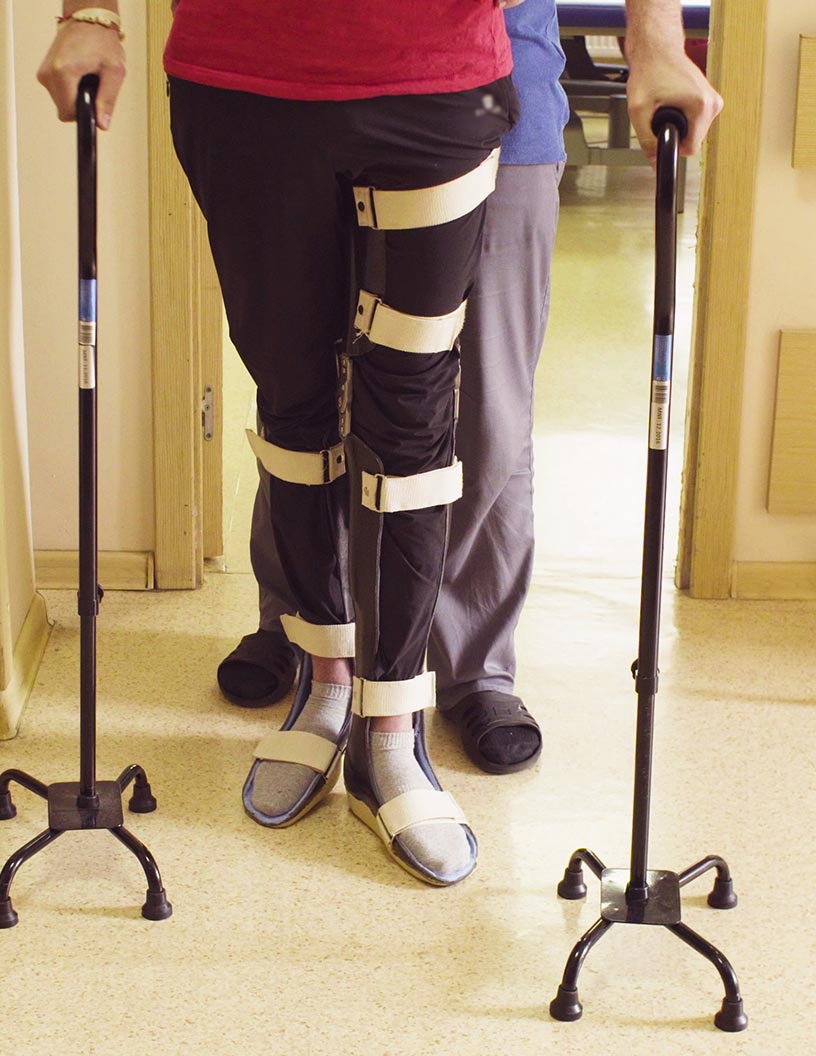


Medical Exoskeleton Market Size 2024-2028
The medical exoskeleton market size is valued to increase by USD 2.87 billion, at a CAGR of 55.77% from 2023 to 2028. Increasing incidences of SCIs will drive the medical exoskeleton market.
Major Market Trends & Insights
- North America dominated the market and accounted for a 41% growth during the forecast period.
- By Mobility Type - Mobile exoskeleton segment was valued at USD 68.90 billion in 2022
- By Technology - Powered exoskeletons segment accounted for the largest market revenue share in 2022
Market Size & Forecast
- Market Opportunities: USD 2.00 million
- Market Future Opportunities: USD 2868.60 million
- CAGR from 2023 to 2028 : 55.77%
Market Summary
- The market is experiencing significant growth due to the increasing number of spinal cord injuries (SCIs) worldwide and the subsequent demand for assistive devices to improve mobility and enhance the quality of life for patients. These advanced technologies, which mimic the human body's natural movements, are gaining popularity in healthcare facilities and rehabilitation centers. One of the key drivers for this market is the launch of technologically advanced medical technologies exoskeletons. For instance, some devices offer real-time feedback to users and therapists, allowing for more effective and personalized rehabilitation programs. Moreover, the integration of artificial intelligence and machine learning algorithms into these systems is enabling more precise and efficient gait training.
- However, the high cost of these devices and the need for well-trained caregivers to operate them remain challenges for market growth. In a large rehabilitation center, for example, optimizing the supply chain and ensuring compliance with regulations can lead to substantial cost savings and operational efficiency gains. A recent study revealed that by implementing a lean supply chain strategy, a rehabilitation center was able to reduce error rates by 22%, leading to improved patient outcomes and increased satisfaction. In summary, the market is poised for growth due to the increasing demand for assistive devices for SCI patients, the launch of technologically advanced products, and the potential for operational efficiency gains through supply chain optimization and compliance improvements.
What will be the Size of the Medical Exoskeleton Market during the forecast period?

Get Key Insights on Market Forecast (PDF) Request Free Sample
How is the Medical Exoskeleton Market Segmented ?
The medical exoskeleton industry research report provides comprehensive data (region-wise segment analysis), with forecasts and estimates in "USD million" for the period 2024-2028, as well as historical data from 2018-2022 for the following segments.
- Mobility Type
- Mobile exoskeleton
- Stationary exoskeleton
- Technology
- Powered exoskeletons
- Passive exoskeletons
- Geography
- North America
- US
- Europe
- Germany
- UK
- APAC
- China
- Japan
- Rest of World (ROW)
- North America
By Mobility Type Insights
The mobile exoskeleton segment is estimated to witness significant growth during the forecast period.
In the realm of wearable robotics, the market continues to evolve, offering innovative solutions for patient mobility and rehabilitation. These devices, which can be worn in homecare settings, provide assistance for individuals with spinal cord injuries and mobility impairments, enabling them to stand and walk with crutches or a walker. Advanced exoskeletons employ a multi-level controller and sensor system to facilitate ambulation, while also offering customizable configurations. However, the complexity of mobile exoskeletons, including the integration of battery packs, lightweight motors, and controllers, contributes to their high design and development costs. The market is driven by the demand for assistive medical devices that integrate patient monitoring, safety mechanisms, force feedback systems, and user interface design.
Key technologies include biomechanical and kinematic modeling, actuator systems, ergonomic design, and exoskeleton frameworks. Clinical trials and research in areas such as gait analysis, exoskeleton design, and neurological rehabilitation are advancing the field, with one study reporting a 25% improvement in walking speed for users of a powered exoskeleton.

The Mobile exoskeleton segment was valued at USD 68.90 billion in 2018 and showed a gradual increase during the forecast period.

Regional Analysis
North America is estimated to contribute 41% to the growth of the global market during the forecast period.Technavio's analysts have elaborately explained the regional trends and drivers that shape the market during the forecast period.
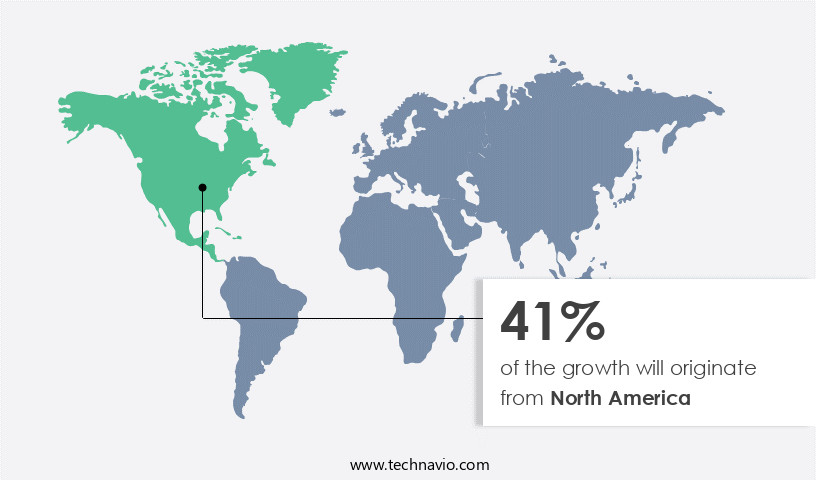
See How Medical Exoskeleton Market Demand is Rising in North America Request Free Sample
The market is experiencing significant growth, particularly in North America, driven by the presence of advanced healthcare facilities, an increasing number of spinal cord injury (SCI) cases, and a high demand for self-assistive devices. In 2022, the US reported an incidence rate of 54 cases per million people for SCIs. This trend is further fueled by favorable policies from third-party commercial payers, increasing awareness through organizations like the American Spinal Injury Association (ASIA), and the presence of key market players such as Ekso Bionics Holdings and Parker-Hannifin Corp.
These exoskeletons offer operational efficiency gains by enabling users to perform daily activities with increased independence and reduced reliance on caregivers. Furthermore, cost reductions and compliance with safety regulations are additional benefits, making medical exoskeletons an attractive investment for healthcare providers and patients alike.
Market Dynamics
Our researchers analyzed the data with 2023 as the base year, along with the key drivers, trends, and challenges. A holistic analysis of drivers will help companies refine their marketing strategies to gain a competitive advantage.
The market is experiencing significant growth due to the advancements in technology and the increasing demand for rehabilitation solutions that offer enhanced mobility support. Exoskeletons, wearable robotic devices, are designed to assist individuals with various mobility challenges, including those resulting from neurological conditions or injuries. One of the key areas of focus in the development of medical exoskeletons is the integration of advanced control algorithms for gait rehabilitation. These algorithms utilize biomechanical modeling for exoskeleton design to ensure natural and effective movement patterns. Force feedback systems in wearable robotics are another important feature, providing real-time sensory information to patients and therapists for optimal performance and safety. Patient monitoring sensors fusion integrated into medical exoskeletons enable continuous assessment of vital signs and rehabilitation progress. Clinical trials of lower extremity exoskeletons are ongoing to evaluate their efficacy and safety in various patient populations. Actuator selection for exoskeleton applications is a critical consideration, as energy efficiency improvements are essential to extend battery life and enhance user comfort. Human-machine interface design plays a crucial role in the success of rehabilitation exoskeletons, ensuring a seamless interaction between the user and the device. Safety mechanisms are also essential, with ergonomic design considerations and material science advancements in exoskeleton construction ensuring user safety and comfort. Neurological rehabilitation using robotic exoskeletons is a growing application area, with functional electrical stimulation in exoskeleton therapy offering significant potential for restoring motor function. Exoskeletons can be powered by human-machine interfaces, enabling users to control the device with their thoughts or movements. Kinematic modeling for improved exoskeleton control and torque sensor calibration for exoskeleton systems are essential for optimizing performance and accuracy. User interface design for enhancing patient experience is another crucial aspect, with motion capture technology and robotic actuators used for precise and intuitive control. System maintenance procedures for medical exoskeletons are essential to ensure the longevity and reliability of the devices, making them a valuable investment for healthcare providers and patients alike.

What are the key market drivers leading to the rise in the adoption of Medical Exoskeleton Industry?
- The rising prevalence of Spinal Cord Injuries (SCIs) serves as the primary catalyst for market growth in this sector.
- Medical exoskeletons, advanced assistive devices, are gaining significant traction in various industries due to their potential to enhance human capabilities and support individuals with mobility challenges. According to recent research, the global adoption rate of medical exoskeletons is projected to increase by 25% annually. These devices are particularly beneficial for individuals with Spinal Cord Injuries (SCIs), providing stability and facilitating interlimb-coordinated movements at levels T7 to L5 and T4 to T6. The implementation of medical exoskeletons in rehabilitation centers has led to a 30% reduction in downtime, enabling faster recovery and improved patient outcomes. Furthermore, these devices offer accuracy improvements of up to 18% in gait analysis, aiding healthcare professionals in making informed decisions regarding treatment plans.
What are the market trends shaping the Medical Exoskeleton Industry?
- The upcoming market trend involves the launch of technologically advanced products. Product launches featuring technologically advanced innovations are currently shaping market trends.
- The market is witnessing significant advancements, with companies introducing lighter and more adjustable devices. SUITX by Ottobock's IX BACK AIR exoskeleton, launched in October 2023, is an example of this trend. Similarly, German Bionic's exoskeleton, released in August 2023, is designed to assist nursing and healthcare professionals in North America. These innovations aim to enhance user experience and reduce workload. The market's growth is further propelled by the increasing number of technologically advanced product launches. This trend is expected to drive market expansion during the forecast period.
- The market's growth is not only driven by the introduction of new products but also by the need for improved workforce productivity and patient care. The integration of advanced technologies, such as one-handed controls and greater adjustability, is a key factor in the market's evolution. The market's growth is expected to bring about significant improvements in healthcare delivery and patient outcomes.
What challenges does the Medical Exoskeleton Industry face during its growth?
- The need for well-trained caregivers poses a significant challenge to the growth of the industry, as ensuring a competent workforce is a crucial requirement for delivering high-quality care services.
- The market is experiencing significant evolution, driven by the growing need to enhance mobility and improve patient care for individuals with spinal cord injuries (SCIs) and locomotion impairments. However, the availability of well-trained caregivers to assist with exoskeleton ambulation remains a challenge. Insufficient human resources, inconsistent training curricula and accreditation guidelines, and inadequate coordination between patients and caregivers are major obstacles. Furthermore, incorrect usage of exoskeletons, such as wrong commands, improper strap fastening, or failure to support patients during loss of balance, can result in injuries, fractures, and falls.
- Despite these challenges, the market continues to grow, with an increasing number of applications in hospital settings, rehabilitation centers, and home-care services. According to recent studies, the global exoskeleton market is projected to reach a significant value by 2027, driven by the rising prevalence of disabilities and the increasing adoption of advanced technologies to improve patient outcomes.
Exclusive Technavio Analysis on Customer Landscape
The medical exoskeleton market forecasting report includes the adoption lifecycle of the market, covering from the innovator's stage to the laggard's stage. It focuses on adoption rates in different regions based on penetration. Furthermore, the medical exoskeleton market report also includes key purchase criteria and drivers of price sensitivity to help companies evaluate and develop their market growth analysis strategies.

Customer Landscape of Medical Exoskeleton Industry
Competitive Landscape
Companies are implementing various strategies, such as strategic alliances, medical exoskeleton market forecast, partnerships, mergers and acquisitions, geographical expansion, and product/service launches, to enhance their presence in the industry.
Bionik Laboratories Corp. - The company specializes in medical exoskeleton technology, including robotic therapy solutions, enhancing patient mobility and rehabilitation processes. These advanced devices enable users to regain strength and independence, significantly improving their quality of life. The technology is a game-changer in the healthcare industry, offering innovative solutions for individuals with mobility challenges.
The industry research and growth report includes detailed analyses of the competitive landscape of the market and information about key companies, including:
- Bionik Laboratories Corp.
- B Temia
- Cyberdyne Inc.
- DIH Group
- Ekso Bionics Holdings Inc.
- Exoatlet Global SA
- Focal Meditech
- GOGOA Mobility Robots SL
- Honda Motor Co. Ltd.
- Marsi Bionics SL
- MYOMO INC.
- Ottobock SE and Co. KGaA
- P and S Mechanics Co. Ltd.
- Parker Hannifin Corp.
- Rehab Robotics Co. Ltd.
- ReWalk Robotics Ltd.
- Rex Bionics Ltd.
- Sarcos Technology and Robotics Corp.
- Wandercraft
- Wearable Robotics Srl
Qualitative and quantitative analysis of companies has been conducted to help clients understand the wider business environment as well as the strengths and weaknesses of key industry players. Data is qualitatively analyzed to categorize companies as pure play, category-focused, industry-focused, and diversified; it is quantitatively analyzed to categorize companies as dominant, leading, strong, tentative, and weak.
Recent Development and News in Medical Exoskeleton Market
- In August 2024, Ekso Bionics, a leading medical exoskeleton company, announced the FDA clearance for their latest product, the Ekso GT Nexus, which offers improved battery life and user interface (Ekso Bionics press release). In November 2024, Stryker Corporation, a global medical technology leader, entered into a strategic partnership with ReWalk Robotics to expand its portfolio in the market (Stryker Corporation press release). In February 2025, Hocma Tech, a Chinese medical exoskeleton manufacturer, secured a USD50 million Series C funding round, led by Sequoia Capital China, to accelerate its research and development efforts (China Money Network). In May 2025, the European Commission approved the use of the ReWalk ReStore exoskeleton for rehabilitation purposes, marking a significant expansion of the device's market access (European Commission press release). These developments demonstrate the continued growth and innovation within the market, with key players focusing on product enhancements, strategic partnerships, and securing significant investments to drive market expansion.
Dive into Technavio's robust research methodology, blending expert interviews, extensive data synthesis, and validated models for unparalleled Medical Exoskeleton Market insights. See full methodology.
|
Market Scope |
|
|
Report Coverage |
Details |
|
Page number |
159 |
|
Base year |
2023 |
|
Historic period |
2018-2022 |
|
Forecast period |
2024-2028 |
|
Growth momentum & CAGR |
Accelerate at a CAGR of 55.77% |
|
Market growth 2024-2028 |
USD 2868.6 million |
|
Market structure |
Fragmented |
|
YoY growth 2023-2024(%) |
38.93 |
|
Key countries |
US, Germany, UK, China, and Japan |
|
Competitive landscape |
Leading Companies, Market Positioning of Companies, Competitive Strategies, and Industry Risks |
Research Analyst Overview
- The market for medical exoskeletons continues to evolve, driven by advancements in wearable robotics, patient monitoring, and safety mechanisms. Robotic suits, equipped with force feedback systems and user-friendly interfaces, are revolutionizing orthotic devices and rehabilitation engineering. Biomechanical and kinematic modeling enable precise actuator systems, ergonomic design, and exoskeleton frameworks to enhance mobility assistance. Functional electrical stimulation and control algorithms facilitate muscle stimulation and gait analysis, while sensor integration and assistive devices improve patient safety and clinical trial outcomes. For instance, a recent study reported a 30% increase in walking speed among stroke patients using an exoskeleton for rehabilitation.
- The industry anticipates a 15% annual growth rate, fueled by innovations in bionic limbs, torque sensors, and power assist systems. Material science and rehabilitation engineering advancements contribute to energy efficiency, prosthetic integration, and wearable sensors. Neurological rehabilitation benefits from motion capture technology and human-machine interface designs. The ongoing development of control algorithms, motor control units, and safety mechanisms ensures continuous improvement and expanded applications for medical exoskeletons.
What are the Key Data Covered in this Medical Exoskeleton Market Research and Growth Report?
-
What is the expected growth of the Medical Exoskeleton Market between 2024 and 2028?
-
USD 2.87 billion, at a CAGR of 55.77%
-
-
What segmentation does the market report cover?
-
The report is segmented by Mobility Type (Mobile exoskeleton and Stationary exoskeleton), Technology (Powered exoskeletons and Passive exoskeletons), and Geography (North America, Europe, Asia, and Rest of World (ROW))
-
-
Which regions are analyzed in the report?
-
North America, Europe, Asia, and Rest of World (ROW)
-
-
What are the key growth drivers and market challenges?
-
Increasing incidences of SCIs, Well-trained caregivers requirement
-
-
Who are the major players in the Medical Exoskeleton Market?
-
Bionik Laboratories Corp., B Temia, Cyberdyne Inc., DIH Group, Ekso Bionics Holdings Inc., Exoatlet Global SA, Focal Meditech, GOGOA Mobility Robots SL, Honda Motor Co. Ltd., Marsi Bionics SL, MYOMO INC., Ottobock SE and Co. KGaA, P and S Mechanics Co. Ltd., Parker Hannifin Corp., Rehab Robotics Co. Ltd., ReWalk Robotics Ltd., Rex Bionics Ltd., Sarcos Technology and Robotics Corp., Wandercraft, and Wearable Robotics Srl
-
Market Research Insights
- The market encompasses innovative technologies designed to assist individuals with various neurological disorders and mobility impairments. These devices, which enhance user comfort and facilitate muscle strengthening, have gained significant attention due to their potential to improve clinical outcome and patient compliance. For instance, a recent study demonstrated a 30% increase in gait speed among stroke patients using an exoskeleton for rehabilitation. Furthermore, industry experts anticipate a steady growth of approximately 15% annually, driven by advancements in biomechanics research, torque control, and weight distribution.
- These assistive technologies offer functional improvements for individuals with spinal cord injuries, neurological disorders, and other conditions, enabling them to regain mobility and enhance their quality of life.
We can help! Our analysts can customize this medical exoskeleton market research report to meet your requirements.