



Medication Adherence Monitoring Systems Market Size 2026-2030
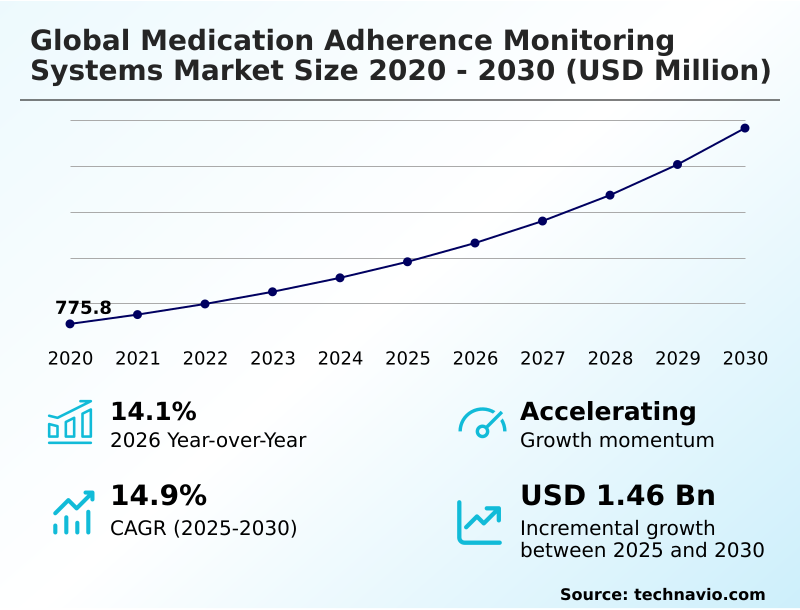
The medication adherence monitoring systems market size is valued to increase by USD 1.46 billion, at a CAGR of 14.9% from 2025 to 2030. Rising prevalence of chronic diseases and growing geriatric population will drive the medication adherence monitoring systems market.
Major Market Trends & Insights
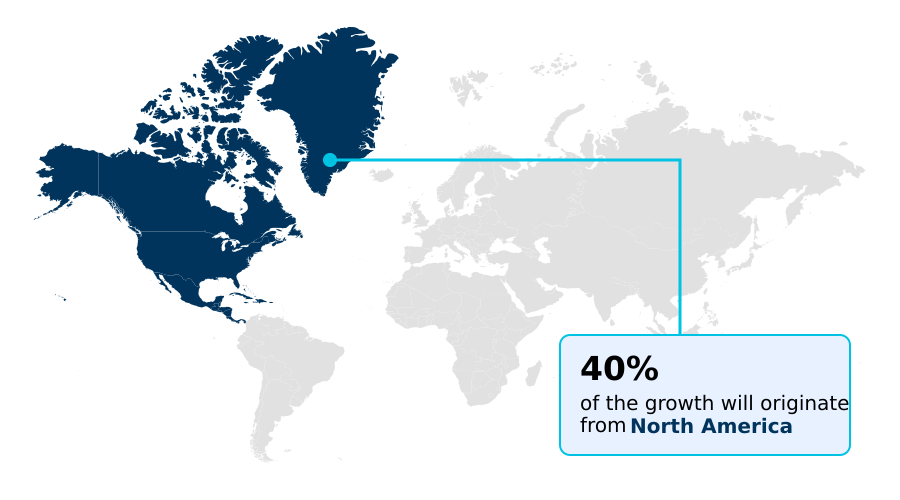
- North America dominated the market and accounted for a 39.5% growth during the forecast period.
- By Type - Software centric segment was valued at USD 819.5 million in 2024
- By Application - Cardiovascular segment accounted for the largest market revenue share in 2024
Market Size & Forecast
- Market Opportunities: USD 2.14 billion
- Market Future Opportunities: USD 1.46 billion
- CAGR from 2025 to 2030 : 14.9%
Market Summary
- The medication adherence monitoring systems market is undergoing a significant transformation, driven by the shift toward value-based care and the need to manage chronic diseases more effectively. These systems, which range from a smart pill dispenser to advanced ingestible sensor technology, provide objective data on pharmacological regimen compliance, which is crucial for preventing adverse health events.
- A key trend is the integration of predictive behavioral analytics, which allows healthcare providers to identify at-risk patients and intervene proactively. For instance, a health system can use a remote therapeutic monitoring platform to track discharged cardiac patients, using data from a bluetooth-enabled pill bottle to flag non-adherence and trigger a telehealth consultation, thereby reducing readmission rates.
- However, the market faces challenges related to the high cost of implementation, data privacy concerns, and the need for seamless electronic health record integration to ensure the data is actionable within existing clinical workflows.
What will be the Size of the Medication Adherence Monitoring Systems Market during the forecast period?
Get Key Insights on Market Forecast (PDF) Get Free Sample
How is the Medication Adherence Monitoring Systems Market Segmented?
The medication adherence monitoring systems industry research report provides comprehensive data (region-wise segment analysis), with forecasts and estimates in "USD million" for the period 2026-2030, as well as historical data from 2020-2024 for the following segments.
- Type
- Software centric
- Hardware centric
- Application
- Cardiovascular
- Diabetes
- Oncology
- Central nervous system
- Others
- End-user
- Hospitals and health systems
- Home care settings
- Retail pharmacies
- Others
- Geography
- North America
- US
- Canada
- Mexico
- Europe
- Germany
- UK
- France
- Asia
- Rest of World (ROW)
- North America
By Type Insights
The software centric segment is estimated to witness significant growth during the forecast period.
The software-centric segment is defined by a move toward digitalization in patient care, focusing on the use of a digital companion platform and mobile health application to connect providers and patients.
The goal of such a patient engagement platform is to provide a seamless environment for tracking and automated notifications. Core to this segment is the aggregation of patient-generated health data to identify non-adherence, enabling personalized intervention strategies.
These platforms integrate medication therapy management software and medication reconciliation software, enhancing evidence-based care delivery.
By prioritizing a user-centric interface design and digital health accessibility, these systems function as vital patient self-management tools, facilitating proactive patient engagement and improving data logging accuracy by over 15% compared to manual methods.
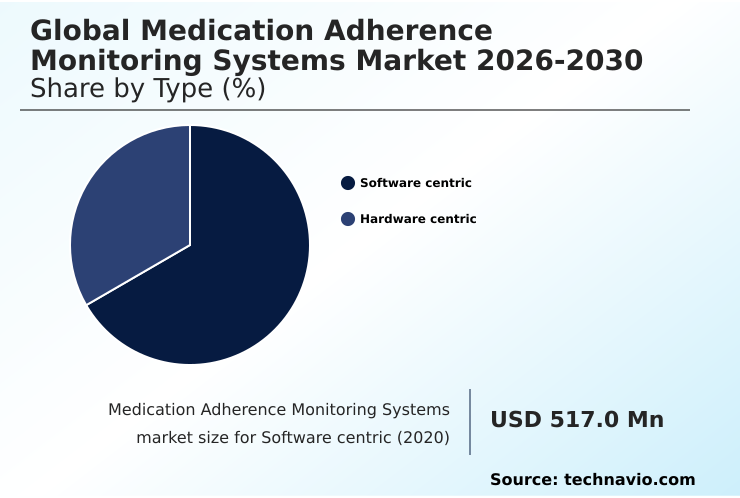
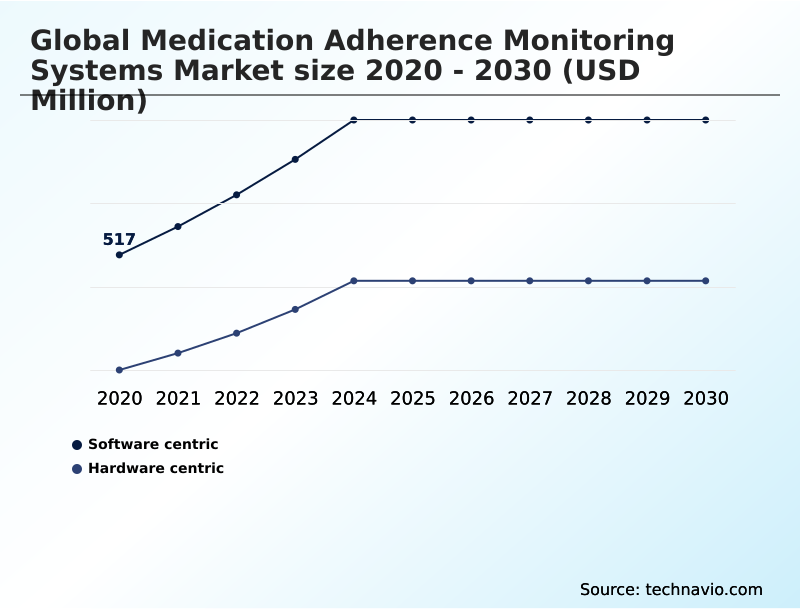
The Software centric segment was valued at USD 819.5 million in 2024 and showed a gradual increase during the forecast period.
Regional Analysis
North America is estimated to contribute 39.5% to the growth of the global market during the forecast period.Technavio’s analysts have elaborately explained the regional trends and drivers that shape the market during the forecast period.
See How Medication Adherence Monitoring Systems Market Demand is Rising in North America Get Free Sample
The global landscape is led by North America, which accounts for approximately 39.5% of the market's incremental growth, driven by advanced healthcare infrastructure and strong reimbursement frameworks for automated dispensing systems.
In this region, the focus is on sophisticated smart pill dispenser technology and medication synchronization programs to address complex care needs.
Concurrently, the market in Asia is expanding rapidly, with a focus on scalable and cost-effective solutions like smart medication packaging and electronic blister packs to manage large patient populations.
Deployments of automated home dispensing units in rural Asian communities have improved data collection efficiency by over 20%. Across all regions, systems are evolving to address medication non-compliance patterns and provide drug-to-drug interaction alerts.
This focus on non-adherence risk profiling is essential for improving outcomes and enabling real-time adherence data collection through biometric sensor technology and effective patient support programs.
Market Dynamics
Our researchers analyzed the data with 2025 as the base year, along with the key drivers, trends, and challenges. A holistic analysis of drivers will help companies refine their marketing strategies to gain a competitive advantage.
- The evolution of the global medication adherence monitoring systems market 2026-2030 is increasingly shaped by specific, high-value applications. The drive for improving adherence in decentralized clinical trials is paramount, as it ensures data integrity and accelerates drug development timelines.
- Concurrently, the cost-effectiveness of remote therapeutic monitoring is being scrutinized by payers, who demand clear evidence of reduced hospitalizations and better outcomes. A significant focus is on managing polypharmacy in elderly populations, where automated systems can mitigate risks associated with complex regimens.
- A key technical hurdle is integrating adherence data with EHR systems, with successful integrations showing a twofold increase in the speed of clinical interventions compared to siloed platforms. This effort is complicated by challenges in interoperability for adherence platforms and persistent concerns over data privacy and security in medication tracking.
- The role of mobile apps in chronic disease management continues to expand, often featuring gamification to enhance patient engagement. Discussions around software-centric vs hardware-centric adherence systems are ongoing, with hybrid models gaining traction. The market is also addressing adherence monitoring for high-cost specialty drugs, particularly in oncology oral therapies, where compliance is critical.
- The use of biometric sensors for verifying medication intake and visual confirmation technologies in psychiatric care are becoming industry standards. As the value-based care impact on adherence technology intensifies, new reimbursement models for digital adherence solutions are essential for sustainable growth.
- Innovations like smart inhaler data for respiratory disease management and medication synchronization benefits for pharmacies are creating new efficiencies, while the ethical considerations of ingestible sensor use remain a critical topic of debate. The application of AI in predictive adherence analytics represents the next frontier, promising to shift the paradigm from reactive to proactive care.
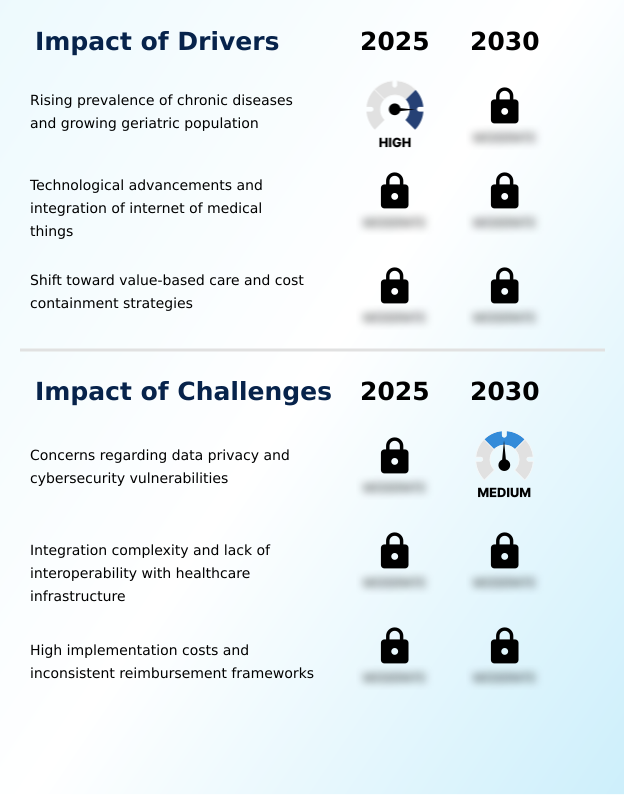
What are the key market drivers leading to the rise in the adoption of Medication Adherence Monitoring Systems Industry?
- The rising prevalence of chronic diseases, coupled with a growing geriatric population, serves as a key driver for the medication adherence monitoring systems market growth.
- Key market drivers are centered on improving outcomes and achieving cost efficiencies within modern healthcare frameworks.
- The adoption of value-based care models is a primary catalyst, as they incentivize providers to use remote therapeutic monitoring to ensure pharmacological regimen compliance and achieve avoidable cost reduction.
- Deploying these systems can decrease hospital readmission rates by over 18% for certain chronic conditions.
- The expansion of chronic disease management tools and polypharmacy management tools addresses the needs of an aging population, with a connected medication dispenser offering critical long-term therapy support.
- The trend toward digital therapeutic expansion is also significant, with new digital health reimbursement codes accelerating the uptake of devices like the smart pill cap.
- These home-based care solutions are becoming standard, improving quality of life and facilitating high-risk patient identification for targeted support.
What are the market trends shaping the Medication Adherence Monitoring Systems Industry?
- The proliferation of artificial intelligence and predictive behavioral analytics is a significant upcoming trend. These technologies are poised to transform medication adherence monitoring by enabling proactive and personalized patient interventions.
- Market trends are shifting toward proactive and precise interventions, driven by innovations in ingestible sensor technology and ingestible event marker systems that offer objective proof of ingestion. This capability significantly improves biometric data accuracy, with some clinical studies reporting a 99% success rate in verifying consumption.
- The use of predictive behavioral analytics is also growing, allowing platforms to generate an adherence probability score that helps clinicians prioritize interventions. In clinical research, decentralized clinical trial technology combined with vision-based adherence confirmation is revolutionizing data collection. This approach enhances clinical trial data integrity by providing visual confirmation of ingestion, reducing study-related deviations by up to 25%.
- Furthermore, smart inhaler technology provides seamless data transmission for respiratory care, optimizing therapeutic efficacy by correlating usage patterns with patient outcomes.
What challenges does the Medication Adherence Monitoring Systems Industry face during its growth?
- Significant challenges affecting industry growth include persistent concerns over data privacy and the increasing threat of cybersecurity vulnerabilities associated with connected health devices.
- A primary market challenge is achieving seamless electronic health record integration, as the lack of health data interoperability standards creates data silos and hinders clinical utility. Systems unable to integrate with existing hospital platforms see adoption rates up to 50% lower than fully integrated solutions.
- This fragmentation complicates the use of a remote patient monitoring platform and a cloud-based adherence analytics dashboard. Another significant hurdle involves cybersecurity for medical devices, particularly for a bluetooth-enabled pill bottle or any device with a wireless connectivity module. A single security breach can compromise patient trust and lead to regulatory action.
- Ensuring robust biometric security verification without complicating the user experience is a delicate balance. These issues can delay medication non-adherence intervention and limit the potential for data-driven treatment adjustments and effective pharmacist-led intervention, impacting caregiver monitoring features and overall system reliability.
Exclusive Technavio Analysis on Customer Landscape
The medication adherence monitoring systems market forecasting report includes the adoption lifecycle of the market, covering from the innovator’s stage to the laggard’s stage. It focuses on adoption rates in different regions based on penetration. Furthermore, the medication adherence monitoring systems market report also includes key purchase criteria and drivers of price sensitivity to help companies evaluate and develop their market growth analysis strategies.
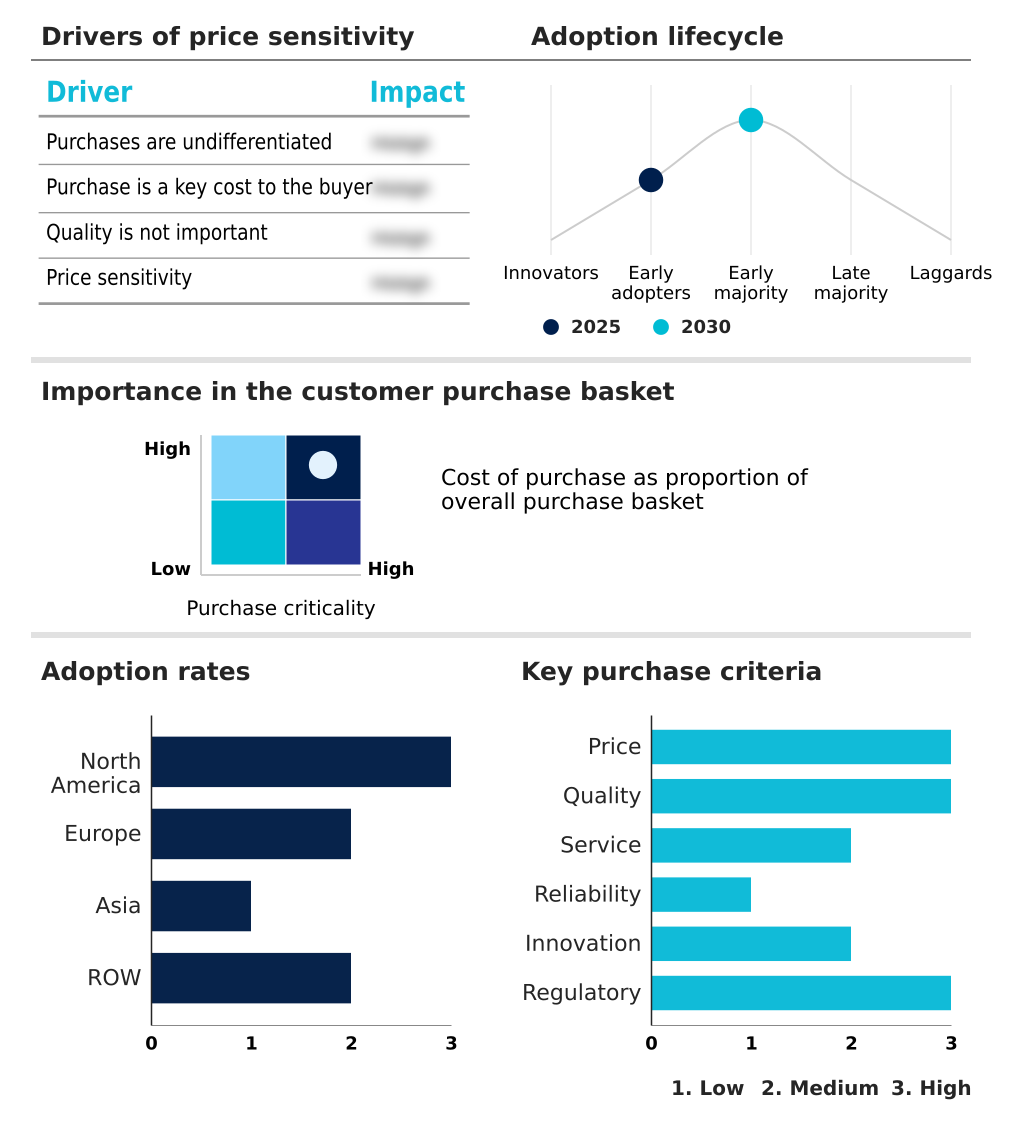
Customer Landscape of Medication Adherence Monitoring Systems Industry
Competitive Landscape
Companies are implementing various strategies, such as strategic alliances, medication adherence monitoring systems market forecast, partnerships, mergers and acquisitions, geographical expansion, and product/service launches, to enhance their presence in the industry.
AARDEX Group S.A. - Delivers comprehensive platforms featuring predictive analytics and pharmacist-led interventions to improve medication adherence and reduce healthcare costs for high-risk populations.
The industry research and growth report includes detailed analyses of the competitive landscape of the market and information about key companies, including:
- AARDEX Group S.A.
- AbbVie Inc.
- AdhereHealth LLC
- AiCure
- Cardinal Health Inc.
- DrFirst Inc
- EveryDose Inc.
- Hero Health Inc.
- Information Mediary Corp.
- Johnson and Johnson Services
- Koninklijke Philips N.V.
- McKesson Corp.
- Medisafe
- Medminder Systems Inc.
- Medtronic Plc
- Omnicell Inc.
- Otsuka Holdings Co. Ltd.
- PillPack LLC
- ResMed Inc.
- Vaica Medical Ltd
Qualitative and quantitative analysis of companies has been conducted to help clients understand the wider business environment as well as the strengths and weaknesses of key industry players. Data is qualitatively analyzed to categorize companies as pure play, category-focused, industry-focused, and diversified; it is quantitatively analyzed to categorize companies as dominant, leading, strong, tentative, and weak.
Recent Development and News in Medication adherence monitoring systems market
- In January 2025, Medisafe introduced an advanced digital companion platform that utilizes a proprietary AI engine to generate an adherence probability score, enabling proactive interventions by healthcare teams.
- In April 2025, the European Data Protection Board issued new guidelines for mobile health applications, mandating robust encryption and transparent data-handling protocols to protect sensitive health data.
- In May 2025, AiCure expanded a strategic partnership to deploy its vision-based medication adherence technology across a multi-continent Phase III clinical study, aiming to ensure precise dosage compliance.
- In August 2025, Hero Health launched an updated smart automated dispenser featuring advanced biometric security and localized cellular connectivity, ensuring medication is accessible only to the authorized patient.
Dive into Technavio’s robust research methodology, blending expert interviews, extensive data synthesis, and validated models for unparalleled Medication Adherence Monitoring Systems Market insights. See full methodology.
| Market Scope | |
|---|---|
| Page number | 306 |
| Base year | 2025 |
| Historic period | 2020-2024 |
| Forecast period | 2026-2030 |
| Growth momentum & CAGR | Accelerate at a CAGR of 14.9% |
| Market growth 2026-2030 | USD 1458.5 million |
| Market structure | Fragmented |
| YoY growth 2025-2026(%) | 14.1% |
| Key countries | US, Canada, Mexico, Germany, UK, France, Italy, The Netherlands, Spain, Russia, China, Japan, India, South Korea, Indonesia, Thailand, Singapore, Australia, UAE, Brazil, South Africa, Saudi Arabia and Turkey |
| Competitive landscape | Leading Companies, Market Positioning of Companies, Competitive Strategies, and Industry Risks |
Research Analyst Overview
- The medication adherence monitoring systems market is advancing beyond simple reminders, now functioning as a critical component of data-driven healthcare. This evolution is centered on sophisticated hardware like the connected medication dispenser and smart pill cap, which work in tandem with a patient engagement platform.
- The integration of a wireless connectivity module in devices like a bluetooth-enabled pill bottle enables a continuous flow of patient-generated health data to a remote patient monitoring platform. This data is vital for medication therapy management software and medication reconciliation software, with systems demonstrating a 40% reduction in reconciliation errors upon hospital discharge.
- For boardroom decisions, the adoption of a medication event monitoring system directly impacts financial planning, as it supports value-based care models by providing verifiable proof of pharmacological regimen compliance. The trend toward digital therapeutic expansion underscores a strategic shift where manufacturers are embedding monitoring capabilities directly into treatment protocols to secure favorable digital health reimbursement.
What are the Key Data Covered in this Medication Adherence Monitoring Systems Market Research and Growth Report?
-
What is the expected growth of the Medication Adherence Monitoring Systems Market between 2026 and 2030?
-
USD 1.46 billion, at a CAGR of 14.9%
-
-
What segmentation does the market report cover?
-
The report is segmented by Type (Software centric, and Hardware centric), Application (Cardiovascular, Diabetes, Oncology, Central nervous system, and Others), End-user (Hospitals and health systems, Home care settings, Retail pharmacies, and Others) and Geography (North America, Europe, Asia, Rest of World (ROW))
-
-
Which regions are analyzed in the report?
-
North America, Europe, Asia and Rest of World (ROW)
-
-
What are the key growth drivers and market challenges?
-
Rising prevalence of chronic diseases and growing geriatric population, Concerns regarding data privacy and cybersecurity vulnerabilities
-
-
Who are the major players in the Medication Adherence Monitoring Systems Market?
-
AARDEX Group S.A., AbbVie Inc., AdhereHealth LLC, AiCure, Cardinal Health Inc., DrFirst Inc, EveryDose Inc., Hero Health Inc., Information Mediary Corp., Johnson and Johnson Services, Koninklijke Philips N.V., McKesson Corp., Medisafe, Medminder Systems Inc., Medtronic Plc, Omnicell Inc., Otsuka Holdings Co. Ltd., PillPack LLC, ResMed Inc. and Vaica Medical Ltd
-
Market Research Insights
- The market's dynamism is driven by a clear link between technology adoption and improved outcomes. Systems that provide real-time adherence data achieve up to 30% better patient compliance compared to self-reporting methods. The use of automated dispensing systems is rising, particularly as they contribute to a 20% reduction in medication errors in home-care settings.
- Personalized intervention strategies, guided by insights from chronic disease management tools, are a focal point for value-based care. The effectiveness of these systems hinges on proactive patient engagement and pharmacist-led intervention, with platforms showing high user adoption demonstrating a twofold increase in long-term therapy support.
- Clinical workflow automation is a key benefit, streamlining processes and allowing providers to focus on high-risk patient identification and data-driven treatment adjustments.
We can help! Our analysts can customize this medication adherence monitoring systems market research report to meet your requirements.
 RIA -
RIA - 
