



Membrane Filters Market Size 2024-2028
The membrane filters market size is forecast to increase by USD 6.5 billion at a CAGR of 4.39% between 2023 and 2028.
- The market is witnessing significant growth due to increasing compliance with standards and safety requirements in various industries. Nanofiltration membrane technology is gaining popularity due to its ability to remove smaller contaminants, leading to a growing demand. However, high operational costs and expenditure remain major challenges for market growth. Furthermore, nanofiltration membranes are increasingly being adopted in industries like pharmaceuticals, food and beverage, and oil and gas for water purification and wastewater treatment. Furthermore, primary materials for membrane filters include polymers and ceramics. Despite these opportunities, the high cost of membrane filters and the need for frequent replacement or cleaning hinder market expansion.
What will be the Size of the Membrane Filters Market During the Forecast Period?
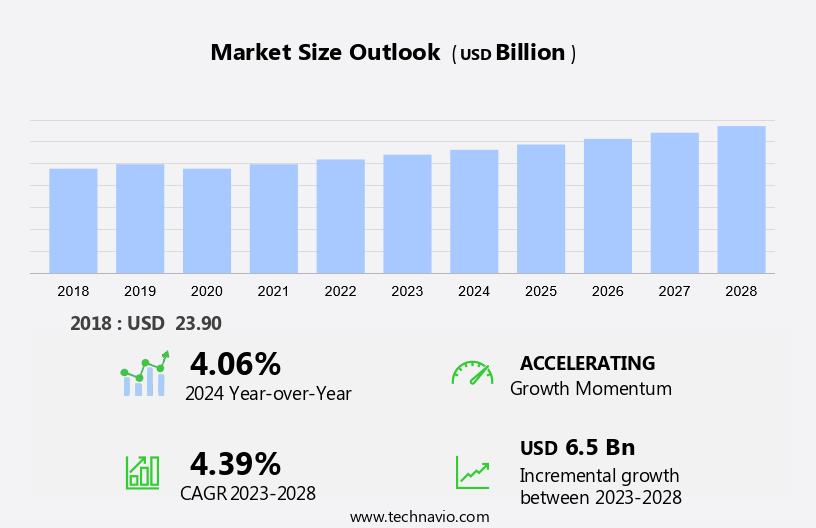
- The market encompasses the production and supply used in various industries, primarily focusing on the water and dairy sectors. It is a critical process for producing clean water and ensuring product safety In the dairy industry. This market is driven by stringent safety regulations and the demand for premium products, as consumers increasingly prioritize cleanliness and health. Membrane filters effectively remove bacteria, organic matter, and microscopic organisms, ensuring the production of safe and high-quality products.
- The market is further fuelled by the growing trend towards spent water recycling and the need for efficient gas separation processes. As contaminating gases become a greater concern, this technology offers a solution for reducing emissions and improving overall process efficiency. Customer awareness and the importance of maintaining clean water sources also contribute to the market's growth.
How is this Membrane Filters Industry segmented and which is the largest segment?
The membrane filters industry research report provides comprehensive data (region-wise segment analysis), with forecasts and estimates in "USD billion" for the period 2024-2028, as well as historical data from 2018-2022 for the following segments.
- Technology
- Reverse osmosis
- Microfiltration
- Ultrafiltration
- Pervaporation
- Others
- Geography
- APAC
- China
- Japan
- North America
- US
- Europe
- Germany
- France
- South America
- Middle East and Africa
- APAC
By Technology Insights
- The reverse osmosis segment is estimated to witness significant growth during the forecast period.
Reverse osmosis is a filtration technology utilizing high pressure, between 20-40 bars, to reverse the natural osmosis process. In this process, a semi-permeable membrane with small pores (0.5-1.5 nanometers) separates two solutions with varying solute concentrations. This method effectively removes particles smaller than 0.001 microns. Initially, reverse osmosis gained popularity in water treatment for producing clean drinking water. However, its applications have expanded significantly in various industries, particularly food and beverage, due to its exceptional ability to purify water. This technology is essential in ensuring clean water for various sectors, including dairy, pharmaceutical synthesis, spent water recycling, wastewater purification, bio-based medications, agriculture, and even in industries like automotive transportation, aerospace defense, banking, financial services, insurance, chemical materials, consumer goods, energy power, pharmaceutical healthcare, and more.
Furthermore, with increasing customer awareness and stringent safety regulations, demand for premium systems has grown. These systems are integral in removing contaminants, pollutants, and impurities, ensuring the highest quality of water and other liquids. Low energy costs and industrial filtering applications further broaden the market scope. Reverse osmosis, ultrafiltration, microfiltration, nanofiltration, demineralization, deionization, and water processing are some of the most common methods. These techniques have proven to be effective in removing contaminants, bacteria, and other impurities, making them indispensable in various industries.
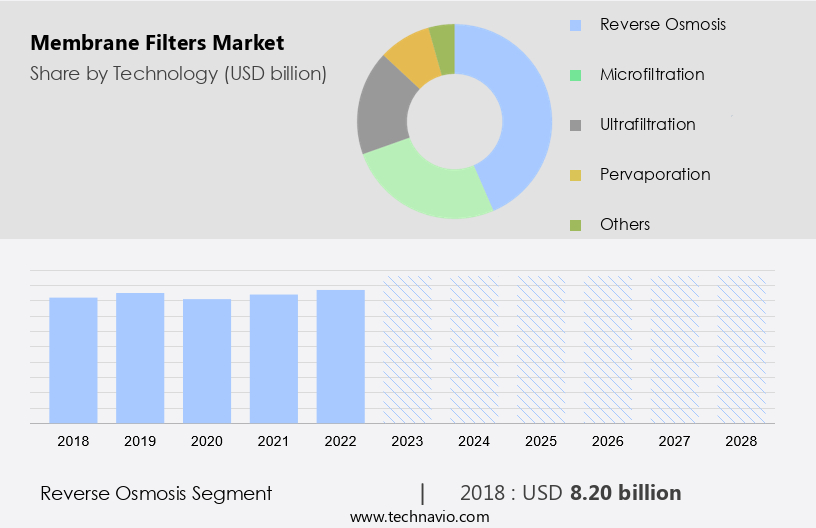
Get a glance at the Membrane Filters Industry report of share of various segments Request Free Sample
The reverse osmosis segment was valued at USD 8.20 billion in 2018 and showed a gradual increase during the forecast period.
Regional Analysis
- APAC is estimated to contribute 31% to the growth of the global market during the forecast period.
Technavio's analysts have elaborately explained the regional trends and drivers that shape the market during the forecast period.
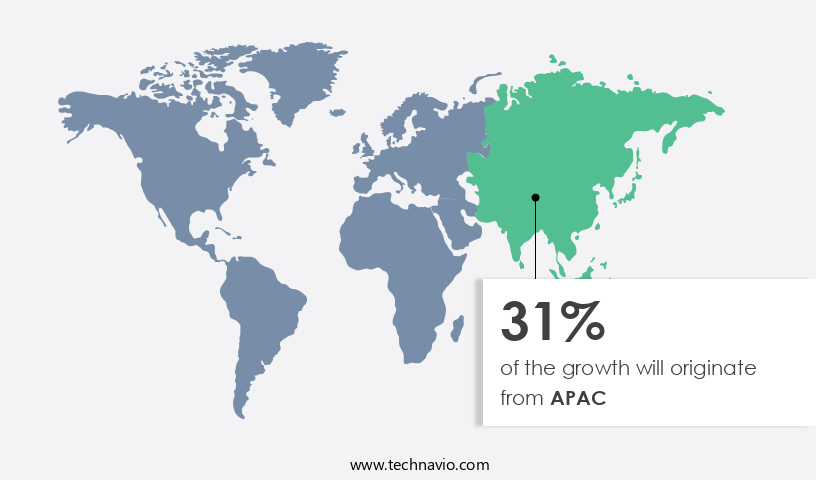
For more insights on the market share of various regions, Request Free Sample
The market In the Asia-Pacific region is experiencing significant growth due to increasing infrastructure development and stringent safety regulations in various sectors. The demand for clean water and sterilized milk In the dairy industry, as well as the need for water filtration In the pharmaceutical and chemical industries, are primary drivers for market expansion. Additionally, the growing awareness of contaminant removal and spent water recycling in industries such as automotive transportation, aerospace and defense, banking, financial services, insurance, and energy power is fueling market growth.
Further, these technologies, including Reverse Osmosis, Ultrafiltration, Microfiltration, Nanofiltration, Demineralization, and Deionization, are essential for the removal of bacteria, organic matter, microscopic organisms, and pollutants from water and industrial processes. These filtration methods are also used In the production of bio-based medications and agriculture. The market's growth is further influenced by the low energy costs and industrial filtering applications in various industries, including cryopreserving, heat-sensitive materials, and emissions reduction. The market's future potential is significant, with continued demand in water processing, pollutant removal, and customer awareness initiatives.
Market Dynamics
Our membrane filters market researchers analyzed the data with 2023 as the base year, along with the key drivers, trends, and challenges. A holistic analysis of drivers will help companies refine their marketing strategies to gain a competitive advantage.
What are the key market drivers leading to the rise In the adoption of Membrane Filters Industry?
Compliance with standards and safety requirements is the key driver of the market.
- membrane filters has emerged as a crucial technology in various industries, including water filtration and food and beverage processing, to address the issue of contamination from bacteria and microscopic organisms. In the dairy sector, where contamination can lead to foodborne illnesses and significant industry losses, it plays a pivotal role in ensuring the production of safe and clean water for processing. This technology is also employed in pharmaceutical synthesis, wastewater purification for bio-based medications, and industrial filtering in sectors such as automotive transportation, aerospace defense, banking, financial services, insurance, chemical material production, consumer goods, energy power, and pharmaceutical healthcare.
- Moreover, these techniques, including reverse osmosis, ultrafiltration, microfiltration, nanofiltration, demineralization, and deionization, enable the removal of contaminants such as bacteria, organic matter, and pollutants, ensuring high-quality output. With increasing customer awareness and stringent safety regulations, the demand for premium products and services continues to grow. Additionally, this offers low energy costs and efficient pollutant removal, making it an attractive option for various industries.
What are the market trends shaping the Membrane Filters Industry?
Growing demand for nanofiltration membrane technology is the upcoming market trend.
- Nanofiltration, a pressure-driven membrane filters process, offers superior functional features and precision compared to other membranes In the food and beverage, pharmaceutical, and wastewater treatment industries. This membrane process, which falls between ultrafiltration and reverse osmosis in terms of molecular and ionic rejection, is gaining popularity due to its operational efficiency. Dairy, beverages, grain products, and other industries are increasingly adopting nanofiltration membranes as an alternative to reverse osmosis membranes. The nanofiltration membrane operates In the pressure range of 100-600 pounds per square inch, making it an attractive option for various applications. This trend is driving the demand, particularly in sectors such as water filtration, pharmaceutical synthesis, and agriculture. Safety regulations and customer awareness are key factors propelling the market forward.
- Moreover, membrane filters is essential for ensuring clean water for human consumption and industrial processes. In the pharmaceutical industry, it is used for spent water recycling and purification of water used In the production of bio-based medications. In agriculture, this is used for irrigation water treatment and wastewater management. In the food and beverage industry, it is used for water processing and pollutant removal, ensuring the production of premium products free from bacteria, organic matter, and microscopic organisms. It is also used In the automotive transportation, aerospace defense, banking, financial services, insurance, chemical material, consumer goods, energy power, and pharmaceutical healthcare industries. Low energy costs and the ability to remove contaminants, gases, and emissions make membrane filters an attractive option for these industries. Additionally,it is used in cryopreserving heat-sensitive materials and in the production of dyes, where precise control of molecular size and selectivity is required.
- Thus, these processes such as reverse osmosis, ultrafiltration, microfiltration, nanofiltration, demineralization, and deionization are all used in various applications to meet the specific needs of different industries. In summary, the membrane filters market is expected to grow significantly during the forecast period due to the increasing demand for clean water, the need for precise control of molecular size and selectivity, and the growing awareness of the importance of water and wastewater treatment. The ability to remove contaminants, bacteria, and other impurities makes it an essential technology for various industries, including food and beverage, pharmaceutical, and wastewater treatment. The precision and operational efficiency of processes such as nanofiltration make them a preferred option over traditional methods for water and wastewater treatment.
What challenges does the Membrane Filters Industry face during its growth?
High operational costs and expenditure is a key challenge affecting industry growth.
- These technologies find extensive applications in sectors such as dairy, pharmaceutical synthesis, water filtration for clean water production, wastewater purification, agriculture, food and beverage, automotive transportation, aerospace defense, banking, financial services, insurance, chemical material, consumer goods, energy power, and pharmaceutical healthcare. Safety regulations mandate the use of systems for the removal of bacteria, organic matter, microscopic organisms, and contaminants from water and spent water. The demand for premium products, such as bio-based medications and cryopreserving heat-sensitive materials, necessitates stringent filtration processes. The systems offer advantages like low energy costs, high penetration flow, and pollutant removal. However, they come with higher operating costs due to membrane maintenance, cleaning, fouling control, replacement, and the initial investment in equipment and technical expertise.
- Further, components of membrane filters systems, such as membranes and filters, have seen a rise in prices due to the increasing cost of primary materials. The filtration of gases, especially In the automotive and energy industries, and the prevention of bacterial assaults and temperature increases are significant challenges driving the market growth. Customer awareness and spent water recycling are emerging trends in the market.
- Thus, technologies like RO, UF, MF, NF, and Deionization are used for pollutant removal and water processing in various industries. In summary, the market is driven by the increasing demand for clean water, stringent safety regulations, and the need for efficient pollutant removal. Despite the high operating costs, the market is expected to grow due to the diverse applications and benefits offered by systems.
Exclusive Customer Landscape
The membrane filters market forecasting report includes the adoption lifecycle of the market, covering from the innovator's stage to the laggard's stage. It focuses on adoption rates in different regions based on penetration. Furthermore, the membrane filters market report also includes key purchase criteria and drivers of price sensitivity to help companies evaluate and develop their market growth analysis strategies.
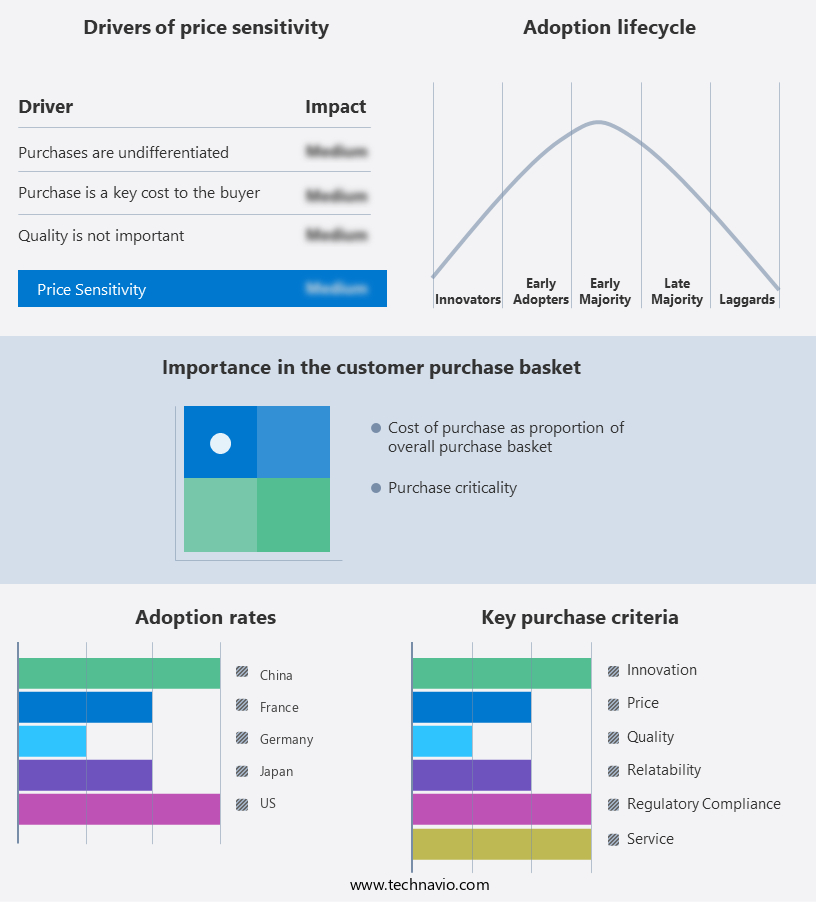
Customer Landscape
Key Companies & Market Insights
Companies are implementing various strategies, such as strategic alliances, membrane filters market forecast, partnerships, mergers and acquisitions, geographical expansion, and product/service launches, to enhance their presence In the industry. The industry research and growth report includes detailed analyses of the competitive landscape of the market and information about key companies, including:
- 3M Co.
- Alfa Laval AB
- Berghof Membrane Technology GmbH
- Danaher Corp.
- Donaldson Co. Inc.
- Eaton Corp. Plc
- General Electric Co.
- GEA Group AG
- Graver Technologies LLC
- Koch Industries Inc.
- Meissner Filtration Products Inc.
- Merck KGaA
- Novasep Holding SAS
- Parker Hannifin Corp.
- Repligen Corp.
- Sartorius AG
- Sterlitech Corp.
- Synder Filtration Inc.
- Thermo Fisher Scientific Inc.
Qualitative and quantitative analysis of companies has been conducted to help clients understand the wider business environment as well as the strengths and weaknesses of key industry players. Data is qualitatively analyzed to categorize companies as pure play, category-focused, industry-focused, and diversified; it is quantitatively analyzed to categorize companies as dominant, leading, strong, tentative, and weak.
Research Analyst Overview
Membrane filters is an essential technology used in various industries to separate and purify fluids from suspended solids, bacteria, organic matter, and microscopic organisms. This process plays a crucial role in ensuring clean water for numerous applications, including dairy sectors, water filtration, and pharmaceutical synthesis. The market is driven by stringent safety regulations and the demand for premium products in sectors such as food and beverage, automotive transportation, aerospace and defense, banking, financial services, insurance, chemical materials, consumer goods, energy and power, pharmaceutical healthcare, and agriculture. It is used extensively in water processing to remove contaminants and pollutants, ensuring clean water for various applications.
In the dairy sector, it is used to produce high-quality milk and dairy products by removing bacteria and organic matter. In the pharmaceutical industry, it is used In the production of bio-based medications, where the purity of the water used in synthesis is critical. Primary materials used include polymeric membranes, ceramic membranes, and metal membranes. These membranes are used in various filtration processes, including reverse osmosis, ultrafiltration, microfiltration, nanofiltration, demineralization, and deionization. Reverse osmosis is a filtration process that uses a partially permeable membrane to remove ions, unwanted molecules, and larger particles from water. Ultrafiltration process that separates particles based on size and molecular weight. Microfiltration is a filtration process that uses membranes with pore sizes between 0.1 and 10 microns to remove bacteria and other microorganisms. Nanofiltration is a process that removes ions, smaller organic molecules, and larger solutes.
Further, membrane filters is also used in industrial applications such as spent water recycling, gas separation, and cryopreserving heat-sensitive materials. In the automotive transportation industry, it is used to remove contaminants from fuel and cooling systems. In the aerospace and defense industry, it is used to remove contaminants from fuel and water systems. The demand for technology is driven by customer awareness of the importance of clean water and the need for efficient and cost-effective filtration processes. membrane filters offer several advantages over traditional filtration methods, including low energy costs, high filtration efficiency, and the ability to remove a wide range of contaminants.
However, membrane filters also face challenges, including the cost of membranes, membrane fouling, and membrane scaling. Membrane fouling occurs when particles or organic matter adhere to the membrane surface, reducing its filtration efficiency. Membrane scaling occurs when mineral deposits form on the membrane surface, reducing its filtration capacity. Despite these challenges, the market is expected to grow due to increasing demand for clean water and the development of new membrane materials and filtration technologies. The market is also expected to be driven by the growing demand for water and wastewater treatment, the increasing use in the pharmaceutical industry, and the growing demand in emerging markets such as China and India. In summary, it is an essential technology used in various industries to ensure clean water and separate fluids from contaminants. The membrane filters market is driven by stringent safety regulations, the demand for premium products, and the need for efficient and cost-effective filtration processes. membrane filters offers several advantages, including low energy costs, high filtration efficiency, and the ability to remove a wide range of contaminants. However, it also faces challenges such as membrane fouling and scaling. Despite these challenges, the market is expected to grow due to increasing demand for clean water and the development of new membrane materials and filtration technologies.
|
Membrane Filters Market Scope |
|
|
Report Coverage |
Details |
|
Page number |
149 |
|
Base year |
2023 |
|
Historic period |
2018-2022 |
|
Forecast period |
2024-2028 |
|
Growth momentum & CAGR |
Accelerate at a CAGR of 4.39% |
|
Market growth 2024-2028 |
USD 6.5 billion |
|
Market structure |
Fragmented |
|
YoY growth 2023-2024(%) |
4.06 |
|
Key countries |
US, China, Germany, France, and Japan |
|
Competitive landscape |
Leading Companies, Market Positioning of Companies, Competitive Strategies, and Industry Risks |
What are the Key Data Covered in this Membrane Filters Market Research and Growth Report?
- CAGR of the Membrane Filters industry during the forecast period
- Detailed information on factors that will drive the Membrane Filters growth and forecasting between 2024 and 2028
- Precise estimation of the size of the market and its contribution of the industry in focus to the parent market
- Accurate predictions about upcoming growth and trends and changes in consumer behaviour
- Growth of the market across APAC, North America, Europe, South America, and Middle East and Africa
- Thorough analysis of the market's competitive landscape and detailed information about companies
- Comprehensive analysis of factors that will challenge the membrane filters market growth of industry companies
We can help! Our analysts can customize this membrane filters market research report to meet your requirements.
 RIA -
RIA - 
