
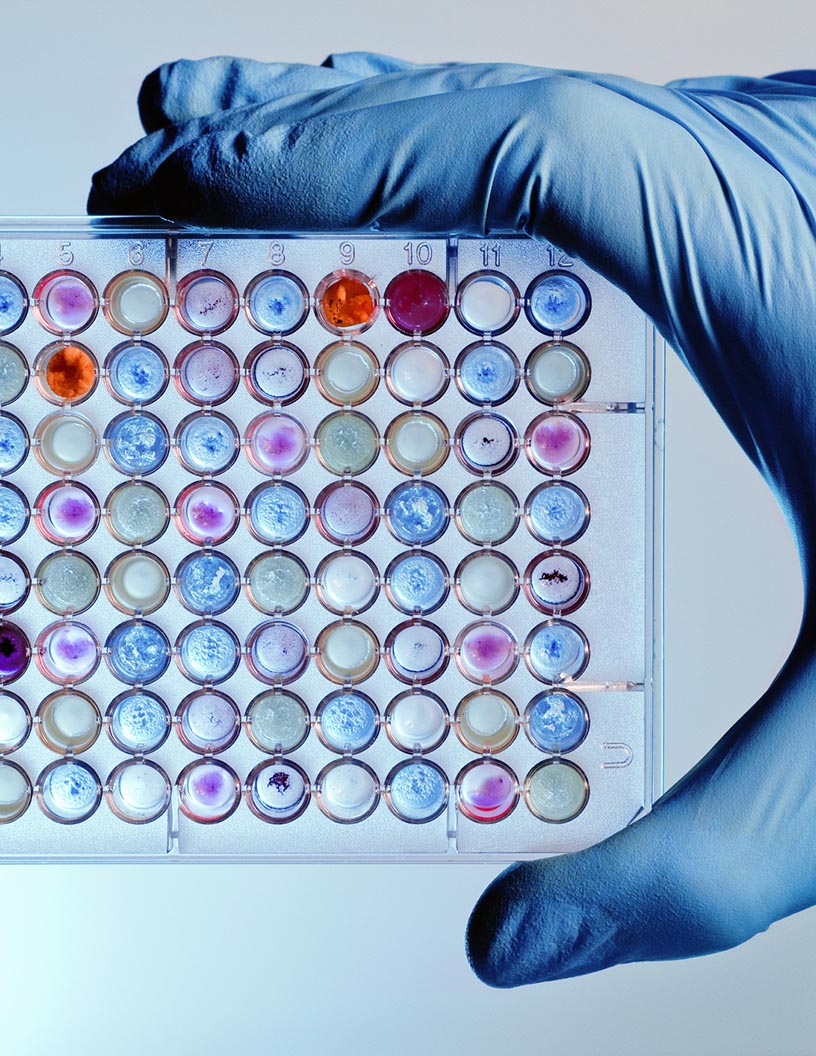


Molecular Microplate Readers and Washers Market Size 2024-2028
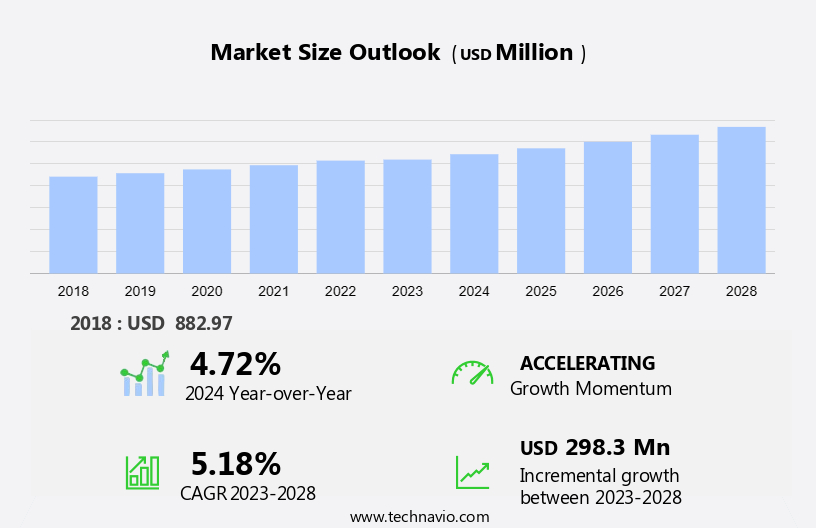
The molecular microplate readers and washers market size is forecast to increase by USD 298.3 million at a CAGR of 5.18% between 2023 and 2028.
- The market is experiencing significant growth due to several key trends. The increase in automation In the healthcare industry is driving market demand, as these devices enable high-throughput and efficient data generation. They offer various inputs and outputs for different types of reagents and solvents, making them versatile for various applications. Additionally, the rising number of conferences and symposiums focused on laboratory device efficiency is promoting the adoption of advanced molecular microplate readers and washers. Central to process industries, control engineering, industrial process control, automation instrumentation, robotics, and safety controls, microplate readers contribute to operational efficiency, product quality, and workplace safety. However, the high cost of instruments related to life sciences tools and services remains a challenge for market growth. Despite this, the market is expected to continue expanding due to the benefits these devices offer in terms of accuracy, speed, and standardization in laboratory processes.
What will be the Size of the Molecular Microplate Readers and Washers Market During the Forecast Period?
- The market represents a significant segment within the broader laboratory automation industry. This market is driven by the increasing demand for high-throughput and automated solutions in research and development, diagnostics, and quality control applications. Molecular microplate readers and washers are essential components of assembly lines in manufacturing processes, particularly In the process industries. These systems utilize a combination of electromechanical equipment, controllers, and robotic systems to automate the reading and washing of microplates. Central processing units and microprocessors enable fast data processing, while human-machine interfaces and programming languages such as ladder logic and standard function (SF) facilitate easy operation and customization.
- Furthermore, digital interfaces, including Ethernet, enable seamless integration with other laboratory systems. Sensors and actuators ensure accurate and consistent performance, while inputs and outputs allow for flexible data transfer and control. Overall, the market is poised for growth due to its ability to enhance productivity, improve accuracy, and reduce labor costs in various industries.
How is this Molecular Microplate Readers and Washers Industry segmented and which is the largest segment?
The molecular microplate readers and washers industry research report provides comprehensive data (region-wise segment analysis), with forecasts and estimates in "USD million" for the period 2024-2028, as well as historical data from 2018-2022 for the following segments.
- Product
- Microplate readers
- Microplate washers
- End-user
- Biotechnology and pharmaceutical companies
- Hospital and diagnostic laboratories
- Others
- Geography
- North America
- US
- Europe
- Germany
- UK
- Asia
- China
- Japan
- Rest of World (ROW)
- North America
By Product Insights
- The microplate readers segment is estimated to witness significant growth during the forecast period.
Microplate readers, essential tools in life science research and industrial process control, are utilized for assessing samples in various applications, including bioassay validation, drug discovery, and quality control across the pharmaceutical, food and beverage, biotechnology industries, and academic institutions. These readers, available in 96-well and higher configurations, enable the analysis of up to 1536 samples. The most common type, 96-well microplate readers, offer a reaction volume of 100-200 µL per well. Multi-mode microplate readers support multiple techniques, including absorbance, luminescence, and fluorescence, while single-mode readers focus on one technique.
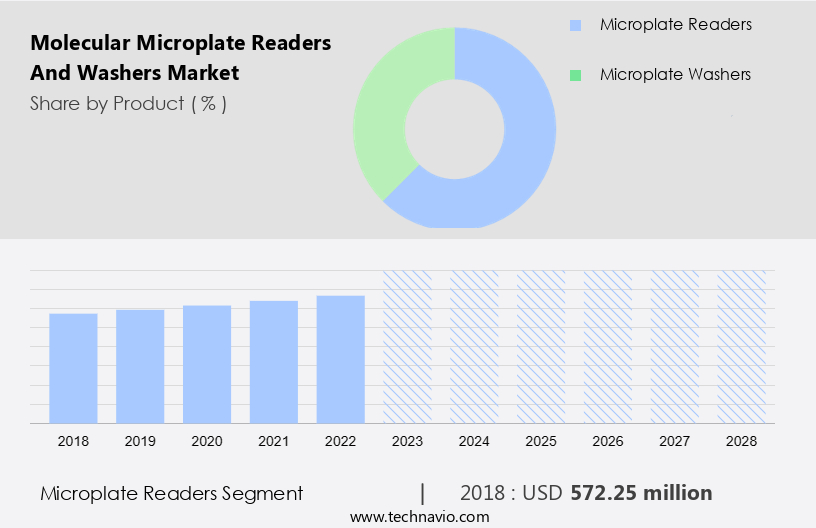
Get a glance at the Molecular Microplate Readers and Washers Industry report of share of various segments Request Free Sample
The microplate readers segment was valued at USD 572.25 million in 2018 and showed a gradual increase during the forecast period.
Regional Analysis
- North America is estimated to contribute 35% to the growth of the global market during the forecast period.
Technavio's analysts have elaborately explained the regional trends and drivers that shape the market during the forecast period.

For more insights on the market share of various regions, Request Free Sample
The market experienced significant growth in North America in 2023, driven by advancements in biotechnology and pharmaceutical research, as well as a heightened focus on drug and vaccine discovery and development for various lifestyle diseases. The region's dominance can be attributed to the presence of numerous companies, including Bio-Rad Laboratories and Thermo Fisher, based In the US. These companies provide advanced microplate readers, such as Bio-Rad's iMark Microplate Absorbance Reader, which boasts fast reading speeds, extensive software capabilities, and pre-programmed validation protocols.
Market Dynamics
Our researchers analyzed the data with 2023 as the base year, along with the key drivers, trends, and challenges. A holistic analysis of drivers will help companies refine their marketing strategies to gain a competitive advantage.
What are the key market drivers leading to the rise In the adoption of Molecular Microplate Readers and Washers Industry?
Increase in automation in healthcare industry is the key driver of the market.
- Molecular microplate readers and washers are essential electromechanical equipment in manufacturing processes for the life sciences industry, including laboratories, hospitals, and research organizations. These systems offer significant benefits, such as increased operational efficiency, product quality, and workplace safety. Fully automated solutions enable labor savings by replacing manual tasks, allowing researchers to focus on analysis and interpretation. Automation also reduces human errors, contributing to data-driven insights for process optimization and improvement. The central processing unit and microprocessor In these systems facilitate advanced control algorithms, safety controls, and functional safety. Human-Machine Interfaces (HMIs) provide operators with intuitive control over inputs and outputs through programming languages like Ladder Logic, Standard Function (SF), and Programmable Process Controller (PPC).
- Furthermore, digital interfaces, such as Ethernet, enable seamless connectivity and communication between systems. Sensors and actuators are integral components of these automated systems, monitoring and controlling temperature, pressure, flow rates, and other critical process parameters. Programmable Logic Controllers (PLCs) and Calibration Equipment ensure accurate and consistent performance. Safety Instrumented Systems and Quality Assurance protocols maintain regulatory standards and compliance with environmental regulations. Automation In the process industries, including control engineering, process control, industrial process control, automation instrumentation, robotics, and safety monitoring, has become increasingly important for optimizing performance, reducing maintenance costs, minimizing unplanned downtime, and enhancing productivity. Energy management and wireless instrumentation are also key considerations for modern industrial automation systems.
What are the market trends shaping the Molecular Microplate Readers and Washers Industry?
Increasing number of conferences and symposiums aimed at promoting efficiency of laboratory devices is the upcoming market trend.
- Molecular microplate readers and washers have gained significant attention In the manufacturing sector, particularly in process industries, due to their ability to automate and optimize various laboratory processes. These electromechanical pieces of equipment utilize a central processing unit and microprocessor to read data from sensors and actuators via digital interfaces, such as Ethernet, and convert it into meaningful information. Human-Machine Interfaces (HMIs) and Programmable Logic Controllers (PLCs) enable operators to program and monitor the systems using programming languages like Ladder Logic, Standard Function (SF), and Programmable Process Controllers. Microplate readers are integral to control engineering and process control in industrial process control, automation instrumentation, and robotics.
- Furthermore, they offer advanced control algorithms, safety controls, functional safety, monitoring, and basic control features, including manual override, shutdown control, interlocking, and output control. These systems ensure operational efficiency, product quality, and workplace safety by minimizing human error, unplanned downtime, and maintenance costs. Microplate washers, on the other hand, are essential for cleaning microplates after assays, ensuring accurate and reliable results. With the integration of sensors, actuators, and safety monitoring systems, these systems ensure regulatory compliance, energy management, safety instrumented systems, and quality assurance.
What challenges does the Molecular Microplate Readers and Washers Industry face during its growth?
High cost of instruments related to life sciences tools and service industry is a key challenge affecting the industry growth.
- Molecular microplate readers and washers play a pivotal role In the manufacturing processes of the life sciences industry, particularly in pharmaceutical and biotechnology companies. These advanced lab instruments facilitate the analysis of various parameters such as fluorescence, luminescence, nephelometry, cell analysis, automated cell counters, and flow cytometers. The compact design of these readers incorporates electromechanical equipment, human machine interfaces (HMI), central processing units (CPU), microprocessors, and digital interfaces, including Ethernet, for seamless data transfer. The integration of robotic systems, sensors, and actuators in molecular microplate readers and washers has led to increased operational efficiency, product quality, and workplace safety.
- In addition, programmable logic controllers (PLC) and programmable process controllers (PPC) enable PLC programming using languages like Ladder Logic, Standard Function (SF), and Functional safety standards. The high cost of these instruments, driven by continuous innovation and advanced features, poses a challenge for the market. High capital expenditures for microplate readers and washers impact the total cost of ownership, including maintenance costs and unplanned downtime. However, the benefits of increased productivity, control systems, safety monitoring, environmental compliance, energy management, and wireless instrumentation outweigh the costs. Molecular microplate readers and washers are integral to process industries, control engineering, industrial process control, automation instrumentation, and robotics.
Exclusive Customer Landscape
The molecular microplate readers and washers market forecasting report includes the adoption lifecycle of the market, covering from the innovator's stage to the laggard's stage. It focuses on adoption rates in different regions based on penetration. Furthermore, the molecular microplate readers and washers market report also includes key purchase criteria and drivers of price sensitivity to help companies evaluate and develop their market growth analysis strategies.
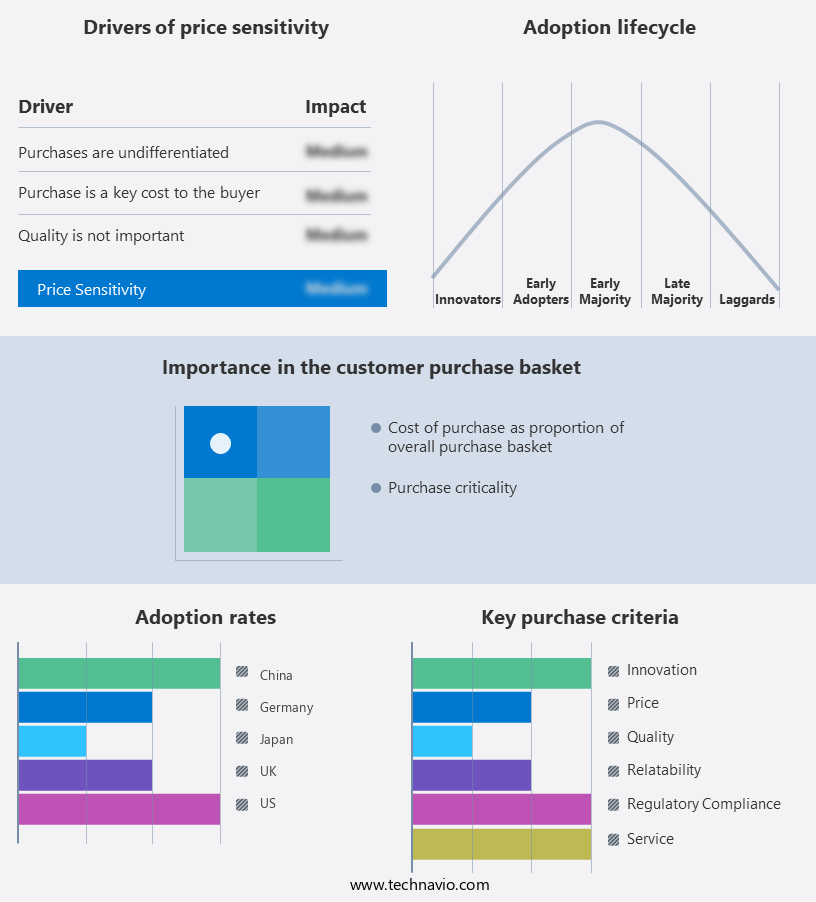
Customer Landscape
Key Companies & Market Insights
Companies are implementing various strategies, such as strategic alliances, molecular microplate readers and washers market forecast, partnerships, mergers and acquisitions, geographical expansion, and product/service launches, to enhance their presence In the industry.
The industry research and growth report includes detailed analyses of the competitive landscape of the market and information about key companies, including:
- Agilent Technologies Inc.
- Awareness Technology Inc.
- Berthold Technologies GmbH and Co.KG
- Bio Rad Laboratories Inc.
- Biosan
- BMG LABTECH GmbH
- Bruker Corp.
- Danaher Corp.
- Enzo Biochem Inc.
- Hidex Oy
- Hudson Robotics Inc.
- Lonza Group Ltd.
- LTEK co ltd.
- Mindray Bio medical Electronics Co. Ltd.
- Molecular Device LLC
- PerkinElmer Inc
- Promega Corp.
- Tecan Trading AG
- Thermo Fisher Scientific Inc.
- VSI Electronics Pvt. Ltd.
Qualitative and quantitative analysis of companies has been conducted to help clients understand the wider business environment as well as the strengths and weaknesses of key industry players. Data is qualitatively analyzed to categorize companies as pure play, category-focused, industry-focused, and diversified; it is quantitatively analyzed to categorize companies as dominant, leading, strong, tentative, and weak.
Research Analyst Overview
Molecular microplate readers and washers play a crucial role In the scientific research and development sectors, enabling high-throughput analysis of biological samples. These instruments facilitate the automation of various laboratory processes, enhancing operational efficiency, product quality, and workplace safety. The molecular microplate reader market is driven by the increasing demand for automation and high-throughput analysis in research and development applications. The integration of advanced technologies, such as digital interfaces, ethernet connectivity, and programmable logic controllers, allows for seamless data transfer and real-time monitoring of experiments. Electromechanical equipment, including molecular microplate readers and washers, are integral components of assembly lines and manufacturing processes in various industries.
In addition, the adoption of these systems is driven by the need for precise control and monitoring of processes, reducing the risk of human error and increasing productivity. Robotic systems are increasingly being integrated into molecular microplate reader and washer systems, enabling the automation of complex processes and improving overall process control. Central processing units and microprocessors facilitate faster data processing and analysis, while human-machine interfaces enable operators to interact with the equipment in an intuitive and efficient manner. Sensors and actuators are essential components of molecular microplate readers and washers, enabling real-time monitoring and control of various parameters such as temperature, pressure, and flow rates.
Furthermore, digital interfaces and programming languages, such as ladder logic and standard function (SF), facilitate easy programming and customization of control algorithms. Safety controls and functional safety are critical considerations In the design and implementation of molecular microplate reader and washer systems. Compliance with regulatory standards, such as those related to operational efficiency, product quality, workplace safety, environmental compliance, and cybersecurity, is essential to ensure the safe and effective operation of these systems. Maintenance costs and unplanned downtime are significant factors influencing the adoption of molecular microplate readers and washers. Optimization of maintenance procedures and the use of calibration equipment and human-machine interfaces can help reduce maintenance costs and minimize unplanned downtime.
In addition, the integration of advanced technologies, such as artificial intelligence (AI) and machine learning, can help improve the performance and functionality of molecular microplate readers and washers. These technologies enable predictive maintenance, real-time monitoring, and automated data analysis, leading to increased operational efficiency and improved product quality. The integration of advanced technologies, such as digital interfaces, robotics, sensors, actuators, and AI, enables improved process control, increased productivity, and reduced maintenance costs. Compliance with regulatory standards and safety considerations are critical factors influencing the design and implementation of these systems.
|
Market Scope |
|
|
Report Coverage |
Details |
|
Page number |
166 |
|
Base year |
2023 |
|
Historic period |
2018-2022 |
|
Forecast period |
2024-2028 |
|
Growth momentum & CAGR |
Accelerate at a CAGR of 5.18% |
|
Market growth 2024-2028 |
USD 298.3 million |
|
Market structure |
Fragmented |
|
YoY growth 2023-2024(%) |
4.72 |
|
Key countries |
US, Germany, UK, China, and Japan |
|
Competitive landscape |
Leading Companies, market growth and forecasting, Market Positioning of Companies, Competitive Strategies, and Industry Risks |
What are the Key Data Covered in this Molecular Microplate Readers and Washers Market Research and Growth Report?
- CAGR of the Molecular Microplate Readers and Washers industry during the forecast period
- Detailed information on factors that will drive the growth and forecasting between 2024 and 2028
- Precise estimation of the size of the market and its contribution of the industry in focus to the parent market
- Accurate predictions about upcoming growth and trends and changes in consumer behaviour
- Growth of the market across North America, Europe, Asia, and Rest of World (ROW)
- Thorough analysis of the market's competitive landscape and detailed information about companies
- Comprehensive analysis of factors that will challenge the molecular microplate readers and washers market growth of industry companies
We can help! Our analysts can customize this molecular microplate readers and washers market research report to meet your requirements.
 RIA -
RIA - 
