



Multichannel Order Management Market Size 2025-2029
The multichannel order management market size is forecast to increase by USD 2.4 billion, at a CAGR of 12% between 2024 and 2029.
- The market is experiencing significant growth, driven by the convenience and easy accessibility of mobile payment systems. This trend is particularly prominent in today's digital age, where consumers demand seamless shopping experiences across multiple channels. Moreover, customer onboarding, reporting and analytics, and artificial intelligence (AI) are crucial components, enabling predictive analytics and exception management. Moreover, the emergence of smart cities is further fueling market expansion, as advanced technologies enable real-time order processing and delivery tracking. However, challenges persist, including the lack of quality standards in Service Level Agreements (SLAs).
- This inconsistency can lead to operational inefficiencies and customer dissatisfaction, necessitating the need for stricter regulations and industry best practices. Companies seeking to capitalize on market opportunities must prioritize the development of robust, flexible, and reliable order management systems that can effectively address these challenges and meet evolving consumer demands. Cloud computing facilitates process optimization and integration services, allowing businesses to efficiently manage their supply chain management and reverse logistics.
What will be the Size of the Multichannel Order Management Market during the forecast period?
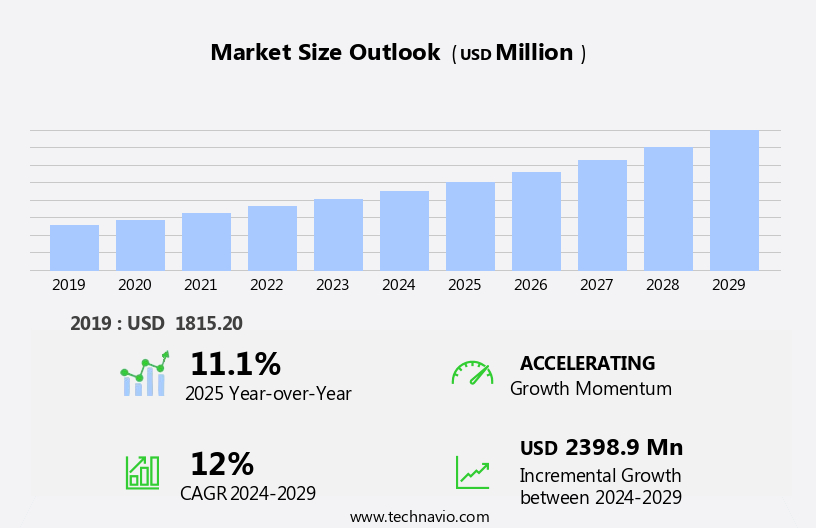
Explore in-depth regional segment analysis with market size data - historical 2019-2023 and forecasts 2025-2029 - in the full report.
Request Free Sample
The market is characterized by continuous evolution and dynamic market activities. Seamlessly integrated solutions are increasingly becoming essential for businesses to effectively manage their multichannel retailing operations. These solutions encompass various functionalities, including UI design for optimal user experience (UX), machine learning for demand forecasting and order routing, inventory accuracy, and performance monitoring. Warehouse automation and shipping integration are also vital, ensuring real-time inventory management and on-time delivery. System maintenance, automated order processing, and e-commerce platform integration are essential for maintaining system uptime and sales growth.
Training and technical support are essential for successful implementation and adoption of these complex systems. Regulatory compliance is another critical aspect, ensuring data security and data migration are handled effectively. In the ever-changing retail landscape, these multifaceted order management systems are indispensable for managing return rates, data analytics, cost optimization, and exception handling. They facilitate last-mile delivery, order tracking, business intelligence, and API documentation, all while maintaining customer satisfaction and ensuring on-time delivery.
How is this Multichannel Order Management Industry segmented?
The multichannel order management industry research report provides comprehensive data (region-wise segment analysis), with forecasts and estimates in "USD million" for the period 2025-2029, as well as historical data from 2019-2023 for the following segments.
- Solution
- Software
- Services
- Deployment
- Cloud-based
- On-premises
- End-user
- Retail and e-commerce
- Manufacturing
- Logistics and transportation
- Others
- Geography
- North America
- US
- Canada
- Mexico
- Europe
- France
- Germany
- UK
- APAC
- China
- India
- Japan
- South Korea
- Rest of World (ROW)
- North America
By Solution Insights
The software segment is estimated to witness significant growth during the forecast period. In the dynamic business landscape of the 21st century, multichannel order management systems have become indispensable tools for companies seeking to streamline their operations and enhance customer satisfaction. The market for these systems is witnessing significant growth, driven by the increasing adoption of multichannel retailing and the need for logistics optimization. Data analytics plays a pivotal role in this context, enabling businesses to gain valuable insights into customer behavior and demand patterns. By leveraging data analytics, companies can optimize their inventory management, improve order accuracy, and minimize return rates. Moreover, real-time inventory and predictive analytics help businesses anticipate demand and adjust their supply chain management accordingly.
Cost optimization is another critical factor driving the market's growth. Cloud computing and automation are key trends in this regard, as they help reduce operational costs and improve process efficiency. Shipping labels, picking and packing, and order tracking are essential components of multichannel order management systems, ensuring on-time delivery and customer satisfaction. Data security is a significant concern for businesses handling sensitive customer information. Robust security protocols and integration with e-commerce platforms ensure that customer data remains protected. Exception management and error handling are crucial features, enabling businesses to address issues promptly and minimize disruptions. The market is also witnessing the integration of advanced technologies such as machine learning, artificial intelligence, and warehouse automation.
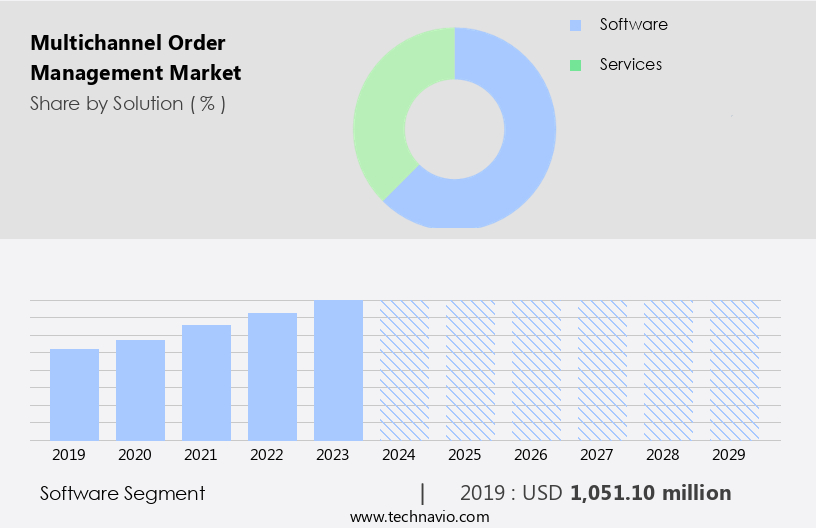
The Software segment was valued at USD 1.05 billion in 2019 and showed a gradual increase during the forecast period.
These technologies enable businesses to optimize their workflows, improve inventory accuracy, and enhance the user experience. Omnichannel strategy and regulatory compliance are other essential factors shaping the market's dynamics. The market is witnessing significant growth, driven by the need for logistics optimization, cost savings, and customer satisfaction. The market is characterized by the adoption of advanced technologies, a focus on data analytics, and a shift towards cloud-based solutions. As businesses continue to expand their geographical reach and embrace multichannel retailing, the demand for efficient and integrated order management systems is expected to remain strong. Product information management and personalized shopping features help to enhance the customer experience, while live chat and returns processing enable businesses to provide timely and effective customer support.
Regional Analysis
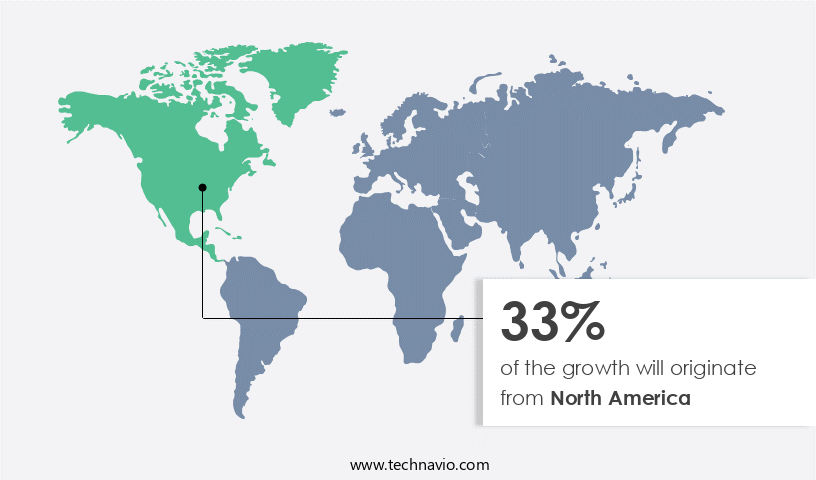
North America is estimated to contribute 33% to the growth of the global market during the forecast period. Technavio's analysts have elaborately explained the regional trends and drivers that shape the market during the forecast period.
In the dynamic business landscape of the 21st century, the market is witnessing significant growth, particularly in regions like North America. This region, known for its pioneering adoption of advanced technologies, especially in retail and telecom industries, is a key market driver. With a high concentration of retail, healthcare, and telecom companies, the region leads in technology creation and consumption. The increasing use of mobile apps for online ordering and the emergence of IoT analytics in end-user industries are fueling market expansion. Logistics optimization is a critical aspect of multichannel order management. Data analytics plays a pivotal role in optimizing costs and improving order accuracy.
Shipping labels, picking and packing, and data validation streamline the order fulfillment process, ensuring customer satisfaction and on-time delivery. Omnichannel strategies, cloud computing, and process optimization enable seamless integration of sales channels and inventory management. Returns processing is another essential component of multichannel order management. User experience (UX) and order tracking enhance customer satisfaction. Business intelligence and reporting and analytics provide valuable insights for sales growth. Integration apis, inventory management, and real-time inventory enable efficient supply chain management. Data security, exception management, and error handling ensure data integrity and system reliability. Last-mile delivery, delivery management, and customer service address the final leg of the delivery process.
Regulatory compliance and system maintenance ensure smooth operations. Machine learning and predictive analytics improve inventory accuracy and order routing. Warehouse automation and shipping integration streamline operations and reduce costs. Performance monitoring and automated order processing optimize workflows and enhance user interface (UI) design. The market is witnessing significant growth in North America, driven by advanced technologies, high adoption of online ordering, and the emergence of IoT analytics. The market's evolution is characterized by logistics optimization, cost optimization, data analytics, and customer satisfaction, among other trends. This market encompasses a range of functionalities, including demand forecasting, mobile commerce, order visibility, customer service, real-time inventory, product catalog management, order processing, real-time data integration, and channel management, among others.
Market Dynamics
Our researchers analyzed the data with 2024 as the base year, along with the key drivers, trends, and challenges. A holistic analysis of drivers will help companies refine their marketing strategies to gain a competitive advantage.
What are the key market drivers leading to the rise in the adoption of Multichannel Order Management Industry?
- The convenience and easy accessibility of mobile payment systems serve as the primary catalyst for market growth. Mobile payment systems' ability to offer quick, secure, and location-independent transactions has significantly increased their adoption rate and fueled market expansion. The market is experiencing significant growth due to the increasing adoption of omnichannel strategies by businesses. Cloud computing technology and integration APIs enable seamless data flow between different channels, ensuring process optimization and improved user experience (UX). Businesses prioritize data security to protect sensitive customer information, making it a crucial factor in the market's expansion.
- Supply chain management is another critical aspect of multichannel order management. Real-time visibility into inventory levels and shipment status helps businesses maintain stock levels and meet customer demand efficiently. Training and support are essential to ensure a smooth implementation and adoption of the order management system. The market is thriving due to the increasing importance of providing a seamless and integrated shopping experience across all channels. Data security, process optimization, and real-time visibility into inventory and sales trends are key drivers of growth in this market. Exception management and returns processing are essential components of an effective order management system. These features help streamline operations, reduce errors, and enhance customer satisfaction. Order tracking and business intelligence provide valuable insights into sales trends and customer behavior, allowing businesses to make informed decisions and drive sales growth.
What are the market trends shaping the Multichannel Order Management Industry?
- Smart cities are emerging as the next major market trend. This trend signifies the increasing adoption of advanced technologies to enhance urban living and improve infrastructure efficiency. The market plays a pivotal role in the realm of smart cities by facilitating seamless communication between various digital devices and managing orders from diverse industries. This includes retail, telecom, and housing and gated community management, among others. The market's significance stems from its ability to cater to the unique requirements of each industry and source, which are often characterized by different channels, such as mobile phones and tablets.
- Integration services and implementation are also essential, enabling real-time inventory management and workflow automation. In addition, inventory management and reverse logistics are crucial components of multichannel order management systems. These features allow for efficient handling of returns and exchanges, enhancing customer service and overall satisfaction. The market's growth is driven by the increasing demand for seamless and integrated order management solutions that cater to the complexities of modern business environments. To ensure optimal performance, multichannel order management solutions must provide technical support, system uptime, and error handling. Furthermore, they must offer delivery management capabilities, ensuring last-mile delivery efficiency.
What challenges does the Multichannel Order Management Industry face during its growth?
- The absence of standardized quality metrics in Service Level Agreements (SLAs) represents a significant challenge impeding industry expansion. In today's business landscape, multichannel order management systems have become essential for companies to manage their e-commerce operations effectively. These systems offer a user-friendly interface (UI) that enables seamless order processing, inventory accuracy, and real-time performance monitoring. Machine learning and artificial intelligence (AI) technologies integrated into these systems provide predictive analytics and order routing, ensuring efficient order fulfillment and customer satisfaction. Moreover, customer onboarding and reporting and analytics features help businesses gain valuable insights into their sales trends and customer behavior. Warehouse automation, shipping integration, and system maintenance are other critical functionalities that enhance the overall performance of these systems.
- Automated order processing and e-commerce platform integration streamline the ordering process, reducing manual errors and improving order turnaround time. However, it is essential for businesses to establish clear service-level agreements (SLAs) with their service providers to ensure the desired level of service quality. SLAs define the benefits and support provided to the customer during the contract period, but they do not cover the delivery process of services. End-users must have a clear understanding of the services included in SLAs and negotiate effectively to protect their business interests. Failure to do so may result in unexpected costs and service disruptions.
Exclusive Customer Landscape
The multichannel order management market forecasting report includes the adoption lifecycle of the market, covering from the innovator's stage to the laggard's stage. It focuses on adoption rates in different regions based on penetration. Furthermore, the multichannel order management market report also includes key purchase criteria and drivers of price sensitivity to help companies evaluate and develop their market growth analysis strategies.
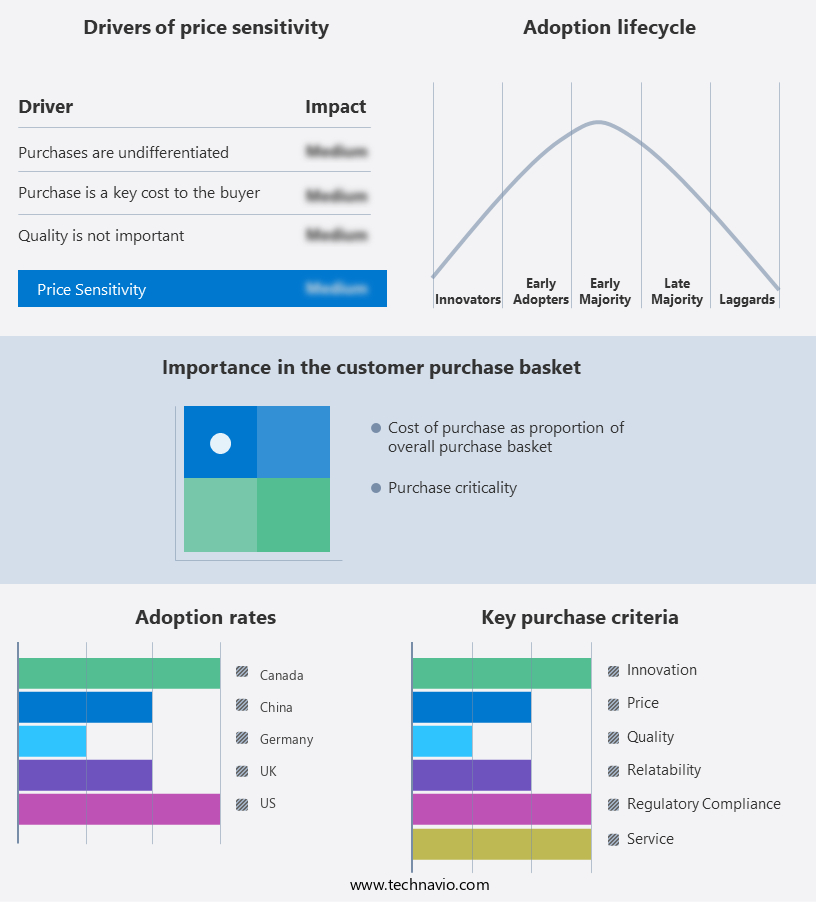
Customer Landscape
Key Companies & Market Insights
Companies are implementing various strategies, such as strategic alliances, multichannel order management market forecast, partnerships, mergers and acquisitions, geographical expansion, and product/service launches, to enhance their presence in the industry.
Algopix Holdings US Inc. - This company provides advanced order management solutions through Solid Commerce software.
The industry research and growth report includes detailed analyses of the competitive landscape of the market and information about key companies, including:
- Algopix Holdings US Inc.
- Browntape Technologies Pvt. Ltd.
- Cloud Commerce Group Ltd.
- Constellation Software Inc.
- Delhivery Ltd.
- GeekSeller LLC
- HCL Technologies Ltd.
- International Business Machines Corp.
- Linn Systems Ltd.
- ManageEcom
- nChannel
- Newfold Digital Inc.
- Oracle Corp.
- Sage Group Plc
- Salesforce Inc.
- SalesWarp
- SellerActive Inc.
- Selro Ltd.
- Vinculum Solutions Pvt. Ltd.
- Zoho Corp. Pvt. Ltd.
Qualitative and quantitative analysis of companies has been conducted to help clients understand the wider business environment as well as the strengths and weaknesses of key industry players. Data is qualitatively analyzed to categorize companies as pure play, category-focused, industry-focused, and diversified; it is quantitatively analyzed to categorize companies as dominant, leading, strong, tentative, and weak.
Recent Development and News in Multichannel Order Management Market
- In January 2024, BlueStar eCommerce, a leading multichannel order management solutions provider, announced the launch of its new AI-driven order management system, "Intellimanage." This advanced solution aims to streamline order processing and fulfillment across multiple sales channels for retailers and brands (BlueStar eCommerce Press Release).
- In March 2024, global technology company, Oracle, entered into a strategic partnership with RedStage, a multichannel order management specialist. This collaboration enabled Oracle to integrate RedStage's order management capabilities into its existing eBusiness Suite, enhancing its omnichannel offerings for businesses (Oracle Press Release).
- In May 2024, global software company, SAP, acquired BravoSolution, a leading provider of multichannel order management and source-to-pay solutions. This acquisition strengthened SAP's supply chain management portfolio, allowing it to cater to larger enterprises with complex order management requirements (SAP Press Release).
- In February 2025, Salesforce, a major CRM provider, received regulatory approval from the European Union for its acquisition of Commerce Cloud, a multichannel order management platform. This acquisition expanded Salesforce's Commerce Cloud offerings, enabling it to cater to European businesses looking for seamless multichannel order management solutions (Wall Street Journal).
Research Analyst Overview
The market is experiencing significant growth as businesses seek to streamline their operations and provide seamless customer experiences across various sales channels. This market encompasses solutions for drop shipping, international shipping, email marketing, capacity planning, cloud security, marketing automation, order consolidation, recurring billing, disaster recovery planning, risk management, loyalty programs, inventory optimization, shipping carrier selection, subscription management, data backup, supply chain visibility, label printing, freight management, affiliate marketing, rate shopping, performance tuning, third-party logistics (3PL), chargeback management, scalable architecture, database management, software development, disaster recovery, high availability, customs compliance, system architecture, demand planning, cross-border commerce, business continuity, payment gateway integration, fraud prevention, social media marketing, batch processing, and customer segmentation.
Drop shipping and international shipping solutions enable businesses to expand their reach and offer global fulfillment, while email marketing and marketing automation tools help engage customers and drive sales. Capacity planning and cloud security ensure businesses can handle increased order volumes and protect sensitive data. Order consolidation and subscription management simplify billing and reduce administrative tasks. Disaster recovery planning, risk management, and business continuity solutions safeguard against unexpected events, while inventory optimization and shipping carrier selection help minimize costs and improve delivery times. Data backup and database management ensure data integrity and availability, and supply chain visibility and label printing provide real-time insights into the order fulfillment process.
Freight management and third-party logistics enable efficient transportation and warehousing, while chargeback management and fraud prevention protect against financial losses. Scalable architecture and performance tuning ensure systems can handle growth, and software development and system architecture enable custom solutions. Payment gateway integration and customs compliance simplify international transactions, and social media marketing and customer segmentation help target marketing efforts effectively. Overall, the market offers a range of solutions to help businesses optimize their operations, improve customer experiences, and adapt to the evolving retail landscape. The integration of various channels, including social commerce and headless commerce, is another key trend in the market.
Dive into Technavio's robust research methodology, blending expert interviews, extensive data synthesis, and validated models for unparalleled Multichannel Order Management Market insights. See full methodology.
|
Market Scope |
|
|
Report Coverage |
Details |
|
Page number |
219 |
|
Base year |
2024 |
|
Historic period |
2019-2023 |
|
Forecast period |
2025-2029 |
|
Growth momentum & CAGR |
Accelerate at a CAGR of 12% |
|
Market growth 2025-2029 |
USD 2.4 billion |
|
Market structure |
Fragmented |
|
YoY growth 2024-2025(%) |
11.1 |
|
Key countries |
US, China, Canada, Germany, UK, France, Japan, Mexico, India, and South Korea |
|
Competitive landscape |
Leading Companies, Market Positioning of Companies, Competitive Strategies, and Industry Risks |
What are the Key Data Covered in this Multichannel Order Management Market Research and Growth Report?
- CAGR of the Multichannel Order Management industry during the forecast period
- Detailed information on factors that will drive the growth and forecasting between 2025 and 2029
- Precise estimation of the size of the market and its contribution of the industry in focus to the parent market
- Accurate predictions about upcoming growth and trends and changes in consumer behaviour
- Growth of the market across North America, Europe, APAC, South America, and Middle East and Africa
- Thorough analysis of the market's competitive landscape and detailed information about companies
- Comprehensive analysis of factors that will challenge the multichannel order management market growth of industry companies
We can help! Our analysts can customize this multichannel order management market research report to meet your requirements.
 RIA -
RIA - 
