
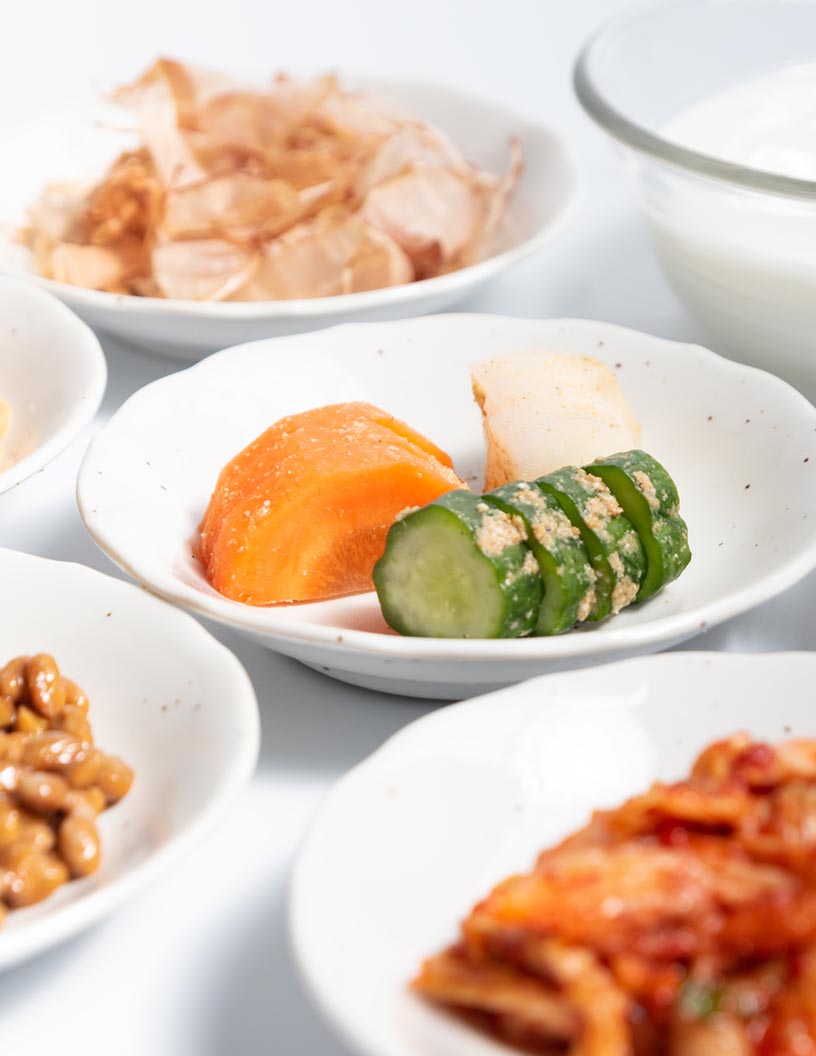

Naturally Fermented Food Market Analysis North America, Europe, APAC, South America, Middle East and Africa - US, UK, China, Brazil, Germany - Size and Forecast 2024-2028

Naturally Fermented Food Market Analysis North America, Europe, APAC, South America, Middle East and Africa - US, UK, China, Brazil, Germany - Size and Forecast 2024-2028

Published: Jul 2024 157 Pages SKU: IRTNTR73209

Market Overview at a Glance

$1.80 B
Market Opportunity
7.08%
CAGR
6.49
YoY growth 2023-2024(%)

Naturally Fermented Food Market Size 2024-2028 

The naturally fermented food market size is forecast to increase by USD 1.8 billion at a CAGR of 7.08% between 2023 and 2028.

  • The market is experiencing significant growth, driven by the increasing recognition of the health benefits associated with these foods. Fermentation naturally enhances the nutritional value and digestibility of various food items, making them a popular choice among health-conscious consumers. The market encompasses a variety of foods undergoing the microbial growth process, including cultured buttermilk, cheese, pickles, beverages, and bakery and cereals. Product launches and innovations in the sector are further fueling market expansion. However, the rise of artificial fermentation methods poses a challenge to the naturally fermented food industry. Producers must focus on maintaining transparency and authenticity to differentiate their offerings and cater to the growing demand for naturally produced foods. The market is expected to continue its upward trajectory, driven by these factors and the increasing consumer preference for healthier, more natural food options.

What will be the Size of the Naturally Fermented Food Market During the Forecast Period?
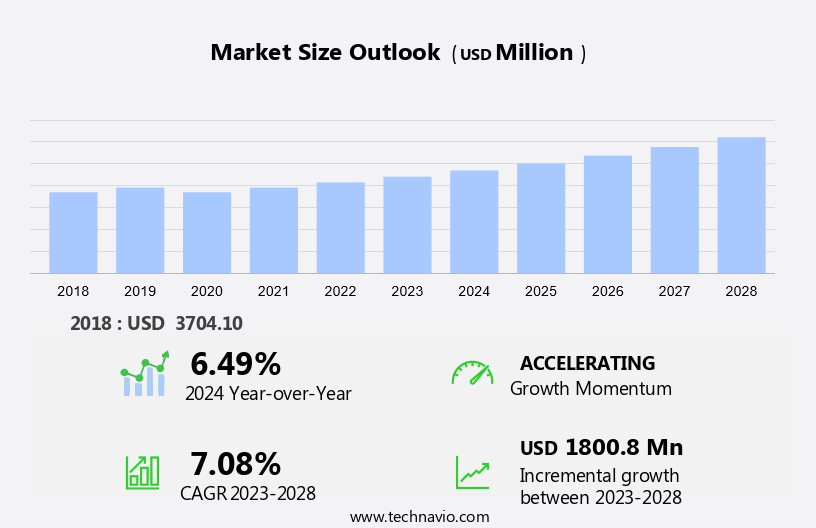
Naturally Fermented Food Market Size

 Request Free Sample

  • The market is witnessing significant growth due to the increasing awareness of the health benefits associated with these foods. The microbial development process of fermented foods involves the use of yeasts, bacteria, and molds to convert sugars, carbs, and acids into carbon dioxide, alcohol, and various natural compounds. These compounds offer numerous health benefits, including improving chronic diseases, boosting gut microbiome for better digestive health, enhancing overall well-being, and supporting immunity, mental health, metabolism, and inflammation management. Fermented foods undergo a natural microbial growth process, which not only preserves the food but also enhances its flavor and nutritional value.
  • Moreover, the presence of anti-inflammatory, antifungal, antioxidant, and anti-atherosclerotic qualities in these foods make them an attractive option for personalized nutrition. Additionally, fermented foods help in reducing food pollutants, making them a safer alternative to processed foods. The market for naturally fermented foods is expected to continue growing due to their health benefits and the increasing consumer preference for natural and healthy food options.

How is this Naturally Fermented Food Industry segmented and which is the largest segment?

The naturally fermented food industry research report provides comprehensive data (region-wise segment analysis), with forecasts and estimates in "USD billion" for the period 2024-2028, as well as historical data from 2018-2022 for the following segments.

  • Product
    • Dairy
    • Bakery
    • Others
  • Geography
    • North America
      • US
    • Europe
      • Germany
      • UK
    • APAC
      • China
    • South America
      • Brazil
    • Middle East and Africa

By Product Insights

  • The dairy segment is estimated to witness significant growth during the forecast period.

The market encompasses a variety of foods undergoing the microbial growth process, including cultured buttermilk, cheese, pickles, beverages, and bakery and cereals. These foods are available at specialty food stores, gourmet shops, artisanal food stores, and ethnic grocery stores. The fermentation process enhances the nutritional content of these foods, increasing their bioavailability and protein content, as well as providing essential nutrients like calcium and probiotics. Fermented foods offer numerous health benefits, such as improving digestion, boosting immunity, supporting mental health, and aiding in metabolism. They have been linked to reducing inflammation and chronic diseases, making them an essential component of personalized nutrition and dietary plans.
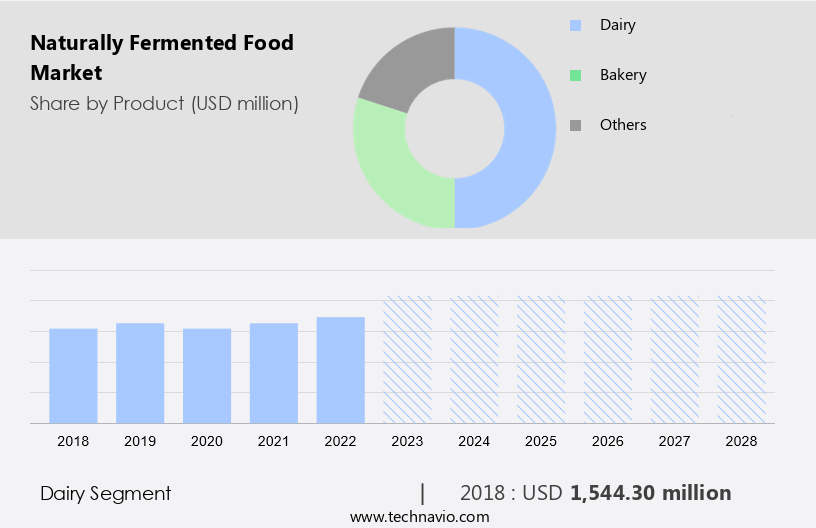
Naturally Fermented Food Market Size

Get a glance at the  Naturally Fermented Food Industry report of share of various segments Request Free Sample

The dairy segment was valued at USD 1.54 billion in 2018 and showed a gradual increase during the forecast period.

Regional Analysis

  • North America is estimated to contribute 40% to the growth of the global market during the forecast period.

Technavio's analysts have elaborately explained the regional trends and drivers that shape the market during the forecast period.
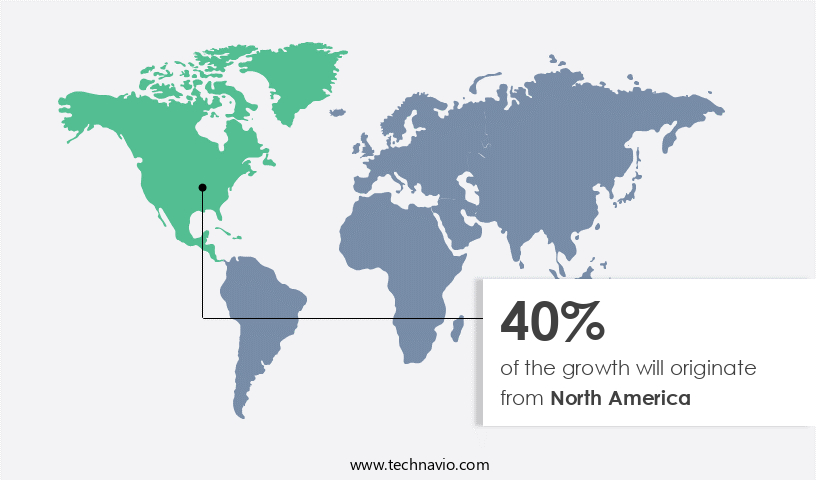
Naturally Fermented Food Market Share by Geography

For more insights on the market share of various regions, Request Free Sample

Fermented foods have gained significant attention in the health and wellness industry due to their potential benefits for gut health and immune system function. The microbial development process of fermented foods involves the growth of yeasts, bacteria, and molds, which convert sucrose and carbs into acids, carbon dioxide, and, in some cases, alcohol. These functional ingredients offer numerous health advantages, including the production of probiotics, which are live bacteria that promote gut health and have been linked to the prevention and management of chronic illnesses such as Type 2 diabetes, heart disease, and stroke. The fermented food market encompasses a wide range of products, including drinkable yogurts, zinc-rich tempeh, and vitamin C-rich fruits like strawberries, peaches, and raspberries.

Market Dynamics

Our naturally fermented food market researchers analyzed the data with 2023 as the base year, along with the key drivers, trends, and challenges. A holistic analysis of drivers will help companies refine their marketing strategies to gain a competitive advantage.

What are the key market drivers leading to the rise in adoption of Naturally Fermented Food Industry?

Health benefits of naturally fermented food is the key driver of the market.

  • Naturally fermented foods, such as cultured buttermilk, sauerkraut, and various types of cheeses, offer numerous health benefits. The microbial growth process during fermentation enhances the nutritional content of these foods, increasing their protein, calcium, and bioavailability. Consumption of these foods aids in digestion, metabolism, and inflammation reduction. Fermented foods are particularly beneficial for individuals with chronic diseases, allergies, or dietary restrictions, as they can provide essential nutrients while minimizing the risk of allergic reactions. Specialty food stores, gourmet shops, artisanal food stores, and ethnic grocery stores often carry a wide selection of naturally fermented foods. These foods offer personalized nutrition options for various dietary plans, including those that exclude processed foods.
  • Moreover, the probiotic content in fermented foods supports a healthy gut microbiome, which is crucial for overall well-being, mental health, and immunity. Prebiotics, natural compounds found in vegetables and other fermented foods, further enhance the beneficial effects of these foods by feeding the healthy bacteria in the gut. The long shelf life of naturally fermented foods, such as pickles and bakery and cereal products, makes them a convenient choice for those who prioritize healthy eating habits. The health consciousness movement has led to an increased demand for naturally fermented foods, which offer a range of health benefits beyond those of processed foods.

What are the market trends shaping the Naturally Fermented Food Industry?

Product launches and innovations is the upcoming trend in the market.

  • The market has experienced significant growth due to the increasing awareness of its health benefits. Consumers are recognizing the importance of personalized nutrition and dietary plans, particularly for managing chronic diseases and enhancing overall well-being, immunity, mental health, and metabolism. Fermented foods, such as cultured buttermilk, are produced in various settings, including specialty food stores, gourmet shops, artisanal food stores, and ethnic grocery stores. The microbial growth process during fermentation enhances the nutritional content of these foods, increasing their protein content, calcium, and bioavailability. Fermented dairy foods, including beverages and vegetables, undergo dairy fermentation, while cheese is produced through a more complex process.
  • Furthermore, the probiotic content of these foods supports digestive health by promoting the growth of beneficial bacteria in the gut. Prebiotics, natural compounds found in some fermented foods, further enhance the health benefits by feeding the gut microbiome. Bakery and cereal products, such as sourdough bread and pickles, also undergo fermentation, adding to their nutritional value and shelf life. As consumers become more health-conscious and prioritize natural foods over processed ones, the demand for naturally fermented foods continues to grow. The market potential for these products is high, attracting new companies to invest in their production. Despite the industrial-scale production, the use of defined strain starters ensures the preservation of the traditional fermentation process, maintaining the health benefits and natural taste of these foods.

What challenges does Naturally Fermented Food Industry face during the growth?

Increasing popularity of artificial fermentation methods is a key challenge affecting the industry growth.

  • The market encompasses a range of cultured dairy products, such as buttermilk, and various food types including beverages, vegetables, and bakery and cereals. These foods undergo a microbial growth process, which contributes to their unique nutritional properties. Consumption of naturally fermented foods is linked to numerous health benefits, including improved digestion, enhanced immunity, and better mental health. The gut microbiome plays a crucial role in metabolism, inflammation, and overall well-being, and naturally fermented foods are rich in prebiotics and probiotics that support this microbiome. Specialty food stores, gourmet shops, artisanal food stores, and ethnic grocery stores are popular destinations for consumers seeking naturally fermented foods.
  • Moreover, dairy fermentation, a key process in the production of naturally fermented foods, increases the bioavailability of proteins, calcium, and other essential nutrients. Cheese, pickles, and other fermented vegetables are popular choices, offering a wide range of nutritional content and shelf life. Health consciousness and the desire for personalized nutrition plans have led to an increasing interest in naturally fermented foods. While these foods offer numerous health benefits, it is essential to be aware of potential allergens and allergic reactions. Dairy food types, in particular, can be problematic for some individuals. As consumers prioritize healthy eating habits and natural foods, the demand for naturally fermented foods continues to grow.

Exclusive Customer Landscape

The naturally fermented food market forecasting report includes the adoption lifecycle of the market, covering from the innovator's stage to the laggard's stage. It focuses on adoption rates in different regions based on penetration. Furthermore, the market report also includes key purchase criteria and drivers of price sensitivity to help companies evaluate and develop their market growth analysis strategies.
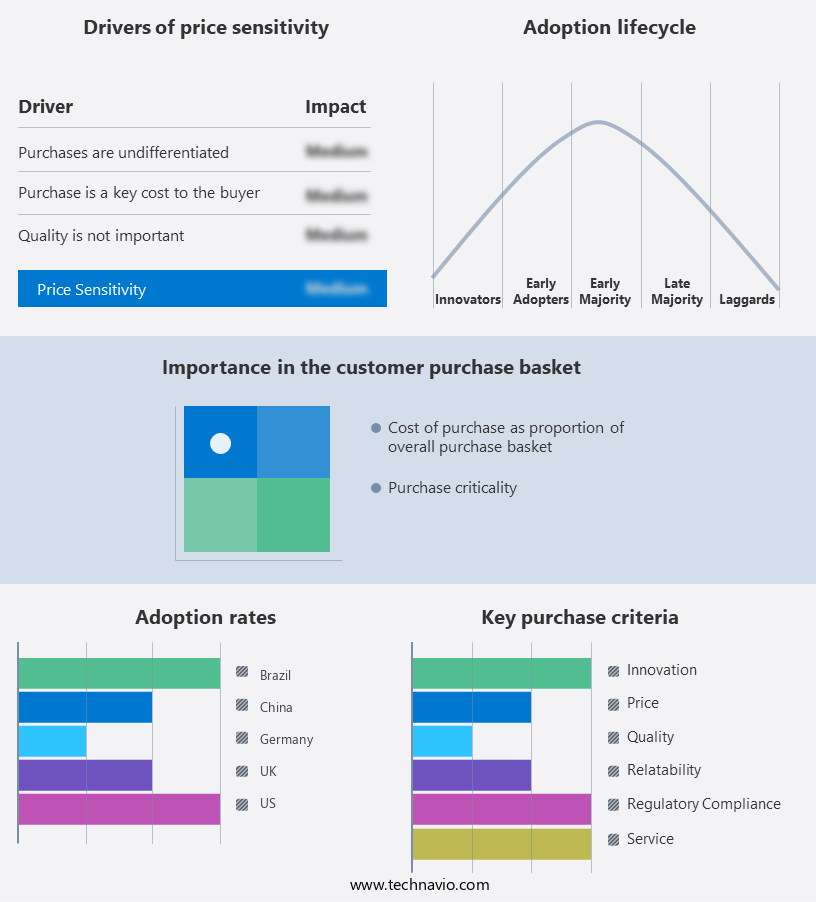
Naturally Fermented Food Market Share by Geography

 Customer Landscape

Key Companies & Market Insights

Companies are implementing various strategies, such as strategic alliances, market forecast, partnerships, mergers and acquisitions, geographical expansion, and product/service launches, to enhance their presence in the industry.

The naturally fermented food industry research and growth report includes detailed analyses of the competitive landscape of the market and information about key companies, including:

  • Barry Callebaut AG
  • BioGaia AB
  • Cargill Inc.
  • Chr Hansen Holding AS
  • Chromologics
  • Conagra Brands Inc.
  • Danone SA
  • ENOUGH
  • Ferm Biotics
  • General Mills Inc.
  • Health Ade LLC
  • International Flavors and Fragrances Inc.
  • Kingdom Supercultures
  • Koninklijke DSM NV
  • Lifeway Foods Inc.
  • Nestle SA
  • Perfect Day Inc.
  • Probitat
  • Tetra Pak Group
  • The Kraft Heinz Co.

Qualitative and quantitative analysis of companies has been conducted to help clients understand the wider business environment as well as the strengths and weaknesses of key industry players. Data is qualitatively analyzed to categorize companies as pure play, category-focused, industry-focused, and diversified; it is quantitatively analyzed to categorize companies as dominant, leading, strong, tentative, and weak.

Research Analyst Overview

Fermented foods have gained significant attention in the health and wellness industry due to their potential health benefits. The microbial development process of fermented foods involves the use of yeasts, bacteria, and molds to convert sugars, such as sucrose, into acids, carbon dioxide, and alcohol. These foods are rich in probiotics, which are live bacteria that support gut health and boost the immune system. The fermented food market is witnessing growth due to the increasing awareness of the role of these foods in preventing chronic illnesses like Type 2 diabetes, heart disease, and stroke. Probiotics found in fermented foods help maintain a healthy gut microbiome, which is essential for overall health.

Furthermore, several solid beverage forms of fermented foods, such as drinkable yogurt, are gaining popularity due to their convenience and portability. Fruits like strawberries, peaches, and raspberries, as well as dairy products like yogurt, kefir, and sourdough bread, undergo fermentation to create delicious and nutritious foods. Functional ingredients like vitamin C, zinc, and active probiotics are often added to fermented foods to enhance their nutritional value. Local diets and culinary traditions also play a crucial role in the production and consumption of fermented foods. Some popular fermented foods include kimchi, sauerkraut, kombucha, tempeh, miso, and various types of cheese.

Naturally Fermented Food Market Scope

Report Coverage

Details

Page number

157

Base year

2023

Historic period

2018-2022

Forecast period

2024-2028

Growth momentum & CAGR

Accelerate at a CAGR of 7.08%

Market growth 2024-2028

USD 1.8 billion

Market structure

Fragmented

YoY growth 2023-2024(%)

6.49

Key countries

US, UK, China, Brazil, and Germany

Competitive landscape

Leading Companies, Market Positioning of Companies, Competitive Strategies, and Industry Risks

Request Free Sample

What are the Key Data Covered in this Market Research and Growth Report?

  • CAGR of the Naturally Fermented Food industry during the forecast period
  • Detailed information on factors that will drive the market growth and forecasting between 2024 and 2028
  • Precise estimation of the size of the market  and its contribution of the industry in focus to the parent market
  • Accurate predictions about upcoming market growth and trends and changes in consumer behaviour
  • Growth of the market across North America, Europe, APAC, South America, and Middle East and Africa
  • Thorough analysis of the market's competitive landscape and detailed information about companies
  • Comprehensive analysis of factors that will challenge the growth of industry companies

We can help! Our analysts can customize this market research report to meet your requirements. Get in touch

1 Executive Summary

  • 1.1 Market overview
    • Executive Summary - Chart on Market Overview
    • Executive Summary - Data Table on Market Overview
    • Executive Summary - Chart on Global Market Characteristics
    • Executive Summary - Chart on Market by Geography
    • Executive Summary - Chart on Market Segmentation by Product
    • Executive Summary - Chart on Incremental Growth
    • Executive Summary - Data Table on Incremental Growth
    • Executive Summary - Chart on Company Market Positioning

2 Market Landscape

  • 2.1 Market ecosystem
    • Parent Market
    • Data Table on - Parent Market
  • 2.2 Market characteristics
    • Market characteristics analysis
  • 2.3 Value chain analysis
    • Value Chain Analysis

3 Market Sizing

  • 3.1 Market definition
    • Offerings of companies included in the market definition
  • 3.2 Market segment analysis
    • Market segments
  • 3.3 Market size 2023
    • 3.4 Market outlook: Forecast for 2023-2028
      • Chart on Global - Market size and forecast 2023-2028 ($ million)
      • Data Table on Global - Market size and forecast 2023-2028 ($ million)
      • Chart on Global Market: Year-over-year growth 2023-2028 (%)
      • Data Table on Global Market: Year-over-year growth 2023-2028 (%)

    4 Historic Market Size

    • 4.1 Global Naturally Fermented Food Market 2018 - 2022
      • Historic Market Size - Data Table on Global Naturally Fermented Food Market 2018 - 2022 ($ million)
    • 4.2 Product segment analysis 2018 - 2022
      • Historic Market Size - Product Segment 2018 - 2022 ($ million)
    • 4.3 Geography segment analysis 2018 - 2022
      • Historic Market Size - Geography Segment 2018 - 2022 ($ million)
    • 4.4 Country segment analysis 2018 - 2022
      • Historic Market Size - Country Segment 2018 - 2022 ($ million)

    5 Five Forces Analysis

    • 5.1 Five forces summary
      • Five forces analysis - Comparison between 2023 and 2028
    • 5.2 Bargaining power of buyers
      • Bargaining power of buyers - Impact of key factors 2023 and 2028
    • 5.3 Bargaining power of suppliers
      • Bargaining power of suppliers - Impact of key factors in 2023 and 2028
    • 5.4 Threat of new entrants
      • Threat of new entrants - Impact of key factors in 2023 and 2028
    • 5.5 Threat of substitutes
      • Threat of substitutes - Impact of key factors in 2023 and 2028
    • 5.6 Threat of rivalry
      • Threat of rivalry - Impact of key factors in 2023 and 2028
    • 5.7 Market condition
      • Chart on Market condition - Five forces 2023 and 2028

    6 Market Segmentation by Product

    • 6.1 Market segments
      • Chart on Product - Market share 2023-2028 (%)
      • Data Table on Product - Market share 2023-2028 (%)
    • 6.2 Comparison by Product
      • Chart on Comparison by Product
      • Data Table on Comparison by Product
    • 6.3 Dairy - Market size and forecast 2023-2028
      • Chart on Dairy - Market size and forecast 2023-2028 ($ million)
      • Data Table on Dairy - Market size and forecast 2023-2028 ($ million)
      • Chart on Dairy - Year-over-year growth 2023-2028 (%)
      • Data Table on Dairy - Year-over-year growth 2023-2028 (%)
    • 6.4 Bakery - Market size and forecast 2023-2028
      • Chart on Bakery - Market size and forecast 2023-2028 ($ million)
      • Data Table on Bakery - Market size and forecast 2023-2028 ($ million)
      • Chart on Bakery - Year-over-year growth 2023-2028 (%)
      • Data Table on Bakery - Year-over-year growth 2023-2028 (%)
    • 6.5 Others - Market size and forecast 2023-2028
      • Chart on Others - Market size and forecast 2023-2028 ($ million)
      • Data Table on Others - Market size and forecast 2023-2028 ($ million)
      • Chart on Others - Year-over-year growth 2023-2028 (%)
      • Data Table on Others - Year-over-year growth 2023-2028 (%)
    • 6.6 Market opportunity by Product
      • Market opportunity by Product ($ million)
      • Data Table on Market opportunity by Product ($ million)

    7 Customer Landscape

    • 7.1 Customer landscape overview
      • Analysis of price sensitivity, lifecycle, customer purchase basket, adoption rates, and purchase criteria

    8 Geographic Landscape

    • 8.1 Geographic segmentation
      • Chart on Market share by geography 2023-2028 (%)
      • Data Table on Market share by geography 2023-2028 (%)
    • 8.2 Geographic comparison
      • Chart on Geographic comparison
      • Data Table on Geographic comparison
    • 8.3 North America - Market size and forecast 2023-2028
      • Chart on North America - Market size and forecast 2023-2028 ($ million)
      • Data Table on North America - Market size and forecast 2023-2028 ($ million)
      • Chart on North America - Year-over-year growth 2023-2028 (%)
      • Data Table on North America - Year-over-year growth 2023-2028 (%)
    • 8.4 Europe - Market size and forecast 2023-2028
      • Chart on Europe - Market size and forecast 2023-2028 ($ million)
      • Data Table on Europe - Market size and forecast 2023-2028 ($ million)
      • Chart on Europe - Year-over-year growth 2023-2028 (%)
      • Data Table on Europe - Year-over-year growth 2023-2028 (%)
    • 8.5 APAC - Market size and forecast 2023-2028
      • Chart on APAC - Market size and forecast 2023-2028 ($ million)
      • Data Table on APAC - Market size and forecast 2023-2028 ($ million)
      • Chart on APAC - Year-over-year growth 2023-2028 (%)
      • Data Table on APAC - Year-over-year growth 2023-2028 (%)
    • 8.6 South America - Market size and forecast 2023-2028
      • Chart on South America - Market size and forecast 2023-2028 ($ million)
      • Data Table on South America - Market size and forecast 2023-2028 ($ million)
      • Chart on South America - Year-over-year growth 2023-2028 (%)
      • Data Table on South America - Year-over-year growth 2023-2028 (%)
    • 8.7 Middle East and Africa - Market size and forecast 2023-2028
      • Chart on Middle East and Africa - Market size and forecast 2023-2028 ($ million)
      • Data Table on Middle East and Africa - Market size and forecast 2023-2028 ($ million)
      • Chart on Middle East and Africa - Year-over-year growth 2023-2028 (%)
      • Data Table on Middle East and Africa - Year-over-year growth 2023-2028 (%)
    • 8.8 US - Market size and forecast 2023-2028
      • Chart on US - Market size and forecast 2023-2028 ($ million)
      • Data Table on US - Market size and forecast 2023-2028 ($ million)
      • Chart on US - Year-over-year growth 2023-2028 (%)
      • Data Table on US - Year-over-year growth 2023-2028 (%)
    • 8.9 UK - Market size and forecast 2023-2028
      • Chart on UK - Market size and forecast 2023-2028 ($ million)
      • Data Table on UK - Market size and forecast 2023-2028 ($ million)
      • Chart on UK - Year-over-year growth 2023-2028 (%)
      • Data Table on UK - Year-over-year growth 2023-2028 (%)
    • 8.10 China - Market size and forecast 2023-2028
      • Chart on China - Market size and forecast 2023-2028 ($ million)
      • Data Table on China - Market size and forecast 2023-2028 ($ million)
      • Chart on China - Year-over-year growth 2023-2028 (%)
      • Data Table on China - Year-over-year growth 2023-2028 (%)
    • 8.11 Brazil - Market size and forecast 2023-2028
      • Chart on Brazil - Market size and forecast 2023-2028 ($ million)
      • Data Table on Brazil - Market size and forecast 2023-2028 ($ million)
      • Chart on Brazil - Year-over-year growth 2023-2028 (%)
      • Data Table on Brazil - Year-over-year growth 2023-2028 (%)
    • 8.12 Germany - Market size and forecast 2023-2028
      • Chart on Germany - Market size and forecast 2023-2028 ($ million)
      • Data Table on Germany - Market size and forecast 2023-2028 ($ million)
      • Chart on Germany - Year-over-year growth 2023-2028 (%)
      • Data Table on Germany - Year-over-year growth 2023-2028 (%)
    • 8.13 Market opportunity by geography
      • Market opportunity by geography ($ million)
      • Data Tables on Market opportunity by geography ($ million)

    9 Drivers, Challenges, and Opportunity/Restraints

    • 9.1 Market drivers
      • 9.2 Market challenges
        • 9.3 Impact of drivers and challenges
          • Impact of drivers and challenges in 2023 and 2028
        • 9.4 Market opportunities/restraints

          10 Competitive Landscape

          • 10.1 Overview
            • 10.2 Competitive Landscape
              • Overview on criticality of inputs and factors of differentiation
            • 10.3 Landscape disruption
              • Overview on factors of disruption
            • 10.4 Industry risks
              • Impact of key risks on business

            11 Competitive Analysis

            • 11.1 Companies profiled
              • Companies covered
            • 11.2 Market positioning of companies
              • Matrix on companies position and classification
            • 11.3 Barry Callebaut AG
              • Barry Callebaut AG - Overview
              • Barry Callebaut AG - Business segments
              • Barry Callebaut AG - Key news
              • Barry Callebaut AG - Key offerings
              • Barry Callebaut AG - Segment focus
            • 11.4 BioGaia AB
              • BioGaia AB - Overview
              • BioGaia AB - Business segments
              • BioGaia AB - Key news
              • BioGaia AB - Key offerings
              • BioGaia AB - Segment focus
            • 11.5 Cargill Inc.
              • Cargill Inc. - Overview
              • Cargill Inc. - Product / Service
              • Cargill Inc. - Key news
              • Cargill Inc. - Key offerings
            • 11.6 Chr Hansen Holding AS
              • Chr Hansen Holding AS - Overview
              • Chr Hansen Holding AS - Business segments
              • Chr Hansen Holding AS - Key news
              • Chr Hansen Holding AS - Key offerings
              • Chr Hansen Holding AS - Segment focus
            • 11.7 Conagra Brands Inc.
              • Conagra Brands Inc. - Overview
              • Conagra Brands Inc. - Business segments
              • Conagra Brands Inc. - Key news
              • Conagra Brands Inc. - Key offerings
              • Conagra Brands Inc. - Segment focus
            • 11.8 Danone SA
              • Danone SA - Overview
              • Danone SA - Business segments
              • Danone SA - Key news
              • Danone SA - Key offerings
              • Danone SA - Segment focus
            • 11.9 General Mills Inc.
              • General Mills Inc. - Overview
              • General Mills Inc. - Business segments
              • General Mills Inc. - Key news
              • General Mills Inc. - Key offerings
              • General Mills Inc. - Segment focus
            • 11.10 Koninklijke DSM NV
              • Koninklijke DSM NV - Overview
              • Koninklijke DSM NV - Business segments
              • Koninklijke DSM NV - Key news
              • Koninklijke DSM NV - Key offerings
              • Koninklijke DSM NV - Segment focus
            • 11.11 Nestle SA
              • Nestle SA - Overview
              • Nestle SA - Business segments
              • Nestle SA - Key news
              • Nestle SA - Key offerings
              • Nestle SA - Segment focus
            • 11.12 The Kraft Heinz Co.
              • The Kraft Heinz Co. - Overview
              • The Kraft Heinz Co. - Business segments
              • The Kraft Heinz Co. - Key news
              • The Kraft Heinz Co. - Key offerings
              • The Kraft Heinz Co. - Segment focus

            12 Appendix

            • 12.1 Scope of the report
              • 12.2 Inclusions and exclusions checklist
                • Inclusions checklist
                • Exclusions checklist
              • 12.3 Currency conversion rates for US$
                • Currency conversion rates for US$
              • 12.4 Research methodology
                • Research methodology
              • 12.5 Data procurement
                • Information sources
              • 12.6 Data validation
                • Data validation
              • 12.7 Validation techniques employed for market sizing
                • Validation techniques employed for market sizing
              • 12.8 Data synthesis
                • Data synthesis
              • 360 degree market analysis
                • 360 degree market analysis
              • 12.10 List of abbreviations
                • List of abbreviations

              Research Methodology

              Technavio presents a detailed picture of the market by way of study, synthesis, and summation of data from multiple sources. The analysts have presented the various facets of the market with a particular focus on identifying the key industry influencers. The data thus presented is comprehensive, reliable, and the result of extensive research, both primary and secondary.

              INFORMATION SOURCES

              Primary sources

              • Manufacturers and suppliers
              • Channel partners
              • Industry experts
              • Strategic decision makers

              Secondary sources

              • Industry journals and periodicals
              • Government data
              • Financial reports of key industry players
              • Historical data
              • Press releases

              DATA ANALYSIS

              Data Synthesis

              • Collation of data
              • Estimation of key figures
              • Analysis of derived insights

              Data Validation

              • Triangulation with data models
              • Reference against proprietary databases
              • Corroboration with industry experts

              REPORT WRITING

              Qualitative

              • Market drivers
              • Market challenges
              • Market trends
              • Five forces analysis

              Quantitative

              • Market size and forecast
              • Market segmentation
              • Geographical insights
              • Competitive landscape

              Interested in this report?

              Get your sample now to see our research methodology and insights!

              Download Now

              Frequently Asked Questions

              Naturally Fermented Food market growth will increase by $ 1800.8 mn during 2024-2028.

              The Naturally Fermented Food market is expected to grow at a CAGR of 7.08% during 2024-2028.

              Naturally Fermented Food market is segmented by Product( Dairy, Bakery, Others)

              Barry Callebaut AG, BioGaia AB, Cargill Inc., Chr Hansen Holding AS, Chromologics, Conagra Brands Inc., Danone SA, ENOUGH, Ferm Biotics, General Mills Inc., Health Ade LLC, International Flavors and Fragrances Inc., Kingdom Supercultures, Koninklijke DSM NV, Lifeway Foods Inc., Nestle SA, Perfect Day Inc., Probitat, Tetra Pak Group, The Kraft Heinz Co. are a few of the key vendors in the Naturally Fermented Food market.

              North America will register the highest growth rate of 40% among the other regions. Therefore, the Naturally Fermented Food market in North America is expected to garner significant business opportunities for the vendors during the forecast period.

              US, UK, China, Brazil, Germany

              • Health benefits of naturally fermented foodNaturally fermented food is rich in probiotics is the driving factor this market.
              • nonpathogenic organisms that aid in digestion. Fermentation also helps in preserving food for a longer duration. Sauerkraut is the driving factor this market.
              • a naturally fermented food is the driving factor this market.
              • has a high vitamin C content is the driving factor this market.
              • which aids in digestion. Eating fermented food increases the healthy bacteria that help to balance the flora in the digestive system. Microflora is one such bacteria that exists in fermented food and helps in the digestion of fibers. The consumption of naturally fermented food helps to improve gut health is the driving factor this market.
              • which is the driving factor this market.
              • in turn is the driving factor this market.
              • strengthens the immune system. Healthy bacteria in the gut support immune system function by inhibiting the onset of autoimmune reactions and controlling specific cells of the immune system. The gut bacterium also affects hormones that regulate human metabolism. These hormones increase appetite is the driving factor this market.
              • leading to overeating and subsequent weight gain. Fermented food helps in balancing the gut bacteria and limiting one appetite is the driving factor this market.
              • which helps improve metabolism. Hence is the driving factor this market.
              • the inherent health benefits of naturally fermented food drive the growth of the market. is the driving factor this market.

              The Naturally Fermented Food market vendors should focus on grabbing business opportunities from the Dairy segment as it accounted for the largest market share in the base year.
              RIA - Research AI Assistant
              Ask RIA
