


Non-Ferrous Industrial Hand Tools Market Size 2024-2028
The non-ferrous industrial hand tools market size is forecast to increase by USD 202.64 th, at a CAGR of 4.7% between 2023 and 2028.
- The market is driven by the expansion of the manufacturing and automotive sectors, which necessitates the use of specialized hand tools made from non-ferrous metals. The popularity of DIY activities also contributes to market growth, as consumers increasingly seek high-quality, durable hand tools for home improvement projects. However, the market faces challenges due to the high cost of materials associated with non-ferrous metals, which can impact the affordability of hand tools for both industrial and consumer applications. Companies in this market must navigate these challenges by exploring cost-effective production methods and alternative materials, while maintaining the quality and durability that non-ferrous metals provide.
- Effective supply chain management and strategic partnerships with raw material suppliers can also help mitigate the impact of material costs on overall production costs. To capitalize on market opportunities, companies should focus on innovation, product differentiation, and customer service, ensuring they meet the evolving needs of both industrial and DIY customers.
What will be the Size of the Non-Ferrous Industrial Hand Tools Market during the forecast period?
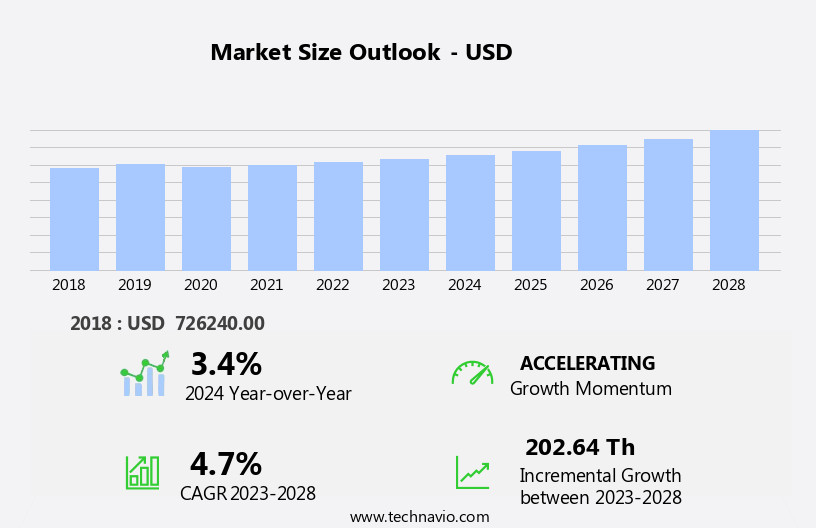
Explore in-depth regional segment analysis with market size data - historical 2018-2022 and forecasts 2024-2028 - in the full report.
Request Free Sample
The market continues to evolve, driven by the diverse requirements of various sectors. Non-ferrous metals, such as aluminum and copper, are increasingly utilized due to their lightweight properties and excellent conductivity. Heat treatment and abrasion resistance are crucial considerations in tool design, ensuring durability and longevity. Tool belts and storage solutions cater to the ergonomic needs of professionals, enhancing productivity and efficiency. Corrosion resistance is another essential factor, particularly in harsh environments. Hand drills and drilling tools, made from tool steel or stainless steel, are integral components of this market. Grinding tools, high-speed steel, turning tools, and tool carts are essential for surface finishing and material selection.
Milling tools, cutting tools, and tool bits are indispensable for precision machining. Safety equipment, including ear protection and eye protection, is a priority for ensuring worker safety. Quality control and design optimization are ongoing concerns, with measuring tools and torque wrenches essential for ensuring accuracy and precision. Tapping tools and reaming tools are crucial for threading and finishing tasks. The market's continuous dynamism is reflected in the evolving patterns of tool applications and the ongoing development of innovative solutions.
How is this Non-Ferrous Industrial Hand Tools Industry segmented?
The non-ferrous industrial hand tools industry research report provides comprehensive data (region-wise segment analysis), with forecasts and estimates in "USD thousand" for the period 2024-2028, as well as historical data from 2018-2022 for the following segments.
- Application
- Construction
- Automotive
- Aerospace
- Electronics
- Distribution Channel
- Offline
- Online
- Geography
- North America
- US
- Canada
- Europe
- France
- Germany
- Italy
- UK
- APAC
- China
- India
- Japan
- South Korea
- Rest of World (ROW)
- North America
.
By Application Insights
The construction segment is estimated to witness significant growth during the forecast period.
The market is experiencing notable expansion, predominantly within the construction sector. These tools offer superior performance and are lighter in weight, making them highly desirable for the challenging conditions prevalent in construction. The construction industry's growth, driven by urbanization and infrastructure development, is a significant factor fueling the demand for non-ferrous industrial hand tools. As cities expand and new projects emerge, there is a pressing need for tools that are efficient, durable, and safe. Non-ferrous metals, such as aluminum and copper, are widely used in the manufacturing of these tools due to their corrosion resistance and heat treatment capabilities.
Abrasion resistance is another essential attribute, ensuring the longevity of tools used in heavy-duty applications. Tool belts, drilling tools, hand drills, turning tools, grinding tools, cutting tools, tool bits, finishing tools, reaming tools, and torque wrenches are some of the essential hand tools employed in construction. Safety equipment, including ear and eye protection, is also a critical consideration in the industry. Material selection, design optimization, quality control, and measuring tools are integral to maintaining tool life and ensuring precision in manufacturing processes. The market is expected to continue its growth trajectory, driven by the construction sector's ongoing expansion and the need for advanced, reliable tools to meet the demands of the industry.
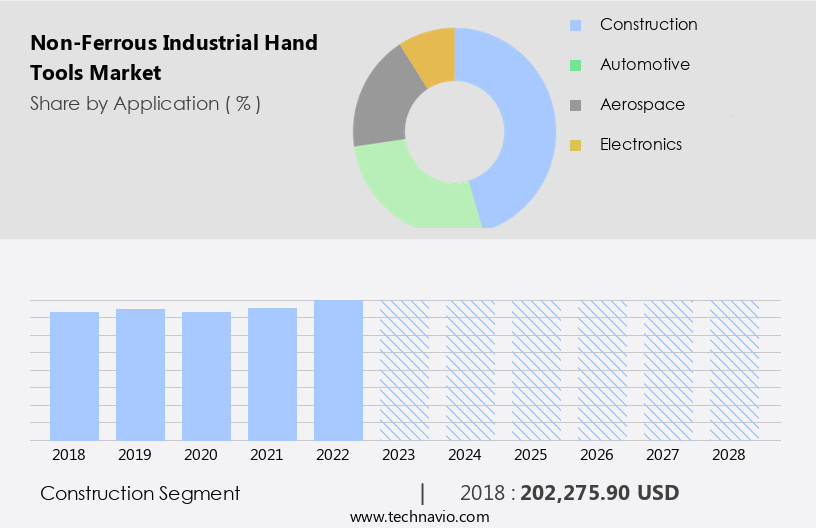
The Construction segment was valued at USD 202,275.90 th in 2018 and showed a gradual increase during the forecast period.
Regional Analysis
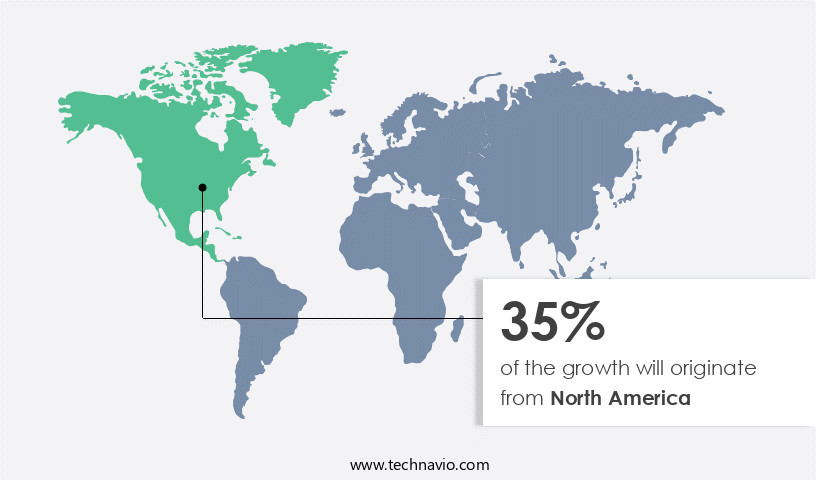
North America is estimated to contribute 35% to the growth of the global market during the forecast period. Technavio's analysts have elaborately explained the regional trends and drivers that shape the market during the forecast period.
The North American market for non-ferrous industrial hand tools is experiencing notable growth, fueled by substantial investments in manufacturing and infrastructure projects. The region's emphasis on advanced manufacturing and the rising adoption of electric vehicles (EVs) is driving a substantial demand for specialized tools crafted from non-ferrous materials. The automotive sector is a significant contributor to the demand for these tools in North America. In December 2022, General Motors (GM) inaugurated its first full-scale EV manufacturing plant in Canada at the CAMI plant in Ingersoll, Ontario. This facility, retooled to produce all-electric delivery vans of BrightDrop, underscores the increasing need for non-ferrous tools capable of handling the unique requirements of EV production.
Non-ferrous metals, such as aluminum and copper, are increasingly used in manufacturing processes due to their superior properties, including heat treatment, corrosion resistance, and abrasion resistance. Tool steel, stainless steel, high-speed steel, and other non-ferrous alloys are essential components of various hand tools, including drilling tools, grinding tools, turning tools, and milling tools. Tool belts, tool carts, and tool storage systems ensure efficient organization and easy access to these tools. Material selection plays a crucial role in tool design optimization, as tool life and performance depend on the specific application. Quality control measures, such as surface finishing and measuring tools, are essential to maintaining the precision and accuracy of these tools.
Safety equipment, including ear and eye protection, is a critical consideration in the manufacturing process to protect workers from potential hazards. In the evolving landscape of industrial hand tools, reaming tools and tapping tools are gaining popularity due to their ability to improve tool life and increase productivity. Torque wrenches and hand tools are indispensable for ensuring precise torque application and maintaining equipment integrity. In conclusion, the North American market for non-ferrous industrial hand tools is witnessing significant growth, driven by the automotive sector's increasing focus on EV production and the unique demands of advanced manufacturing processes.
The adoption of non-ferrous materials, such as aluminum and copper, and the continuous innovation in tool design and manufacturing processes are shaping the future of this market.
Market Dynamics
Our researchers analyzed the data with 2023 as the base year, along with the key drivers, trends, and challenges. A holistic analysis of drivers will help companies refine their marketing strategies to gain a competitive advantage.
What are the key market drivers leading to the rise in the adoption of Non-Ferrous Industrial Hand Tools Industry?
- The expansion of the manufacturing and automotive sectors serves as the primary catalyst for market growth.
- The market is experiencing significant growth due to the expanding manufacturing and automotive sectors. The automotive industry's shift towards electric and hybrid vehicles has led to an increased demand for lighter components, which are commonly made from non-ferrous materials. This trend is driving the need for specialized non-ferrous industrial hand tools for assembly, maintenance, and repair processes, ultimately enhancing operational efficiency. In the manufacturing sector, there is a growing focus on precision engineering and customization. Non-ferrous industrial hand tools are essential for tasks such as welding, soldering, and machining, allowing manufacturers to produce intricate components that meet stringent quality standards.
- The use of these tools contributes to the production of high-performance and fuel-efficient parts. Moreover, safety remains a top priority in industrial settings, leading to the increased adoption of safety equipment, including non-ferrous industrial hand tools. These tools offer improved ergonomics and reduced risk of injury compared to traditional ferrous tools. Additionally, the availability of advanced reaming and tapping tools ensures precise and accurate threading, contributing to the overall productivity and efficiency of manufacturing processes. In conclusion, the market is poised for growth due to the expanding manufacturing and automotive sectors, the shift towards lighter and more efficient components, and the emphasis on precision engineering and safety.
- These factors are expected to continue fueling the demand for non-ferrous industrial hand tools in the coming years.
What are the market trends shaping the Non-Ferrous Industrial Hand Tools Industry?
- DIY activities are gaining increasing popularity, making them a noteworthy market trend. This trend reflects a growing interest in hands-on projects and self-sufficiency.
- The market is experiencing growth due to the increasing preference for DIY activities. Non-ferrous materials, including aluminum, copper, and brass, are popular choices for these projects due to their lightweight properties, corrosion resistance, and appealing aesthetics. DIY enthusiasts and professionals alike are utilizing these materials for renovations, repairs, and custom projects. This trend is driven by the abundance of online resources, such as instructional videos and community forums, which provide practical knowledge and skills. The demand for specialized non-ferrous hand tools is on the rise to cater to this market. These tools are essential for working with non-ferrous metals effectively and safely.
- Eye protection and tool belts are crucial accessories for using these tools, ensuring user safety and comfort. Heat treatment and abrasion resistance are important considerations when selecting non-ferrous hand tools, as they enhance tool durability and efficiency. Hand drills and drilling tools are among the most commonly used non-ferrous hand tools due to their versatility and wide application range. In conclusion, the market is experiencing growth due to the popularity of DIY activities and the increasing use of non-ferrous materials in various projects. The demand for specialized hand tools, eye protection, tool belts, and other accessories is on the rise to cater to this market.
- The trend is supported by the availability of online resources, which empower DIY enthusiasts with practical knowledge and skills.
What challenges does the Non-Ferrous Industrial Hand Tools Industry face during its growth?
- The escalating costs of non-ferrous metals, which are a significant component in manufacturing processes, pose a major challenge to the industry's growth trajectory.
- Non-ferrous industrial hand tools, which are primarily made of aluminum, copper, nickel, stainless steel, high-speed steel, turning tools, tool storage solutions, grinding tools, surface finishing tools, and zinc, face significant challenges due to the high cost of non-ferrous metals. The escalating prices of these metals are influenced by various factors, including supply chain constraints, market demand fluctuations, geopolitical tensions, and the increasing costs of mining and extraction. The cost of non-ferrous metals is substantial, with copper priced between USD 6,000 and USD 8,000 per ton, aluminum between USD 1,500 and USD 2,500 per ton, zinc between USD 2,000 and USD 3,500 per ton, tin between USD 15,000 and USD 20,000 per ton, lead between USD 2,000 and USD 3,500 per ton, nickel between USD 10,000 and USD 15,000 per ton, and titanium between USD 20,000 and USD 30,000 per ton.
- These high costs are driven by the inherent properties of non-ferrous metals, making them highly desirable for advanced applications across various industries, including automotive, aerospace, electronics, and construction. Despite the challenges, the demand for non-ferrous industrial hand tools remains strong due to their superior performance and durability.
Exclusive Customer Landscape
The non-ferrous industrial hand tools market forecasting report includes the adoption lifecycle of the market, covering from the innovator's stage to the laggard's stage. It focuses on adoption rates in different regions based on penetration. Furthermore, the non-ferrous industrial hand tools market report also includes key purchase criteria and drivers of price sensitivity to help companies evaluate and develop their market growth analysis strategies.
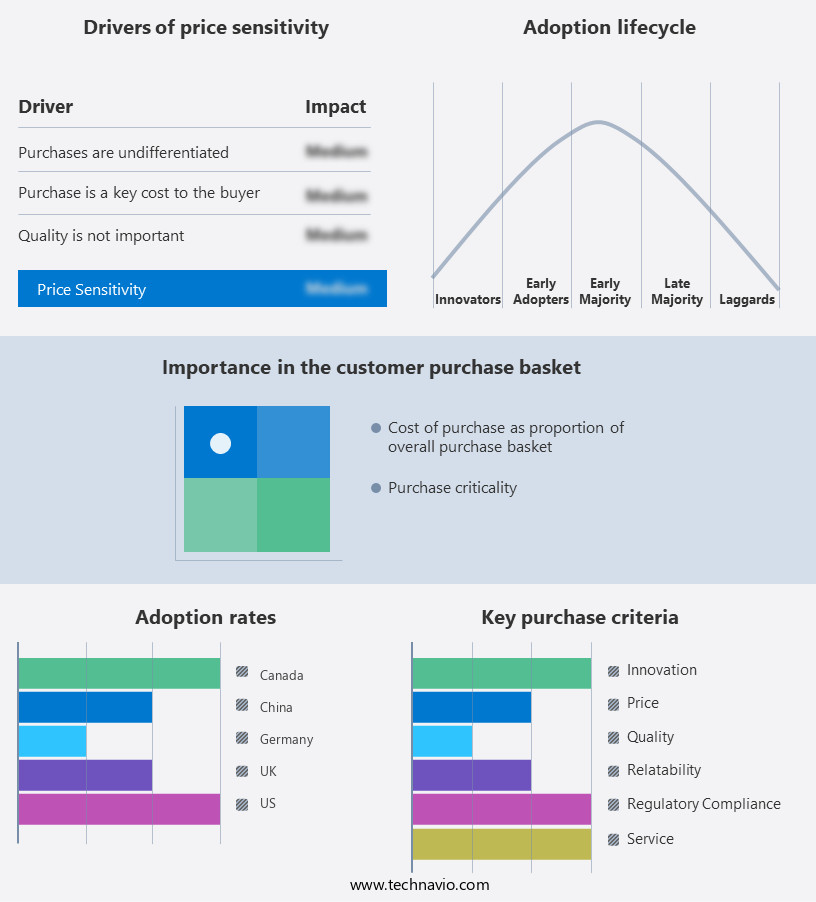
Customer Landscape
Key Companies & Market Insights
Companies are implementing various strategies, such as strategic alliances, non-ferrous industrial hand tools market forecast, partnerships, mergers and acquisitions, geographical expansion, and product/service launches, to enhance their presence in the industry.
Apex Tool Group LLC - The company showcases a diverse range of non-ferrous industrial hand tools under esteemed brands including SATA, Campbell, GEARWRENCH, Crescent, and Jacobs.
The industry research and growth report includes detailed analyses of the competitive landscape of the market and information about key companies, including:
- Apex Tool Group LLC
- Bahco
- BHT Tool GmbH
- Channellock Inc.
- Emerson Electric Co.
- Felo Werkzeugfabrik GmbH
- GEDORE Werkzeugfabrik GmbH and Co. KG
- Ingersoll Rand Inc.
- JPW Industries Inc.
- Klein Tools Inc.
- KNIPEX Werk C. Gustav Putsch KG
- Makita Power Tools India Pvt. Ltd.
- Milwaukee Electric Tool
- PB Swiss Tools AG
- Robert Bosch GmbH
- Snap On Inc.
- Stanley Black and Decker Inc.
- Techtronic Industries Co. Ltd.
- Wiha Group GmbH
- Wright Tool Co.
Qualitative and quantitative analysis of companies has been conducted to help clients understand the wider business environment as well as the strengths and weaknesses of key industry players. Data is qualitatively analyzed to categorize companies as pure play, category-focused, industry-focused, and diversified; it is quantitatively analyzed to categorize companies as dominant, leading, strong, tentative, and weak.
Recent Development and News in Non-Ferrous Industrial Hand Tools Market
- In March 2024, Snap-on Incorporated, a leading global innovator and manufacturer of tools, equipment, and diagnostic solutions, introduced a new line of non-ferrous industrial hand tools. The new product line, named Snap-on ProNonFerrous, is designed to cater to the growing demand for non-ferrous materials in various industries, including aerospace, automotive, and construction (Snap-on Inc. Press Release, 2024).
- In July 2024, Stanley Black & Decker, a Fortune 500 industrial organization, announced a strategic partnership with Hangzhou Alton Advanced Manufacturing Co. Ltd. This collaboration aimed to expand Stanley Black & Decker's non-ferrous hand tool offerings by leveraging Alton's advanced manufacturing capabilities and expertise in non-ferrous materials (Stanley Black & Decker Press Release, 2024).
Research Analyst Overview
- The market encompasses a diverse range of tools used in various industries for cutting, shaping, and maintaining non-ferrous materials. Market trends reflect an increasing focus on tool maintenance and safety standards, with tool certification and total quality management gaining prominence. Tool sharpening techniques, such as laser cutting and additive manufacturing, are revolutionizing the industry, while waterjet cutting and CNC machining continue to dominate. Tool handling and inventory control are crucial aspects of supply chain management, with just-in-time delivery and lean manufacturing strategies driving efficiency. Tool management software and industrial automation are essential tools for optimizing production and reducing tool wear.
- Safety standards, including hard chrome plating and shot peening, ensure the longevity and effectiveness of non-ferrous industrial hand tools. The adoption of advanced technologies like 3D printing, powder metallurgy, and six sigma methodologies further enhances tool performance and standardization within distribution networks. Tool calibration and tool safety standards are essential components of a comprehensive tool management strategy, ensuring consistent quality and reliability in manufacturing processes. The integration of these trends and technologies is transforming the market, offering significant opportunities for growth and innovation.
Dive into Technavio's robust research methodology, blending expert interviews, extensive data synthesis, and validated models for unparalleled Non-Ferrous Industrial Hand Tools Market insights. See full methodology.
|
Market Scope |
|
|
Report Coverage |
Details |
|
Page number |
205 |
|
Base year |
2023 |
|
Historic period |
2018-2022 |
|
Forecast period |
2024-2028 |
|
Growth momentum & CAGR |
Accelerate at a CAGR of 4.7% |
|
Market growth 2024-2028 |
USD 202.64 thousand |
|
Market structure |
Fragmented |
|
YoY growth 2023-2024(%) |
3.4 |
|
Key countries |
US, China, Canada, UK, Germany, Japan, South Korea, India, France, and Italy |
|
Competitive landscape |
Leading Companies, Market Positioning of Companies, Competitive Strategies, and Industry Risks |
What are the Key Data Covered in this Non-Ferrous Industrial Hand Tools Market Research and Growth Report?
- CAGR of the Non-Ferrous Industrial Hand Tools industry during the forecast period
- Detailed information on factors that will drive the growth and forecasting between 2024 and 2028
- Precise estimation of the size of the market and its contribution of the industry in focus to the parent market
- Accurate predictions about upcoming growth and trends and changes in consumer behaviour
- Growth of the market across North America, Europe, APAC, South America, and Middle East and Africa
- Thorough analysis of the market's competitive landscape and detailed information about companies
- Comprehensive analysis of factors that will challenge the non-ferrous industrial hand tools market growth of industry companies
We can help! Our analysts can customize this non-ferrous industrial hand tools market research report to meet your requirements.
 RIA -
RIA - 
