


NOR Flash Market Size 2026-2030
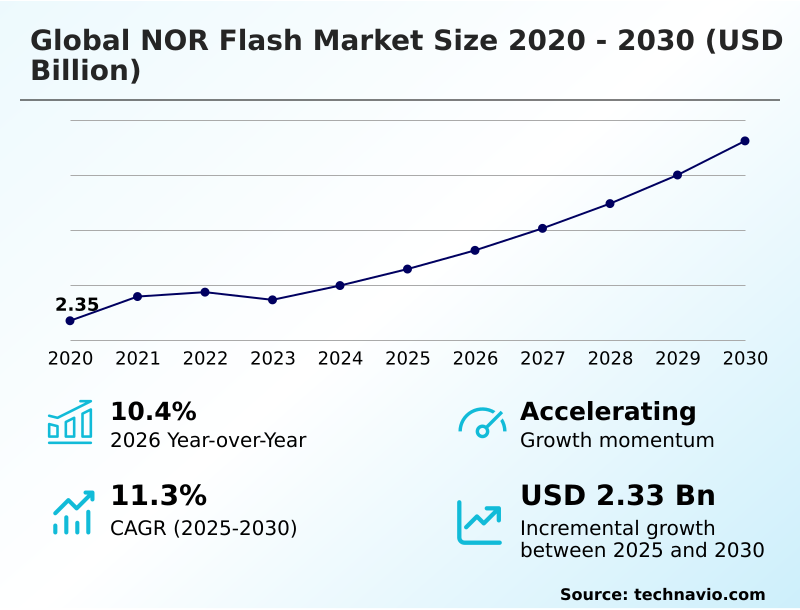
The nor flash market size is valued to increase by USD 2.33 billion, at a CAGR of 11.3% from 2025 to 2030. Increasing demand for high-performance electronics will drive the nor flash market.
Major Market Trends & Insights
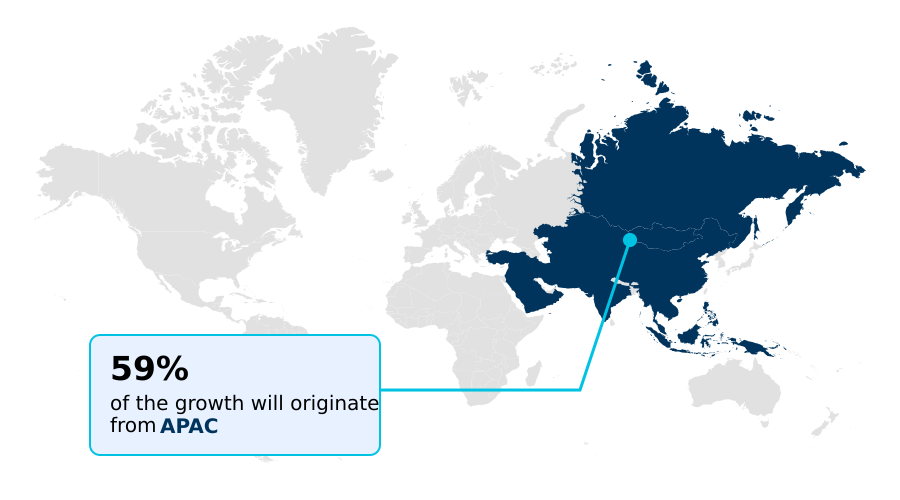
- APAC dominated the market and accounted for a 58.8% growth during the forecast period.
- By Type - Serial NOR flash segment was valued at USD 1.70 billion in 2024
- By End-user - Consumer electronics segment accounted for the largest market revenue share in 2024
Market Size & Forecast
- Market Opportunities: USD 3.27 billion
- Market Future Opportunities: USD 2.33 billion
- CAGR from 2025 to 2030 : 11.3%
Market Summary
- The NOR flash market is characterized by its critical role in ensuring system reliability and performance across a multitude of electronic applications. Its inherent attributes of fast read access and non-volatile data retention make it the preferred choice for boot code storage and execute-in-place (XIP) functionality in embedded systems.
- Growth is significantly driven by the increasing electronic content in vehicles, where NOR flash is essential for advanced driver-assistance systems (ADAS) and in-vehicle infotainment (IVI) platforms that demand instant-on capability. Another key driver is the expansion of the IoT ecosystem, where countless connected devices rely on low-power, high-reliability memory for firmware storage and over-the-air (OTA) updates.
- For instance, an automotive OEM’s product strategy for software-defined vehicles depends on a robust memory subsystem for secure firmware management, where high-density NOR flash enables reliable OTA updates, ensuring system integrity and reducing long-term maintenance costs.
- However, the market faces challenges from the high capital investment required for semiconductor fabrication and the competitive pressure from emerging memory technologies like MRAM and ReRAM, which threaten to disrupt established use cases by offering alternative performance characteristics.
What will be the Size of the NOR Flash Market during the forecast period?
Get Key Insights on Market Forecast (PDF) Get Free Sample
How is the NOR Flash Market Segmented?
The nor flash industry research report provides comprehensive data (region-wise segment analysis), with forecasts and estimates in "USD million" for the period 2026-2030, as well as historical data from 2020-2024 for the following segments.
- Type
- Serial NOR flash
- Parallel NOR flash
- End-user
- Consumer electronics
- Communication
- Automotive
- Industrial
- Others
- Product type
- Quad SPI
- SPI single or dual
- Octal and xSPI
- Geography
- APAC
- China
- South Korea
- Japan
- North America
- US
- Canada
- Mexico
- Europe
- Germany
- UK
- France
- South America
- Brazil
- Argentina
- Colombia
- Middle East and Africa
- UAE
- Saudi Arabia
- South Africa
- Rest of World (ROW)
- APAC
By Type Insights
The serial nor flash segment is estimated to witness significant growth during the forecast period.
The market is segmented by type, where serial NOR flash is pivotal due to its low pin count and simplified architecture, making it ideal for a wide range of NOR flash applications.
This non-volatile storage contrasts with parallel NOR flash, which is reserved for systems requiring the fastest possible direct memory mapping. In high-volume consumer electronics memory, where NOR flash versus NAND flash decisions are critical, the serial interface dominates.
NOR flash pricing trends are heavily influenced by demand for code storage solutions in devices like NOR flash for smart meters.
Innovations in single-level cell designs and techniques like code shadowing are crucial for balancing performance and cost, with some architectures reducing board space by 25%.
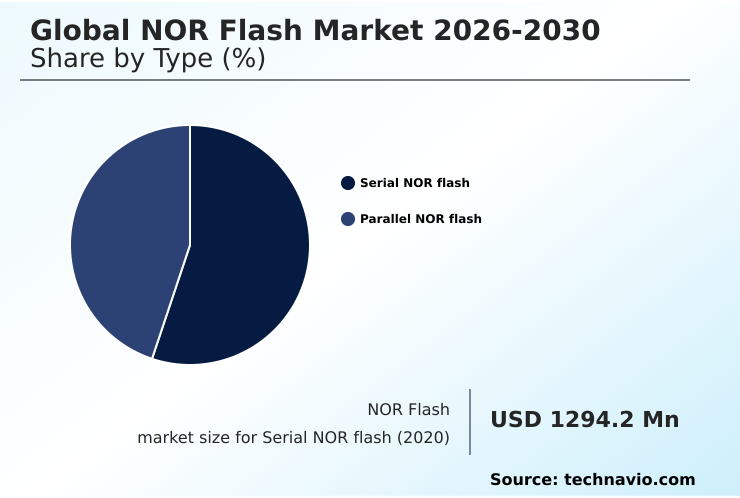
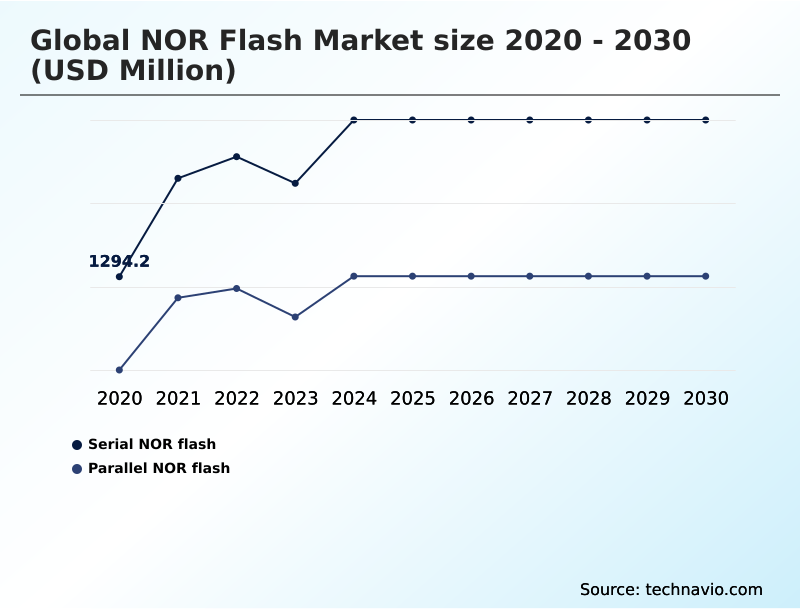
The Serial NOR flash segment was valued at USD 1.70 billion in 2024 and showed a gradual increase during the forecast period.
Regional Analysis
APAC is estimated to contribute 58.8% to the growth of the global market during the forecast period.Technavio’s analysts have elaborately explained the regional trends and drivers that shape the market during the forecast period.
See How NOR Flash Market Demand is Rising in APAC Get Free Sample
The geographic landscape is dominated by the APAC region, which functions as both a primary manufacturing hub and a massive consumer, accounting for over 58% of incremental growth.
This is driven by the region’s expansive industrial automation memory sector and strategic government initiatives promoting semiconductor self-sufficiency.
Demand for automotive-grade NOR flash is particularly strong for NOR flash in ADAS applications, where fast read access for firmware storage is critical for ensuring firmware integrity.
The widespread use of the quad SPI interface in memory for embedded microcontrollers further solidifies this demand. North America and Europe are key markets for automotive memory solutions and specialized products like radiation-hardened NOR flash, focusing on high-value sectors.
The need for efficient system-on-chip integration makes this non-volatile storage essential in advanced driver-assistance systems and NOR flash for IoT devices.
Market Dynamics
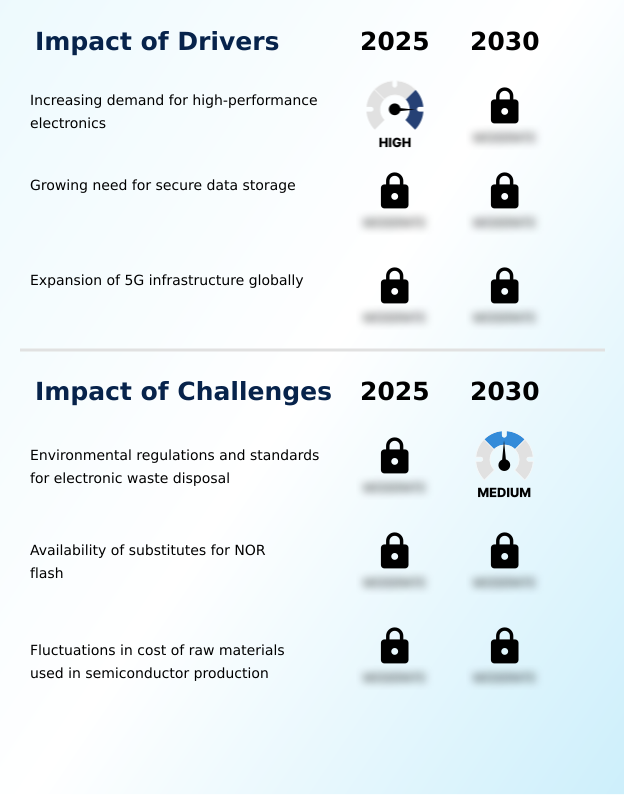
Our researchers analyzed the data with 2025 as the base year, along with the key drivers, trends, and challenges. A holistic analysis of drivers will help companies refine their marketing strategies to gain a competitive advantage.
- Strategic decision-making in the NOR flash market is increasingly complex, shaped by a confluence of technological evolution and end-market demands. The impact of 5g rollout on NOR flash is significant, driving demand for higher-density memory in networking equipment. Concurrently, NOR flash requirements for automotive ADAS are becoming more stringent, prioritizing reliability and fast performance.
- This has elevated the importance of using NOR flash for secure boot processes to protect against cyber threats. System designers are evaluating the benefits of octal SPI for fast boot capabilities in next-generation infotainment systems. However, challenges in NOR flash miniaturization persist, pushing manufacturers toward advancements in 3d NOR flash technology.
- The fundamental role of NOR flash in iot firmware and its use in industrial automation systems remain stable demand drivers. Key considerations include the threat from substitutes for NOR flash in electronics and fluctuating cost factors in NOR flash production.
- The ability to facilitate secure over-the-air updates is a key differentiator, and comparing serial and parallel NOR flash helps optimize designs. Ensuring data integrity in NOR flash is paramount, especially for low power NOR flash for wearables and high-reliability memory for aerospace. The on-chip ecc benefits in NOR flash and streamlined NOR flash integration with system-on-chips are critical for performance.
- The market must also navigate e-waste regulations for NOR flash and mitigate supply chain risks for NOR flash market stability. For instance, implementing robust OTA update capabilities has been shown to reduce post-sale maintenance dispatches by a double-digit percentage, directly improving operational efficiency.
What are the key market drivers leading to the rise in the adoption of NOR Flash Industry?
- The rising demand for high-performance electronics across consumer, automotive, and industrial applications serves as a fundamental driver for market expansion.
- Demand for high-performance electronics is a primary driver, with devices requiring dependable non-volatile memory for critical boot code storage and firmware storage.
- High reliability memory is essential in telecommunication equipment memory, particularly memory for 5G base stations, and in NOR flash in medical devices, where data retention is non-negotiable.
- In automotive applications, the need for responsive NOR flash for IVI systems and complex in-vehicle infotainment platforms fuels growth. The emphasis is on secure data storage solutions with low power consumption.
- The adoption of these components in critical infrastructure has been shown to reduce system recovery times by more than 60%, demonstrating their significant value in maintaining operational uptime and system resilience.
What are the market trends shaping the NOR Flash Industry?
- A prominent trend shaping the market is the intensified focus from vendors on launching new products. These innovations are tailored to meet the escalating demands of high-growth sectors.
- Key trends revolve around innovation to support next-generation systems. The miniaturization of memory chips is being advanced by developments like 3D NOR flash technology and advanced packaging for flash memory, enabling higher memory density. Interfaces are also evolving, with octal SPI and the xSPI interface delivering the high bandwidth needed for execute-in-place functionality and fast boot time memory.
- This is critical for complex zonal architecture memory in vehicles. Secure over-the-air updates are another focus, requiring sophisticated secure firmware management to ensure system integrity. These advancements maintain a competitive edge, with some new architectures improving data throughput by over 50% compared to legacy interfaces, even as the MRAM versus NOR flash debate continues.
What challenges does the NOR Flash Industry face during its growth?
- Stringent environmental regulations and evolving standards for the disposal of electronic waste present a significant operational and financial challenge to the industry.
- The industry faces challenges from both technological and regulatory fronts. The semiconductor supply chain is strained by fluctuating semiconductor raw material costs, impacting everything from the semiconductor fabrication plant to the final product. Scalability is a technical hurdle, as moving beyond the 28nm process node proves difficult, opening the door for alternatives like ReRAM as a NOR flash substitute.
- Concurrently, stringent electronic waste regulations, including extended producer responsibility and restriction of hazardous substances, add complexity. While features like on-chip error correction code and support for a secure boot process maintain value, the cost of compliance can increase operational overhead by up to 15%, impacting overall profitability.
Exclusive Technavio Analysis on Customer Landscape
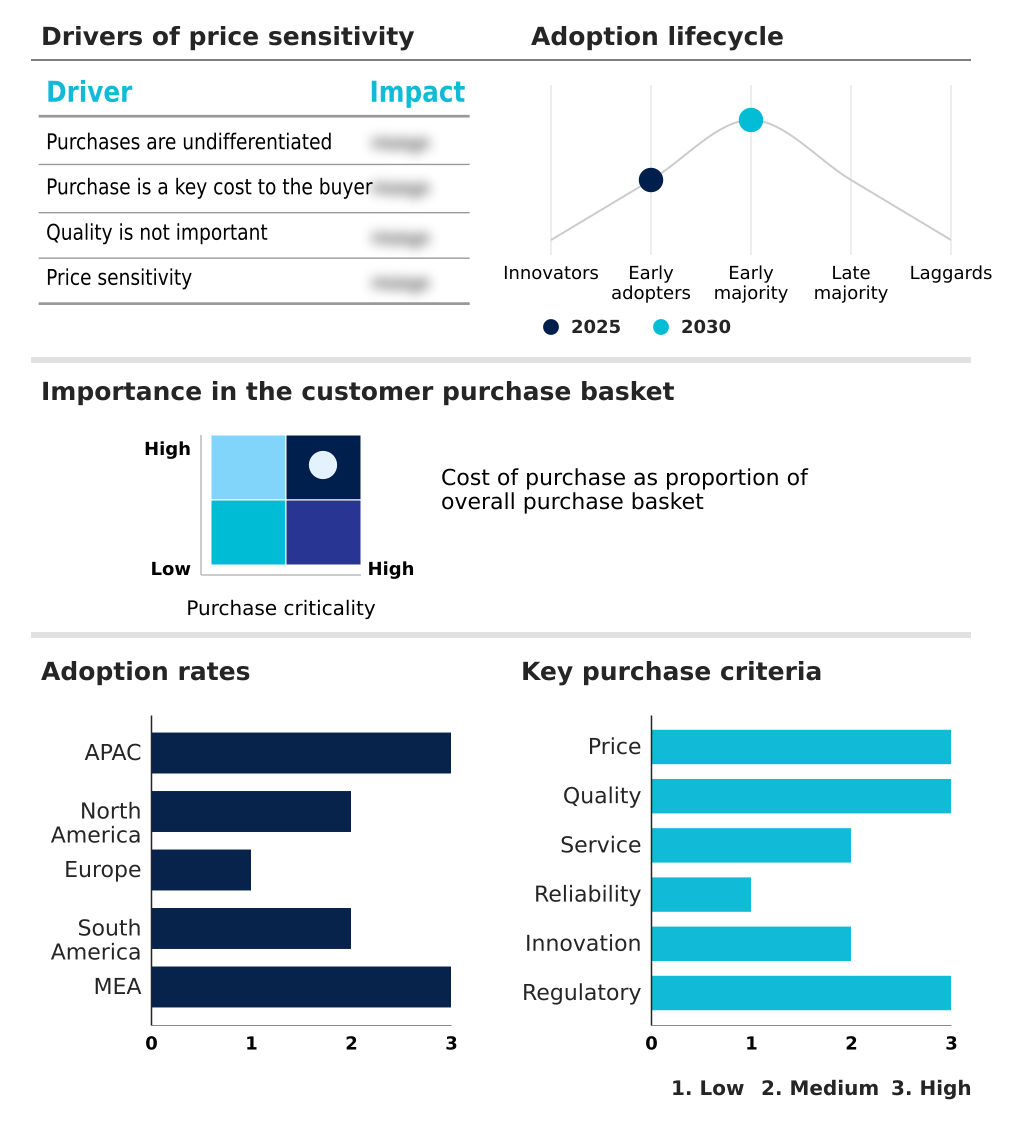
The nor flash market forecasting report includes the adoption lifecycle of the market, covering from the innovator’s stage to the laggard’s stage. It focuses on adoption rates in different regions based on penetration. Furthermore, the nor flash market report also includes key purchase criteria and drivers of price sensitivity to help companies evaluate and develop their market growth analysis strategies.
Customer Landscape of NOR Flash Industry
Competitive Landscape
Companies are implementing various strategies, such as strategic alliances, nor flash market forecast, partnerships, mergers and acquisitions, geographical expansion, and product/service launches, to enhance their presence in the industry.
Alliance Memory Inc. - Offering a broad range of memory ICs, including SRAM, DRAM, and various FLASH solutions, to support diverse legacy and modern electronic design requirements.
The industry research and growth report includes detailed analyses of the competitive landscape of the market and information about key companies, including:
- Alliance Memory Inc.
- Amkor Technology Inc.
- Cypress Semiconductor Corp
- Elite Semiconductor Tech Inc.
- Giantec Semiconductor Corp.
- GigaDevice Semiconductor Inc
- Infineon Technologies AG
- Integrated Silicon Solution
- Macronix International Co Ltd
- Microchip Technology Inc.
- Micron Technology Inc.
- Renesas Electronics Corp.
- Rochester Electronics LLC
- ROHM Co. Ltd.
- Sino Wealth Electronic Ltd.
- Winbond Electronics Corp.
- Wuhan Xinxin Semiconductor Manufacturing Co., Ltd.
- XTX Technology Inc.
Qualitative and quantitative analysis of companies has been conducted to help clients understand the wider business environment as well as the strengths and weaknesses of key industry players. Data is qualitatively analyzed to categorize companies as pure play, category-focused, industry-focused, and diversified; it is quantitatively analyzed to categorize companies as dominant, leading, strong, tentative, and weak.
Recent Development and News in Nor flash market
- In August, 2024, Infineon Technologies AG launched its SEMPER X1 LPDDR Flash, a memory solution engineered for next-generation automotive architectures to enhance safety and performance.
- In November, 2024, Macronix International Co. Ltd. introduced its groundbreaking 3D NOR flash technology, announcing a single-chip 4Gb solution with mass production anticipated for early 2025.
- In January, 2025, a Defense Logistics Agency qualification was announced for Infineon Technologies AG's radiation-hardened 512 Mbit QSPI NOR flash, making it the first QML-qualified memory for the space industry.
- In May, 2025, Infineon Technologies AG achieved ASIL-D certification for its SEMPER NOR flash memory family, a key validation for its use in safety-critical automotive systems like ADAS.
Dive into Technavio’s robust research methodology, blending expert interviews, extensive data synthesis, and validated models for unparalleled NOR Flash Market insights. See full methodology.
| Market Scope | |
|---|---|
| Page number | 299 |
| Base year | 2025 |
| Historic period | 2020-2024 |
| Forecast period | 2026-2030 |
| Growth momentum & CAGR | Accelerate at a CAGR of 11.3% |
| Market growth 2026-2030 | USD 2328.3 million |
| Market structure | Fragmented |
| YoY growth 2025-2026(%) | 10.4% |
| Key countries | China, Taiwan, South Korea, Japan, India, Australia, US, Canada, Mexico, Germany, UK, France, The Netherlands, Italy, Spain, Brazil, Argentina, Colombia, UAE, Saudi Arabia, South Africa, Egypt and Israel |
| Competitive landscape | Leading Companies, Market Positioning of Companies, Competitive Strategies, and Industry Risks |
Research Analyst Overview
- The NOR Flash market is sustained by its indispensable role in applications demanding high reliability memory and fast read access for critical code. Its architecture, featuring non-volatile memory properties, is essential for firmware storage and the secure boot process in everything from consumer electronics to advanced automotive-grade NOR flash systems.
- A key boardroom-level consideration is product strategy related to miniaturization, where technologies like wafer-level chip scale packages (WLCSP) and the move toward the 28nm process node are critical for staying competitive. While serial NOR flash with its low pin count and quad SPI interface dominates, parallel NOR flash holds its ground in legacy systems requiring direct memory mapping.
- Innovations such as on-chip error correction code (ECC) and 3D NOR flash technology are addressing the need for higher memory density and robust data retention. The technology is fundamental to advanced driver-assistance systems (ADAS) and in-vehicle infotainment (IVI), enabling functionality like over-the-air (OTA) updates and execute-in-place (XIP).
- Demand is further bolstered by the rollout of 5G, with network infrastructure deployments driving a need for components that support over 400 million new connections.
What are the Key Data Covered in this NOR Flash Market Research and Growth Report?
-
What is the expected growth of the NOR Flash Market between 2026 and 2030?
-
USD 2.33 billion, at a CAGR of 11.3%
-
-
What segmentation does the market report cover?
-
The report is segmented by Type (Serial NOR flash, and Parallel NOR flash), End-user (Consumer electronics, Communication, Automotive, Industrial, and Others), Product Type (Quad SPI, SPI single or dual, and Octal and xSPI) and Geography (APAC, North America, Europe, South America, Middle East and Africa)
-
-
Which regions are analyzed in the report?
-
APAC, North America, Europe, South America and Middle East and Africa
-
-
What are the key growth drivers and market challenges?
-
Increasing demand for high-performance electronics, Environmental regulations and standards for electronic waste disposal
-
-
Who are the major players in the NOR Flash Market?
-
Alliance Memory Inc., Amkor Technology Inc., Cypress Semiconductor Corp, Elite Semiconductor Tech Inc., Giantec Semiconductor Corp., GigaDevice Semiconductor Inc, Infineon Technologies AG, Integrated Silicon Solution, Macronix International Co Ltd, Microchip Technology Inc., Micron Technology Inc., Renesas Electronics Corp., Rochester Electronics LLC, ROHM Co. Ltd., Sino Wealth Electronic Ltd., Winbond Electronics Corp., Wuhan Xinxin Semiconductor Manufacturing Co., Ltd. and XTX Technology Inc.
-
Market Research Insights
- The market is shaped by competing technological and economic forces. Demand for high-performance electronics memory is strong, particularly for automotive memory solutions and telecommunication equipment memory used in 5G base stations. This is balanced by challenges from the semiconductor supply chain, where volatile semiconductor raw material costs can cause downstream service quotes to increase by as much as 18%.
- While NOR flash pricing trends are a constant consideration, the technology's role in secure data storage solutions for NOR flash in medical devices and industrial automation memory remains critical.
- As NOR flash applications expand into NOR flash for IoT and complex NOR flash for IVI systems, the debate of NOR flash versus NAND flash continues, with each technology serving distinct needs.
- Alternatives like MRAM versus NOR flash and ReRAM as NOR flash substitute are gaining attention, especially as the miniaturization of memory chips pushes current technology nodes to their limits.
We can help! Our analysts can customize this nor flash market research report to meet your requirements.
 RIA -
RIA - 
