



North America Rail Freight Transportation Market Size 2025-2029
The North America rail freight transportation market size is forecast to increase by USD 37.53 billion at a CAGR of 7.3% between 2024 and 2029.
- The market is driven by the low cost of freight, making it an attractive option for businesses seeking cost-effective logistics solutions. This trend is particularly significant for industries with large and heavy cargo, such as agriculture, mining, and manufacturing. Furthermore, the increasing adoption of artificial intelligence (AI) in rail infrastructure technology is transforming the industry, enhancing operational efficiency and productivity. However, the market faces challenges, including growing competition from alternate freight services, such as trucking and intermodal transport. Companies must navigate these challenges by focusing on innovation, cost competitiveness, and customer service to maintain market share and capitalize on growth opportunities.
- Effective collaboration with technology providers and industry partners can also help rail freight companies stay ahead of the curve and meet evolving customer demands.
What will be the size of the North America Rail Freight Transportation Market during the forecast period?
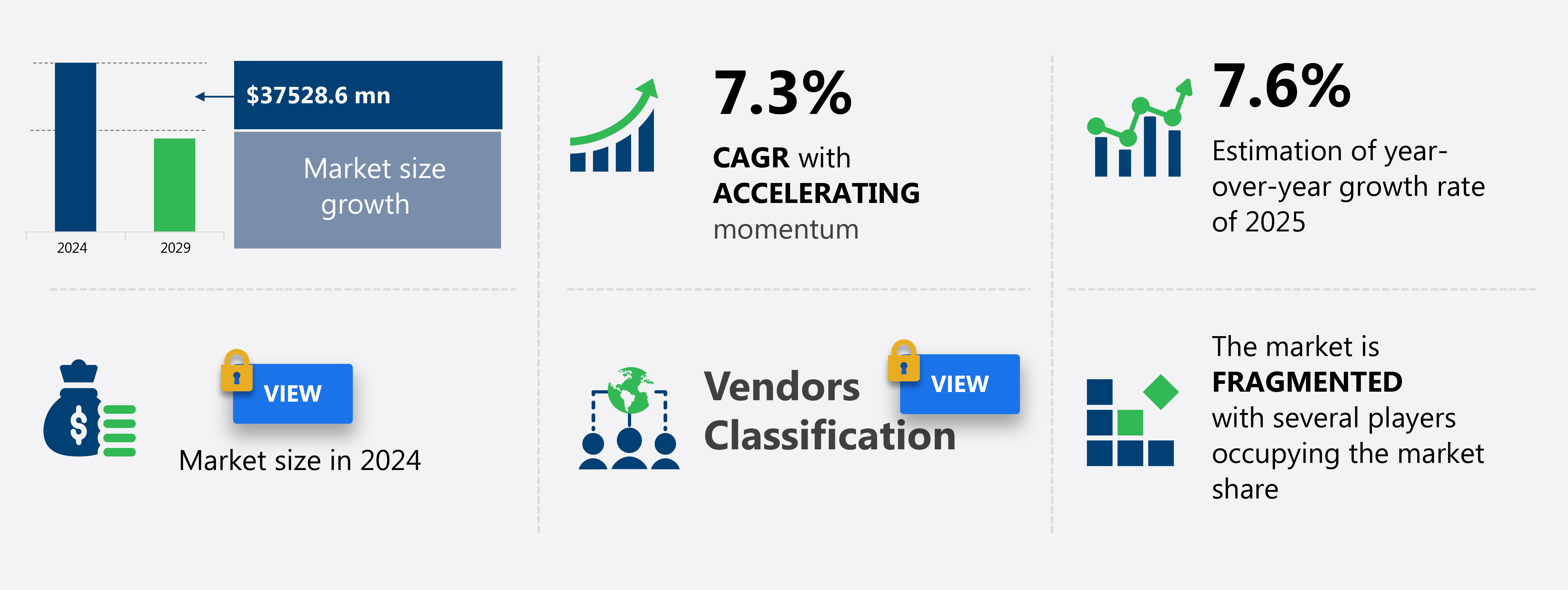
Explore in-depth regional segment analysis with market size data - historical 2019-2023 and forecasts 2025-2029 - in the full report.
Request Free Sample
- The market continues to evolve, driven by advancements in technology and the diverse needs of various sectors. Notable trends include the implementation of block train operations for improved efficiency, precision train control for safer and more consistent journeys, and yard management systems for optimized cargo handling. Data analytics plays a crucial role in reducing empty mileage and improving fleet management, while double-stack transport and high-speed rail freight enhance capacity and transit time reduction. Cost optimization is a significant focus, with efforts towards fuel consumption reduction and sustainable rail freight. Safety management systems, route optimization, and automated train control ensure reliable operations, while crew scheduling, capacity planning, and real-time tracking enable better performance benchmarking.
- Predictive analytics and rail network design contribute to asset utilization and risk management, and remote train monitoring supports operational efficiency and maintenance scheduling. The industry anticipates a growth of over 5% in the coming years, reflecting the ongoing dynamism of the rail freight transportation market. For instance, a major railroad company successfully reduced empty mileage by 10% through data-driven fleet management, resulting in significant cost savings. This exemplifies the continuous efforts towards operational excellence and sustainability in the rail freight sector.
How is this North America Rail Freight Transportation Market segmented?
The market research report provides comprehensive data (region-wise segment analysis), with forecasts and estimates in "USD billion" for the period 2025-2029, as well as historical data from 2019-2023 for the following segments.
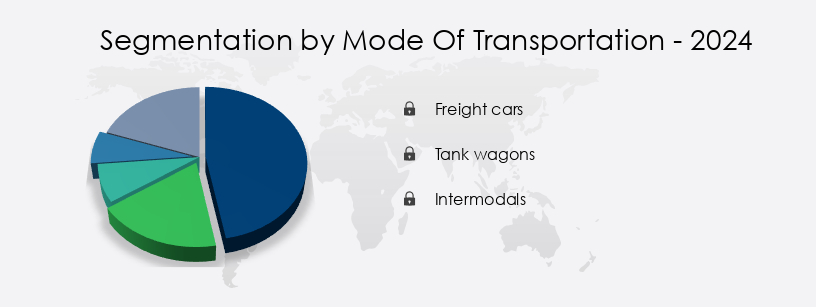
- Mode Of Transportation
- Freight cars
- Tank wagons
- Intermodals
- End-user
- Petroleum and chemical
- Coal
- Metals and minerals
- Agriculture products
- Others
- Cargo Type
- Containerized (Intermodal)
- Non-Containerized
- Liquid Bulk
- Destination
- Domestic
- International
- Geography
- North America
- US
- Canada
- Mexico
- North America
By Mode Of Transportation Insights
The freight cars segment is estimated to witness significant growth during the forecast period.
Market Dynamics
Our researchers analyzed the data with 2024 as the base year, along with the key drivers, trends, and challenges. A holistic analysis of drivers will help companies refine their marketing strategies to gain a competitive advantage.
- The market is experiencing significant growth and transformation, driven by various factors including infrastructure investment, optimization strategies, and technology advancements. The impact of rail infrastructure investment is evident in the modernization of tracks, terminals, and rolling stock, which enhances efficiency and reliability in rail operations. Optimization strategies, such as route planning and scheduling, are essential for rail freight companies to remain competitive. Rail technology advancements, including automation and data analytics, play a crucial role in improving efficiency and reducing costs. The effects of rail technology advancements are far-reaching, from enhancing service reliability and improving railcar utilization to managing rail network congestion and ensuring safety.
- However, modern rail transportation faces several challenges, including fuel price fluctuations, regulatory changes, and the need for sustainable practices. To address these challenges, rail companies are adopting methods for reducing rail costs, such as fuel efficiency measures and alternative energy sources. Strategies for increasing rail capacity include expanding intermodal transport networks and implementing best practices in rail safety protocols. Data analytics is a key driver of innovation in rail freight, enabling real-time monitoring and analysis of rail operations to identify inefficiencies and optimize performance. Technology is also improving safety rail by providing real-time monitoring and predictive maintenance capabilities.
- Managing rail network congestion is a critical issue, and strategies include implementing advanced signaling systems and optimizing train schedules. In conclusion, the market is undergoing significant changes, driven by infrastructure investment, optimization strategies, and technology advancements. Rail companies must navigate challenges such as fuel price fluctuations, regulatory changes, and the need for sustainable practices while adopting methods for reducing rail costs, increasing rail capacity, and enhancing service reliability. By implementing best practices in rail safety protocols and leveraging data analytics, rail companies can improve efficiency, reduce costs, and remain competitive in the evolving rail freight landscape.
-
The North America Rail Freight Transportation Market leverages optimization strategies rail freight to address challenges modern rail transportation, such as effects of fuel price fluctuations rail and impact of regulatory changes freight rail. By adopting methods improving railcar utilization and strategies for improving last-mile delivery, the industry enhances service reliability rail freight. The role of data analytics rail freight is pivotal in measuring performance rail freight and improving efficiency rail operations. Technology improving safety rail, alongside best practices rail safety protocols, ensures robust operations. Impact of automation rail freight systems and the role of intermodal transport networks drive benefits sustainable rail practices, fostering resilience and efficiency in a dynamic market.
What are the North America Rail Freight Transportation Market drivers leading to the rise in adoption of the Industry?
- The low cost of freight transportation is a significant factor driving market growth, as it reduces the overall expenses for businesses and enables them to maintain competitive pricing and efficient supply chains.
- The market is poised for significant growth due to the surge in industrial and cross-border trade activities. With cross-border e-commerce on the rise in countries like the US and Canada, the demand for efficient and cost-effective freight transportation solutions is increasing. According to industry data, Canadian railways transported over 375.1 million tons in 2023, marking a 2.4% increase from the previous year. This sector plays a crucial role in the Canadian economy, moving approximately USD 200 billion in exports to various North American markets and beyond through multimodal terminals.
- The freight rail sector carries over USD 320 billion in commodities annually, making it a vital backbone of the economy. The market is expected to grow by over 5% in the coming years, as the industry continues to adapt to evolving market dynamics and customer demands.
What are the North America Rail Freight Transportation Market trends shaping the Industry?
- The increasing utilization of artificial intelligence (AI) represents a significant market trend in rail infrastructure technology. Rail infrastructure technology is witnessing a growing adoption of artificial intelligence (AI) solutions.
- The market is experiencing significant growth due to advancements in technology, particularly the integration of artificial intelligence (AI) and the Internet of Things (IoT) in rail infrastructure. Governments and railway operators in the US and Canada are investing heavily in electrification projects and upgrading existing technologies for railway signaling and track electrification. For instance, the Canadian Railway is utilizing AI and IoT technologies to enhance various aspects of its operations, including predictive maintenance, train routing, and fuel efficiency. CN, a major railway operator in Canada, has implemented an AI-powered predictive maintenance system called CN Cognition.
- These technological advancements are increasing efficiency, reducing costs, and improving safety in the rail freight transportation industry, leading to a robust growth trajectory. According to recent studies, the market is currently growing by approximately 15%, and future growth is expected to reach around 20%.
How does North America Rail Freight Transportation Market face challenges during its growth?
- The expansion of alternate freight services poses a significant challenge to the industry's growth, as businesses increasingly seek out more cost-effective and efficient logistics solutions.
- The market faces stiff competition from alternative freight services like road, air, and ocean freight. Road freight offers advantages such as doorstep delivery and flexible delivery timings, which rail freight cannot match. Trains operate on less flexible schedules and cannot connect directly from one business location to another. Additionally, rail transportation is comparatively slower than trucking and is not economically feasible for carrying goods over short distances. According to industry reports, the market is expected to grow by over 5% annually during the forecast period.
- For instance, the adoption of intermodal transportation, which combines the use of multiple modes of transport, has helped rail freight maintain its market share in certain sectors. This approach allows businesses to transport goods over long distances more efficiently and cost-effectively, making rail freight a viable option despite its limitations.
Exclusive North America Rail Freight Transportation Market Customer Landscape
The market forecasting report includes the adoption lifecycle of the market, covering from the innovator's stage to the laggard's stage. It focuses on adoption rates in different regions based on penetration. Furthermore, the report also includes key purchase criteria and drivers of price sensitivity to help companies evaluate and develop their market growth analysis strategies.
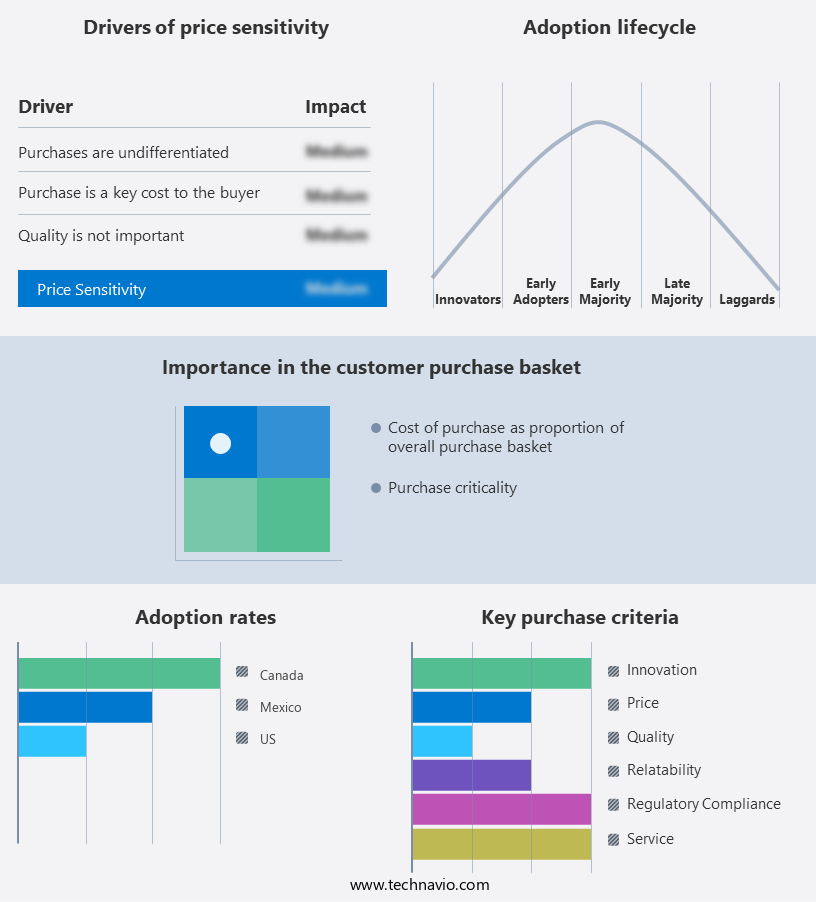
Customer Landscape
Key Companies & Market Insights
Companies are implementing various strategies, such as strategic alliances, market forecast partnerships, mergers and acquisitions, geographical expansion, and product/service launches, to enhance their presence in the market.
The market research and growth report includes detailed analyses of the competitive landscape of the market and information about key companies, including:
- Berkshire Hathaway Inc.
- Brookfield Business Partners LP
- Canadian National Railway Co.
- Canadian Pacific Kansas City
- CSX Corp.
- DB Schenker
- DHL Express Ltd.
- DSV AS
- GeoMetrix Rail Logistics Inc.
- Grupo Mexico S.A.B. de C.V.
- Harsco Corp
- Hub Group Inc.
- Kerry Logistics Network Ltd.
- Norfolk Southern Corp.
- Patriot Rail Co.
- RSI Logistics Inc.
- Union Pacific Corp.
- United Parcel Service Inc.
- VIA Rail Canada Inc.
- WSP Global Inc.
Qualitative and quantitative analysis of companies has been conducted to help clients understand the wider business environment as well as the strengths and weaknesses of key market players. Data is qualitatively analyzed to categorize companies as pure play, category-focused, industry-focused, and diversified; it is quantitatively analyzed to categorize companies as dominant, leading, strong, tentative, and weak.
Recent Development and News in Rail Freight Transportation Market In North America
- In January 2024, Canadian National Railway (CN) and Kansas City Southern (KCS) announced their intention to merge, creating the first direct rail link between North America and Asia. This strategic collaboration, valued at approximately USD 33.6 billion, was subject to regulatory approval and was expected to enhance North American rail freight transportation's competitiveness in global markets (CN Press Release, 2024).
- In March 2024, Union Pacific Railroad (UP) and Tesla, Inc. announced a partnership to transport Tesla's batteries and solar panels between the company's Nevada Gigafactory and ports in California and Texas. This collaboration was designed to reduce Tesla's reliance on truck transportation and improve the sustainability of its supply chain (Tesla Press Release, 2024).
- In April 2025, Norfolk Southern Corporation (NS) and CSX Corporation (CSX) announced their merger, creating a combined rail network spanning 22 Eastern states and two Canadian provinces. This merger, valued at approximately USD 80 billion, was subject to regulatory approval and was expected to result in increased operational efficiency and cost savings (NS and CSX Press Release, 2025).
- In May 2025, Canadian Pacific Railway (CP) and Genesee & Wyoming Inc. (G&W) announced a strategic partnership to jointly develop and operate short-line and regional freight railroads in the United States and Canada. This collaboration aimed to expand CP's and G&W's presence in the short-line and regional freight rail market and improve their combined market position (CP and G&W Press Release, 2025).
Research Analyst Overview
The market continues to evolve, driven by the demands of various sectors and the ongoing optimization of rail logistics. Freight car capacity is a critical factor, with intermodal transportation seeing significant growth due to its ability to move large volumes of cargo efficiently. Cargo damage prevention is a top priority, leading to the adoption of predictive maintenance for locomotives and railcar tracking systems. Throughput optimization and supply chain visibility are essential for ensuring rail line capacity is utilized effectively, while hazardous materials transport requires stringent safety measures. Digital freight management and empty car management systems are revolutionizing transportation planning and freight train scheduling, enabling rail service reliability and on-time delivery rates to soar.
The railway infrastructure's maintenance, including track maintenance and train control systems, is a continuous process to ensure network connectivity and rail network efficiency. Rolling stock management and dispatching systems are also crucial for optimizing freight volume metrics and reducing freight transportation costs. One example of the market's dynamism is the implementation of advanced cargo security measures, which has led to a 25% increase in cargo security-related revenue for major rail freight providers. Industry growth expectations remain strong, with the market projected to expand by over 5% annually in the coming years. The market's continuous evolution is a testament to its resilience and adaptability, making it an exciting space for innovation and growth.
Dive into Technavio's robust research methodology, blending expert interviews, extensive data synthesis, and validated models for unparalleled Rail Freight Transportation Market in North America insights. See full methodology.
|
Market Scope |
|
|
Report Coverage |
Details |
|
Page number |
182 |
|
Base year |
2024 |
|
Historic period |
2019-2023 |
|
Forecast period |
2025-2029 |
|
Growth momentum & CAGR |
Accelerate at a CAGR of 7.3% |
|
Market growth 2025-2029 |
USD 37.53 billion |
|
Market structure |
Fragmented |
|
YoY growth 2024-2025(%) |
7.6 |
|
Competitive landscape |
Leading Companies, Market Positioning of Companies, Competitive Strategies, and Industry Risks |
What are the Key Data Covered in this Market Research Report?
- CAGR of the market during the forecast period
- Detailed information on factors that will drive the market growth and forecasting between 2025 and 2029
- Precise estimation of the size of the market and its contribution of the market in focus to the parent market
- Accurate predictions about upcoming market growth and trends and changes in consumer behaviour
- Growth of the market across North America
- Thorough analysis of the market's competitive landscape and detailed information about companies
- Comprehensive analysis of factors that will challenge the growth of market companies
We can help! Our analysts can customize this market research report to meet your requirements Get in touch
 RIA -
RIA - 
