



Oleochemicals Market Size 2026-2030
The oleochemicals market size is valued to increase by USD 12.00 billion, at a CAGR of 6.3% from 2025 to 2030. Growth of packaged food and beverage industry will drive the oleochemicals market.
Major Market Trends & Insights
- APAC dominated the market and accounted for a 65.5% growth during the forecast period.
- By Product - Fatty acids segment was valued at USD 16.41 billion in 2024
- By Application - Soaps and detergents segment accounted for the largest market revenue share in 2024
Market Size & Forecast
- Market Opportunities: USD 21.59 billion
- Market Future Opportunities: USD 12.00 billion
- CAGR from 2025 to 2030 : 6.3%
Market Summary
- The oleochemicals market is fundamentally driven by the global shift toward sustainability and green chemistry. Derived from renewable feedstocks such as vegetable oils and animal fats, these compounds are central to replacing petroleum-based products in a multitude of applications. Core products, including fatty acids, fatty alcohols, and glycerol, are produced through processes like hydrolysis and esterification.
- Key industry trends include the rising demand for biosurfactants and bio-lubricants, which offer enhanced biodegradability. For instance, a cosmetics manufacturer might reformulate its entire skincare line to use only plant-derived ingredients and oleochemical-based emulsifiers to meet consumer demand for clean-label products, thereby improving brand perception and market share.
- However, the industry grapples with challenges like the volatility of feedstock prices, influenced by competition from the biofuel sector and climatic conditions affecting crop yields. The demand for sustainable sourcing and supply chain transparency is also reshaping operational strategies, pushing producers toward certified raw materials like sustainable palm oil to comply with international regulations and corporate social responsibility standards.
- This dynamic environment necessitates continuous innovation in both production technology and application development.
What will be the Size of the Oleochemicals Market during the forecast period?

Get Key Insights on Market Forecast (PDF) Get Free Sample
How is the Oleochemicals Market Segmented?
The oleochemicals industry research report provides comprehensive data (region-wise segment analysis), with forecasts and estimates in "USD million" for the period 2026-2030, as well as historical data from 2020-2024 for the following segments.
- Product
- Fatty acids
- Fatty alcohol
- Glycerol
- Fatty amines
- Others
- Application
- Soaps and detergents
- Polymers
- Personal care and pharmaceuticals
- Lubricants and greases
- Others
- Source
- Vegetable oils
- Animal fats
- Geography
- APAC
- China
- India
- Japan
- North America
- US
- Canada
- Mexico
- Europe
- Germany
- France
- UK
- Middle East and Africa
- Saudi Arabia
- South Africa
- UAE
- South America
- Brazil
- Argentina
- Colombia
- Rest of World (ROW)
- APAC
By Product Insights
The fatty acids segment is estimated to witness significant growth during the forecast period.
The oleochemicals market is segmented by product, application, and source, reflecting its integration into diverse industrial value chains. Product-wise, the market includes fatty acids, fatty alcohols, and glycerol, which are foundational components.
Key applications such as soaps, detergents, personal care, and polymers define demand-side segmentation. Sourcing from vegetable oils and animal fats creates another critical market division.
The fatty acids segment, crucial for manufacturing surfactants and emulsifiers, is experiencing a consistent year-over-year growth of 5.9%.
This segmentation underscores the industry's reliance on renewable feedstocks like tallow and palm oil and its role in fostering a circular economy through bio-based alternatives and the use of byproducts from hydrogenation and esterification processes.
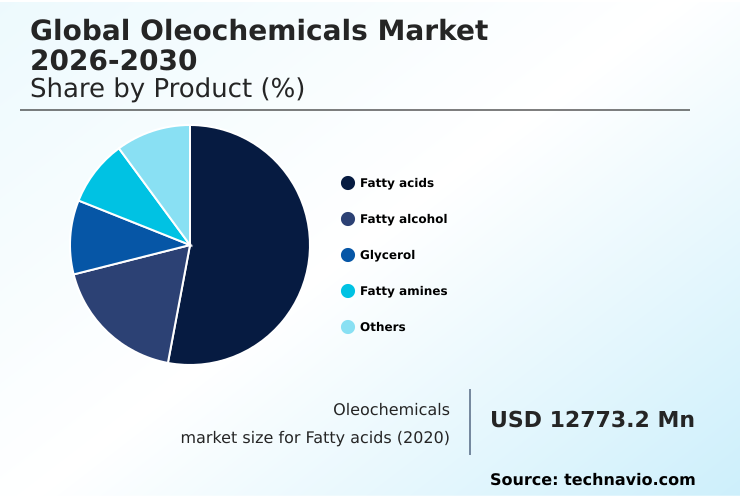
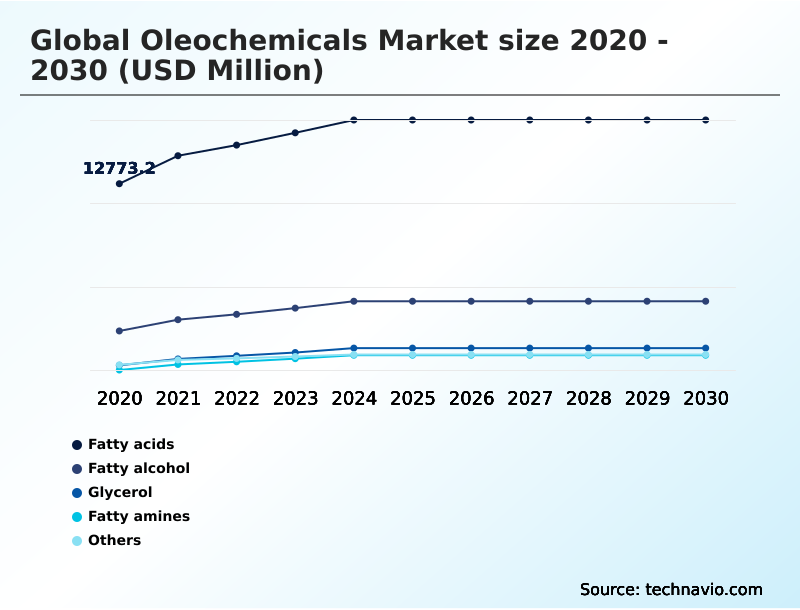
The Fatty acids segment was valued at USD 16.41 billion in 2024 and showed a gradual increase during the forecast period.
Regional Analysis
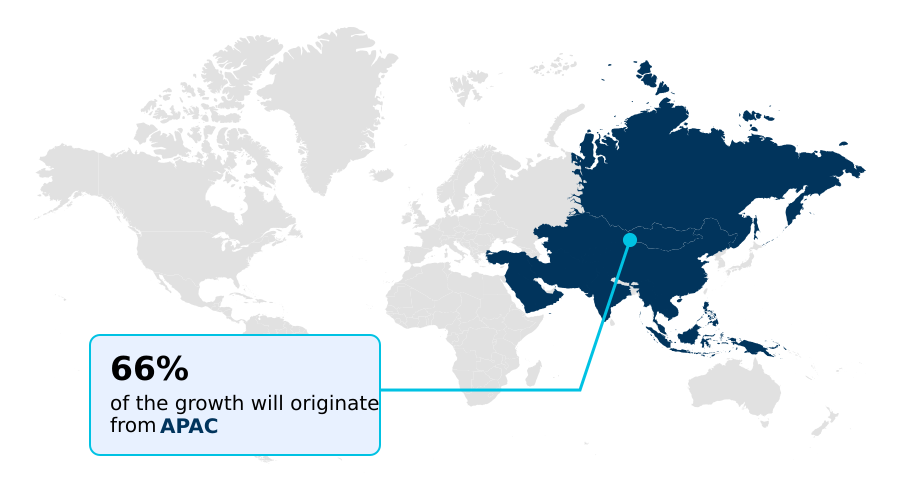
APAC is estimated to contribute 65.5% to the growth of the global market during the forecast period.Technavio’s analysts have elaborately explained the regional trends and drivers that shape the market during the forecast period.
See How Oleochemicals Market Demand is Rising in APAC Get Free Sample
The geographic landscape of the oleochemicals market is dominated by the APAC region, which accounts for the majority of global production and consumption. This leadership is built on access to abundant renewable feedstocks like palm oil and coconut oil.
The region is projected to contribute 65.5% of the market's incremental growth, driven by rapid industrialization and rising consumer demand for personal care ingredients.
Regional dynamics are also shaped by government initiatives, such as Indonesia's biofuel mandate, which impacts feedstock availability.
In contrast, North America and Europe are mature markets focused on high-value specialty esters and bio-polymers, with an emphasis on sustainable sourcing and supply chain transparency.
These regions leverage advanced hydrogenation and hydrolysis technologies to produce specialized oleochemicals, including stearic acid, for niche applications.
Market Dynamics
Our researchers analyzed the data with 2025 as the base year, along with the key drivers, trends, and challenges. A holistic analysis of drivers will help companies refine their marketing strategies to gain a competitive advantage.
- The global oleochemicals market 2026-2030 is increasingly shaped by the dual pressures of sustainability and performance, with long-term growth tied to innovation in green chemistry. Using oleochemicals in paper recycling is a prime example, where these bio-based agents help de-ink paper more efficiently, with some facilities reporting energy consumption reductions of over 20% compared to virgin pulp methods.
- Similarly, the environmental benefits of oleochemical surfactants are driving their adoption over petrochemical-based alternatives. The growth of biosurfactants from oleochemicals is a key trend, particularly as consumer demand for natural ingredients intensifies. Oleochemicals' role in green chemistry extends to their use in creating sustainable lubricants, where oleochemical applications in personal care are already well-established.
- Manufacturers are focused on developing new formulations, as seen in the push for oleochemicals versus petrochemicals in polymers, where bio-based options offer a lower carbon footprint. However, challenges in oleochemical feedstock supply, stemming from competition with biofuels and agricultural uncertainties, remain a significant hurdle.
- This has amplified the focus on both vegetable oils as oleochemical feedstock and animal fats for fatty acid production. The impact of biodiesel on glycerol supply continues to reshape the market, leading to innovations in glycerol purification for pharmaceutical use and the use of fatty amines in agrochemicals.
- Ultimately, the market for fatty acids for soap and detergent production remains a foundational demand driver.
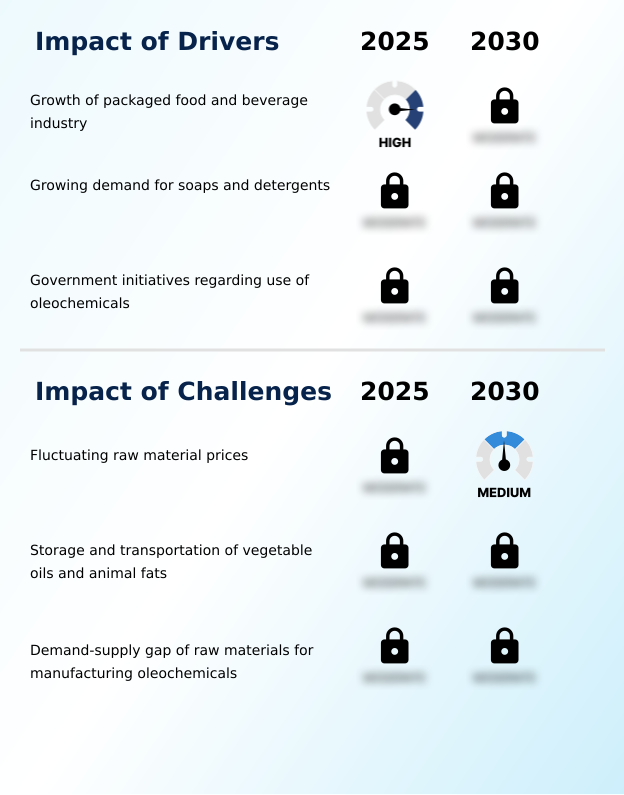
What are the key market drivers leading to the rise in the adoption of Oleochemicals Industry?
- A key market driver is the growth of the packaged food and beverage industry, which utilizes oleochemicals as essential emulsifiers and preservatives.
- Market growth is primarily driven by increasing demand from end-use industries for sustainable ingredients.
- The soaps and detergents sector remains a major consumer, with a notable shift toward natural surfactants derived from oleochemicals; this transition has resulted in a 20% increase in market penetration for bio-based cleaners in some developed regions.
- Additionally, the packaged food industry's expansion fuels demand for oleochemical-based emulsifiers and food additives that improve product texture and shelf life. Government initiatives promoting green chemistry and renewable materials provide further momentum.
- For instance, incentives for bio-lubricants have led to a 10% year-over-year increase in their adoption in environmentally sensitive applications. This regulatory support, coupled with consumer preference for plant-derived ingredients, strengthens the market's growth trajectory.
What are the market trends shaping the Oleochemicals Industry?
- A significant market trend is the growing demand for biosurfactants, which are gaining prominence as environmentally friendly alternatives to conventional surfactants.
- Key trends in the oleochemicals market center on sustainability and high-performance bio-based alternatives. The rising demand for biosurfactants is a significant driver, as these compounds offer improved environmental profiles and are increasingly adopted in personal care and cleaning products, enhancing formulation stability by over 15% in certain applications.
- Another major trend is the expanded use of oleochemicals, including specialty esters, in producing bio-polymers and biodegradable plastics. This shift aligns with circular economy principles and addresses concerns about plastic waste. Furthermore, the use of fatty acid methyl esters (fames) as biodiesel is growing, driven by government mandates for renewable fuels.
- The use of biodiesel can reduce certain exhaust emissions by up to 50% compared to conventional diesel, creating a substantial, albeit competitive, demand for vegetable oils and animal fats.
What challenges does the Oleochemicals Industry face during its growth?
- Fluctuating raw material prices present a key challenge that affects the industry's growth trajectory and profitability.
- The primary challenge confronting the oleochemicals market is the significant volatility of raw material prices. Feedstock costs, which can constitute a large portion of production expenses, are subject to sharp fluctuations, impacting profit margins by as much as 20% in a single quarter.
- This instability is driven by competition from the biofuel sector for vegetable oils and animal fats, as well as by unpredictable agricultural yields. Furthermore, stringent regulations governing the storage and transportation of these raw materials, such as the SPCC rule, add operational complexity and can increase logistics costs by over 10%.
- This creates a difficult environment for manufacturers, who must navigate supply chain transparency demands and feedstock diversification strategies to maintain stability. The demand-supply gap for certain feedstocks like tallow further complicates long-term planning.
Exclusive Technavio Analysis on Customer Landscape
The oleochemicals market forecasting report includes the adoption lifecycle of the market, covering from the innovator’s stage to the laggard’s stage. It focuses on adoption rates in different regions based on penetration. Furthermore, the oleochemicals market report also includes key purchase criteria and drivers of price sensitivity to help companies evaluate and develop their market growth analysis strategies.
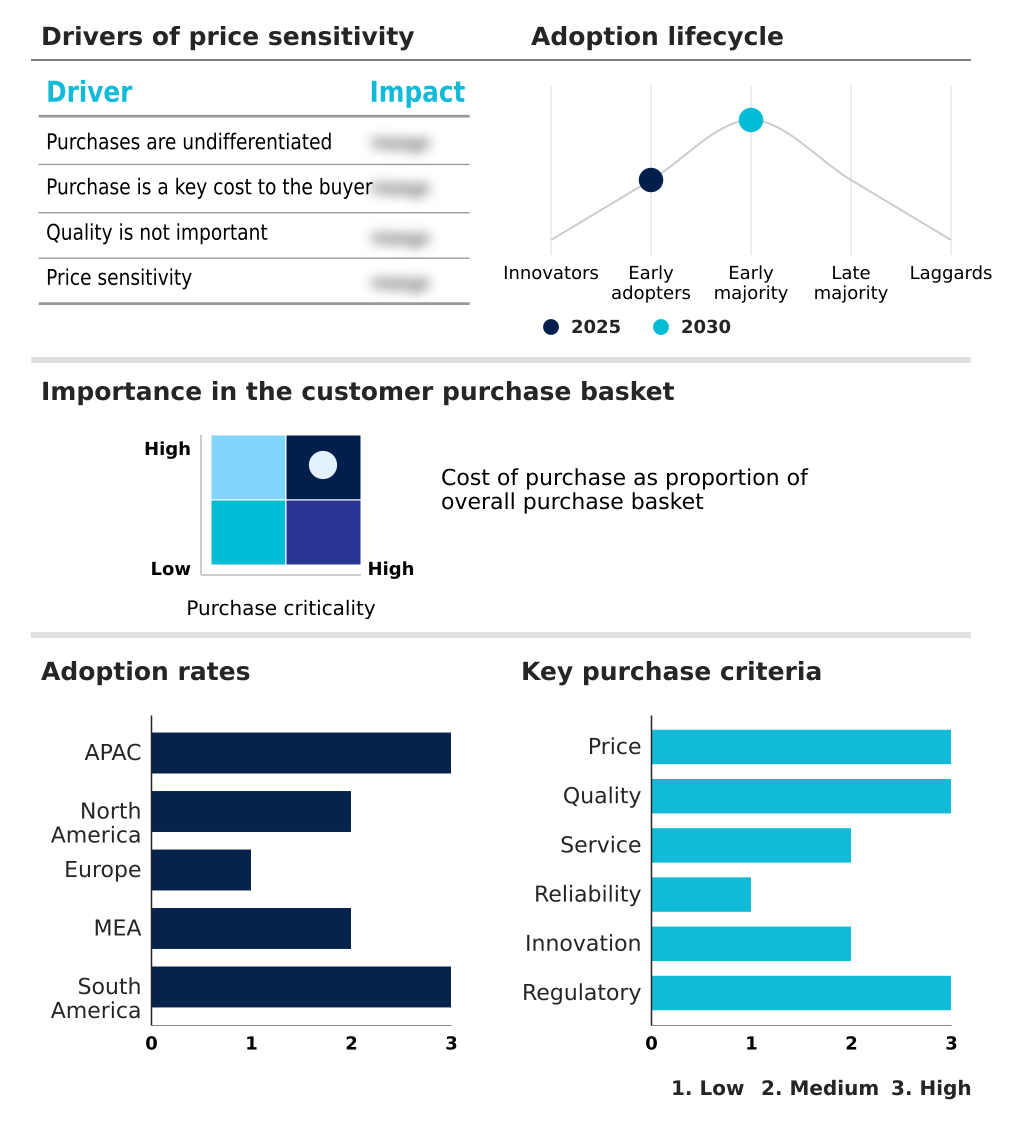
Customer Landscape of Oleochemicals Industry
Competitive Landscape
Companies are implementing various strategies, such as strategic alliances, oleochemicals market forecast, partnerships, mergers and acquisitions, geographical expansion, and product/service launches, to enhance their presence in the industry.
Akzo Nobel NV - Offerings include oleochemicals for metalworking lubricants, plastic additives, and paper production, addressing various industrial application needs.
The industry research and growth report includes detailed analyses of the competitive landscape of the market and information about key companies, including:
- Akzo Nobel NV
- BASF SE
- Berg Schmidt GmbH
- Cabot Corp.
- Cargill Inc.
- Croda International Plc
- Ecogreen Oleochemicals
- Emery Oleochemicals
- Evonik Industries AG
- Evyap Soap Oil Glycerin
- Fairchem Organics Ltd.
- Godrej Industries Ltd.
- IOI Corp. BHD
- Kao Corp.
- KLK Oleo
- Oleon NV
- Procter and Gamble Co.
- Saudi Basic Industries
- VVF Ltd.
- Wilmar International Ltd.
Qualitative and quantitative analysis of companies has been conducted to help clients understand the wider business environment as well as the strengths and weaknesses of key industry players. Data is qualitatively analyzed to categorize companies as pure play, category-focused, industry-focused, and diversified; it is quantitatively analyzed to categorize companies as dominant, leading, strong, tentative, and weak.
Recent Development and News in Oleochemicals market
- In March 2025, the Indonesian government implemented its B40 biodiesel mandate, increasing the required blend of palm-based biodiesel to 40% and intensifying domestic competition for palm oil feedstock.
- In February 2025, KLK OLEO expanded its presence in South Asia by opening a new representative office in Mumbai, India, to better serve the personal and home care sectors in the subcontinent.
- In July 2025, Emery Oleochemicals appointed Min Chong as its new Group Chief Executive Officer to guide the company toward enhanced operational efficiency and strategic growth in sustainable chemicals.
- In October 2025, IOI Group reported it had surpassed its 2025 greenhouse gas emission intensity reduction target one year ahead of schedule, highlighting its commitment to climate initiatives.
Dive into Technavio’s robust research methodology, blending expert interviews, extensive data synthesis, and validated models for unparalleled Oleochemicals Market insights. See full methodology.
| Market Scope | |
|---|---|
| Page number | 311 |
| Base year | 2025 |
| Historic period | 2020-2024 |
| Forecast period | 2026-2030 |
| Growth momentum & CAGR | Accelerate at a CAGR of 6.3% |
| Market growth 2026-2030 | USD 12000.9 million |
| Market structure | Fragmented |
| YoY growth 2025-2026(%) | 5.9% |
| Key countries | China, India, Japan, South Korea, Indonesia, Thailand, US, Canada, Mexico, Germany, France, UK, Italy, Spain, The Netherlands, Saudi Arabia, South Africa, UAE, Egypt, Israel, Brazil, Argentina and Colombia |
| Competitive landscape | Leading Companies, Market Positioning of Companies, Competitive Strategies, and Industry Risks |
Research Analyst Overview
- The oleochemicals market is undergoing a significant transformation driven by the imperative for sustainable and bio-based alternatives. Core production relies on renewable feedstocks such as palm oil, tallow, soybean oil, coconut oil, and rapeseed oil, which are processed through hydrolysis, hydrogenation, and esterification to yield foundational chemicals.
- These include fatty acids like stearic acid, oleic acid, and lauric acid, as well as fatty alcohols and glycerol. These compounds are integral to a wide range of applications, from personal care to industrial manufacturing.
- A critical boardroom-level concern is supply chain compliance with regulations like the EUDR, which mandates verifiable, deforestation-free sourcing and has led to a re-evaluation of procurement strategies. The industry's shift toward green chemistry is evident in the rising prominence of biosurfactants, bio-lubricants, and bio-polymers, which offer superior biodegradability.
- For instance, the use of fatty acid methyl esters (fames) in biodiesel production has a direct impact on the availability and pricing of co-products. This intricate supply-demand relationship requires sophisticated operational planning to maintain profitability and meet the evolving demands for sustainable surfactants.
What are the Key Data Covered in this Oleochemicals Market Research and Growth Report?
-
What is the expected growth of the Oleochemicals Market between 2026 and 2030?
-
USD 12.00 billion, at a CAGR of 6.3%
-
-
What segmentation does the market report cover?
-
The report is segmented by Product (Fatty acids, Fatty alcohol, Glycerol, Fatty amines, and Others), Application (Soaps and detergents, Polymers, Personal care and pharmaceuticals, Lubricants and greases, and Others), Source (Vegetable oils, and Animal fats) and Geography (APAC, North America, Europe, Middle East and Africa, South America)
-
-
Which regions are analyzed in the report?
-
APAC, North America, Europe, Middle East and Africa and South America
-
-
What are the key growth drivers and market challenges?
-
Growth of packaged food and beverage industry, Fluctuating raw material prices
-
-
Who are the major players in the Oleochemicals Market?
-
Akzo Nobel NV, BASF SE, Berg Schmidt GmbH, Cabot Corp., Cargill Inc., Croda International Plc, Ecogreen Oleochemicals, Emery Oleochemicals, Evonik Industries AG, Evyap Soap Oil Glycerin, Fairchem Organics Ltd., Godrej Industries Ltd., IOI Corp. BHD, Kao Corp., KLK Oleo, Oleon NV, Procter and Gamble Co., Saudi Basic Industries, VVF Ltd. and Wilmar International Ltd.
-
Market Research Insights
- The oleochemicals market is shaped by a dynamic interplay of cost, performance, and sustainability imperatives. The high contribution of raw materials to final product cost makes procurement efficiency critical, with inputs representing over 40% of expenses in some formulations. Consequently, enterprises are focused on feedstock diversification and securing sustainable sourcing channels to mitigate price volatility.
- The demand for bio-based alternatives continues to rise, as their adoption can improve end-product environmental profiles, with certain bio-lubricants demonstrating a 90% higher rate of biodegradability than their mineral oil counterparts. This shift supports a circular economy model, where oleochemicals are increasingly used as plasticizers and in the formulation of biodegradable plastics.
- The market's evolution is driven by the need for functional, renewable solutions across consumer and industrial applications.
We can help! Our analysts can customize this oleochemicals market research report to meet your requirements.
 RIA -
RIA - 
