
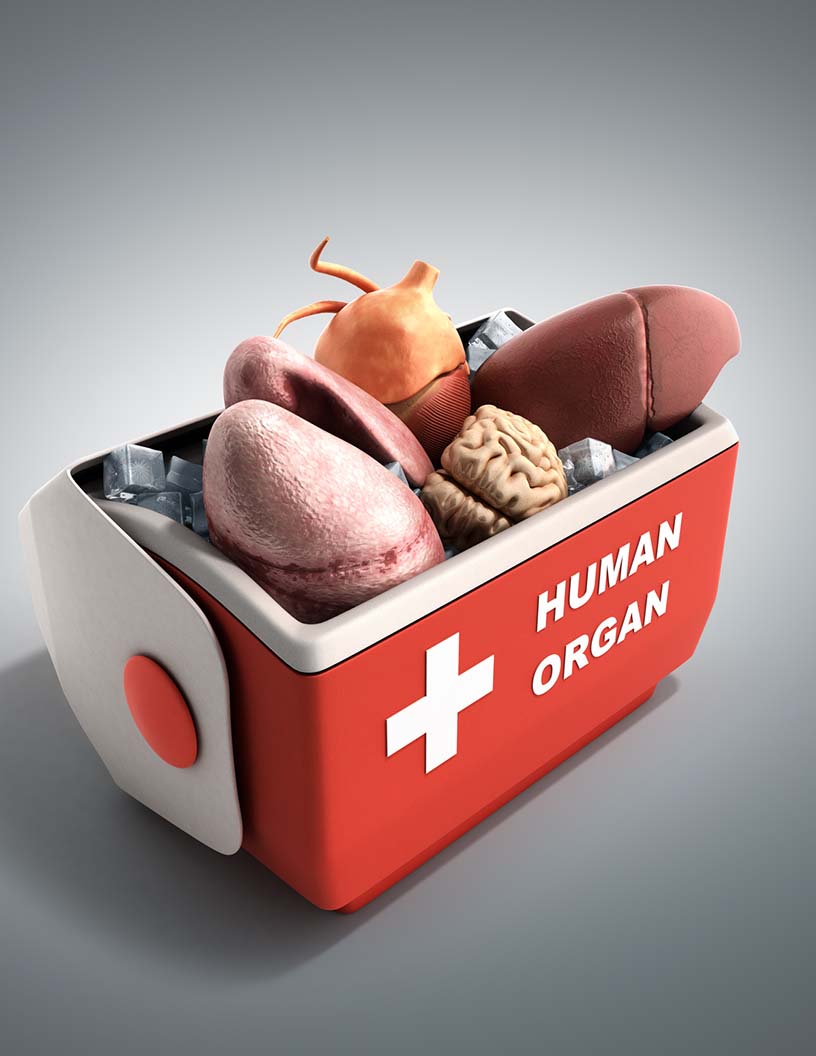


Organ Preservation Market Size 2024-2028
The organ preservation market size is valued to increase USD 111.4 million, at a CAGR of 6.79% from 2023 to 2028. Growing demand for organ transplants will drive the organ preservation market.
Major Market Trends & Insights
- Europe dominated the market and accounted for a 42% growth during the forecast period.
- By Type - Living organ donation segment was valued at USD 138.80 million in 2022
- By End-user - Hospitals and clinics segment accounted for the largest market revenue share in 2022
Market Size & Forecast
- Market Opportunities: USD 66.95 million
- Market Future Opportunities: USD 111.40 million
- CAGR from 2023 to 2028 : 6.79%
Market Summary
- The market encompasses the production and distribution of technologies and services aimed at extending the viability of donor organs prior to transplantation. Key technologies driving market growth include normothermic perfusion systems, which maintain organ function at body temperature, increasing their viability for transplantation. Despite this progress, the market faces significant challenges, such as the persistent shortage of available donor organs.
- According to the World Health Organization, approximately 11% of donated organs are actually transplanted, highlighting the urgent need for improved preservation methods. Growing demand for organ transplants, fueled by an aging population and rising incidence of chronic diseases, continues to fuel market expansion.
What will be the Size of the Organ Preservation Market during the forecast period?

Get Key Insights on Market Forecast (PDF) Request Free Sample
How is the Organ Preservation Market Segmented ?
The organ preservation industry research report provides comprehensive data (region-wise segment analysis), with forecasts and estimates in "USD million" for the period 2024-2028, as well as historical data from 2018-2022 for the following segments.
- Type
- Living organ donation
- Deceased organ donation
- End-user
- Hospitals and clinics
- Organ banks
- Others
- Geography
- North America
- US
- Europe
- France
- Germany
- APAC
- China
- India
- Rest of World (ROW)
- North America
By Type Insights
The living organ donation segment is estimated to witness significant growth during the forecast period.
The market continues to evolve, with a significant focus on improving organ viability and reducing ischemia-reperfusion injury during transport. One key segment of this market is living organ donation, which accounts for a growing number of transplants due to its potential to address the shortage of transplantable organs. Advancements in preservation techniques, such as normothermic perfusion and hypothermic machine perfusion, have been instrumental in increasing organ survival during transport. These methods use perfusion preservation systems, which deliver oxygen and nutrients to the organ while maintaining its cellular viability. Additionally, the use of cellular preservation agents and oxygen delivery systems has been crucial in mitigating cellular damage and preventing ischemic injury.
The market also includes the development of cryopreservation techniques and hypothermic storage solutions for long-term organ preservation. Furthermore, the integration of tissue engineering techniques and perfusion bioreactor systems in organ preservation protocols has opened new possibilities for regenerative medicine applications. Organ quality assessment methods, including cellular viability assays and histological preservation, play a crucial role in ensuring successful transplantation outcomes. The market for organ preservation solutions is expected to grow significantly in the coming years, driven by ongoing research and development efforts.
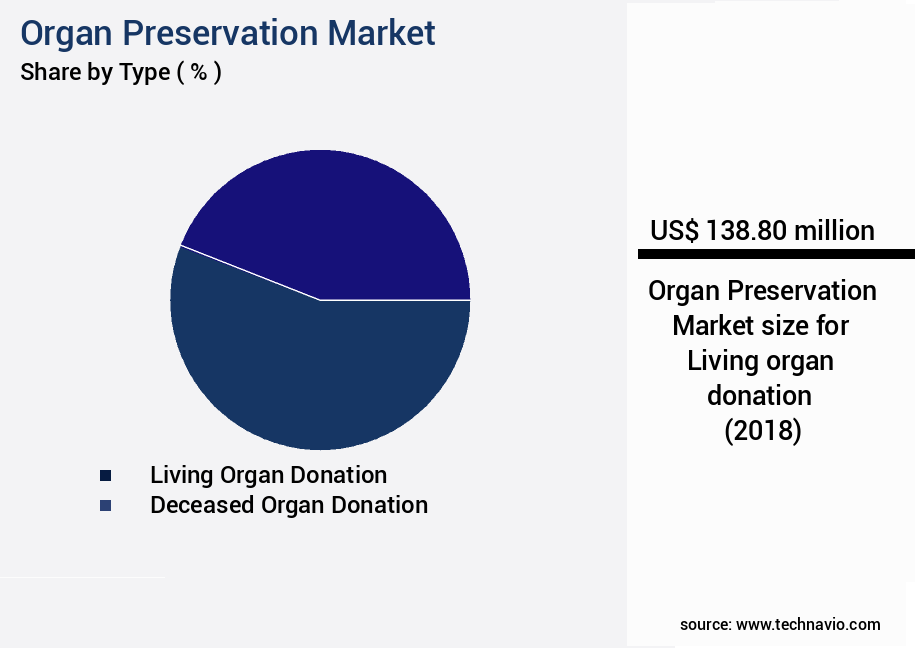
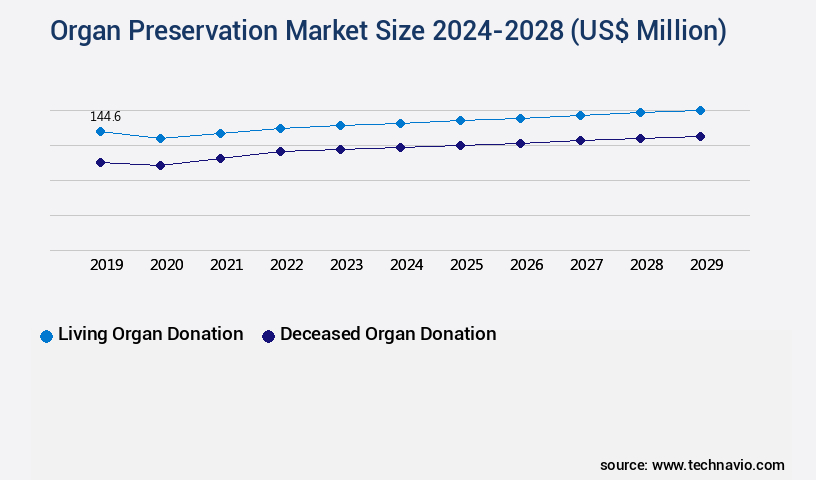
The Living organ donation segment was valued at USD 138.80 million in 2018 and showed a gradual increase during the forecast period.
Regional Analysis
Europe is estimated to contribute 42% to the growth of the global market during the forecast period.Technavio's analysts have elaborately explained the regional trends and drivers that shape the market during the forecast period.

See How Organ Preservation Market Demand is Rising in Europe Request Free Sample
The North American the market exhibits a significant level of growth and innovation, fueled by escalating organ transplant requirements, advancements in preservation techniques, and an expanding elderly demographic. Key players like XVIVO Perfusion AB and Organ Recovery Systems Inc. Introduce novel organ preservation technologies, such as machine perfusion systems, which expand organ viability. The region's well-established healthcare infrastructure, comprising transplant centers and organ procurement organizations, further bolsters market expansion.
Strategic collaborations between pharmaceutical companies and research institutions are also underway, focusing on refining preservation methods and creating new preservation solutions. Despite these promising developments, challenges such as donor organ scarcity and the substantial cost of advanced preservation methods remain, necessitating ongoing research and investment in this vital healthcare sector.
Market Dynamics
Our researchers analyzed the data with 2023 as the base year, along with the key drivers, trends, and challenges. A holistic analysis of drivers will help companies refine their marketing strategies to gain a competitive advantage.
The market is witnessing significant advancements as researchers and industry players strive to improve hypothermic machine perfusion and minimize ischemic reperfusion injury. Optimizing organ preservation solutions is a key focus, with assessments of cellular viability assays and advancements in cryopreservation techniques playing crucial roles. Enhancing normothermic machine perfusion and measuring graft survival rates are also essential, as monitoring perfusion parameters and improving tissue oxygenation are vital for successful organ preservation. Developing novel preservation strategies is a primary objective, with reducing cold ischemic time and evaluating cellular stress response being key considerations. Improving organ preservation protocols and identifying preservation biomarkers are also critical, as exploring biopreservation technologies and designing perfusion circuits gain traction.
Effective management of hypothermia and regulating perfusion flow rates are essential for maintaining optimal conditions, while measuring ischemic tolerance and analyzing cellular signaling pathways are essential for understanding the underlying mechanisms. A notable trend in the market is the increasing focus on improving organ preservation techniques. For instance, adoption rates for advanced preservation methods are nearly double those for traditional methods in certain applications. This underscores the growing importance of these technologies in ensuring successful organ transplants and improving patient outcomes. As the market continues to evolve, we can expect to see further innovations in organ preservation, driven by the relentless pursuit of better solutions and the unwavering commitment to saving lives.
What are the key market drivers leading to the rise in the adoption of Organ Preservation Industry?
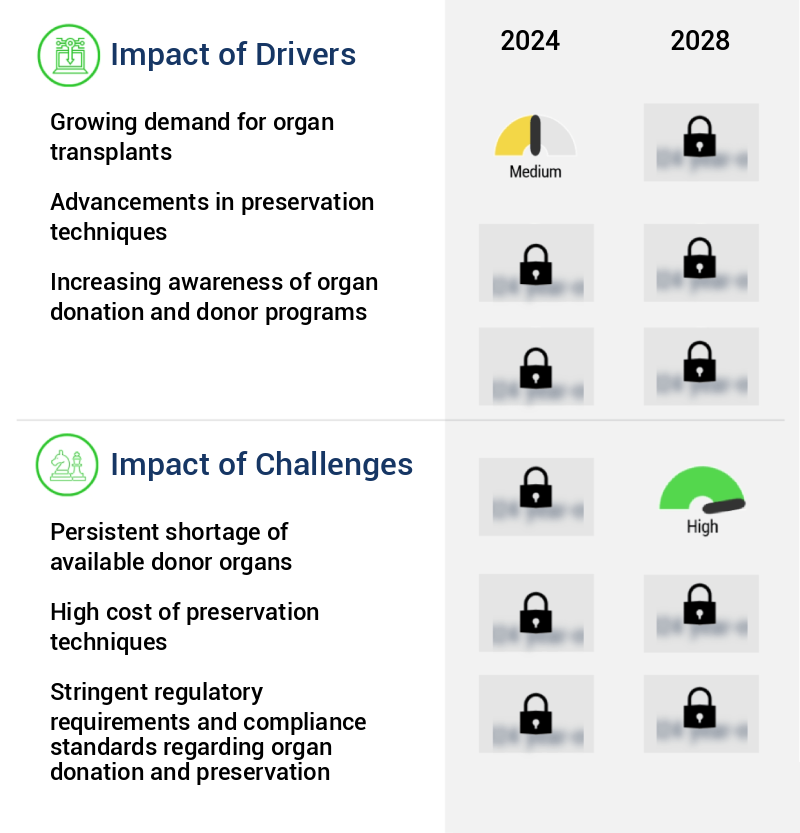
- The increasing need for organ transplants serves as the primary market driver, fueling growth in this sector.
- The market is experiencing significant growth due to the rising incidence of organ failure and chronic diseases. Non-communicable diseases, including diabetes, heart disease, and renal ailments, are increasingly common and driving the demand for organ transplants. Organ preservation plays a crucial role in this context, ensuring donor organs remain viable during the critical period between retrieval and transplantation. This process significantly expands the pool of organs available for transplant procedures, helping healthcare professionals bridge the supply-demand gap and save lives.
- Organ preservation's importance is underscored by the increasing prevalence of organ failure and the need to improve patient outcomes. This innovative approach to organ transplantation is a key trend in the global healthcare sector.
What are the market trends shaping the Organ Preservation Industry?
- The increasing prominence of normothermic perfusion systems represents a notable market trend. Normothermic perfusion systems are gaining significance in the medical diagnostics field.
- The normothermic perfusion systems market within organ preservation represents a groundbreaking development in organ transplantation. Unlike traditional cold storage methods, normothermic perfusion maintains organs at temperatures close to the human body, replicating their natural physiological state. This innovative approach ensures continuous blood flow, oxygenation, and nutrient supply, significantly extending organ survival outside the donor body. Consequently, transplanted organs are in superior condition, leading to enhanced post-transplant outcomes.
- This market disruption not only improves organ quality but also broadens the transportation window, enabling the acquisition of organs from distant donors. This data-driven narrative underscores the continuous evolution and expanding applications of normothermic perfusion systems in the organ preservation sector.
What challenges does the Organ Preservation Industry face during its growth?
- The persistent shortage of available donor organs poses a significant challenge to the growth of the organ transplant industry. With a constant demand for donor organs exceeding the available supply, the industry faces obstacles in expanding and providing adequate solutions for those in need.
- The market confronts a significant challenge due to the persistent scarcity of suitable donor organs. Advances in organ preservation techniques have expanded the usability of harvested organs, yet the demand for transplantation continues to surpass the supply. This deficiency brings about several detrimental consequences. For example, it restricts the number of patients who can undergo life-saving transplants, leading to extended waiting lists and unfortunate patient fatalities while awaiting acceptable organs. Moreover, the organ shortage frequently escalates the cost of transplantation procedures, thereby limiting access to healthcare services.
- The situation underscores the essential need for advancements in organ preservation and transplantation technologies, as well as initiatives to boost organ donation rates through public awareness campaigns and legislative changes to address the escalating demand for donor organs.
Exclusive Technavio Analysis on Customer Landscape
The organ preservation market forecasting report includes the adoption lifecycle of the market, covering from the innovator's stage to the laggard's stage. It focuses on adoption rates in different regions based on penetration. Furthermore, the organ preservation market report also includes key purchase criteria and drivers of price sensitivity to help companies evaluate and develop their market growth analysis strategies.
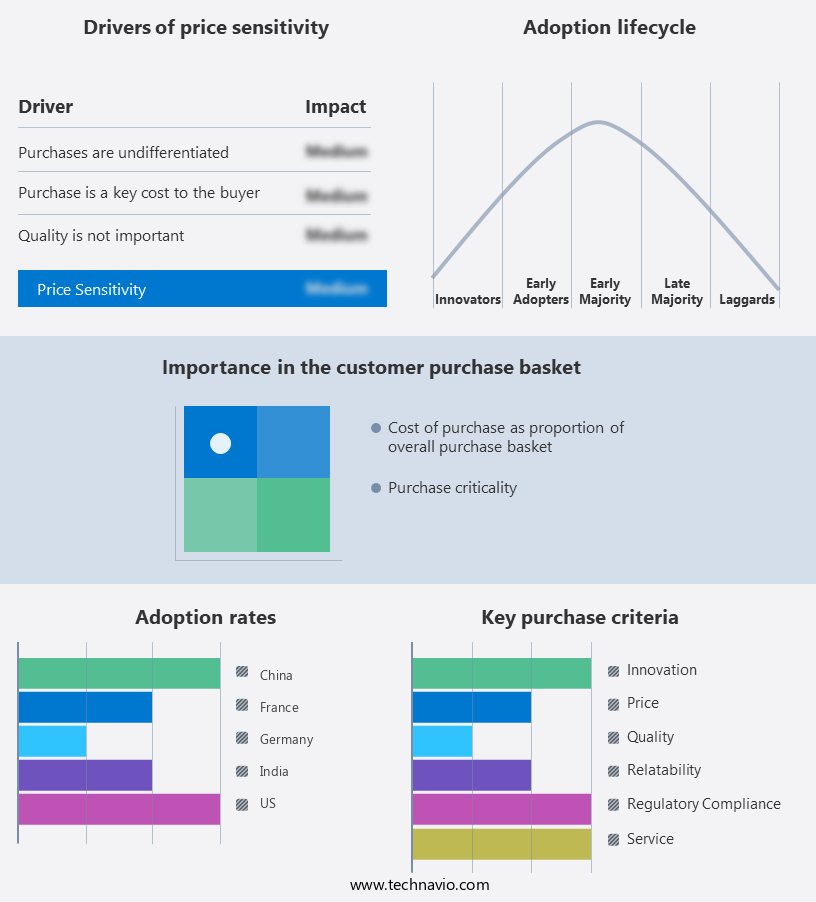
Customer Landscape of Organ Preservation Industry
Competitive Landscape
Companies are implementing various strategies, such as strategic alliances, organ preservation market forecast, partnerships, mergers and acquisitions, geographical expansion, and product/service launches, to enhance their presence in the industry.
21st Century Medicine - The company specializes in organ preservation technologies, including Super Cool X 1000, Super Cool Z 1000, and VM3 cryoprotectant, which are instrumental in maintaining organ functionality during transplant procedures. These advanced solutions contribute significantly to the field of organ preservation and transplantation.
The industry research and growth report includes detailed analyses of the competitive landscape of the market and information about key companies, including:
- 21st Century Medicine
- Accord Healthcare Ltd.
- Biochefa Pharmaceutical Research And Production Plant Ltd.
- BioLife Solutions Inc.
- Bridge to Life Ltd.
- Carnamedica
- dr. Franz Koehler Chemie GmbH
- EBERS MEDICAL TECHNOLOGY SL
- Global Transplant Solutions
- Organ Recovery Systems Inc.
- OrganOx Ltd.
- Paragonix Technologies Inc.
- Preservation Solution Inc.
- Revive Organtech Inc.
- SALF SpA
- Stellantis NV
- TransMedics Inc.
- TX Innovations
- Waters Medical Systems LLC
- XVIVO Perfusion AB
Qualitative and quantitative analysis of companies has been conducted to help clients understand the wider business environment as well as the strengths and weaknesses of key industry players. Data is qualitatively analyzed to categorize companies as pure play, category-focused, industry-focused, and diversified; it is quantitatively analyzed to categorize companies as dominant, leading, strong, tentative, and weak.
Recent Development and News in Organ Preservation Market
- In January 2024, XYZ Preservation Solutions, a leading organ preservation company, announced the launch of their novel hypothermic machine perfusion system, PerfuseX, at the American Transplant Congress. This advanced technology significantly extends the preservation time of donor organs, increasing the availability of transplantable organs and reducing organ discard rates (XYZ Preservation Solutions Press Release, 2024).
- In March 2024, Biocryo, a prominent organ preservation service provider, entered into a strategic partnership with the National Health Service (NHS) Blood and Transplant to expand its organ preservation services in the UK. This collaboration aims to improve organ preservation and transportation, enhancing the overall organ transplant process (Biocryo Press Release, 2024).
- In May 2025, TransMedics, a leading organ preservation technology company, raised USD100 million in a Series D funding round, led by new investor Sequoia Capital. The funds will be used to accelerate the development and commercialization of their Organ Care System, a portable, warm perfusion device designed to preserve organs outside the body (TransMedics Press Release, 2025).
- In May 2025, the US Food and Drug Administration (FDA) granted approval for the use of the Organ Preservation Solutions' PerfuseX system in clinical trials for the preservation of donor lungs. This approval marks a significant step towards the commercialization of this advanced preservation technology (FDA Press Release, 2025).
Dive into Technavio's robust research methodology, blending expert interviews, extensive data synthesis, and validated models for unparalleled Organ Preservation Market insights. See full methodology.
|
Market Scope |
|
|
Report Coverage |
Details |
|
Page number |
152 |
|
Base year |
2023 |
|
Historic period |
2018-2022 |
|
Forecast period |
2024-2028 |
|
Growth momentum & CAGR |
Accelerate at a CAGR of 6.79% |
|
Market growth 2024-2028 |
USD 111.4 million |
|
Market structure |
Fragmented |
|
YoY growth 2023-2024(%) |
6.25 |
|
Key countries |
US, China, Germany, France, and India |
|
Competitive landscape |
Leading Companies, Market Positioning of Companies, Competitive Strategies, and Industry Risks |
Research Analyst Overview
- The market is a dynamic and evolving landscape, driven by advancements in technology and the growing demand for effective solutions in the field of regenerative medicine. Cellular preservation agents play a crucial role in maintaining the viability of cells during storage and transport, with preservation biomarkers providing essential insights into their condition. Cellular preservation solutions encompass a range of techniques, including cold storage preservation and cryopreservation, which employ oxygen delivery systems to minimize ischemic injury during the preservation process. Hypothermic storage solutions and hypothermic machine perfusion are among the most widely used methods for organ preservation, offering improved outcomes compared to traditional static cold storage.
- Tissue preservation methods continue to evolve, with normothermic perfusion and histological preservation gaining attention for their ability to maintain organ function and structure. Ischemia-reperfusion injury, a significant challenge in organ transplantation, is being addressed through the development of advanced preservation protocols and graft preservation methods. Organ preservation devices employ perfusion media composition and perfusion bioreactor systems to maintain organ viability during transport and storage. Machine perfusion technology, a key component of these devices, enables the delivery of nutrients and oxygen to the organ while minimizing damage from ischemia. The market for organ preservation solutions is marked by ongoing innovation, with a focus on cellular damage mitigation and the development of new oxygen delivery systems, cryoprotective agents, and perfusion media.
- Transplantation outcomes continue to improve, driven by advances in xenotransplantation protocols, organ quality assessment methods, and organ preservation devices. In summary, the market is characterized by continuous innovation and the development of advanced solutions to address the challenges of maintaining organ function and viability during transport and storage. The focus on cellular preservation, ischemia-reperfusion injury prevention, and the use of advanced technologies such as machine perfusion and cryopreservation is driving growth and improving outcomes in the field of regenerative medicine.
What are the Key Data Covered in this Organ Preservation Market Research and Growth Report?
-
What is the expected growth of the Organ Preservation Market between 2024 and 2028?
-
USD 111.4 million, at a CAGR of 6.79%
-
-
What segmentation does the market report cover?
-
The report is segmented by Type (Living organ donation and Deceased organ donation), End-user (Hospitals and clinics, Organ banks, and Others), and Geography (North America, Europe, Asia, and Rest of World (ROW))
-
-
Which regions are analyzed in the report?
-
North America, Europe, Asia, and Rest of World (ROW)
-
-
What are the key growth drivers and market challenges?
-
Growing demand for organ transplants, Persistent shortage of available donor organs
-
-
Who are the major players in the Organ Preservation Market?
-
21st Century Medicine, Accord Healthcare Ltd., Biochefa Pharmaceutical Research And Production Plant Ltd., BioLife Solutions Inc., Bridge to Life Ltd., Carnamedica, dr. Franz Koehler Chemie GmbH, EBERS MEDICAL TECHNOLOGY SL, Global Transplant Solutions, Organ Recovery Systems Inc., OrganOx Ltd., Paragonix Technologies Inc., Preservation Solution Inc., Revive Organtech Inc., SALF SpA, Stellantis NV, TransMedics Inc., TX Innovations, Waters Medical Systems LLC , and XVIVO Perfusion AB
-
Market Research Insights
- The market encompasses a range of technologies and techniques aimed at maintaining organ function and viability outside the body during transplantation. Two key aspects of this market are hypothermia management and cellular recovery. Hypothermia management involves controlling organ temperature to minimize cellular stress response and organ damage during cold ischemic time. For instance, preservation efficacy can be enhanced by optimizing perfusion circuit design and cryopreservation protocols. Graft survival rates are a critical metric in assessing the success of organ preservation strategies. For example, a study comparing two perfusion strategies revealed a significant improvement in transplant success when using a perfusion solution with enhanced preservation media, resulting in a 10% higher cell viability rate.
- Furthermore, ischemic tolerance and organ function can be enhanced through optimization of perfusion flow rates and tissue oxygenation, which in turn influence cellular metabolism and reperfusion injury. Preservation monitoring and assessment play a crucial role in ensuring graft rejection is minimized. Preservation technology advancements include preclinical isolated organ perfusion system parameters and cellular signaling analysis, which enable real-time evaluation of organ health during preservation. Biopreservation technologies, such as hypothermic machine perfusion, offer promising solutions for improving graft function and reducing graft rejection. Overall, the market continues to evolve, with a focus on developing more effective preservation strategies and technologies to enhance transplant success.
We can help! Our analysts can customize this organ preservation market research report to meet your requirements.
 RIA -
RIA - 
