

Organic Chocolate Market Analysis Europe, North America, APAC, South America, Middle East and Africa - US, Canada, China, Germany, UK - Size and Forecast 2024-2028

Organic Chocolate Market Analysis Europe, North America, APAC, South America, Middle East and Africa - US, Canada, China, Germany, UK - Size and Forecast 2024-2028

Published: Mar 2024 162 Pages SKU: IRTNTR40246

Market Overview at a Glance

$345.01 Mn
Market Opportunity
6.05%
CAGR
5.45
YoY growth 2023-2024(%)

Organic Chocolate Market Size 2024-2028 

The organic chocolate market size is forecast to increase by USD 345.01 million at a CAGR of 6.05% between 2023 and 2028. The market is experiencing significant growth due to the increasing demand for organic food products in the United States. Premiumization of organic chocolates, particularly in the hazelnut segment, is a notable trend driving market expansion. The organic chocolate industry is witnessing innovative developments, such as the creation of new fruit spread, jam, and marmalade-infused chocolate products. However, the high production costs associated with organic farming and processing remain challenges for market participants. Despite these hurdles, the market is expected to continue its growth trajectory, offering opportunities for businesses in the chocolate confectionery sector.

What will be the Size of the Market During the Forecast Period?
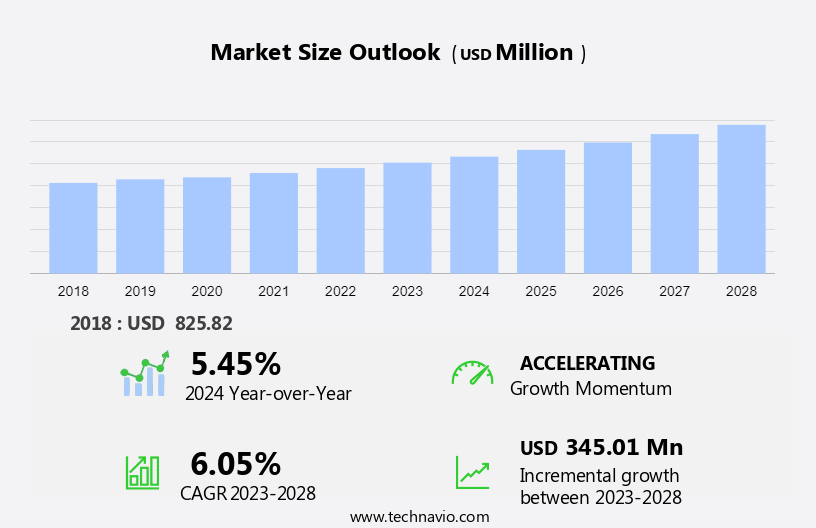
Organic Chocolate Market Size

 Request Free Sample

The market is experiencing significant growth within the confectionery industry. Consumers' increasing awareness of health and wellness, coupled with a desire for ethically sourced and sustainably produced goods, has led to a surge in demand for organic chocolate products. Organic chocolate is produced using organic cocoa beans, which are grown without the use of artificial fertilizers or pesticides. This approach to farming not only benefits the environment by preserving soil health and promoting biodiversity, but also ensures the absence of harmful chemicals in the final product. The organic farming practices employed in the production of organic chocolate align with the broader trend towards organic goods in various sectors.

Consumers are increasingly seeking out organic food products, including chocolate spreads, as they perceive them to be healthier and more sustainable alternatives to conventional products. Dark, milk, and hazelnut chocolate spreads are popular choices within the organic chocolate spread segment. These spreads offer consumers a delicious and versatile way to enjoy the rich flavors of organic chocolate in their daily lives. Valeo Foods, Chocobee, and other organic chocolate confectioneries are capitalizing on this trend by introducing innovative and high-quality organic chocolate spreads to the market. The organic cocoa industry is also gaining traction, with a focus on sustainable and ethical production practices.

The use of organic farming methods ensures that cocoa farmers receive fair wages and work in safe conditions, while also minimizing the environmental impact of cocoa production. The market is not limited to spreads, however. Organic chocolate confectioneries, including chocolates, beverages, and cocoa powder, are also experiencing growth. These products cater to consumers who seek the health benefits and ethical production practices associated with organic chocolate. The fruit spread, jam, and marmalade segments are also seeing an increase in demand for organic options, as consumers look for healthier alternatives to traditional sweet spreads. Organic chocolate spreads, with their rich chocolate flavor and health benefits, are gaining popularity as a natural and delicious alternative to these conventional products.

Moreover, the market is poised for continued growth, as consumers become more conscious of their health and the environmental impact of their food choices. Organic chocolate confectioneries and chocolate spreads, in particular, offer a delicious and sustainable way for consumers to indulge in their sweet tooth while supporting ethical and sustainable farming practices. In conclusion, the market is a growing trend within the confectionery industry, driven by consumers' increasing awareness of health and sustainability. Organic chocolate spreads, made from organic cocoa beans grown using sustainable farming practices, are a popular choice for consumers seeking healthier and more ethically produced alternatives to conventional chocolate spreads. The market is expected to continue growing, as consumers increasingly demand transparency and sustainability in their food choices.

Market Segmentation

The market research report provides comprehensive data (region-wise segment analysis), with forecasts and estimates in "USD million" for the period 2024-2028, as well as historical data from 2018-2022 for the following segments.

  • Type
    • Organic dark chocolate
    • Organic milk chocolate
    • Organic white chocolate
  • Distribution Channel
    • Offline
    • Online
  • Geography
    • Europe
      • Germany
      • UK
    • North America
      • Canada
      • US
    • APAC
      • China
    • South America
    • Middle East and Africa

By Type Insights

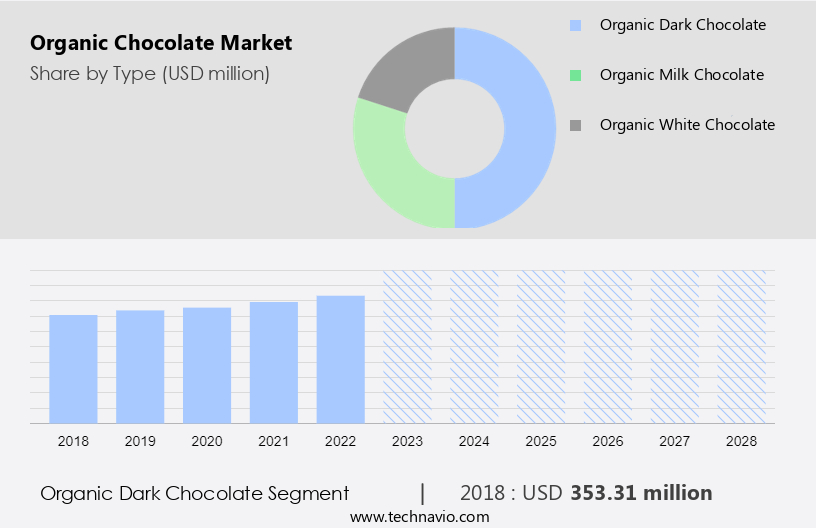
The organic dark chocolate segment is estimated to witness significant growth during the forecast period. Organic dark chocolate is a popular product in the cocoa industry, derived primarily from the seeds of the cocoa tree that are organically produced. This type of chocolate is gaining traction among health-conscious consumers due to its higher nutrient content compared to other chocolate varieties. Organic dark chocolate is rich in antioxidants and flavonoids, which promote cardiovascular health by stimulating the production of nitric oxide in the blood vessels. Major companies in The market include Barry Callebaut AG and Divine Chocolate, a subsidiary of Ludwig Weinrich GmbH and Co. The demand for clean-label products, including organic chocolate, is on the rise as consumers seek healthier options. Organic cocoa powder is also used in the production of various beverages, further expanding the market for this product. As the trend towards healthy eating continues, the market is expected to grow steadily.
Organic Chocolate Market Size

Get a glance at the market share of various segments Request Free Sample

The organic dark chocolate segment accounted for USD 353.31 million in 2018 and showed a gradual increase during the forecast period.

Regional Insights

Europe is estimated to contribute 39% to the growth of the global market during the forecast period. Technavio's analysts have elaborately explained the regional trends and drivers that shape the market during the forecast period.
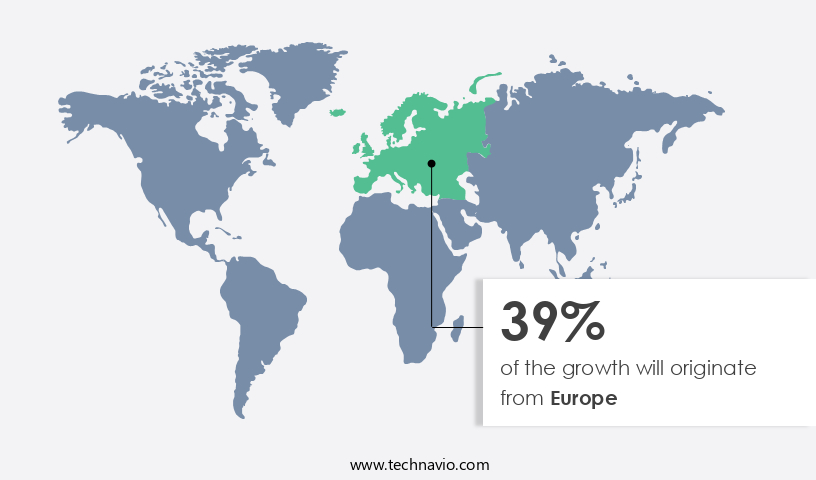
Organic Chocolate Market Share by Geography

For more insights on the market share of various regions Request Free Sample

Organic chocolate has gained significant popularity in the confectionery industry, particularly in Europe, where the preference for organic goods is on the rise. The European market for organic chocolate, including organic dark, milk, and white varieties, is witnessing substantial growth due to the increasing demand for fine-flavored cocoa. The region's organic chocolate manufacturing industry requires large quantities of cocoa beans, leading to a surge in demand for these beans from countries practicing organic farming. Organic farming practices, which exclude the use of artificial fertilizers and pesticides, are essential for soil preservation and sustainable farming. The European Union (EU) has strict regulations regarding organic farming, ensuring the highest standards for organic products.

These regulations have made Europe a prominent region in The market. Major markets for organic chocolate in Europe include France, Switzerland, Germany, and the UK. The increasing number of product innovations and launches is expected to drive the growth of the highly competitive market in Europe during the forecast period. As consumers become more health-conscious and environmentally aware, the demand for organic chocolate is likely to continue increasing in the region.

Market Dynamics

Our researchers analyzed the data with 2023 as the base year, along with the key drivers, trends, and challenges. A holistic analysis of drivers will help companies refine their marketing strategies to gain a competitive advantage.

Market Driver

Increasing premiumization of organic chocolates is the key driver of the market. The market in the confectionery industry is experiencing significant growth, with a focus on organic farming practices and the production of clean-label, health-conscious chocolate products. companies, such as Divine Chocolate and ChocoBee, are prioritizing soil preservation and plant protection, avoiding the use of artificial fertilizers and pesticides. This approach resonates with consumers seeking premium, high-quality organic chocolate, including dark, white, and milk varieties. The demand for organic chocolate spreads, such as dark chocolate and milk chocolate spreads, as well as hazelnut chocolate spread, is also increasing. Valeo Foods and other market players are responding by expanding their organic product offerings and emphasizing the benefits of organically produced cocoa.

Moreover, the cocoa industry, including chocolate confectioneries, cocoa liquor, chocolate couverture, cocoa butter, and cocoa powder, is benefiting from this trend. Consumers are increasingly seeking healthy eating options and are willing to pay a premium for organic and clean-label products. The organic cocoa industry is expected to continue growing, with an emphasis on transparency and sustainability. The market is not limited to traditional chocolate products. It also includes organic fruit spreads, jams, and marmalades, as well as dairy beverages and cocoa beverages. As consumers continue to prioritize health and wellness, the demand for organic chocolate and related products is expected to remain strong.

Market Trends

Growing developments in organic chocolate industry is the upcoming trend in the market. The market in the confectionery industry is witnessing significant growth due to increasing consumer demand for organic and ethically sourced products. Organic chocolate manufacturers are focusing on initiatives that promote fair trade and sustainable farming practices. For instance, some companies are ensuring that cocoa farmers receive fair compensation and are implementing organic farming methods that avoid the use of artificial fertilizers and pesticides for soil preservation and plant protection. Recent developments in the market include Hu Kitchen's launch of dairy milk chocolate options sourced from grass-fed cows, catering to consumers seeking ethical and sustainable dairy products.

Additionally, Theobroma Chocolat introduced "Yummy Zero Sugar," a groundbreaking innovation in organic chocolate, providing consumers with a sugar-free option. Valeo Foods, ChocoBee, and other players in the market are also focusing on clean-label products, using organically produced cocoa and organic cocoa industry ingredients such as cocoa butter, cocoa liquor, chocolate couverture, and cocoa butter blocks. The market also includes organic chocolate spreads like dark chocolate spread, milk chocolate spread, and hazelnut chocolate spread. The organic food fair is another platform showcasing a range of organic food products, including fruit spread, jam, marmalade, and hazelnut segment, highlighting the growing popularity of organic products in the chocolate confectionery and cocoa industry. The trend towards healthy eating and clean-label products is driving the demand for organic chocolate, beverages, cocoa powder, and other chocolate confectioneries.

Market Challenge

High production costs associated with organic farming and processing is a key challenge affecting the market growth. The market in the confectionery industry is characterized by higher production costs due to the requirements of organic farming. In contrast to conventional chocolate production, organic farming adheres to stringent regulations, prohibiting synthetic pesticides, herbicides, and fertilizers. These regulations can lead to lower yields and increased production expenses for organic cocoa farmers. Organic farming practices, such as crop rotation, natural pest control, and soil conservation, necessitate additional labor and resources compared to conventional farming methods. Farmers must also invest in organic certifications and compliance measures to meet regulatory standards, further increasing production costs.

However, organic chocolate offerings include Dark, White, and Milk varieties from companies like Divine Chocolate and ChocoBee. The Organic Cocoa Industry also produces organic cocoa powder, cocoa liquor, chocolate couverture, cocoa butter blocks, chips, and liquid cocoa butter for use in chocolate confectioneries, cakes, pastries, biscuits, dairy beverages, and healthy eating products. Organic Food Fairs showcase a range of organic food products, including organic chocolate spreads like Dark, Milk, and Hazelnut, as well as fruit spreads, jams, and marmalades. Valeo Foods and other market players offer clean-label, organically produced cocoa and chocolate products. The market is a niche segment of the chocolate confectionery and cocoa industry, with a focus on sustainable farming practices and health-conscious consumers.

Exclusive Customer Landscape

The market forecasting report includes the adoption lifecycle of the market, covering from the innovator's stage to the laggard's stage. It focuses on adoption rates in different regions based on penetration. Furthermore, the report also includes key purchase criteria and drivers of price sensitivity to help companies evaluate and develop their market growth analysis strategies.
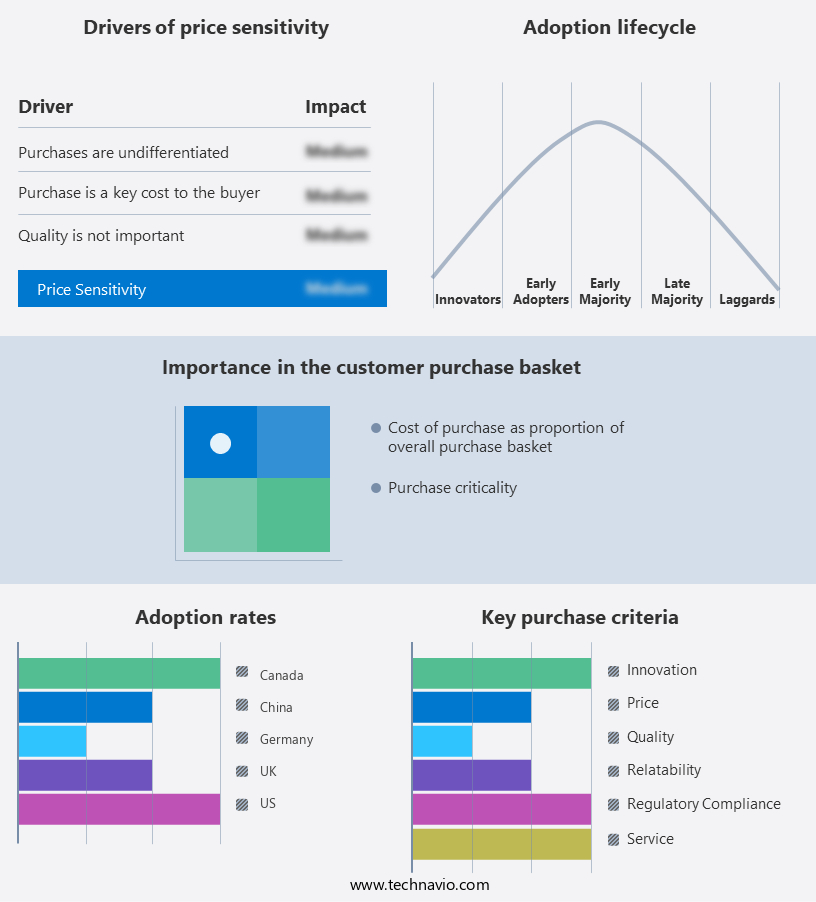
Organic Chocolate Market Share by Geography

 Customer Landscape

Key Companies & Market Insights

Companies are implementing various strategies, such as strategic alliances, partnerships, mergers and acquisitions, geographical expansion, and product/service launches, to enhance their presence in the market.

Alter Eco: The company offers organic chocolate such as super blackout, dark salted brown butter, dark salted burnt caramel, deep dark sea salt, deep dark classic blackout, mint blackout organic dark chocolate, and others.

The market research and growth report includes detailed analyses of the competitive landscape of the market and information about key companies, including:

  • Alter Eco
  • American Licorice Co.
  • Barry Callebaut AG
  • Chocolat Bernrain AG
  • Compartes Chocolatier
  • Endangered Species Chocolate LLC
  • Fortissimo Chocolates Ltd.
  • Giddy Yoyo Inc.
  • HOFER KG
  • Ludwig Weinrich GmbH and Co. KG
  • Mason and Co.
  • Mondelez International Inc.
  • Montezumas Direct Ltd.
  • Newmans Own Inc.
  • Nibmor Inc.
  • Pronatec AG
  • Rococo Chocolates London Ltd.
  • Stern Wywiol Gruppe GmbH and Co. KG
  • Taza Chocolate
  • The Grenada Chocolate Co. Ltd.
  • The Hershey Co.
  • Theobroma Chocolat

Qualitative and quantitative analysis of companies has been conducted to help clients understand the wider business environment as well as the strengths and weaknesses of key market players. Data is qualitatively analyzed to categorize companies as pure play, category-focused, industry-focused, and diversified; it is quantitatively analyzed to categorize companies as dominant, leading, strong, tentative, and weak.

Research Analyst Overview

Organic chocolate is a popular choice in the confectionery industry for those seeking healthier and ethically sourced treats. Unlike conventional chocolate, organic chocolate is produced using organic farming methods, avoiding artificial fertilizers and pesticides. This results in better soil preservation and plant protection, ensuring high-quality cocoa beans. Organic chocolate comes in various forms, including dark, white, and milk varieties. Brands like Divine Chocolate and Valeo Foods offer organic dark chocolate, vegan/paleo options, and organic chocolate spreads. These spreads include dark chocolate spread, milk chocolate spread, and hazelnut chocolate spread. The organic cocoa industry focuses on clean-label products, with organic cocoa powder, cocoa liquor, chocolate couverture, cocoa butter blocks, and cocoa butter used in chocolates, beverages, and baked goods like cakes, pastries, biscuits, and dairy beverages. Organic food fairs showcase a wide range of organic food products, including fruit spreads, jams, and marmalades in the hazelnut segment. Organic chocolate production supports cocoa farmers, ensuring fair wages and sustainable farming practices. The organic cocoa industry's commitment to organic farming and clean-label products caters to consumers' growing demand for healthy eating and ethically sourced products.

Market Scope

Report Coverage

Details

Page number

162

Base year

2023

Historic period

2018-2022

Forecast period

2024-2028

Growth momentum & CAGR

Accelerate at a CAGR of 6.05%

Market growth 2024-2028

USD 345.01 million

Market structure

Fragmented

YoY growth 2023-2024(%)

5.45

Regional analysis

Europe, North America, APAC, South America, and Middle East and Africa

Performing market contribution

Europe at 39%

Key countries

US, Canada, China, Germany, and UK

Competitive landscape

Leading Companies, Market Positioning of Companies, Competitive Strategies, and Industry Risks

Key companies profiled

Alter Eco, American Licorice Co., Barry Callebaut AG, Chocolat Bernrain AG, Compartes Chocolatier, Endangered Species Chocolate LLC, Fortissimo Chocolates Ltd., Giddy Yoyo Inc., HOFER KG, Ludwig Weinrich GmbH and Co. KG, Mason and Co., Mondelez International Inc., Montezumas Direct Ltd., Newmans Own Inc., Nibmor Inc., Pronatec AG, Rococo Chocolates London Ltd., Stern Wywiol Gruppe GmbH and Co. KG, Taza Chocolate, The Grenada Chocolate Co. Ltd., The Hershey Co., and Theobroma Chocolat

Market dynamics

Parent market analysis, market growth inducers and obstacles, market forecast, fast-growing and slow-growing segment analysis, COVID-19 impact and recovery analysis and future consumer dynamics, market condition analysis for the forecast period

Customization purview

If our market report has not included the data that you are looking for, you can reach out to our analysts and get segments customized.

Request Free Sample

What are the Key Data Covered in this Market Research and Growth Report?

  • CAGR of the market during the forecast period
  • Detailed information on factors that will drive the market growth and forecasting between 2024 and 2028
  • Precise estimation of the size of the market  and its contribution of the market in focus to the parent market
  • Accurate predictions about upcoming market growth and trends and changes in consumer behaviour
  • Growth of the market across Europe, North America, APAC, South America, and Middle East and Africa
  • Thorough analysis of the market's competitive landscape and detailed information about companies
  • Comprehensive analysis of factors that will challenge the growth of market companies

We can help! Our analysts can customize this market research report to meet your requirements. Get in touch

1 Executive Summary

  • 1.1 Market overview
    • Exhibit 01: Executive Summary – Chart on Market Overview
    • Exhibit 02: Executive Summary – Data Table on Market Overview
    • Exhibit 03: Executive Summary – Chart on Global Market Characteristics
    • Exhibit 04: Executive Summary – Chart on Market by Geography
    • Exhibit 05: Executive Summary – Chart on Market Segmentation by Type
    • Exhibit 06: Executive Summary – Chart on Market Segmentation by Distribution Channel
    • Exhibit 07: Executive Summary – Chart on Incremental Growth
    • Exhibit 08: Executive Summary – Data Table on Incremental Growth
    • Exhibit 09: Executive Summary – Chart on Vendor Market Positioning

2 Market Landscape

  • 2.1 Market ecosystem
    • Exhibit 10: Parent market
    • Exhibit 11: Market Characteristics

3 Market Sizing

  • 3.1 Market definition
    • Exhibit 12: Offerings of vendors included in the market definition
  • 3.2 Market segment analysis
    • Exhibit 13: Market segments
  • 3.3 Market size 2023
    • 3.4 Market outlook: Forecast for 2023-2028
      • Exhibit 14: Chart on Global - Market size and forecast 2023-2028 ($ million)
      • Exhibit 15: Data Table on Global - Market size and forecast 2023-2028 ($ million)
      • Exhibit 16: Chart on Global Market: Year-over-year growth 2023-2028 (%)
      • Exhibit 17: Data Table on Global Market: Year-over-year growth 2023-2028 (%)

    4 Historic Market Size

    • 4.1 Global organic chocolate market 2018 - 2022
      • Exhibit 18: Historic Market Size – Data Table on global organic chocolate market 2018 - 2022 ($ million)
    • 4.2 Type Segment Analysis 2018 - 2022
      • Exhibit 19: Historic Market Size – Type Segment 2018 - 2022 ($ million)
    • 4.3 Distribution channel Segment Analysis 2018 - 2022
      • Exhibit 20: Historic Market Size – Distribution channel Segment 2018 - 2022 ($ million)
    • 4.4 Geography Segment Analysis 2018 - 2022
      • Exhibit 21: Historic Market Size – Geography Segment 2018 - 2022 ($ million)
    • 4.5 Country Segment Analysis 2018 - 2022
      • Exhibit 22: Historic Market Size – Country Segment 2018 - 2022 ($ million)

    5 Five Forces Analysis

    • 5.1 Five forces summary
      • Exhibit 23: Five forces analysis - Comparison between 2023 and 2028
    • 5.2 Bargaining power of buyers
      • Exhibit 24: Chart on Bargaining power of buyers – Impact of key factors 2023 and 2028
    • 5.3 Bargaining power of suppliers
      • Exhibit 25: Bargaining power of suppliers – Impact of key factors in 2023 and 2028
    • 5.4 Threat of new entrants
      • Exhibit 26: Threat of new entrants – Impact of key factors in 2023 and 2028
    • 5.5 Threat of substitutes
      • Exhibit 27: Threat of substitutes – Impact of key factors in 2023 and 2028
    • 5.6 Threat of rivalry
      • Exhibit 28: Threat of rivalry – Impact of key factors in 2023 and 2028
    • 5.7 Market condition
      • Exhibit 29: Chart on Market condition - Five forces 2023 and 2028

    6 Market Segmentation by Type

    • 6.1 Market segments
      • Exhibit 30: Chart on Type - Market share 2023-2028 (%)
      • Exhibit 31: Data Table on Type - Market share 2023-2028 (%)
    • 6.2 Comparison by Type
      • Exhibit 32: Chart on Comparison by Type
      • Exhibit 33: Data Table on Comparison by Type
    • 6.3 Organic dark chocolate - Market size and forecast 2023-2028
      • Exhibit 34: Chart on Organic dark chocolate - Market size and forecast 2023-2028 ($ million)
      • Exhibit 35: Data Table on Organic dark chocolate - Market size and forecast 2023-2028 ($ million)
      • Exhibit 36: Chart on Organic dark chocolate - Year-over-year growth 2023-2028 (%)
      • Exhibit 37: Data Table on Organic dark chocolate - Year-over-year growth 2023-2028 (%)
    • 6.4 Organic milk chocolate - Market size and forecast 2023-2028
      • Exhibit 38: Chart on Organic milk chocolate - Market size and forecast 2023-2028 ($ million)
      • Exhibit 39: Data Table on Organic milk chocolate - Market size and forecast 2023-2028 ($ million)
      • Exhibit 40: Chart on Organic milk chocolate - Year-over-year growth 2023-2028 (%)
      • Exhibit 41: Data Table on Organic milk chocolate - Year-over-year growth 2023-2028 (%)
    • 6.5 Organic white chocolate - Market size and forecast 2023-2028
      • Exhibit 42: Chart on Organic white chocolate - Market size and forecast 2023-2028 ($ million)
      • Exhibit 43: Data Table on Organic white chocolate - Market size and forecast 2023-2028 ($ million)
      • Exhibit 44: Chart on Organic white chocolate - Year-over-year growth 2023-2028 (%)
      • Exhibit 45: Data Table on Organic white chocolate - Year-over-year growth 2023-2028 (%)
    • 6.6 Market opportunity by Type
      • Exhibit 46: Market opportunity by Type ($ million)
      • Exhibit 47: Data Table on Market opportunity by Type ($ million)

    7 Market Segmentation by Distribution Channel

    • 7.1 Market segments
      • Exhibit 48: Chart on Distribution Channel - Market share 2023-2028 (%)
      • Exhibit 49: Data Table on Distribution Channel - Market share 2023-2028 (%)
    • 7.2 Comparison by Distribution Channel
      • Exhibit 50: Chart on Comparison by Distribution Channel
      • Exhibit 51: Data Table on Comparison by Distribution Channel
    • 7.3 Offline - Market size and forecast 2023-2028
      • Exhibit 52: Chart on Offline - Market size and forecast 2023-2028 ($ million)
      • Exhibit 53: Data Table on Offline - Market size and forecast 2023-2028 ($ million)
      • Exhibit 54: Chart on Offline - Year-over-year growth 2023-2028 (%)
      • Exhibit 55: Data Table on Offline - Year-over-year growth 2023-2028 (%)
    • 7.4 Online - Market size and forecast 2023-2028
      • Exhibit 56: Chart on Online - Market size and forecast 2023-2028 ($ million)
      • Exhibit 57: Data Table on Online - Market size and forecast 2023-2028 ($ million)
      • Exhibit 58: Chart on Online - Year-over-year growth 2023-2028 (%)
      • Exhibit 59: Data Table on Online - Year-over-year growth 2023-2028 (%)
    • 7.5 Market opportunity by Distribution Channel
      • Exhibit 60: Market opportunity by Distribution Channel ($ million)
      • Exhibit 61: Data Table on Market opportunity by Distribution Channel ($ million)

    8 Customer Landscape

    • 8.1 Customer landscape overview
      • Exhibit 62: Analysis of price sensitivity, lifecycle, customer purchase basket, adoption rates, and purchase criteria

    9 Geographic Landscape

    • 9.1 Geographic segmentation
      • Exhibit 63: Chart on Market share by geography 2023-2028 (%)
      • Exhibit 64: Data Table on Market share by geography 2023-2028 (%)
    • 9.2 Geographic comparison
      • Exhibit 65: Chart on Geographic comparison
      • Exhibit 66: Data Table on Geographic comparison
    • 9.3 Europe - Market size and forecast 2023-2028
      • Exhibit 67: Chart on Europe - Market size and forecast 2023-2028 ($ million)
      • Exhibit 68: Data Table on Europe - Market size and forecast 2023-2028 ($ million)
      • Exhibit 69: Chart on Europe - Year-over-year growth 2023-2028 (%)
      • Exhibit 70: Data Table on Europe - Year-over-year growth 2023-2028 (%)
    • 9.4 North America - Market size and forecast 2023-2028
      • Exhibit 71: Chart on North America - Market size and forecast 2023-2028 ($ million)
      • Exhibit 72: Data Table on North America - Market size and forecast 2023-2028 ($ million)
      • Exhibit 73: Chart on North America - Year-over-year growth 2023-2028 (%)
      • Exhibit 74: Data Table on North America - Year-over-year growth 2023-2028 (%)
    • 9.5 APAC - Market size and forecast 2023-2028
      • Exhibit 75: Chart on APAC - Market size and forecast 2023-2028 ($ million)
      • Exhibit 76: Data Table on APAC - Market size and forecast 2023-2028 ($ million)
      • Exhibit 77: Chart on APAC - Year-over-year growth 2023-2028 (%)
      • Exhibit 78: Data Table on APAC - Year-over-year growth 2023-2028 (%)
    • 9.6 South America - Market size and forecast 2023-2028
      • Exhibit 79: Chart on South America - Market size and forecast 2023-2028 ($ million)
      • Exhibit 80: Data Table on South America - Market size and forecast 2023-2028 ($ million)
      • Exhibit 81: Chart on South America - Year-over-year growth 2023-2028 (%)
      • Exhibit 82: Data Table on South America - Year-over-year growth 2023-2028 (%)
    • 9.7 Middle East and Africa - Market size and forecast 2023-2028
      • Exhibit 83: Chart on Middle East and Africa - Market size and forecast 2023-2028 ($ million)
      • Exhibit 84: Data Table on Middle East and Africa - Market size and forecast 2023-2028 ($ million)
      • Exhibit 85: Chart on Middle East and Africa - Year-over-year growth 2023-2028 (%)
      • Exhibit 86: Data Table on Middle East and Africa - Year-over-year growth 2023-2028 (%)
    • 9.8 US - Market size and forecast 2023-2028
      • Exhibit 87: Chart on US - Market size and forecast 2023-2028 ($ million)
      • Exhibit 88: Data Table on US - Market size and forecast 2023-2028 ($ million)
      • Exhibit 89: Chart on US - Year-over-year growth 2023-2028 (%)
      • Exhibit 90: Data Table on US - Year-over-year growth 2023-2028 (%)
    • 9.9 Germany - Market size and forecast 2023-2028
      • Exhibit 91: Chart on Germany - Market size and forecast 2023-2028 ($ million)
      • Exhibit 92: Data Table on Germany - Market size and forecast 2023-2028 ($ million)
      • Exhibit 93: Chart on Germany - Year-over-year growth 2023-2028 (%)
      • Exhibit 94: Data Table on Germany - Year-over-year growth 2023-2028 (%)
    • 9.10 UK - Market size and forecast 2023-2028
      • Exhibit 95: Chart on UK - Market size and forecast 2023-2028 ($ million)
      • Exhibit 96: Data Table on UK - Market size and forecast 2023-2028 ($ million)
      • Exhibit 97: Chart on UK - Year-over-year growth 2023-2028 (%)
      • Exhibit 98: Data Table on UK - Year-over-year growth 2023-2028 (%)
    • 9.11 China - Market size and forecast 2023-2028
      • Exhibit 99: Chart on China - Market size and forecast 2023-2028 ($ million)
      • Exhibit 100: Data Table on China - Market size and forecast 2023-2028 ($ million)
      • Exhibit 101: Chart on China - Year-over-year growth 2023-2028 (%)
      • Exhibit 102: Data Table on China - Year-over-year growth 2023-2028 (%)
    • 9.12 Canada - Market size and forecast 2023-2028
      • Exhibit 103: Chart on Canada - Market size and forecast 2023-2028 ($ million)
      • Exhibit 104: Data Table on Canada - Market size and forecast 2023-2028 ($ million)
      • Exhibit 105: Chart on Canada - Year-over-year growth 2023-2028 (%)
      • Exhibit 106: Data Table on Canada - Year-over-year growth 2023-2028 (%)
    • 9.13 Market opportunity by geography
      • Exhibit 107: Market opportunity by geography ($ million)
      • Exhibit 108: Data Tables on Market opportunity by geography ($ million)

    10 Drivers, Challenges, and Trends

    • 10.1 Market drivers
      • 10.2 Market challenges
        • 10.3 Impact of drivers and challenges
          • Exhibit 109: Impact of drivers and challenges in 2023 and 2028
        • 10.4 Market trends

          11 Vendor Landscape

          • 11.1 Overview
            • 11.2 Vendor landscape
              • Exhibit 110: Overview on Criticality of inputs and Factors of differentiation
            • 11.3 Landscape disruption
              • Exhibit 111: Overview on factors of disruption
            • 11.4 Industry risks
              • Exhibit 112: Impact of key risks on business

            12 Vendor Analysis

            • 12.1 Vendors covered
              • Exhibit 113: Vendors covered
            • 12.2 Market positioning of vendors
              • Exhibit 114: Matrix on vendor position and classification
            • 12.3 Alter Eco
              • Exhibit 115: Alter Eco - Overview
              • Exhibit 116: Alter Eco - Product / Service
              • Exhibit 117: Alter Eco - Key offerings
            • 12.4 American Licorice Co.
              • Exhibit 118: American Licorice Co. - Overview
              • Exhibit 119: American Licorice Co. - Product / Service
              • Exhibit 120: American Licorice Co. - Key offerings
            • 12.5 Barry Callebaut AG
              • Exhibit 121: Barry Callebaut AG - Overview
              • Exhibit 122: Barry Callebaut AG - Business segments
              • Exhibit 123: Barry Callebaut AG - Key news
              • Exhibit 124: Barry Callebaut AG - Key offerings
              • Exhibit 125: Barry Callebaut AG - Segment focus
            • 12.6 Chocolat Bernrain AG
              • Exhibit 126: Chocolat Bernrain AG - Overview
              • Exhibit 127: Chocolat Bernrain AG - Product / Service
              • Exhibit 128: Chocolat Bernrain AG - Key offerings
            • 12.7 Compartes Chocolatier
              • Exhibit 129: Compartes Chocolatier - Overview
              • Exhibit 130: Compartes Chocolatier - Product / Service
              • Exhibit 131: Compartes Chocolatier - Key offerings
            • 12.8 Endangered Species Chocolate LLC
              • Exhibit 132: Endangered Species Chocolate LLC - Overview
              • Exhibit 133: Endangered Species Chocolate LLC - Product / Service
              • Exhibit 134: Endangered Species Chocolate LLC - Key offerings
            • 12.9 Giddy Yoyo Inc.
              • Exhibit 135: Giddy Yoyo Inc. - Overview
              • Exhibit 136: Giddy Yoyo Inc. - Product / Service
              • Exhibit 137: Giddy Yoyo Inc. - Key offerings
            • 12.10 HOFER KG
              • Exhibit 138: HOFER KG - Overview
              • Exhibit 139: HOFER KG - Product / Service
              • Exhibit 140: HOFER KG - Key offerings
            • 12.11 Ludwig Weinrich GmbH and Co. KG
              • Exhibit 141: Ludwig Weinrich GmbH and Co. KG - Overview
              • Exhibit 142: Ludwig Weinrich GmbH and Co. KG - Key offerings
            • 12.12 Mondelez International Inc.
              • Exhibit 143: Mondelez International Inc. - Overview
              • Exhibit 144: Mondelez International Inc. - Business segments
              • Exhibit 145: Mondelez International Inc. - Key news
              • Exhibit 146: Mondelez International Inc. - Key offerings
              • Exhibit 147: Mondelez International Inc. - Segment focus
            • 12.13 Montezumas Direct Ltd.
              • Exhibit 148: Montezumas Direct Ltd. - Overview
              • Exhibit 149: Montezumas Direct Ltd. - Product / Service
              • Exhibit 150: Montezumas Direct Ltd. - Key offerings
            • 12.14 Nibmor Inc.
              • Exhibit 151: Nibmor Inc. - Overview
              • Exhibit 152: Nibmor Inc. - Product / Service
              • Exhibit 153: Nibmor Inc. - Key offerings
            • 12.15 Taza Chocolate
              • Exhibit 154: Taza Chocolate - Overview
              • Exhibit 155: Taza Chocolate - Product / Service
              • Exhibit 156: Taza Chocolate - Key offerings
            • 12.16 The Grenada Chocolate Co. Ltd.
              • Exhibit 157: The Grenada Chocolate Co. Ltd. - Overview
              • Exhibit 158: The Grenada Chocolate Co. Ltd. - Product / Service
              • Exhibit 159: The Grenada Chocolate Co. Ltd. - Key offerings
            • 12.17 The Hershey Co.
              • Exhibit 160: The Hershey Co. - Overview
              • Exhibit 161: The Hershey Co. - Business segments
              • Exhibit 162: The Hershey Co. - Key news
              • Exhibit 163: The Hershey Co. - Key offerings
              • Exhibit 164: The Hershey Co. - Segment focus

            13 Appendix

            • 13.1 Scope of the report
              • 13.2 Inclusions and exclusions checklist
                • Exhibit 165: Inclusions checklist
                • Exhibit 166: Exclusions checklist
              • 13.3 Currency conversion rates for US$
                • Exhibit 167: Currency conversion rates for US$
              • 13.4 Research methodology
                • Exhibit 168: Research methodology
                • Exhibit 169: Validation techniques employed for market sizing
                • Exhibit 170: Information sources
              • 13.5 List of abbreviations
                • Exhibit 171: List of abbreviations

              Research Methodology

              Technavio presents a detailed picture of the market by way of study, synthesis, and summation of data from multiple sources. The analysts have presented the various facets of the market with a particular focus on identifying the key industry influencers. The data thus presented is comprehensive, reliable, and the result of extensive research, both primary and secondary.

              INFORMATION SOURCES

              Primary sources

              • Manufacturers and suppliers
              • Channel partners
              • Industry experts
              • Strategic decision makers

              Secondary sources

              • Industry journals and periodicals
              • Government data
              • Financial reports of key industry players
              • Historical data
              • Press releases

              DATA ANALYSIS

              Data Synthesis

              • Collation of data
              • Estimation of key figures
              • Analysis of derived insights

              Data Validation

              • Triangulation with data models
              • Reference against proprietary databases
              • Corroboration with industry experts

              REPORT WRITING

              Qualitative

              • Market drivers
              • Market challenges
              • Market trends
              • Five forces analysis

              Quantitative

              • Market size and forecast
              • Market segmentation
              • Geographical insights
              • Competitive landscape

              Interested in this report?

              Get your sample now to see our research methodology and insights!

              Download Now

              Frequently Asked Questions

              Organic Chocolate market growth will increase by $ 345.01 mn during 2024-2028 .

              The Organic Chocolate market is expected to grow at a CAGR of 6.05% during 2024-2028 .

              Organic Chocolate market is segmented by Type( Organic dark chocolate, Organic milk chocolate, Organic white chocolate) Distribution Channel( Offline, Online, APAC, South America, Middle East and Africa)

              Alter Eco, American Licorice Co., Barry Callebaut AG, Chocolat Bernrain AG, Compartes Chocolatier, Endangered Species Chocolate LLC, Fortissimo Chocolates Ltd., Giddy Yoyo Inc., HOFER KG, Ludwig Weinrich GmbH and Co. KG, Mason and Co., Mondelez International Inc., Montezumas Direct Ltd., Newmans Own Inc., Nibmor Inc., Pronatec AG, Rococo Chocolates London Ltd., Stern Wywiol Gruppe GmbH and Co. KG, Taza Chocolate, The Grenada Chocolate Co. Ltd., The Hershey Co., Theobroma Chocolat are a few of the key vendors in the Organic Chocolate market.

              Europe will register the highest growth rate of 39% among the other regions. Therefore, the Organic Chocolate market in Europe is expected to garner significant business opportunities for the vendors during the forecast period.

              US, Canada, China, Germany, UK

              • Increasing premiumization of organic chocolatesThe global demand for premium organic chocolates is growing is the driving factor this market.
              • particularly in emerging economies such as China is the driving factor this market.
              • India is the driving factor this market.
              • and Brazil. Vendors such as Barry Callebaut and Mondelez International are increasing efforts to improve differentiation is the driving factor this market.
              • premiumization is the driving factor this market.
              • and personalization in their chocolate segments with new premium offerings. Vendors of premium organic chocolates get higher profit margins and focus on better taste and quality. Thus is the driving factor this market.
              • currently is the driving factor this market.
              • many players are launching premium truffle chocolates to attract consumers by price is the driving factor this market.
              • packaging is the driving factor this market.
              • ingredients is the driving factor this market.
              • exclusivity is the driving factor this market.
              • and provenance. The improving lifestyle of consumers is the driving factor this market.
              • owing to rising disposable income and growing health consciousness is the driving factor this market.
              • is driving the demand for premium and luxurious confectionery items. Many vendors have launched their premium products exclusively for elite customers. Various food and beverage manufacturers are increasingly focusing on niche products such as sugar-free organic chocolates in a bid to earn more profits. Premiumization strategies enable vendors to differentiate their products in terms of pricing. Also is the driving factor this market.
              • with the increase in awareness about health and wellness is the driving factor this market.
              • consumers are willing to pay extra for low-calorie is the driving factor this market.
              • low-fat food and beverages is the driving factor this market.
              • including sugar-free organic chocolates. Hence is the driving factor this market.
              • vendors are offering high-priced additional products in the global organic chocolate market. Thus is the driving factor this market.
              • increasing premiumization of organic chocolates will drive the growth of the market in focus during the forecast period. is the driving factor this market.

              The Organic Chocolate market vendors should focus on grabbing business opportunities from the Organic dark chocolate segment as it accounted for the largest market share in the base year.
