



Osteoarthritis Therapeutics Market Size 2024-2028
The osteoarthritis therapeutics market size is forecast to increase by USD 4.57 billion at a CAGR of 9.49% between 2023 and 2028.
- The osteoarthritis treatment market is experiencing significant growth due to the rising prevalence of this chronic disease and the expanding research and development in this field. The high cost of treatment is a significant market driver, as patients often require long-term care and multiple therapies to manage their symptoms. Companies are focusing on developing cost-effective treatments, such as hyaluronic acid products, to address this challenge. Inflation also plays a role in market growth, as the cost of living increases and patients seek affordable treatment options. Overall, the market is expected to continue expanding, driven by the increasing burden of chronic diseases and the ongoing research and development efforts.
What will be the Size of the Osteoarthritis Therapeutics Market During the Forecast Period?
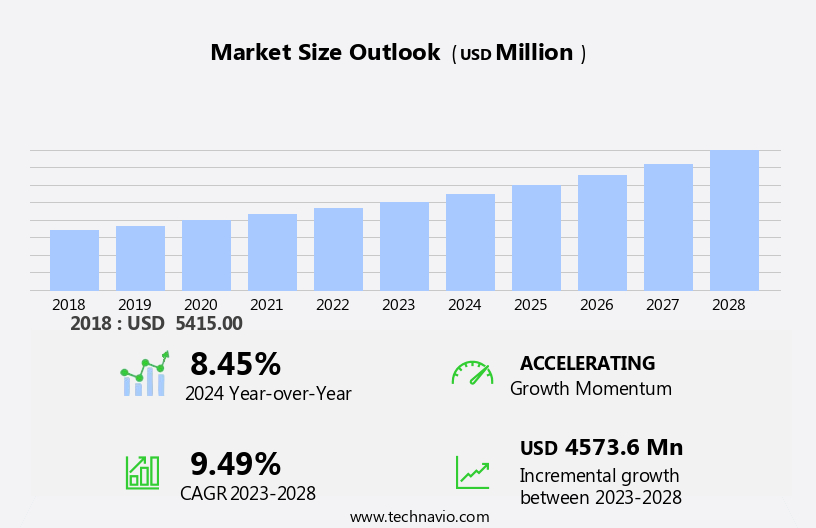
- Osteoarthritis (OA), a chronic degenerative joint disease, affects millions of individuals, leading to significant pain and disability. The market is witnessing steady growth due to the increasing prevalence of the disease and the unmet medical need for effective treatments. The current market for OA therapeutics comprises various classes of drugs, including pain relievers, topical agents, intra-articular agents, and nutraceuticals. Pain medications, such as nonsteroidal anti-inflammatory drugs (NSAIDs) and opioids, are commonly used for symptomatic relief. However, these medications come with potential side effects, including gastrointestinal issues and an increased risk of cardiovascular events.
- The demand for noninvasive approaches is on the rise, as patients seek alternatives to surgery and long-term use of pain medications. Topical agents, such as capsaicin and menthol, offer localized pain relief with minimal systemic side effects. Intra-articular agents, including hyaluronic acid products, provide direct delivery of therapeutics to the affected joint. Novel therapeutics, such as fibroblast growth factor-18 (FGF-18) and Sprifermin, are under investigation for their potential to slow down the progression of OA. These biological agents target the underlying causes of OA, including cartilage degradation and joint inflammation. Pharmacological methods are not the only approach to managing OA.
How is this Osteoarthritis Therapeutics Industry segmented and which is the largest segment?
The industry research report provides comprehensive data (region-wise segment analysis), with forecasts and estimates in "USD billion" for the period 2024-2028, as well as historical data from 2018-2022 for the following segments.
- Product
- Analgesics and NSAIDs
- Corticosteriods
- Viscosupplements
- Others
- Type
- Ankle osteoarthritis
- Hip osteoarthritis
- Knee osteoarthritis
- Others
- Geography
- North America
- US
- Europe
- Germany
- UK
- Asia
- China
- Japan
- Rest of World (ROW)
- North America
By Product Insights
- The analgesics and NSAIDs segment is estimated to witness significant growth during the forecast period.
Osteoarthritis, characterized by joint pain and anatomy damage due to wear and tear, requires effective therapeutic interventions. The analgesic and Over-the-Counter non-specific anti-inflammatory Drugs (OTC NSAIDs) segment is experiencing significant growth as they provide relief from the primary symptom, pain. Acetaminophen and NSAIDs like Ibuprofen and Naproxen are commonly used for managing pain in patients with knee osteoarthritis. NSAIDs offer additional benefits with their anti-inflammatory properties, making them increasingly popular. However, traditional non-selective NSAIDs have side effects such as gastric ulcers and kidney issues. Personalized medicine and biomarkers are emerging trends in osteoarthritis therapeutics. Corticosteroids and Duloxetine are other therapeutic options for treating osteoarthritis, with corticosteroids providing quick pain relief and Duloxetine offering long-term pain management through its dual mechanism of action on both pain and mood.
The market is anticipated to expand due to the increasing prevalence of the disease, especially among the aging population. This growth is driven by the rising awareness of the disease, technological advancements, and the development of new therapeutic options.
Get a glance at the market report of share of various segments Request Free Sample
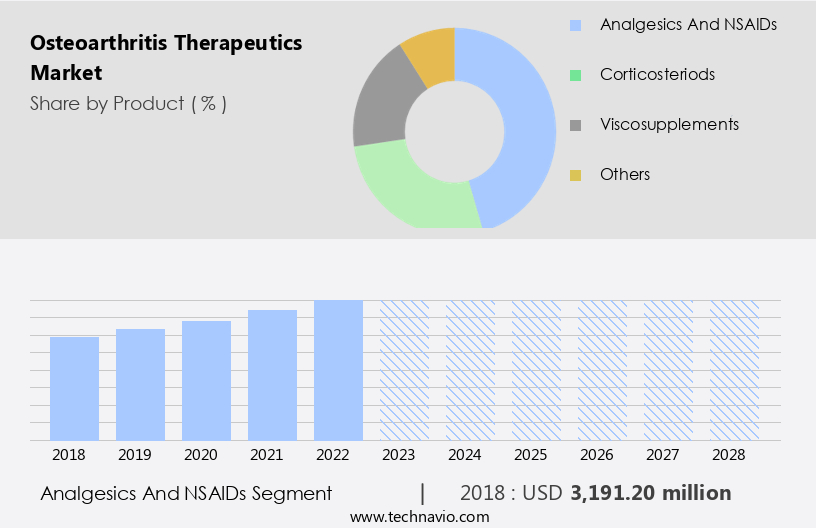
The Analgesics and NSAIDs segment was valued at USD 3.19 billion in 2018 and showed a gradual increase during the forecast period.
Regional Analysis
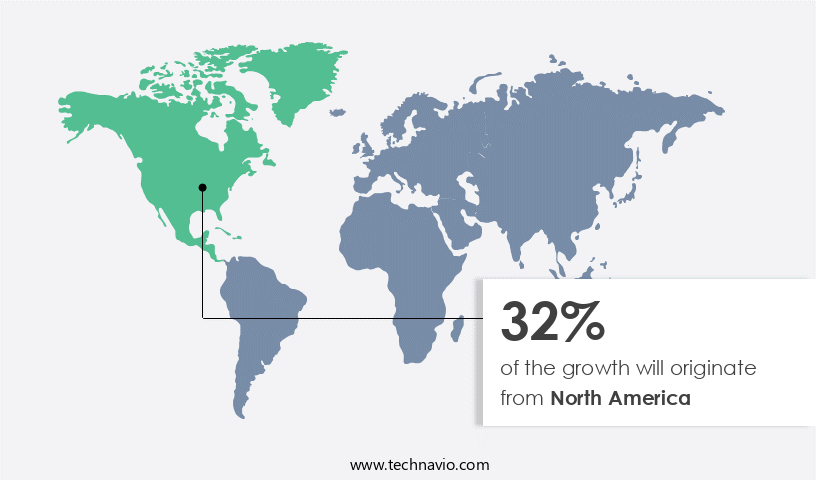
- North America is estimated to contribute 32% to the growth of the global market during the forecast period.
Technavio's analysts have elaborately explained the regional trends and drivers that shape the market during the forecast period.
For more insights on the market size of various regions, Request Free Sample
Osteoarthritis (OA), a common form of arthritis, affects millions of adults In the United States. Osteoarthritis is characterized by joint pain, stiffness, and loss of function. The high prevalence of this condition In the US presents a significant opportunity for the market. Clinical trials and preclinical research are ongoing to develop personalized medicines for OA. For instance, Anti-NGF therapy, which targets nerve growth factors, is being explored for its potential to alleviate pain.
Regulatory scenarios are being evaluated to ensure the safety and efficacy of these new therapies. Strategic alliances between industry players and research institutions are driving innovation in OA therapeutics. Pain management remains a priority, with a focus on developing effective treatments for knee osteoarthritis. As the market evolves, it is crucial to stay informed about the latest developments and regulatory scenarios.
Market Dynamics
Our researchers analyzed the data with 2023 as the base year, along with the key drivers, trends, and challenges. A holistic analysis of drivers will help companies refine their marketing strategies to gain a competitive advantage.
What are the key market drivers leading to the rise In the adoption of Osteoarthritis Therapeutics Industry?
The increasing incidence of osteoarthritis is the key driver of the market.
- The condition, characterized by the degeneration of cartilage In the joints, is influenced by various factors, including aging and obesity. As the population ages, the imbalance between catabolic and anabolic activities In the joints increases, leading to cartilage degeneration. Additionally, aging results in a decrease in muscle mass and an increase in fat mass, contributing to joint loading and the progression of osteoarthritis. The disease can affect various joints, including those In the hip, shoulder, hand, and small joints.
- The market for osteoarthritis encompasses several drug classifications and administration routes, such as oral and topical. Qualitative factors, including patient preferences and physician recommendations, and quantitative factors, such as efficacy and safety, play a significant role In the market's growth.
What are the market trends shaping the Osteoarthritis Therapeutics Industry?
Expanding research and development is the upcoming market trend.
- Osteoarthritis, a degenerative joint disease, is a significant health concern worldwide. The advancement of scientific research has led to a better comprehension of the molecular mechanisms underlying this condition. Consequently, potential drug targets have been identified to address the disease at its root cause. Two primary pro-inflammatory cytokines, interleukin-1 beta (IL-1?) and tumor necrosis factor-alpha (TNF-?), are under investigation for their role in cartilage degradation.
- TNF-? instigates inflammation In the synovial membrane, contributing to cartilage matrix deterioration. Moreover, various growth factors, including insulin growth factor 1, basic fibroblast growth factor, platelet-derived growth factor, bone morphogenetic proteins, and transforming growth factor beta 1, are essential for cartilage repair.
What challenges does the Osteoarthritis Therapeutics Industry face during its growth?
The high cost of treatment is a key challenge affecting the industry growth.
- Osteoarthritis, a chronic joint disease characterized by pain and impaired joint function, incurred significant financial statistics in US healthcare in 2013, ranking as the second most expensive condition treated in hospitals. Current treatments primarily provide symptomatic relief, necessitating ongoing medication use.
- The high cost of treatment persists despite the availability of affordable generic alternatives In the market. The scarcity of curative methods, such as stem cell and gene therapies, further complicates the situation. According to the Centers for Disease Control and Prevention (CDC), osteoarthritis treatment expenses have been a substantial challenge for the healthcare sector.
Exclusive Customer Landscape
The market forecasting report includes the adoption lifecycle of the market, covering from the innovator's stage to the laggard's stage. It focuses on adoption rates in different regions based on penetration. Furthermore, the market report also includes key purchase criteria and drivers of price sensitivity to help companies evaluate and develop their market growth analysis strategies.
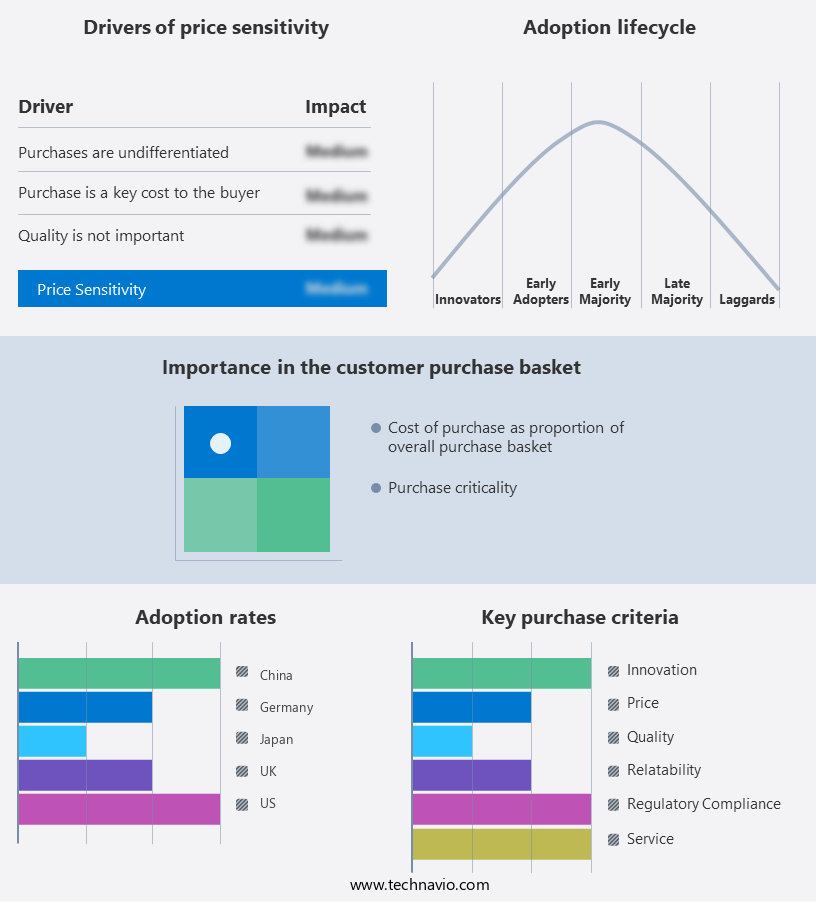
Customer Landscape
Key Companies & Market Insights
Companies are implementing various strategies, such as strategic alliances, market forecast, partnerships, mergers and acquisitions, geographical expansion, and product/service launches, to enhance their presence In the industry.
The industry research and growth report includes detailed analyses of the competitive landscape of the market and information about key companies, including:
- Abbott Laboratories
- Alvogen Iceland ehf
- Anika Therapeutics Inc.
- Avanos Medical Inc.
- Bayer AG
- Bioventus LLC
- Boehringer Ingelheim International GmbH
- F. Hoffmann La Roche Ltd.
- Ferring BV
- Fidia Farmaceutici Spa
- GlaxoSmithKline Plc
- Hanmi Pharm Co. Ltd.
- Horizon Therapeutics Plc
- Johnson and Johnson Services Inc.
- Novartis AG
- Pacira BioSciences Inc.
- Pharmed Ltd.
- Sanofi SA
- Viatris Inc.
- Zimmer Biomet Holdings Inc.
Qualitative and quantitative analysis of companies has been conducted to help clients understand the wider business environment as well as the strengths and weaknesses of key industry players. Data is qualitatively analyzed to categorize companies as pure play, category-focused, industry-focused, and diversified; it is quantitatively analyzed to categorize companies as dominant, leading, strong, tentative, and weak.
Research Analyst Overview
Osteoarthritis (OA) is a degenerative joint disease characterized by the breakdown of cartilage and underlying bone, leading to chronic pain and inflammation. The therapeutic market for OA focuses on providing relief from symptoms through various approaches, including pain medications, orthopedic braces, and nutraceuticals. Pain relievers remain a popular choice for managing OA symptoms. These include oral analgesics such as acetaminophen, nonsteroidal anti-inflammatory drugs (NSAIDs) like naproxen and ibuprofen, and prescription drugs like duloxetine. Topical agents and intra-articular agents are also used for localized pain relief. The market is witnessing a shift towards personalized medicine, with the identification of biomarkers playing a crucial role in the development of novel therapeutics, including orthobiologics and gene therapy, which offer targeted and innovative treatment options.
Furthermore, this includes anti-NGF therapy, which targets nerve growth factors to reduce pain. Pharmacological methods continue to dominate the OA therapeutics market, with ongoing clinical trials and preclinical research exploring new regulatory scenarios. The market is segmented based on the route of administration, including oral and topical, and distribution channels, including hospital pharmacies, online pharmacies, and retail pharmacies. Factors influencing the purchasing pattern include financial statistics, inflation, and the prevalence of chronic diseases such as OA In the aging population. The market for OA therapeutics is expected to grow significantly due to the increasing incidence of OA In the knee, hip, shoulder, hand, and small joints.
|
Market Scope |
|
|
Report Coverage |
Details |
|
Page number |
177 |
|
Base year |
2023 |
|
Historic period |
2018-2022 |
|
Forecast period |
2024-2028 |
|
Growth momentum & CAGR |
Accelerate at a CAGR of 9.49% |
|
Market Growth 2024-2028 |
USD 4.57 billion |
|
Market structure |
Fragmented |
|
YoY growth 2023-2024(%) |
8.45 |
|
Key countries |
US, UK, Japan, Germany, and China |
|
Competitive landscape |
Leading Companies, Market Positioning of Companies, Competitive Strategies, and Industry Risks |
What are the Key Data Covered in this Osteoarthritis Therapeutics Market Research and Growth Report?
- CAGR of the Osteoarthritis Therapeutics industry during the forecast period
- Detailed information on factors that will drive the market growth and forecasting between 2024 and 2028
- Precise estimation of the size of the market and its contribution of the industry in focus to the parent market
- Accurate predictions about upcoming growth and trends and changes in consumer behaviour
- Growth of the market across North America, Europe, Asia, and Rest of World (ROW)
- Thorough analysis of the market's competitive landscape and detailed information about companies
- Comprehensive analysis of factors that will challenge the osteoarthritis therapeutics market growth of industry companies
We can help! Our analysts can customize this osteoarthritis therapeutics market research report to meet your requirements.
 RIA -
RIA - 
