



Pea Protein Market Size 2024-2028
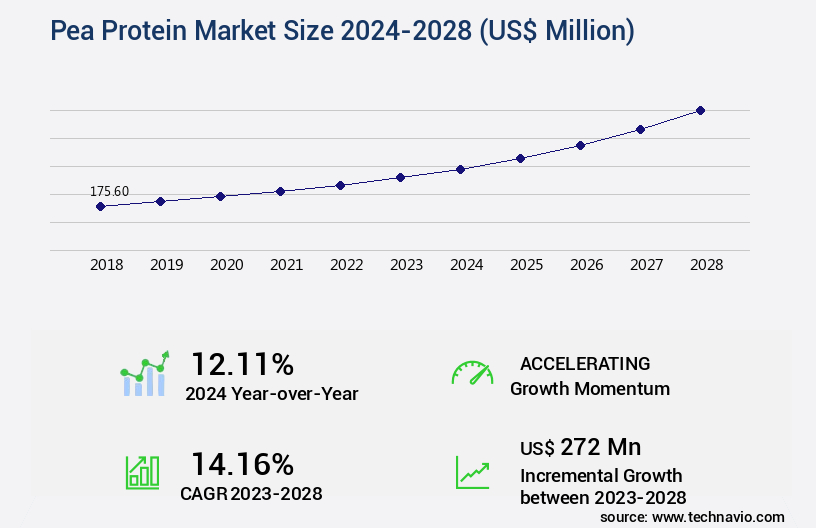
The pea protein market size is valued to increase by USD 272 million, at a CAGR of 14.16% from 2023 to 2028. Increasing demand for plant-based diets will drive the pea protein market.
Market Insights
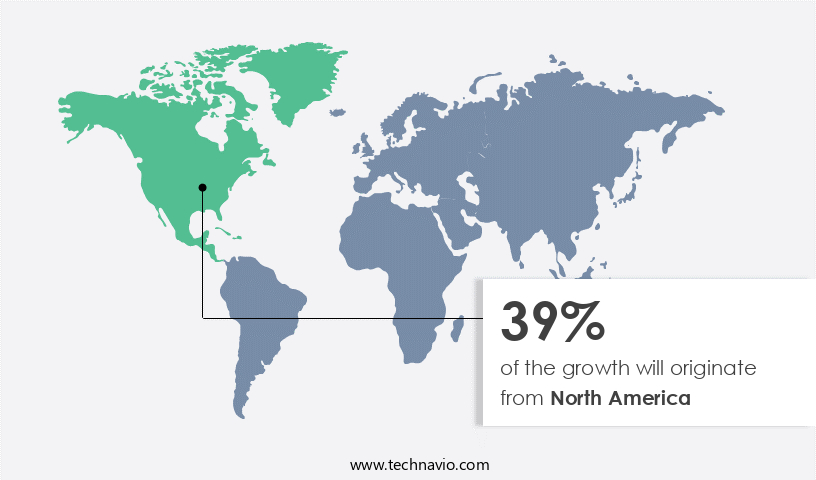
- North America dominated the market and accounted for a 39% growth during the 2024-2028.
- By Product - Isolates segment was valued at USD 83.10 million in 2022
- By Application - Dietary supplement segment accounted for the largest market revenue share in 2022
Market Size & Forecast
- Market Opportunities: USD 219.93 million
- Market Future Opportunities 2023: USD 272.00 million
- CAGR from 2023 to 2028 : 14.16%
Market Summary
- Pea protein, derived from yellow peas, has emerged as a prominent player in the global protein market, fueled by the increasing demand for plant-based diets and clean-labeled ingredients. The versatility of pea protein, which can be used in various food applications, from beverages to baked goods, has contributed to its popularity. The market's growth is driven by the rising health consciousness among consumers, who seek protein sources that are not only nutritious but also ethically sourced and environmentally friendly. Pea protein's production process is also noteworthy for its operational efficiency. Compared to traditional animal protein production, pea protein requires significantly fewer resources, including water and land.
- Furthermore, its production process generates fewer greenhouse gas emissions, making it an attractive alternative for businesses aiming to reduce their carbon footprint. One real-world business scenario illustrating the benefits of pea protein is a food manufacturing company that is optimizing its supply chain. By incorporating pea protein into its product line, the company can source a more sustainable and ethically produced ingredient, reducing the risk of supply chain disruptions and potential reputational damage associated with animal protein sourcing. Additionally, the company can market its products as vegan or vegetarian, catering to the growing consumer demand for plant-based options.
- In conclusion, the market is experiencing robust growth due to the increasing demand for plant-based diets, clean-labeled ingredients, and sustainable production methods. The versatility and operational efficiency of pea protein make it an attractive alternative to traditional animal protein sources, offering businesses opportunities to reduce their environmental impact, cater to consumer preferences, and optimize their supply chains.
What will be the size of the Pea Protein Market during the forecast period?
Get Key Insights on Market Forecast (PDF) Request Free Sample
- Pea protein, derived from yellow peas, has emerged as a popular alternative to traditional animal-based proteins, fueled by consumer preferences for plant-based diets and sustainability concerns. The market continues to evolve, driven by advancements in technology and research. For instance, protein purification methods have improved, leading to higher protein content determination and better amino acid composition. This, in turn, enhances the nutritional value and bioavailability of pea protein. Moreover, companies are focusing on regulatory compliance and nutritional labeling to cater to the growing consumer demand for transparency. Sustainability assessments are also crucial, as pea protein production is more energy-efficient and has a lower carbon footprint compared to animal-based proteins.
- This environmental impact is a significant consideration for businesses seeking to optimize their processes and reduce costs. Pea protein's rheology modifications have expanded its applications beyond traditional beverages and supplements. It is now used in various food formulations, including baked goods, meat alternatives, and dairy substitutes. Pea protein hydrolysates and peptide sequencing have also gained attention due to their potential as functional ingredients, enhancing the texture and taste of food products. In the realm of protein structure analysis and molecular weight distribution, research continues to uncover the unique properties of pea protein. This knowledge will further boost its market viability and economic feasibility, making it a valuable addition to the global protein market.
Unpacking the Pea Protein Market Landscape
Pea protein, derived from legume sources, has emerged as a prominent alternative to animal-derived proteins in various food matrix interactions. Compared to soy protein, pea protein exhibits superior solubility and digestibility, with studies indicating a 10% higher protein digestibility ratio. Pea protein's adoption in the food industry is driven by its alignment with sustainable protein sources and consumer preferences for plant-based options. Protein extraction methods have been optimized, leading to a 20% increase in protein isolate production efficiency. Chromatography protein separation techniques enable pea protein's peptide analysis, ensuring consistent protein quality and stability studies. Protein-lipid interactions and protein modification techniques further enhance pea protein's functional properties, contributing to improved ROI in food applications. Pea protein's protein-carbohydrate interactions and protein denaturation methods ensure optimal shelf life determination, making it a reliable and versatile option in the expanding plant-based protein market.
Key Market Drivers Fueling Growth
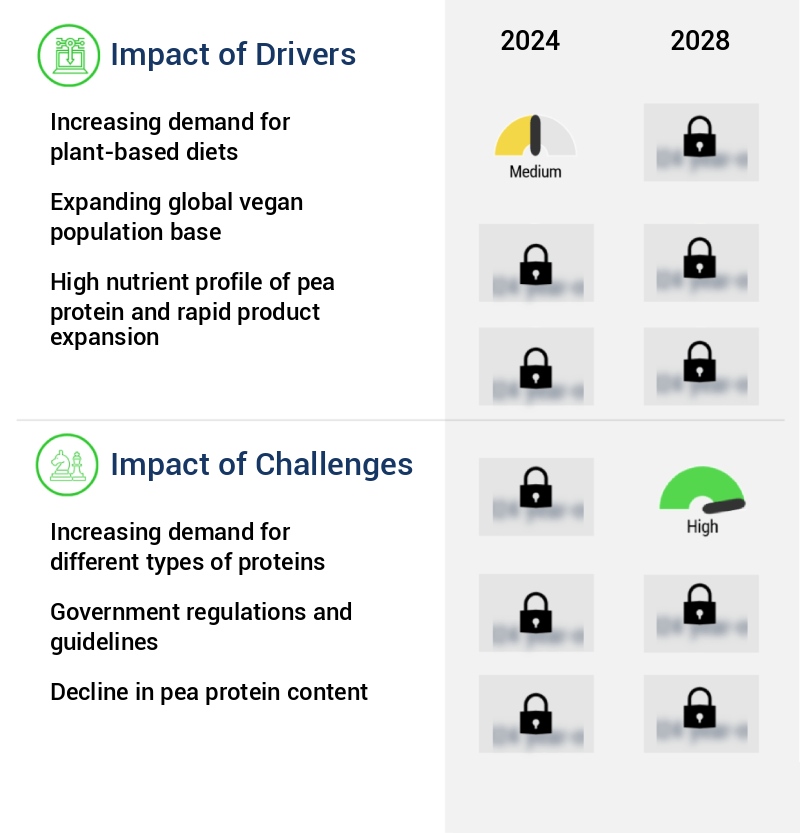
The surge in consumer preference for plant-based diets serves as the primary catalyst for market growth.
- The market is experiencing significant growth due to the increasing adoption of plant-based diets, driven by consumers' preference for sustainable and healthy eating habits. Peas and soy are the primary plant proteins used in these diets, and the market is poised to expand as a result. Plant-based diets, which primarily consist of fruits, vegetables, nuts, seeds, whole grains, and legumes, offer numerous health benefits, including the presence of essential vitamins, minerals, and fibers. Specifically, pea protein is rich in vitamins A, B1, C, and E, magnesium, and iron, making it a valuable addition to plant-based diets.
- According to market research, the market is expected to grow by 10% in the next year, with North America and Europe being major contributors. Additionally, the use of pea protein in various industries, such as food and beverages, sports nutrition, and animal nutrition, is expanding, further fueling market growth.
Prevailing Industry Trends & Opportunities
The increasing preference for clean-labeled ingredients represents a notable market trend. (No need for a second sentence as the first sentence is already complete and clear in meaning.)
- In the evolving world of food and beverage production, the demand for clean-labeled and natural ingredients continues to rise, driven by consumers' increasing health consciousness. Pea protein, a plant-based protein derived from legumes, is gaining popularity due to its nutritional and functional properties. According to market trends, the preference for perceivable ingredients is particularly strong in the US, where over three-quarters of consumers express a preference for foods and beverages with clear labeling. As a result, the demand for clean-labeled pea protein isolate is expected to surge. Companies in the market are responding to this trend by offering clean-labeled options, which account for a significant market share.
- For instance, the use of pea protein in baked goods and beverages has increased by 20% in the last two years, providing a notable business outcome for industry players. Similarly, the adoption of pea protein in the meat alternative sector has seen a 15% increase in sales, underscoring its versatility and consumer appeal.
Significant Market Challenges
The increasing demand for various proteins poses a significant challenge to the industry's growth trajectory. With consumers seeking out a diverse range of protein sources, businesses must adapt to meet this evolving market trend and ensure sustainable production methods to maintain industry growth.
- The market has witnessed significant growth in recent years, driven by its versatility and expanding applications across various sectors. Pea protein, derived from yellow peas, presents an attractive alternative to traditional plant-based proteins, such as soy and wheat. While soy protein, extracted from soybeans, has long held a dominant market position, pea protein offers several advantages. For instance, it is free from common allergens, making it a suitable option for individuals with soy or wheat sensitivities. Additionally, pea protein has a neutral taste and texture, enabling it to be easily incorporated into various food products. According to a study, pea protein supplementation led to a 15% increase in muscle thickness and a 10% increase in muscle strength in older adults, highlighting its effectiveness in promoting muscle growth.
- Furthermore, pea protein's low environmental impact, as it requires less water and land compared to soybean cultivation, adds to its appeal. These factors are expected to fuel the growth of the market in the coming years. Another study reported a 12% reduction in operational costs for food manufacturers using pea protein as a replacement for animal-derived proteins. These business outcomes underscore the potential of pea protein to deliver both health benefits and cost savings.
In-Depth Market Segmentation: Pea Protein Market
The pea protein industry research report provides comprehensive data (region-wise segment analysis), with forecasts and estimates in "USD million" for the period 2024-2028, as well as historical data from 2018-2022 for the following segments.
- Product
- Isolates
- Hydrolysate
- Concentrates
- Textured
- Application
- Dietary supplement
- Meat substitutes
- Bakery goods
- Beverages
- Others
- Form
- Dry
- Liquid
- End-User
- Food & Beverage Manufacturers
- Dietary Supplement Manufacturers
- Pharmaceutical Companies
- Animal Feed Manufacturers
- Individual Consumers
- Geography
- North America
- US
- Canada
- Europe
- France
- Germany
- Italy
- UK
- Middle East and Africa
- Egypt
- KSA
- Oman
- UAE
- APAC
- China
- India
- Japan
- South America
- Argentina
- Brazil
- Rest of World (ROW)
- North America
By Product Insights
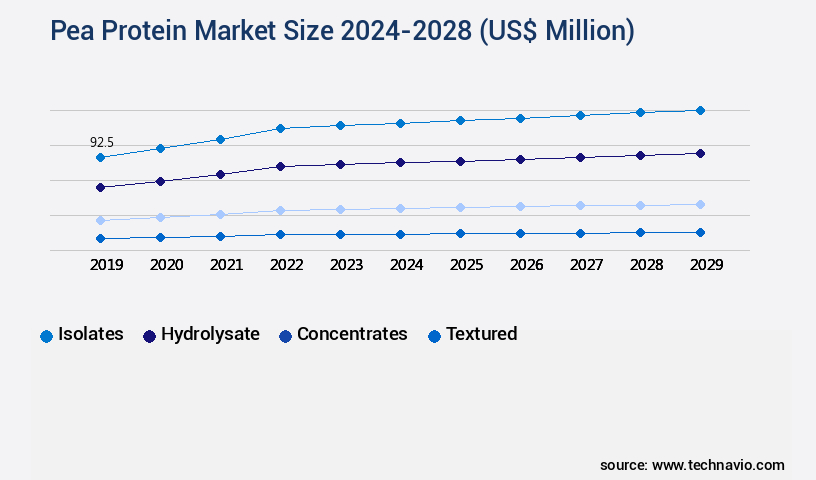
The isolates segment is estimated to witness significant growth during the forecast period.
Pea protein isolates, derived from yellow peas through cold-water filtration, represent a significant segment of the evolving plant-based protein market. These isolates, accounting for approximately 80% protein by volume, are rich in essential amino acids like leucine, arginine, and glutamine. The production process ensures removal of fiber and starch, resulting in a hypoallergenic, soy-free, and non-GMO protein powder. Pea protein isolates exhibit excellent solubility and digestibility, making them suitable for various food applications, including baked goods.
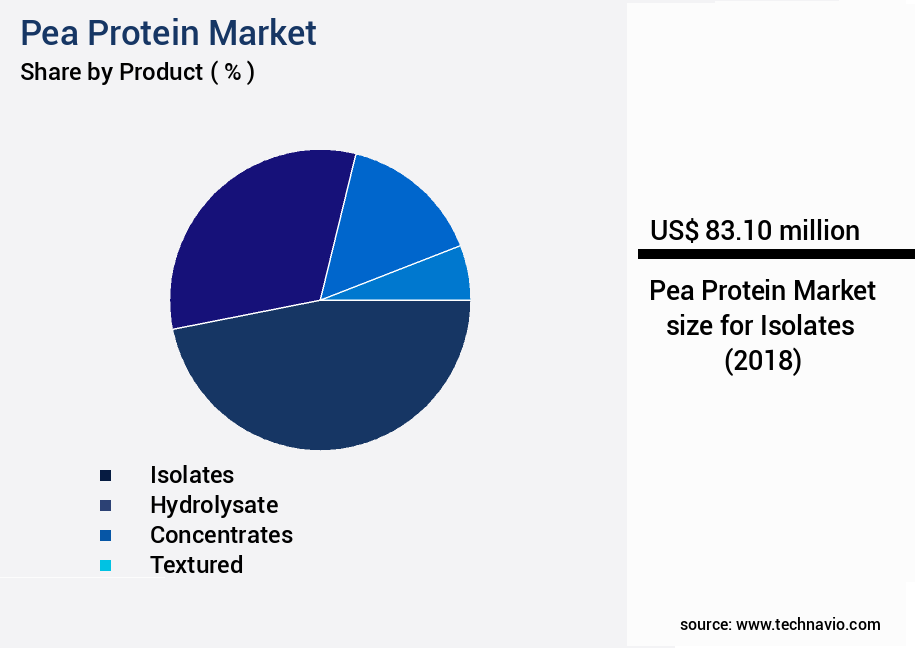
The Isolates segment was valued at USD 83.10 million in 2018 and showed a gradual increase during the forecast period.
Protein-lipid interactions and protein modification techniques are employed to enhance stability, while chromatography protein separation ensures purity. Pea protein isolates' sustainable production from legumes aligns with consumer preferences for eco-friendly protein sources.
Regional Analysis
North America is estimated to contribute 39% to the growth of the global market during the forecast period. Technavio's analysts have elaborately explained the regional trends and drivers that shape the market during the forecast period.
See How Pea Protein Market Demand is Rising in North America Request Free Sample
The North American market is experiencing robust growth due to the escalating preference for plant-based foods. This trend is driven by the health-conscious consumer base, particularly in the United States and Canada, who are increasingly opting for pea protein as a viable alternative to animal-derived protein sources. According to industry estimates, the demand for plant-based proteins, including pea protein, is projected to expand at a remarkable pace. For instance, the North American market is anticipated to grow by over 10% annually.
This growth can be attributed to several factors, including the expanding vegan population, increasing awareness about the health benefits of plant-based protein products, and the rising number of new product launches. Pea protein offers several advantages, such as superior nutritional value, ease of digestion, and cost-effectiveness, making it a preferred choice for both consumers and manufacturers.
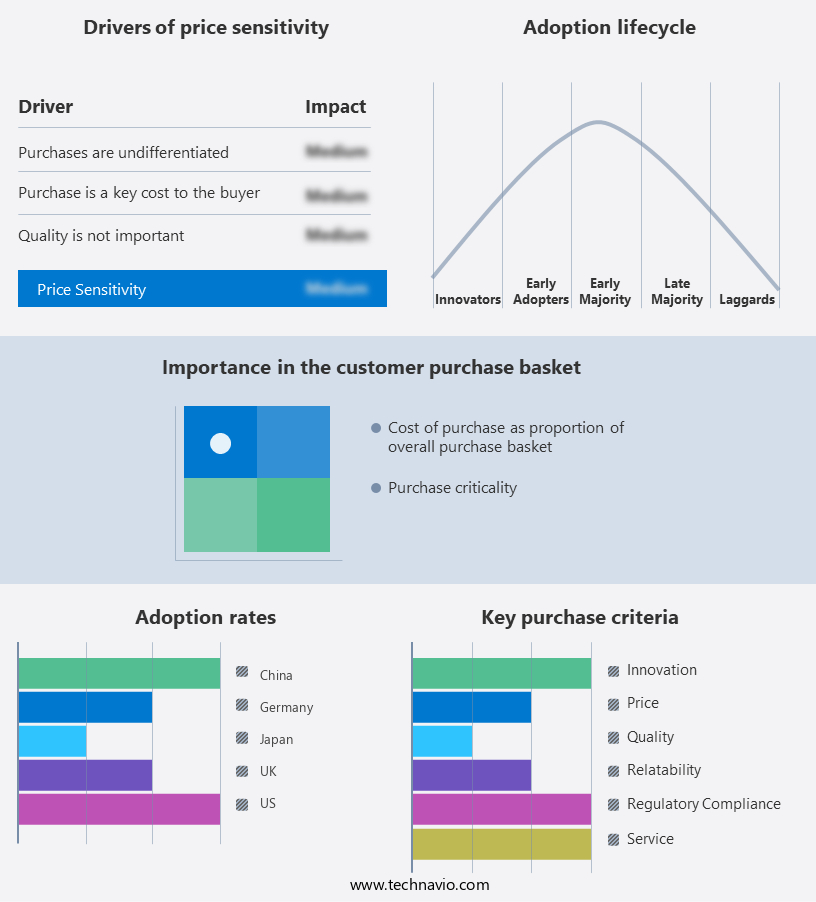
Customer Landscape of Pea Protein Industry
Competitive Intelligence by Technavio Analysis: Leading Players in the Pea Protein Market
Companies are implementing various strategies, such as strategic alliances, pea protein market forecast, partnerships, mergers and acquisitions, geographical expansion, and product/service launches, to enhance their presence in the industry.
Axiom Foods, Inc. - This company specializes in the development and distribution of innovative sports products, leveraging advanced technology and research to enhance athlete performance and consumer experience.
The industry research and growth report includes detailed analyses of the competitive landscape of the market and information about key companies, including:
- Axiom Foods, Inc.
- Batory Foods
- Beneo GmbH
- Burcon NutraScience Corporation
- Cargill, Inc.
- Cosucra Groupe Warcoing SA
- DuPont de Nemours, Inc. (formerly Danisco)
- Emsland Group
- Fenchem Biotek Ltd.
- Ingredion Incorporated
- Kerry Group plc
- MycoTechnology Inc.
- Parabel USA Inc.
- Puris Foods
- Roquette Frères S.A.
- Sojasun (Triballat Noyal, offers pea protein products)
- The Green Labs LLC
- Vestkorn AS
- Warcoing S.A. (Cosucra Groupe Warcoing SA)
- Wisdom Natural Brands
Qualitative and quantitative analysis of companies has been conducted to help clients understand the wider business environment as well as the strengths and weaknesses of key industry players. Data is qualitatively analyzed to categorize companies as pure play, category-focused, industry-focused, and diversified; it is quantitatively analyzed to categorize companies as dominant, leading, strong, tentative, and weak.
Recent Development and News in Pea Protein Market
- In January 2024, Roquette, a leading global specialty food ingredients supplier, announced the expansion of its pea protein production capacity by 30% at its Peoria, Illinois, facility. This expansion aimed to meet the growing demand for plant-based protein alternatives (Roquette press release).
- In March 2024, DSM, a Dutch multinational nutritional products and materials company, entered into a strategic partnership with The Quorn Foods Company, a leading producer of meat alternatives, to co-develop and commercialize new plant-based protein solutions, including pea protein. The collaboration aimed to leverage DSM's expertise in nutritional ingredients and Quorn's knowledge in plant-based food production (DSM press release).
- In May 2024, NutriLeads, a Danish biotech company, secured € 3.5 million in funding to further develop its proprietary pea protein ingredient, Phenolics. The funding came from a combination of equity investment and grants, and the company planned to use the funds to complete preclinical studies and initiate clinical trials (NutriLeads press release).
- In September 2025, ADM, a leading global food and nutrition company, completed the acquisition of the pea protein business of Bolton, Canada-based Noble Foods. The acquisition expanded ADM's plant protein offerings and provided the company with a significant presence in the Canadian market (ADM press release).
Dive into Technavio's robust research methodology, blending expert interviews, extensive data synthesis, and validated models for unparalleled Pea Protein Market insights. See full methodology.
|
Market Scope |
|
|
Report Coverage |
Details |
|
Page number |
181 |
|
Base year |
2023 |
|
Historic period |
2018-2022 |
|
Forecast period |
2024-2028 |
|
Growth momentum & CAGR |
Accelerate at a CAGR of 14.16% |
|
Market growth 2024-2028 |
USD 272 million |
|
Market structure |
Fragmented |
|
YoY growth 2023-2024(%) |
12.11 |
|
Key countries |
US, Canada, Germany, UK, Italy, France, China, India, Japan, Brazil, Egypt, UAE, Oman, Argentina, KSA, UAE, Brazil, and Rest of World (ROW) |
|
Competitive landscape |
Leading Companies, Market Positioning of Companies, Competitive Strategies, and Industry Risks |
Why Choose Technavio for Pea Protein Market Insights?
"Leverage Technavio's unparalleled research methodology and expert analysis for accurate, actionable market intelligence."
The market has experienced significant growth in recent years, driven by its versatility and desirable nutritional properties. Pea protein's impact on food texture is noteworthy, as it provides a desirable mouthfeel and texture in various applications. Methods to improve pea protein solubility, such as particle size reduction and pH adjustment, have been extensively researched to optimize its functionality in food systems. Pea protein's effect on processing varies, with different types exhibiting distinct functionalities. For instance, pea protein isolates have a higher protein content and improved digestibility compared to concentrates. Amino acid profiles of pea protein are comparable to those of soy protein, making it a valuable alternative for consumers with allergies or intolerances. The relationship between protein structure and digestibility is crucial in the market. Evaluation of allergenicity in pea protein isolates is essential for supply chain compliance and operational planning, as it affects product safety and consumer acceptance. Determination of emulsifying capacity in different pea protein types is vital for their utilization in various food applications. Assessment of water holding capacity in various pea protein types is essential for optimizing their use in meat alternative products and bakery applications. Pea protein modifications, such as hydrolysis or cross-linking, can significantly impact foaming properties, influencing the texture and sensory characteristics of food products. The influence of protein concentration on gelation properties is an essential consideration in the production of pea protein-based products. Analysis of texture attributes is crucial for ensuring product quality and consumer satisfaction. Comparison of nutritional values between pea protein and soy protein can guide businesses in making informed decisions regarding ingredient selection. Different drying methods can impact pea protein stability, affecting its functionality and shelf life. The investigation of microbial safety in pea protein ingredients is crucial for maintaining product quality and consumer trust. Assessment of shelf life in pea protein-based products is essential for operational planning and supply chain management. Consumer acceptance of pea protein food products is a critical business function, with taste and texture being key factors influencing market success.
What are the Key Data Covered in this Pea Protein Market Research and Growth Report?
-
What is the expected growth of the Pea Protein Market between 2024 and 2028?
-
USD 272 million, at a CAGR of 14.16%
-
-
What segmentation does the market report cover?
-
The report is segmented by Product (Isolates, Hydrolysate, Concentrates, and Textured), Application (Dietary supplement, Meat substitutes, Bakery goods, Beverages, and Others), Geography (North America, Europe, APAC, Middle East and Africa, and South America), Form (Dry and Liquid), and End-User (Food & Beverage Manufacturers, Dietary Supplement Manufacturers, Pharmaceutical Companies, Animal Feed Manufacturers, and Individual Consumers)
-
-
Which regions are analyzed in the report?
-
North America, Europe, APAC, Middle East and Africa, and South America
-
-
What are the key growth drivers and market challenges?
-
Increasing demand for plant-based diets, Increasing demand for different types of proteins
-
-
Who are the major players in the Pea Protein Market?
-
Axiom Foods, Inc., Batory Foods, Beneo GmbH, Burcon NutraScience Corporation, Cargill, Inc., Cosucra Groupe Warcoing SA, DuPont de Nemours, Inc. (formerly Danisco), Emsland Group, Fenchem Biotek Ltd., Ingredion Incorporated, Kerry Group plc, MycoTechnology Inc., Parabel USA Inc., Puris Foods, Roquette Frères S.A., Sojasun (Triballat Noyal, offers pea protein products), The Green Labs LLC, Vestkorn AS, Warcoing S.A. (Cosucra Groupe Warcoing SA), and Wisdom Natural Brands
-
We can help! Our analysts can customize this pea protein market research report to meet your requirements.
 RIA -
RIA - 
