



Pharmaceutical Logistics Market Size 2025-2029
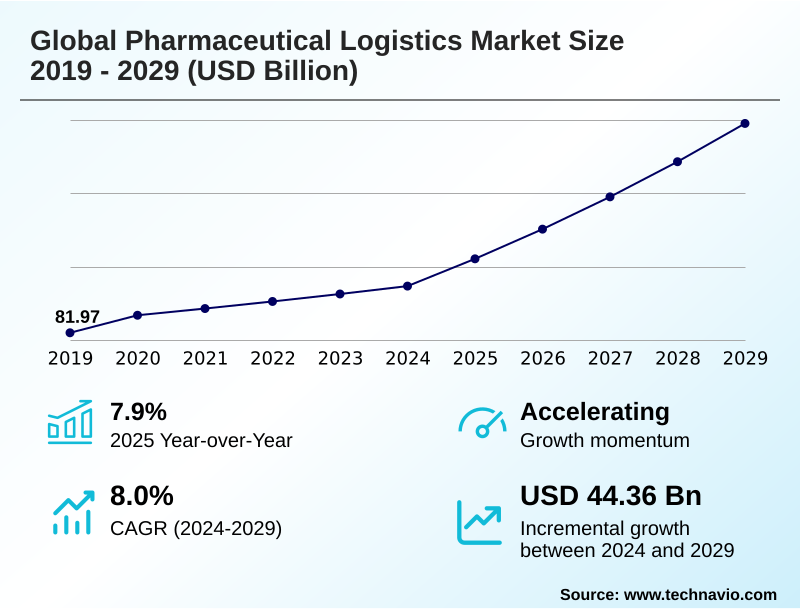
The pharmaceutical logistics market size is valued to increase by USD 44.36 billion, at a CAGR of 8% from 2024 to 2029. Ascendancy of biologics and temperature-sensitive pharmaceuticals will drive the pharmaceutical logistics market.
Major Market Trends & Insights
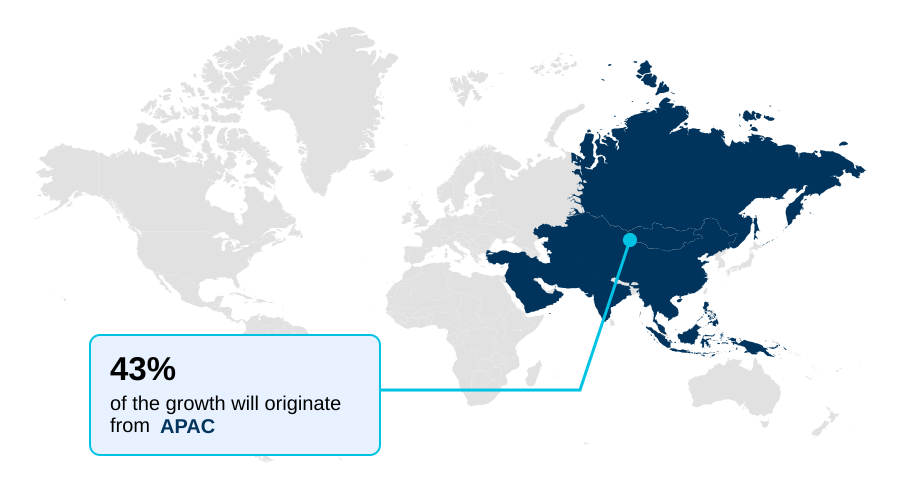
- APAC dominated the market and accounted for a 42.6% growth during the forecast period.
- By Type - Non cold chain segment was valued at USD 74.30 billion in 2023
- By Application - Storage segment accounted for the largest market revenue share in 2023
Market Size & Forecast
- Market Opportunities: USD 57.09 billion
- Market Future Opportunities: USD 44.36 billion
- CAGR from 2024 to 2029 : 8%
Market Summary
- The pharmaceutical logistics market is undergoing a significant transformation, driven by the shift towards high-value biologics and personalized medicines that demand impeccable supply chain execution. Core to this evolution is the expansion of cold chain logistics, which is no longer a niche service but a fundamental requirement for a growing portion of the pharmaceutical pipeline.
- This necessitates substantial investment in temperature-controlled infrastructure and real-time monitoring technologies to ensure product integrity. A key trend is the digitalization of the supply chain, where technologies like AI and blockchain are being deployed to enhance traceability and predictive capabilities.
- For instance, a logistics provider can use AI-powered analytics to model transportation routes, identifying potential weather-related risks and proactively rerouting a critical shipment of vaccines, thereby preventing a costly temperature excursion. However, navigating the complex web of global regulations and mitigating security risks like theft and counterfeiting remain persistent challenges.
- Success in this market hinges on a provider's ability to integrate advanced technology with deep regulatory expertise to deliver secure, compliant, and efficient services.
What will be the Size of the Pharmaceutical Logistics Market during the forecast period?
Get Key Insights on Market Forecast (PDF) Get Free Sample
How is the Pharmaceutical Logistics Market Segmented?
The pharmaceutical logistics industry research report provides comprehensive data (region-wise segment analysis), with forecasts and estimates in "USD million" for the period 2025-2029, as well as historical data from 2019-2023 for the following segments.
- Type
- Non cold chain
- Cold chain
- Application
- Storage
- Transportation
- Mode of transportation
- Road
- Sea
- Air
- Rail
- Geography
- APAC
- China
- India
- Japan
- North America
- US
- Canada
- Mexico
- Europe
- Germany
- UK
- France
- Middle East and Africa
- Saudi Arabia
- UAE
- South Africa
- South America
- Brazil
- Argentina
- Colombia
- Rest of World (ROW)
- APAC
By Type Insights
The non cold chain segment is estimated to witness significant growth during the forecast period.
The non-cold chain segment, governed by good storage practices (gsp), forms a substantial part of the market, focusing on products stable at controlled room temperatures.
While distinct from cold chain logistics, this area still demands rigorous quality control to maintain the chain of custody and prevent deviations.
Logistics providers are enhancing security and visibility, with some achieving a 15% reduction in handling errors through advanced systems.
The principles of unit-level electronic traceability are increasingly applied to high-value ambient products to bolster supply chain resilience and uphold the chain of identity from manufacturer to patient.
This ensures end-to-end visibility and mitigates risks, even for products not requiring cryogenic storage facilities, reflecting a holistic approach to quality and patient-centric logistics.
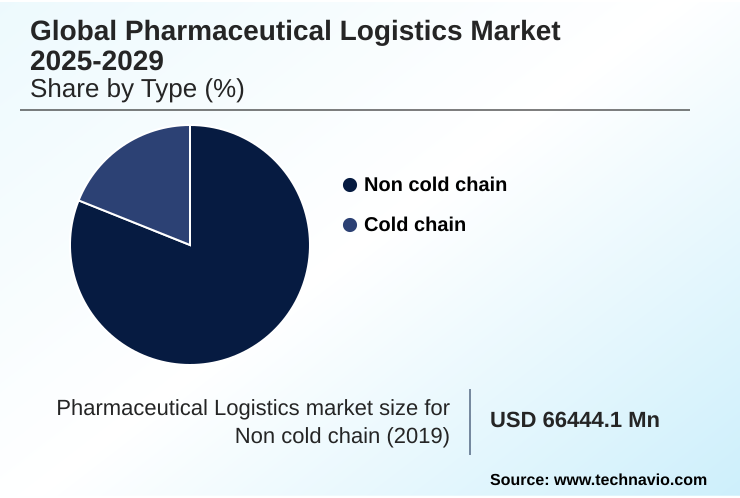
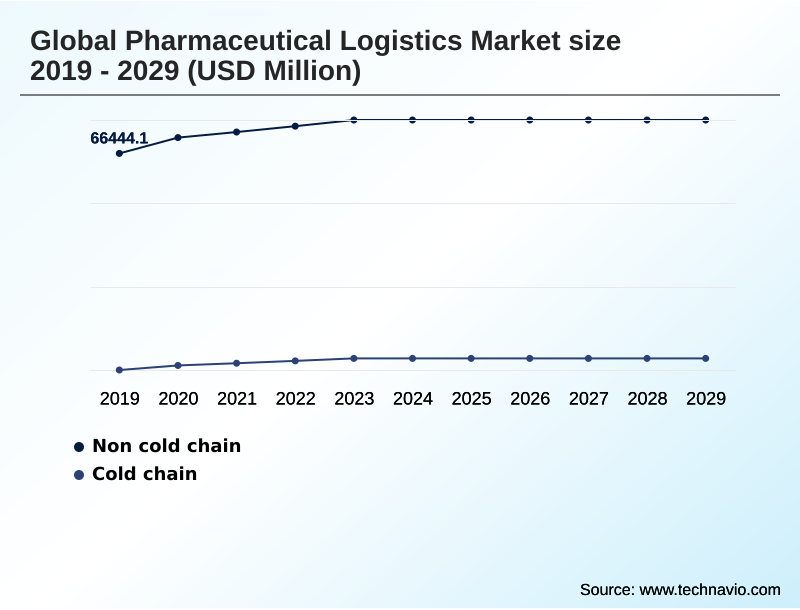
The Non cold chain segment was valued at USD 74.30 billion in 2023 and showed a gradual increase during the forecast period.
Regional Analysis
APAC is estimated to contribute 42.6% to the growth of the global market during the forecast period.Technavio’s analysts have elaborately explained the regional trends and drivers that shape the market during the forecast period.
See How Pharmaceutical Logistics Market Demand is Rising in APAC Get Free Sample
The geographic landscape is characterized by diverse regional dynamics, with APAC emerging as the fastest-growing market, while North America remains the largest in terms of value.
In APAC, rapid infrastructure development is underway to support its expanding role as a manufacturing hub, though challenges in last-mile delivery persist.
In contrast, North America and Europe focus on optimizing mature networks through technology, with an emphasis on good distribution practices (gdp).
The adoption of automated storage and retrieval systems (asrs) in these regions has improved warehouse efficiency by up to 25%. Across all regions, multi-modal transportation strategies are crucial for balancing cost and speed.
The implementation of sustainable logistics solutions is also gaining traction globally, influenced by regulations like the carbon border adjustment mechanism (cbam), pushing firms towards greener temperature-controlled packaging and logistics cost optimization.
Market Dynamics
Our researchers analyzed the data with 2024 as the base year, along with the key drivers, trends, and challenges. A holistic analysis of drivers will help companies refine their marketing strategies to gain a competitive advantage.
- Strategic decision-making in the pharmaceutical logistics market is increasingly focused on specialized operational challenges. A core concern is effectively managing temperature excursions in cold chain, which requires robust protocols and technologies. Concurrently, optimizing last-mile specialty drug delivery is critical for patient-centric models, especially with the rise of decentralized clinical trial logistics solutions.
- This shift necessitates a fresh cost analysis of active versus passive packaging to balance expense and risk. For compliance, understanding the nuances of DSCSA compliance for third-party logistics is non-negotiable in the US market, while on a global scale, navigating fragmented global regulatory landscapes remains a constant.
- Securing high-value pharmaceutical shipments through advanced supply chain security protocols is paramount, often involving a combination of technology and physical security measures. The debate over blockchain implementation for drug traceability continues, with many seeing it as the future for ensuring data integrity in pharmaceutical serialization.
- AI-powered predictive logistics analytics is transforming risk management, helping to foresee issues from geopolitical impacts on pharmaceutical transport to potential delays. This technology is crucial for optimizing multi-modal API logistics and validating temperature-controlled shipping lanes. Efficiently handling pharma returns and reverse logistics management has also become a key focus for cost control and compliance.
- In parallel, warehouse automation for pharma distribution and addressing cryogenic supply chain management challenges are key investment areas. Firms that successfully integrate these strategies, such as using AI to improve route reliability by 20% over manual planning, are setting new industry benchmarks.
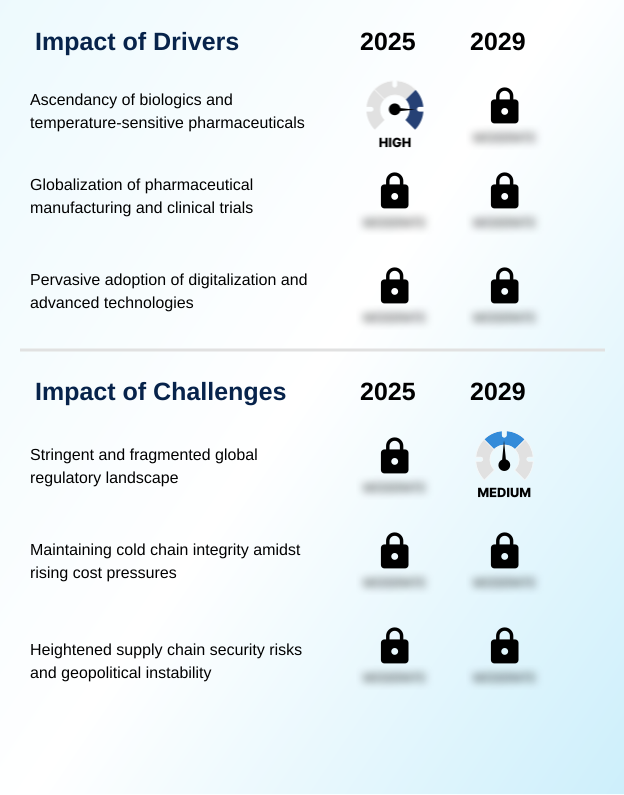
What are the key market drivers leading to the rise in the adoption of Pharmaceutical Logistics Industry?
- The ascendancy of biologics and other temperature-sensitive pharmaceuticals is a key driver compelling significant growth and innovation within the market.
- The globalization of pharmaceutical manufacturing and clinical trials is a primary market driver, fueling demand for advanced clinical trial logistics to manage investigational medicinal products.
- This creates a complex biologics supply chain that requires deep cross-border logistics expertise and robust supply chain resilience.
- The adoption of real-time monitoring technology, including remote temperature monitoring, provides critical oversight and has reduced product loss from temperature deviations by over 25% for early adopters.
- Furthermore, regulatory mandates are compelling the industry-wide adoption of serialization data exchange using standards like gs1 electronic product code information services (epcis).
- This requirement for data aggregation and reporting, combined with the use of demand forecasting algorithms, is enhancing supply chain visibility and predictability, making operations more efficient.
What are the market trends shaping the Pharmaceutical Logistics Industry?
- A significant market trend is the move toward hyper-specialization in logistics, particularly for products requiring cryogenic and ultra-low temperature conditions. This shift addresses the complex needs of advanced therapies.
- Market trends are pivoting towards hyper-specialization, driven by the complex needs of advanced therapy medicinal products (atmps) and cell and gene therapies (cgts). This shift necessitates investment in cryogenic shipping and ultra-low temperature (ult) storage capabilities.
- To manage these sensitive supply chains, companies are adopting digital control towers powered by predictive analytics, which have been shown to improve on-time delivery rates by up to 15%. This technological adoption supports a move towards more patient-centric logistics models.
- The integration of digital twin modeling creates a proactive intervention capability, allowing for the simulation of shipment routes and stress-testing of packaging solutions. Building a gxp-compliant network supported by interoperable electronic systems is crucial for ensuring both regulatory adherence and operational excellence in this evolving landscape.
What challenges does the Pharmaceutical Logistics Industry face during its growth?
- The stringent and fragmented nature of the global regulatory landscape presents a significant challenge to market growth and operational efficiency.
- Navigating stringent global regulations remains a significant market challenge, demanding sophisticated regulatory compliance management. Mandates like the drug supply chain security act (dscsa) require the creation of a seamless, auditable trail, pushing firms towards technologies like blockchain traceability. Simultaneously, heightened security threats necessitate advanced supply chain security protocols.
- To combat cargo theft, companies are deploying secure truck convoys, often supported by geofencing alarms and dual-driver teams, which has been shown to reduce in-transit theft incidents by up to 60% in high-risk corridors. Mitigating temperature excursion risk across increasingly complex validated shipping lanes is another critical hurdle.
- Even with advanced technology, the operational and financial pressures of managing a secure and compliant network, including efficient reverse logistics, are substantial for all service providers.
Exclusive Technavio Analysis on Customer Landscape
The pharmaceutical logistics market forecasting report includes the adoption lifecycle of the market, covering from the innovator’s stage to the laggard’s stage. It focuses on adoption rates in different regions based on penetration. Furthermore, the pharmaceutical logistics market report also includes key purchase criteria and drivers of price sensitivity to help companies evaluate and develop their market growth analysis strategies.
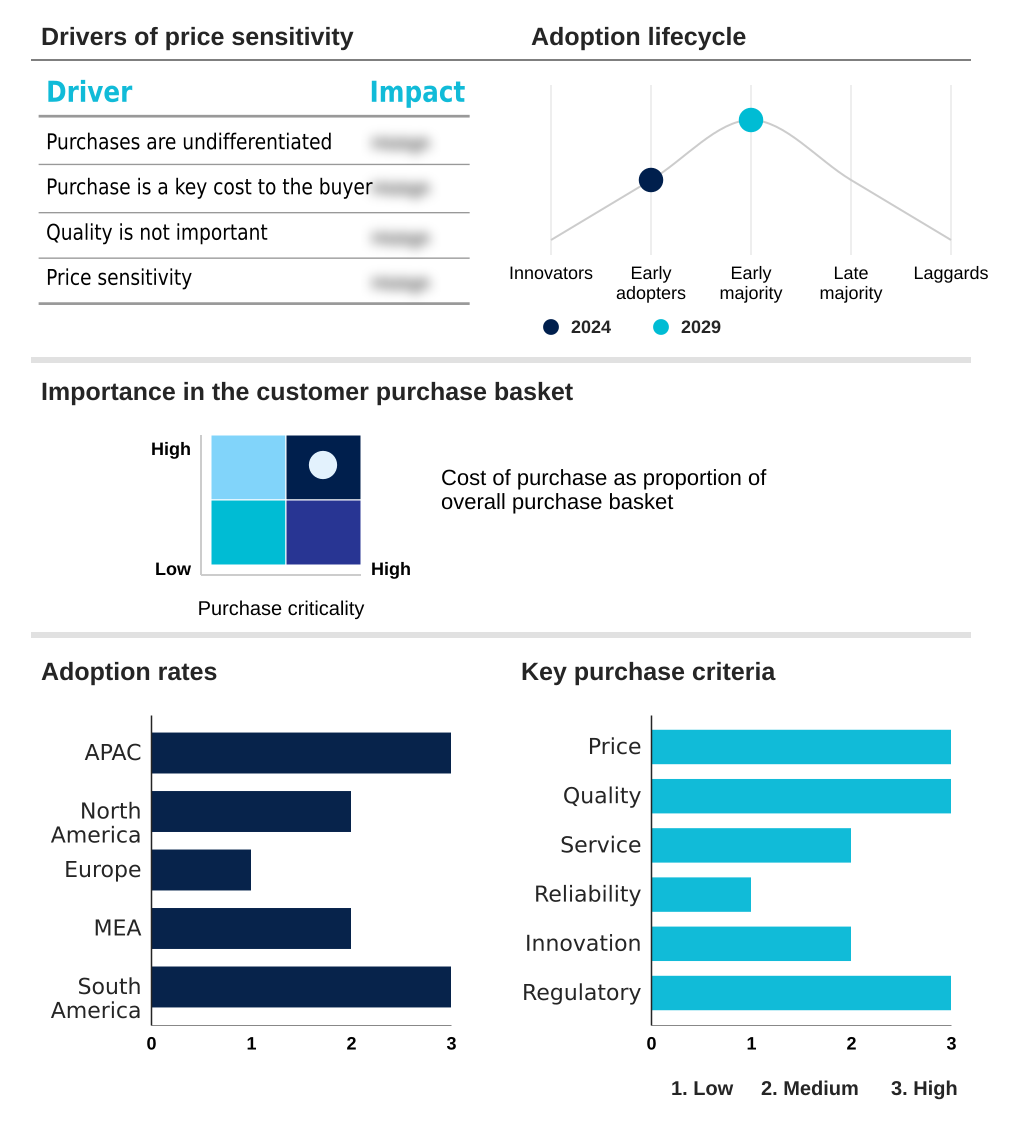
Customer Landscape of Pharmaceutical Logistics Industry
Competitive Landscape
Companies are implementing various strategies, such as strategic alliances, pharmaceutical logistics market forecast, partnerships, mergers and acquisitions, geographical expansion, and product/service launches, to enhance their presence in the industry.
AP Moller Maersk AS - Offerings include international, temperature-controlled freight forwarding and comprehensive hub management solutions designed specifically for global pharmaceutical product distribution.
The industry research and growth report includes detailed analyses of the competitive landscape of the market and information about key companies, including:
- AP Moller Maersk AS
- AWL India Pvt. Ltd.
- Bollore Logistics
- CEVA Logistics SA
- CJ CheilJedang Corp.
- CMA CGM Group
- DACHSER SE
- DHL International GmbH
- DSV AS
- FedEx Corp.
- Gemadept Corp.
- GEODIS
- Kuehne Nagel Management AG
- Rhenus SE and Co. KG
- Schenker AG
- SF Express Co. Ltd.
- Tiong Nam Logistics Holdings Berhad
- United Parcel Service Inc.
- YCH Group
- YUSEN LOGISTICS CO. LTD.
Qualitative and quantitative analysis of companies has been conducted to help clients understand the wider business environment as well as the strengths and weaknesses of key industry players. Data is qualitatively analyzed to categorize companies as pure play, category-focused, industry-focused, and diversified; it is quantitatively analyzed to categorize companies as dominant, leading, strong, tentative, and weak.
Recent Development and News in Pharmaceutical logistics market
- In September, 2024, Kuehne + Nagel Management AG announced a strategic partnership with a leading technology firm to implement a blockchain-based platform, enhancing the traceability of cell and gene therapies across its global network.
- In November, 2024, United Parcel Service Inc. launched its enhanced UPS Premier Platinum service, integrating next-generation sensor technology and priority handling to offer near real-time monitoring and intervention for critical cryogenic shipments.
- In February, 2025, DHL International GmbH completed the acquisition of a specialized European last-mile delivery provider, expanding its direct-to-patient service capabilities and strengthening its temperature-controlled ground network.
- In April, 2025, CEVA Logistics SA received IATA CEIV Pharma certification for its new 10,000 square meter life sciences facility at a major Asian airport, boosting its capacity for handling temperature-sensitive biologics and vaccines in the region.
Dive into Technavio’s robust research methodology, blending expert interviews, extensive data synthesis, and validated models for unparalleled Pharmaceutical Logistics Market insights. See full methodology.
| Market Scope | |
|---|---|
| Page number | 291 |
| Base year | 2024 |
| Historic period | 2019-2023 |
| Forecast period | 2025-2029 |
| Growth momentum & CAGR | Accelerate at a CAGR of 8% |
| Market growth 2025-2029 | USD 44356.8 million |
| Market structure | Fragmented |
| YoY growth 2024-2025(%) | 7.9% |
| Key countries | China, India, Japan, Australia, South Korea, Indonesia, US, Canada, Mexico, Germany, UK, France, Italy, Spain, The Netherlands, Saudi Arabia, UAE, South Africa, Israel, Turkey, Brazil, Argentina and Colombia |
| Competitive landscape | Leading Companies, Market Positioning of Companies, Competitive Strategies, and Industry Risks |
Research Analyst Overview
- The pharmaceutical logistics market is defined by a sophisticated interplay of technology, regulation, and specialized services. The ascent of cell and gene therapies (cgts) has intensified the need for flawless cold chain logistics, including cryogenic shipping and a verifiable chain of custody.
- Compliance with mandates like the drug supply chain security act (dscsa) is driving the adoption of unit-level electronic traceability and robust serialization data exchange, with platforms enabling a 40% faster verification process. This necessitates a secure digital infrastructure capable of supporting technologies like blockchain traceability.
- To manage the biologics supply chain, firms utilize digital control towers with predictive analytics for overseeing investigational medicinal products in clinical trial logistics. Execution relies on validated shipping lanes, advanced temperature-controlled packaging, and both active temperature control containers and passive thermal packaging.
- At the facility level, adherence to good distribution practices (gdp) and good storage practices (gsp) is critical, with automated storage and retrieval systems (asrs) enhancing efficiency.
- Boardroom decisions increasingly center on capital expenditure for these technologies to mitigate risk and ensure compliance, as security threats demand solutions from secure truck convoys to comprehensive reverse logistics protocols to maintain the chain of identity.
What are the Key Data Covered in this Pharmaceutical Logistics Market Research and Growth Report?
-
What is the expected growth of the Pharmaceutical Logistics Market between 2025 and 2029?
-
USD 44.36 billion, at a CAGR of 8%
-
-
What segmentation does the market report cover?
-
The report is segmented by Type (Non cold chain, and Cold chain), Application (Storage, and Transportation), Mode of Transportation (Road, Sea, Air, and Rail) and Geography (APAC, North America, Europe, Middle East and Africa, South America)
-
-
Which regions are analyzed in the report?
-
APAC, North America, Europe, Middle East and Africa and South America
-
-
What are the key growth drivers and market challenges?
-
Ascendancy of biologics and temperature-sensitive pharmaceuticals, Stringent and fragmented global regulatory landscape
-
-
Who are the major players in the Pharmaceutical Logistics Market?
-
AP Moller Maersk AS, AWL India Pvt. Ltd., Bollore Logistics, CEVA Logistics SA, CJ CheilJedang Corp., CMA CGM Group, DACHSER SE, DHL International GmbH, DSV AS, FedEx Corp., Gemadept Corp., GEODIS, Kuehne Nagel Management AG, Rhenus SE and Co. KG, Schenker AG, SF Express Co. Ltd., Tiong Nam Logistics Holdings Berhad, United Parcel Service Inc., YCH Group and YUSEN LOGISTICS CO. LTD.
-
Market Research Insights
- The market's dynamics are increasingly shaped by a focus on end-to-end visibility and proactive risk management, driven by advanced technologies. Implementing digital twin modeling allows firms to simulate supply chain disruptions, improving contingency planning effectiveness by over 40%.
- The adoption of robust warehouse management systems (wms) integrated with demand forecasting algorithms has led to a 15% reduction in inventory holding costs while enhancing supply chain resilience. Furthermore, a commitment to sustainable logistics solutions is becoming a competitive differentiator, with some operators achieving a 10% reduction in carbon emissions on key trade lanes.
- These advancements in proactive intervention capability and logistics cost optimization are critical for maintaining a competitive edge in a market defined by complex regulatory compliance management and the need for high-integrity, patient-centric logistics.
We can help! Our analysts can customize this pharmaceutical logistics market research report to meet your requirements.
 RIA -
RIA - 
