



Physical Security Information Management Market Size 2025-2029
The physical security information management (PSIM) market size is forecast to increase by USD 6.55 billion at a CAGR of 27.2% between 2024 and 2029. The market is experiencing significant growth, driven by the emergence of smart cities and the integration of the Internet of Things (IoT) with physical security systems. These technological advancements enable real-time monitoring, analysis, and response to security threats, enhancing situational awareness and improving overall safety and efficiency.
Major Market Trends & Insights
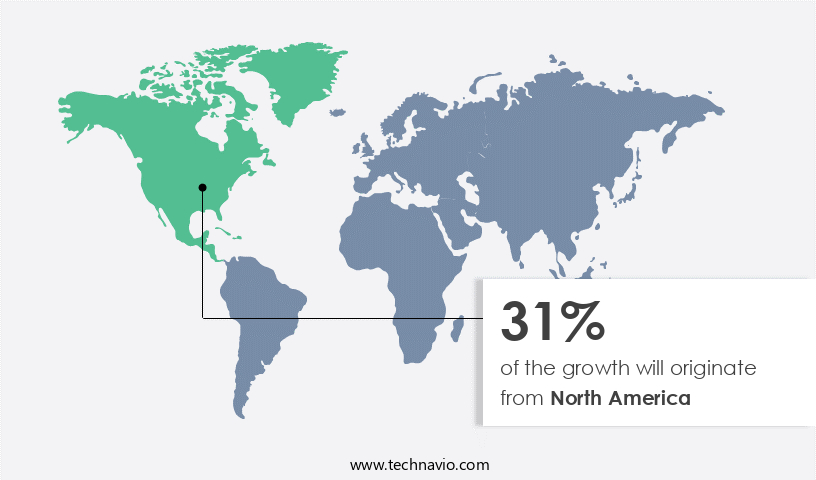
- North America dominated the market and contributed 31% to the growth during the forecast period.
- The market is expected to grow significantly in Europe region as well over the forecast period.
- Based on the End-user, the PE and U segment led the market and was valued at USD 528.90 million of the global revenue in 2023.
- Based on the Solution, the Software segment accounted for the largest market revenue share in 2023.
Market Size & Forecast
- Market Opportunities: USD 553.23 Million
- Future Opportunities: USD 6.55Billion
- CAGR (2024-2029): 27.2%
- North America: Largest market in 2023
The market continues to evolve in various sectors. However, the market also faces challenges, primarily infrastructural requirements for seamless integration of various security systems and ensuring interoperability among different technologies. Additionally, ensuring data privacy and cybersecurity in the context of these interconnected systems poses a significant challenge. Companies seeking to capitalize on the opportunities presented by the PSIM market must focus on developing solutions that address these challenges, ensuring compatibility and interoperability, and prioritizing data security. By doing so, they can effectively cater to the growing demand for advanced security solutions in the era of smart cities and IoT.
What will be the Size of the Physical Security Information Management (PSIM) Market during the forecast period?
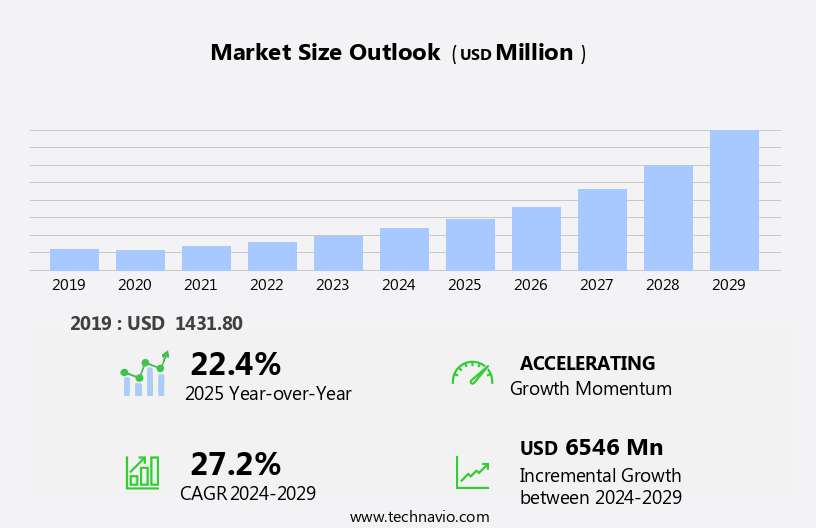
- The market continues to evolve, driven by the ever-changing security landscape and the need for comprehensive protection across various sectors. PSIM systems enable event analysis, intrusion detection, security training, workflow automation, and compliance reporting, among other functionalities. These solutions are integral to ensuring situational awareness, risk management, business continuity, and disaster recovery. Cloud-based PSIM solutions have gained traction due to their flexibility and scalability, while machine learning and artificial intelligence enhance threat assessment and predictive analytics capabilities. Hybrid PSIM systems offer the benefits of both cloud and on-premise deployments, catering to diverse organizational needs. Security policies, audits, and vulnerability management are essential components of a robust PSIM strategy.
- Real-time monitoring, security integration, alarm management, and reporting and analytics provide situational awareness and enable swift incident response. Critical infrastructure protection, security operations, and security personnel rely on PSIM systems for open standards, correlation engine, and unified security platform capabilities. Threat intelligence and disaster recovery are also crucial aspects of these solutions. The ongoing development of PSIM systems reflects the continuous dynamism of the security landscape, with data visualization, security assessments, access control, and security budget considerations shaping market activities. The evolving patterns in this space underscore the importance of staying informed and adaptive to ensure effective security management.
How is this Physical Security Information Management (PSIM) Industry segmented?
The physical security information management (PSIM) industry research report provides comprehensive data (region-wise segment analysis), with forecasts and estimates in "USD million" for the period 2025-2029, as well as historical data from 2019-2023 for the following segments.
- End-user
- PE and U
- Transportation
- Commercial
- Government and defense
- Others
- Solution
- Software
- Services
- Deployment
- On-premises
- Cloud
- Application
- Centralized Management
- Compliance
- Reporting and Analytics
- Building Management
- Geography
- North America
- US
- Canada
- Europe
- France
- Germany
- Italy
- UK
- APAC
- China
- India
- Japan
- South America
- Brazil
- Middle East and Africa
- UAE
- Rest of World (ROW)
- North America
By End-user Insights
The PE and U segment is estimated to witness significant growth during the forecast period. The segment was valued at USD 528.90 billion in 2023. It continued to the largest segment at a CAGR of 15.43%.
The market is experiencing significant growth in the power, energy, and utility sectors due to increased digitization and stringent regulatory requirements, such as Health, Safety, and Environment (HSE) standards. End-users in these sectors aim to reduce costs and risks while maintaining superior quality and timeliness of their products. PSIM solutions enable secure access and management of project-related documentation and digital content for all stakeholders, streamlining processes and operational efficiencies. Open standards and data visualization tools in PSIM systems facilitate seamless integration of various security systems, including video surveillance, access control, and intrusion detection. Risk management and business continuity plans are crucial components of PSIM, ensuring disaster recovery and emergency response capabilities.
Machine learning and artificial intelligence technologies provide predictive analytics and threat assessment capabilities, enhancing situational awareness and incident response. Security policies, audits, and vulnerability management are essential aspects of PSIM, ensuring compliance with regulatory requirements and maintaining security awareness among personnel. Hybrid and cloud-based PSIM solutions offer flexibility and scalability, accommodating the unique needs of various organizations. Real-time monitoring, alarm management, and reporting and analytics capabilities provide valuable insights for security operations centers and incident management teams. PSIM systems' correlation engine and threat intelligence features enable the identification and mitigation of potential security threats, protecting critical infrastructure.
Access control, security assessments, and security training ensure the secure handling of sensitive information and the prevention of unauthorized access. In summary, the PSIM market is evolving to meet the growing demand for integrated, unified security platforms that provide enhanced situational awareness, risk management, and operational efficiencies.
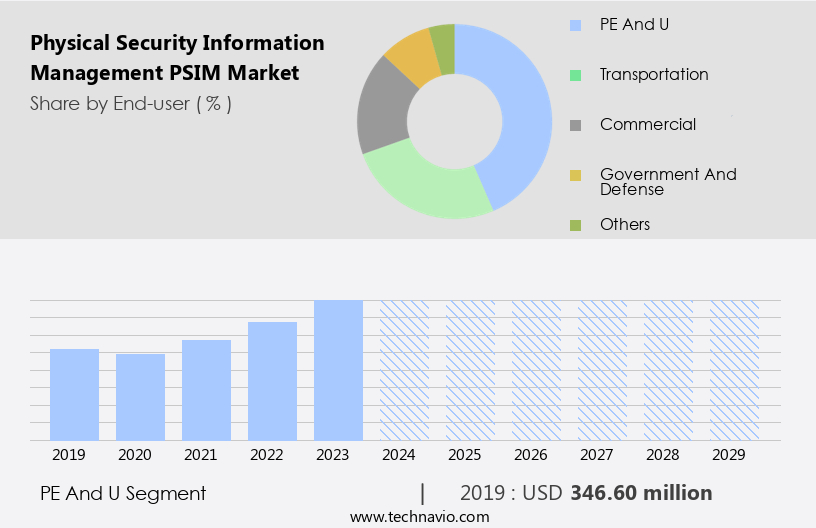
The PE and U segment was valued at USD 346.60 billion in 2019 and showed a gradual increase during the forecast period.
Regional Analysis
North America is estimated to contribute 31% to the growth of the global market during the forecast period. Data suggests that the future opportunities for growth in the North America region estimates to be around USD 769.90 million. Technavio's analysts have elaborately explained the regional trends and drivers that shape the market during the forecast period.
The market in North America has seen significant growth, driven primarily by the heightened security awareness following the 9/11 attacks. This incident instilled a deep-rooted fear of potential terrorist attacks, leading businesses and organizations to invest in advanced PSIM solutions for enhanced security operations. North America is currently a mature market for PSIM technology, with a high adoption rate. However, the market share is expected to decline due to the region's advanced stage of development. Key factors fueling the growth of the PSIM market in North America include the availability of robust IT and business infrastructure, stringent IT security compliance regulations, and the increasing adoption of cloud-based security solutions.
PSIM systems are integral to risk management, business continuity, and disaster recovery strategies. They provide security personnel with real-time situational awareness, enabling them to respond effectively to security threats. Open standards ensure seamless integration of various security systems, including video surveillance, security analytics, intrusion detection, access control, and alarm management. Machine learning and artificial intelligence technologies are increasingly being integrated into PSIM systems for predictive analytics and threat assessment. Security policies, audits, and vulnerability management are crucial components of PSIM solutions, ensuring compliance with regulatory requirements. The unified security platform offered by PSIM solutions streamlines workflow automation, incident response, and reporting and analytics.
Hybrid PSIM systems cater to both on-premise and cloud-based requirements, offering flexibility and scalability. Critical infrastructure protection is another significant application area for PSIM systems in North America. The correlation engine within PSIM systems enables real-time monitoring and threat assessment, ensuring effective security integration and incident management. The PSIM market in North America is expected to continue growing due to the increasing security budgets and the need for emergency response preparedness. The market is witnessing a shift towards advanced security technologies, including threat intelligence and predictive analytics, to enhance security operations and mitigate potential risks.
Market Dynamics
The Physical Security Information Management Market is experiencing significant growth, driven by evolving Physical Security Information Management Market trends towards comprehensive security integration. Integrated security platform solutions are crucial for unifying disparate systems within a security operations center (SOC) software. The shift towards cloud-based PSIM solutions offers enhanced flexibility and scalability, benefiting organizations managing critical infrastructure security management. The adoption of AI in physical security is revolutionizing threat detection and response. Enterprise security management software and intelligent building security systems are increasingly leveraging PSIM for centralized control. Key integrations include video management system (VMS) integration PSIM and access control system (ACS) integration PSIM, along with robust IoT device integration for PSIM. The ability to perform real-time event correlation PSIM is a core value proposition. The expanding Physical Security Information Management Market size reflects strong PSIM market growth drivers. Advanced security automation software and unified security management software are paramount for efficient operations. Furthermore, predictive analytics for security PSIM and robust data center security management PSIM are vital for ensuring regulatory compliance security PSIM.
Our researchers analyzed the data with 2024 as the base year, along with the key drivers, trends, and challenges. A holistic analysis of drivers will help companies refine their marketing strategies to gain a competitive advantage.
What are the key market drivers leading to the rise in the adoption of Physical Security Information Management (PSIM) Industry?
- The emergence of smart cities serves as the primary catalyst for market growth, driven by the integration of advanced technologies such as IoT, AI, and data analytics to enhance urban infrastructure and improve livability.
- Physical Security Information Management (PSIM) systems play a crucial role in smart cities by providing a unified security platform for incident response and threat assessment. These solutions enable data aggregation from various sources, including high-definition cameras, for effective surveillance of cities and critical infrastructure. PSIM systems utilize predictive analytics to identify potential threats and enable proactive emergency response. Threat intelligence is also integrated into these systems to enhance their capabilities. By making data-driven decisions, PSIM solutions improve the performance of core public, commercial, and industrial infrastructure in smart cities.
- These systems are essential for managing security in various facilities such as airports, seaports, bus depots, refineries, stadiums, and manufacturing plants. With the increasing emphasis on security and the need for efficient resource utilization, the demand for PSIM solutions is expected to grow in the smart cities market.
What are the market trends shaping the Physical Security Information Management (PSIM) Industry?
- The integration of the Internet of Things (IoT) with physical security is an emerging market trend. This convergence of technologies enhances security systems by enabling real-time monitoring, automated responses, and data-driven insights.
- Physical Security Information Management (PSIM) is a critical solution that enhances security awareness and risk management for businesses by integrating data from various sources, including video surveillance, security analytics, and open standards. PSIM enables real-time data visualization and situational awareness, empowering security personnel to make informed decisions and respond effectively to potential threats. The adoption of Internet of Things (IoT) technology in PSIM is a game-changer, as it connects a multitude of devices and objects for seamless data collection and analysis. This real-time data enables businesses to improve their business continuity and disaster recovery capabilities.
- IoT applications in wireless video surveillance allow for immediate responses to real-time decision-making, while the integration of security analytics enhances threat detection and response. The growing demand for improving the efficiency of facilities such as energy plants, water management plants, and waste management plants will further drive the installation of IoT-based physical security devices. PSIM solutions also provide essential features for risk management, including incident reporting, escalation, and response. By integrating these features with IoT technology, businesses can achieve a higher level of security operations and ensure the safety and security of their assets.
What challenges does the Physical Security Information Management (PSIM) Industry face during its growth?
- The growth of the industry is significantly impacted by the infrastructure requirements, which represent a major challenge that must be addressed by professionals.
- Physical Security Information Management (PSIM) systems have become essential for businesses seeking to enhance their security infrastructure. Advanced security technologies, such as intrusion detection, access control, and event analysis, require significant infrastructure, including bandwidth, video cameras, biometric data capturing devices, and storage. The vast amount of data generated by video surveillance poses a challenge, particularly with the adoption of high-definition 4K recording. To address these challenges, industries are investing in advanced PSIM solutions that offer workflow automation, machine learning, and compliance reporting. These features enable efficient event analysis and response, reducing the workload on security personnel.
- Moreover, cloud-based PSIM solutions offer scalability and cost savings, making them an attractive option for businesses. Reliable and high-density storage solutions are crucial in the PSIM industry, given the importance of surveillance data as potential evidence. These storage solutions must be of high quality, scalable, and capable of handling large volumes of data. The need for such solutions is further accentuated by the increasing adoption of hybrid PSIM systems, which integrate both physical and IT security. In conclusion, the PSIM market is driven by the growing demand for advanced security technologies and the need for efficient event analysis and response.
- The market is also witnessing the adoption of cloud-based solutions and the integration of machine learning and artificial intelligence. The requirement for reliable, high-density, and scalable storage solutions remains a key challenge and opportunity for market participants.
Exclusive Customer Landscape
The physical security information management (PSIM) market forecasting report includes the adoption lifecycle of the market, covering from the innovator's stage to the laggard's stage. It focuses on adoption rates in different regions based on penetration. Furthermore, the physical security information management (PSIM) market report also includes key purchase criteria and drivers of price sensitivity to help companies evaluate and develop their market growth analysis strategies.
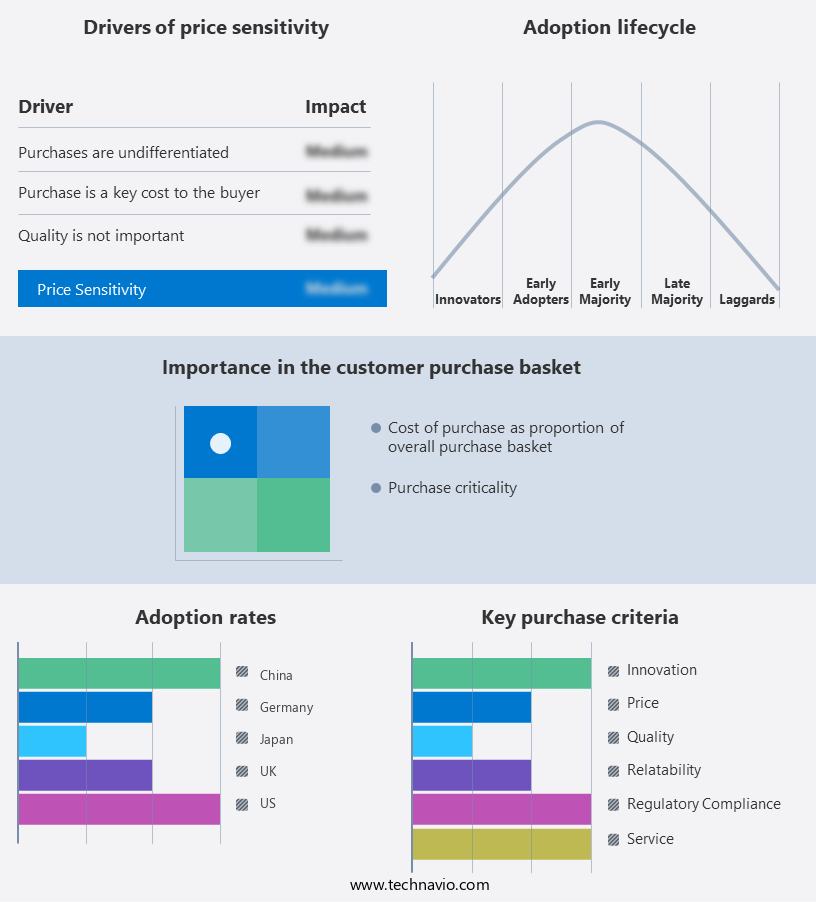
Customer Landscape
Key Companies & Market Insights
Companies are implementing various strategies, such as strategic alliances, physical security information management (psim) market forecast, partnerships, mergers and acquisitions, geographical expansion, and product/service launches, to enhance their presence in the industry.
AARMTech Engineering Pvt. Ltd. - The company specializes in physical security information management solutions, including Aarmtech's offering.
The industry research and growth report includes detailed analyses of the competitive landscape of the market and information about key companies, including:
- AARMTech Engineering Pvt. Ltd.
- Advancis Software and Services GmbH
- ARES Security Corp.
- AxxonSoft
- Canon Inc.
- Carrier Global Corp.
- easypsim AG
- Everbridge Inc.
- Genetec Inc.
- Hexagon AB
- Johnson Controls International Plc
- Kentima AB
- LG Corp.
- Nanodems Corp.
- NICE Ltd.
- Robert Bosch GmbH
- Siemens AG
Qualitative and quantitative analysis of companies has been conducted to help clients understand the wider business environment as well as the strengths and weaknesses of key industry players. Data is qualitatively analyzed to categorize companies as pure play, category-focused, industry-focused, and diversified; it is quantitatively analyzed to categorize companies as dominant, leading, strong, tentative, and weak.
Recent Development and News in Physical Security Information Management (PSIM) Market
- In February 2024, Honeywell announced the launch of its advanced PSIM solution, Maximum Security, which integrates access control, video surveillance, intrusion detection, and other security systems to provide a unified security management platform (Honeywell, 2024). This new offering aims to cater to the growing demand for comprehensive security solutions in various industries.
- In August 2024, Tyco International and Johnson Controls, two leading players in the PSIM market, announced their merger to create a global powerhouse in the security industry (Tyco International, 2025). The combined entity, Johnson Controls-Tyco, will offer an extensive range of PSIM solutions and services, strengthening their market position and enhancing their ability to cater to diverse customer needs.
- In November 2024, Bosch Security Systems received approval from the European Union's General Data Protection Regulation (GDPR) for its PSIM solution, enabling it to cater to the stringent data protection requirements of European clients (Bosch, 2024). This approval underscores the increasing importance of data privacy and security in the PSIM market.
- In March 2025, Genetec, a leading PSIM provider, unveiled its new cloud-based PSIM solution, allowing clients to access security management services remotely and reducing the need for on-premises infrastructure (Genetec, 2025). This technological advancement signifies a significant shift towards cloud-based solutions in the PSIM market.
Research Analyst Overview
The market is witnessing significant growth, driven by the increasing adoption of advanced technologies such as license plate recognition and biometric authentication for enhanced security. Data privacy concerns are also fueling the demand for centralized security management systems that can effectively handle security incident investigation and reporting. Automation and response capabilities are becoming essential for PSIM solutions to address the complexities of modern security environments. The integration of IoT security, building automation systems, and video analytics into PSIM solutions is a notable trend. Security maturity is a critical factor influencing market dynamics, with organizations prioritizing PCI DSS compliance, security governance, and regulatory compliance.
NIST Cybersecurity Framework and security orchestration are gaining traction as effective security strategies. Perimeter security, access control systems, fire alarm systems, and network security monitoring are crucial components of PSIM solutions. Facial recognition and intrusion detection systems are essential for physical access control and perimeter security. Security incident management and security awareness training are integral to maintaining a robust security posture. Cloud security is a growing concern, necessitating the adoption of advanced security frameworks and best practices. Security governance, security incident reporting, and security awareness training are vital for ensuring regulatory compliance and mitigating risks. Overall, the PSIM market is evolving to address the complexities of modern security environments, offering businesses effective solutions for managing and mitigating security risks.
Dive into Technavio's robust research methodology, blending expert interviews, extensive data synthesis, and validated models for unparalleled Physical Security Information Management (PSIM) Market insights. See full methodology.
|
Market Scope |
|
|
Report Coverage |
Details |
|
Page number |
211 |
|
Base year |
2024 |
|
Historic period |
2019-2023 |
|
Forecast period |
2025-2029 |
|
Growth momentum & CAGR |
Accelerate at a CAGR of 27.2% |
|
Market growth 2025-2029 |
USD 6546 million |
|
Market structure |
Fragmented |
|
YoY growth 2024-2025(%) |
22.4 |
|
Key countries |
US, Japan, UK, Germany, China, Canada, France, India, Brazil, and Italy |
|
Competitive landscape |
Leading Companies, Market Positioning of Companies, Competitive Strategies, and Industry Risks |
What are the Key Data Covered in this Physical Security Information Management (PSIM) Market Research and Growth Report?
- CAGR of the Physical Security Information Management (PSIM) industry during the forecast period
- Detailed information on factors that will drive the growth and forecasting between 2025 and 2029
- Precise estimation of the size of the market and its contribution of the industry in focus to the parent market
- Accurate predictions about upcoming growth and trends and changes in consumer behaviour
- Growth of the market across North America, Europe, APAC, Middle East and Africa, and South America
- Thorough analysis of the market's competitive landscape and detailed information about companies
- Comprehensive analysis of factors that will challenge the physical security information management (PSIM) market growth of industry companies
Have questions about our Market Research Report? Connect with our Principal Consultant for exclusive insights.
 RIA -
RIA - 
