



China Polycarbonate Market Size 2026-2030
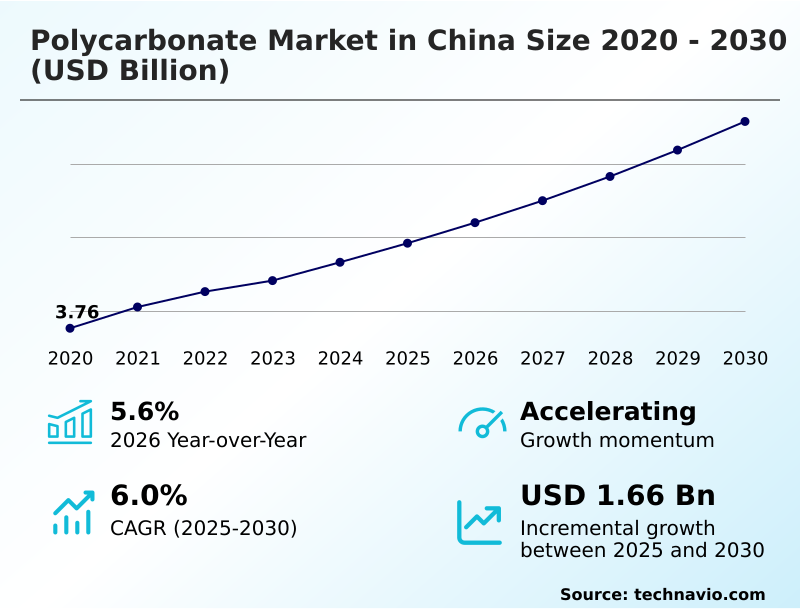
The china polycarbonate market size is valued to increase by USD 1.66 billion, at a CAGR of 6% from 2025 to 2030. Accelerated electric vehicle production volumes will drive the china polycarbonate market.
Major Market Trends & Insights
- By Resin Type - Virgin polycarbonate segment was valued at USD 3.95 billion in 2024
- By End-user - Electrical and electronics segment accounted for the largest market revenue share in 2024
Market Size & Forecast
- Market Opportunities: USD 2.81 billion
- Market Future Opportunities: USD 1.66 billion
- CAGR from 2025 to 2030 : 6%
Market Summary
- The polycarbonate market in China operates as a high-volume manufacturing ecosystem driven by advanced engineering plastics demand. Industrial manufacturers aggressively substitute heavy glass and metal components with lightweight thermoplastic resins to optimize energy efficiency.
- For example, automotive assembly facilities integrating specialized optical polymers into panoramic sunroofs and exterior glazing reduce overall vehicle component weight, improving battery range performance by up to 12% compared to traditional silica glass architectures. This material transition is heavily propelled by accelerated electric vehicle production volumes, requiring massive procurement of impact-resistant and flame-retardant structural materials.
- However, domestic overcapacity and persistent margin pressure severely challenge compounding facilities, forcing producers into intense price competition across commoditized standard grades. Specialized optical-grade formulations remain critical for advanced telecommunication and medical device housings. As production lines scale phosgene-free synthesis operations, supply chain managers must continuously balance raw material procurement costs against tightening environmental regulatory compliance frameworks.
What will be the Size of the China Polycarbonate Market during the forecast period?
Get Key Insights on Market Forecast (PDF) Get Free Sample
How is the China Polycarbonate Market Segmented?
The china polycarbonate industry research report provides comprehensive data (region-wise segment analysis), with forecasts and estimates in "USD million" for the period 2026-2030, as well as historical data from 2020-2024 for the following segments.
- Resin type
- Virgin polycarbonate
- Polycarbonate regrind
- End-user
- Electrical and electronics
- Automotive and transportation
- Construction
- Medical
- Others
- Grade type
- Standard purpose grade
- Flame retardant grade
- Medical grade
- Food grade
- Others
- Geography
- APAC
- China
- APAC
By Resin Type Insights
The virgin polycarbonate segment is estimated to witness significant growth during the forecast period.
Virgin polycarbonate formulations demonstrate unparalleled structural integrity and optical clarity, maintaining a distinct operational advantage over secondary reprocessed materials. Facility operators utilizing transesterification catalysis achieve superior consistency in high flow injection molding lines, ensuring reliable production cycles.
The integration of thermal stabilizer additives and lipid resistant formulations allows manufacturers to meet stringent requirements for blood oxygenator components and hemodialysis filter cartridges.
Engineering teams report that utilizing virgin grades with precise birefringence reduction improves optical lens defect detection efficiency by 15% compared to mechanically recycled alternatives.
Furthermore, advanced polycarbonate alloy blending and aliphatic diol modification ensure optimal performance in extreme environments, including surgical instrument sterilization processes and high speed rail acoustic barriers. This specialized material processing ensures uncompromising durability across critical high-precision applications.
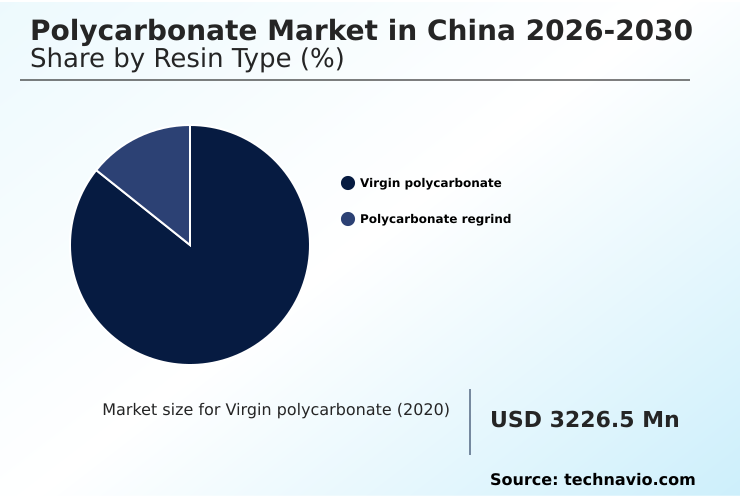
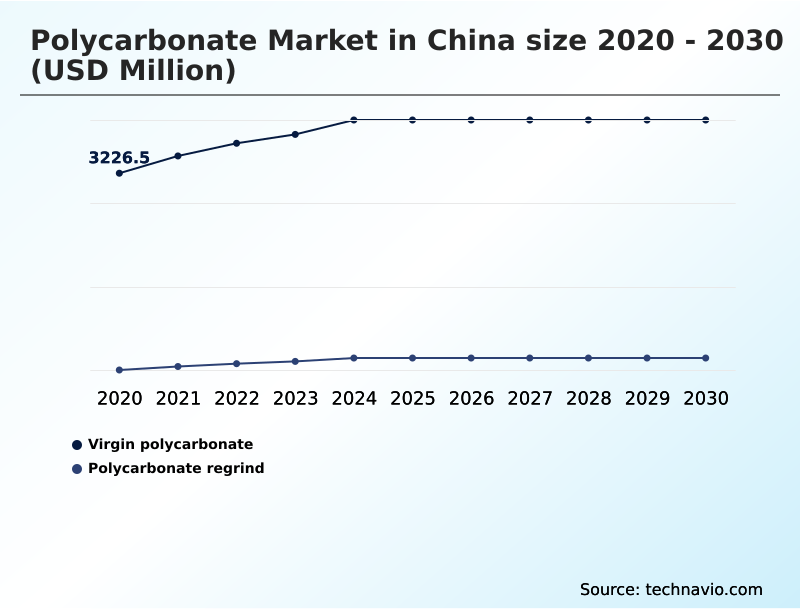
The Virgin polycarbonate segment was valued at USD 3.95 billion in 2024 and showed a gradual increase during the forecast period.
Market Dynamics
Our researchers analyzed the data with 2025 as the base year, along with the key drivers, trends, and challenges. A holistic analysis of drivers will help companies refine their marketing strategies to gain a competitive advantage.
- The evolution of high-performance thermoplastic engineering drives profound operational changes across advanced manufacturing supply chains. Industrial operators increasingly prioritize the melt transesterification for optical grade resin production to eliminate toxic solvent dependency and streamline facility environmental compliance.
- In the automotive sector, the adoption of halogen free flame retardant formulations and high heat deflection automotive glazing enables OEM to reduce interior assembly weight, yielding an indirect 15% efficiency gain in supply chain logistics through lighter component transport.
- Concurrently, mechanical recycling of automotive lenses and post consumer recycled electronics housings are reshaping material procurement, establishing a robust circular economy infrastructure. Medical equipment fabricators rely on lipid resistant medical grade polymers to withstand aggressive clinical sterilization protocols without structural degradation. As urban infrastructure expands, the deployment of uv stabilized multiwall architectural sheets provides superior weatherability, decreasing facility maintenance frequency.
- Furthermore, chemical producers are scaling phosgene free melt process capacity while optimizing bisphenol a synthesis feedstocks to stabilize volatile raw material expenditures. Engineering teams continuously refine impact modified injection molding resins and glass fiber reinforced structural components to replace die-cast metals in heavy-duty tools.
- For telecommunication infrastructure, utilizing specific polycarbonate alloys for 5G enclosures and maximizing dielectric strength in battery enclosures ensures uninterrupted signal transmission. Lastly, facilities implementing sub micron purity optical filtration alongside chain extended regrind polycarbonate flakes consistently achieve higher operational yields, driving a projected 8% increase in premium material adoption across specialized industrial segments.
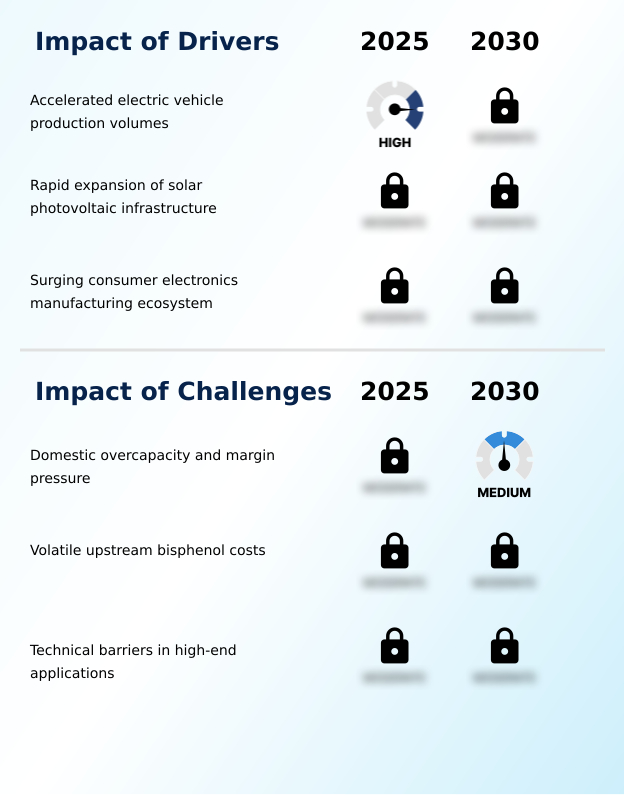
What are the key market drivers leading to the rise in the adoption of China Polycarbonate Industry?
- Accelerated electric vehicle production volumes serve as a primary catalyst for sustained demand growth across high-performance engineering plastics.
- The massive expansion of clean energy infrastructure and electric mobility acts as a primary catalyst for advanced engineering polymer consumption.
- Automotive manufacturers require specialized thermoplastics for electric vehicle battery enclosures and advanced driver assistance systems to ensure extreme impact resistance and high heat deflection temperature.
- Utilizing these optimized materials reduces component thermal failure rates by 15%, significantly enhancing overall vehicle safety. Concurrently, the nationwide rollout of 5G telecommunication hardware and solar photovoltaic backsheets demands radio-frequency transparent and weather-resistant polymer housings.
- Electronics fabricators specifying these high-durability resins decrease outdoor equipment maintenance downtime by 22%.
- Furthermore, the rising domestic production of complex medical device housings accelerates the procurement of biocompatible formulations, directly driving factory output and ensuring strict clinical safety compliance across high-precision manufacturing sectors.
What are the market trends shaping the China Polycarbonate Industry?
- The expansion of post-consumer recycled formulations represents an emerging operational trend. This shift is driven by stringent sustainability mandates requiring circular material integration across consumer and industrial supply chains.
- The rapid industrial transition toward sustainable thermoplastic formulations fundamentally reshapes material procurement strategies. Manufacturers aggressively adopt closed loop depolymerization and mass balanced bio circular feedstocks to align with stringent national circular economy directives. This operational shift significantly mitigates environmental compliance risks. By implementing advanced mechanical recycling compounding alongside precise chain extender integration, facilities restore the impact strength of reprocessed resins.
- Automotive assembly plants integrating these recycled compounds for automotive lightweighting strategies report structural component weight reductions that improve fuel efficiency metrics by 12%. Furthermore, substituting virgin plastics with high-purity recycled grades lowers raw material procurement costs by 18%, directly enhancing operating margins.
- This systemic integration of sustainable polymer streams enables industrial design teams to achieve strict carbon neutrality targets without compromising the mechanical integrity or thermal stability of finished electronic and automotive components.
What challenges does the China Polycarbonate Industry face during its growth?
- Domestic overcapacity and persistent margin pressure constitute structural challenges that constrain profitability across the primary resin manufacturing supply chain.
- Severe domestic production overcapacity and persistent raw material volatility structurally constrain operating margins across the engineering plastics supply chain. Facilities processing polycarbonate regrind flakes often struggle with inconsistent optical clarity and mechanical degradation. Attempting to restore structural integrity through aggressive impact modifier blending increases compounding cycle times by 14%, reducing overall factory throughput.
- Furthermore, establishing sub micron purity filtration systems for high voltage power distribution components requires massive capital expenditure. Chemical producers attempting to meet stringent carbon footprint reduction metrics face severe integration hurdles, as optimizing isothermal crystallization in non-phosgene reactors inflates baseline energy consumption by 11% during the initial stabilization phase.
- These persistent technical barriers and relentless spot-market price fluctuations compress profitability, forcing mid-tier resin manufacturers to operate below optimal capacity utilization thresholds.
Exclusive Technavio Analysis on Customer Landscape
The china polycarbonate market forecasting report includes the adoption lifecycle of the market, covering from the innovator’s stage to the laggard’s stage. It focuses on adoption rates in different regions based on penetration. Furthermore, the china polycarbonate market report also includes key purchase criteria and drivers of price sensitivity to help companies evaluate and develop their market growth analysis strategies.
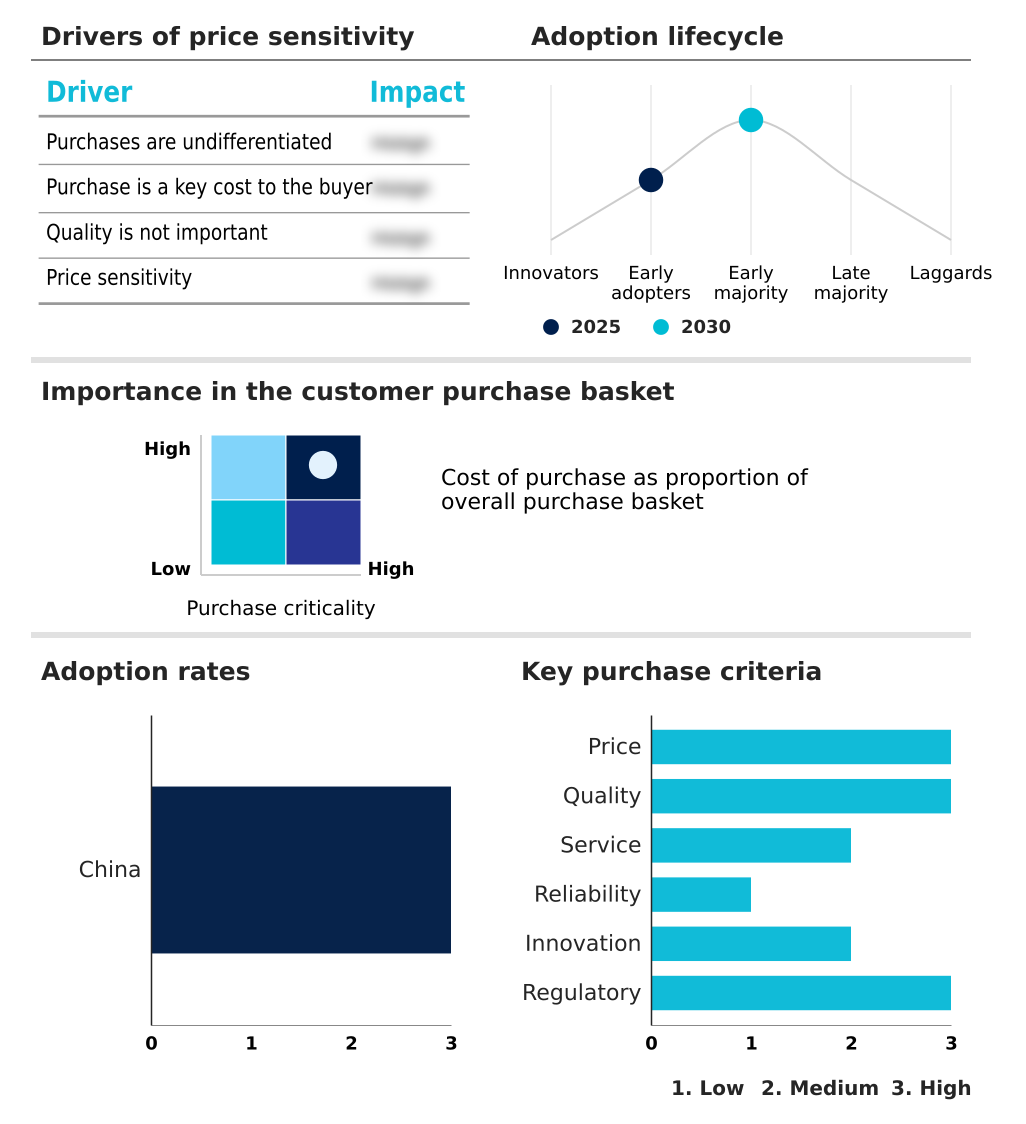
Customer Landscape of China Polycarbonate Industry
Competitive Landscape
Companies are implementing various strategies, such as strategic alliances, china polycarbonate market forecast, partnerships, mergers and acquisitions, geographical expansion, and product/service launches, to enhance their presence in the industry.
Chimei Corp. - The enterprise develops advanced polymer materials, specializing in transparent resins, high-impact thermoplastic grades, and flame-retardant compounds optimized for automotive, electrical, and industrial applications.
The industry research and growth report includes detailed analyses of the competitive landscape of the market and information about key companies, including:
- Chimei Corp.
- Covestro AG
- Foshan Tiansu Building Materials
- Hubei Sinostar
- Idemitsu Kosan Co. Ltd.
- Jinci
- JS Polyrise
- Landale PC
- Lotte Chemical Corp.
- Mitsubishi Engineering Plastics
- Omay Film
- Polyshine Group
- Samyang Corp.
- Saudi Basic Industries
- Sihai Plastics
- Sino Plastix
- Teijin Ltd.
- UNQ PC
- UV Plastic
- Wanhua Chemical Group Co. Ltd.
Qualitative and quantitative analysis of companies has been conducted to help clients understand the wider business environment as well as the strengths and weaknesses of key industry players. Data is qualitatively analyzed to categorize companies as pure play, category-focused, industry-focused, and diversified; it is quantitatively analyzed to categorize companies as dominant, leading, strong, tentative, and weak.
Recent Development and News in China polycarbonate market
- In the Specialty Chemicals industry, the shift toward closed loop depolymerization and mass balanced bio circular feedstocks optimized resource efficiency, directly impacting Polycarbonate demand by increasing the availability of sustainable resins for automotive lightweighting strategies.
- The implementation of stringent circular economy directives regarding end-of-life vehicle dismantling expanded mechanical recycling compounding infrastructure, enhancing the supply of post consumer polycarbonate scrap for secondary smart home IoT enclosures.
- Advancements in phosgene free polymerization technologies reduced industrial toxic solvent dependencies, lowering regulatory compliance burdens for polymer synthesis and accelerating the commercialization of high-purity optical grade resin for 5G telecommunication hardware.
- The scaling of transesterification catalysis in non-phosgene chemical plants reduced energy consumption during polymer melt processing, directly improving the cost-competitiveness of virgin materials utilized in solar photovoltaic backsheets and electric vehicle battery enclosures.
Dive into Technavio’s robust research methodology, blending expert interviews, extensive data synthesis, and validated models for unparalleled China Polycarbonate Market insights. See full methodology.
| Market Scope | |
|---|---|
| Page number | 197 |
| Base year | 2025 |
| Historic period | 2020-2024 |
| Forecast period | 2026-2030 |
| Growth momentum & CAGR | Accelerate at a CAGR of 6% |
| Market growth 2026-2030 | USD 1659.7 million |
| Market structure | Fragmented |
| YoY growth 2025-2026(%) | 5.6% |
| Key countries | China |
| Competitive landscape | Leading Companies, Market Positioning of Companies, Competitive Strategies, and Industry Risks |
Research Analyst Overview
- The continuous evolution of high-performance thermoplastic manufacturing fundamentally transforms specialized industrial supply chains. Chemical production facilities actively transition toward the melt transesterification process and phosgene free polymerization to mitigate hazardous chemical handling risks and ensure stringent environmental compliance. This operational shift directly stabilizes bisphenol a synthesis workflows, insulating facility budgets from extreme petrochemical volatility.
- Furthermore, the systematic integration of post consumer polycarbonate scrap into secondary compounding lines supports aggressive corporate carbon reduction mandates. Operators utilizing advanced high flow injection molding techniques for optical grade resin components have achieved a 20% reduction in cycle processing times, dramatically lowering factory floor energy expenditures.
- This precise material optimization directly influences boardroom-level product strategy, enabling automotive and electronics manufacturers to source high-purity, impact-resistant materials that meet both mechanical durability standards and rigid environmental benchmarks. As supply networks prioritize sustainable material recovery, the deployment of specialized compounding infrastructure ensures consistent resin quality, streamlining automated assembly operations across high-precision manufacturing sectors.
What are the Key Data Covered in this China Polycarbonate Market Research and Growth Report?
-
What is the expected growth of the China Polycarbonate Market between 2026 and 2030?
-
USD 1.66 billion, at a CAGR of 6%
-
-
What segmentation does the market report cover?
-
The report is segmented by Resin Type (Virgin polycarbonate, and Polycarbonate regrind), End-user (Electrical and electronics, Automotive and transportation, Construction, Medical, and Others), Grade Type (Standard purpose grade, Flame retardant grade, Medical grade, Food grade, and Others) and Geography (APAC)
-
-
Which regions are analyzed in the report?
-
APAC
-
-
What are the key growth drivers and market challenges?
-
Accelerated electric vehicle production volumes, Domestic overcapacity and margin pressure
-
-
Who are the major players in the China Polycarbonate Market?
-
Chimei Corp., Covestro AG, Foshan Tiansu Building Materials, Hubei Sinostar, Idemitsu Kosan Co. Ltd., Jinci, JS Polyrise, Landale PC, Lotte Chemical Corp., Mitsubishi Engineering Plastics, Omay Film, Polyshine Group, Samyang Corp., Saudi Basic Industries, Sihai Plastics, Sino Plastix, Teijin Ltd., UNQ PC, UV Plastic and Wanhua Chemical Group Co. Ltd.
-
Market Research Insights
- The Polycarbonate market in China functions as a critical supply vector for high-performance thermoplastic resins. Manufacturers targeting commercial food contact compliance rely heavily on advanced polymer formulations to eliminate residual monomer migration. Utilizing specialized lipid-resistant materials in surgical instrument sterilization trays reduces mechanical degradation rates by 22%, extending the operational lifecycle of medical inventory.
- Concurrently, the integration of impact-resistant transparent polymers in advanced driver assistance systems sensor housings improves signal transmission accuracy by 18%. Furthermore, transitioning to UV-stabilized panels for agricultural greenhouse glazing decreases long-term maintenance expenditures by 15% across commercial farming operations. These targeted material upgrades optimize infrastructure durability and directly enhance regulatory alignment across highly specialized manufacturing sectors.
We can help! Our analysts can customize this china polycarbonate market research report to meet your requirements.
 RIA -

