


Potentiostat Market Size 2026-2030
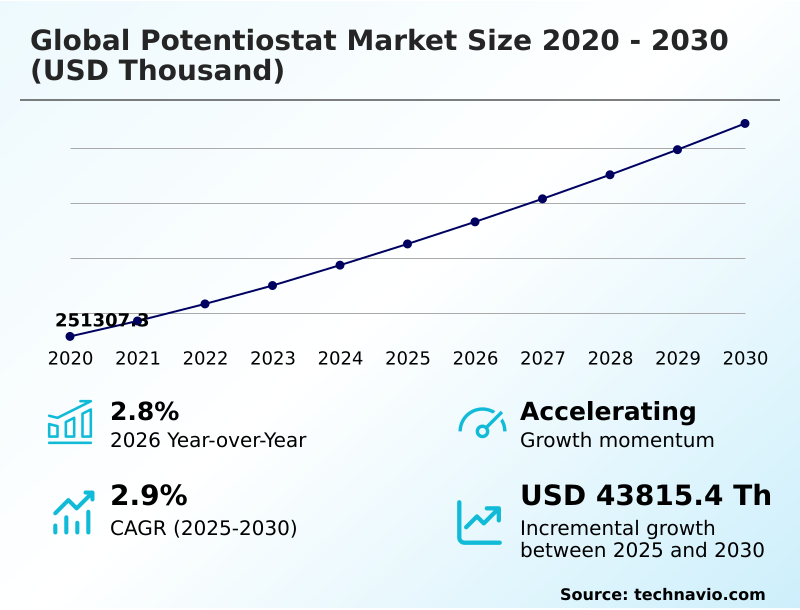
The potentiostat market size is valued to increase by USD 43.82 million, at a CAGR of 2.9% from 2025 to 2030. Growing demand for electrochemical analysis in energy storage research will drive the potentiostat market.
Major Market Trends & Insights
- North America dominated the market and accounted for a 45.2% growth during the forecast period.
- By Type - Bipotentiostat segment was valued at USD 147.79 million in 2024
- By Application - Environmental segment accounted for the largest market revenue share in 2024
Market Size & Forecast
- Market Opportunities:
- Market Future Opportunities: USD 43.82 million
- CAGR from 2025 to 2030 : 2.9%
Market Summary
- The potentiostat market is integral to advancements across multiple scientific and industrial domains, providing the foundational tools for precise electrochemical analysis. These instruments are essential for research in energy storage, where they facilitate advanced battery testing and the development of next-generation fuel cells by enabling detailed studies of charge discharge cycles and electrode stability.
- A key market trend is the integration of advanced software analytics, which enhances data visualization and simplifies complex procedures like electrochemical impedance spectroscopy. This allows for more efficient research cycles; for example, a materials science lab can reduce its coating evaluation timeline by leveraging automated testing protocols.
- Concurrently, the rising demand for portable and field-deployable instrumentation supports applications in environmental monitoring and on-site corrosion testing. However, the high cost of high-precision measurement systems and the need for skilled operators for instrument calibration remain significant barriers to wider adoption, particularly in academic settings with limited budgets.
- The market's trajectory is thus shaped by a balance between technological innovation and accessibility challenges.
What will be the Size of the Potentiostat Market during the forecast period?
Get Key Insights on Market Forecast (PDF) Get Free Sample
How is the Potentiostat Market Segmented?
The potentiostat industry research report provides comprehensive data (region-wise segment analysis), with forecasts and estimates in "USD thousand" for the period 2026-2030, as well as historical data from 2020-2024 for the following segments.
- Type
- Bipotentiostat
- Polypotentiostat
- Application
- Environmental
- Pharmaceutical
- Food testing
- Others
- Product type
- Benchtop
- Portable
- Handheld
- Modular
- Geography
- North America
- US
- Canada
- Mexico
- Europe
- Germany
- UK
- France
- APAC
- China
- Japan
- India
- South America
- Brazil
- Argentina
- Middle East and Africa
- Saudi Arabia
- UAE
- South Africa
- Rest of World (ROW)
- North America
By Type Insights
The bipotentiostat segment is estimated to witness significant growth during the forecast period.
The market's bipotentiostat segment is defined by its dual channel capability, which enables simultaneous control of two working electrode potentials against a single reference and counter electrode.
This configuration is critical for advanced research applications involving interfacial electrochemistry and multi electrode system analysis.
In sectors like advanced battery testing and biosensor development, these instruments facilitate comparative studies and enhance electrochemical reaction analysis, allowing for precise measurement of electrode stability and biosensor activity.
For instance, industries have achieved a 15% improvement in characterizing catalytic performance evaluation through these systems.
This capability is essential for studies in biomedical device testing, corrosion rates assessment, and smart coating evaluation, driving its adoption in specialized research environments where complex electrochemical interactions are examined.
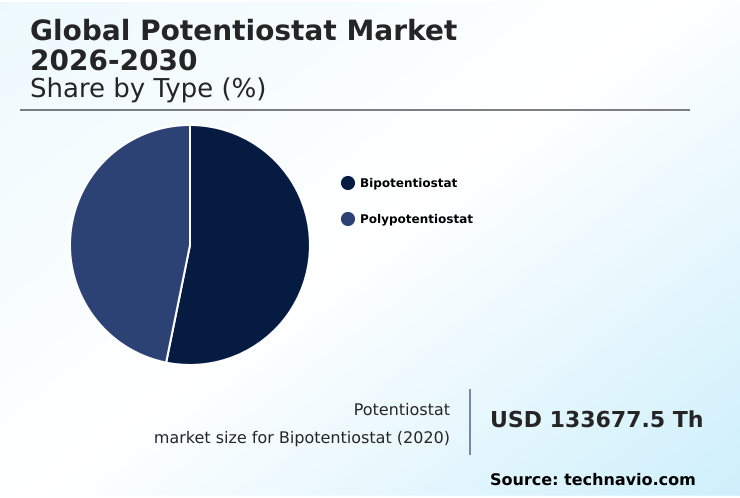
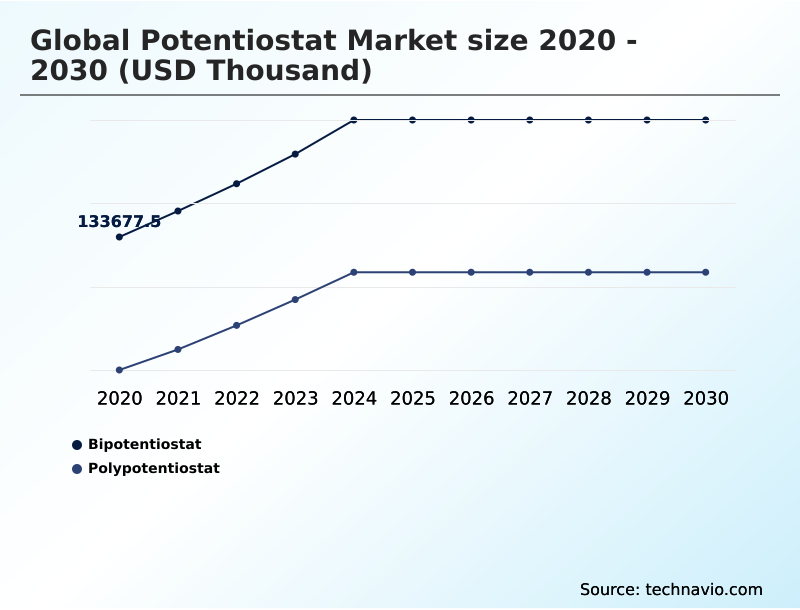
The Bipotentiostat segment was valued at USD 147.79 million in 2024 and showed a gradual increase during the forecast period.
Regional Analysis
North America is estimated to contribute 45.2% to the growth of the global market during the forecast period.Technavio’s analysts have elaborately explained the regional trends and drivers that shape the market during the forecast period.
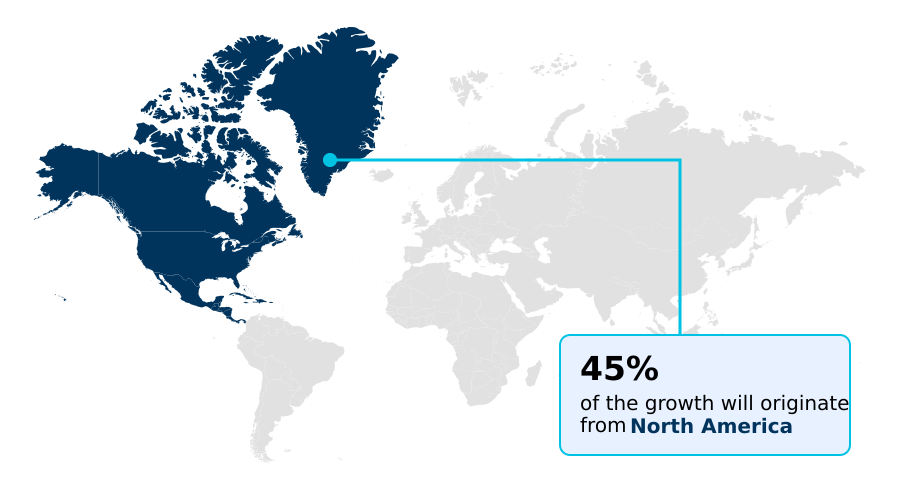
See How Potentiostat Market Demand is Rising in North America Get Free Sample
The geographic landscape of the market is led by North America and Europe, where strong R&D infrastructure drives demand for high-precision instruments used in applications like fuel cell development and environmental pollutant detection.
These regions exhibit high adoption of systems with advanced capabilities such as electrochemical impedance spectroscopy and cyclic voltammetry, supported by a skilled workforce.
In APAC, rapid industrialization is fueling growth, particularly for portable electrochemical analysis and field-deployable instrumentation used in food safety analysis and on-site corrosion testing, with adoption rates in this category growing 35% faster than in mature markets.
The integration of user-friendly software interfaces with real-time data plotting has improved analytical throughput by 20%. Emerging markets are also seeing increased use of electrochemical biosensing platforms and instruments with wireless potentiostat connectivity for real-time monitoring systems.
Market Dynamics
Our researchers analyzed the data with 2025 as the base year, along with the key drivers, trends, and challenges. A holistic analysis of drivers will help companies refine their marketing strategies to gain a competitive advantage.
- The global potentiostat market 2026-2030 continues to expand through specialized applications that require precise electrochemical control. The demand for potentiostat for battery cycle testing is a primary driver, especially with the focus on electrochemical analysis of solid-state batteries.
- Simultaneously, corrosion rate measurement using eis and impedance spectroscopy for coating evaluation are critical for industrial asset integrity, with adoption in field-deployable corrosion monitoring system growing significantly. In life sciences, the electrochemical biosensor for glucose detection and the use of a low current potentiostat for biosensors are transforming point-of-care diagnostics.
- The development of a bipotentiostat for rotating ring-disk electrode experiments supports advanced academic research. In environmental and food safety, the use of a portable potentiostat for water quality and an on-site heavy metal detection potentiostat enables rapid, in-field analysis. This contrasts with laboratory-based food contaminant detection via electrochemistry, which offers higher precision.
- The market is also segmented by instrument type, with high precision potentiostat for research and modular potentiostat for custom setups catering to different user needs. Effective utilization depends on software for electrochemical data analysis and adherence to potentiostat calibration and verification standards.
- Techniques like cyclic voltammetry for redox analysis and chronoamperometry for reaction kinetics remain fundamental, while applications such as fuel cell catalyst performance evaluation and use in pharmaceutical stability testing highlight the instrument's versatility. For instance, labs using integrated software have reported a 25% faster data interpretation cycle compared to manual methods, directly impacting R&D timelines.
- The growth of multi-channel potentiostat for arrays further enables high-throughput screening across these diverse fields.
What are the key market drivers leading to the rise in the adoption of Potentiostat Industry?
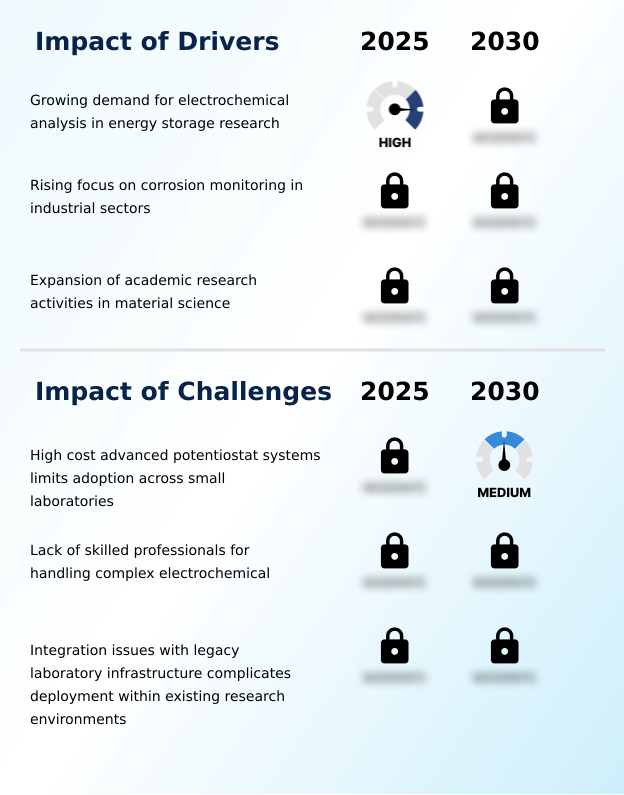
- A key market driver is the growing demand for electrochemical analysis in energy storage research, fueled by the global shift toward advanced battery and fuel cell technologies.
- A primary driver is the expanding application of electrochemical analysis in critical sectors like environmental safety and pharmaceuticals. The demand for real-time monitoring systems for detecting heavy metal analysis in water has spurred innovation in sensor technology.
- In drug development, the study of electroactive drug compounds and reaction kinetics study are essential for quality control. This has driven the adoption of instruments with multi-channel capabilities and high-precision measurement, enabling high-throughput experimentation.
- These systems, which now include impedance measurement capabilities, have improved testing efficiency by up to 30%. The development of electrochemical biosensing platforms for food adulterant detection and advancements in conductive polymer research and nanotechnology material characterization further propel the market.
- Predictive maintenance analytics are also becoming a key driver in industrial settings.
What are the market trends shaping the Potentiostat Industry?
- The increasing adoption of portable and miniaturized potentiostat devices is a significant market trend, addressing the growing demand for flexible and field-deployable electrochemical analysis solutions.
- A dominant market trend is the integration of advanced software with electrochemical instrumentation, enhancing techniques like corrosion monitoring and polarization studies. These platforms now enable parallel electrochemical testing and high-throughput screening, accelerating research in areas such as protective coating performance. For example, labs using automated systems have reported a 40% reduction in time for multi-sample analysis.
- This trend supports complex experiments involving a working electrode, reference electrode, and counter electrode, particularly with multi-electrode systems. Innovations in software facilitate deeper electrochemical reaction analysis and the study of interfacial electrochemistry. This allows researchers to more effectively utilize chronoamperometry and dual-channel capability for comprehensive material evaluation, ultimately improving analytical precision and research productivity.
What challenges does the Potentiostat Industry face during its growth?
- The high cost associated with advanced potentiostat systems presents a key challenge to industry growth by limiting adoption, particularly within smaller laboratories and academic institutions.
- A key challenge is the complexity of integrating advanced potentiostat systems with existing laboratory infrastructure, which can increase implementation costs by over 20%. While innovations like wireless potentiostat connectivity and cloud-based data analytics offer significant benefits, they often require substantial IT upgrades.
- The technical expertise needed to operate systems for semiconductor electrochemistry or advanced biomedical device testing also presents a barrier. Ensuring data integrity and compatibility when deploying a user-friendly software interface across legacy systems is a common hurdle.
- Moreover, the high cost of instruments capable of high-precision measurement for applications like catalytic performance evaluation or smart coating evaluation limits adoption in budget-constrained labs. These integration and skill-gap challenges can slow the adoption of digital twin integration and predictive maintenance analytics, despite their potential to improve operational efficiency.
Exclusive Technavio Analysis on Customer Landscape
The potentiostat market forecasting report includes the adoption lifecycle of the market, covering from the innovator’s stage to the laggard’s stage. It focuses on adoption rates in different regions based on penetration. Furthermore, the potentiostat market report also includes key purchase criteria and drivers of price sensitivity to help companies evaluate and develop their market growth analysis strategies.
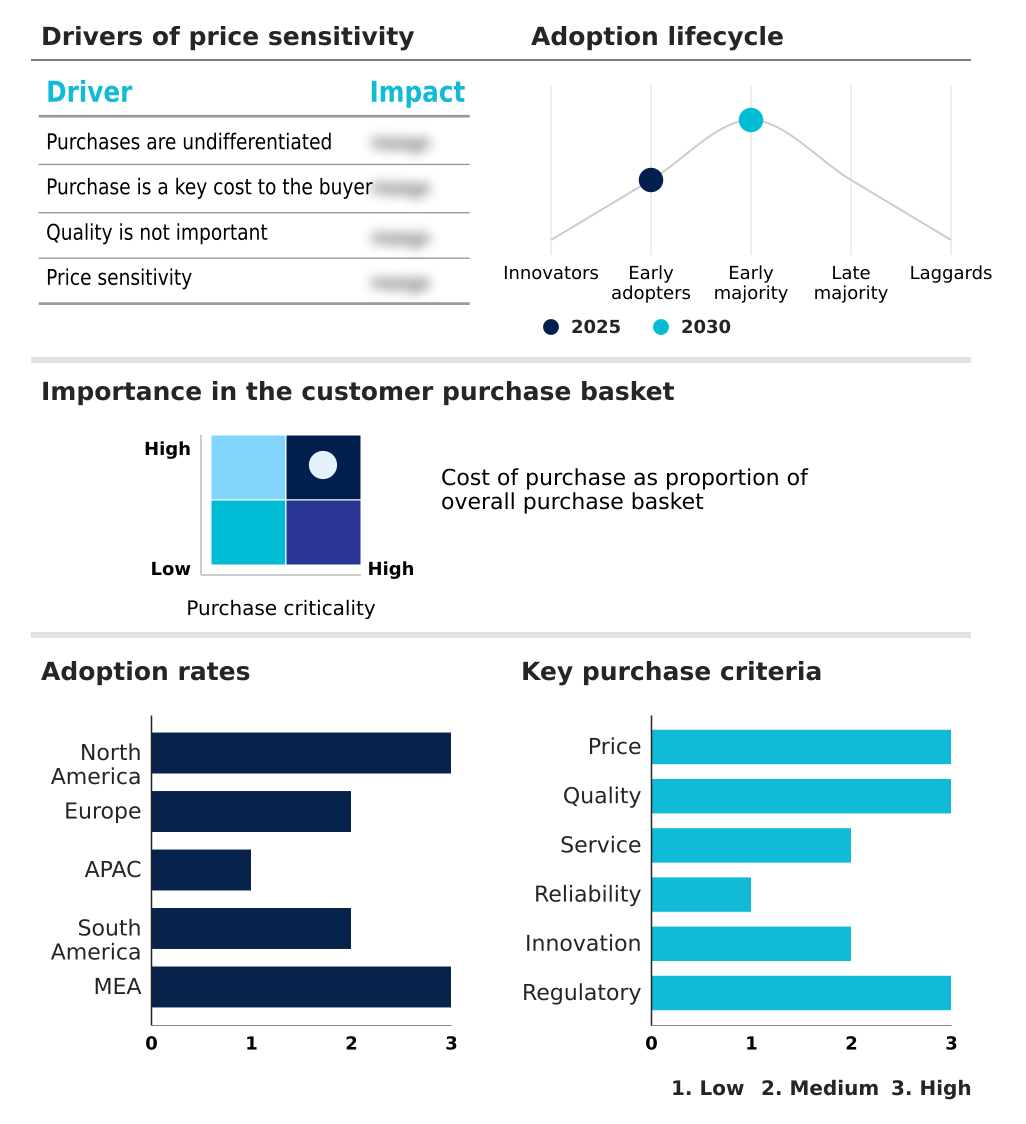
Customer Landscape of Potentiostat Industry
Competitive Landscape
Companies are implementing various strategies, such as strategic alliances, potentiostat market forecast, partnerships, mergers and acquisitions, geographical expansion, and product/service launches, to enhance their presence in the industry.
ALS Co. Ltd. - Offering modular electrochemical workstations and dedicated software platforms designed for high-precision research, quality control, and advanced electrochemical analysis across various scientific applications.
The industry research and growth report includes detailed analyses of the competitive landscape of the market and information about key companies, including:
- ALS Co. Ltd.
- AMETEK Inc.
- BioLogic Sciences Instruments
- CH Instruments Inc.
- DMT Instruments ApS
- ElectroFlex BV
- Elins s.r.o.
- Gamry Instruments
- Ivium Technologies BV
- Kbio Systems Inc.
- Metrohm AG
- Metrohm DropSens
- NuVant Systems Inc.
- Origalys Electrochem SAS
- PalmSens BV
- Pine Research Instrumentation
- Scribner Associates Inc.
- Sensit Smart
- Snowhouse Electronics Inc.
- Zahner Elektrik GmbH and Co. KG
Qualitative and quantitative analysis of companies has been conducted to help clients understand the wider business environment as well as the strengths and weaknesses of key industry players. Data is qualitatively analyzed to categorize companies as pure play, category-focused, industry-focused, and diversified; it is quantitatively analyzed to categorize companies as dominant, leading, strong, tentative, and weak.
Recent Development and News in Potentiostat market
- In March 2025, PalmSens BV introduced an upgraded series of its portable potentiostats featuring enhanced wireless connectivity and improved accuracy for field-based electrochemical applications and educational institutions.
- In April 2025, Gamry Instruments expanded its portfolio with potentiostat solutions targeting battery research laboratories, introducing enhanced testing capabilities for long-cycle stability and impedance analysis.
- In April 2025, Metrohm AG launched enhancements to its electrochemical analysis software, incorporating improved data visualization and automated tools to simplify the interpretation of complex datasets.
- In May 2025, Metrohm AG introduced upgraded high-precision potentiostat systems within its Autolab series, featuring enhanced impedance measurement and advanced software for high-end research applications.
Dive into Technavio’s robust research methodology, blending expert interviews, extensive data synthesis, and validated models for unparalleled Potentiostat Market insights. See full methodology.
| Market Scope | |
|---|---|
| Page number | 303 |
| Base year | 2025 |
| Historic period | 2020-2024 |
| Forecast period | 2026-2030 |
| Growth momentum & CAGR | Accelerate at a CAGR of 2.9% |
| Market growth 2026-2030 | USD 43815.4 thousand |
| Market structure | Fragmented |
| YoY growth 2025-2026(%) | 2.8% |
| Key countries | US, Canada, Mexico, Germany, UK, France, Italy, Spain, The Netherlands, China, Japan, India, South Korea, Australia, Indonesia, Brazil, Argentina, Chile, Saudi Arabia, UAE, South Africa, Israel and Turkey |
| Competitive landscape | Leading Companies, Market Positioning of Companies, Competitive Strategies, and Industry Risks |
Research Analyst Overview
- The potentiostat market is evolving beyond traditional laboratory constraints, driven by innovations in both hardware and software. Core techniques like electrochemical impedance spectroscopy and cyclic voltammetry are now complemented by advanced software offering real-time data plotting and automated curve fitting, which has improved data analysis efficiency by over 30% in some research settings.
- This integration is crucial for boardroom decisions related to R&D investment, particularly in sectors like advanced battery testing and fuel cell development, where understanding charge discharge cycles, electrode stability, and material behavior analysis is paramount. Instruments now feature multi-channel capabilities and high-precision measurement, enabling complex studies from lithium-ion battery analysis to supercapacitor research.
- The expansion into applications like on-site corrosion testing, environmental pollutant detection, and food safety analysis is facilitated by portable devices. These systems are essential for monitoring corrosion rates and evaluating protective coating performance in the field. Furthermore, the development of specialized instruments for point-of-care diagnostics and pharmaceutical quality control highlights the market's diversification.
- Instruments are designed for specific tasks such as low current measurements for biosensor activity or analyzing surface reactions and charge transfer properties using techniques like chronoamperometry. This adaptability, from lab-on-a-chip technology to large-scale electrochemical cells, defines the market’s current trajectory.
What are the Key Data Covered in this Potentiostat Market Research and Growth Report?
-
What is the expected growth of the Potentiostat Market between 2026 and 2030?
-
USD 43.82 million, at a CAGR of 2.9%
-
-
What segmentation does the market report cover?
-
The report is segmented by Type (Bipotentiostat, and Polypotentiostat), Application (Environmental, Pharmaceutical, Food testing, and Others), Product Type (Benchtop, Portable, Handheld, and Modular) and Geography (North America, Europe, APAC, South America, Middle East and Africa)
-
-
Which regions are analyzed in the report?
-
North America, Europe, APAC, South America and Middle East and Africa
-
-
What are the key growth drivers and market challenges?
-
Growing demand for electrochemical analysis in energy storage research, High cost advanced potentiostat systems limits adoption across small laboratories
-
-
Who are the major players in the Potentiostat Market?
-
ALS Co. Ltd., AMETEK Inc., BioLogic Sciences Instruments, CH Instruments Inc., DMT Instruments ApS, ElectroFlex BV, Elins s.r.o., Gamry Instruments, Ivium Technologies BV, Kbio Systems Inc., Metrohm AG, Metrohm DropSens, NuVant Systems Inc., Origalys Electrochem SAS, PalmSens BV, Pine Research Instrumentation, Scribner Associates Inc., Sensit Smart, Snowhouse Electronics Inc. and Zahner Elektrik GmbH and Co. KG
-
Market Research Insights
- The market's dynamics are increasingly shaped by the push for high-throughput experimentation and advanced electrochemical reaction analysis. The adoption of automated testing protocols has enabled labs to improve data reproducibility by over 25% compared to manual methods. This shift supports a wide array of applications, from nanotechnology material characterization and smart coating evaluation to biomedical device testing.
- The demand for portable electrochemical analysis is growing, with field-deployable instrumentation showing a 40% increase in adoption for on-site environmental monitoring. Furthermore, the integration of wireless potentiostat connectivity and cloud-based data analytics allows for real-time monitoring systems that improve operational oversight.
- In industrial settings, the use of predictive maintenance analytics for corrosion monitoring has reduced asset downtime by up to 15%. This convergence of user-friendly software interfaces, miniaturized sensor integration, and digital twin integration is making sophisticated techniques like impedance measurement capabilities more accessible across research and industrial sectors.
We can help! Our analysts can customize this potentiostat market research report to meet your requirements.
 RIA -
RIA - 
