


Premature Ejaculation Disorder Market Analysis US - Size and Forecast 2024-2028

Premature Ejaculation Disorder Market Analysis US - Size and Forecast 2024-2028

Published: Nov 2023 152 Pages SKU: IRTNTR70381

Market Overview at a Glance

$478.41 Mn
Market Opportunity
10.22%
CAGR
10.1
YoY growth 2023-2024(%)

US Premature Ejaculation Disorder Market Size 2024-2028 

The US premature ejaculation disorder market size is forecast to increase by USD 478.41 million at a CAGR of 10.22% between 2023 and 2028. The premature ejaculation disorder market in the US is experiencing significant growth due to the high efficacy of off-label drugs, leading to increased usage by individuals seeking treatment. This trend is driven by the availability of effective medications, such as selective serotonin reuptake inhibitors (SSRIs), which offer prolonged intercourse and improved sexual satisfaction. Another key trend is the use of nanotechnology in drug delivery systems, enabling targeted and controlled release of drugs for enhanced efficacy and reduced side effects.

However, the market faces challenges related to the side effects of available treatments, including dizziness, headaches, and gastrointestinal issues, which may limit their widespread adoption. Additionally, the stigma surrounding premature ejaculation and the lack of awareness about the disorder hinder market growth. Despite these challenges, the US Premature Ejaculation Disorder market growth is steady due to the increasing demand for effective treatments and the ongoing research and development efforts in the field.

What will be the US Premature Ejaculation Disorder Market Size During the Forecast Period?
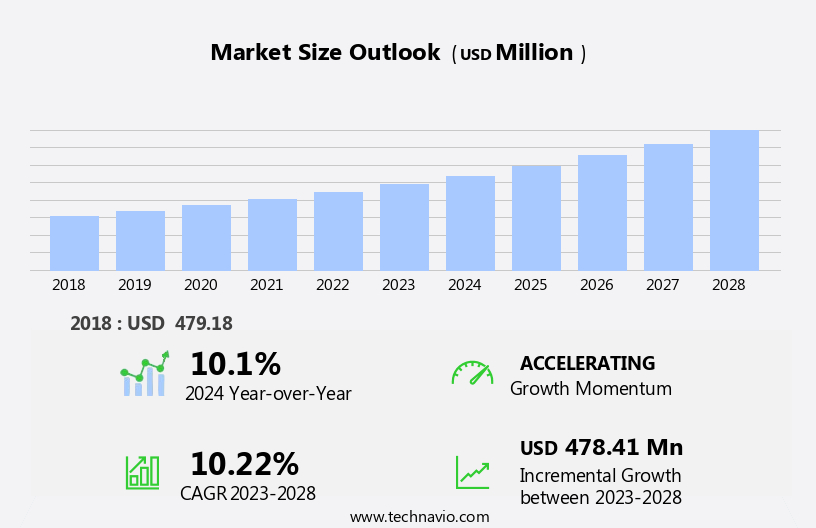
Premature Ejaculation Disorder Market in US Size

 Request Free Sample

Premature ejaculation (PE) is a common issue affecting many men, marked by the inability to control ejaculation during intercourse, leading to distress and a reduced quality of life. The growing demand for PE therapeutics has led to the development of innovative drug therapies, including topical amide anesthetics and selective serotonin reuptake inhibitors (SSRIs), with OTC (Over-the-Counter) options becoming more accessible. Product diversification, such as combination therapies and telemedicine services, is a key trend in the market, while off-label drugs are also being explored for their effectiveness.

Diagnostic methods include self-reporting and clinical assessments, with digital platforms providing easy access to resources. Non-pharmacological interventions, such as pelvic floor exercises and mindfulness practices, are gaining popularity as well. Vendor analysis shows that the PE market is expected to grow significantly, driven by increasing awareness of PE causes, risk factors, and the demand for effective treatments..

Market Segmentation

The market research report provides comprehensive data (region-wise segment analysis), with forecasts and estimates in "USD million" for the period 2024-2028, as well as historical data from 2018 - 2022 for the following segments.

  • Route Of Administration
    • Oral
    • Topical
  • Drug Class
    • SSRIs
    • PDE5 inhibitors
    • Amide anesthetics
    • Others
  • Distribution Channel
    • Prescription
    • OTC
  • Geography
    • US

By Route Of Administration Insights

The Oral segment is estimated to witness significant growth during the forecast period The significant market share of the oral route segment can be attributed to the popularity and high preference for oral medication as the first line of treatment for premature ejaculation, owing to its ease of use and wide availability. These drugs are available in different forms, such as tablets, capsules, and liquids.


Furthermore, The significant premature ejaculation disorder market share of the oral route segment can be attributed to the popularity and high preference for oral medication as the first line of treatment for premature ejaculation, owing to its ease of use and wide availability. These drugs are available in different forms, such as tablets, capsules, and liquids. The traditional agents to prolong coitus were alpha amino benzoate and phenoxybenzamine, both of which were associated with severe side effects. Tricyclic antidepressants and, finally, SSRIs were used due to their sustained efficacy on ejaculatory latency and tolerable side effect profile. The mechanism for delayed ejaculation with SSRIs is generally related to the inhibition of various descending pathways linked with the ejaculatory reflex. This is supported by studies that show significant variations in cortical serotonergic function between patients with premature ejaculation in males. Such factors are expected to fuel the segment growth which in turn drives the market growth during the forecast period. 
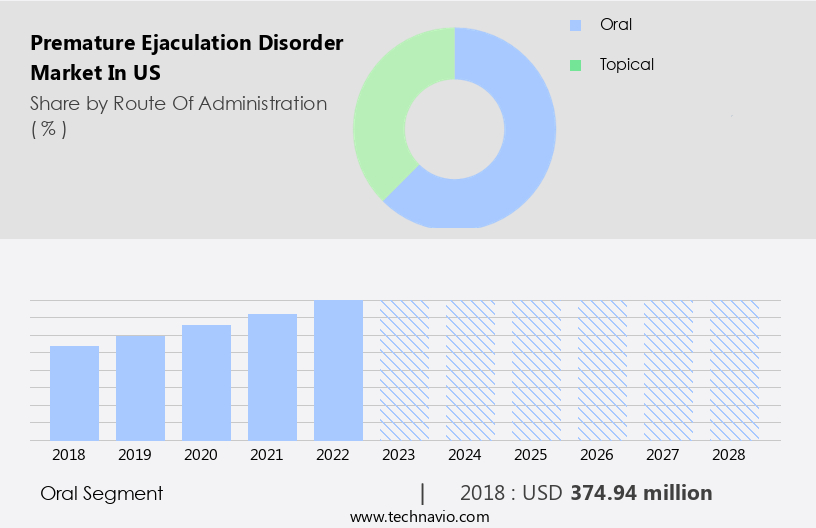
Premature Ejaculation Disorder Market in US Size

Get a glance at the market share of various segments Request Free Sample

The oral segment was valued at USD 374.94 million in 2018 and showed a gradual increase during the forecast period.

Our market researchers analyzed the data with 2023 as the base year, along with the key drivers, trends, and challenges. A holistic analysis of drivers will help companies refine their marketing strategies to gain a competitive advantage.

US Premature Ejaculation Disorder Market Driver

The high efficacy of off-label drugs leading to high usage by people is the key driver of the market. The premature ejaculation (PE) disorder market in the US is primarily driven by the widespread use of off-label drugs, generic versions of patent-expired medicines, and over-the-counter (OTC) formulations. Men seeking treatment for PE often consult healthcare professionals for various therapeutic options. In the US, only one approved product exists for PE treatment. However, the dominance of off-label drugs, particularly those from the selective serotonin reuptake inhibitors (SSRIs) and phosphodiesterase-5 inhibitors (PDE5i) classes, has significantly influenced the market's growth. These drugs, used off-label, have shown promising results in managing PE, with improved drug delivery systems, such as nanotechnology, enhancing bioavailability and drug release rates.

Anxiety, depression, abnormal hormone levels, inherited traits, psychological factors, early sexual experiences, and sexual abuse are some common factors contributing to PE. Treatment approaches include anesthetic agents like lidocaine-based sprays, behavioral techniques, and medical interventions. The ongoing research in PE therapeutics, including the development of new drugs and delivery systems, is expected to further expand the market.

US Premature Ejaculation Disorder Market Trends

The use of nanotechnology in drug delivery is the upcoming trend in the market. Premature ejaculation (PE), a common condition affecting men, has been a subject of interest for healthcare professionals due to its significant impact on sexual health and well-being. PE is characterized by the incapability to control ejaculation during sexual intercourse, leading to a rapid climax or early ejaculation. The causes of PE are multifactorial, with both psychological and biological factors contributing. These include early sexual experiences, sexual abuse, poor body image, depression, anxiety, abnormal hormone levels, inherited traits, inflammation, infection, prostate issues, and urethral irritation. Nanotechnology, introduced in the 1980s, has emerged as a promising solution to enhance the efficacy and safety of PE therapeutics.

Furthermore, this advanced technology offers new approaches to medicine delivery, improving drug absorption and bioavailability, as well as controlling drug release rate. Off-label use of PDE-5 inhibitors, such as tadalafil, sildenafil, and vardenafil, has gained popularity due to their ability to inhibit the PDE-5 isoenzyme competitively. These drugs, which are orally administered, have shown significant improvement in PE symptoms. However, the development of nanotechnology-based PE therapeutics, such as Lidocaine-based sprays, offers a more targeted and effective approach to treating PE. Behavioral techniques and medical interventions remain essential components of PE management, and diagnostic methods continue to evolve to better identify and assess this condition as per Premature Ejaculation Disorder Market Trends

US Premature Ejaculation Disorder Market  Challenge

The side effects of available drugs is a key challenge affecting the market growth. The premature ejaculation (PE) disorder market in the US comprises various therapeutic options, including over-the-counter (OTC) drugs and off-label use of certain medications. Men seeking treatment for PE face challenges due to the side effects associated with some therapeutics. For instance, Phosphodiesterase-5 (PDE5) inhibitors, which are FDA-approved for erectile dysfunction, are sometimes used off-label for PE. However, these drugs carry potential risks such as prolonged erections lasting over four hours and priapism, a serious condition characterized by a painful erection that persists for more than six hours. Nanotechnology offers promising solutions for PE therapeutics by enhancing medicine delivery, bioavailability, and drug release rate.

Furthermore, anesthetic agents like lidocaine-based sprays have gained popularity as a behavioral technique for PE treatment. These sprays are applied to the penis prior to sexual intercourse to desensitize the penis and delay ejaculation. PE is a complex condition influenced by both psychological and biological factors. Early sexual experiences, sexual abuse, poor body image, depression, anxiety, abnormal hormone levels, inherited traits, inflammation, infection, prostate issues, and urethral irritation are some of the factors contributing to PE. Diagnostic methods include self-reporting, clinical interviews, and physical examinations. Behavioral techniques, medical interventions, and pharmacological therapies are the primary treatment modalities for PE.

Moreover, behavioral techniques include the stop-start method, the squeeze technique, and the use of anesthetic agents. Medical interventions include the use of selective serotonin reuptake inhibitors (SSRIs) and tricyclic antidepressants (TCAs). Pharmacological therapies include PDE5 inhibitors, topical anesthetics, and local anesthetics. In conclusion, the PE disorder market in the US presents significant opportunities for the development of novel therapeutics that address the underlying causes of PE while minimizing side effects. Nanotechnology and anesthetic agents are promising areas of research for the development of effective PE therapeutics. Collaboration between healthcare professionals, researchers, and industry players is essential to improve the understanding of PE and develop effective, safe, and accessible treatment options for men.

Exclusive Customer Landscape

As per US Premature Ejaculation Disorder Market Analysis, the market forecast report includes the adoption lifecycle of the market, covering from the innovator's stage to the laggard's stage. It focuses on adoption rates in different regions based on penetration. Furthermore, the report also includes key purchase criteria and drivers of price sensitivity to help companies evaluate and develop their market growth analysis strategies.
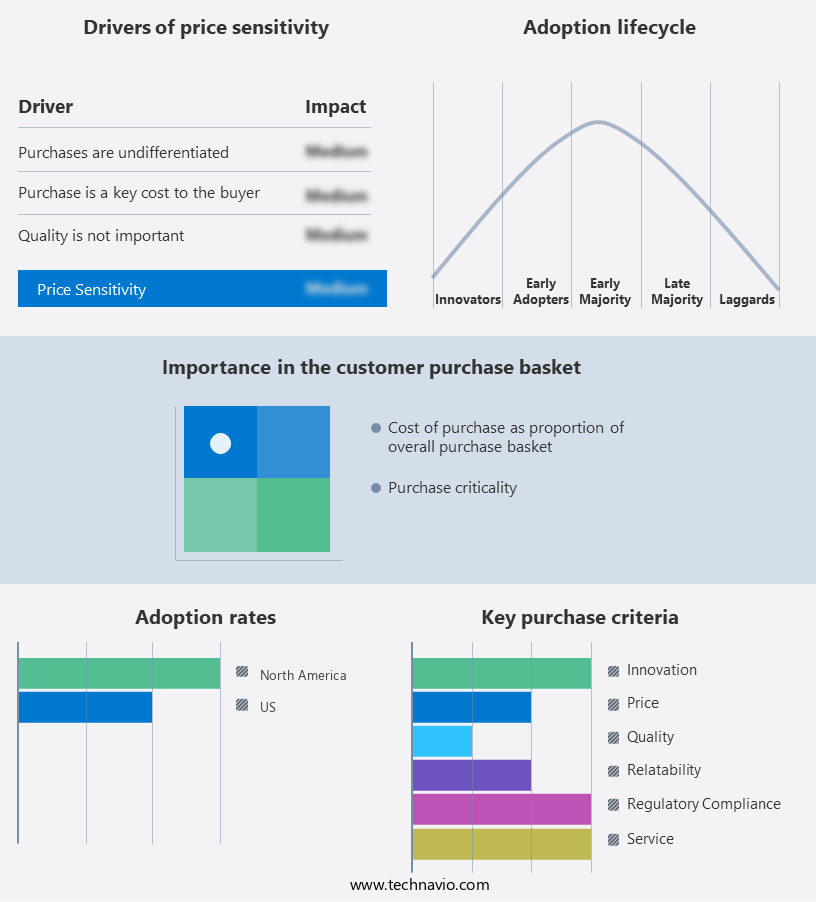
Premature Ejaculation Disorder Market in US Share by Geography

 Customer Landscape

Key Companies & Market Insights

Companies are implementing various strategies, such as strategic alliances, partnerships, mergers and acquisitions, geographical expansion, and product/service launches, to enhance their presence in the market.

Absorption Pharmaceuticals LLC - The company offers premature ejaculation disorder therapeutics such as delay spray, home and away, and threesome.

The market research and growth report includes detailed analyses of the competitive landscape of the market and information about key companies, including:

  • Absorption Pharmaceuticals LLC
  • Alembic Pharmaceuticals Ltd.
  • Amneal Pharmaceuticals Inc.
  • Bayer AG
  • Cipla Ltd.
  • Eli Lilly and Co.
  • Johnson and Johnson
  • Lupin Ltd.
  • NeuroHealing Pharmaceuticals Inc.
  • Novartis AG
  • Pfizer Inc.
  • Prinston Pharmaceutical Inc.
  • Teva Pharmaceutical Industries Ltd.
  • Veru Inc.
  • VIVUS LLC
  • Aytu BioPharma Inc.
  • Royalty Pharma plc
  • Sebela Pharmaceuticals Inc.

Qualitative and quantitative analysis of companies has been conducted to help clients understand the wider business environment as well as the strengths and weaknesses of key market players. Data is qualitatively analyzed to categorize companies as pure play, category-focused, industry-focused, and diversified; it is quantitatively analyzed to categorize companies as dominant, leading, strong, tentative, and weak.

Research Analyst Overview

Premature ejaculation (PE) is a common sexual health issue among men, characterized by the incapability to control ejaculation during sexual intercourse, resulting in rapid or early ejaculation. PE can be caused by both psychological and biological factors, including early sexual experiences, sexual abuse, poor body image, depression, anxiety, abnormal hormone levels, inherited traits, inflammation, infection, prostate issues, and urethral irritation.

Furthermore, healthcare professionals estimate that up to 30% of men experience PE at some point in their lives. PE therapeutics include over-the-counter (OTC) drugs, off-label use of certain medications, anesthetic agents, and PE-specific treatments like Promescent, a lidocaine-based spray. Nanotechnology is being explored for improving medicine delivery, bioavailability, and drug release rate to enhance the efficacy of PE treatments. Behavioral techniques and medical interventions are also used to manage PE. Diagnostic methods include self-reporting, physical examinations, and sexual function assessments. PE is a significant concern for men's sexual health, and ongoing research aims to develop more effective and accessible treatment options.

Premature Ejaculation Disorder Market Scope


Report Coverage

Details

Page number

152

Base year

2023

Historic period

2018 - 2022

Forecast period

2024-2028

Growth momentum & CAGR

Accelerate at a CAGR of 10.22%

Market growth 2024-2028

USD 478.41 million

Market structure

Concentrated

YoY growth 2023-2024(%)

10.1

Key companies profiled

Absorption Pharmaceuticals LLC, Alembic Pharmaceuticals Ltd., Amneal Pharmaceuticals Inc., Bayer AG, Cipla Ltd., Eli Lilly and Co., Johnson and Johnson, Lupin Ltd., NeuroHealing Pharmaceuticals Inc., Novartis AG, Pfizer Inc., Prinston Pharmaceutical Inc., Teva Pharmaceutical Industries Ltd., Veru Inc., VIVUS LLC, Aytu BioPharma Inc., Royalty Pharma plc, and Sebela Pharmaceuticals Inc.

Market dynamics

Parent market analysis, market growth inducers and obstacles,market forecast , fast-growing and slow-growing segment analysis, COVID-19 impact and recovery analysis and future consumer dynamics, market condition analysis for the forecast period

Customization purview

If our market report has not included the data that you are looking for, you can reach out to our analysts and get segments customized.

Competitive landscape

Leading Companies, Market Positioning of Companies, Competitive Strategies, and Industry Risks

Request Free Sample

What are the Key Data Covered in this Market Research Report?

  • CAGR of the market during the forecast period
  • Detailed information on factors that will drive the market growth and forecasting between 2024 and 2028
  • Precise estimation of the size of the market  and its contribution of the market in focus to the parent market
  • Accurate predictions about upcoming market growth and trends and changes in consumer behaviour
  • Growth of the market across US
  • Thorough analysis of the market's competitive landscape and detailed information about companies
  • Comprehensive analysis of factors that will challenge the growth of market companies

We can help! Our analysts can customize this market research report to meet your requirements Get in touch

1 Executive Summary

  • 1.1 Market overview
    • Exhibit 01: Executive Summary – Chart on Market Overview
    • Exhibit 02: Executive Summary – Data Table on Market Overview
    • Exhibit 03: Executive Summary – Chart on Country Market Characteristics
    • Exhibit 04: Executive Summary – Chart on Market Segmentation by Route of Administration
    • Exhibit 05: Executive Summary – Chart on Market Segmentation by Drug Class
    • Exhibit 06: Executive Summary – Chart on Market Segmentation by Distribution Channel
    • Exhibit 07: Executive Summary – Chart on Vendor Market Positioning

2 Market Landscape

  • 2.1 Market ecosystem
    • Exhibit 08: Parent market
    • Exhibit 09: Market Characteristics

3 Market Sizing

  • 3.1 Market definition
    • Exhibit 10: Offerings of vendors included in the market definition
  • 3.2 Market segment analysis
    • Exhibit 11: Market segments
  • 3.3 Market size 2023
    • 3.4 Market outlook: Forecast for 2023-2028
      • Exhibit 12: Chart on US - Market size and forecast 2023-2028 ($ million)
      • Exhibit 13: Data Table on US - Market size and forecast 2023-2028 ($ million)
      • Exhibit 14: Chart on US: Year-over-year growth 2023-2028 (%)
      • Exhibit 15: Data Table on US: Year-over-year growth 2023-2028 (%)

    4 Historic Market Size

    • 4.1 Premature ejaculation disorder market in US 2018 - 2022
      • Exhibit 16: Historic Market Size – Data Table on premature ejaculation disorder market in US 2018 - 2022 ($ million)
    • 4.2 Route of Administration Segment Analysis 2018 - 2022
      • Exhibit 17: Historic Market Size – Route of Administration Segment 2018 - 2022 ($ million)
    • 4.3 Drug Class Segment Analysis 2018 - 2022
      • Exhibit 18: Historic Market Size – Drug Class Segment 2018 - 2022 ($ million)
    • 4.4 Distribution Channel Segment Analysis 2018 - 2022
      • Exhibit 19: Historic Market Size – Distribution Channel Segment 2018 - 2022 ($ million)

    5 Five Forces Analysis

    • 5.1 Five forces summary
      • Exhibit 20: Five forces analysis - Comparison between 2023 and 2028
    • 5.2 Bargaining power of buyers
      • Exhibit 21: Chart on Bargaining power of buyers – Impact of key factors 2023 and 2028
    • 5.3 Bargaining power of suppliers
      • Exhibit 22: Bargaining power of suppliers – Impact of key factors in 2023 and 2028
    • 5.4 Threat of new entrants
      • Exhibit 23: Threat of new entrants – Impact of key factors in 2023 and 2028
    • 5.5 Threat of substitutes
      • Exhibit 24: Threat of substitutes – Impact of key factors in 2023 and 2028
    • 5.6 Threat of rivalry
      • Exhibit 25: Threat of rivalry – Impact of key factors in 2023 and 2028
    • 5.7 Market condition
      • Exhibit 26: Chart on Market condition - Five forces 2023 and 2028

    6 Market Segmentation by Route of Administration

    • 6.1 Market segments
      • Exhibit 27: Chart on Route of Administration - Market share 2023-2028 (%)
      • Exhibit 28: Data Table on Route of Administration - Market share 2023-2028 (%)
    • 6.2 Comparison by Route of Administration
      • Exhibit 29: Chart on Comparison by Route of Administration
      • Exhibit 30: Data Table on Comparison by Route of Administration
    • 6.3 Oral - Market size and forecast 2023-2028
      • Exhibit 31: Chart on Oral - Market size and forecast 2023-2028 ($ million)
      • Exhibit 32: Data Table on Oral - Market size and forecast 2023-2028 ($ million)
      • Exhibit 33: Chart on Oral - Year-over-year growth 2023-2028 (%)
      • Exhibit 34: Data Table on Oral - Year-over-year growth 2023-2028 (%)
    • 6.4 Topical - Market size and forecast 2023-2028
      • Exhibit 35: Chart on Topical - Market size and forecast 2023-2028 ($ million)
      • Exhibit 36: Data Table on Topical - Market size and forecast 2023-2028 ($ million)
      • Exhibit 37: Chart on Topical - Year-over-year growth 2023-2028 (%)
      • Exhibit 38: Data Table on Topical - Year-over-year growth 2023-2028 (%)
    • 6.5 Market opportunity by Route of Administration
      • Exhibit 39: Market opportunity by Route of Administration ($ million)
      • Exhibit 40: Data Table on Market opportunity by Route of Administration ($ million)

    7 Market Segmentation by Drug Class

    • 7.1 Market segments
      • Exhibit 41: Chart on Drug Class - Market share 2023-2028 (%)
      • Exhibit 42: Data Table on Drug Class - Market share 2023-2028 (%)
    • 7.2 Comparison by Drug Class
      • Exhibit 43: Chart on Comparison by Drug Class
      • Exhibit 44: Data Table on Comparison by Drug Class
    • 7.3 SSRIs - Market size and forecast 2023-2028
      • Exhibit 45: Chart on SSRIs - Market size and forecast 2023-2028 ($ million)
      • Exhibit 46: Data Table on SSRIs - Market size and forecast 2023-2028 ($ million)
      • Exhibit 47: Chart on SSRIs - Year-over-year growth 2023-2028 (%)
      • Exhibit 48: Data Table on SSRIs - Year-over-year growth 2023-2028 (%)
    • 7.4 PDE5 inhibitors - Market size and forecast 2023-2028
      • Exhibit 49: Chart on PDE5 inhibitors - Market size and forecast 2023-2028 ($ million)
      • Exhibit 50: Data Table on PDE5 inhibitors - Market size and forecast 2023-2028 ($ million)
      • Exhibit 51: Chart on PDE5 inhibitors - Year-over-year growth 2023-2028 (%)
      • Exhibit 52: Data Table on PDE5 inhibitors - Year-over-year growth 2023-2028 (%)
    • 7.5 Amide anesthetics - Market size and forecast 2023-2028
      • Exhibit 53: Chart on Amide anesthetics - Market size and forecast 2023-2028 ($ million)
      • Exhibit 54: Data Table on Amide anesthetics - Market size and forecast 2023-2028 ($ million)
      • Exhibit 55: Chart on Amide anesthetics - Year-over-year growth 2023-2028 (%)
      • Exhibit 56: Data Table on Amide anesthetics - Year-over-year growth 2023-2028 (%)
    • 7.6 Others - Market size and forecast 2023-2028
      • Exhibit 57: Chart on Others - Market size and forecast 2023-2028 ($ million)
      • Exhibit 58: Data Table on Others - Market size and forecast 2023-2028 ($ million)
      • Exhibit 59: Chart on Others - Year-over-year growth 2023-2028 (%)
      • Exhibit 60: Data Table on Others - Year-over-year growth 2023-2028 (%)
    • 7.7 Market opportunity by Drug Class
      • Exhibit 61: Market opportunity by Drug Class ($ million)
      • Exhibit 62: Data Table on Market opportunity by Drug Class ($ million)

    8 Market Segmentation by Distribution Channel

    • 8.1 Market segments
      • Exhibit 63: Chart on Distribution Channel - Market share 2023-2028 (%)
      • Exhibit 64: Data Table on Distribution Channel - Market share 2023-2028 (%)
    • 8.2 Comparison by Distribution Channel
      • Exhibit 65: Chart on Comparison by Distribution Channel
      • Exhibit 66: Data Table on Comparison by Distribution Channel
    • 8.3 Prescription - Market size and forecast 2023-2028
      • Exhibit 67: Chart on Prescription - Market size and forecast 2023-2028 ($ million)
      • Exhibit 68: Data Table on Prescription - Market size and forecast 2023-2028 ($ million)
      • Exhibit 69: Chart on Prescription - Year-over-year growth 2023-2028 (%)
      • Exhibit 70: Data Table on Prescription - Year-over-year growth 2023-2028 (%)
    • 8.4 OTC - Market size and forecast 2023-2028
      • Exhibit 71: Chart on OTC - Market size and forecast 2023-2028 ($ million)
      • Exhibit 72: Data Table on OTC - Market size and forecast 2023-2028 ($ million)
      • Exhibit 73: Chart on OTC - Year-over-year growth 2023-2028 (%)
      • Exhibit 74: Data Table on OTC - Year-over-year growth 2023-2028 (%)
    • 8.5 Market opportunity by Distribution Channel
      • Exhibit 75: Market opportunity by Distribution Channel ($ million)
      • Exhibit 76: Data Table on Market opportunity by Distribution Channel ($ million)

    9 Customer Landscape

    • 9.1 Customer landscape overview
      • Exhibit 77: Analysis of price sensitivity, lifecycle, customer purchase basket, adoption rates, and purchase criteria

    10 Drivers, Challenges, and Trends

    • 10.1 Market drivers
      • 10.2 Market challenges
        • 10.3 Impact of drivers and challenges
          • Exhibit 78: Impact of drivers and challenges in 2023 and 2028
        • 10.4 Market trends

          11 Vendor Landscape

          • 11.1 Overview
            • 11.2 Vendor landscape
              • Exhibit 79: Overview on Criticality of inputs and Factors of differentiation
            • 11.3 Landscape disruption
              • Exhibit 80: Overview on factors of disruption
            • 11.4 Industry risks
              • Exhibit 81: Impact of key risks on business

            12 Vendor Analysis

            • 12.1 Vendors covered
              • Exhibit 82: Vendors covered
            • 12.2 Market positioning of vendors
              • Exhibit 83: Matrix on vendor position and classification
            • 12.3 Absorption Pharmaceuticals LLC
              • Exhibit 84: Absorption Pharmaceuticals LLC - Overview
              • Exhibit 85: Absorption Pharmaceuticals LLC - Product / Service
              • Exhibit 86: Absorption Pharmaceuticals LLC - Key offerings
            • 12.4 Alembic Pharmaceuticals Ltd.
              • Exhibit 87: Alembic Pharmaceuticals Ltd. - Overview
              • Exhibit 88: Alembic Pharmaceuticals Ltd. - Product / Service
              • Exhibit 89: Alembic Pharmaceuticals Ltd. - Key offerings
            • 12.5 Amneal Pharmaceuticals Inc.
              • Exhibit 90: Amneal Pharmaceuticals Inc. - Overview
              • Exhibit 91: Amneal Pharmaceuticals Inc. - Business segments
              • Exhibit 92: Amneal Pharmaceuticals Inc. - Key news
              • Exhibit 93: Amneal Pharmaceuticals Inc. - Key offerings
              • Exhibit 94: Amneal Pharmaceuticals Inc. - Segment focus
            • 12.6 Aytu BioPharma Inc.
              • Exhibit 95: Aytu BioPharma Inc. - Overview
              • Exhibit 96: Aytu BioPharma Inc. - Product / Service
              • Exhibit 97: Aytu BioPharma Inc. - Key offerings
            • 12.7 Bayer AG
              • Exhibit 98: Bayer AG - Overview
              • Exhibit 99: Bayer AG - Business segments
              • Exhibit 100: Bayer AG - Key news
              • Exhibit 101: Bayer AG - Key offerings
              • Exhibit 102: Bayer AG - Segment focus
            • 12.8 Cipla Ltd.
              • Exhibit 103: Cipla Ltd. - Overview
              • Exhibit 104: Cipla Ltd. - Business segments
              • Exhibit 105: Cipla Ltd. - Key news
              • Exhibit 106: Cipla Ltd. - Key offerings
              • Exhibit 107: Cipla Ltd. - Segment focus
            • 12.9 Eli Lilly and Co.
              • Exhibit 108: Eli Lilly and Co. - Overview
              • Exhibit 109: Eli Lilly and Co. - Product / Service
              • Exhibit 110: Eli Lilly and Co. - Key news
              • Exhibit 111: Eli Lilly and Co. - Key offerings
            • 12.10 Johnson and Johnson
              • Exhibit 112: Johnson and Johnson - Overview
              • Exhibit 113: Johnson and Johnson - Business segments
              • Exhibit 114: Johnson and Johnson - Key news
              • Exhibit 115: Johnson and Johnson - Key offerings
              • Exhibit 116: Johnson and Johnson - Segment focus
            • 12.11 NeuroHealing Pharmaceuticals Inc.
              • Exhibit 117: NeuroHealing Pharmaceuticals Inc. - Overview
              • Exhibit 118: NeuroHealing Pharmaceuticals Inc. - Product / Service
              • Exhibit 119: NeuroHealing Pharmaceuticals Inc. - Key offerings
            • 12.12 Novartis AG
              • Exhibit 120: Novartis AG - Overview
              • Exhibit 121: Novartis AG - Business segments
              • Exhibit 122: Novartis AG - Key offerings
              • Exhibit 123: Novartis AG - Segment focus
            • 12.13 Pfizer Inc.
              • Exhibit 124: Pfizer Inc. - Overview
              • Exhibit 125: Pfizer Inc. - Product / Service
              • Exhibit 126: Pfizer Inc. - Key news
              • Exhibit 127: Pfizer Inc. - Key offerings
            • 12.14 Sebela Pharmaceuticals Inc.
              • Exhibit 128: Sebela Pharmaceuticals Inc. - Overview
              • Exhibit 129: Sebela Pharmaceuticals Inc. - Product / Service
              • Exhibit 130: Sebela Pharmaceuticals Inc. - Key offerings
            • 12.15 Teva Pharmaceutical Industries Ltd.
              • Exhibit 131: Teva Pharmaceutical Industries Ltd. - Overview
              • Exhibit 132: Teva Pharmaceutical Industries Ltd. - Business segments
              • Exhibit 133: Teva Pharmaceutical Industries Ltd. - Key news
              • Exhibit 134: Teva Pharmaceutical Industries Ltd. - Key offerings
              • Exhibit 135: Teva Pharmaceutical Industries Ltd. - Segment focus
            • 12.16 Veru Inc.
              • Exhibit 136: Veru Inc. - Overview
              • Exhibit 137: Veru Inc. - Business segments
              • Exhibit 138: Veru Inc. - Key offerings
              • Exhibit 139: Veru Inc. - Segment focus
            • 12.17 VIVUS LLC
              • Exhibit 140: VIVUS LLC - Overview
              • Exhibit 141: VIVUS LLC - Product / Service
              • Exhibit 142: VIVUS LLC - Key offerings

            13 Appendix

            • 13.1 Scope of the report
              • 13.2 Inclusions and exclusions checklist
                • Exhibit 143: Inclusions checklist
                • Exhibit 144: Exclusions checklist
              • 13.3 Currency conversion rates for US$
                • Exhibit 145: Currency conversion rates for US$
              • 13.4 Research methodology
                • Exhibit 146: Research methodology
                • Exhibit 147: Validation techniques employed for market sizing
                • Exhibit 148: Information sources
              • 13.5 List of abbreviations
                • Exhibit 149: List of abbreviations

              Research Methodology

              Technavio presents a detailed picture of the market by way of study, synthesis, and summation of data from multiple sources. The analysts have presented the various facets of the market with a particular focus on identifying the key industry influencers. The data thus presented is comprehensive, reliable, and the result of extensive research, both primary and secondary.

              INFORMATION SOURCES

              Primary sources

              • Manufacturers and suppliers
              • Channel partners
              • Industry experts
              • Strategic decision makers

              Secondary sources

              • Industry journals and periodicals
              • Government data
              • Financial reports of key industry players
              • Historical data
              • Press releases

              DATA ANALYSIS

              Data Synthesis

              • Collation of data
              • Estimation of key figures
              • Analysis of derived insights

              Data Validation

              • Triangulation with data models
              • Reference against proprietary databases
              • Corroboration with industry experts

              REPORT WRITING

              Qualitative

              • Market drivers
              • Market challenges
              • Market trends
              • Five forces analysis

              Quantitative

              • Market size and forecast
              • Market segmentation
              • Geographical insights
              • Competitive landscape

              Interested in this report?

              Get your sample now to see our research methodology and insights!

              Download Now

              Frequently Asked Questions

              Premature Ejaculation Disorderin US market growth will increase by $ 478.41 mn during 2024-2028.

              The Premature Ejaculation Disorderin US market is expected to grow at a CAGR of 10.22% during 2024-2028.

              Premature Ejaculation Disorderin US market is segmented by Route Of Administration( Oral, Topical) Drug Class( SSRIs, PDE5 inhibitors, Amide anesthetics, Others) Distribution Channel( Prescription, OTC)

              Absorption Pharmaceuticals LLC, Alembic Pharmaceuticals Ltd., Amneal Pharmaceuticals Inc., Bayer AG, Cipla Ltd., Eli Lilly and Co., Johnson and Johnson, Lupin Ltd., NeuroHealing Pharmaceuticals Inc., Novartis AG, Pfizer Inc., Prinston Pharmaceutical Inc., Teva Pharmaceutical Industries Ltd., Veru Inc., VIVUS LLC, Aytu BioPharma Inc., Royalty Pharma plc, Sebela Pharmaceuticals Inc. are a few of the key vendors in the Premature Ejaculation Disorderin US market.

              North America will register the highest growth rate of 100% among the other regions. Therefore, the Premature Ejaculation Disorderin US market in North America is expected to garner significant business opportunities for the vendors during the forecast period.

              US, North America

              • High efficacy of off-label drugs leading to high usage by peopleThere is only one approved product for treating premature ejaculation in the US market. The premature ejaculation disorder therapeutics market in US is dominated by off-label drugs is the driving factor this market.
              • generic versions of patent-expired drugs is the driving factor this market.
              • and over-the-counter formulations. The increasing demand for several off-label drugs is a primary factor driving the growth of the market. The premature ejaculation disorder therapeutics market in US has witnessed an increased use of off-label drugs of different drug classes is the driving factor this market.
              • such as SSRIs and PDE5 inhibitors is the driving factor this market.
              • due to their effectiveness in the treatment of premature ejaculation. The treatment with off-label drugs belonging to SSRIs and PDE5 inhibitors has revolutionized the treatment approach. SSRIs is the driving factor this market.
              • such as paroxetine is the driving factor this market.
              • fluoxetine is the driving factor this market.
              • and sertraline is the driving factor this market.
              • are used to treat depression and mental health disorders and can cause delayed ejaculation in men. When the regulation of serotonin is disrupted in the central nervous system is the driving factor this market.
              • ejaculation can be rehabilitated. Clinical trials have determined that the serotonin neurotransmitter has the greatest impact on ejaculation and its timing. Owing to such findings is the driving factor this market.
              • SSRIs have been used in the management of premature ejaculation. For instance is the driving factor this market.
              • paroxetine 20-40 mg is the driving factor this market.
              • sertraline 50-100 mg is the driving factor this market.
              • fluoxetine 20-40 mg is the driving factor this market.
              • and clomipramine 10-50 mg can be administered daily for the treatment of premature ejaculation. Among these is the driving factor this market.
              • paroxetine produces the strongest anti-ejaculatory effect by an approximately eightfold increase in the ejaculatory threshold or the intravaginal ejaculation latency time over the initial baseline. The anti-ejaculatory effect is achieved within five to ten days of administration of SSRIs. Furthermore is the driving factor this market.
              • all SSRIs are effective and usually have no serious complications. Also is the driving factor this market.
              • patients with premature ejaculation do not discontinue the intake of drugs due to minor side effects such as dry mouth. PDE5 inhibitors are the gold-standard first treatment for men with erectile dysfunction. Many of the clinical studies recommend that the use of PDE5 inhibitors can be useful in premature ejaculation disorder treatment. Moreover is the driving factor this market.
              • some clinical studies have revealed that PDE5 inhibitors is the driving factor this market.
              • when combined with SSRIs is the driving factor this market.
              • provide better results for premature ejaculation disorder treatment than using SSRIs alone due to the improved erection resulting from the PDE5 inhibitor inhibits ejaculation through the downregulation of the receptors involved in somatosensory latency times. Regardless of the mechanism of PDE5 inhibitors is the driving factor this market.
              • they are considered to be safe and effective as a therapeutic adjunct for premature ejaculation in men. Therefore is the driving factor this market.
              • they are highly used as off-label drugs for the treatment of premature ejaculation. The high efficacy of these drugs increases their demand among end-users is the driving factor this market.
              • thereby contributing to market growth. Therefore is the driving factor this market.
              • the high efficacy of off-label drugs leading to high usage by end-users will drive the growth of the premature ejaculation disorder therapeutics market in US during the forecast period. is the driving factor this market.

              The Premature Ejaculation Disorderin US market vendors should focus on grabbing business opportunities from the Oral segment as it accounted for the largest market share in the base year.
              RIA - Research AI Assistant
              Ask RIA
