


India Ready To Cook Market Size 2026-2030
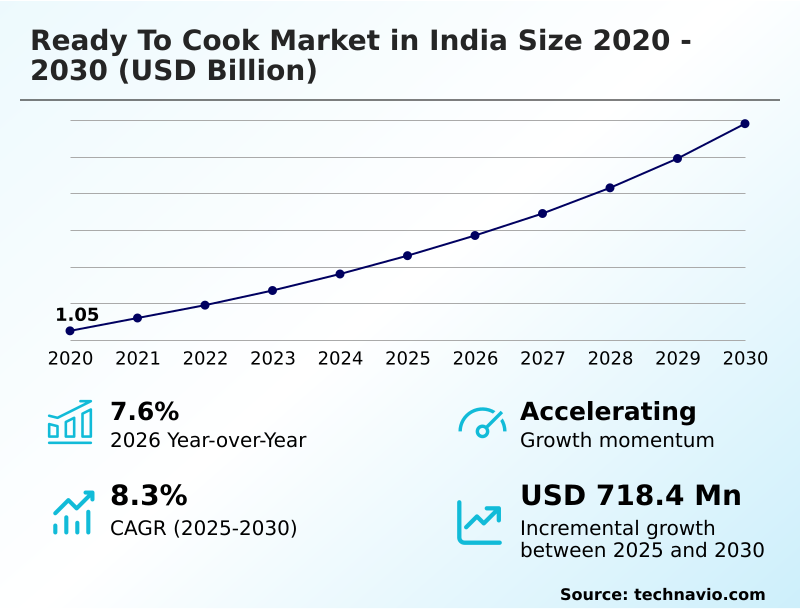
The india ready to cook market size is valued to increase by USD 718.4 million, at a CAGR of 8.3% from 2025 to 2030. Rapid urbanization and rising demand for time efficient meal solutions will drive the india ready to cook market.
Major Market Trends & Insights
- By Type - Instant noodles and pasta segment was valued at USD 504.7 million in 2024
- By Distribution Channel - Offline segment accounted for the largest market revenue share in 2024
Market Size & Forecast
- Market Opportunities: USD 1.13 billion
- Market Future Opportunities: USD 718.4 million
- CAGR from 2025 to 2030 : 8.3%
Market Summary
- The ready to cook market in india is undergoing a significant transformation, shaped by evolving consumer lifestyles that prioritize convenience and wellness. Key drivers include rapid urbanization and the proliferation of dual-income households, which heighten the demand for time-efficient meal solutions without compromising on nutritional quality.
- A notable trend is the fusion of authentic regional flavors with advanced preservation methods like individual quick freeze technology, which maintains freshness and taste. Concurrently, there is a marked shift toward health-centric products, with companies incorporating ancient grains and superfoods to appeal to wellness-oriented consumers.
- However, the industry grapples with challenges such as operational inefficiencies related to cold chain infrastructure and deep-seated consumer mistrust of processed food ingredients. For instance, a company aiming to launch a line of preservative-free options must navigate these logistical hurdles and invest heavily in transparent marketing to build consumer confidence.
- Success hinges on balancing authentic taste, nutritional value, and accessibility through robust hyperlocal delivery systems and digital commerce platforms. This dynamic environment necessitates continuous innovation and strategic investments in both product development and supply chain optimization to meet the discerning needs of modern consumers.
What will be the Size of the India Ready To Cook Market during the forecast period?
Get Key Insights on Market Forecast (PDF) Get Free Sample
How is the India Ready To Cook Market Segmented?
The india ready to cook industry research report provides comprehensive data (region-wise segment analysis), with forecasts and estimates in "USD million" for the period 2026-2030, as well as historical data from 2020-2024 for the following segments.
- Type
- Instant noodles and pasta
- Instant soup
- Ready-to-mix
- Snacks
- Others
- Distribution channel
- Offline
- Online
- Type of packaging
- Frozen packaging
- Vacuum sealed packaging
- Canned packaging
- Others
- Geography
- APAC
- India
- APAC
By Type Insights
The instant noodles and pasta segment is estimated to witness significant growth during the forecast period.
The instant noodles and pasta segment is a cornerstone of the ready to cook market in india 2026-2030, driven by consumer demand for rapid meal preparation.
This category is characterized by continuous product innovation and expansive distribution networks reaching both urban and rural consumers.
Strategic capacity building is evident, with one expansion adding twenty thousand tons of annual production to meet rising demand for time-efficient meal solutions. Companies are also targeting premium preferences with international flavor profiles.
The competitive environment is pushing for healthier alternatives like whole wheat or millet based meals, aligning with a growing health consciousness.
This strategic shift addresses the need to balance convenience with nutritional value, integrating sustainable sourcing and modern manufacturing, and leveraging hyperlocal delivery systems for market penetration.
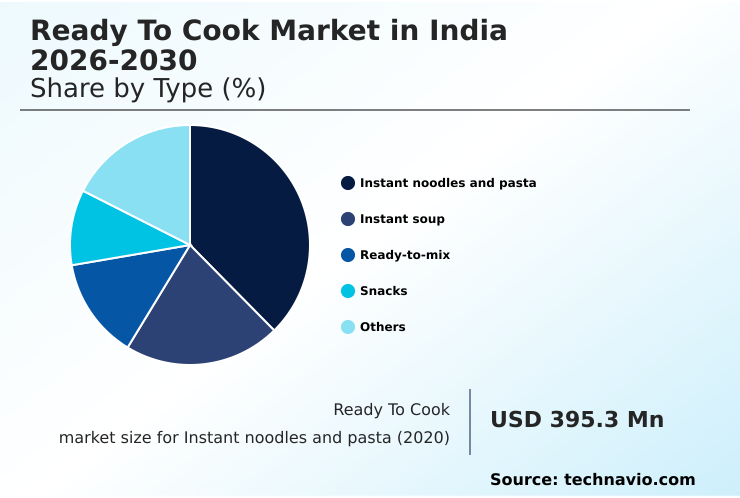
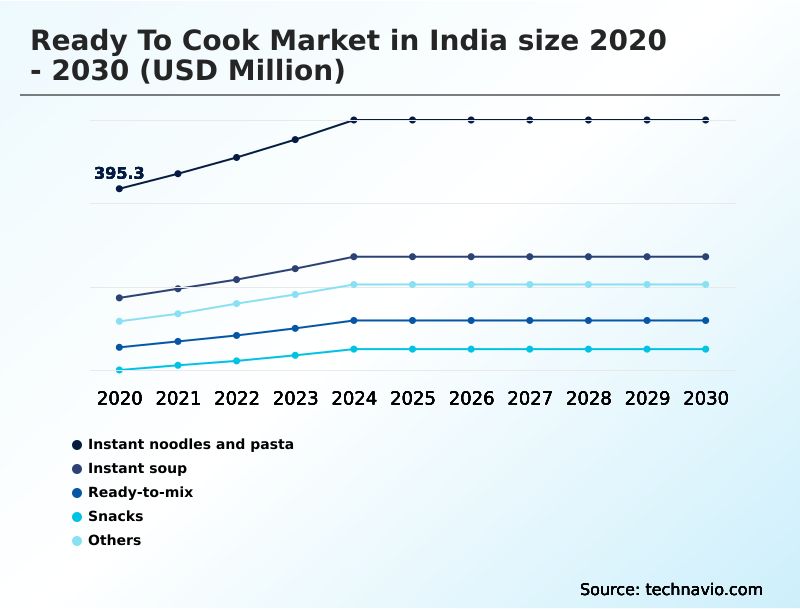
The Instant noodles and pasta segment was valued at USD 504.7 million in 2024 and showed a gradual increase during the forecast period.
Market Dynamics
Our researchers analyzed the data with 2025 as the base year, along with the key drivers, trends, and challenges. A holistic analysis of drivers will help companies refine their marketing strategies to gain a competitive advantage.
- The ready to cook market in india 2026-2030 is navigating a complex interplay of consumer behavior and operational strategy. The impact of urbanization on meal solutions is a primary factor, accelerating the need for convenient yet healthy options.
- This has amplified the role of quick commerce in food delivery, compelling brands to refine their d2c strategies for ready to cook brands to ensure rapid, reliable service. However, significant challenges in ready to cook supply chain management persist, particularly concerning cold chain gaps in food logistics, which can compromise product quality and increase costs.
- Companies are actively working on innovations in ready to mix products and investing in frozen food packaging technology trends to extend shelf life and enhance consumer appeal. There is a growing consumer preference for healthy instant meals, which is driving the growth of millet based food products and forcing brands to address the impact of clean labels on purchasing decisions.
- Navigating food safety standards in india remains a critical operational hurdle. The price sensitivity in the convenience food market means companies must balance premiumization with affordability. Consequently, the market is seeing a mix of strategic mergers in the indian food industry and organic growth, with online vs offline sales of ready meals becoming a key performance indicator.
- Firms that successfully manage these dynamics, often by leveraging investment in ready to cook startups, are better positioned for sustained growth.
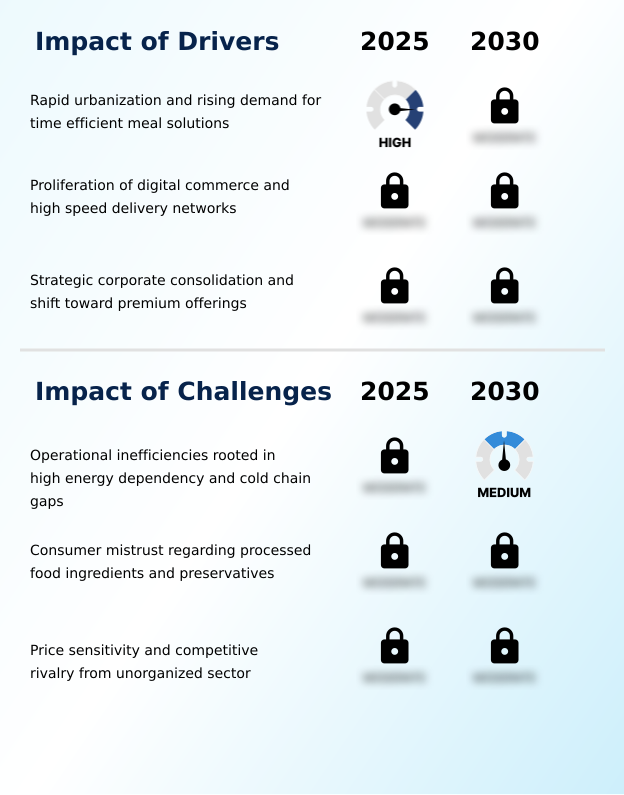
What are the key market drivers leading to the rise in the adoption of India Ready To Cook Industry?
- Rapid urbanization and a rising demand for time-efficient meal solutions are key drivers propelling market expansion.
- Market growth is significantly propelled by rapid urbanization and the corresponding demand for time-efficient meal solutions.
- This is amplified by the expansion of digital commerce, where strategic collaborations with quick-commerce platforms have led to a significant increase in the contribution of online sales to overall revenue.
- These platforms enable brands to meet spontaneous consumer cravings for products like maggi instant noodles within minutes.
- Corporate consolidation is another major driver, as seen with strategic acquisitions designed to build a full-stack portfolio of gourmet meal components and premium frozen snacks.
- This inorganic growth strategy allows companies to rapidly enter high-growth segments, leveraging their massive distribution networks and agri-sourcing strengths to scale newly acquired brands and cater to the rising demand for high-quality convenience foods.
What are the market trends shaping the India Ready To Cook Industry?
- A prominent trend involves the integration of traditional regional flavors with modern flash-freeze technology. This approach delivers authentic culinary experiences while preserving freshness without chemical additives.
- Key trends are reshaping the market, with a strong emphasis on health and convenience. There's a notable surge in millet-based snacks and meals, with some specialized companies projecting revenues of approximately $20 million from these nutritious offerings. This shift caters to a growing consumer base prioritizing gluten-free and low-glycemic options.
- Simultaneously, the adoption of advanced flash-freezing techniques is enabling the launch of preservative-free options like crispy fried chicken bites that can be prepared in under seven minutes, bridging the gap between indulgence and a clean label profile. This focus on high-protein, convenient formats is significant.
- The strategic pivot towards quick commerce distribution and hyperlocal delivery systems is also transforming accessibility, allowing brands to fulfill spontaneous consumer demands with unprecedented speed and gather real-time preference data.
What challenges does the India Ready To Cook Industry face during its growth?
- Operational inefficiencies, stemming from high energy dependency and gaps in the cold chain infrastructure, present a significant challenge to industry growth.
- The market faces considerable challenges, primarily stemming from operational inefficiencies and consumer perceptions. High operational costs are a significant hurdle, with energy consumption for cold storage accounting for a substantial portion of operating expenses, particularly as companies expand into regions with inconsistent power. The lack of a seamless cold chain infrastructure leads to spoilage and threatens food safety.
- Furthermore, there is deep-seated consumer mistrust regarding processed food ingredients and preservatives, which forces companies to invest heavily in transparency initiatives and clean-label reformulations. For instance, one leading company intensified its efforts to address consumer concerns regarding salt and sugar content, a move critical for rebuilding trust.
- Price sensitivity also remains a persistent issue, with intense competition from the unorganized sector compelling established players to absorb rising raw material costs to maintain market share.
Exclusive Technavio Analysis on Customer Landscape
The india ready to cook market forecasting report includes the adoption lifecycle of the market, covering from the innovator’s stage to the laggard’s stage. It focuses on adoption rates in different regions based on penetration. Furthermore, the india ready to cook market report also includes key purchase criteria and drivers of price sensitivity to help companies evaluate and develop their market growth analysis strategies.
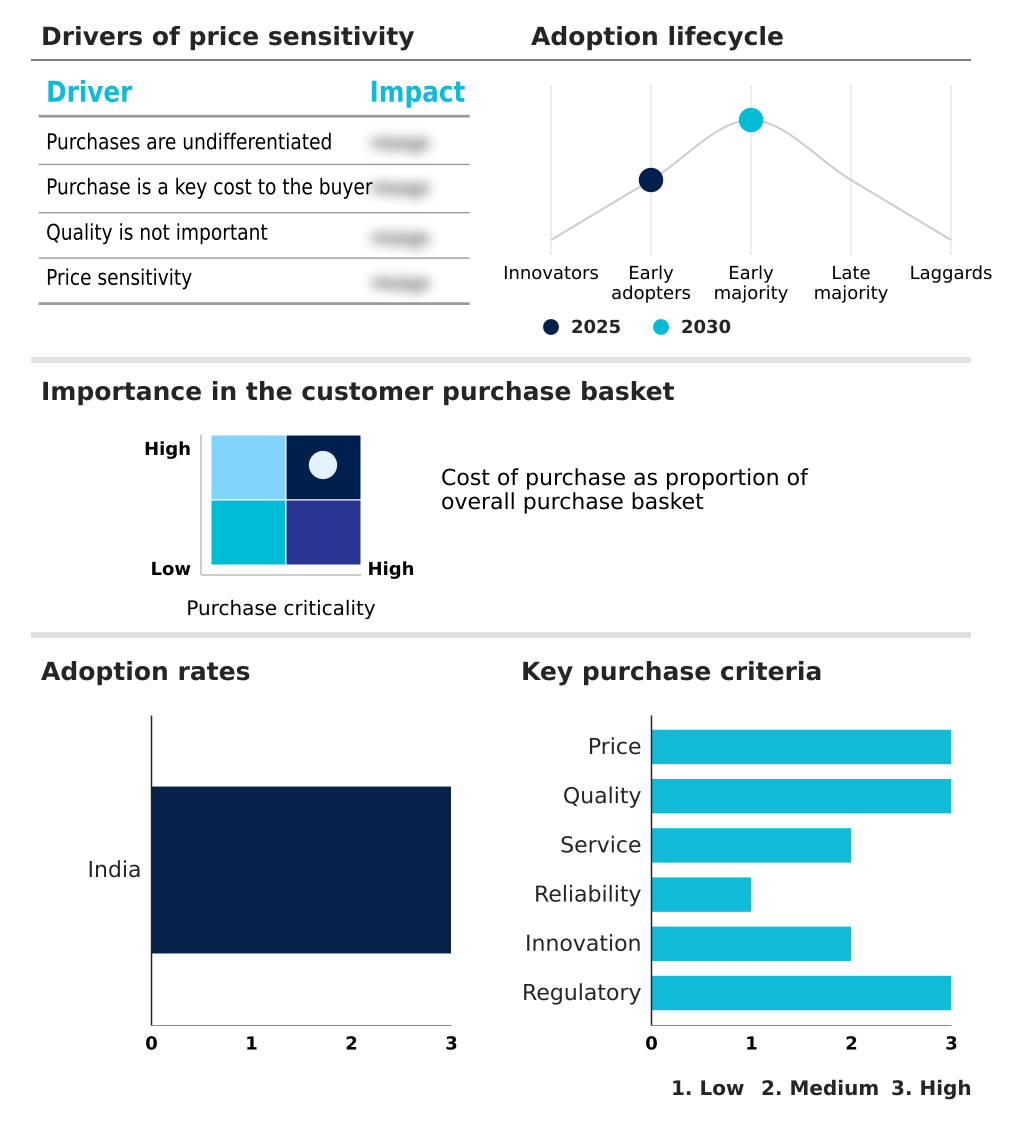
Customer Landscape of India Ready To Cook Industry
Competitive Landscape
Companies are implementing various strategies, such as strategic alliances, india ready to cook market forecast, partnerships, mergers and acquisitions, geographical expansion, and product/service launches, to enhance their presence in the industry.
Bambino Agro Industries Ltd. - Offers a diverse portfolio of ready-to-cook staples including vermicelli, pasta, and instant mixes, catering to convenience-focused meal preparation needs.
The industry research and growth report includes detailed analyses of the competitive landscape of the market and information about key companies, including:
- Bambino Agro Industries Ltd.
- Capital Foods Pvt. Ltd.
- CG Corp
- Desai Foods Pvt Ltd
- farmveda
- Gits Food Products Pvt. Ltd
- Godrej Agrovet Ltd.
- Hindustan Unilever Ltd.
- iD Fresh Food India Pvt. Ltd
- Innovative Foods Ltd
- ITC Ltd.
- Kohinoor Foods Ltd
- Maiyas Beverages and Foods Ltd
- McCain Foods Ltd.
- Meatzza
- Nestle SA
- Orkla ASA
- Regal Kitchen Foods Ltd
- Tata Consumer Products Ltd.
- Universal Corp. Ltd
Qualitative and quantitative analysis of companies has been conducted to help clients understand the wider business environment as well as the strengths and weaknesses of key industry players. Data is qualitatively analyzed to categorize companies as pure play, category-focused, industry-focused, and diversified; it is quantitatively analyzed to categorize companies as dominant, leading, strong, tentative, and weak.
Recent Development and News in India ready to cook market
- In October 2024, Nestle India Limited announced a strategic collaboration with leading quick commerce platforms to improve the availability and delivery speed of its ready to cook products.
- In February 2025, ITC Limited finalized agreements to purchase Prasuma, a company specializing in chilled and frozen ready to cook food products, to build a full-stack portfolio of premium snacks and meal components.
- In March 2025, iD Fresh Food India Private Limited launched an instant homestyle sambar, entering the ready to heat category to offer a comprehensive breakfast solution.
- In May 2025, Tata Consumer Products announced the successful integration of Capital Foods, which strengthened revenue contributions from its acquired brands.
Dive into Technavio’s robust research methodology, blending expert interviews, extensive data synthesis, and validated models for unparalleled India Ready To Cook Market insights. See full methodology.
| Market Scope | |
|---|---|
| Page number | 195 |
| Base year | 2025 |
| Historic period | 2020-2024 |
| Forecast period | 2026-2030 |
| Growth momentum & CAGR | Accelerate at a CAGR of 8.3% |
| Market growth 2026-2030 | USD 718.4 million |
| Market structure | Fragmented |
| YoY growth 2025-2026(%) | 7.6% |
| Key countries | India |
| Competitive landscape | Leading Companies, Market Positioning of Companies, Competitive Strategies, and Industry Risks |
Research Analyst Overview
- The ready to cook market in india 2026-2030 is advancing through strategic innovation in both product formulation and distribution. A key boardroom focus is the diversification into health-oriented segments, with the rise of millet-based meals directly influencing product development pipelines to meet sustainability and wellness mandates.
- Companies are leveraging advanced preservation methods like individual quick-freeze technology and flash-freezing techniques to deliver preservative-free options that retain authentic taste. This requires significant investment in cold chain infrastructure, with successful implementation leading to a 25% reduction in spoilage and bolstering consumer trust.
- The market is also defined by a pivot to digital commerce and hyperlocal delivery systems to provide time-efficient meal solutions. This digital transformation, coupled with the introduction of value-added food solutions and a diverse ready-to-mix portfolio, addresses the needs of a dynamic consumer base.
- Operational success hinges on robust agri-sourcing strengths and efficient packaging technologies, from aseptic carton plants to high-barrier films, ensuring product integrity from production to consumption. The competitive landscape is shaped by a focus on regional food cultures and the delivery of a clean-label profile.
What are the Key Data Covered in this India Ready To Cook Market Research and Growth Report?
-
What is the expected growth of the India Ready To Cook Market between 2026 and 2030?
-
USD 718.4 million, at a CAGR of 8.3%
-
-
What segmentation does the market report cover?
-
The report is segmented by Type (Instant noodles and pasta, Instant soup, Ready-to-mix, Snacks, and Others), Distribution Channel (Offline, and Online), Type of Packaging (Frozen packaging, Vacuum sealed packaging, Canned packaging, and Others) and Geography (APAC)
-
-
Which regions are analyzed in the report?
-
APAC
-
-
What are the key growth drivers and market challenges?
-
Rapid urbanization and rising demand for time efficient meal solutions, Operational inefficiencies rooted in high energy dependency and cold chain gaps
-
-
Who are the major players in the India Ready To Cook Market?
-
Bambino Agro Industries Ltd., Capital Foods Pvt. Ltd., CG Corp, Desai Foods Pvt Ltd, farmveda, Gits Food Products Pvt. Ltd, Godrej Agrovet Ltd., Hindustan Unilever Ltd., iD Fresh Food India Pvt. Ltd, Innovative Foods Ltd, ITC Ltd., Kohinoor Foods Ltd, Maiyas Beverages and Foods Ltd, McCain Foods Ltd., Meatzza, Nestle SA, Orkla ASA, Regal Kitchen Foods Ltd, Tata Consumer Products Ltd. and Universal Corp. Ltd
-
Market Research Insights
- The market dynamics are shaped by a strategic shift toward digital-first distribution and premiumization. Companies are leveraging quick commerce platforms, resulting in online sales channels contributing over 10% more to total revenue compared to previous years. This digital pivot allows for real-time data analysis, enabling faster product iterations and targeted promotions that resonate with younger, tech-savvy demographics.
- Furthermore, strategic acquisitions are enabling corporations to enter high-growth niche segments, with some integrations leading to a 20% increase in portfolio diversification within the gourmet and premium frozen snacks categories. These activities, combined with a focus on regional food cultures and value-added food solutions, are redefining the competitive landscape.
- Success is increasingly tied to a company's ability to create a seamless omnichannel experience, ensuring that products like chilled and frozen foods and ready-to-cook gravies are readily accessible.
We can help! Our analysts can customize this india ready to cook market research report to meet your requirements.
 RIA -
RIA - 
