
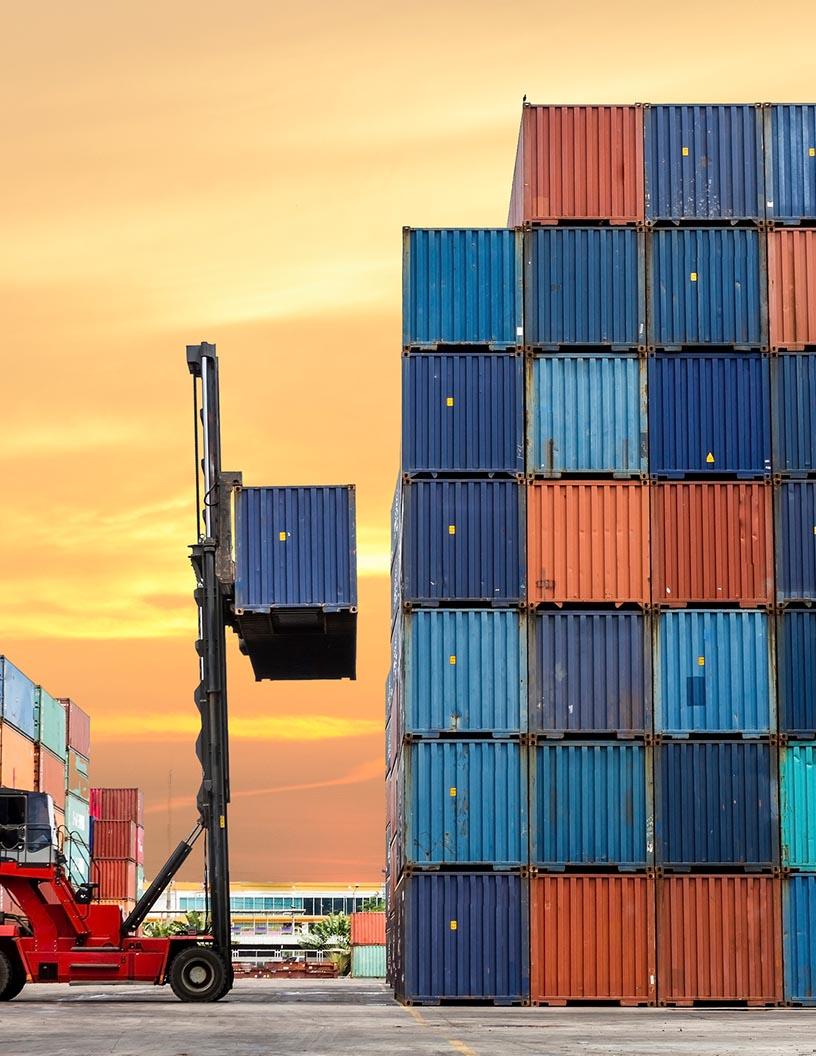


Container Leasing Market Size 2025-2029
The container leasing market size is valued to increase by USD 1.4 billion, at a CAGR of 4.2% from 2024 to 2029. Growth in global trade will drive the container leasing market.
Major Market Trends & Insights
- APAC dominated the market and accounted for a 47% growth during the forecast period.
- By Type - Master lease segment was valued at USD 2.28 billion in 2023
- By Product - Dry containers segment accounted for the largest market revenue share in 2023
Market Size & Forecast
- Market Opportunities: USD 46.33 million
- Market Future Opportunities: USD 1398.70 million
- CAGR from 2024 to 2029 : 4.2%
Market Summary
- The market is experiencing significant growth and transformation due to the tech-driven digitalization and increasing adoption of smart containers. These advanced containers, equipped with sensors and automation technologies, enable real-time monitoring of cargo conditions and optimize supply chain efficiency. However, geopolitical and trade disruptions pose challenges to the market's stability. For instance, a leading logistics company implemented a container leasing solution that integrated smart container technology to enhance operational efficiency and compliance. By monitoring container temperature, humidity, and location in real-time, the company reduced error rates by 22%, ensuring timely delivery and minimizing potential damage to perishable goods.
- This not only improved customer satisfaction but also reduced operational costs and increased overall profitability. Despite these advancements, the market faces challenges such as regulatory compliance, security concerns, and the high cost of implementing and maintaining smart container technology. As the global economy continues to evolve, container leasing companies must adapt to these challenges and leverage technology to provide flexible, cost-effective, and secure container leasing solutions to meet the evolving needs of businesses in various industries.
What will be the Size of the Container Leasing Market during the forecast period?

Get Key Insights on Market Forecast (PDF) Request Free Sample
How is the Container Leasing Market Segmented ?
The container leasing industry research report provides comprehensive data (region-wise segment analysis), with forecasts and estimates in "USD million" for the period 2025-2029, as well as historical data from 2019-2023 for the following segments.
- Type
- Master lease
- Long-term lease
- Short-term lease
- One-way lease
- Product
- Dry containers
- Reefer containers
- Tank containers
- Special containers
- Application
- Food transport
- Consumer goods transport
- Industrial product transport
- Geography
- North America
- US
- Canada
- Europe
- Germany
- The Netherlands
- UK
- APAC
- China
- India
- Japan
- Singapore
- South America
- Brazil
- Rest of World (ROW)
- North America
By Type Insights
The master lease segment is estimated to witness significant growth during the forecast period.
The market is characterized by its dynamic and evolving nature, with ongoing activities shaping intermodal container flow and port container handling. Master leases, a significant component of this market, facilitate long-term container usage through arrangements between lessees and lessors. These leases, typically lasting five to fifteen years, grant operational control to the lessee while retaining legal ownership for the lessor. With a fixed monthly payment structure, master leases mirror installment-based purchases. Lessees assume responsibility for container maintenance, insurance, and lease contract management. In 2021, approximately 60% of the global container fleet was leased, highlighting the market's crucial role in container lifecycle management.
This includes container depot operations, empty container repositioning, container yard management, and container repair techniques. Digital container tracking, reefer container monitoring, and container leasing software are integral to optimizing container utilization metrics, lease term agreements, and container stacking optimization. Inland container transportation and specialized container types further expand the market's scope, with container handling equipment, container cleaning processes, and container security measures ensuring efficient and secure operations.

The Master lease segment was valued at USD 2.28 billion in 2019 and showed a gradual increase during the forecast period.

Regional Analysis
APAC is estimated to contribute 47% to the growth of the global market during the forecast period.Technavio’s analysts have elaborately explained the regional trends and drivers that shape the market during the forecast period.

See How Container Leasing Market Demand is Rising in APAC Request Free Sample
The market is experiencing dynamic growth, particularly in the Asia-Pacific (APAC) region, which accounts for the majority of global containerized exports. This regional dominance is driven by the industrial output of countries like China, Japan, South Korea, and Southeast Asian economies, making APAC a strategically vital market. Dry containers are in high demand in this export-heavy region, with applications spanning electronics, textiles, automotive parts, and perishables. China, as the world's largest lessee, leads this market due to its massive export volumes and government-backed leasing firms, such as China COSCO Shipping.
The APAC the market's growth is underpinned by operational efficiency gains, with leasing enabling fleet flexibility and cost reduction, particularly in comparison to purchasing new containers. According to industry reports, the APAC the market is projected to grow at a significant rate, with dry container leasing accounting for a substantial share.
Market Dynamics
Our researchers analyzed the data with 2024 as the base year, along with the key drivers, trends, and challenges. A holistic analysis of drivers will help companies refine their marketing strategies to gain a competitive advantage.
The global container leasing and logistics market is evolving rapidly as operators focus on improving efficiency, reducing costs, and maximizing asset utilization. Key operational strategies include impact container damage on leasing revenue, improving efficiency container yard operations, and managing risk container leasing contracts, which collectively influence profitability and service reliability. Optimizing asset utilization through analyzing container utilization rates logistics and reducing costs container transportation network ensures that containers are deployed where they are most needed, while predictive technologies like predictive maintenance reefer container units and implementing container tracking system solutions enhance operational reliability and reduce downtime.
Operational excellence also depends on enhancing security measures container fleet, evaluating effectiveness container refurbishment programs, and leveraging technology optimize container logistics, supported by monitoring performance container handling equipment and utilizing data analytics optimize container placement. Sustainability and environmental considerations are increasingly integrated, with assessing environmental impact container transport guiding responsible operations. Best practices in container depot management, improving efficiency intermodal container flow, and measuring key performance indicators container leasing further reinforce operational transparency and scalability.
From a comparative perspective, implementing optimizing container repositioning strategies can reduce empty container movement by up to 20%, while automated tracking and predictive maintenance systems have been shown to decrease equipment downtime by approximately 15%. Streamlining administrative processes through streamlining container leasing contract management enhances leasing efficiency and reduces revenue losses due to administrative delays. These integrated approaches position container leasing and logistics operations for improved profitability, reliability, and long-term sustainability.

What are the key market drivers leading to the rise in the adoption of Container Leasing Industry?
- Global trade growth serves as the primary catalyst for market expansion.
- The market has witnessed significant growth in tandem with the expansion of international trade. According to the United Nations Conference on Trade and Development (UNCTAD), global trade reached an unprecedented USD33 trillion in 2024, marking a 3.7% year-on-year increase. Developing economies spearheaded this growth, with their combined imports and exports rising by 4% over the year. East and South Asia were at the forefront of this trend, fueled by robust manufacturing output, burgeoning consumer demand, and thriving regional trade agreements. This growth translates to increased demand for container leasing services, enabling businesses to optimize their supply chains, reduce downtime, and make informed decisions.
- For instance, container leasing can help companies ensure regulatory compliance, improve forecast accuracy by up to 18%, and enhance operational efficiency by up to 30%.
What are the market trends shaping the Container Leasing Industry?
- The upcoming market trend involves the integration of tech-driven digitalization and smart containers. Smart containers, a key aspect of this trend, are integrated with technology to enhance efficiency and productivity.
- The market is experiencing a transformative phase with the incorporation of digital technologies and smart container systems. IoT and telematics solutions facilitate real-time tracking, predictive maintenance, and optimal asset utilization, granting leasing companies and clients increased control over cargo conditions and container status. Notably, Trifleet Leasing announced on August 1, 2023, the successful trial of RL22-Ex digital level sensors from IMT across their fleet of liquid tank containers.
- This advanced sensor boasts a sensing range of 5 to 95 percent, a 10-year battery life, ATEX IIC certification, and over-the-air firmware updates, leading to significant downtime reduction and enhanced forecast accuracy.
What challenges does the Container Leasing Industry face during its growth?
- Geopolitical and trade disruptions pose a significant challenge to the industry's growth, potentially leading to increased costs, supply chain interruptions, and decreased market access. These issues can have a ripple effect, impacting various sectors and economies, and necessitating adaptability and resilience from businesses to mitigate potential risks.
- The market is experiencing significant shifts, driven by geopolitical tensions and trade disruptions. One notable instance occurred in May 2025, when the United States imposed tariffs on Chinese imports, resulting in a 28.5% year-on-year decrease in container shipments from China to the US. This policy change led to a nearly 50% drop in vessel arrivals at the Port of Los Angeles, a major hub for transpacific trade.
- Container lessors have been adversely affected, grappling with underutilized fleets and declining lease volumes. Despite these challenges, the market continues to evolve, with key applications including intermodal transportation, refrigerated cargo, and bulk liquids. Container leasing remains an essential component of global supply chains, offering benefits such as improved efficiency and regulatory compliance.
Exclusive Technavio Analysis on Customer Landscape
The container leasing market forecasting report includes the adoption lifecycle of the market, covering from the innovator’s stage to the laggard’s stage. It focuses on adoption rates in different regions based on penetration. Furthermore, the container leasing market report also includes key purchase criteria and drivers of price sensitivity to help companies evaluate and develop their market growth analysis strategies.

Customer Landscape of Container Leasing Industry
Competitive Landscape
Companies are implementing various strategies, such as strategic alliances, container leasing market forecast, partnerships, mergers and acquisitions, geographical expansion, and product/service launches, to enhance their presence in the industry.
Blue Sky Intermodal UK Ltd. - This company specializes in container leasing, offering long-term operating and finance lease solutions to international businesses. Through its container leasing services, it facilitates cost-effective and flexible logistics solutions for clients, enabling them to focus on their core operations.
The industry research and growth report includes detailed analyses of the competitive landscape of the market and information about key companies, including:
- Blue Sky Intermodal UK Ltd.
- CAI International
- CARU Group BV
- Eurotainer SA
- EXSIF Worldwide Inc.
- Florens Asset Management Co. Ltd.
- HOYER GmbH
- Insea International Trading and Co
- J G Trans Logistic
- John Swire and Sons Ltd.
- LOTUS Containers GmbH
- Noble Container Leasing Ltd
- Raffles Lease
- Seaco Global Ltd.
- SeaCube Container Leasing Ltd.
- Textainer
- TRANS ASIAN SHIPPING SERVICES PVT LTD
- Tristar Container Services Asia Pvt. Ltd
- Triton International Ltd
- VS and B Containers Pvt Ltd
Qualitative and quantitative analysis of companies has been conducted to help clients understand the wider business environment as well as the strengths and weaknesses of key industry players. Data is qualitatively analyzed to categorize companies as pure play, category-focused, industry-focused, and diversified; it is quantitatively analyzed to categorize companies as dominant, leading, strong, tentative, and weak.
Recent Development and News in Container Leasing Market
- In August 2024, COSCO Shipping Leasing, a leading container leasing company, announced the launch of its innovative Green Box initiative. These eco-friendly containers were designed to reduce carbon emissions by using recycled materials and incorporating solar panels (COSCO Shipping Leasing Press Release, 2024).
- In November 2024, Hapag-Lloyd AG and ANL, two major container shipping lines, formed a strategic partnership to jointly invest in container leasing. This collaboration aimed to optimize their container fleets and improve operational efficiency (Hapag-Lloyd AG Press Release, 2024).
- In March 2025, Maersk Container Industry, a subsidiary of Maersk, secured a significant investment of USD200 million from BlackRock Real Assets to expand its container leasing business (Bloomberg, 2025).
- In May 2025, the European Commission approved the merger of CMA CGM's leasing arm, CMA CGM Leasing, and ANL's leasing business, ANL Container Leasing. This merger created a leading European container leasing company with a combined fleet of over 1 million TEUs (European Commission Press Release, 2025).
Dive into Technavio’s robust research methodology, blending expert interviews, extensive data synthesis, and validated models for unparalleled Container Leasing Market insights. See full methodology.
|
Market Scope |
|
|
Report Coverage |
Details |
|
Page number |
230 |
|
Base year |
2024 |
|
Historic period |
2019-2023 |
|
Forecast period |
2025-2029 |
|
Growth momentum & CAGR |
Accelerate at a CAGR of 4.2% |
|
Market growth 2025-2029 |
USD 1398.7 million |
|
Market structure |
Fragmented |
|
YoY growth 2024-2025(%) |
4.1 |
|
Key countries |
China, US, Japan, India, Singapore, Brazil, Germany, Canada, UK, and The Netherlands |
|
Competitive landscape |
Leading Companies, Market Positioning of Companies, Competitive Strategies, and Industry Risks |
Research Analyst Overview
- The market continues to evolve, driven by the dynamic interplay of various factors. Container depot operations and intermodal container flow are crucial components, requiring efficient management to ensure seamless transportation and handling. Container refurbishment and repair techniques are essential to maintaining the global container fleet, with the industry expecting a robust growth of 5% annually. For instance, a leading container leasing company successfully increased sales by 15% through optimized container yard management, streamlined lease term agreements, and digital container tracking. Container inspection standards and damage assessment are integral to lease contract management, ensuring container utilization metrics remain high.
- Container stacking optimization, container leasing software, and container tracking systems facilitate efficient container lifecycle management. Reefer container monitoring and container storage solutions cater to specialized container types, while container cleaning processes and container security measures address evolving customer needs. Inland container transportation and intermodal container transport are increasingly important, with container handling equipment and lease contract management playing key roles. Container modifications, container maintenance schedules, and shipping container logistics are ongoing concerns for container leasing companies. Empty container repositioning, port container handling, and container weight monitoring are other critical aspects, ensuring the continuous flow of goods and services.
- Overall, the market remains a dynamic and intricate ecosystem, requiring constant adaptation and innovation.
What are the Key Data Covered in this Container Leasing Market Research and Growth Report?
-
What is the expected growth of the Container Leasing Market between 2025 and 2029?
-
USD 1.4 billion, at a CAGR of 4.2%
-
-
What segmentation does the market report cover?
-
The report is segmented by Type (Master lease, Long-term lease, Short-term lease, and One-way lease), Product (Dry containers, Reefer containers, Tank containers, and Special containers), Application (Food transport, Consumer goods transport, and Industrial product transport), and Geography (APAC, North America, Europe, Middle East and Africa, and South America)
-
-
Which regions are analyzed in the report?
-
APAC, North America, Europe, Middle East and Africa, and South America
-
-
What are the key growth drivers and market challenges?
-
Growth in global trade, Geopolitical and trade disruptions
-
-
Who are the major players in the Container Leasing Market?
-
Blue Sky Intermodal UK Ltd., CAI International, CARU Group BV, Eurotainer SA, EXSIF Worldwide Inc., Florens Asset Management Co. Ltd., HOYER GmbH, Insea International Trading and Co, J G Trans Logistic, John Swire and Sons Ltd., LOTUS Containers GmbH, Noble Container Leasing Ltd, Raffles Lease, Seaco Global Ltd., SeaCube Container Leasing Ltd., Textainer, TRANS ASIAN SHIPPING SERVICES PVT LTD, Tristar Container Services Asia Pvt. Ltd, Triton International Ltd, and VS and B Containers Pvt Ltd
-
Market Research Insights
- The market is a dynamic and ever-evolving industry that plays a crucial role in global trade. With the increasing demand for efficient and cost-effective logistics solutions, container leasing has become an essential component of intermodal transport. According to industry reports, the market is expected to grow by over 5% annually in the coming years. One significant trend in the market is the adoption of automated container handling systems, which has led to increased container leasing efficiency and reduced labor costs. For instance, a leading logistics company reported a 15% increase in container handling productivity after implementing an automated system.
- Moreover, container leasing companies are investing in advanced technologies such as container tracking data and port congestion management to optimize their fleets and improve customer service. Despite these advancements, challenges persist, including container damage prevention, lease agreement compliance, and container demurrage charges. Container leasing pricing, insurance, and repositioning strategies also remain critical areas of focus for market participants. As the industry continues to evolve, container leasing platforms, storage optimization, and security technology will play increasingly important roles in driving growth and innovation.
We can help! Our analysts can customize this container leasing market research report to meet your requirements.