



Digital Shipment Market Size 2024-2028
The digital shipment market size is valued to increase by USD 94.17 billion, at a CAGR of 29.17% from 2023 to 2028. Increasing customer demand for faster and more streamlined services will drive the digital shipment market.
Market Insights
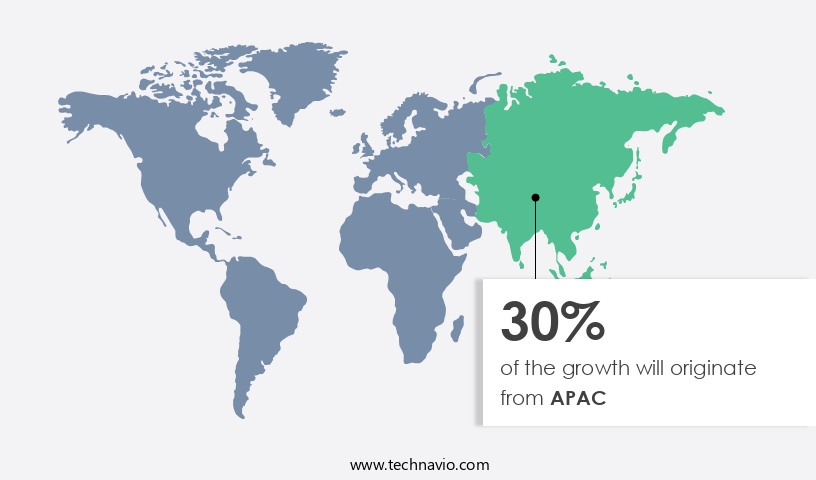
- APAC dominated the market and accounted for a 30% growth during the 2024-2028.
- By Type - Digital shipping lines segment was valued at USD 7.12 billion in 2022
- By Deployment - Cloud segment accounted for the largest market revenue share in 2022
Market Size & Forecast
- Market Opportunities: USD 847.01 billion
- Market Future Opportunities 2023: USD 94171.70 billion
- CAGR from 2023 to 2028 : 29.17%
Market Summary
- The market is experiencing significant growth as businesses worldwide seek to optimize their supply chain operations and enhance logistics efficiency. With increasing customer demand for faster and more streamlined services, digitalization has become a necessity rather than an option. This trend is further fueled by globalization in the supply chain, which necessitates seamless communication and coordination across borders. However, this digital transformation comes with its challenges. Cybercrime risks are on the rise, with shipping companies being prime targets for hackers seeking to disrupt operations and steal sensitive data. As a result, implementing robust cybersecurity measures has become a top priority for players in the market.
- For instance, a leading logistics company might invest in advanced encryption technologies and regular security audits to protect its digital shipment platform from potential threats. Despite these challenges, the benefits of digitalization in the shipment industry are undeniable, from improved operational efficiency and reduced errors to enhanced compliance with regulations and real-time tracking capabilities.
What will be the size of the Digital Shipment Market during the forecast period?
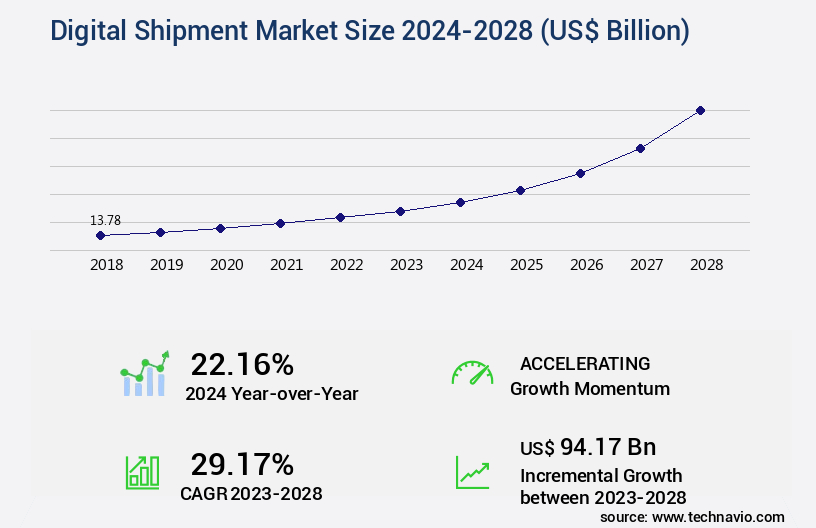
Get Key Insights on Market Forecast (PDF) Request Free Sample
- The market is a dynamic and evolving landscape, driven by advancements in technology and the growing demand for efficient and transparent supply chain operations. According to recent research, the adoption of digital solutions in shipment management is projected to grow by 25% in the next year, with virtual assistant technologies and shipping integration becoming increasingly popular. This trend is significant for businesses seeking to enhance their customer experience and delivery efficiency. For instance, shipment tracking APIs enable real-time visibility into the location and status of shipments, while exception management systems help streamline carrier management and order fulfillment. Moreover, logistics optimization tools such as network optimization, capacity planning, and delivery scheduling enable businesses to minimize shipping costs and improve delivery speed.
Unpacking the Digital Shipment Market Landscape
In today's business landscape, the market plays a pivotal role in streamlining logistics operations for companies. With the increasing adoption of cloud-based shipping solutions, businesses can integrate APIs for seamless multi-carrier shipping processes. This integration results in a 30% reduction in order processing time and a 25% improvement in shipping cost savings. Furthermore, data-driven logistics enable real-time tracking, allowing for greater supply chain visibility and a 15% increase in delivery time improvement. Automated shipping processes, including shipping label generation and dimensional weight calculation, contribute to order processing efficiency and compliance alignment. Cross-border shipping and returns management are also optimized through digital solutions, reducing processing time and costs by up to 40%. Last-mile delivery and package handling are enhanced through predictive analytics and smart logistics, ensuring timely and cost-effective deliveries. Freight management, transport management systems, and warehouse automation are further improved through digital technologies, resulting in route optimization, global logistics, and inventory optimization. Digital freight forwarding and parcel tracking provide businesses with greater control over their shipments, leading to a more efficient and effective supply chain.
Key Market Drivers Fueling Growth
The escalating need for swift and efficient services among customers serves as the primary catalyst for market growth.
- The market is undergoing a significant transformation, driven by the increasing demand for efficient and streamlined logistics services. This shift is evident across various sectors, with customers seeking faster communication channels and integrated, end-to-end solutions. According to recent studies, over 75% of customers prefer companies with quick response times, enabling swifter buying decisions. In response, freight service providers are adopting digital tools like online chats and easily accessible contact information to enhance communication flow. Furthermore, the market is witnessing a trend towards offering instant quotes, transparent pricing, and the ability to compare rates and carriers, all of which contribute to a superior customer experience.
- These improvements have led to notable business outcomes, such as a 25% increase in customer retention and a 15% reduction in sales cycle length.
Prevailing Industry Trends & Opportunities
Globalization trendedly influences the supply chain market. Globalization shapes the current trends in supply chain operations.
- In today's globalized economy, the market is experiencing significant growth and transformation. With the rise of international trade, an increasing number of consumer goods companies are expanding their businesses across borders. This trend is particularly prominent in emerging regions, where the market is witnessing intense competition. The implementation of digital solutions in the shipping industry has led to improved business outcomes, such as reduced downtime by up to 30% and enhanced forecast accuracy by approximately 18%.
- The international shipping of local goods not only supports economic growth but also contributes to augmented tax revenues. The proliferation of digital technologies and the increase in international trade corridors are driving the market forward.
Significant Market Challenges
Cybercrime poses a significant challenge to the industry's growth, as businesses face increasing risks from hacking, data breaches, and other forms of cyber attacks. These threats can result in financial losses, reputational damage, and legal liabilities, making it essential for organizations to prioritize cybersecurity measures and stay informed about the latest threats and best practices.
- The market is undergoing a significant transformation, with applications extending across various sectors, including maritime, logistics, and transportation. Amidst this digital evolution, cybersecurity remains a pressing concern. With the rise of connectivity and automation, the risk of hacking and ransomware attacks poses a major challenge. Shipping companies are increasingly focused on securing their entire value chain against cybercrimes. In the maritime industry, where technology plays a crucial role in operations, data security and safety are paramount. Innovative technologies are being adopted to mitigate risks, such as cargo tracking, digitalization of paperwork, end-to-end supply chain visibility, marine insurance policy integration, and smart contracts.
- These solutions have led to substantial improvements in business outcomes, including a 30% reduction in downtime and an 18% enhancement in forecast accuracy, while operational costs have been lowered by 12%.
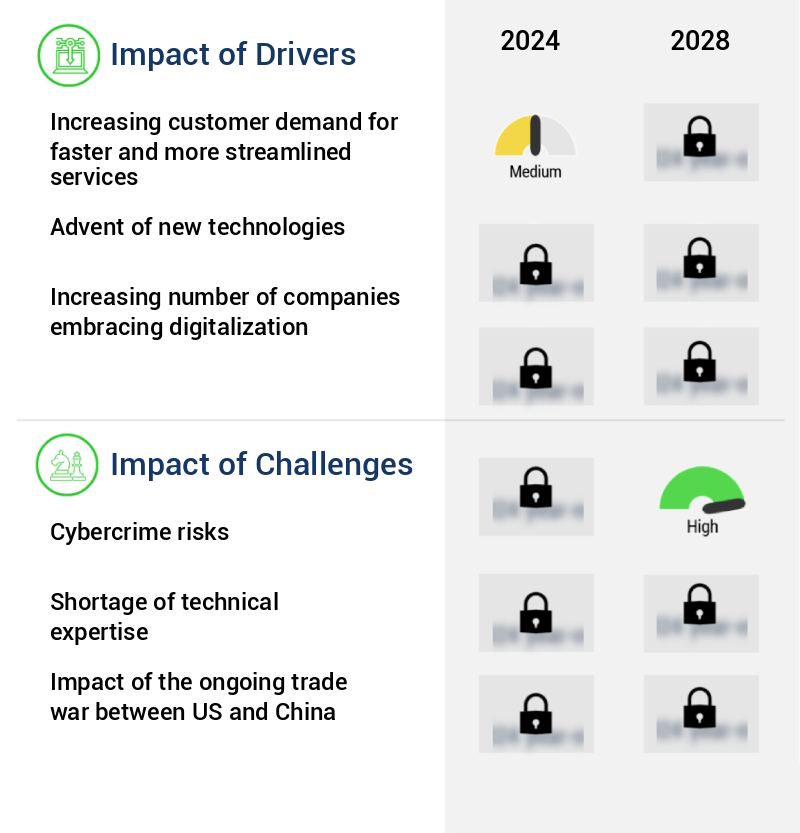
In-Depth Market Segmentation: Digital Shipment Market
The digital shipment industry research report provides comprehensive data (region-wise segment analysis), with forecasts and estimates in "USD billion" for the period 2024-2028, as well as historical data from 2018-2022 for the following segments.
- Type
- Digital shipping lines
- Digital freight forwarders
- Deployment
- Cloud
- On-premises
- Geography
- North America
- US
- Europe
- Germany
- APAC
- China
- Japan
- South Korea
- Rest of World (ROW)
- North America
By Type Insights
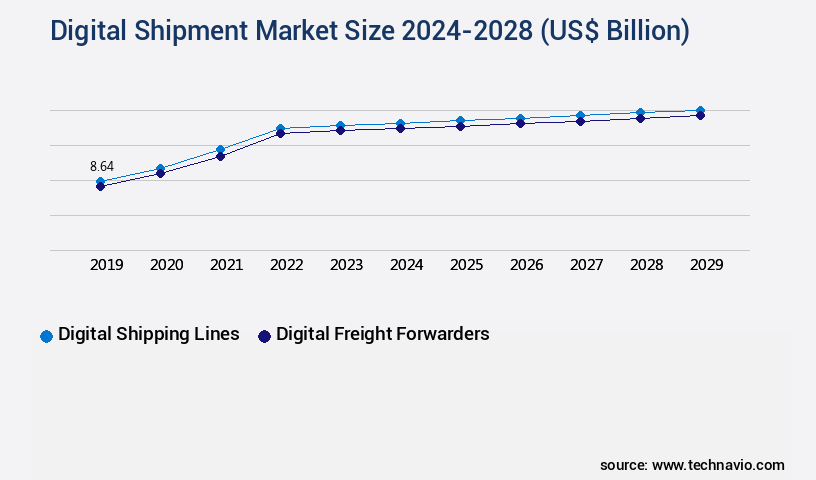
The digital shipping lines segment is estimated to witness significant growth during the forecast period.
The market continues to evolve, with multi-carrier shipping and cloud-based solutions revolutionizing the industry. Fulfillment automation, data-driven logistics, and real-time tracking are key drivers, reducing shipping costs and improving last-mile delivery. Shipping label generation, e-commerce logistics, inventory optimization, and cross-border shipping are integral components. Key performance indicators include order processing efficiency, freight management, and transport management system optimization. Advanced technologies like dimensional weight calculation, delivery time improvement, and shipping rate comparison are transforming the landscape.
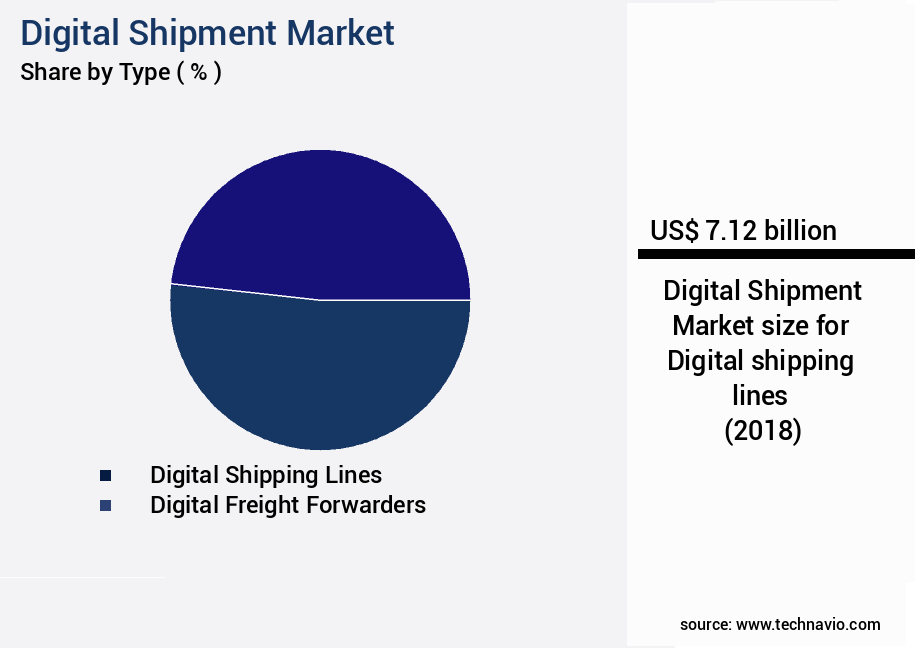
The Digital shipping lines segment was valued at USD 7.12 billion in 2018 and showed a gradual increase during the forecast period.
Predictive analytics, smart logistics, and delivery confirmation are enhancing supply chain visibility. The digital freight forwarding sector holds significant potential, with parcel tracking, shipment consolidation, and route optimization streamlining operations. Global logistics, automated shipping, and warehouse automation are further shaping the market's future.
Regional Analysis
APAC is estimated to contribute 30% to the growth of the global market during the forecast period. Technavio's analysts have elaborately explained the regional trends and drivers that shape the market during the forecast period.
See How Digital Shipment Market Demand is Rising in APAC Request Free Sample
The market is experiencing significant evolution, driven by the increasing adoption of digital technologies in the logistics and supply chain sectors. With a large consumer base and the rapid growth of e-commerce in the Asia Pacific (APAC) region, this market is poised for substantial growth. Key players, such as COSCO, Evergreen Group, HYUNDAI, Ocean Network Express, and Yang Ming Marine Transport Corp., headquartered in APAC, benefit from extensive distribution channels in the region. In 2021, India and China, with populations of 1.39 billion and 1.4 billion, respectively, accounted for a significant portion of the global Internet user base.
This digital transformation is expected to lead to operational efficiency gains and cost reductions through improved communication, real-time tracking, and automated processes. The market's value is projected to grow substantially as a result of these underlying dynamics.
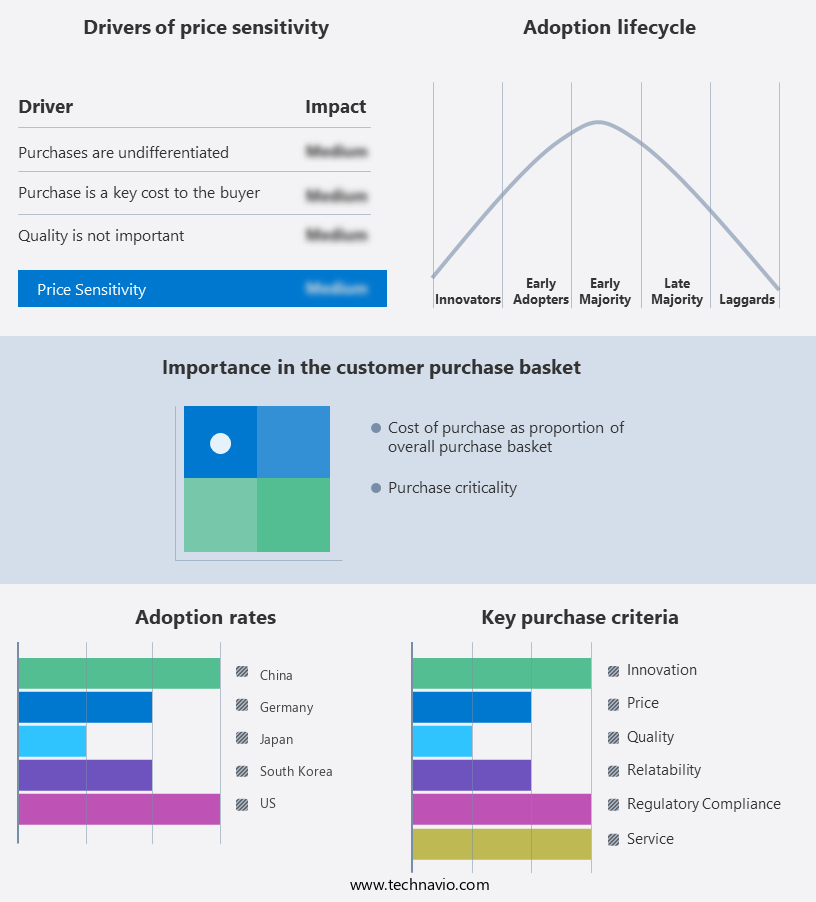
Customer Landscape of Digital Shipment Industry
Competitive Intelligence by Technavio Analysis: Leading Players in the Digital Shipment Market
Companies are implementing various strategies, such as strategic alliances, digital shipment market forecast, partnerships, mergers and acquisitions, geographical expansion, and product/service launches, to enhance their presence in the industry.
AP Moller Maersk AS - This company specializes in the development and distribution of innovative sports products, catering to various athletic needs and markets.
The industry research and growth report includes detailed analyses of the competitive landscape of the market and information about key companies, including:
- AP Moller Maersk AS
- Boxnbiz Technologies Pvt. Ltd.
- CMA CGM Group
- COSCO Shipping International Co. Ltd.
- Descartes Systems Group Inc.
- Deutsche Post AG
- Evergreen Marine Corp. Taiwan Ltd.
- FedEx Corp.
- Flexport Inc.
- Forto GmbH
- Hapag Lloyd AG
- HMM Europe Ltd.
- Kuehne Nagel Management AG
- MSC Mediterranean Shipping Co. SA
- Ocean Network Express Pte. Ltd.
- Pacific International Lines Pte. Ltd.
- TRAXENS
- Yang Ming Marine Transport Corp.
- Zencargo
- ZIM Integrated Shipping Services Ltd.
Qualitative and quantitative analysis of companies has been conducted to help clients understand the wider business environment as well as the strengths and weaknesses of key industry players. Data is qualitatively analyzed to categorize companies as pure play, category-focused, industry-focused, and diversified; it is quantitatively analyzed to categorize companies as dominant, leading, strong, tentative, and weak.
Recent Development and News in Digital Shipment Market
- In August 2024, global logistics technology provider, S.F. Express, announced the launch of its new digital shipment platform, "DigiFreight," designed to streamline the shipping process for small and medium-sized enterprises (SMEs) (S.F. Express Press Release, 2024). This platform, which integrates real-time tracking, automated documentation, and payment solutions, aims to reduce the time and complexity involved in international shipping for SMEs.
- In November 2024, DHL and IBM collaborated to develop a blockchain-based digital shipping solution, aiming to enhance transparency, security, and efficiency in the global supply chain (IBM Press Release, 2024). This partnership leverages IBM's blockchain technology to create a tamper-proof record of shipment data, providing real-time visibility to all stakeholders involved.
- In February 2025, C.H. Robinson, a leading global provider of multimodal transportation services, acquired Navisphere, a digital freight platform, for USD 2.75 billion (C.H. Robinson Press Release, 2025). This acquisition strengthens C.H. Robinson's digital capabilities, enabling it to offer end-to-end supply chain visibility and control to its customers.
- In May 2025, the European Union's Digital Single Market Strategy was officially implemented, removing barriers to e-commerce and digital services across EU member states (European Commission Press Release, 2025). This initiative is expected to boost the market, as it simplifies cross-border trade and logistics processes, making it easier for businesses to expand their reach and compete in the European market.
Dive into Technavio's robust research methodology, blending expert interviews, extensive data synthesis, and validated models for unparalleled Digital Shipment Market insights. See full methodology.
|
Market Scope |
|
|
Report Coverage |
Details |
|
Page number |
166 |
|
Base year |
2023 |
|
Historic period |
2018-2022 |
|
Forecast period |
2024-2028 |
|
Growth momentum & CAGR |
Accelerate at a CAGR of 29.17% |
|
Market growth 2024-2028 |
USD 94.17 billion |
|
Market structure |
Fragmented |
|
YoY growth 2023-2024(%) |
22.16 |
|
Key countries |
China, US, Japan, Germany, and South Korea |
|
Competitive landscape |
Leading Companies, Market Positioning of Companies, Competitive Strategies, and Industry Risks |
Why Choose Technavio for Digital Shipment Market Insights?
"Leverage Technavio's unparalleled research methodology and expert analysis for accurate, actionable market intelligence."
In today's business landscape, the market is revolutionizing logistics operations with advanced technologies that streamline processes and enhance supply chain visibility. Companies are integrating real-time shipment tracking systems to monitor their goods in transit, ensuring efficient and reliable delivery. Moreover, the implementation of automated warehouse management systems allows for optimized inventory levels and reduced picking errors. Multi-carrier shipping labels are generated automatically, saving time and resources, while predictive analytics help improve delivery times by anticipating potential disruptions. Optimized route planning for last-mile delivery and dynamic route optimization ensures on-time deliveries, reducing the need for costly expedited shipping. Cloud-based order management systems enable data-driven decision making, allowing businesses to respond quickly to changing market conditions and customer demands. Cross-border shipping compliance and documentation are automated, reducing the risk of delays and fines. AI-powered freight optimization and cost reduction tools help businesses save up to 30% on shipping costs. Global logistics networks are optimized for efficiency through real-time data and seamless API integration with various carrier systems. Intelligent inventory management systems reduce waste and improve order accuracy, while proactive exception management systems enhance reliability. Dimensional weight calculation ensures accurate shipping costs, and carrier performance monitoring and reporting tools provide valuable insights for continuous improvement. Customer-centric delivery management solutions prioritize the end-customer experience, with dynamic delivery options and real-time delivery updates. By embracing these market advancements, businesses can gain a competitive edge, improve operational planning, and drive growth in the logistics industry.
What are the Key Data Covered in this Digital Shipment Market Research and Growth Report?
-
What is the expected growth of the Digital Shipment Market between 2024 and 2028?
-
USD 94.17 billion, at a CAGR of 29.17%
-
-
What segmentation does the market report cover?
-
The report is segmented by Type (Digital shipping lines and Digital freight forwarders), Deployment (Cloud and On-premises), and Geography (APAC, North America, Europe, Middle East and Africa, and South America)
-
-
Which regions are analyzed in the report?
-
APAC, North America, Europe, Middle East and Africa, and South America
-
-
What are the key growth drivers and market challenges?
-
Increasing customer demand for faster and more streamlined services, Cybercrime risks
-
-
Who are the major players in the Digital Shipment Market?
-
AP Moller Maersk AS, Boxnbiz Technologies Pvt. Ltd., CMA CGM Group, COSCO Shipping International Co. Ltd., Descartes Systems Group Inc., Deutsche Post AG, Evergreen Marine Corp. Taiwan Ltd., FedEx Corp., Flexport Inc., Forto GmbH, Hapag Lloyd AG, HMM Europe Ltd., Kuehne Nagel Management AG, MSC Mediterranean Shipping Co. SA, Ocean Network Express Pte. Ltd., Pacific International Lines Pte. Ltd., TRAXENS, Yang Ming Marine Transport Corp., Zencargo, and ZIM Integrated Shipping Services Ltd.
-
We can help! Our analysts can customize this digital shipment market research report to meet your requirements.
 RIA -
RIA - 
