


Quick Service Restaurants Market Size 2025-2029
The quick service restaurants market size is forecast to increase by USD 63.8 billion, at a CAGR of 2.2% between 2024 and 2029. Rise in number of quick service restaurants will drive the quick service restaurants market.
Major Market Trends & Insights
- North America dominated the market and accounted for a 53% growth during the forecast period.
- By the Service, the Eat-in service sub-segment was valued at USD 270.60 billion in 2023
- By the Type, the Chain sub-segment accounted for the largest market revenue share in 2023
Market Size & Forecast
- Market Opportunities: USD 18.09 billion
- Future Opportunities: USD 63.80 billion
- CAGR : 2.2%
- North America: Largest market in 2023
Market Summary
- The Quick Service Restaurants (QSR) Market is experiencing significant growth and innovation, driven by advancements in core technologies and applications such as mobile ordering and contactless payment systems. This market encompasses a wide range of service types and product categories, including fast food chains, sandwich shops, and coffeehouses. Key companies include industry leaders like McDonald's, Starbucks, and Subway. Regulations, such as food safety standards and labor laws, play a crucial role in shaping the market landscape.
- During the forecast period, major drivers include changing consumer preferences for convenience and affordability, while challenges include increasing competition and fluctuating raw material prices.
- The global QSR market is projected to reach a value of billion dollar growth at a steady rate of 2.2% annually. Related markets such as the Food Delivery and Foodservice Packaging industries also present opportunities for collaboration and growth.
What will be the Size of the Quick Service Restaurants Market during the forecast period?

Get Key Insights on Market Forecast (PDF) Request Free Sample
How is the Quick Service Restaurants Market Segmented and what are the key trends of market segmentation?
The quick service restaurants industry research report provides comprehensive data (region-wise segment analysis), with forecasts and estimates in "USD billion" for the period 2025-2029, as well as historical data from 2019-2023 for the following segments.
- Service
- Eat-in service
- Takeaway service
- Drive-thru service
- Home delivery service
- Type
- Chain
- Independent
- Product Type
- Burger and sandwich
- Pizza
- Asian cuisine
- Frozen desserts and ice cream
- Others
- Geography
- North America
- US
- Canada
- Mexico
- Europe
- France
- Germany
- UK
- APAC
- China
- India
- Japan
- South Korea
- Rest of World (ROW)
- North America
By Service Insights
The eat-in service segment is estimated to witness significant growth during the forecast period.
In the dynamic quick service restaurant market, operational efficiency is a top priority. Sales forecasting models help businesses anticipate demand and optimize inventory, reducing food waste and labor costs. Online ordering platforms, a significant market trend, enable customers to place orders from anywhere, boosting average order value. Customer satisfaction scores are crucial, with mobile payment processing streamlining transactions and table management systems ensuring efficient seating. Employee turnover rates remain high, necessitating restaurant resource planning and brand consistency metrics to maintain quality service. Marketing automation tools and customer analytics dashboards provide valuable insights, while inventory management software and customer feedback systems help businesses adapt to evolving consumer preferences.
Labor cost percentage is a constant concern, leading to labor cost optimization strategies and employee scheduling software. Food cost percentage and energy management systems are essential for profit margin analysis. Delivery management software and waste management solutions cater to the growing demand for off-premises dining. Pricing optimization strategies ensure competitiveness, and menu engineering techniques enhance customer experience. Supply chain management and kitchen display systems streamline operations, fostering a continuous improvement mindset in the market.

The Eat-in service segment was valued at USD 270.60 billion in 2019 and showed a gradual increase during the forecast period.

Regional Analysis
North America is estimated to contribute 53% to the growth of the global market during the forecast period. Technavio's analysts have elaborately explained the regional trends and drivers that shape the market during the forecast period.

See How Quick Service Restaurants Market Demand is Rising in North America Request Free Sample
The Quick Service Restaurants (QSR) market in North America is experiencing growth due to consumer preferences for dining out, brand loyalty, and the introduction of new experiences and cuisines. The US and Canada are major contributors to the foodservice industry's expansion. Consumers' strong affinity for dining out has resulted in an increase in QSRs, with cities like New York, Los Angeles, Toronto, and Vancouver witnessing significant growth. According to recent data, the number of QSRs in the US has risen by 5% in the last year, while in Canada, the figure has grown by 3%.
This trend is expected to continue, with industry experts projecting a 2% annual increase in the number of QSRs over the next five years. The QSR sector's ongoing evolution reflects the dynamic nature of consumer preferences and the industry's ability to adapt and innovate.
Market Dynamics
Our researchers analyzed the data with 2024 as the base year, along with the key drivers, trends, and challenges. A holistic analysis of drivers will help companies refine their marketing strategies to gain a competitive advantage.
In the quick service restaurant (QSR) industry, technology is crucial. Advanced Point of Sale (POS) systems serve as a data hub for predictive analytics and demand forecasting. Self-service kiosks and mobile apps streamline the customer experience. For drive-thrus, voice AI and computer vision enhance efficiency, while AI-powered chatbots handle customer service.
Kitchen automation and robotics ensure food safety compliance and reduce labor costs. This is supported by automated inventory management and a “First In, First Out” (FIFO) system to reduce food waste. Omnichannel integrations and frictionless payments create a seamless customer journey. Ultimately, a focus on supply chain visibility, data-driven insights, and customer relationship management (CRM) integration builds a robust, efficient, and profitable operational framework.

What are the key market drivers leading to the rise in the adoption of Quick Service Restaurants Industry?
- The increase in the number of quick service restaurants serves as the primary driver for market growth in this sector.
- The quick service restaurant market is experiencing significant expansion due to the escalating demand for fast food, particularly in emerging economies. This trend is motivating established chains to broaden their reach both domestically and internationally. The increasing urban population and a substantial white-collar demographic have led to a surge in the number of quick service restaurants. Furthermore, the growing preference for socializing at cafes among urban youth is fueling market growth. The emergence of specialty coffee shops, catering to diverse tastes and premium coffee preferences, is another driving factor.
- Leading café chains, such as Starbucks, are capitalizing on this trend by opening outlets in numerous developing economies in Asia and South America. The quick service restaurant industry continues to evolve, presenting numerous opportunities for growth and innovation.
What are the market trends shaping the Quick Service Restaurants Industry?
- The trend in the food industry is shifting towards innovations in packaging and serving methods for food. Packaging and food serving are undergoing significant advancements in the market.
- Packaging continues to evolve as a critical brand differentiator in various industries. Innovations in sustainable packaging solutions, such as biodegradable and compostable options, are gaining traction. Customized packaging, tailored to the shape and size of food products, is another trend. In the quick service restaurant sector, corrugated packaging has emerged as a popular choice. This packaging type offers thermal properties that keep food hot, making it suitable for on-the-go meals.
- Its protected fluting material ensures food remains fresh for extended periods and safeguards against spills. These advancements underscore the industry's commitment to enhancing consumer experiences and addressing sustainability concerns.
What challenges does the Quick Service Restaurants Industry face during its growth?
- The volatility in raw material prices poses a significant challenge to the industry's growth trajectory.
- Quick service restaurants (QSRs) face ongoing challenges in managing the volatile prices of essential food commodities and raw materials, such as sugar and dairy products, which are integral to preparing popular beverages like coffee and tea. Unpredictable weather patterns can lead to sudden price increases, negatively impacting profit margins for numerous restaurants worldwide. These price fluctuations can create production issues, resulting in a supply-demand imbalance in the market. To maintain high hygiene standards and ensure consistent food quality, foodservice outlets, including QSRs, must allocate additional resources. This investment is crucial to address the challenges posed by the ever-changing market dynamics.
- The continuous evolution of the food industry necessitates a proactive approach from QSRs to adapt to these fluctuations and remain competitive. Incorporating data-driven strategies and staying informed about market trends can help QSRs mitigate the risks associated with price volatility. By closely monitoring commodity prices and implementing effective cost management techniques, these businesses can minimize the impact on their bottom line and maintain customer satisfaction.
Exclusive Customer Landscape
The quick service restaurants market forecasting report includes the adoption lifecycle of the market, covering from the innovator's stage to the laggard's stage. It focuses on adoption rates in different regions based on penetration. Furthermore, the quick service restaurants market report also includes key purchase criteria and drivers of price sensitivity to help companies evaluate and develop their market growth analysis strategies.
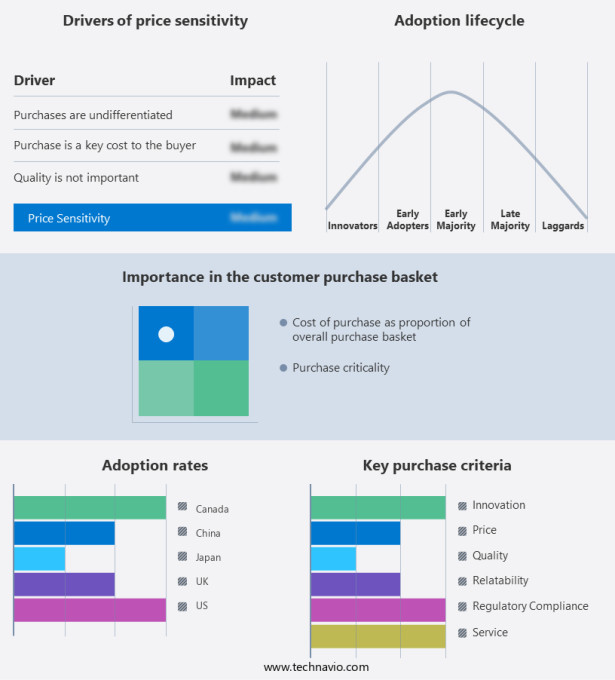
Customer Landscape of Quick Service Restaurants Industry
Competitive Landscape & Market Insights
Companies are implementing various strategies, such as strategic alliances, quick service restaurants market forecast, partnerships, mergers and acquisitions, geographical expansion, and product/service launches, to enhance their presence in the industry.
American Dairy Queen Corp. - Quick service restaurants, including DQ, provide efficient dining solutions through streamlined operations and convenient menus.
The industry research and growth report includes detailed analyses of the competitive landscape of the market and information about key companies, including:
- American Dairy Queen Corp.
- ArmyNavy Burger Inc.
- BonChon Chicken Philippines
- Bounty Agro Ventures Inc.
- Carls Jr. Restaurants LLC
- Chick fil A Inc.
- Chipotle Mexican Grill Inc.
- Dominos Pizza Inc.
- Goldilocks Filipino Cuisine
- Honeybee Foods Corp.
- Jack in the Box Inc.
- McDonald Corp.
- Restaurant Brands International Inc.
- Shakeys Pizza Asia Ventures Inc.
- Starbucks Corp.
- The Subway Group
- The Wendys Co.
- YUM Brands Inc.
Qualitative and quantitative analysis of companies has been conducted to help clients understand the wider business environment as well as the strengths and weaknesses of key industry players. Data is qualitatively analyzed to categorize companies as pure play, category-focused, industry-focused, and diversified; it is quantitatively analyzed to categorize companies as dominant, leading, strong, tentative, and weak.
Recent Development and News in Quick Service Restaurants Market
- In January 2024, McDonald's Corporation announced the global rollout of its contactless ordering system, McD App Order, in response to the increasing demand for contactless services due to the pandemic (McDonald's Corporation Press Release, 2024). This strategic move aimed to enhance the customer experience and ensure safety measures, boosting the company's digital transformation.
- In March 2024, Starbucks Coffee Company entered into a partnership with Microsoft to deploy Microsoft's Dynamics 365 platform and Microsoft 365 suite to digitally transform its stores and enhance the customer experience (Starbucks Coffee Company Press Release, 2024). This collaboration aimed to streamline operations, improve store management, and provide a more personalized customer experience.
- In May 2024, Yum! Brands, the parent company of KFC, Pizza Hut, and Taco Bell, completed the acquisition of the Indian quick-service restaurant chain, Sagar Ratna, marking its entry into the Indian vegetarian QSR market (Yum! Brands Press Release, 2024). This strategic expansion aimed to cater to the growing demand for vegetarian food options in India and expand Yum!'s presence in the region.
- In February 2025, Subway, the world's largest sandwich chain, launched its plant-based Subway Beyond Meat menu in partnership with Beyond Meat, Inc. (Subway Press Release, 2025). This strategic partnership aimed to cater to the growing demand for plant-based food options and attract health-conscious consumers. The menu included plant-based versions of Subway's popular sandwiches, salads, and wraps.
Dive into Technavio's robust research methodology, blending expert interviews, extensive data synthesis, and validated models for unparalleled Quick Service Restaurants Market insights. See full methodology.
|
Market Scope |
|
|
Report Coverage |
Details |
|
Page number |
224 |
|
Base year |
2024 |
|
Historic period |
2019-2023 |
|
Forecast period |
2025-2029 |
|
Growth momentum & CAGR |
Accelerate at a CAGR of 2.2% |
|
Market growth 2025-2029 |
USD 63.8 billion |
|
Market structure |
Fragmented |
|
YoY growth 2024-2025(%) |
2.1 |
|
Key countries |
US, China, India, Canada, Japan, Germany, South Korea, Mexico, UK, and France |
|
Competitive landscape |
Leading Companies, Market Positioning of Companies, Competitive Strategies, and Industry Risks |
Research Analyst Overview
ai_gpt_research_analysis.multili
What are the Key Data Covered in this Quick Service Restaurants Market Research and Growth Report?
-
What is the expected growth of the fertility services market between 2025 and 2029?
-
USD 63.8 billion, at a CAGR of 2.2%
-
-
What segmentation does the market report cover?
-
The report segmented by Service (Eat-in service, Takeaway service, Drive-thru service, and Home delivery service), Type (Chain and Independent), Product Type (Burger and sandwich, Pizza, Asian cuisine, Frozen desserts and ice cream, and Others), and Geography (North America, APAC, Europe, South America, and Middle East and Africa)
-
-
Which regions are analyzed in the report?
-
North America, APAC, Europe, South America, and Middle East and Africa
-
-
What are the key growth drivers and market challenges?
-
Rise in number of quick service restaurants, Fluctuations in raw material prices
-
-
Who are the major players in the fertility services market?
-
Key Companies American Dairy Queen Corp., ArmyNavy Burger Inc., BonChon Chicken Philippines, Bounty Agro Ventures Inc., Carls Jr. Restaurants LLC, Chick fil A Inc., Chipotle Mexican Grill Inc., Dominos Pizza Inc., Goldilocks Filipino Cuisine, Honeybee Foods Corp., Jack in the Box Inc., McDonald Corp., Restaurant Brands International Inc., Shakeys Pizza Asia Ventures Inc., Starbucks Corp., The Subway Group, The Wendys Co., and YUM Brands Inc.
-
We can help! Our analysts can customize this quick service restaurants market research report to meet your requirements.
Market Research Insights
- Quick Service Restaurants (QSRs) represent a significant segment of the food industry, accounting for a substantial market share without fail. Currently, approximately 40% of all food sales in the United States stem from QSRs, according to the National Restaurant Association. Looking forward, this sector is projected to experience a steady growth of around 3% annually. A noteworthy comparison lies within the areas of order accuracy rates and kitchen workflow efficiency. Leading QSRs have reported an average order accuracy rate of 95%, while less efficient competitors trail behind with rates as low as 85%. This discrepancy translates to substantial differences in customer satisfaction and repeat business.
- Moreover, the implementation of advanced technologies, such as peak hour management systems and supply chain traceability, has been a game-changer for many QSRs. These technologies have led to improved kitchen workflow efficiency, reduced food preparation time, and enhanced customer service. As a result, top-performing QSRs have been able to maintain an edge in the competitive landscape.