


Residential Air Quality Control Services Market Size 2024-2028
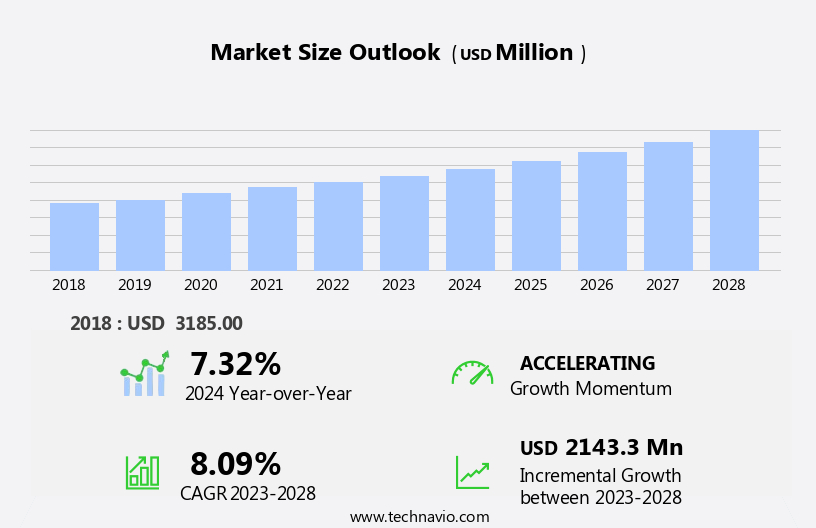
The residential air quality control services market size is forecast to increase by USD 2.14 billion at a CAGR of 8.09% between 2023 and 2028.
- The market is experiencing significant growth due to the rising demand for well-maintained infrastructure and the increasing trend of outsourcing facility management services. Homeowners are becoming increasingly conscious of the importance of indoor air quality and are investing in air quality control systems to ensure the health and comfort of their families. This demand is driving the market forward, with companies offering a range of services from installation and maintenance to repair and replacement of air filtration systems. However, the market is not without challenges. The increasing material costs pose a significant obstacle for market participants. Raw material prices for components such as filters and sensors have been on the rise, putting pressure on companies to pass these costs onto consumers or absorb them themselves.
- This can impact profitability and may limit the growth potential for some players in the market. Companies must navigate this challenge by exploring alternative sourcing strategies, improving operational efficiency, and finding ways to provide value-added services to customers beyond just air quality control to justify the higher costs.
What will be the Size of the Residential Air Quality Control Services Market during the forecast period?
- The market continues to evolve, driven by the growing awareness of the importance of indoor air quality for sustainable homes, health and wellness, and energy efficiency. Air quality audits, home renovation projects, and new construction initiatives integrate advanced filtration systems, UV air purification, HVAC systems, and ventilation systems to ensure optimal indoor air quality. Building codes and EPA regulations mandate air quality monitoring and analysis, driving the demand for installation services and maintenance contracts. Sustainable homes, multi-family housing, and rental properties prioritize air quality data and analytics for performance optimization. Air exchange rates, dust mites, pet dander, and other contaminants are addressed through HEPA filtration, carbon filtration, and air sealing.
- Home improvement projects and home staging incorporate air quality considerations, with remote monitoring and data analytics enabling proactive maintenance and repair services. The ongoing unfolding of market activities reflects the continuous integration of air quality control services across various sectors, ensuring healthier living environments for all.
How is this Residential Air Quality Control Services Industry segmented?
The residential air quality control services industry research report provides comprehensive data (region-wise segment analysis), with forecasts and estimates in "USD million" for the period 2024-2028, as well as historical data from 2018-2022 for the following segments.
- End-user
- Apartments
- Standalone houses
- Service
- Maintenance
- Cleaning
- Technology Specificity
- HEPA Filtration
- UV Purification
- Ionization
- Distribution Channel
- Service Providers
- Online Booking
- Retail
- Geography
- North America
- US
- Mexico
- Europe
- France
- Germany
- Italy
- Spain
- UK
- Middle East and Africa
- UAE
- APAC
- Australia
- China
- India
- Japan
- South Korea
- South America
- Brazil
- Rest of World (ROW)
- North America
By End-user Insights
The apartments segment is estimated to witness significant growth during the forecast period.
In the realm of residential properties, the demand for air quality control services is on the rise, particularly in apartments and housing societies. These communities rely on third-party companies for maintenance and operation of their centralized HVAC systems, ensuring healthy indoor air quality for occupants. Long air ducts in these buildings necessitate regular cleaning to prevent clogging and potential harm to the entire structure. The market is primarily driven by the apartment segment, as proper maintenance and optimization of HVAC systems are crucial for efficient heating, ventilation, and cooling. Energy efficiency and sustainability are also essential considerations in modern residential construction, leading to the integration of air quality monitoring, analysis, and filtration systems.
Sustainable homes and multi-family housing projects prioritize air quality data and analysis to adhere to building codes and EPA regulations. Home renovation projects often include the installation of air purifiers, UV air purification, and HEPA filtration systems to improve indoor air quality and address concerns related to dust mites, pet dander, and respiratory health. Air exchange rates, data analytics, and remote monitoring have become increasingly important in optimizing air quality and energy efficiency in residential properties. Green building initiatives and home improvement projects further emphasize the importance of air quality testing, air sealing, and repair services to ensure a healthy living environment.
In the context of new construction, performance optimization and adherence to Ashrae standards are essential for ensuring energy efficiency and optimal indoor air quality. Additionally, rental properties require regular maintenance and air quality testing to meet regulatory requirements and maintain tenant satisfaction. The integration of smart home technology and home automation systems allows for more efficient air quality control and remote monitoring, further enhancing the overall living experience. The evolving trends in the market reflect a growing emphasis on health and wellness, energy efficiency, and sustainable living.
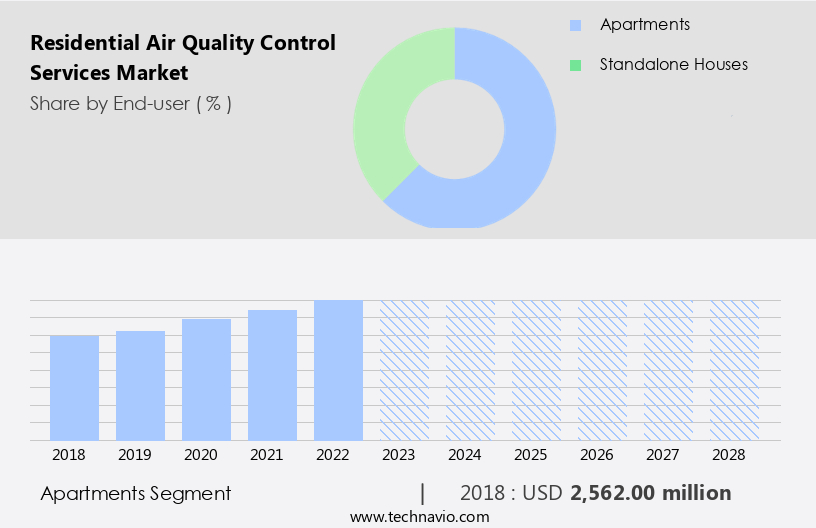
The Apartments segment was valued at USD 2.56 billion in 2018 and showed a gradual increase during the forecast period.
Regional Analysis
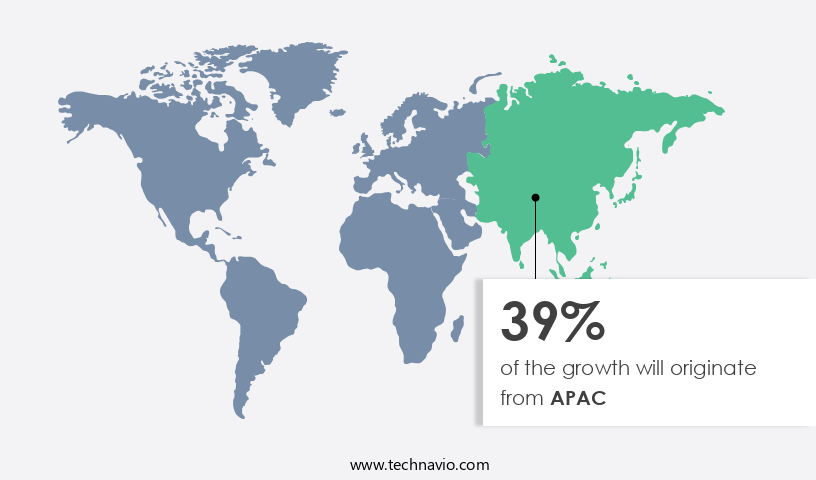
APAC is estimated to contribute 39% to the growth of the global market during the forecast period.Technavio's analysts have elaborately explained the regional trends and drivers that shape the market during the forecast period.
The market in North America is experiencing notable growth, with the United States leading the charge. This market's expansion is driven by the increasing prevalence of air pollutants and the US's adoption of advanced technologies in air quality solutions. The market is characterized by a diverse company landscape, with both local and international players. In the US, there is a growing trend towards smart home technology and maintenance contracts for air quality services. Building codes and regulations, such as EPA guidelines and ASHRAE standards, are influencing the market's direction. Installation services for air purifiers, filtration systems, UV air purification, and ventilation systems are in high demand.
Energy efficiency and sustainability are key considerations in new construction and home improvement projects. Air quality monitoring, analysis, and testing are essential services for ensuring health and wellness, particularly for those with respiratory issues or sensitivities to pet dander and dust mites. Air exchange rates, data analytics, and remote monitoring are also gaining traction in the market. Green building and multi-family housing are emerging sectors, with a focus on air sealing and performance optimization. Repair services and duct cleaning are also important aspects of the market. The regional market is expected to continue its growth trajectory, driven by these trends and the increasing awareness of the importance of indoor air quality.
Market Dynamics
Our researchers analyzed the data with 2023 as the base year, along with the key drivers, trends, and challenges. A holistic analysis of drivers will help companies refine their marketing strategies to gain a competitive advantage.
The Global Residential Air Quality Control Services Market grows with air quality testing for homes and HEPA air purifiers for residences. Residential air quality trends highlight smart air purifiers for allergies and indoor air quality monitoring services. Air quality services for urban homes and air purifiers for pet owners drive demand, per residential air quality forecast. Eco-friendly air purification systems leverage air quality services with IoT, while air purifiers for asthma relief ensure health. Air quality services for new homes and air purifiers for dust control enhance comfort. Air quality services for elderly care, advanced air purification technologies, and air quality services for HVAC optimize solutions. Residential air quality for wellness, air quality service supply chain, air purifiers for mold prevention, air quality services for smart homes, air quality control for families, and air quality services for global markets fuel growth through 2028.
What are the key market drivers leading to the rise in the adoption of Residential Air Quality Control Services Industry?
- The escalating need for well-preserved infrastructure serves as the primary catalyst for market growth. The market is experiencing significant growth due to the increasing investments in the real estate sector. The maturity of the real estate markets in the US and Europe is leading to an uptick in construction activities, which in turn increases the presence of pollutants and the need for air quality control services. In the context of this development, data analytics plays a crucial role in identifying and addressing indoor air quality issues, such as pet dander and other allergens. Moreover, remote monitoring systems enable real-time tracking of air quality levels, ensuring optimal living conditions. The rise in disposable income and the trend towards green building and multi-family housing further fuel market growth.
- Air sealing and repair services are essential components of air quality control, ensuring energy efficiency and improved indoor air quality. Air quality testing is also a critical aspect of maintaining healthy living environments, particularly in high-rise buildings with complex HVAC systems. In conclusion, the market is expected to continue its growth trajectory, driven by the real estate sector's expansion and the increasing focus on maintaining healthy indoor environments. Remote monitoring, data analytics, and advanced repair and maintenance services are key trends shaping the market landscape.
What are the market trends shaping the Residential Air Quality Control Services Industry?
- The trend in the facility management services market is shifting towards an increased utilization of outsourcing. This approach offers numerous benefits, including cost savings, improved efficiency, and access to specialized expertise.
- In the realm of residential property management, outsourcing Facility Management (FM) services for air quality control has emerged as a strategic choice for building owners. By delegating tasks such as maintenance contracts, installation services, and air quality monitoring to third-party companies, building owners can concentrate on more revenue-generating and complex aspects of their business. The adoption of smart home technology and energy efficiency initiatives has further accentuated the importance of indoor air quality, leading to a growing demand for air quality data analysis and air purifier installation services. Building codes and regulations increasingly emphasize the need for regular air quality checks, making air quality analysis a crucial component of FM services.
- The expanding residential infrastructure development in various sectors presents significant opportunities for FM service providers. Outsourcing FM services ensures that service providers manage all responsibilities and associated risks, enabling systematic and routine system checks, ultimately contributing to harmonious building operations.
What challenges does the Residential Air Quality Control Services Industry face during its growth?
- The escalating material costs pose a significant challenge to the industry's growth trajectory. In the realm of home improvement, the demand for Residential Air Quality Control Services continues to gain significance as consumers prioritize sustainable homes and prioritize health and wellness. Air quality audits are increasingly popular, particularly during home renovation projects, to ensure optimal respiratory health. Filtration systems, UV air purification, and advanced HVAC systems are integral solutions for maintaining superior indoor air quality. New construction projects often incorporate these technologies from the outset. The market dynamics for Residential Air Quality Control Services are shaped by several factors. The increasing awareness of the importance of air quality in overall health and wellness is a key driver.
- Additionally, the availability of advanced technologies, such as filtration systems and UV air purification, has made these solutions more accessible and affordable for homeowners. However, the rising costs of equipment and maintenance can pose a challenge for companies, potentially impacting profitability. Tools and equipment used in Residential Air Quality Control Services include access tools, inspection tools, and hand-cleaning tools, as well as compressed air vacuums, liquid surface treatment application equipment, hand-held HEPA vacuums, and wet vacuums. companies must navigate the evolving market landscape, staying informed of the latest trends and technologies to provide the best possible solutions for their clients.
Exclusive Customer Landscape
The residential air quality control services market forecasting report includes the adoption lifecycle of the market, covering from the innovator's stage to the laggard's stage. It focuses on adoption rates in different regions based on penetration. Furthermore, the residential air quality control services market report also includes key purchase criteria and drivers of price sensitivity to help companies evaluate and develop their market growth analysis strategies.
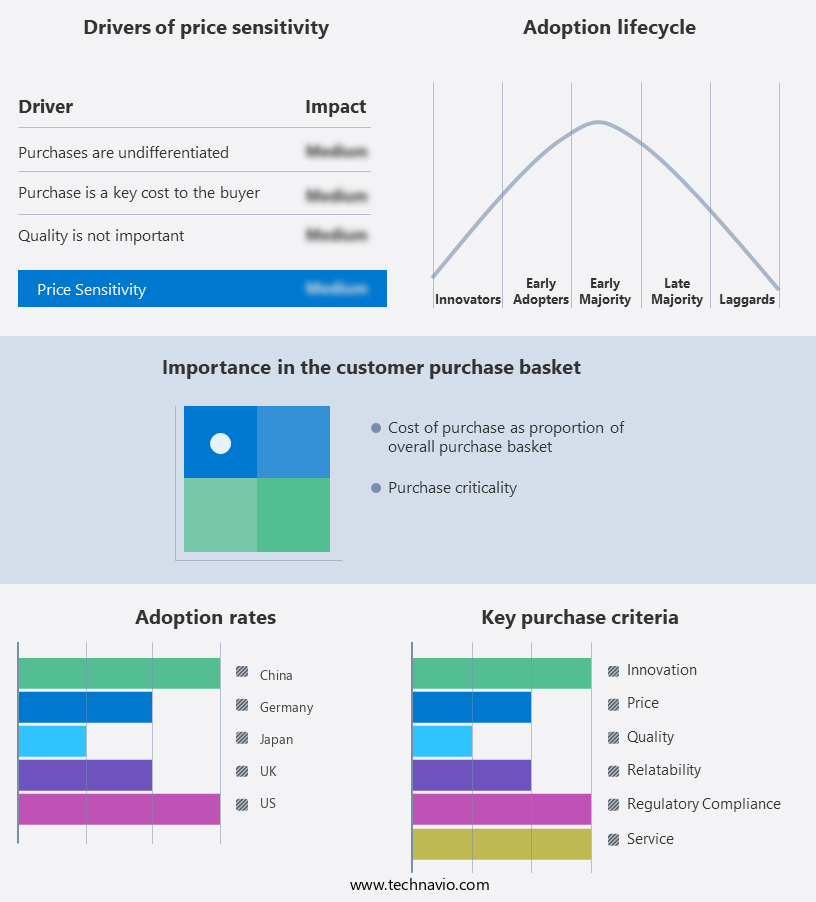
Customer Landscape
Key Companies & Market Insights
Companies are implementing various strategies, such as strategic alliances, residential air quality control services market forecast, partnerships, mergers and acquisitions, geographical expansion, and product/service launches, to enhance their presence in the industry.
The industry research and growth report includes detailed analyses of the competitive landscape of the market and information about key companies, including:
- Dyson
- Honeywell
- Philips
- Blueair
- IQAir
- Coway
- Levoit
- Winix
- Sharp
- Samsung
- Molekule
- Aeroseal
- Trane
- Carrier
- Daikin
- Johnson Controls
- Lennox International
- Systech Environmental
- EnviroVent
- Airius
Qualitative and quantitative analysis of companies has been conducted to help clients understand the wider business environment as well as the strengths and weaknesses of key industry players. Data is qualitatively analyzed to categorize companies as pure play, category-focused, industry-focused, and diversified; it is quantitatively analyzed to categorize companies as dominant, leading, strong, tentative, and weak.
Recent Development and News in Residential Air Quality Control Services Market
- In February 2023, Honeywell International Inc. Announced the launch of its new Residential Air Purifier, the AirTouch IQ, which uses advanced technologies like HEPA filtration, UV-C light, and Particulate Matter (PM) sensors to improve indoor air quality (IAQ) (Honeywell Press Release, 2023). This product expansion underscores Honeywell's commitment to addressing the growing concern for homeowners seeking improved IAQ solutions.
- In June 2024, Philips and Amazon announced a strategic partnership to integrate Philips Smart Air Purifiers with Amazon Alexa, enabling voice control and real-time air quality monitoring for customers (Amazon Newsroom, 2024). This collaboration represents a significant advancement in smart home technology, making it more convenient for consumers to manage their air quality control systems.
- In October 2024, Blueair, a leading air purifier manufacturer, raised USD50 million in a Series C funding round led by EQT Ventures, bringing its total funding to USD100 million (BusinessWire, 2024). This investment will support Blueair's continued growth and innovation in the market.
Research Analyst Overview
The market is experiencing significant growth as homeowners prioritize energy-saving solutions and strive for healthier living environments. Air quality guidelines and home air quality standards continue to evolve, driving the demand for air quality certification and improvement services. Air quality research and technology advancements, including air filtration and ventilation, are key factors in this market trend. Air quality indexes provide valuable data for air quality management and awareness, while air quality consulting and education help homeowners make informed decisions. Air quality regulations are increasingly stringent, necessitating the adoption of air purification technology and ongoing air quality monitoring using sensors. The market for air quality services is dynamic, with a focus on innovation and continuous improvement to meet the evolving needs of homeowners.
Dive into Technavio's robust research methodology, blending expert interviews, extensive data synthesis, and validated models for unparalleled Residential Air Quality Control Services Market insights. See full methodology.
|
Market Scope |
|
|
Report Coverage |
Details |
|
Page number |
164 |
|
Base year |
2023 |
|
Historic period |
2018-2022 |
|
Forecast period |
2024-2028 |
|
Growth momentum & CAGR |
Accelerate at a CAGR of 8.09% |
|
Market growth 2024-2028 |
USD 2143.3 million |
|
Market structure |
Fragmented |
|
YoY growth 2023-2024(%) |
7.32 |
|
Key countries |
US, China, Germany, Japan, UK, Australia, India, France, Brazil, UAE, Rest of World (ROW), Saudi Arabia, France, South Korea, Mexico, Italy, and Spain |
|
Competitive landscape |
Leading Companies, Market Positioning of Companies, Competitive Strategies, and Industry Risks |
What are the Key Data Covered in this Residential Air Quality Control Services Market Research and Growth Report?
- CAGR of the Residential Air Quality Control Services industry during the forecast period
- Detailed information on factors that will drive the growth and forecasting between 2024 and 2028
- Precise estimation of the size of the market and its contribution of the industry in focus to the parent market
- Accurate predictions about upcoming growth and trends and changes in consumer behaviour
- Growth of the market across North America, Europe, APAC, Middle East and Africa, and South America
- Thorough analysis of the market's competitive landscape and detailed information about companies
- Comprehensive analysis of factors that will challenge the residential air quality control services market growth of industry companies
We can help! Our analysts can customize this residential air quality control services market research report to meet your requirements.
 RIA -
RIA - 
