



Residential Cooking Grills Market Size and Growth Forecast 2026-2030
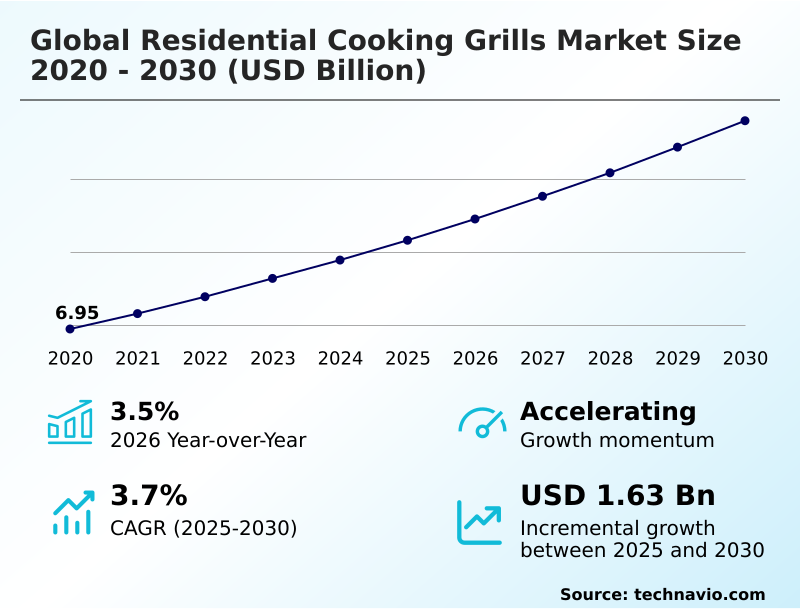
The Residential Cooking Grills Market size was valued at USD 8.16 billion in 2025 growing at a CAGR of 3.7% during the forecast period 2026-2030.
North America accounts for 34.4% of incremental growth during the forecast period. The Gas segment by Product was valued at USD 4.16 billion in 2024, while the Outdoor segment holds the largest revenue share by Application.
The market is projected to grow by USD 2.85 billion from 2020 to 2030, with USD 1.63 billion of the growth expected during the forecast period of 2025 to 2030.
Get Key Insights on Market Forecast (PDF) Request Free Sample
Residential Cooking Grills Market Overview
The residential cooking grills market is defined by a significant shift toward the backyard as a functional extension of the home, driving demand for sophisticated and durable outdoor cooking solutions. This evolution is propelled by the integration of smart technologies, where features like IoT integration and Wi-Fi connectivity are becoming standard for enabling remote monitoring and guided cooking assistance. In a typical scenario, a manufacturer leveraging over-the-air firmware updates for its line of smart grills can continuously enhance user experience, leading to higher brand loyalty and customer retention. This technological advancement is especially prevalent in North America, which is poised to contribute approximately 34% of the market's incremental growth. However, manufacturers face the ongoing challenge of supply chain volatility, which affects the procurement of essential materials for hybrid grilling systems and advanced kamado-style grills. Balancing innovation with operational resilience is critical for navigating this dynamic landscape.
Drivers, Trends, and Challenges in the Residential Cooking Grills Market
The evolution of high-performance outdoor kitchen grills into central components of residential design is reshaping procurement criteria, with a growing emphasis on professional-grade features like a gas grill with infrared searing burner.
In parallel, urbanization is creating a robust sub-market for the portable electric grill for balcony use, where product design is heavily influenced by compliance with local fire safety codes, such as those established by the National Fire Protection Association (NFPA).
The integration of a smart grill with app control allows for unprecedented precision, enabling users to manage everything from high-heat searing to the low-and-slow cooking required for a kamado ceramic charcoal smoker. From an operational standpoint, manufacturers adopting modular design principles can produce both large built-in units and versatile multi-fuel hybrid grill systems on a single assembly line.
This strategy can reduce dedicated tooling costs by over 20% compared to traditional manufacturing, providing the flexibility needed to address divergent market segments without sacrificing efficiency. This agility is critical for capitalizing on both suburban upgrade cycles and urban infill projects, ensuring a competitive edge in a bifurcated market.
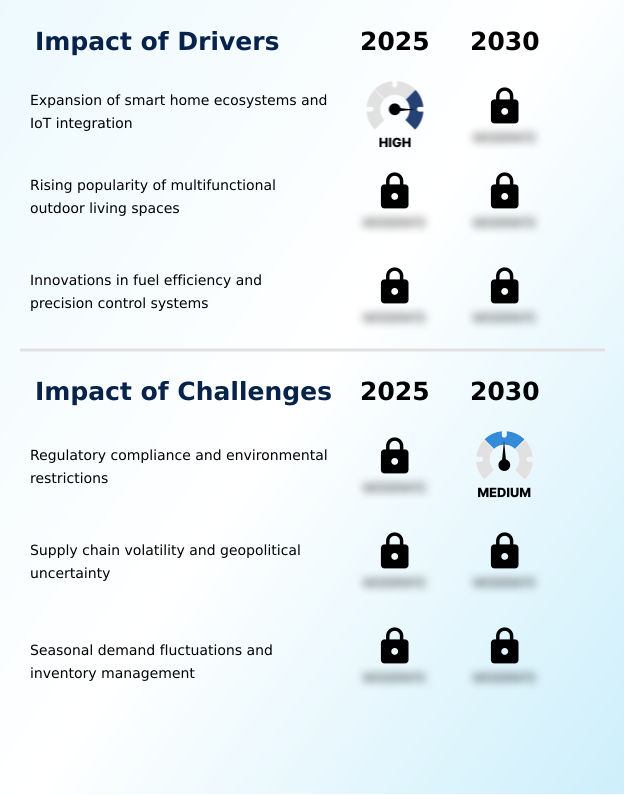
Primary Growth Driver: The expansion of smart home ecosystems and the integration of IoT technology into outdoor appliances is a primary driver for the residential cooking grills market.
A key market driver is the expansion of smart home ecosystems, which fuels consumer demand for residential grills equipped with automated temperature regulation.
This push for convenience and precision is transforming backyards into multifunctional outdoor living spaces, stimulating sales of premium units that feature an infrared side sear burner and are constructed from durable 304-grade stainless steel.
Concurrently, innovations in fuel efficiency, particularly within wood pellet grills that use automated auger systems and induction fans, appeal to both environmentally conscious and results-driven consumers.
These advancements support the market's 3.5% year-over-year growth, as sophisticated thermal management systems deliver consistent cooking results and lower operational costs, thereby enhancing the overall value proposition for end-users.
Emerging Market Trend: A dominant trend is the transformation of grilling into software-led experiences, characterized by integrated AI and closed-loop control systems for data-driven precision.
The market's primary trend is the evolution of grills into software-led platforms, embedding IoT integration and Wi-Fi connectivity to enable sophisticated remote monitoring. This shift is particularly pronounced in North America, which accounts for approximately 34.4% of the market's incremental growth. Consumers now expect guided cooking assistance through mobile applications, which democratizes complex culinary techniques.
This software focus is complemented by the rising demand for high-performance hardware for outdoor kitchens, including versatile hybrid grilling systems and modular kamado-style grills crafted from durable ceramic materials. Furthermore, the convergence of portability and power is evident in the growing popularity of compact electric grills equipped with high-wattage heating elements, addressing the needs of urban consumers.
Key Industry Challenge: Navigating a complex landscape of regulatory compliance and environmental restrictions on emissions and safety standards poses a key challenge to industry growth.
A primary challenge is navigating complex environmental regulations, including local air quality mandates that restrict open-flame cooking and compel investment in cleaner-burning wood pellet grills or high-performance electric models. This regulatory landscape introduces significant cost and complexity into product development.
Furthermore, persistent supply chain volatility and geopolitical uncertainty disrupt the procurement of critical materials, such as porcelain-enameled steel and electronic components for smart features, directly impacting production timelines. The industry also contends with pronounced seasonal demand, with over 70% of sales concentrated in the spring and summer months.
This cyclicality places immense strain on inventory management and manufacturing capacity for a diverse product range, from basic charcoal units to complex multi-fuel appliances.
Explore Full Market Dynamics Analysis Request Free Sample
Residential Cooking Grills Market Segmentation
The residential cooking grills industry research report provides comprehensive data including region-wise segment analysis, with forecasts and analysis for the period 2026-2030, as well as historical data from 2020-2024 for the following segments.
Product Segment Analysis
The gas segment is estimated to witness significant growth during the forecast period.
The gas segment remains the cornerstone of the residential cooking grills market, accounting for over 50% of sales.
This dominance is sustained by continuous innovation focused on high-performance heating and long-term durability, moving beyond basic utility to become the centerpiece of outdoor kitchens.
Procurement decisions are influenced by professional-grade features such as high-output burners and specialized infrared searing zones. Manufacturers are prioritizing premium materials like 304-grade stainless steel and porcelain-enameled coatings to ensure all-weather resilience and consistent heat distribution.
This segment benefits from a user base that values the rapid ignition and precise thermal management systems that liquid propane and natural gas provide, offering a convenient, powerful alternative to traditional charcoal or electric options.
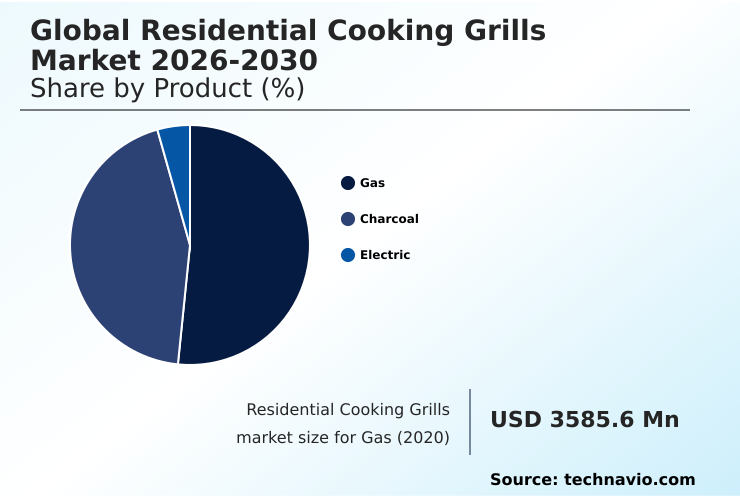
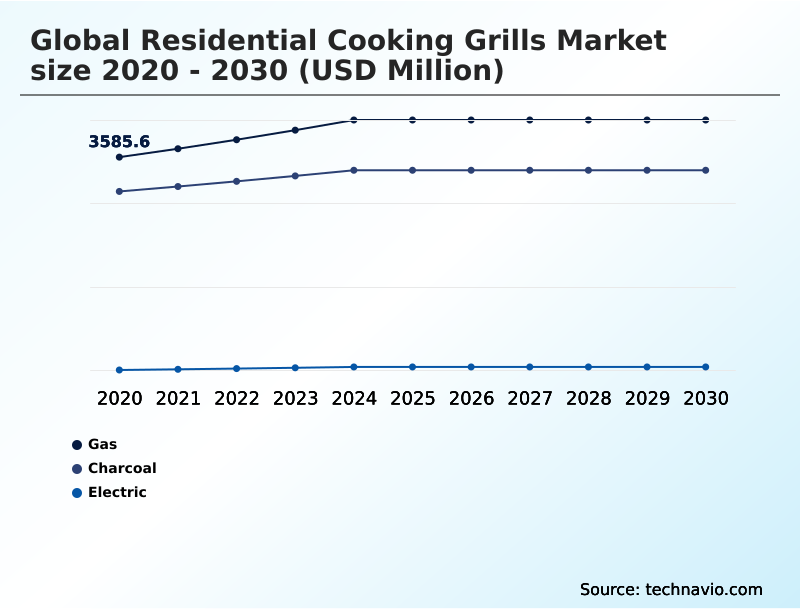
The Gas segment was valued at USD 4.16 billion in 2024 and showed a gradual increase during the forecast period.
Residential Cooking Grills Market by Region: North America Leads with 34.4% Growth Share
North America is estimated to contribute 34.4% to the growth of the global market during the forecast period.
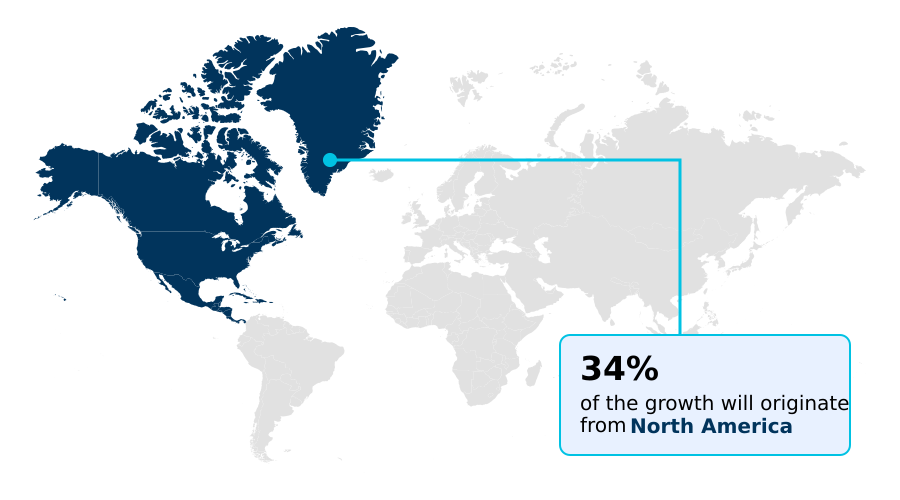
The geographic landscape is led by North America, which is set to contribute 34.45% of the market's growth, driven by a mature outdoor cooking culture and high adoption of smart-enabled, high-performance outdoor kitchen grills.
Close behind, the APAC region will account for 33.29% of growth, fueled by rapid urbanization in countries like South Korea and Japan, where demand for compact electric grills and smokeless indoor options is surging.
In Europe, which represents 19.23% of the opportunity, stringent environmental regulations such as REACH are influencing product design, accelerating the shift toward efficient high-wattage heating elements and cleaner fuel sources.
Across all regions, the use of durable materials like 304-grade stainless steel is crucial for ensuring product longevity in diverse climatic conditions, from coastal humidity to extreme temperatures.
Customer Landscape Analysis for the Residential Cooking Grills Market
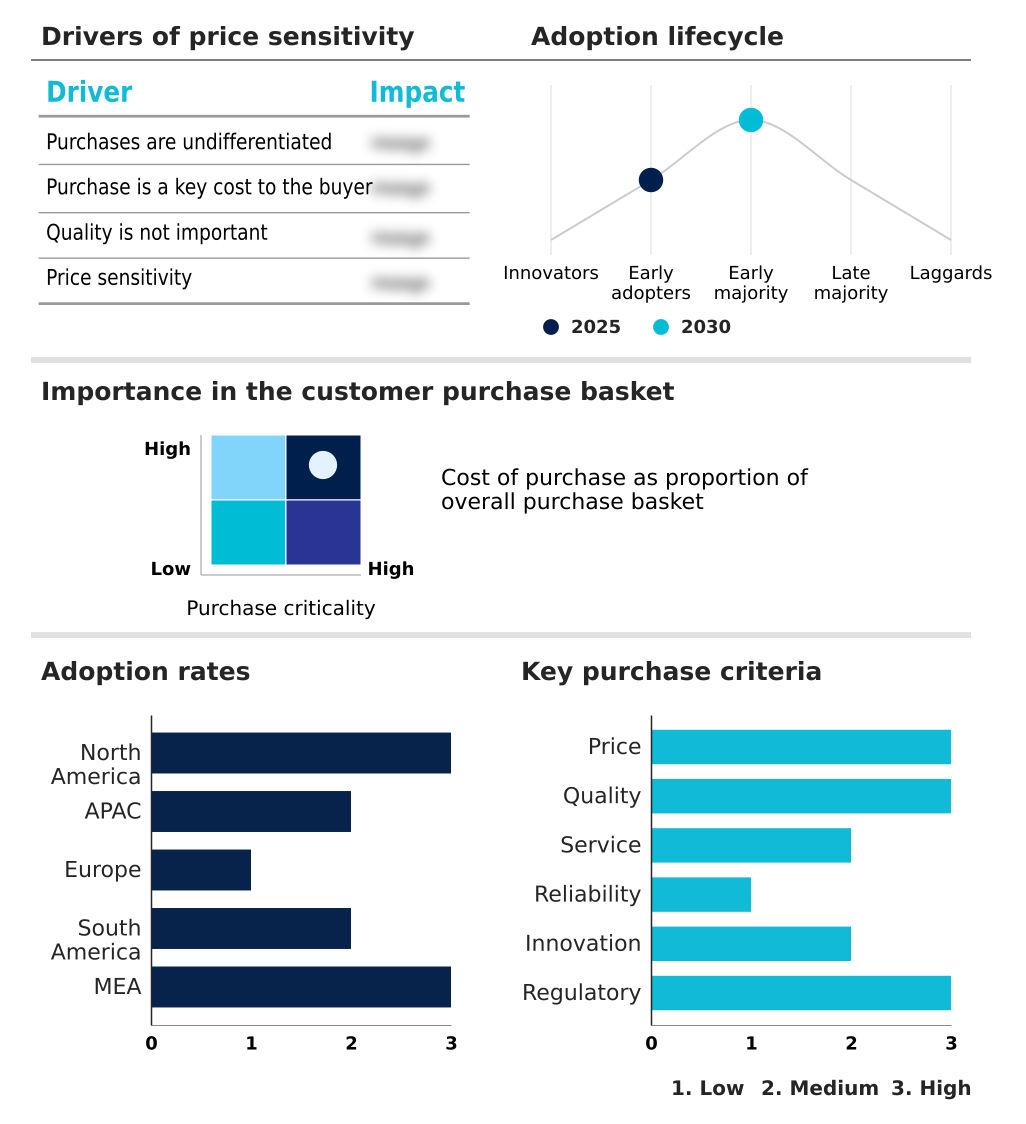
The residential cooking grills market forecasting report includes the adoption lifecycle of the market, covering from the innovator’s stage to the laggard’s stage. It focuses on adoption rates in different regions based on penetration. Furthermore, the residential cooking grills market report also includes key purchase criteria and drivers of price sensitivity to help companies evaluate and develop their market growth analysis strategies.
Competitive Landscape of the Residential Cooking Grills Market
Companies are implementing various strategies, such as strategic alliances, partnerships, mergers and acquisitions, geographical expansion, and product/service launches, to enhance their presence in the residential cooking grills market industry.
Blackstone Products - Vendors provide a range of residential cooking grills, from high-performance outdoor kitchen systems to portable units, emphasizing technological innovation and durable materials for diverse consumer lifestyles.
The industry research and growth report includes detailed analyses of the competitive landscape of the market and information about key companies, including:
- Blackstone Products
- Blaze Grills
- Broil King
- Bull Outdoor Products Inc.
- Char Broil LLC
- Coyote Outdoor Living Inc.
- Cuisinart
- Dometic Group AB
- Empire Comfort Systems
- Fire Magic Grills
- Kamado Joe
- Lynx Grills Inc.
- Masterbuilt Manufacturing LLC
- Monument Grills LLC
- Nexgrill Industries Inc.
- The Coleman Co. Inc.
- Traeger Inc.
- Weber Inc.
- Wolf Steel Ltd.
Qualitative and quantitative analysis of companies has been conducted to help clients understand the wider business environment as well as the strengths and weaknesses of key industry players. Data is qualitatively analyzed to categorize companies as pure play, category-focused, industry-focused, and diversified; it is quantitatively analyzed to categorize companies as dominant, leading, strong, tentative, and weak.
Recent Developments in the Residential Cooking Grills Market
- In March 2025, Napoleon Products introduced specialized all-weather components and integrated sear burners in its updated Freestyle series, a move designed to diversify product utility and encourage year-round usage.
- In March 2025, Char-Broil LLC received the Men's Journal Grilling Award for its Bistro Pro series, validating the commercial success of its high-performance hybrid electric models designed for space-constrained urban environments.
- In February 2025, Traeger Inc. launched its Woodridge Series, a new line of wood pellet grills featuring integrated digital pellet sensors and a Super Smoke Mode to enhance flavor output and fuel efficiency.
- In January 2025, Weber-Stephen Products LLC unveiled its new product portfolio, establishing a comprehensive smart ecosystem by interconnecting its grills, wireless probes, and accessories through the unified Weber Connect digital platform.
Research Analyst Overview: Residential Cooking Grills Market
Operational resilience has become a primary focus, with boardroom decisions now centered on balancing the procurement costs of premium materials like 304-grade stainless steel and porcelain-enameled coatings against the risks of supply chain disruptions.
The integration of IoT integration and Wi-Fi connectivity is no longer a differentiating feature but a baseline requirement, compelling R&D to prioritize software ecosystems over mere hardware advancements.
This strategic pivot forces a critical choice: either invest in versatile hybrid grilling systems that accommodate multiple fuel types or perfect a single technology, such as advanced wood pellet grills with automated auger systems or next-generation kamado-style grills.
With North America driving a significant portion of market expansion, adherence to standards like UL 499 for electric cooking appliances is non-negotiable for market access. This reality transforms product development, influencing the design of everything from high-wattage heating elements to infrared side sear burner safety protocols and turning it into a cross-functional exercise in risk management.
Dive into Technavio’s robust research methodology, blending expert interviews, extensive data synthesis, and validated models for unparalleled Residential Cooking Grills Market insights. See full methodology.
| Market Scope | |
|---|---|
| Page number | 289 |
| Base year | 2025 |
| Historic period | 2020-2024 |
| Forecast period | 2026-2030 |
| Growth momentum & CAGR | Accelerate at a CAGR of 3.7% |
| Market growth 2026-2030 | USD 1629.5 million |
| Market structure | Fragmented |
| YoY growth 2025-2026(%) | 3.5% |
| Key countries | US, Canada, Mexico, China, India, Japan, South Korea, Australia, Indonesia, Germany, UK, France, Italy, Spain, The Netherlands, Brazil, Argentina, Chile, Saudi Arabia, UAE, South Africa, Egypt and Nigeria |
| Competitive landscape | Leading Companies, Market Positioning of Companies, Competitive Strategies, and Industry Risks |
Residential Cooking Grills Market: Key Questions Answered in This Report
-
What is the expected growth of the Residential Cooking Grills Market between 2026 and 2030?
-
The Residential Cooking Grills Market is expected to grow by USD 1.63 billion during 2026-2030, registering a CAGR of 3.7%. Year-over-year growth in 2026 is estimated at 3.5%%. This acceleration is shaped by expansion of smart home ecosystems and iot integration, which is intensifying demand across multiple end-use verticals covered in the report.
-
-
What segmentation does the market report cover?
-
The report is segmented by Product (Gas, Charcoal, and Electric), Application (Outdoor, and Indoor), Material (Stainless steel, Aluminium, and Others) and Geography (North America, APAC, Europe, South America, Middle East and Africa). Among these, the Gas segment is estimated to witness significant growth during the forecast period, driven by rising adoption across key application areas. Each segment includes detailed qualitative and quantitative analysis, along with historical data from 2020-2024 and forecasts through 2030 with year-over-year growth rates.
-
-
Which regions are analyzed in the report?
-
The report covers North America, APAC, Europe, South America and Middle East and Africa. North America is estimated to contribute 34.4% to market growth during the forecast period. Country-level analysis includes US, Canada, Mexico, China, India, Japan, South Korea, Australia, Indonesia, Germany, UK, France, Italy, Spain, The Netherlands, Brazil, Argentina, Chile, Saudi Arabia, UAE, South Africa, Egypt and Nigeria, with dedicated market size tables and year-over-year growth for each.
-
-
What are the key growth drivers and market challenges?
-
The primary driver is expansion of smart home ecosystems and iot integration, which is accelerating investment and industry demand. The main challenge is regulatory compliance and environmental restrictions, creating operational barriers for key market participants. The report quantifies the impact of each driver and challenge across 2026 and 2030 with comparative analysis.
-
-
Who are the major players in the Residential Cooking Grills Market?
-
Key vendors include Blackstone Products, Blaze Grills, Broil King, Bull Outdoor Products Inc., Char Broil LLC, Coyote Outdoor Living Inc., Cuisinart, Dometic Group AB, Empire Comfort Systems, Fire Magic Grills, Kamado Joe, Lynx Grills Inc., Masterbuilt Manufacturing LLC, Monument Grills LLC, Nexgrill Industries Inc., The Coleman Co. Inc., Traeger Inc., Weber Inc. and Wolf Steel Ltd.. The report provides qualitative and quantitative analysis categorizing companies as dominant, leading, strong, tentative, and weak based on their market positioning. Company profiles include business segment analysis, SWOT assessment, key offerings, and recent strategic developments.
-
Residential Cooking Grills Market Research Insights
Market dynamics are shaped by consumer demand for both convenience and authenticity, leading to appliances that feature remote monitoring and automated temperature regulation. Concurrently, the appeal of traditional cooking methods drives innovation in products offering guided cooking assistance for techniques like reverse searing.
In practice, manufacturers must balance these software-led features with adherence to hardware-focused regulations like RoHS, which governs the use of hazardous substances in the digital pellet sensors and other electronic components.
The market's segmentation reflects this duality, with the gas segment maintaining a significantly larger share than the electric segment, though the latter is expanding rapidly in urban areas where smokeless indoor options are a necessity.
We can help! Our analysts can customize this residential cooking grills market research report to meet your requirements.
 RIA -
RIA - 
