



Risk Management Software Market Size 2025-2029
The risk management software market size is valued to increase USD 13.28 billion, at a CAGR of 19.2% from 2024 to 2029. Increase in data and security breaches among enterprises will drive the risk management software market.
Major Market Trends & Insights
- North America dominated the market and accounted for a 36% growth during the forecast period.
- By Component - Software segment was valued at USD 3.05 billion in 2023
- By Deployment - On-premises segment accounted for the largest market revenue share in 2023
Market Size & Forecast
- Market Opportunities: USD 382.64 million
- Market Future Opportunities: USD 13277.30 million
- CAGR from 2024 to 2029 : 19.2%
Market Summary
- The market has experienced significant growth in recent years, fueled by the increasing number of data breaches and cyber threats targeting enterprises. According to a recent report, the global risk management market size was valued at USD 12.3 billion in 2020 and is projected to reach USD 21.2 billion by 2026. Despite this growth, challenges persist, with high costs and complexity in installing and configuring risk management software remaining barriers to adoption. However, the trend towards cloud-based solutions is gaining momentum, offering more accessible and cost-effective alternatives. These solutions enable real-time risk assessment and mitigation, making them increasingly attractive to businesses seeking to protect their assets and reputation.
- Moreover, the integration of advanced technologies such as artificial intelligence and machine learning is enhancing the functionality of risk management software, providing more accurate risk assessments and predictive analytics. This evolution is expected to continue, with a focus on improving user experience, increasing automation, and providing more actionable insights to help businesses make informed decisions and mitigate risks effectively.
What will be the Size of the Risk Management Software Market during the forecast period?
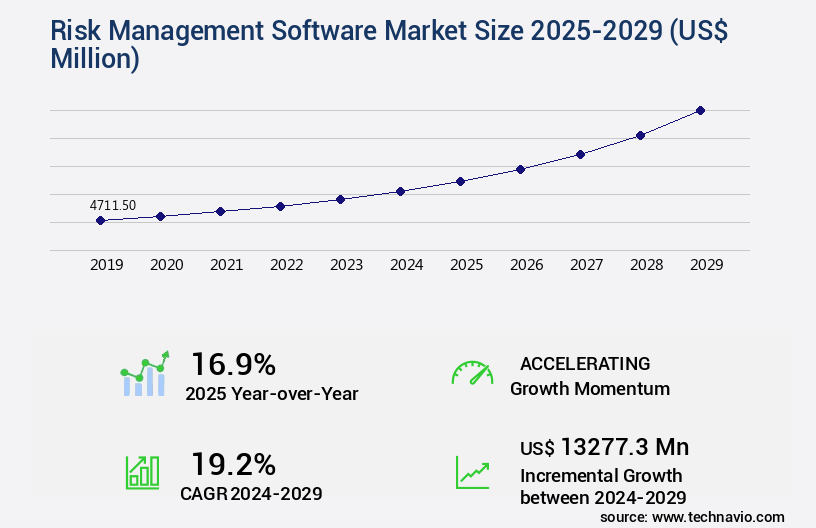
Get Key Insights on Market Forecast (PDF) Request Free Sample
How is the Risk Management Software Market Segmented?
The risk management software industry research report provides comprehensive data (region-wise segment analysis), with forecasts and estimates in "USD million" for the period 2025-2029, as well as historical data from 2019-2023 for the following segments.
- Component
- Software
- Services
- Deployment
- On-premises
- Cloud
- Type
- Operational risk
- Cybersecurity risk
- Financial risk
- Compliance and regulatory risk
- Others
- Industry Application
- Banking and finance services
- Manufacturing
- Telecommunications
- Healthcare
- Others
- End-user
- Large enterprises
- SMEs
- Geography
- North America
- US
- Canada
- Europe
- France
- Germany
- Italy
- UK
- APAC
- China
- India
- Japan
- South Korea
- Rest of World (ROW)
- North America
By Component Insights
The software segment is estimated to witness significant growth during the forecast period.
The market is witnessing robust growth due to the escalating demand for advanced tools that facilitate qualitative and quantitative risk assessments. This segment's expansion is driven by technological advancements, increasing data volumes, and the necessity for comprehensive risk analysis and management. For instance, financial institutions, healthcare providers, and insurance companies extensively use quantitative risk assessment software, which employs statistical tools and algorithms to quantify risks and develop risk mitigation strategies.
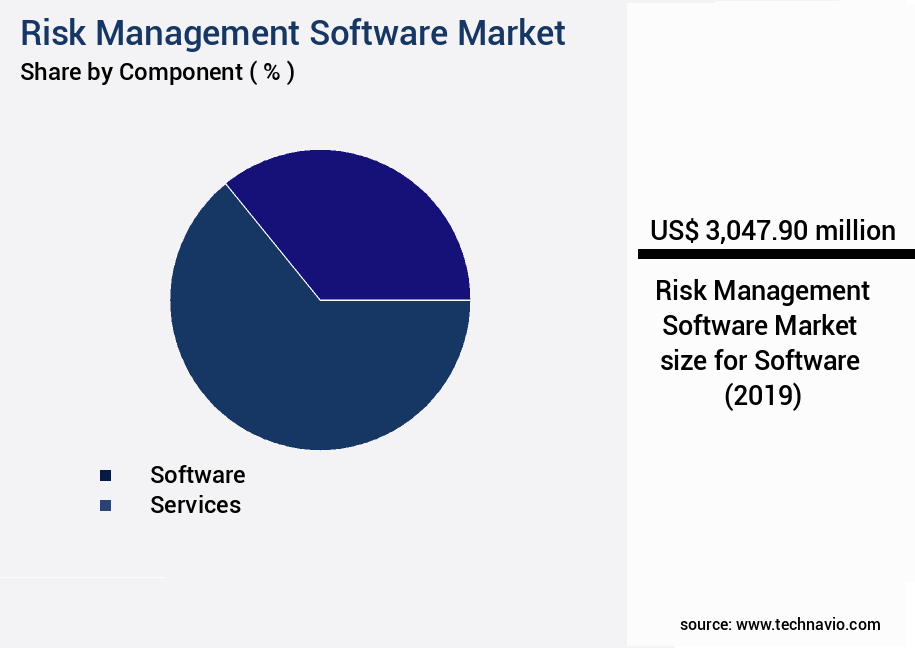
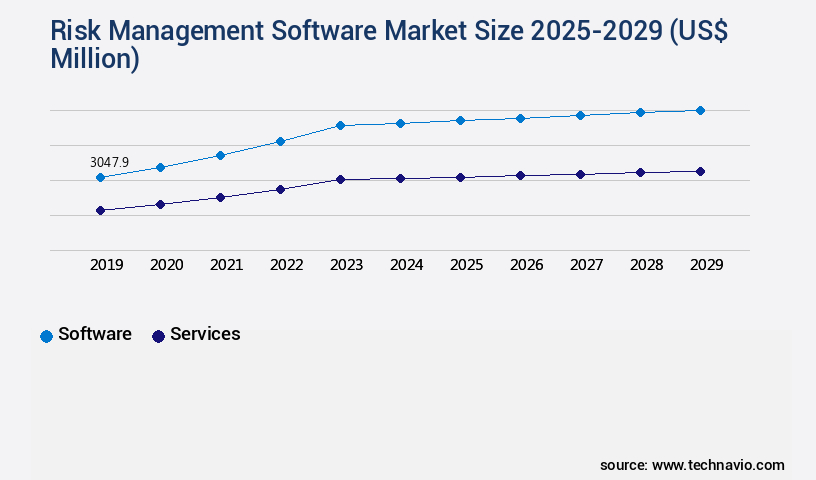
The Software segment was valued at USD 3.05 billion in 2019 and showed a gradual increase during the forecast period.
Regulatory compliance software, disaster recovery planning tools, and crisis communication protocols are essential components of risk management systems, ensuring regulatory adherence and business continuity. The market's growth is also influenced by the integration of cybersecurity incident response, threat intelligence platforms, and access control systems, which fortify organizational defenses against potential risks.
Regional Analysis
North America is estimated to contribute 36% to the growth of the global market during the forecast period. Technavio's analysts have elaborately explained the regional trends and drivers that shape the market during the forecast period.
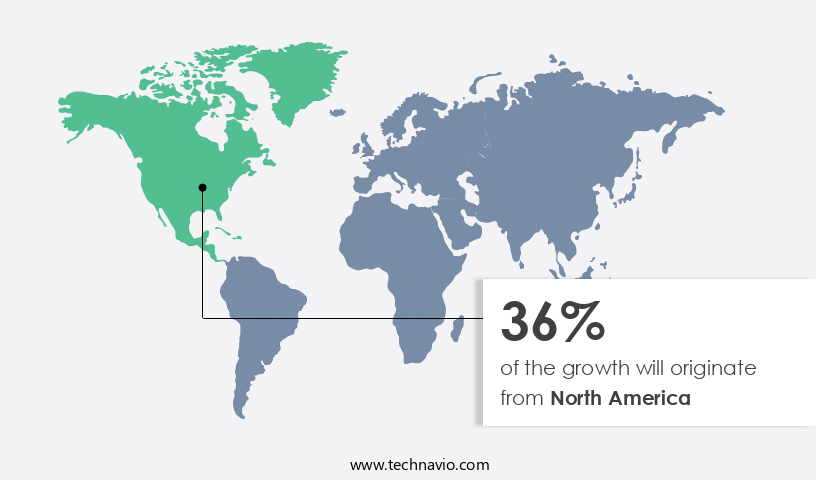
See How Risk Management Software Market Demand is Rising in North America Request Free Sample
ai_gpt_geographic_landscape.multip
Market Dynamics
Our researchers analyzed the data with 2024 as the base year, along with the key drivers, trends, and challenges. A holistic analysis of drivers will help companies refine their marketing strategies to gain a competitive advantage.
The market is experiencing significant growth due to the increasing complexity of business environments and the need for effective risk mitigation strategies. This market caters to various sectors, offering solutions that range from key risk indicator dashboards to automated vulnerability management systems. Cloud-based platforms are gaining popularity, providing real-time access to risk data and enabling incident management workflow automation. Regulatory compliance reporting is a crucial aspect of risk management, and software solutions offer streamlined processes for generating reports. Third-party risk assessment tools and supply chain risk management software solutions are essential for businesses with extensive networks. Integrated risk management software platforms provide a comprehensive solution, combining features such as risk appetite framework implementation, quantitative and qualitative risk assessment, and risk matrix and heatmap visualization. Business continuity and disaster recovery, crisis communication management, data loss prevention and encryption, security information and event management, fraud detection and prevention, and cybersecurity incident response plans are all integral components of a robust risk management strategy. Risk register and tracking software ensures that risks are identified, assessed, and managed effectively, providing valuable insights for informed decision-making. In summary, the market offers a range of solutions designed to help businesses effectively manage and mitigate risks. From automated vulnerability management systems to regulatory compliance reporting modules, these tools provide valuable insights and enable organizations to implement proactive risk management strategies.
In the dynamic Risk Management software Market, organizations are increasingly adopting advanced tools to navigate complex regulatory landscapes, mitigate threats, and support strategic decision-making. A core component of this shift is software for risk mitigation strategies, which enables companies to proactively identify, assess, and address potential risks before they escalate into critical issues. Supporting real-time oversight, key risk indicator dashboards software allows risk managers to track and visualize risk metrics across departments. These dashboards enhance situational awareness and help organizations detect emerging threats through automated alerts and trend analysis.
In the cybersecurity domain, an automated vulnerability management system is crucial for identifying system weaknesses, prioritizing remediation efforts, and ensuring compliance with security frameworks. These systems reduce manual effort while maintaining constant vigilance over network infrastructure. Scalability and remote accessibility are driving the demand for a cloud based risk management platform. These platforms provide centralized access to risk data, seamless integration with other enterprise systems, and flexibility for organizations operating across multiple regions or jurisdictions.
Compliance remains a cornerstone of modern risk practices, and a regulatory compliance reporting module streamlines the process of gathering, documenting, and submitting compliance-related information. This not only reduces the risk of penalties but also ensures timely audit readiness. As business ecosystems grow more interconnected, third party risk assessment tools software is increasingly vital. These tools help evaluate vendor risks related to cybersecurity, financial health, operational stability, and reputational exposure, enabling informed onboarding and monitoring decisions.
To further protect operational continuity, companies are investing in a supply chain risk management software solution. This software identifies potential disruptions in sourcing, logistics, and global markets, helping businesses maintain resilience and agility in the face of uncertainty. An integrated risk management software platform combines various risk domains—operational, financial, IT, strategic—into a single, unified interface. This promotes cross-functional collaboration and enhances organizational visibility, allowing for more comprehensive risk assessments and streamlined reporting.
For larger organizations, an enterprise risk management software system supports the development and execution of enterprise-wide risk frameworks. These systems link risk objectives to strategic goals, ensuring that risk oversight is embedded throughout the business. Establishing clear risk parameters is made possible through risk appetite framework implementation software. This software defines acceptable risk thresholds and aligns operational decisions with the organization's overall risk tolerance.
Finally, decision-makers rely on quantitative and qualitative risk assessment software to evaluate threats using both statistical models and expert judgment. These tools help organizations understand both the likelihood and potential impact of various risk scenarios, creating a balanced, well-rounded view of exposure. Collectively, these solutions are transforming the risk management software market, equipping businesses with the tools needed to anticipate challenges, comply with regulations, and build long-term resilience.
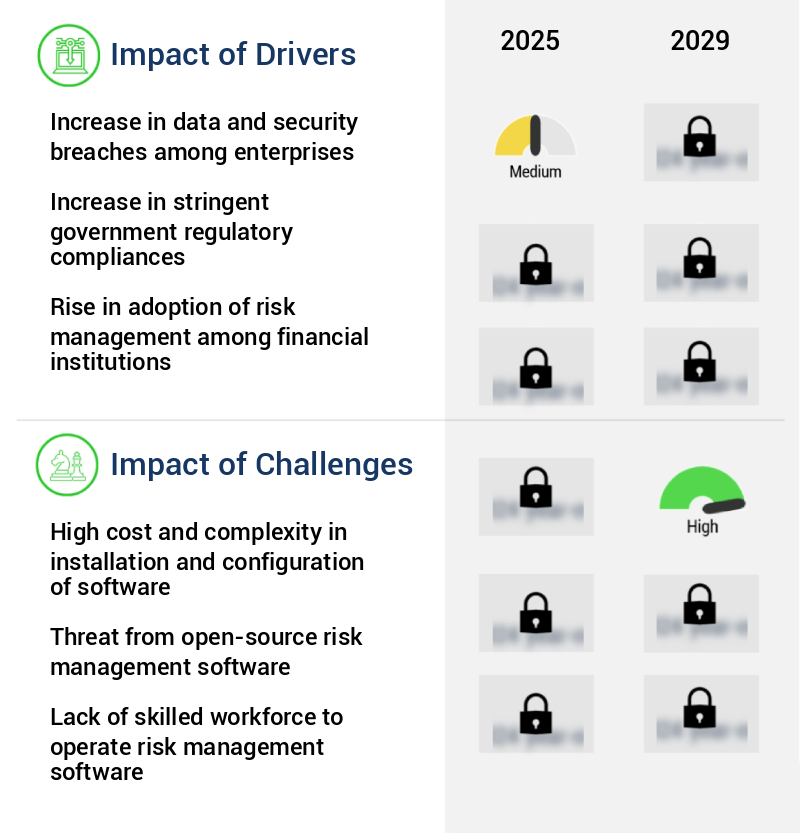
What are the key market drivers leading to the rise in the adoption of Risk Management Software Industry?
- The escalating issue of data breaches and heightened security threats within enterprise environments serves as the primary catalyst for market growth.
- In today's digital business landscape, the importance of robust risk management software has become increasingly evident. With more companies relying on big data analytics and cloud computing, the threat of cyber-attacks has surged. Sector-specific entities, such as insurance companies, are particularly susceptible due to their handling of sensitive personal and financial data. In response, these organizations have adopted advanced threat intelligence platforms. These solutions employ sophisticated algorithms and machine learning techniques to analyze network traffic and detect potential vulnerabilities in real-time.
- Approximately 60% of large companies worldwide have already implemented risk management software, and this number is expected to grow as businesses continue to prioritize cybersecurity. By using these tools, companies can respond quickly and proactively to security threats, ensuring business continuity and protecting their valuable data.
What are the market trends shaping the Risk Management Software Industry?
- The rising adoption of cloud-based risk management solutions represents a significant market trend. This shift towards cloud technology reflects a growing demand for efficient, flexible, and cost-effective risk management solutions.
- The cloud-based market is experiencing significant growth as businesses increasingly adopt these solutions for their risk management needs. Compared to traditional on-premises systems, cloud-based solutions offer several advantages, including real-time risk visibility, scalability, flexibility, and cost savings. One illustrative example is RiskCloud, a comprehensive risk management platform that empowers organizations to effectively manage risks across all business activities. With RiskCloud, users can identify, assess, mitigate, and monitor risks in real-time, ensuring a proactive approach to risk management.
- Additionally, its reporting capabilities provide valuable insights into risk exposure, enabling informed decision-making. The shift towards cloud-based risk management solutions underscores the evolving nature of risk management and its increasing importance in today's business landscape.
What challenges does the Risk Management Software Industry face during its growth?
- The high cost and intricate installation and configuration processes associated with software implementation pose significant challenges, hindering industry growth.
- Risk management software has gained significant traction in the business world due to its ability to identify and mitigate potential risks and threats. Despite its benefits, the installation and configuration process can be costly and complex. The high cost and complexity stem from the need for customization, as each business has unique risk management requirements. This customization often necessitates a lengthy consultation process with software providers to ensure all specific needs are addressed. According to recent research, the market is projected to reach a value of USD 12.5 billion by 2027, growing at a steady pace.
- Another study indicates that the North American market held a market share of approximately 40% in 2020. These figures underscore the growing importance of risk management software in various sectors.
Exclusive Technavio Analysis on Customer Landscape
The risk management software market forecasting report includes the adoption lifecycle of the market, covering from the innovator's stage to the laggard's stage. It focuses on adoption rates in different regions based on penetration. Furthermore, the risk management software market report also includes key purchase criteria and drivers of price sensitivity to help companies evaluate and develop their market growth analysis strategies.
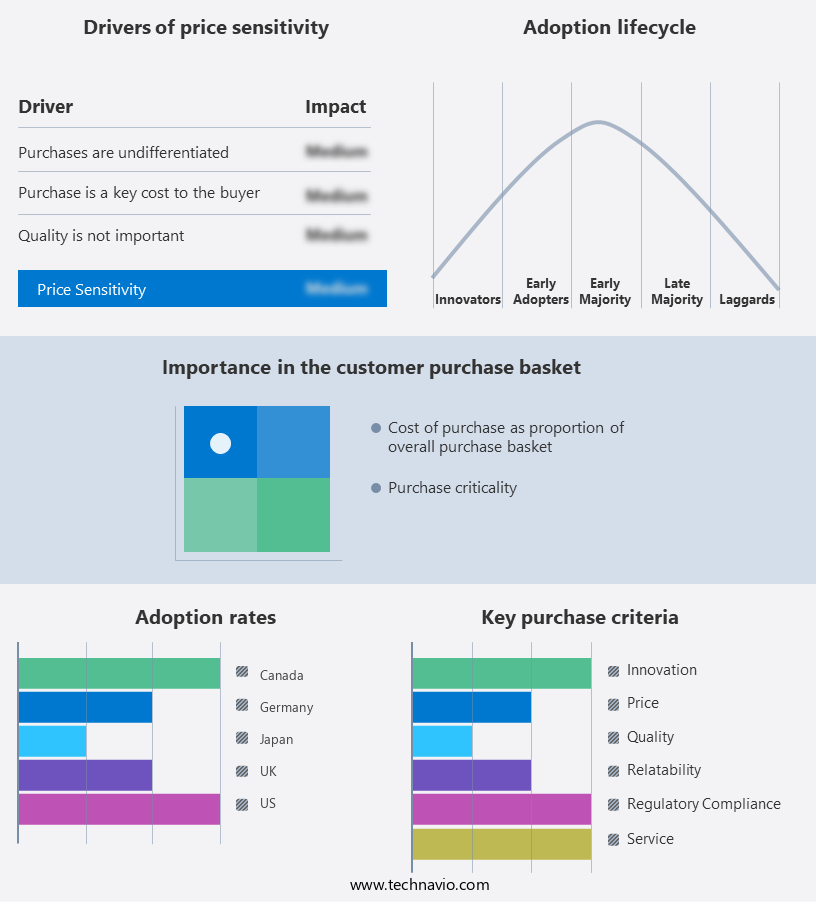
Customer Landscape of Risk Management Software Industry
Competitive Landscape
Companies are implementing various strategies, such as strategic alliances, risk management software market forecast, partnerships, mergers and acquisitions, geographical expansion, and product/service launches, to enhance their presence in the industry.
Aravo Solutions Inc. - The RSA Security LLC subsidiary of the company introduces Archer Environmental, Social, and Governance (ESG) Value Stack, a risk management software solution.
The industry research and growth report includes detailed analyses of the competitive landscape of the market and information about key companies, including:
- Aravo Solutions Inc.
- Cura Global GRC Solutions PTE LTD.
- Dell Technologies Inc.
- Diligent Corp.
- Fusion Risk Management Inc.
- Ideagen
- International Business Machines Corp.
- Intertek Group Plc
- LogicGate Inc.
- LogicManager Inc.
- MetricStream Inc.
- NAVEX Global Inc.
- ProcessUnity Inc.
- Resolver Inc.
- Riskonnect Inc.
- RSM International Ltd.
- SAP SE
- Stiftelsen Det Norske Veritas
- Thomson Reuters Corp.
- Wolters Kluwer NV
Qualitative and quantitative analysis of companies has been conducted to help clients understand the wider business environment as well as the strengths and weaknesses of key industry players. Data is qualitatively analyzed to categorize companies as pure play, category-focused, industry-focused, and diversified; it is quantitatively analyzed to categorize companies as dominant, leading, strong, tentative, and weak.
Recent Development and News in Risk Management Software Market
- In January 2024, Riskonnect, a leading provider of integrated risk management solutions, announced the launch of its new product, Riskonnect 7.0. This advanced version offers enhanced analytics capabilities and improved user experience, aiming to streamline risk management processes for businesses (Riskonnect Press Release, 2024).
- In March 2024, SAS and Guidewire Software, both prominent players in the market, entered into a strategic partnership. This collaboration aimed to integrate SAS' advanced analytics capabilities with Guidewire's claims management platform, providing insurers with more accurate risk assessments and improved underwriting (SAS Press Release, 2024).
- In May 2024, RSA Security, a cybersecurity and risk management solutions provider, completed its acquisition of FraudLabs Pro, a fraud detection and prevention software company. This acquisition expanded RSA's fraud detection capabilities and strengthened its position in the risk management market (RSA Security Press Release, 2024).
- In January 2025, the European Commission approved the European Single Market for Insurance (ESMI) project, which aims to create a unified digital market for insurance products across Europe. This initiative is expected to increase competition and improve consumer access to risk management solutions (European Commission Press Release, 2025).
Dive into Technavio's robust research methodology, blending expert interviews, extensive data synthesis, and validated models for unparalleled Risk Management Software Market insights. See full methodology.
|
Market Scope |
|
|
Report Coverage |
Details |
|
Page number |
245 |
|
Base year |
2024 |
|
Historic period |
2019-2023 |
|
Forecast period |
2025-2029 |
|
Growth momentum & CAGR |
Accelerate at a CAGR of 19.2% |
|
Market growth 2025-2029 |
USD 13277.3 million |
|
Market structure |
Fragmented |
|
YoY growth 2024-2025(%) |
16.9 |
|
Key countries |
Canada, US, UK, China, Germany, France, Japan, India, Italy, and South Korea |
|
Competitive landscape |
Leading Companies, Market Positioning of Companies, Competitive Strategies, and Industry Risks |
Research Analyst Overview
- The market continues to evolve, with organizations across various sectors recognizing the importance of mitigating potential threats and ensuring regulatory compliance. Qualitative risk assessments play a crucial role in identifying and prioritizing risks based on their impact on business operations. For instance, a financial services firm may use such assessments to evaluate the likelihood and potential impact of reputational damage from a data breach. Disaster recovery planning is another essential application of risk management software, enabling businesses to prepare for and respond effectively to unexpected events. According to recent industry reports, the global disaster recovery market is projected to grow by over 10% annually, driven by increasing adoption across industries.
- Financial risk management and compliance reporting tools help organizations manage and mitigate financial risks while ensuring adherence to regulatory requirements. Strategic and operational risk management are also critical functions, with incident response plans and scenario planning tools providing valuable insights into potential risks and their potential impact on business continuity. Risk mitigation strategies, such as data encryption methods and access control systems, are becoming increasingly important in the age of cyber threats. Regulatory compliance software, crisis communication protocols, and audit management systems further enhance an organization's risk management capabilities. A vulnerability management platform, for example, can help identify and prioritize vulnerabilities, enabling organizations to implement loss prevention techniques and security awareness training to minimize the risk of cyber attacks.
- Threat intelligence platforms and quantitative risk assessment tools provide valuable insights into potential threats and their likelihood, allowing organizations to allocate resources effectively. In conclusion, the market is a dynamic and evolving landscape, with a range of applications and tools designed to help organizations manage and mitigate risks effectively. From qualitative risk assessments and disaster recovery planning to financial risk management and cybersecurity incident response, the market offers a diverse range of solutions to meet the unique needs of businesses across various sectors.
What are the Key Data Covered in this Risk Management Software Market Research and Growth Report?
-
What is the expected growth of the Risk Management Software Market between 2025 and 2029?
-
USD 13.28 billion, at a CAGR of 19.2%
-
-
What segmentation does the market report cover?
-
The report is segmented by Component (Software and Services), Deployment (On-premises and Cloud), Type (Operational risk, Cybersecurity risk, Financial risk, Compliance and regulatory risk, and Others), Industry Application (Banking and finance services, Manufacturing, Telecommunications, Healthcare, and Others), End-user (Large enterprises and SMEs), and Geography (North America, Europe, APAC, South America, and Middle East and Africa)
-
-
Which regions are analyzed in the report?
-
North America, Europe, APAC, South America, and Middle East and Africa
-
-
What are the key growth drivers and market challenges?
-
Increase in data and security breaches among enterprises, High cost and complexity in installation and configuration of software
-
-
Who are the major players in the Risk Management Software Market?
-
Aravo Solutions Inc., Cura Global GRC Solutions PTE LTD., Dell Technologies Inc., Diligent Corp., Fusion Risk Management Inc., Ideagen, International Business Machines Corp., Intertek Group Plc, LogicGate Inc., LogicManager Inc., MetricStream Inc., NAVEX Global Inc., ProcessUnity Inc., Resolver Inc., Riskonnect Inc., RSM International Ltd., SAP SE, Stiftelsen Det Norske Veritas, Thomson Reuters Corp., and Wolters Kluwer NV
-
Market Research Insights
- The market for risk management software is a dynamic and continually evolving landscape, with organizations increasingly recognizing the importance of proactive risk mitigation strategies. Two significant trends illustrate this development. First, the number of organizations implementing corrective action plans has risen by 25% over the past year, underscoring the growing emphasis on addressing risks before they escalate. Second, industry experts anticipate a 12% annual growth rate for the market in the coming years. This expansion reflects the increasing demand for integrated risk management solutions, encompassing company risk management, crisis management training, and fraud prevention measures, among others.
- Organizations are recognizing the value of comprehensive risk management frameworks that enable effective risk communication, tolerance level setting, and incident reporting, ultimately enhancing their overall resilience and regulatory compliance.
We can help! Our analysts can customize this risk management software market research report to meet your requirements.
 RIA -
RIA - 
