



Satellite Ground Station Equipment Market Size 2024-2028
The satellite ground station equipment market size is forecast to increase by USD 6600 billion at a CAGR of 6.89% between 2023 and 2028.
- The market is experiencing significant growth due to the increasing adoption of High Throughput Satellite (HTS) communication systems and the emergence of mobile ground stations. HTS communication offers higher data transfer rates, improved spectral efficiency, and expanded coverage, making it an attractive option for various industries such as telecommunications, government, and defense. Moreover, the development of Next-Generation Satellite (NGSO) constellations is driving the demand for advanced ground station equipment, including NOC equipment, VSAT equipment, antennas, power units, gateways, block upconverters, and transceiver goods. National weather centers and other organizations require reliable and efficient ground station equipment to receive data from Low Earth Orbit (LEO) satellites.
- Rising demand for HTS communication systems and mobile ground stations rises, driven by the need for advanced equipment to support NGSO constellations and organizations like national weather centers. While high initial investments in components like antennas and receivers may pose challenges, the benefits of enhanced connectivity and real-time data transfer are expected to drive long-term growth.
What will be the Satellite Ground Station Equipment Market Size During the Forecast Period?
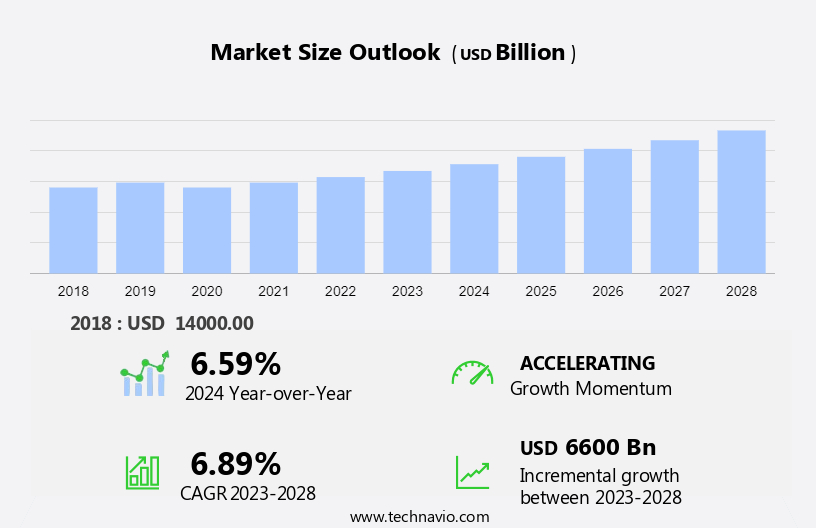
- The market represents a significant segment of the satellite communication industry. These facilities are essential for establishing a link between satellites in orbit and terrestrial networks, enabling various applications in sectors such as national weather centers, homeland security, defense, marine, search and rescue, and the space industry. Satellite ground stations consist of several components, including antenna systems, terminal units, converters, and reception equipment. Antenna systems, comprised of reception antennas, feed horns, and waveguides, are responsible for receiving signals transmitted from satellites. Terminal units, which include modems and multiplexers, process and transmit data between the satellite and terrestrial networks.
- Moreover, converters facilitate the conversion of signals between different frequency bands. High Throughput Satellites (HTS) communication has gained considerable attention in recent years due to its ability to provide faster data transfer rates. Fixed satellite systems utilizing HTS communication are increasingly being adopted for applications requiring large amounts of data, such as big data and artificial intelligence. Low Earth Orbit (LEO) satellites have also emerged as a viable alternative to traditional Geostationary Earth Orbit (GEO) satellites. LEO satellites offer advantages such as lower latency and increased coverage. Consequently, the demand for satellite ground station equipment to support LEO satellite systems is expected to grow.
- The market caters to various industries and applications. National weather centers rely on satellite data for weather forecasting and monitoring. Homeland security and defense organizations use satellite communication for secure data transfer and situational awareness. The marine industry employs satellite communication for navigation and distress signaling. Search and rescue teams utilize satellite communication for locating and rescuing individuals in remote areas. In the space industry, satellite ground stations play a crucial role in supporting satellite operations and providing satellite services. Satellite communication is essential for maintaining contact with satellites, monitoring their health, and controlling their functions.
- Additionally, satellite ground stations facilitate the transmission of data collected by satellites, which is used for various applications, including Earth observation, scientific research, and telecommunications. In conclusion, the market is a vital component of the satellite communication industry. The market is driven by the increasing adoption of HTS communication and the growing demand for satellite services in various industries. As the need for faster and more reliable satellite communication continues to grow, the market is poised for significant expansion.
How is this market segmented and which is the largest segment?
The market research report provides comprehensive data (region-wise segment analysis), with forecasts and estimates in "USD billion" for the period 2024-2028, as well as historical data from 2018-2022 for the following segments.
- Type
- NOC equipment
- VSAT equipment
- Antennas
- Power units
- Others
- Geography
- North America
- US
- APAC
- China
- Japan
- Europe
- UK
- South America
- Middle East and Africa
- North America
By Type Insights
- The NOC equipment segment is estimated to witness significant growth during the forecast period.
In the realm of satellite communications, Network Operations Centers (NOCs) play a pivotal role in managing transmissions from ground stations and overseeing the functioning of satellites in orbit. NOCs consist of essential equipment including frequency converters, amplifiers, satellite routers, bandwidth optimizers, modems, and Block Upconverters (BUCs). The NOC equipment market is fueled by the escalating intricacy and size of satellite networks, necessitating sophisticated management systems to ensure optimal reliability and productivity. Moreover, the proliferation of high-throughput satellites (HTSs) and the imperative for proficient bandwidth management are significant growth factors for advanced NOC equipment. Furthermore, the burgeoning adoption of satellite-based services, such as broadband internet, television broadcasting, and defense communications, necessitates intricate network operations centers.
Moreover, the NOC equipment market encompasses various components, including VSAT equipment, antennas, power units, gateways, and transceiver goods. VSAT equipment comprises Very Small Aperture Terminals, which are crucial for two-way satellite communication. Antennas, such as reception antennas and feed horns, are integral for capturing and transmitting satellite signals. Power units ensure the efficient supply of power to the satellite ground station, while gateways serve as the interface between terrestrial and satellite networks. Transceiver goods facilitate the conversion of electrical signals into radio waves and vice versa. The advent of Non-Geostationary Orbit (NGSO) satellite constellations, like Low Earth Orbit (LEO) satellites, is expected to revolutionize the satellite communications landscape.
National weather centers and other organizations rely on these satellites for real-time data collection and dissemination. The integration of NGSO satellite constellations necessitates the deployment of advanced ground station equipment to handle the unique challenges posed by these satellites' orbits and data volumes. In conclusion, the market is poised for significant growth due to the increasing adoption of satellite-based services, the emergence of advanced satellite technologies, and the escalating demand for efficient bandwidth management. NOC equipment, including VSAT equipment, antennas, power units, gateways, and transceiver goods, will continue to be indispensable components of satellite communications infrastructure.
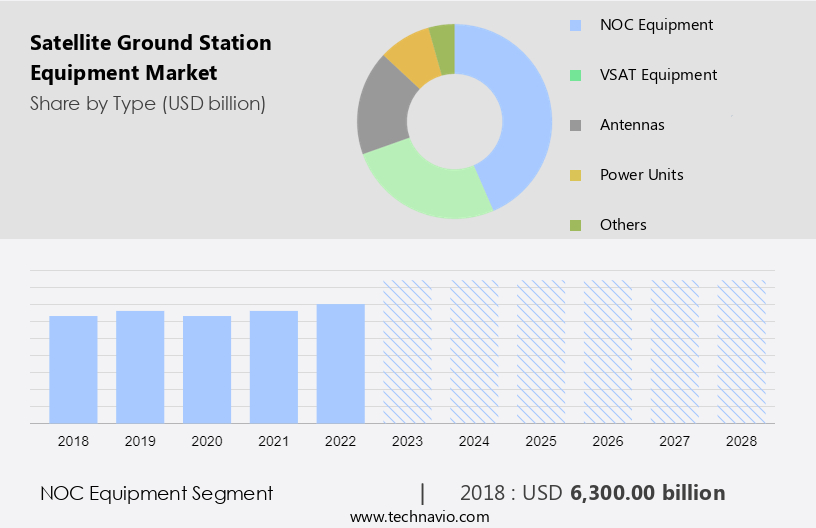
Get a glance at the market report of share of various segments Request Free Sample
The NOC equipment segment was valued at USD 6300.00 billion in 2018 and showed a gradual increase during the forecast period.
Regional Analysis
- North America is estimated to contribute 38% to the growth of the global market during the forecast period.
Technavio's analysts have elaborately explained the regional trends and drivers that shape the market during the forecast period.
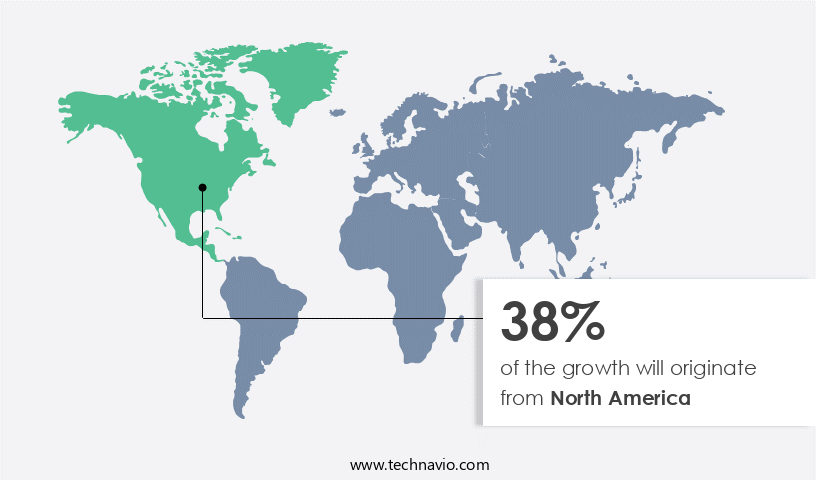
For more insights on the market share of various regions Request Free Sample
In the North American region, the market experienced significant growth in 2023. This expansion is driven by the presence of prominent satellite service providers, including SES, EchoStar, and Globecomm Systems Inc., based in the US and Canada. These companies launch satellites into orbit, which require ground stations for operation. Consequently, they invest in purchasing essential ground station equipment such as gateways, BUCs, bandwidth optimizers, and modems. The growth in the North American market can be attributed to the increasing number of satellite launches aimed at delivering high-speed and cost-effective broadband satellite Internet services. Additionally, these satellites provide high data rates backhaul links to telecommunication operators and Internet Service Providers (ISPs), contributing to the expansion of satellite networks in rural areas where terrestrial infrastructure is limited.
Furthermore, the integration of advanced technologies like Big Data, Artificial Intelligence, Internet of Things (IoT), and Data Analytics into satellite networks is driving demand for high-performance ground station equipment. The deployment of mega-constellations and advancements in Earth observation and digital broadcasting applications are also fueling market growth. Overall, the North American the market is poised for continued expansion due to the increasing need for reliable and high-speed satellite services.
Market Dynamics
Our researchers analyzed the data with 2023 as the base year, along with the key drivers, trends, and challenges. A holistic analysis of drivers will help companies refine their marketing strategies to gain a competitive advantage.
What are the key market drivers leading to the rise in adoption of Satellite Ground Station Equipment Market?
Increasing investments in HTS communication is the key driver of the market.
- High Throughput Satellites (HTS) offer increased data transmission rates compared to traditional fixed satellite systems, utilizing frequency reuse and multiple spot beams. HTS satellites are predominantly deployed to deliver broadband internet access to under-served regions, primarily catering to enterprise, telecom, and maritime sectors. The communication system encompasses both the HTS satellite and ground stations, often referred to as earth stations. Earth stations consist of network equipment, including gateways and hubs, which connect the satellite to terrestrial networks such as cellular networks, enhancing overall network capacity.
- Moreover, financing for HTS ground station equipment can be sourced from various channels, including banks, private equity firms, and venture capitalists. The radio frequency equipment employed in these ground stations operates within various bands, focusing on spectral efficiency, signal-to-noise ratio, and network compression techniques to optimize performance. With the advent of 5G networks, the demand for HTS ground station equipment is expected to surge, necessitating advanced scheduling techniques and network compression methods to ensure optimal network capacity and signal quality.
What are the market trends shaping the Satellite Ground Station Equipment Market?
The emergence of mobile ground stations is the upcoming trend in the market.
- Ground stations play a crucial role in receiving and processing data transmitted from satellites. However, building a traditional ground station comes with significant upfront costs. To address this challenge, mobile ground stations have gained popularity due to their lower investment requirements. These portable stations consist of essential network equipment, including antenna systems, terminal units, antenna junction boxes, navigation equipment, converters, and other necessary components.
- Moreover, mobile ground stations are self-sufficient, with their own power supply, enabling researchers and other users to access satellite signals even in the absence of a fixed station. Additionally, their transportability makes them suitable for use in remote, underserved areas. Mobile ground stations are integral to various business applications, such as maritime communications, high throughput satellite (HTS) communication, and network hardware for high-speed internet connectivity. The integration of HTS technology in fixed satellite systems and the increasing number of high-throughput satellite launches further boost the demand for mobile ground stations.
What challenges does Satellite Ground Station Equipment Market face during the growth?
High initial investments are key challenges affecting the market growth.
- Establishing a satellite communication network entails significant upfront investments, encompassing both ground and space stations. Ground stations comprise network equipment, consumer devices, and other components, while space stations consist of satellites. The installation of ground station equipment is intricate, necessitating precise antenna pointing, polarization alignment, and transmitter setup. This complexity contributes to high initial costs.
- However, properly positioning the VSAT dish is essential for effective communication, making each ground station installation a time-consuming and intricate process. The satellite industry encompasses various applications, including macro cell towers, satellite-based backhaul, remote sensing, and Earth observation. The increasing bandwidth demand and the proliferation of satellite constellations in C-band, S-band, K-band, X-band, and other frequency bands drive the growth of the market. The Low Earth Orbit (LEO) segment is experiencing significant expansion due to orbit control advancements.
Exclusive Customer Landscape
The market forecasting report includes the adoption lifecycle of the market, covering from the innovator's stage to the laggard's stage. It focuses on adoption rates in different regions based on penetration. Furthermore, the market report also includes key purchase criteria and drivers of price sensitivity to help companies evaluate and develop their market growth analysis strategies.
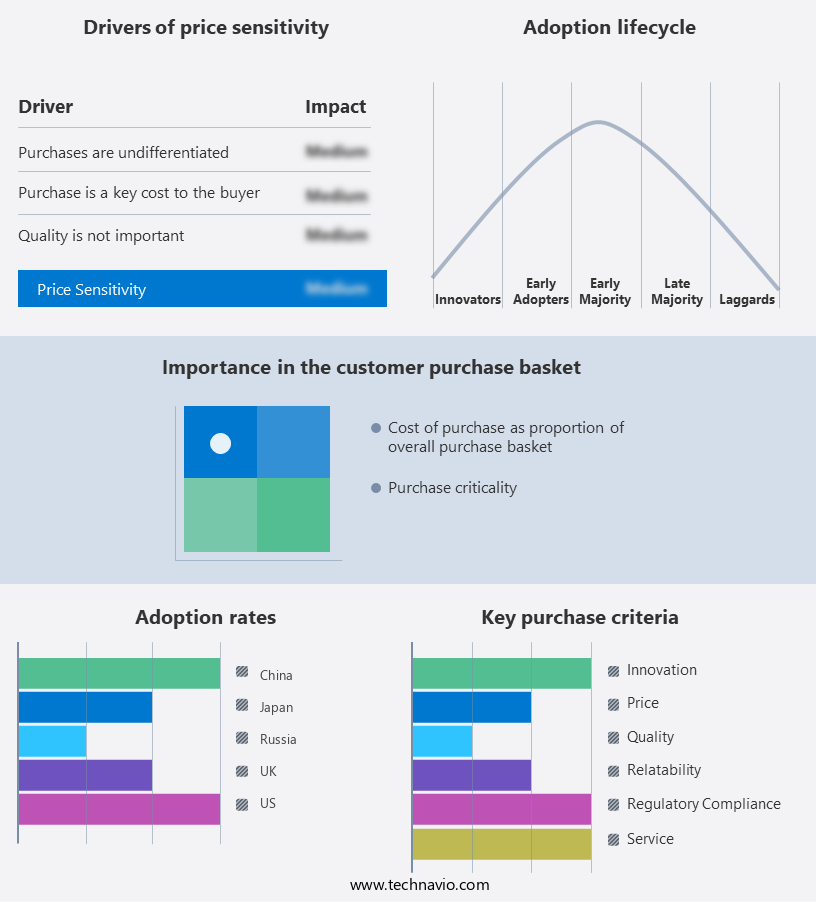
Customer Landscape
Key Companies & Market Insights
Companies are implementing various strategies, such as strategic alliances, market forecast , partnerships, mergers and acquisitions, geographical expansion, and product/service launches, to enhance their presence in the market. The market research and growth report includes detailed analyses of the competitive landscape of the market and information about key companies, including:
- AAC Clyde Space AB
- Baylin Technologies Inc
- Comtech
- CPI International Inc
- ECA Group
- EchoStar Corp.
- Gilat Satellite Networks Ltd.
- GomSpace Group AB
- Inmarsat Global Ltd.
- Innovative Solutions In Space BV
- Kratos Defense and Security Solutions Inc.
- Norsat International Inc.
- NovelSat
- Satcom Direct Inc
- Singapore Technologies Engineering Ltd.
- Teledyne Technologies Inc.
- Terrasat Communications Inc
- Ultra Electronics Holdings Plc
- Viasat Inc.
- WORK Microwave GmbH
Qualitative and quantitative analysis of companies has been conducted to help clients understand the wider business environment as well as the strengths and weaknesses of key market players. Data is qualitatively analyzed to categorize companies as pure play, category-focused, industry-focused, and diversified; it is quantitatively analyzed to categorize companies as dominant, leading, strong, tentative, and weak.
Research Analyst Overview
The market is witnessing significant growth due to the increasing demand for high-throughput satellites (HTS) and network equipment in various industries. HTS communication plays a crucial role in providing high-speed internet to underserved areas, enabling business applications and maritime communications. Mobile ground stations, consisting of antenna systems, terminal units, converters, and navigation equipment, are essential components of HTS networks. Antenna systems, including reception antennas, feed horns, waveguides, and receivers, are integral to the functioning of satellite ground stations. Power units, gateways, and vsats are other essential network hardware. HTS launches and the growing popularity of NGSO satellite constellations have led to an increase in demand for satellite ground station equipment.
In summary, the satellite industry caters to various sectors, including national weather centers, experiment labs, homeland security, defense, marine, and search and rescue. Satellite communication is increasingly being used for voice-based services, 5G satellite, and small aperture terminals. The market for satellite ground station equipment is expected to grow further due to the increasing demand for bandwidth, digital broadcasting, and earth observation applications. Financing from banks, private equity firms, and venture capitalists is driving the growth of the market. The market is also witnessing advancements in radio frequency equipment, scheduling techniques, network compression, and signal-to-noise ratio, leading to improved spectral efficiency and network capacity. The integration of small cells and macro cell towers with satellite-based backhaul is expected to further boost the market's growth.
|
Market Scope |
|
|
Report Coverage |
Details |
|
Page number |
152 |
|
Base year |
2023 |
|
Historic period |
2018-2022 |
|
Forecast period |
2024-2028 |
|
Growth momentum & CAGR |
Accelerate at a CAGR of 6.89% |
|
Market growth 2024-2028 |
USD 6600 billion |
|
Market structure |
Fragmented |
|
YoY growth 2023-2024(%) |
6.59 |
|
Key countries |
US, China, Japan, Russia, and UK |
|
Competitive landscape |
Leading Companies, Market Positioning of Companies, Competitive Strategies, and Industry Risks |
What are the Key Data Covered in this Market Research and Growth Report?
- CAGR of the market during the forecast period
- Detailed information on factors that will drive the market growth and forecasting between 2024 and 2028
- Precise estimation of the size of the market and its contribution of the market in focus to the parent market
- Accurate predictions about upcoming market growth and trends and changes in consumer behaviour
- Growth of the market across North America, APAC, Europe, South America, and Middle East and Africa
- Thorough analysis of the market's competitive landscape and detailed information about companies
- Comprehensive analysis of factors that will challenge the growth of market companies
We can help! Our analysts can customize this market research report to meet your requirements. Get in touch
 RIA -
RIA - 
