


Satellite Phone Market Size 2025-2029
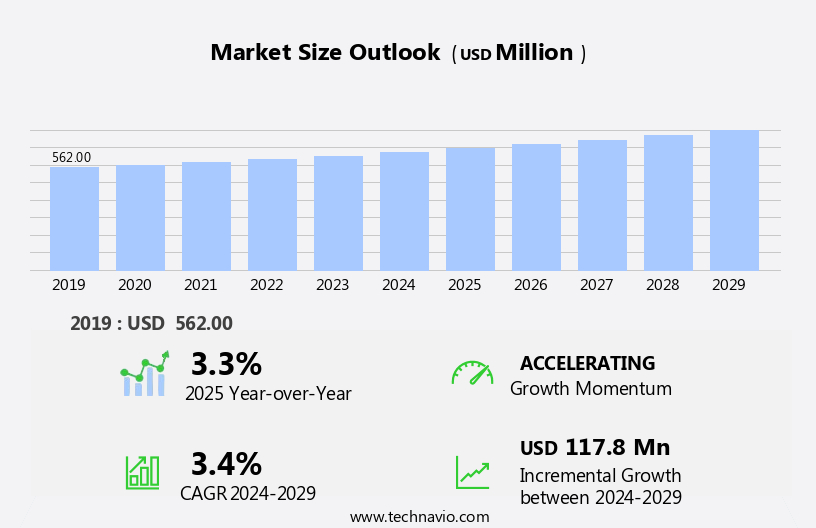
The satellite phone market size is forecast to increase by USD 117.8 million at a CAGR of 3.4% between 2024 and 2029.
- The market is experiencing significant growth, driven by the advantages these devices offer over traditional landline and cellular phones. Satellite phones provide uninterrupted communication in remote areas with no terrestrial infrastructure, making them indispensable for industries such as maritime, aviation, and emergency services. Furthermore, the progression towards low-cost, satellite-based Internet services is expanding the market's reach, enabling businesses and individuals in underconnected regions to access global communication networks. However, the market is not without challenges. Stringent regulatory standards for satellite phone development and deployment impose significant costs on manufacturers and operators. Additionally, advancements in terrestrial communication technologies, such as 5G networks, may limit the demand for satellite phones in areas with reliable terrestrial coverage. The segment is expected to benefit from the rising investments in satellite technologies and satellite manufacturing and launch for surveillance, regional security, and spy intelligence in emerging economies such as China, India, and Russia.
- To capitalize on market opportunities and navigate these challenges effectively, companies must focus on innovation, cost reduction, and regulatory compliance. By addressing these factors, they can differentiate themselves and maintain a competitive edge in the evolving satellite communications landscape. The growth of maritime information is primarily attributed to the increasing adoption of the market, which is driven by an increase in the global demand for the satellite phone industry.
What will be the Size of the Satellite Phone Market during the forecast period?
- Satellite frequency bands, including those in low Earth orbit (LEO) and medium Earth orbit (MEO), are crucial for satellite phone functionality. The aviation industry is a significant consumer of satellite communication services, with satellite phone prices remaining competitive to cater to the industry's needs. Satellite transponders are integral components of satellite networks, enabling satellite communication and data transmission. Satellite licensing, satellite time synchronization, satellite encryption, satellite broadband, satellite navigation systems, satellite weather data, satellite imagery, satellite positioning, satellite security, geostationary orbit, medium Earth orbit, satellite interference, and satellite phone reliability are key aspects driving the market's growth. The market in APAC is experiencing the fastest growth among all the regions, mainly owing to the rapid increase in the demand for satellite communication and satellite internet from the developing countries in the region.
- In summary, the satellite communications market is witnessing a in demand due to its critical role in various industries, including aviation, and the continuous advancements in satellite technology. Satellite phone adoption is increasing, driven by the need for reliable communication in remote locations and the availability of affordable satellite phone subscriptions.
How is this Satellite Phone Industry segmented?
The satellite phone industry research report provides comprehensive data (region-wise segment analysis), with forecasts and estimates in "USD million" for the period 2025-2029, as well as historical data from 2019-2023 for the following segments.
- Application
- Maritime
- Aerospace
- Government
- Energy
- Others
- Product
- GEO
- LEO
- Product Type
- Handheld satellite phones
- Vehicle-mounted satellite phones
- Maritime satellite phones
- Aircraft satellite phones
- Geography
- North America
- US
- Canada
- Europe
- France
- Germany
- UK
- APAC
- China
- India
- Japan
- South Korea
- Rest of World (ROW)
- North America
By Application Insights
The maritime segment is estimated to witness significant growth during the forecast period. The market experiences significant growth due to the increasing demand for communication solutions in remote locations where traditional cellular networks fail to provide coverage. Maritime industries, such as shipping, fishing, and offshore oil and gas exploration, heavily rely on satellite phones for reliable communication. This trend is driven by increasing investments in satellite technologies by countries like China, India, and Russia for surveillance, regional security, and intelligence operations. For instance, NewSpace India Limited (NSIL), the commercial arm of ISRO, is launching a satellite mission to enhance broadband services across India, including remote regions, with a 32-beam HTS capacity. With integrated GPS capabilities and effective satellite propulsion systems, they ensure precise location tracking, enhancing safety and coordination in wilderness areas and remote environments.
Satellite communication plays a crucial role in various applications, including GPS navigation, text messaging, voice calls, and satellite uplink and downlink, making it an integral component of maritime operations. These advancements in satellite technology are expected to expand the market's reach and provide comprehensive coverage.
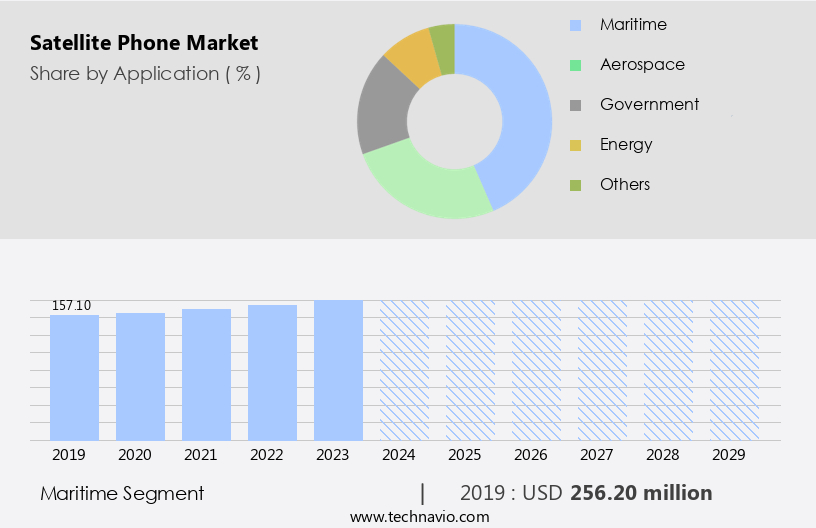
The Maritime segment was valued at USD 256.20 million in 2019 and showed a gradual increase during the forecast period.
Regional Analysis
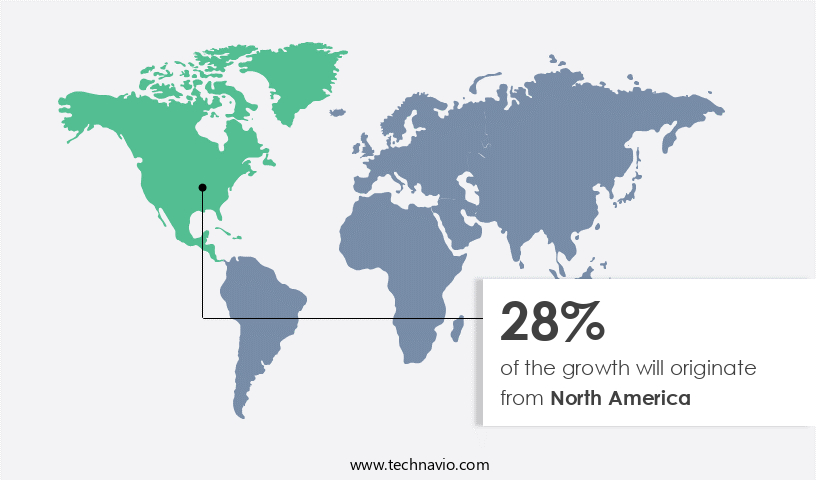
North America is estimated to contribute 28% to the growth of the global market during the forecast period. Technavio's analysts have elaborately explained the regional trends and drivers that shape the market during the forecast period.
The market in Asia Pacific (APAC) is witnessing significant growth due to the increasing demand for satellite communication from various sectors, particularly in developing countries. Governments in the region are investing in advanced satellite-based infrastructure to ensure uninterrupted connectivity, especially in light of cross-border security threats and the region's susceptibility to natural disasters. For instance, countries like China, Japan, and India are developing multi-role satellites with advanced subsystems, including satellite phones and satellite bandwidth, to enhance communication capabilities. The aviation industry is another major contributor to the market's growth, as satellite phones offer reliable communication services during field operations.
The price of satellite phones, although high, is justifiable given their essential role in ensuring safety and efficiency in aviation. Satellite transponders are an integral component of satellite networks, enabling the transmission and reception of data and voice communication. Satellite networks are crucial during disaster management in APAC, where timely and accurate communication is vital. For example, the CMS-01 satellite, launched in December 2020, provides communication services in the Extended-C Band frequency spectrum, covering mainland India, the Andaman and Nicobar Islands, and the Lakshadweep Islands. Overall, the market's growth is driven by the need for reliable communication services in various industries and sectors, particularly in disaster-prone regions like APAC.
Market Dynamics
Our researchers analyzed the data with 2024 as the base year, along with the key drivers, trends, and challenges. A holistic analysis of drivers will help companies refine their marketing strategies to gain a competitive advantage.
What are the Satellite Phone market drivers leading to the rise in the adoption of Industry?
- The primary advantage driving the market is the superiority of satellite phones over landline and cellular phones, including uninterrupted connectivity in remote areas and the ability to function during natural disasters or network outages. Satellite phones offer uninterrupted communication solutions by transmitting signals through satellites, enabling connectivity in areas where terrestrial networks fail. These devices are indispensable during emergencies, such as natural disasters or man-made incidents, where traditional communication networks may be compromised. Satellite phones ensure the continuity of command-and-control functions by providing a reliable means of communication for government agencies and organizations. Satellite phone technology is characterized by its ability to deliver data services through satellite signals, which boast superior strength compared to terrestrial networks. Satellite latency, a concern for some users, has been minimized with advancements in satellite technology. The use of satellite antennas and handsets has become more convenient, making satellite phones an increasingly popular choice for communication in remote areas.
- Satellite coverage extends beyond the limitations of terrestrial networks, providing global connectivity. In the event of network outages or inaccessibility, satellite phones offer a reliable alternative for maintaining communication. By utilizing satellite technology, organizations can ensure uninterrupted communication services, ensuring business continuity and effective response during emergencies. Operating through low earth orbit (LEO) satellites and GEO satellite constellations, satellite phones ensure reliable call quality and accessibility in remote locations such as open oceans and wilderness areas, overcoming dead spots and constraints of traditional cellular networks.
What are the Satellite Phone market trends shaping the Industry?
- The emerging market trend involves the advancement towards affordable, satellite-delivered Internet services. Satellite phones have gained traction in various industries due to their durability and ability to provide communication services in remote areas with minimal infrastructure. However, the traditional satellite phones using large-size satellites in geostationary orbit face challenges such as high latency and substantial investment for communication and launching. In contrast, the emergence of nano and microsatellites in Low Earth Orbit (LEO) has revolutionized the satellite communication industry. Placed approximately 680 miles from the earth's surface, these satellites significantly reduce latency, offering Internet services with latency as low as 20-30 milliseconds, comparable to fiber-optic cable networks.
- This development is crucial for applications that require real-time communication, such as gaming, video conferencing, and live streaming. Despite the initial investment required for the development and deployment of these satellite constellations, the long-term cost savings and performance benefits make it a viable alternative to traditional satellite communication systems.
How does Satellite Phone market faces challenges face during its growth?
- The satellite phone industry faces significant growth constraints due to stringent regulatory standards governing their development. These regulations are a crucial consideration for industry players, necessitating substantial investments in research and compliance. Satellite mobile phones adhere to stringent standards such as EN 62262/IEC 62262 and EN 60529/IEC 60529 for impact and ingress protection, respectively. EN 62262/IEC 62262-2002 pertains to the IK ratings, which measure the protection against mechanical impact, while EN 60529/IEC 60529-2004 relates to IP ratings, which determine the degree of protection against water and solid objects like dust. These ratings ensure the durability and reliability of satellite phones, making them essential for various industries and applications. Disaster relief efforts, energy sector operations, and the maritime industry rely on satellite phones for off-grid communication and emergency situations.
- Outdoor enthusiasts also use these devices for adventure activities where traditional cellular networks may not be accessible. Satellite phone accessories, such as cases, further enhance the functionality and protection of these devices. In summary, satellite phones cater to industries and individuals in need of uninterrupted communication in remote locations or during emergencies. Their rugged design and adherence to international standards make them a reliable and essential communication solution.
Exclusive Customer Landscape
The satellite phone market forecasting report includes the adoption lifecycle of the market, covering from the innovator's stage to the laggard's stage. It focuses on adoption rates in different regions based on penetration. Furthermore, the satellite phone market report also includes key purchase criteria and drivers of price sensitivity to help companies evaluate and develop their market growth analysis strategies.
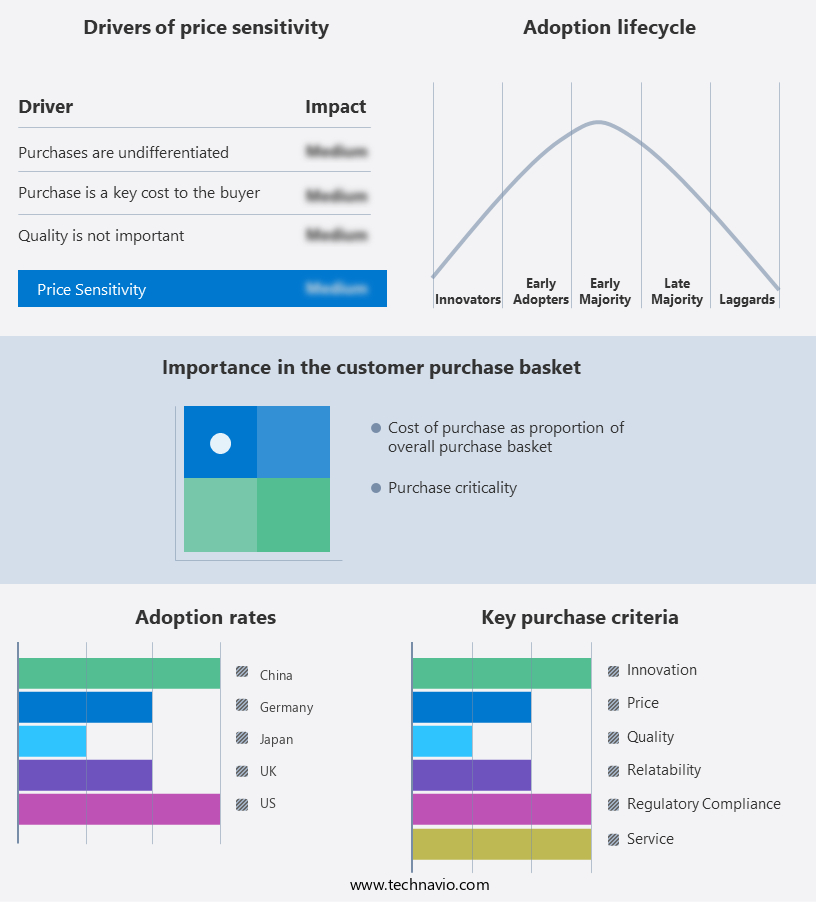
Customer Landscape
Key Companies & Market Insights
Companies are implementing various strategies, such as strategic alliances, satellite phone market forecast, partnerships, mergers and acquisitions, geographical expansion, and product/service launches, to enhance their presence in the industry.
AT and T Inc. - The company offers satellite phones named Sonim XP5 Plus satellite phone that delivers reliable voice calling and secured messaging capabilities.
The industry research and growth report includes detailed analyses of the competitive landscape of the market and information about key companies, including:
- AT and T Inc.
- Globalstar Inc.
- Inmarsat Global Ltd.
- Iridium Communications Inc.
- Telefonaktiebolaget LM Ericsson
- Thuraya Telecommunications Co.
- United Parcel Service Inc.
Qualitative and quantitative analysis of companies has been conducted to help clients understand the wider business environment as well as the strengths and weaknesses of key industry players. Data is qualitatively analyzed to categorize companies as pure play, category-focused, industry-focused, and diversified; it is quantitatively analyzed to categorize companies as dominant, leading, strong, tentative, and weak.
Recent Development and News in Satellite Phone Market
- The market has witnessed significant developments in recent years, with key players focusing on product innovations, technological collaborations, and geographic expansions to cater to the growing demand for uninterrupted communication services in remote areas. Here are four key developments in the market:
- In Q3 2024, Thuraya Telecommunications Company launched its new Thuraya X5-Touch satellite phone, featuring a larger touchscreen display, enhanced battery life, and improved connectivity options. This launch aimed to cater to the increasing demand for advanced satellite communication solutions in the energy, maritime, and mining industries (Thuraya Press Release, 2024).
- In Q1 2025, Iridium Communications and Amazon Web Services (AWS) announced a strategic collaboration to offer integrated satellite communication services to AWS customers. This partnership enabled AWS to offer global satellite connectivity as a fully managed service, expanding its IoT and M2M offerings (Iridium Communications Press Release, 2025).
- In H2 2024, Inmarsat announced the acquisition of BGAN Services, a leading provider of broadband satellite communication services. This acquisition aimed to strengthen Inmarsat's position in the satcom market and expand its offerings to include high-speed broadband services for maritime, aviation, and enterprise customers (Inmarsat Press Release, 2024).
- In Q4 2025, Globalstar announced the launch of its new satellite, which marked the completion of its second-generation constellation. This development enabled Globalstar to offer enhanced coverage, improved voice and data services, and lower latency to its customers, making it a significant milestone in the market (Globalstar Press Release, 2025).
- These developments demonstrate the continuous innovation and growth in the market, driven by technological advancements and strategic collaborations and acquisitions. According to Technavio's latest market research report, the market is expected to grow at a CAGR of over 7% during the forecast period, driven by the increasing demand for satellite communication services in remote areas and the ongoing development of advanced satellite technologies (Technavio, 2022).
Research Analyst Overview
The market continues to evolve, driven by the growing demand for reliable communication solutions in various industries and applications. One significant sector fueling this growth is disaster relief, where satellite phones serve as essential tools for emergency response teams in remote areas. These phones enable real-time communication between teams, facilitating coordinated efforts and ensuring the timely delivery of aid. Another industry that heavily relies on satellite communication is energy. In remote oil and gas exploration sites or wind farms, satellite phones provide the only viable means of communication, ensuring that operations run smoothly and efficiently. The energy sector's dependence on satellite communication is further increased during emergencies, such as natural disasters or equipment failures, where a quick response is crucial.
Satellite phone accessories, such as cases, chargers, and antennas, also contribute to the market's expansion. These accessories cater to the unique needs of various user groups, including outdoor enthusiasts and field operations teams. For instance, a rugged satellite phone case can protect the handset from harsh environmental conditions, while a high-capacity satellite phone charger ensures uninterrupted communication during extended fieldwork. The maritime industry is another key player in the market. With vast expanses of water and limited terrestrial infrastructure, satellite communication is indispensable for maritime vessels. Satellite phones provide essential services like GPS navigation, text messaging, and voice calls, ensuring the safety and efficiency of maritime operations.
Off-grid communication is another application driving the growth of the market. In remote locations where terrestrial infrastructure is unavailable, satellite phones offer a reliable means of communication for individuals and organizations. This is particularly important for government agencies and emergency services, where the ability to communicate during crises can save lives and prevent further damage. The aviation industry also utilizes satellite communication extensively. Satellite phones enable pilots and crew members to stay connected during long flights, ensuring that they have access to real-time information and can communicate with ground personnel. Moreover, satellite communication is essential for aviation safety, as it facilitates communication between aircraft and air traffic control towers, ensuring the safe and efficient operation of air traffic. The growth of the market depends on several factors, including the advantages of satellite phones over landline and cellular phones, the growing investments in satellite communication, and the development of nano and small satellites.
The market is further shaped by advancements in satellite technology. Improvements in satellite network coverage, satellite bandwidth, and satellite signal strength have led to better satellite phone performance and lower prices. As a result, satellite phones have become more accessible to a wider range of users, driving market growth. Satellite phone subscriptions have also become increasingly popular, offering users flexible and cost-effective communication solutions. These subscriptions provide users with access to a range of services, including data services, satellite uplink, and satellite downlink, making satellite communication a viable option for various applications. The market is driven by the growing demand for reliable communication solutions in various industries and applications.
From disaster relief and energy to outdoor enthusiasts and maritime industries, satellite phones offer unparalleled connectivity in remote locations and during emergencies. Advancements in satellite technology and the availability of satellite phone accessories and subscriptions continue to shape the market, making satellite communication an essential tool for organizations and individuals alike.
Dive into Technavio's robust research methodology, blending expert interviews, extensive data synthesis, and validated models for unparalleled Satellite Phone Market insights. See full methodology.
|
Market Scope |
|
|
Report Coverage |
Details |
|
Page number |
207 |
|
Base year |
2024 |
|
Historic period |
2019-2023 |
|
Forecast period |
2025-2029 |
|
Growth momentum & CAGR |
Accelerate at a CAGR of 3.4% |
|
Market growth 2025-2029 |
USD 117.8 million |
|
Market structure |
Concentrated |
|
YoY growth 2024-2025(%) |
3.3 |
|
Key countries |
US, China, Japan, Canada, India, South Korea, UK, Germany, France, and Saudi Arabia |
|
Competitive landscape |
Leading Companies, Market Positioning of Companies, Competitive Strategies, and Industry Risks |
What are the Key Data Covered in this Satellite Phone Market Research and Growth Report?
- CAGR of the Satellite Phone industry during the forecast period
- Detailed information on factors that will drive the growth and forecasting between 2025 and 2029
- Precise estimation of the size of the market and its contribution of the industry in focus to the parent market
- Accurate predictions about upcoming growth and trends and changes in consumer behaviour
- Growth of the market across APAC, North America, Europe, Middle East and Africa, and South America
- Thorough analysis of the market's competitive landscape and detailed information about companies
- Comprehensive analysis of factors that will challenge the satellite phone market growth of industry companies
We can help! Our analysts can customize this satellite phone market research report to meet your requirements.
 RIA -
RIA - 
