
Two-Wheeler Braking System Market Analysis APAC, North America, Europe, South America, Middle East and Africa - China, India, US, Indonesia, Canada, Vietnam, Germany, Malaysia, UK, Italy - Size and Forecast 2025-2029

Two-Wheeler Braking System Market Analysis APAC, North America, Europe, South America, Middle East and Africa - China, India, US, Indonesia, Canada, Vietnam, Germany, Malaysia, UK, Italy - Size and Forecast 2025-2029

Published: Mar 2025 229 Pages SKU: IRTNTR73491

Market Overview at a Glance

$1.59 B
Market Opportunity
7.4%
CAGR
6.8
YoY growth 2024-2025(%)

Two-Wheeler Braking System Market Size 2025-2029

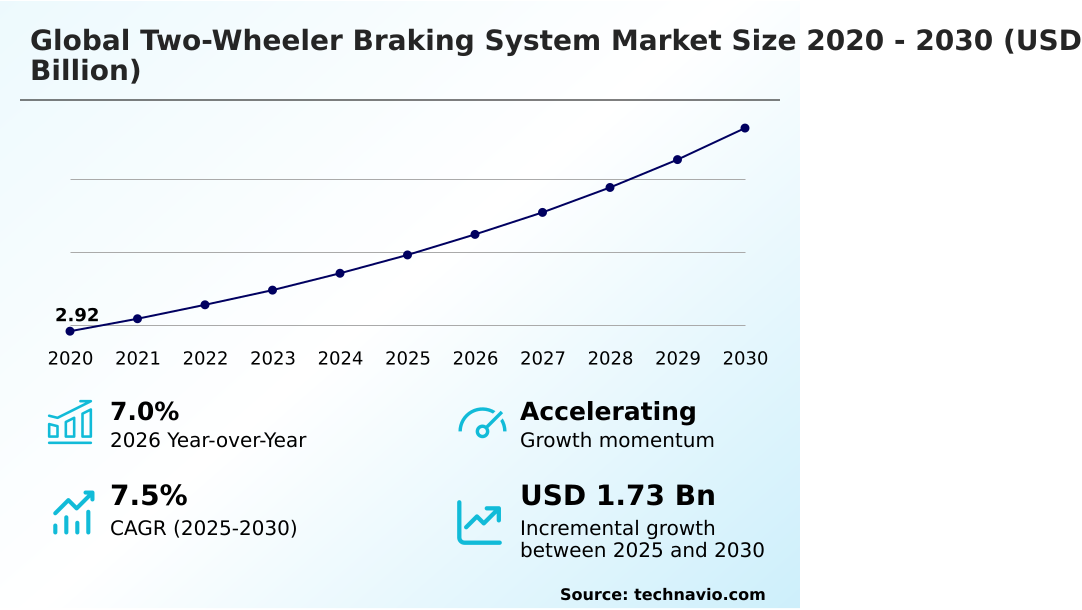
The two-wheeler braking system market size is forecast to increase by USD 1.59 billion, at a CAGR of 7.4% between 2024 and 2029.

  • The market is witnessing significant growth due to the increasing integration of advanced technologies such as traction control systems and sensors. The market is also experiencing a rise in demand, as these systems play a crucial role in managing the braking functions. Motorcycle suspension systems market and motorcycle clutch market are also growing in parallel, as they complement the braking system's functionality. Market trends include the rising electronic content in two-wheelers, which is leading to the development of more sophisticated braking systems. Another trend is the design of remote diagnostics and prognostics for autonomous vehicles, which is expected to revolutionize the industry. However, challenges remain, such as the complexity arising in the development of these advanced braking systems, which can increase production costs and require extensive research and development efforts.

What will be the Size of the Two-Wheeler Braking System Market During the Forecast Period?

Two-Wheeler Braking System Market Size

 Request Free Sample

  • The market encompasses motorcycles and scooters, experiencing significant growth due to urbanization and demographic shifts. Modern electronics, such as anti-lock braking systems (ABS), have become increasingly popular, prioritizing safety and performance for motorists. ABS enhances steerability during emergency braking and reduces braking distance, making it a crucial safety feature. The rural population also contributes to the market's expansion, as two-wheelers offer affordability and maneuverability in less densely populated areas. 
  • Factors like price competitiveness, fuel efficiency, and emissions regulations influence market dynamics. Copper and brake pads are essential components of the braking system, while electronic components contribute to the integration of advanced technologies. Overall, the market is poised for continued expansion, driven by safety standards, urbanization, and evolving consumer preferences.

How is this Two-Wheeler Braking System Industry segmented and which is the largest segment?

The two-wheeler braking system industry research report provides comprehensive data (region-wise segment analysis), with forecasts and estimates in "USD billion" for the period 2025-2029, as well as historical data from 2019-2023 for the following segments.

  • Product
    • Drum
    • Disc
  • Application
    • Motorcycle
    • Scooters
  • Distribution Channel
    • OEM
    • Aftermarket
  • Type
    • Metal
    • Carbon
  • Geography
    • APAC
      • China
      • India
      • Vietnam
    • North America
      • Canada
      • US
    • Europe
      • Germany
      • UK
      • Italy
    • South America
    • Middle East and Africa

By Product Insights

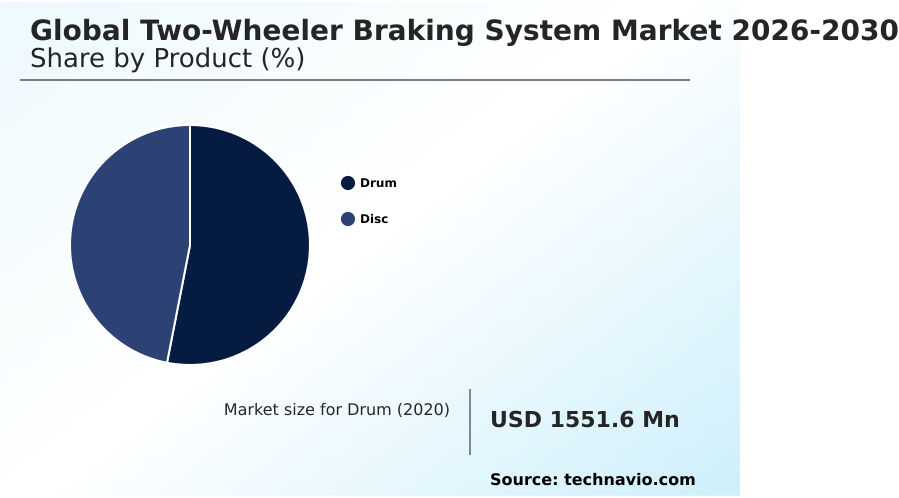
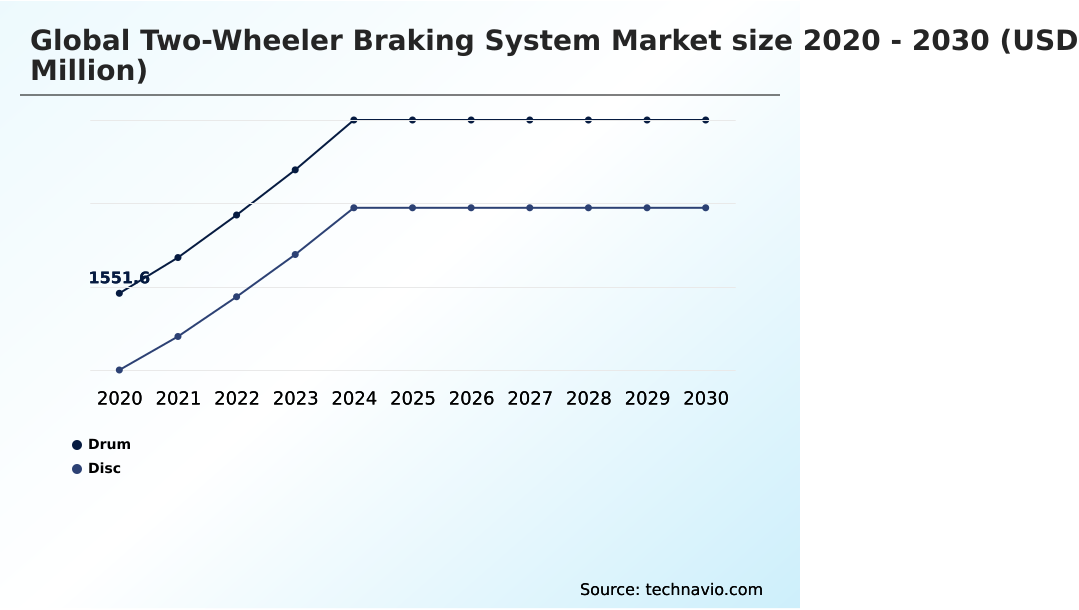
  • The drum segment is estimated to witness significant growth during the forecast period.

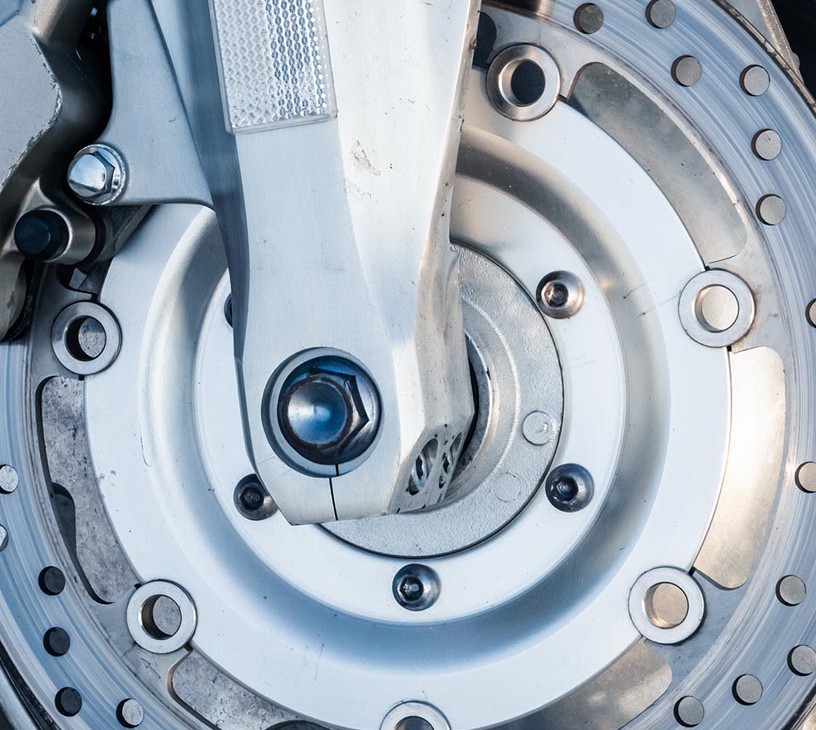
The market encompasses drum and disc brakes for motorcycles and scooters. Drum brakes, featuring shoes or pads that press against the inner surface of a rotating drum, offer lower cost due to simpler construction, yet provide less stopping power than disc brakes. Their resistance to heat build-up makes them popular, especially in urban environments where traffic congestion can cause frequent braking. The market's expansion is driven by the rising demand for two-wheelers, fueled by urbanization and demographic trends. Safety concerns, including the implementation of regulatory standards, have increased consumer awareness, leading to a growing preference for anti-lock braking systems (ABS) and other advanced braking technologies.

The market is further influenced by the emergence of electric mobility, IoT, telematics systems, and cost-efficiency considerations. Key players offering customization options and aftermarket demand for brake friction products. The market is also impacted by emission standards, material science advancements, and the price competitiveness of various brake systems, including drum and disc brakes.

Two-Wheeler Braking System Market Size

Get a glance at the market report of share of various segments Request Free Sample

The drum segment was valued at USD 1.65 billion in 2019 and showed a gradual increase during the forecast period.
Regional Analysis

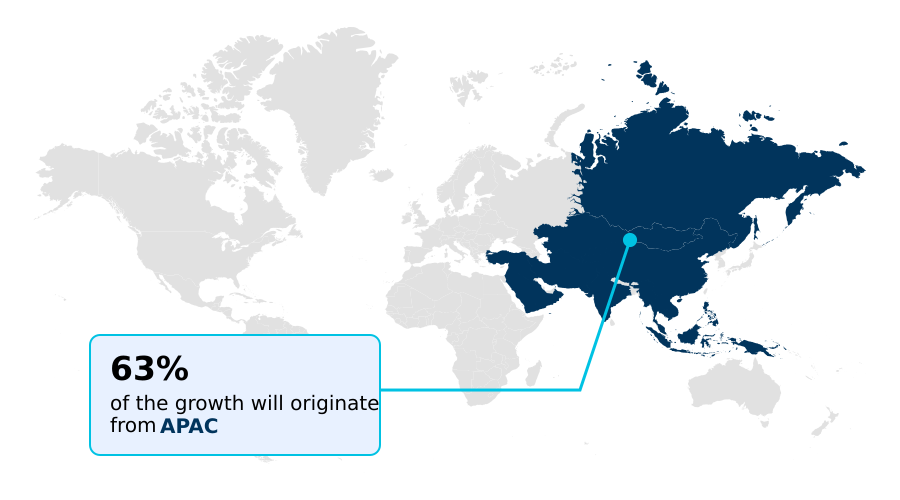
  • APAC is estimated to contribute 69% to the growth of the global market during the forecast period.

Technavio's analysts have elaborately explained the regional trends and drivers that shape the market during the forecast period.
Two-Wheeler Braking System Market Share by Geography

For more insights on the market size of various regions, Request Free Sample

The market in Asia Pacific (APAC) is primarily driven by the adoption in India, China, and Indonesia. These countries account for approximately 85% of the global two-wheeler market, making APAC the dominant region. The large commuter two-wheeler segments in these countries are cost-effective, leading to their popularity. However, there is a growing trend towards the adoption of advanced braking systems, such as Anti-lock Braking Systems (ABS), in the commuter segment. This shift is primarily due to regulatory mandates and increasing consumer awareness. Although most vehicles in these countries fall under the 125 cc category, OEMs are expected to adopt ABS in smaller vehicles as well due to safety concerns and performance benefits.

Market Dynamics

Our researchers analyzed the data with 2024 as the base year, along with the key drivers, trends, and challenges. A holistic analysis of drivers will help companies refine their marketing strategies to gain a competitive advantage.

What are the key market drivers leading to the rise in the adoption of the Two-Wheeler Braking System Industry?

Rising electronic content in two-wheelers is the key driver of the market.

  • The two-wheeler industry is witnessing significant advancements, with a focus on enhancing rider safety, comfort, and efficiency. Motorcycles and scooters are increasingly incorporating electronic components, driving the adoption of modern braking systems such as CBS (Combined Braking System), ABS (Anti-lock Braking System), and brake-by-wire. The integration of wheel speed sensors has led to the implementation of ABS in two-wheelers, ensuring improved braking performance and stability. Traction control systems have emerged as a result of ABS technology, offering better riding dynamics for various two-wheeler types, including high-performance bikes like sports, cruiser, and tourer models.
  • The incorporation of sensors and advanced braking systems is transforming the two-wheeler landscape, enabling smoother riding experiences and shorter braking distances. This shift towards electronic components is also influencing other aspects of two-wheelers, such as fuel efficiency, maneuverability, and emissions. The cost-efficiency and performance benefits of these advanced braking systems are expected to boost their demand in the aftermarket as well. The regulatory standards for rider safety and consumer awareness continue to evolve, further fueling the adoption of these advanced braking technologies.

What are the market trends shaping the Two-Wheeler Braking System Industry?

Development of remote diagnostics and prognostics for autonomous vehicles is the upcoming market trend.

  • The market is witnessing significant growth due to the increasing urbanization and the expanding demographic of motorcycle and scooter riders. With a focus on rider safety, regulatory standards are becoming more stringent, leading to the widespread adoption of Advanced Braking Systems (ABS), particularly in high-performance bikes such as sports bikes, cruiser bikes, and tourers. This market is also influenced by consumer awareness and customization trends, driving aftermarket demand for brake friction products and electronic components like wheel speed sensors and ABS braking systems. Moreover, the shift towards electric mobility and emission standards is impacting the market, with companies investing in research and development to create reliable and cost-effective solutions.
  • The integration of modern electronics, IoT, and telematics systems is enhancing braking performance, steerability, and maneuverability, while reducing braking distance and improving fuel efficiency. Despite these advancements, challenges remain, including mechanical problems and system breakdowns, which necessitate the presence of workshops and reliable aftermarket suppliers. The market is also influenced by factors like exchange rates, price competitiveness, and the availability of copper, brake pads, and other essential materials. Safety concerns continue to be a priority, with manufacturers focusing on developing advanced braking systems that can prevent fatal crashes and improve road traffic safety. The future of the market lies in the integration of sensors, brake fluid, and lubricators, ensuring smooth riding performance and long-lasting, low-maintenance systems.

What challenges does the Two-Wheeler Braking System Industry face during its growth?

Design complications arising in sophisticated braking systems are a key challenge affecting the industry growth.

  • The market faces intricacies due to the complexities of parts and installation processes. The adoption of Anti-lock Braking Systems (ABS) is increasing, leading to more complex control units. Designing control units for various riding scenarios, such as uphill and downhill riding, cornering, heavy maneuvering, and adverse road conditions, is essential. Space constraints and ideal location are significant installation considerations for two-wheelers, with the control unit's computer chip vulnerable to electrical noise damage. Urbanization and demographic shifts, particularly in developing countries, fuel the demand for two-wheelers, driving market growth. Regulatory standards prioritizing rider safety, consumer awareness, and customization contribute to the market's expansion.
  • Aftermarket demand, emission standards, cost-efficiency, material science, and electric mobility also influence market dynamics. Key technologies include IoT, telematics systems, drum brakes, disc brakes, and advanced braking systems. Safety concerns, maintenance costs, and performance are crucial factors for motorcyclists and scooter riders. Brake friction products, sensors, and reliable aftermarket suppliers are essential for system reliability. Electric vehicles and charging infrastructure, subsidies, and brake fluid are emerging trends.

Exclusive Customer Landscape

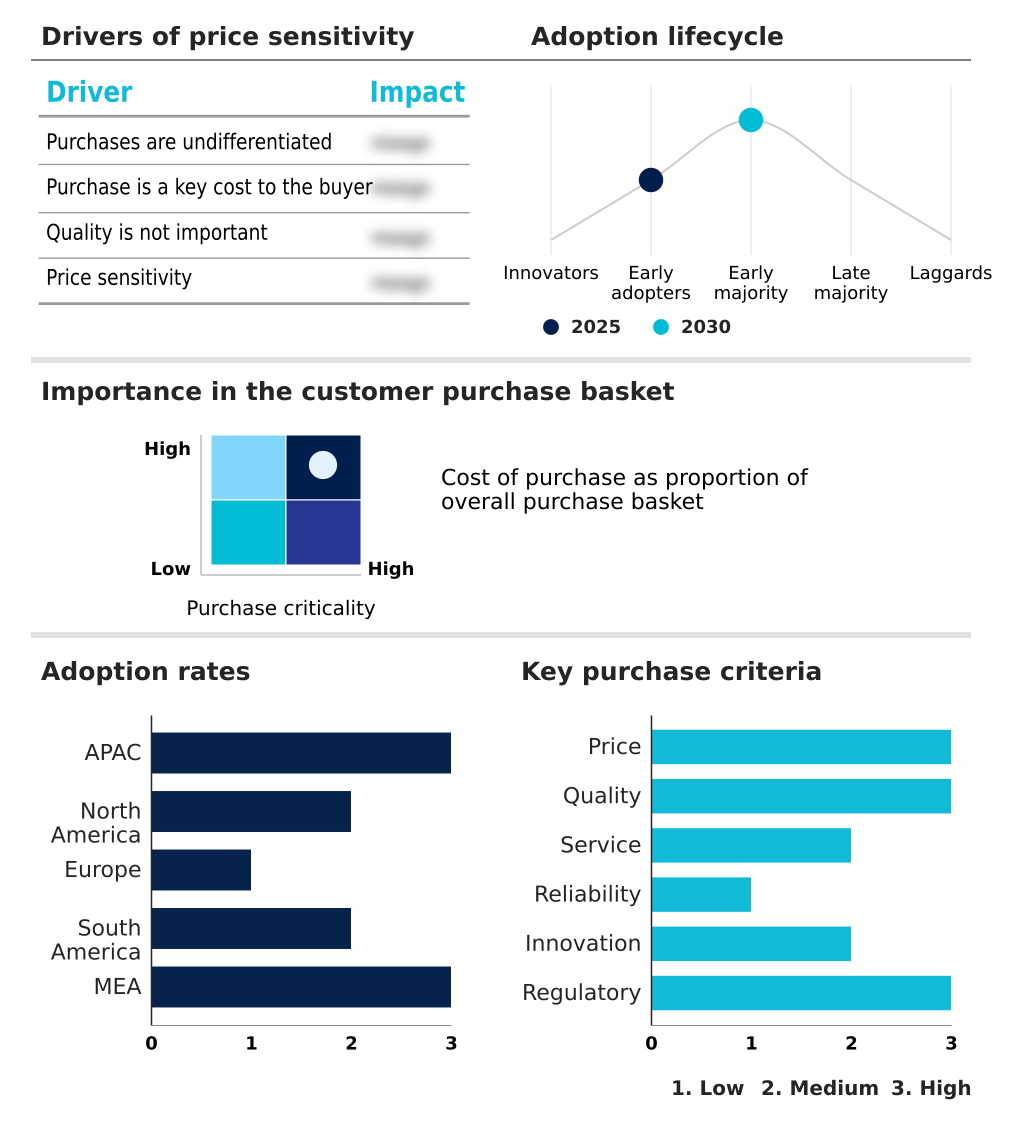
The two-wheeler braking system market forecasting report includes the adoption lifecycle of the market, covering from the innovator's stage to the laggard's stage. It focuses on adoption rates in different regions based on penetration. Furthermore, the two-wheeler braking system market report also includes key purchase criteria and drivers of price sensitivity to help companies evaluate and develop their market growth analysis strategies.
Two-Wheeler Braking System Market Share by Geography

 Customer Landscape

Key Companies & Market Insights

Companies are implementing various strategies, such as strategic alliances, two-wheeler braking system market forecast, partnerships, mergers and acquisitions, geographical expansion, and product/service launches, to enhance their presence in the industry.

ADVICS Co. Ltd. - The company offers two-wheeler braking systems such as ADVICS brake caliper and advanced braking system modulator.

The industry research and growth report includes detailed analyses of the competitive landscape of the market and information about key companies, including:

  • Allied Nippon Pvt. Ltd.
  • ASK Automotive Ltd.
  • Brembo Spa
  • BWI Group
  • Carlisle Companies Inc.
  • Continental AG
  • Datson Engineering
  • Endurance Technologies Ltd.
  • Hitachi Ltd.
  • HL Mando Co. Ltd.
  • Honda Motor Co. Ltd.
  • Longzhong Holding Group Co. Ltd.
  • Masu Brakes Pvt. Ltd.
  • MK Group
  • Nissin Brake Performance
  • Rico Auto Industries Ltd.
  • Robert Bosch GmbH
  • ZF Friedrichshafen AG

Qualitative and quantitative analysis of companies has been conducted to help clients understand the wider business environment as well as the strengths and weaknesses of key industry players. Data is qualitatively analyzed to categorize companies as pure play, category-focused, industry-focused, and diversified; it is quantitatively analyzed to categorize companies as dominant, leading, strong, tentative, and weak.

Research Analyst Overview

The market encompasses a vital segment of the transportation industry, catering to motorcycles and scooters. This market is driven by various factors, including urbanization and demographic shifts, safety standards, and performance enhancements. Urbanization and demographic trends have led to an increase in the number of motorcycle and scooter users, particularly in densely populated areas. These vehicles offer cost-efficiency, maneuverability, and ease of use, making them a popular choice for commuters. Safety is a significant concern in the two-wheeler industry, leading to the adoption of advanced braking systems such as Anti-Lock Braking Systems (ABS) and Advanced Braking Systems (ABS).

Further, these systems improve rider safety by preventing wheel lock-up during hard braking, allowing for better steerability and shorter braking distances. Regulatory standards also play a crucial role in the market. Safety regulations ensure that vehicles meet specific performance requirements, while emission standards aim to reduce the environmental impact of these vehicles. Consumer awareness and customization are also driving factors in the market. Riders seek improved performance and personalization, leading to increased demand for high-performance brake systems and aftermarket components. Material science advancements, such as the use of copper in brake pads and discs, and the integration of IoT and telematics systems, are revolutionizing the market.

In addition, these technologies offer cost-efficiency, improved safety, and enhanced riding experience. The market for two-wheeler braking systems is diverse, with applications ranging from motorcycles and scooters to electric mobility solutions. The use of electric vehicles and the development of charging infrastructure are also impacting the market, with subsidies and incentives driving adoption. The market is competitive, with organized suppliers and aftermarket demand for replacement parts. However, the market also faces challenges, including the use of low-quality materials and mechanical problems that can lead to system breakdowns. Workshops and repair services play a crucial role in maintaining the profit margin of two-wheeler braking system suppliers.

Market Scope

Report Coverage

Details

Page number

229

Base year

2024

Historic period

2019-2023

Forecast period

2025-2029

Growth momentum & CAGR

Accelerate at a CAGR of 7.4%

Market growth 2025-2029

USD 1.59 billion

Market structure

Fragmented

YoY growth 2024-2025(%)

6.8

Key countries

China, India, US, Indonesia, Canada, Vietnam, Germany, Malaysia, UK, and Italy

Competitive landscape

Leading Companies, Market Positioning of Companies, Competitive Strategies, and Industry Risks

Request Free Sample

What are the Key Data Covered in this Two-Wheeler Braking System Market Research and Growth Report?

  • CAGR of the Two-Wheeler Braking System industry during the forecast period
  • Detailed information on factors that will drive the market growth and forecasting between 2025 and 2029
  • Precise estimation of the size of the market and its contribution of the industry in focus to the parent market
  • Accurate predictions about upcoming growth and trends and changes in consumer behaviour
  • Growth of the market across APAC, North America, Europe, South America, and Middle East and Africa
  • Thorough analysis of the market's competitive landscape and detailed information about companies
  • Comprehensive analysis of factors that will challenge the two-wheeler braking system market growth of industry companies

We can help! Our analysts can customize this two-wheeler braking system market research report to meet your requirements.

Get in touch

1 Executive Summary

  • 1.1 Market overview
    • Executive Summary - Chart on Market Overview
    • Executive Summary - Data Table on Market Overview
    • Executive Summary - Chart on Global Market Characteristics
    • Executive Summary - Chart on Market by Geography
    • Executive Summary - Chart on Market Segmentation by Product
    • Executive Summary - Chart on Market Segmentation by Application
    • Executive Summary - Chart on Market Segmentation by Distribution Channel
    • Executive Summary - Chart on Market Segmentation by Type
    • Executive Summary - Chart on Incremental Growth
    • Executive Summary - Data Table on Incremental Growth
    • Executive Summary - Chart on Company Market Positioning

2 Technavio Analysis

  • 2.1 Analysis of price sensitivity, lifecycle, customer purchase basket, adoption rates, and purchase criteria
    • Analysis of price sensitivity, lifecycle, customer purchase basket, adoption rates, and purchase criteria
  • 2.2 Criticality of inputs and Factors of differentiation
    • Overview on criticality of inputs and factors of differentiation
  • 2.3 Factors of disruption
    • Overview on factors of disruption
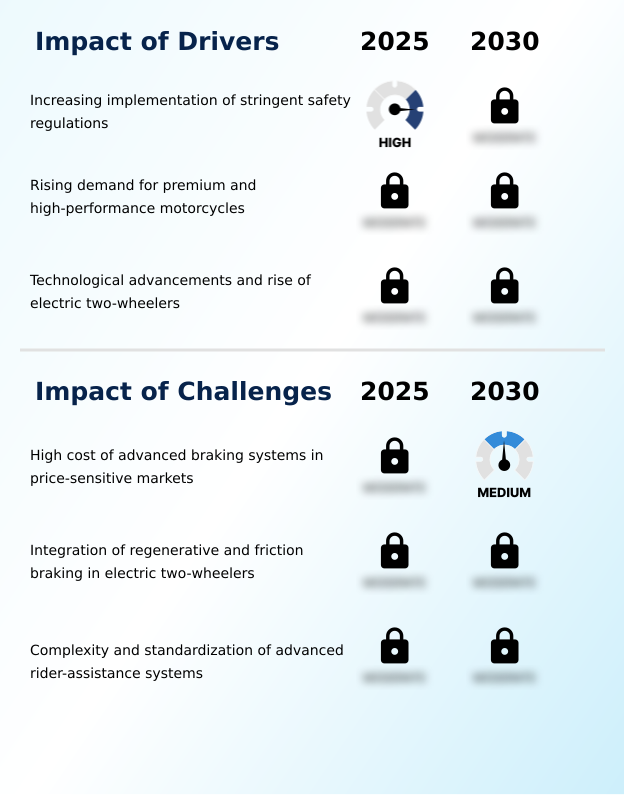
  • 2.4 Impact of drivers and challenges
    • Impact of drivers and challenges in 2024 and 2029

3 Market Landscape

  • 3.1 Market ecosystem
    • Parent Market
    • Data Table on - Parent Market
  • 3.2 Market characteristics
    • Market characteristics analysis
  • 3.3 Value chain analysis
    • Value chain analysis

4 Market Sizing

  • 4.1 Market definition
    • Offerings of companies included in the market definition
  • 4.2 Market segment analysis
    • Market segments
  • 4.3 Market size 2024
    • 4.4 Market outlook: Forecast for 2024-2029
      • Chart on Global - Market size and forecast 2024-2029 ($ million)
      • Data Table on Global - Market size and forecast 2024-2029 ($ million)
      • Chart on Global Market: Year-over-year growth 2024-2029 (%)
      • Data Table on Global Market: Year-over-year growth 2024-2029 (%)

    5 Historic Market Size

    • 5.1 Global Two-Wheeler Braking System Market 2019 - 2023
      • Historic Market Size - Data Table on Global Two-Wheeler Braking System Market 2019 - 2023 ($ million)
    • 5.2 Product segment analysis 2019 - 2023
      • Historic Market Size - Product Segment 2019 - 2023 ($ million)
    • 5.3 Application segment analysis 2019 - 2023
      • Historic Market Size - Application Segment 2019 - 2023 ($ million)
    • 5.4 Distribution Channel segment analysis 2019 - 2023
      • Historic Market Size - Distribution Channel Segment 2019 - 2023 ($ million)
    • 5.5 Type segment analysis 2019 - 2023
      • Historic Market Size - Type Segment 2019 - 2023 ($ million)
    • 5.6 Geography segment analysis 2019 - 2023
      • Historic Market Size - Geography Segment 2019 - 2023 ($ million)
    • 5.7 Country segment analysis 2019 - 2023
      • Historic Market Size - Country Segment 2019 - 2023 ($ million)

    6 Qualitative Analysis

    • 6.1 The AI impact on Global Two-wheeler Braking System Market

      7 Five Forces Analysis

      • 7.1 Five forces summary
        • Five forces analysis - Comparison between 2024 and 2029
      • 7.2 Bargaining power of buyers
        • Bargaining power of buyers - Impact of key factors 2024 and 2029
      • 7.3 Bargaining power of suppliers
        • Bargaining power of suppliers - Impact of key factors in 2024 and 2029
      • 7.4 Threat of new entrants
        • Threat of new entrants - Impact of key factors in 2024 and 2029
      • 7.5 Threat of substitutes
        • Threat of substitutes - Impact of key factors in 2024 and 2029
      • 7.6 Threat of rivalry
        • Threat of rivalry - Impact of key factors in 2024 and 2029
      • 7.7 Market condition
        • Chart on Market condition - Five forces 2024 and 2029

      8 Market Segmentation by Product

      • 8.1 Market segments
        • Chart on Product - Market share 2024-2029 (%)
        • Data Table on Product - Market share 2024-2029 (%)
      • 8.2 Comparison by Product
        • Chart on Comparison by Product
        • Data Table on Comparison by Product
      • 8.3 Drum - Market size and forecast 2024-2029
        • Chart on Drum - Market size and forecast 2024-2029 ($ million)
        • Data Table on Drum - Market size and forecast 2024-2029 ($ million)
        • Chart on Drum - Year-over-year growth 2024-2029 (%)
        • Data Table on Drum - Year-over-year growth 2024-2029 (%)
      • 8.4 Disc - Market size and forecast 2024-2029
        • Chart on Disc - Market size and forecast 2024-2029 ($ million)
        • Data Table on Disc - Market size and forecast 2024-2029 ($ million)
        • Chart on Disc - Year-over-year growth 2024-2029 (%)
        • Data Table on Disc - Year-over-year growth 2024-2029 (%)
      • 8.5 Market opportunity by Product
        • Market opportunity by Product ($ million)
        • Data Table on Market opportunity by Product ($ million)

      9 Market Segmentation by Application

      • 9.1 Market segments
        • Chart on Application - Market share 2024-2029 (%)
        • Data Table on Application - Market share 2024-2029 (%)
      • 9.2 Comparison by Application
        • Chart on Comparison by Application
        • Data Table on Comparison by Application
      • 9.3 Motorcycle - Market size and forecast 2024-2029
        • Chart on Motorcycle - Market size and forecast 2024-2029 ($ million)
        • Data Table on Motorcycle - Market size and forecast 2024-2029 ($ million)
        • Chart on Motorcycle - Year-over-year growth 2024-2029 (%)
        • Data Table on Motorcycle - Year-over-year growth 2024-2029 (%)
      • 9.4 Scooters - Market size and forecast 2024-2029
        • Chart on Scooters - Market size and forecast 2024-2029 ($ million)
        • Data Table on Scooters - Market size and forecast 2024-2029 ($ million)
        • Chart on Scooters - Year-over-year growth 2024-2029 (%)
        • Data Table on Scooters - Year-over-year growth 2024-2029 (%)
      • 9.5 Market opportunity by Application
        • Market opportunity by Application ($ million)
        • Data Table on Market opportunity by Application ($ million)

      10 Market Segmentation by Distribution Channel

      • 10.1 Market segments
        • Chart on Distribution Channel - Market share 2024-2029 (%)
        • Data Table on Distribution Channel - Market share 2024-2029 (%)
      • 10.2 Comparison by Distribution Channel
        • Chart on Comparison by Distribution Channel
        • Data Table on Comparison by Distribution Channel
      • 10.3 OEM - Market size and forecast 2024-2029
        • Chart on OEM - Market size and forecast 2024-2029 ($ million)
        • Data Table on OEM - Market size and forecast 2024-2029 ($ million)
        • Chart on OEM - Year-over-year growth 2024-2029 (%)
        • Data Table on OEM - Year-over-year growth 2024-2029 (%)
      • 10.4 Aftermarket - Market size and forecast 2024-2029
        • Chart on Aftermarket - Market size and forecast 2024-2029 ($ million)
        • Data Table on Aftermarket - Market size and forecast 2024-2029 ($ million)
        • Chart on Aftermarket - Year-over-year growth 2024-2029 (%)
        • Data Table on Aftermarket - Year-over-year growth 2024-2029 (%)
      • 10.5 Market opportunity by Distribution Channel
        • Market opportunity by Distribution Channel ($ million)
        • Data Table on Market opportunity by Distribution Channel ($ million)

      11 Market Segmentation by Type

      • 11.1 Market segments
        • Chart on Type - Market share 2024-2029 (%)
        • Data Table on Type - Market share 2024-2029 (%)
      • 11.2 Comparison by Type
        • Chart on Comparison by Type
        • Data Table on Comparison by Type
      • 11.3 Metal - Market size and forecast 2024-2029
        • Chart on Metal - Market size and forecast 2024-2029 ($ million)
        • Data Table on Metal - Market size and forecast 2024-2029 ($ million)
        • Chart on Metal - Year-over-year growth 2024-2029 (%)
        • Data Table on Metal - Year-over-year growth 2024-2029 (%)
      • 11.4 Carbon - Market size and forecast 2024-2029
        • Chart on Carbon - Market size and forecast 2024-2029 ($ million)
        • Data Table on Carbon - Market size and forecast 2024-2029 ($ million)
        • Chart on Carbon - Year-over-year growth 2024-2029 (%)
        • Data Table on Carbon - Year-over-year growth 2024-2029 (%)
      • 11.5 Market opportunity by Type
        • Market opportunity by Type ($ million)
        • Data Table on Market opportunity by Type ($ million)

      12 Customer Landscape

      • 12.1 Customer landscape overview
        • Analysis of price sensitivity, lifecycle, customer purchase basket, adoption rates, and purchase criteria

      13 Geographic Landscape

      • 13.1 Geographic segmentation
        • Chart on Market share by geography 2024-2029 (%)
        • Data Table on Market share by geography 2024-2029 (%)
      • 13.2 Geographic comparison
        • Chart on Geographic comparison
        • Data Table on Geographic comparison
      • 13.3 APAC - Market size and forecast 2024-2029
        • Chart on APAC - Market size and forecast 2024-2029 ($ million)
        • Data Table on APAC - Market size and forecast 2024-2029 ($ million)
        • Chart on APAC - Year-over-year growth 2024-2029 (%)
        • Data Table on APAC - Year-over-year growth 2024-2029 (%)
      • 13.4 North America - Market size and forecast 2024-2029
        • Chart on North America - Market size and forecast 2024-2029 ($ million)
        • Data Table on North America - Market size and forecast 2024-2029 ($ million)
        • Chart on North America - Year-over-year growth 2024-2029 (%)
        • Data Table on North America - Year-over-year growth 2024-2029 (%)
      • 13.5 Europe - Market size and forecast 2024-2029
        • Chart on Europe - Market size and forecast 2024-2029 ($ million)
        • Data Table on Europe - Market size and forecast 2024-2029 ($ million)
        • Chart on Europe - Year-over-year growth 2024-2029 (%)
        • Data Table on Europe - Year-over-year growth 2024-2029 (%)
      • 13.6 South America - Market size and forecast 2024-2029
        • Chart on South America - Market size and forecast 2024-2029 ($ million)
        • Data Table on South America - Market size and forecast 2024-2029 ($ million)
        • Chart on South America - Year-over-year growth 2024-2029 (%)
        • Data Table on South America - Year-over-year growth 2024-2029 (%)
      • 13.7 Middle East and Africa - Market size and forecast 2024-2029
        • Chart on Middle East and Africa - Market size and forecast 2024-2029 ($ million)
        • Data Table on Middle East and Africa - Market size and forecast 2024-2029 ($ million)
        • Chart on Middle East and Africa - Year-over-year growth 2024-2029 (%)
        • Data Table on Middle East and Africa - Year-over-year growth 2024-2029 (%)
      • 13.8 China - Market size and forecast 2024-2029
        • Chart on China - Market size and forecast 2024-2029 ($ million)
        • Data Table on China - Market size and forecast 2024-2029 ($ million)
        • Chart on China - Year-over-year growth 2024-2029 (%)
        • Data Table on China - Year-over-year growth 2024-2029 (%)
      • 13.9 India - Market size and forecast 2024-2029
        • Chart on India - Market size and forecast 2024-2029 ($ million)
        • Data Table on India - Market size and forecast 2024-2029 ($ million)
        • Chart on India - Year-over-year growth 2024-2029 (%)
        • Data Table on India - Year-over-year growth 2024-2029 (%)
      • 13.10 US - Market size and forecast 2024-2029
        • Chart on US - Market size and forecast 2024-2029 ($ million)
        • Data Table on US - Market size and forecast 2024-2029 ($ million)
        • Chart on US - Year-over-year growth 2024-2029 (%)
        • Data Table on US - Year-over-year growth 2024-2029 (%)
      • 13.11 Indonesia - Market size and forecast 2024-2029
        • Chart on Indonesia - Market size and forecast 2024-2029 ($ million)
        • Data Table on Indonesia - Market size and forecast 2024-2029 ($ million)
        • Chart on Indonesia - Year-over-year growth 2024-2029 (%)
        • Data Table on Indonesia - Year-over-year growth 2024-2029 (%)
      • 13.12 Vietnam - Market size and forecast 2024-2029
        • Chart on Vietnam - Market size and forecast 2024-2029 ($ million)
        • Data Table on Vietnam - Market size and forecast 2024-2029 ($ million)
        • Chart on Vietnam - Year-over-year growth 2024-2029 (%)
        • Data Table on Vietnam - Year-over-year growth 2024-2029 (%)
      • 13.13 Canada - Market size and forecast 2024-2029
        • Chart on Canada - Market size and forecast 2024-2029 ($ million)
        • Data Table on Canada - Market size and forecast 2024-2029 ($ million)
        • Chart on Canada - Year-over-year growth 2024-2029 (%)
        • Data Table on Canada - Year-over-year growth 2024-2029 (%)
      • 13.14 Germany - Market size and forecast 2024-2029
        • Chart on Germany - Market size and forecast 2024-2029 ($ million)
        • Data Table on Germany - Market size and forecast 2024-2029 ($ million)
        • Chart on Germany - Year-over-year growth 2024-2029 (%)
        • Data Table on Germany - Year-over-year growth 2024-2029 (%)
      • 13.15 Malaysia - Market size and forecast 2024-2029
        • Chart on Malaysia - Market size and forecast 2024-2029 ($ million)
        • Data Table on Malaysia - Market size and forecast 2024-2029 ($ million)
        • Chart on Malaysia - Year-over-year growth 2024-2029 (%)
        • Data Table on Malaysia - Year-over-year growth 2024-2029 (%)
      • 13.16 UK - Market size and forecast 2024-2029
        • Chart on UK - Market size and forecast 2024-2029 ($ million)
        • Data Table on UK - Market size and forecast 2024-2029 ($ million)
        • Chart on UK - Year-over-year growth 2024-2029 (%)
        • Data Table on UK - Year-over-year growth 2024-2029 (%)
      • 13.17 Italy - Market size and forecast 2024-2029
        • Chart on Italy - Market size and forecast 2024-2029 ($ million)
        • Data Table on Italy - Market size and forecast 2024-2029 ($ million)
        • Chart on Italy - Year-over-year growth 2024-2029 (%)
        • Data Table on Italy - Year-over-year growth 2024-2029 (%)
      • 13.18 Market opportunity by geography
        • Market opportunity by geography ($ million)
        • Data Tables on Market opportunity by geography ($ million)

      14 Drivers, Challenges, and Opportunity/Restraints

      • 14.1 Market drivers
        • 14.2 Market challenges
          • 14.3 Impact of drivers and challenges
            • Impact of drivers and challenges in 2024 and 2029
          • 14.4 Market opportunities/restraints

            15 Competitive Landscape

            • 15.1 Overview
              • 15.2 Competitive Landscape
                • Overview on criticality of inputs and factors of differentiation
              • 15.3 Landscape disruption
                • Overview on factors of disruption
              • 15.4 Industry risks
                • Impact of key risks on business

              16 Competitive Analysis

              • 16.1 Companies profiled
                • Companies covered
              • 16.2 Company ranking index
                • Company ranking index
              • 16.3 Market positioning of companies
                • Matrix on companies position and classification
              • 16.4 ADVICS Co. Ltd.
                • ADVICS Co. Ltd. - Overview
                • ADVICS Co. Ltd. - Product / Service
                • ADVICS Co. Ltd. - Key offerings
                • SWOT
              • 16.5 Allied Nippon Pvt. Ltd.
                • Allied Nippon Pvt. Ltd. - Overview
                • Allied Nippon Pvt. Ltd. - Product / Service
                • Allied Nippon Pvt. Ltd. - Key offerings
                • SWOT
              • 16.6 ASK Automotive Ltd.
                • ASK Automotive Ltd. - Overview
                • ASK Automotive Ltd. - Product / Service
                • ASK Automotive Ltd. - Key offerings
                • SWOT
              • 16.7 Brembo Spa
                • Brembo Spa - Overview
                • Brembo Spa - Business segments
                • Brembo Spa - Key news
                • Brembo Spa - Key offerings
                • Brembo Spa - Segment focus
                • SWOT
              • 16.8 BWI Group
                • BWI Group - Overview
                • BWI Group - Product / Service
                • BWI Group - Key offerings
                • SWOT
              • 16.9 Carlisle Companies Inc.
                • Carlisle Companies Inc. - Overview
                • Carlisle Companies Inc. - Business segments
                • Carlisle Companies Inc. - Key news
                • Carlisle Companies Inc. - Key offerings
                • Carlisle Companies Inc. - Segment focus
                • SWOT
              • 16.10 Continental AG
                • Continental AG - Overview
                • Continental AG - Business segments
                • Continental AG - Key news
                • Continental AG - Key offerings
                • Continental AG - Segment focus
                • SWOT
              • 16.11 Endurance Technologies Ltd.
                • Endurance Technologies Ltd. - Overview
                • Endurance Technologies Ltd. - Product / Service
                • Endurance Technologies Ltd. - Key offerings
                • SWOT
              • 16.12 Hitachi Ltd.
                • Hitachi Ltd. - Overview
                • Hitachi Ltd. - Business segments
                • Hitachi Ltd. - Key news
                • Hitachi Ltd. - Key offerings
                • Hitachi Ltd. - Segment focus
                • SWOT
              • 16.13 HL Mando Co. Ltd.
                • HL Mando Co. Ltd. - Overview
                • HL Mando Co. Ltd. - Product / Service
                • HL Mando Co. Ltd. - Key news
                • HL Mando Co. Ltd. - Key offerings
                • SWOT
              • 16.14 Honda Motor Co. Ltd.
                • Honda Motor Co. Ltd. - Overview
                • Honda Motor Co. Ltd. - Business segments
                • Honda Motor Co. Ltd. - Key news
                • Honda Motor Co. Ltd. - Key offerings
                • Honda Motor Co. Ltd. - Segment focus
                • SWOT
              • 16.15 Nissin Brake Performance
                • Nissin Brake Performance - Overview
                • Nissin Brake Performance - Product / Service
                • Nissin Brake Performance - Key offerings
                • SWOT
              • 16.16 Rico Auto Industries Ltd.
                • Rico Auto Industries Ltd. - Overview
                • Rico Auto Industries Ltd. - Product / Service
                • Rico Auto Industries Ltd. - Key offerings
                • SWOT
              • 16.17 Robert Bosch GmbH
                • Robert Bosch GmbH - Overview
                • Robert Bosch GmbH - Product / Service
                • Robert Bosch GmbH - Key news
                • Robert Bosch GmbH - Key offerings
                • SWOT
              • 16.18 ZF Friedrichshafen AG
                • ZF Friedrichshafen AG - Overview
                • ZF Friedrichshafen AG - Business segments
                • ZF Friedrichshafen AG - Key news
                • ZF Friedrichshafen AG - Key offerings
                • ZF Friedrichshafen AG - Segment focus
                • SWOT

              17 Appendix

              • 17.1 Scope of the report
                • 17.2 Inclusions and exclusions checklist
                  • Inclusions checklist
                  • Exclusions checklist
                • 17.3 Currency conversion rates for US$
                  • Currency conversion rates for US$
                • 17.4 Research methodology
                  • Research methodology
                • 17.5 Data procurement
                  • Information sources
                • 17.6 Data validation
                  • Data validation
                • 17.7 Validation techniques employed for market sizing
                  • Validation techniques employed for market sizing
                • 17.8 Data synthesis
                  • Data synthesis
                • 17.9 360 degree market analysis
                  • 360 degree market analysis
                • 17.10 List of abbreviations
                  • List of abbreviations

                Research Methodology

                Technavio presents a detailed picture of the market by way of study, synthesis, and summation of data from multiple sources. The analysts have presented the various facets of the market with a particular focus on identifying the key industry influencers. The data thus presented is comprehensive, reliable, and the result of extensive research, both primary and secondary.

                INFORMATION SOURCES

                Primary sources

                • Manufacturers and suppliers
                • Channel partners
                • Industry experts
                • Strategic decision makers

                Secondary sources

                • Industry journals and periodicals
                • Government data
                • Financial reports of key industry players
                • Historical data
                • Press releases

                DATA ANALYSIS

                Data Synthesis

                • Collation of data
                • Estimation of key figures
                • Analysis of derived insights

                Data Validation

                • Triangulation with data models
                • Reference against proprietary databases
                • Corroboration with industry experts

                REPORT WRITING

                Qualitative

                • Market drivers
                • Market challenges
                • Market trends
                • Five forces analysis

                Quantitative

                • Market size and forecast
                • Market segmentation
                • Geographical insights
                • Competitive landscape

                Interested in this report?

                Get your sample now to see our research methodology and insights!

                Download Now

                Frequently Asked Questions

                Two-Wheeler Braking System market growth will increase by $ 1593.2 mn during 2025-2029.

                The Two-Wheeler Braking System market is expected to grow at a CAGR of 7.4% during 2025-2029.

                Two-Wheeler Braking System market is segmented by Product( Drum, Disc) Application( Motorcycle, Scooters, Europe, South America, Middle East and Africa) Distribution Channel( OEM, Aftermarket, Europe, South America, Middle East and Africa)

                ADVICS Co. Ltd., Allied Nippon Pvt. Ltd., ASK Automotive Ltd., Brembo Spa, BWI Group, Carlisle Companies Inc., Continental AG, Datson Engineering, Endurance Technologies Ltd., Hitachi Ltd., HL Mando Co. Ltd., Honda Motor Co. Ltd., Longzhong Holding Group Co. Ltd., Masu Brakes Pvt. Ltd., MK Group, Nissin Brake Performance, Rico Auto Industries Ltd., Robert Bosch GmbH, ZF Friedrichshafen AG are a few of the key vendors in the Two-Wheeler Braking System market.

                APAC will register the highest growth rate of 69% among the other regions. Therefore, the Two-Wheeler Braking System market in APAC is expected to garner significant business opportunities for the vendors during the forecast period.

                China, India, US, Indonesia, Canada, Vietnam, Germany, Malaysia, UK, Italy

                • Rising electronic content in two-wheelersThe increasing need for rider comfort is the driving factor this market.
                • safety is the driving factor this market.
                • and efficiency is pushing the development and inclusion of electronic components in two-wheelers. The growing acceptance of electronic content in two-wheelers is enabling the rapid electrification of mechanical components. This is one of the principal reasons for the rising adoption of braking systems such as CBS is the driving factor this market.
                • ABS is the driving factor this market.
                • and brake-by-wire. The advent of wheel speed sensors has seen the development and incorporation of ABS in two-wheelers. Speed sensors monitor vehicle speed and regulate braking pressure accordingly. The development of ABS has given rise to the traction control system to make two-wheelers more stable and improve their riding dynamics. Meanwhile is the driving factor this market.
                • ride-by-wire technology enhances the seamless transmission of power. Moreover is the driving factor this market.
                • customers prefer vehicles that support advanced safety systems. Electrification has been a major factor in driving technological developments in the automotive industry. Automotive systems such as fuel delivery systems is the driving factor this market.
                • braking systems is the driving factor this market.
                • steering systems is the driving factor this market.
                • and safety systems are increasingly fitted with electronic components that have integrated circuits or chips (ICs) to help fine-tune every operation and increase the efficiency of the overall system. The growing use of automotive electronics in modern vehicles necessitates the adoption of automotive brake-by-wire systems to control the body electronics in vehicles. Customers prefer vehicles with increased safety is the driving factor this market.
                • convenience is the driving factor this market.
                • and connectivity features. Automakers are integrating automotive artificial intelligence (AI) in safety systems is the driving factor this market.
                • which can recognize the gestures of the driver and activate various safety systems or features. Furthermore is the driving factor this market.
                • safety features such as adaptive cruise control and emergency braking systems use low-level automotive AI to enhance driving safety. The stringent government regulations for vehicle fuel efficiency and vehicle emissions have compelled OEMs to explore alternative sources for propulsion is the driving factor this market.
                • such as flexible fuel is the driving factor this market.
                • natural gas engines is the driving factor this market.
                • and electric vehicles. This has led to the higher electrification of components in vehicles. The increasing penetration of electronics and the growing dependence of vehicles on such electronics are making automotive brake-by-wire systems one of the mainstream electronic components in vehicles in the forecast period. Therefore is the driving factor this market.
                • the rising electronic content in two-wheelers will drive the growth of the global two-wheeler braking system market during the forecast period. is the driving factor this market.

                The Two-Wheeler Braking System market vendors should focus on grabbing business opportunities from the Drum segment as it accounted for the largest market share in the base year.