


Sheet Metal Processing Equipment Market Size 2026-2030
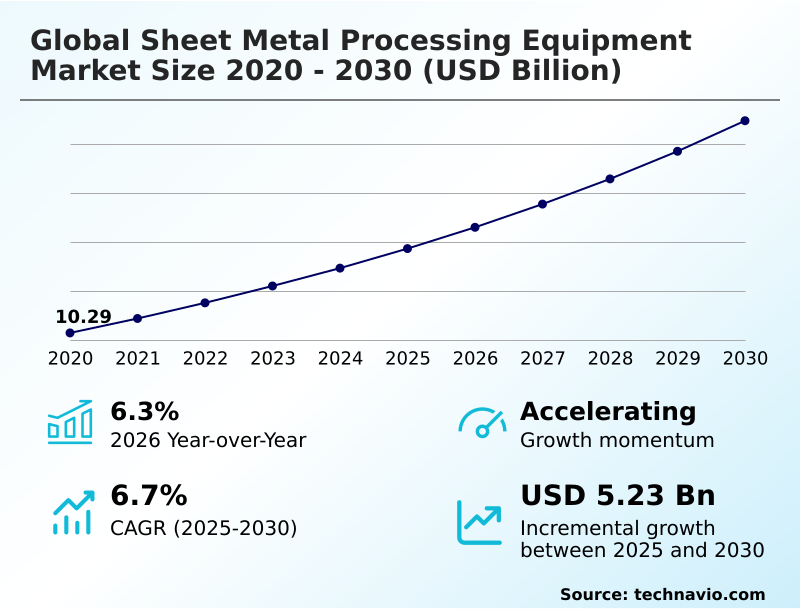
The sheet metal processing equipment market size is valued to increase by USD 5.23 billion, at a CAGR of 6.7% from 2025 to 2030. Increasing pace of technological innovation will drive the sheet metal processing equipment market.
Major Market Trends & Insights
- APAC dominated the market and accounted for a 58.3% growth during the forecast period.
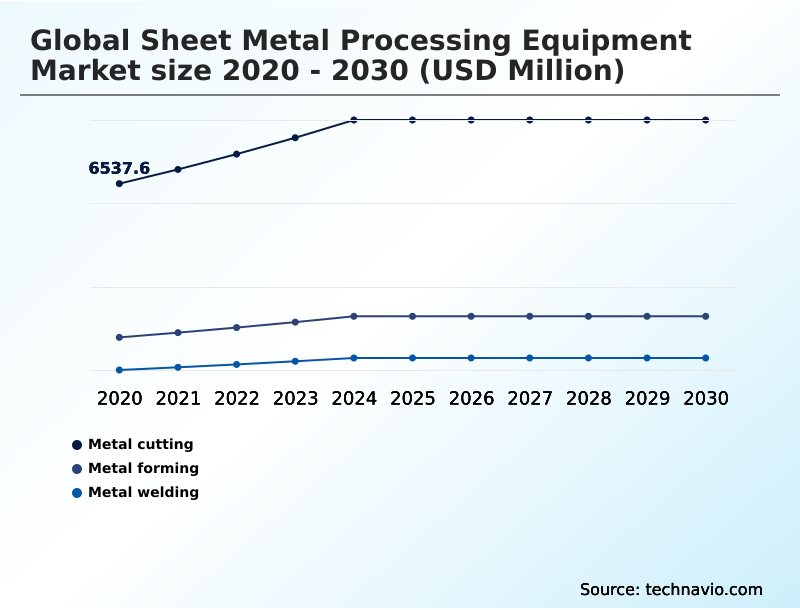
- By Application - Metal cutting segment was valued at USD 8.28 billion in 2024
- By End-user - Automotive segment accounted for the largest market revenue share in 2024
Market Size & Forecast
- Market Opportunities: USD 8.68 billion
- Market Future Opportunities: USD 5.23 billion
- CAGR from 2025 to 2030 : 6.7%
Market Summary
- The sheet metal processing equipment market is undergoing a significant transformation, driven by the convergence of advanced automation and the demand for higher precision in manufacturing. Core drivers include the rapid pace of technological innovation, particularly in high-power fiber lasers and robotic systems, which enable fabricators to achieve greater efficiency and handle advanced materials.
- Key end-use industries, such as automotive, aerospace, and electronics, are creating sustained demand for sophisticated machinery to support trends like electric vehicle production and lightweighting. For instance, an automotive supplier producing battery enclosures must invest in automated press brakes and robotic welding systems to meet stringent quality standards while managing high-volume output.
- This shift toward smart factory solutions, which integrate CAD/CAM software and CNC controls, is a direct response to the persistent skilled labor shortage. However, the high capital investment required for such technology, coupled with supply chain volatility, presents considerable challenges for small and medium-sized enterprises seeking to upgrade their capabilities.
What will be the Size of the Sheet Metal Processing Equipment Market during the forecast period?
Get Key Insights on Market Forecast (PDF) Get Free Sample
How is the Sheet Metal Processing Equipment Market Segmented?
The sheet metal processing equipment industry research report provides comprehensive data (region-wise segment analysis), with forecasts and estimates in "USD million" for the period 2026-2030, as well as historical data from 2020-2024 for the following segments.
- Application
- Metal cutting
- Metal forming
- Metal welding
- End-user
- Automotive
- Construction
- Aerospace
- Electronics
- Others
- Type
- Manual
- Automatic
- Geography
- APAC
- China
- Japan
- South Korea
- Europe
- Germany
- France
- Italy
- North America
- US
- Canada
- Mexico
- Middle East and Africa
- South Africa
- UAE
- Saudi Arabia
- South America
- Brazil
- Argentina
- Rest of World (ROW)
- APAC
By Application Insights
The metal cutting segment is estimated to witness significant growth during the forecast period.
The market is segmented by application, with metal cutting being a critical area defined by constant innovation. While plasma cutting systems and waterjet cutting technology serve specific niches, the segment is dominated by laser-based solutions that enhance precision component manufacturing.
The drive for efficiency in advanced material processing, particularly for electric vehicle component production, has led to systems that achieve cutting speeds up to 30% faster than previous generations. This pursuit of speed is also seen in high-speed punching machines.
Modern equipment increasingly incorporates real-time process monitoring and energy-saving servo-electric drives, supporting both high-volume production of HVAC system components and the sophisticated demands of lights-out production environments.
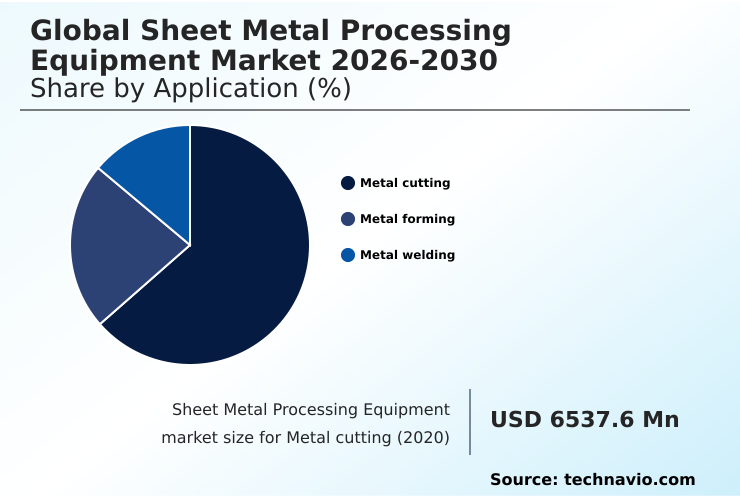
The Metal cutting segment was valued at USD 8.28 billion in 2024 and showed a gradual increase during the forecast period.
Regional Analysis
APAC is estimated to contribute 58.3% to the growth of the global market during the forecast period.Technavio’s analysts have elaborately explained the regional trends and drivers that shape the market during the forecast period.
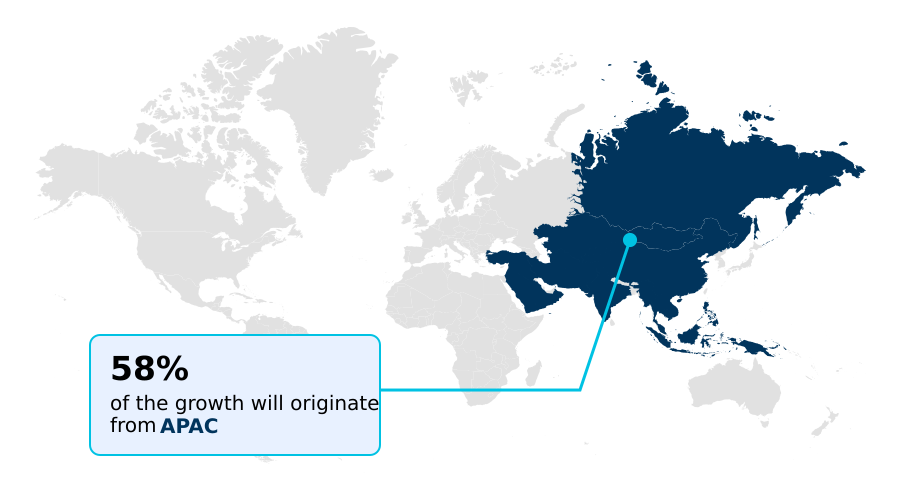
See How Sheet Metal Processing Equipment Market Demand is Rising in APAC Get Free Sample
The geographic landscape is dominated by the APAC region, which is projected to contribute over 58% of the market's incremental growth, driven by its massive manufacturing base for data center infrastructure and structural steel fabrication.
This region is a hotbed for adopting integrated punching and bending systems.
Meanwhile, North America is seeing a surge in investment due to reshoring trends, with over 71% of manufacturers citing labor shortages as a primary challenge, fueling demand for automation in aerospace component manufacturing and architectural metalwork.
Europe remains a hub for advanced technologies like hot stamping technology and multi-axis laser processing. In contrast, emerging markets are investing in heavy-duty equipment, exploring hydroforming processes as cost-effective giga-casting alternatives for automotive and industrial applications.
Market Dynamics
Our researchers analyzed the data with 2025 as the base year, along with the key drivers, trends, and challenges. A holistic analysis of drivers will help companies refine their marketing strategies to gain a competitive advantage.
- Strategic decision-making in the industry now centers on specialized applications and process optimization. For instance, the selection of high power laser cutting for thick materials is driven by the need to increase throughput in heavy industry, while automating press brakes for small batches provides the flexibility required by job shops.
- For complex assemblies, improving weld quality with robotic systems has become a standard for ensuring consistency. In automotive, the debate over automotive giga-casting vs sheet metal assembly is pushing innovation in hot stamping technology for automotive lightweighting and processing high-strength steel for electric vehicles.
- Sustainability is also a key factor, with firms adopting servo-electric press brake energy savings and using advanced nesting software to reduce scrap. Integrated systems for lights-out production are transforming factory floors through automated material handling in fabrication and collaborative robots in metal fabrication. The use of digital twin simulation for press brakes allows for offline programming, significantly reducing setup times.
- For quality assurance, real-time monitoring for quality control is indispensable, especially for precision fabrication for aerospace components and high-volume data center rack manufacturing. These targeted solutions collectively focus on reducing cycle times in metal forming and delivering sustainable and energy-efficient processing across all applications.
- These integrated approaches have shown to improve on-time delivery rates by a notable margin compared to siloed operational structures.
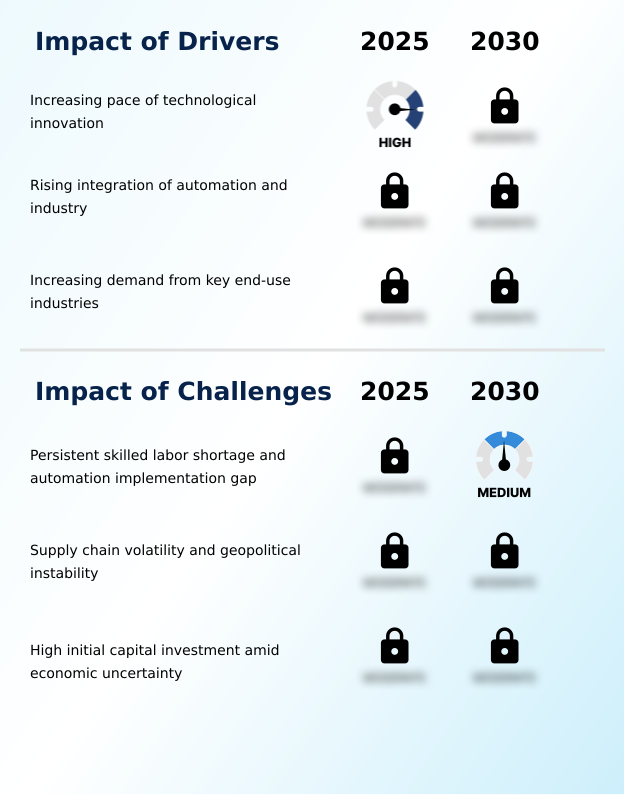
What are the key market drivers leading to the rise in the adoption of Sheet Metal Processing Equipment Industry?
- The increasing pace of technological innovation is a primary driver for the market, enabling unprecedented levels of productivity, precision, and efficiency.
- The market is driven by industry 4.0 integration and the push for smart factory solutions. Advanced CAD/CAM software solutions and seamless CNC controls integration are fundamental to achieving the precision required for electric vehicle component production and lightweighting in automotive.
- The use of digital twin simulations allows fabricators to optimize processes before production, with some achieving a 25% reduction in processing time for new parts.
- Flexible manufacturing systems equipped with automated tool changing offer unparalleled agility, while enhanced predictive maintenance capabilities help improve forecast accuracy by 18% for scheduling downtime.
- This technological drive is essential for manufacturers seeking to enhance their production ecosystems and operational effectiveness.
What are the market trends shaping the Sheet Metal Processing Equipment Industry?
- The rapid proliferation of high-power fiber laser cutting machines is a dominant and accelerating trend. This development enhances productivity by enabling faster cutting speeds and processing of thicker materials.
- Key trends in the sheet metal fabrication industry are pushing toward higher efficiency and sustainability. The proliferation of high-power fiber lasers and automated press brakes facilitates high-precision fabrication, while integrated robotic bending cells are enabling true lights-out manufacturing environments.
- These systems are increasingly designed as energy-efficient equipment, with some companies reporting energy use lowered by 12% compared to older hydraulic systems. Furthermore, the adoption of advanced nesting software for material optimization directly supports sustainable manufacturing practices and contributes to reduced operational costs.
- This focus on intelligent automation has been shown to reduce machine downtime by up to 30% in integrated setups.
What challenges does the Sheet Metal Processing Equipment Industry face during its growth?
- A persistent skilled labor shortage and a gap in automation implementation represent a significant challenge confronting the industry's growth trajectory.
- Addressing the skilled labor gap through automation remains a primary challenge, driving investment in automated sorting systems and robotic welding systems. The integration of collaborative robots (cobots) and advanced machine vision systems is becoming critical, especially as reshoring manufacturing initiatives increase demand for high-strength steel processing and aluminum alloy fabrication.
- Implementing automated material handling can reduce labor costs by over 20% in high-volume settings. However, ensuring supply chain resilience for these sophisticated components is a persistent concern. These technologies directly combat workforce deficits by taking over repetitive tasks, with robotic systems capable of lowering error rates by up to 40% compared to manual operations.
Exclusive Technavio Analysis on Customer Landscape
The sheet metal processing equipment market forecasting report includes the adoption lifecycle of the market, covering from the innovator’s stage to the laggard’s stage. It focuses on adoption rates in different regions based on penetration. Furthermore, the sheet metal processing equipment market report also includes key purchase criteria and drivers of price sensitivity to help companies evaluate and develop their market growth analysis strategies.
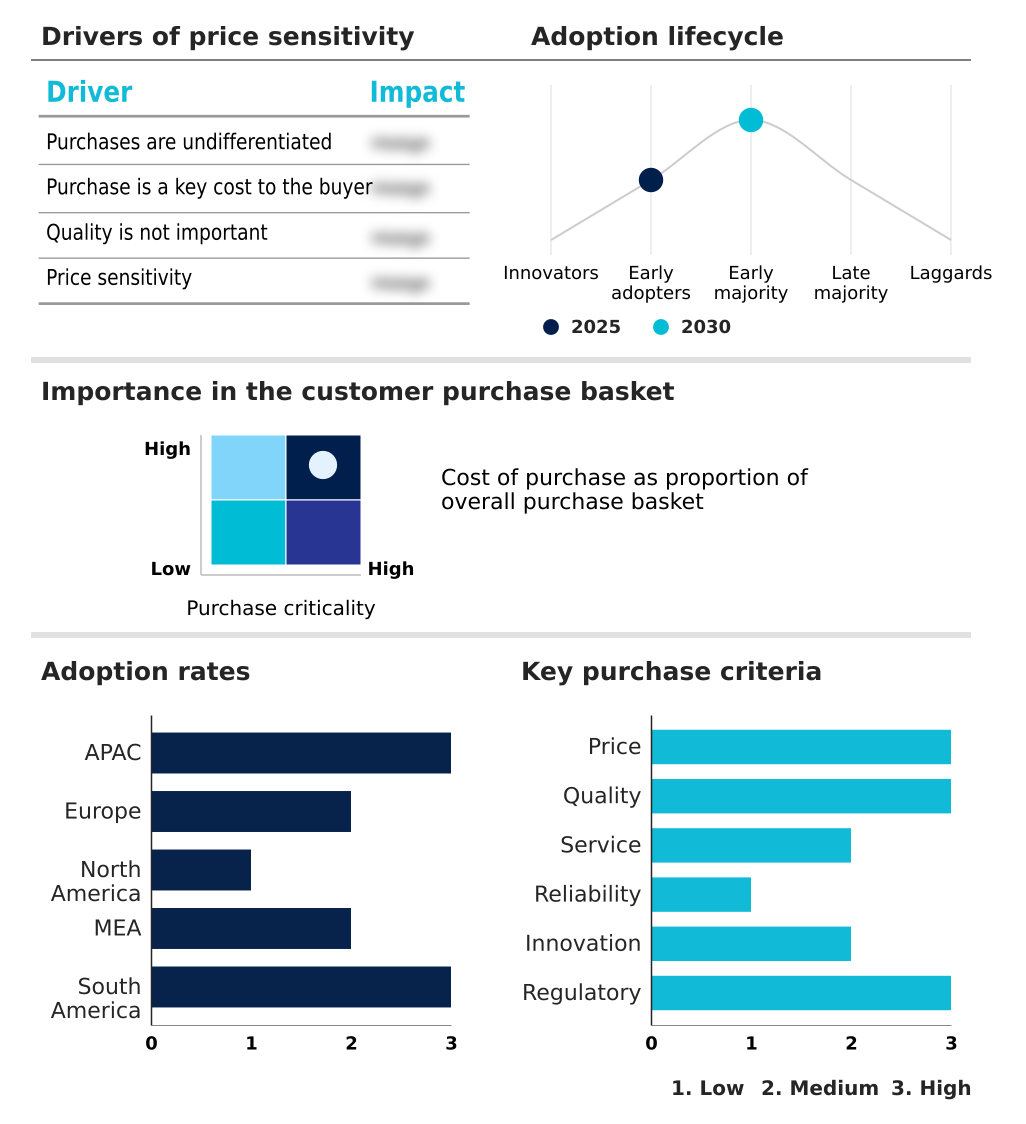
Customer Landscape of Sheet Metal Processing Equipment Industry
Competitive Landscape
Companies are implementing various strategies, such as strategic alliances, sheet metal processing equipment market forecast, partnerships, mergers and acquisitions, geographical expansion, and product/service launches, to enhance their presence in the industry.
Bodor Laser - Offerings center on high-precision laser cutting machines, providing advanced and automated solutions for complex metal cutting and fabrication requirements in the industrial sector.
The industry research and growth report includes detailed analyses of the competitive landscape of the market and information about key companies, including:
- Bodor Laser
- Bystronic Laser AG
- Coherent Corp.
- Dallan SpA
- DANOBAT S. Coop.
- Haas Automation Inc.
- Haco NV
- Jier North America Inc.
- Komatsu India Pvt. Ltd.
- LVD Co. nv
- Maanshan Durmapress Co. Ltd
- Mazak Optonics Corp.
- Mitsubishi Electric Corp.
- Murata Machinery Ltd.
- Nukon Bulgaria ltd.
- PRIMA POWER SEA CO LTD.
- Salvagnini Italia SPA
- SCM GROUP Spa
- TRUMPF SE Co. KG
- Wilson Tool International
Qualitative and quantitative analysis of companies has been conducted to help clients understand the wider business environment as well as the strengths and weaknesses of key industry players. Data is qualitatively analyzed to categorize companies as pure play, category-focused, industry-focused, and diversified; it is quantitatively analyzed to categorize companies as dominant, leading, strong, tentative, and weak.
Recent Development and News in Sheet metal processing equipment market
- In August 2024, Bodor Laser launched its new L Series of large-format machines, designed to integrate more power for precision in cutting demanding materials like structural steel.
- In November 2024, AMADA unveiled its next-generation Regius series fiber laser cutting machine, which incorporates artificial intelligence to optimize the cutting path and reduce processing time.
- In December 2024, Prima Power acquired Sistec AM, a provider of robotic and customized industrial automation systems, to expand its automation capabilities and integrated technology portfolio.
- In May 2025, Bodor Laser showcased its laser technology at the FEIMEC industrial exhibition in Sao Paulo, demonstrating its strategic focus on the expanding South American manufacturing market.
Dive into Technavio’s robust research methodology, blending expert interviews, extensive data synthesis, and validated models for unparalleled Sheet Metal Processing Equipment Market insights. See full methodology.
| Market Scope | |
|---|---|
| Page number | 299 |
| Base year | 2025 |
| Historic period | 2020-2024 |
| Forecast period | 2026-2030 |
| Growth momentum & CAGR | Accelerate at a CAGR of 6.7% |
| Market growth 2026-2030 | USD 5226.5 million |
| Market structure | Fragmented |
| YoY growth 2025-2026(%) | 6.3% |
| Key countries | China, Japan, South Korea, India, Australia, Indonesia, Germany, France, Italy, UK, Spain, The Netherlands, US, Canada, Mexico, South Africa, UAE, Saudi Arabia, Egypt, Turkey, Brazil, Argentina and Chile |
| Competitive landscape | Leading Companies, Market Positioning of Companies, Competitive Strategies, and Industry Risks |
Research Analyst Overview
- From a research perspective, the sheet metal processing equipment market’s evolution is defined by the integration of intelligent and automated technologies. The industry is rapidly moving beyond standalone machines toward flexible manufacturing systems that incorporate robotic bending cells and automated sorting systems for lights-out manufacturing.
- The push for higher productivity is evident in the adoption of high-power fiber lasers and high-speed punching machines, which have demonstrated the ability to reduce cycle times by over 30%. Key technologies like hot stamping technology and hydroforming processes are becoming crucial, offering giga-casting alternatives in automotive applications.
- Advanced systems feature CNC controls integration with CAD/CAM software solutions and digital twin simulations for process optimization. Innovations in automated tool changing, multi-axis laser processing, and integrated punching and bending are enhancing machine versatility. Meanwhile, servo-electric drives are replacing less efficient systems, and the use of collaborative robots (cobots), machine vision systems, and robotic welding systems is addressing labor gaps.
- Advanced nesting software and real-time process monitoring are standard for maximizing material use, while plasma cutting systems and waterjet cutting technology serve specialized needs alongside automated material handling.
What are the Key Data Covered in this Sheet Metal Processing Equipment Market Research and Growth Report?
-
What is the expected growth of the Sheet Metal Processing Equipment Market between 2026 and 2030?
-
USD 5.23 billion, at a CAGR of 6.7%
-
-
What segmentation does the market report cover?
-
The report is segmented by Application (Metal cutting, Metal forming, and Metal welding), End-user (Automotive, Construction, Aerospace, Electronics, and Others), Type (Manual, and Automatic) and Geography (APAC, Europe, North America, Middle East and Africa, South America)
-
-
Which regions are analyzed in the report?
-
APAC, Europe, North America, Middle East and Africa and South America
-
-
What are the key growth drivers and market challenges?
-
Increasing pace of technological innovation, Persistent skilled labor shortage and automation implementation gap
-
-
Who are the major players in the Sheet Metal Processing Equipment Market?
-
Bodor Laser, Bystronic Laser AG, Coherent Corp., Dallan SpA, DANOBAT S. Coop., Haas Automation Inc., Haco NV, Jier North America Inc., Komatsu India Pvt. Ltd., LVD Co. nv, Maanshan Durmapress Co. Ltd, Mazak Optonics Corp., Mitsubishi Electric Corp., Murata Machinery Ltd., Nukon Bulgaria ltd., PRIMA POWER SEA CO LTD., Salvagnini Italia SPA, SCM GROUP Spa, TRUMPF SE Co. KG and Wilson Tool International
-
Market Research Insights
- Market dynamics are shaped by the strategic shift toward smart factory solutions and advanced material processing to enhance supply chain resilience. The need for high-precision fabrication in sectors like aerospace component manufacturing and electric vehicle component production is driving investment in energy-efficient equipment. Companies adopting these technologies report a 15% improvement in operational efficiency.
- Furthermore, the push for reshoring manufacturing and sustainable manufacturing practices is compelling businesses to adopt automation to address the skilled labor gap, which has led to a 20% reduction in labor-related costs in some automated facilities. This transition is critical for producing components for data center infrastructure and architectural metalwork while maintaining a competitive edge.
We can help! Our analysts can customize this sheet metal processing equipment market research report to meet your requirements.
 RIA -
RIA - 
