



Sinusitis Drugs Market Size 2024-2028
The sinusitis drugs market size is forecast to increase by USD 735.7 million at a CAGR of 5.53% between 2023 and 2028.
- The market is experiencing significant growth due to the rising prevalence of sinusitis, a common inflammatory condition affecting the sinuses. The increasing investments in research and development by major players are also driving market growth. Diagnostic techniques such as sinus CT scans, nasal cytology testing, and ciliary function tests play a crucial role in accurate diagnosis. Surgical interventions, such as endoscopic sinus surgery and balloon sinuplasty, are increasingly being used for sinusitis management, providing an opportunity for market expansion. Additionally, the development of novel drugs and combination therapies is expected to further fuel market growth. The market is expected to witness steady growth In the coming years, offering potential opportunities for key players.
What will be the Size of the Sinusitis Drugs Market During the Forecast Period?

- The market caters to the growing demand for effective treatments for sinusitis in both children and adults. Sinusitis, an inflammatory condition affecting the sinuses, can manifest as acute, sub-acute, or chronic forms. Antibiotic development remains a key focus In the market due to the prevalence of bacterial infections. However, rising pollution levels and increasing patient knowledge contribute to a shift towards non-antibiotic therapeutic approaches. Errors and complications associated with diagnostic procedures and dosage forms necessitate continuous innovation in sinusitis management.
- Furthermore, the market introduction of advanced technologies like 3D navigation technology aims to improve patient outcomes while minimizing risks. Despite the availability of various treatments for sinusitis, complications such as meningitis and brain abscess remain concerns. Overall, the market is driven by the unmet medical need for effective, safe, and patient-friendly treatments for sinusitis.
How is this Sinusitis Drugs Industry segmented and which is the largest segment?
The sinusitis drugs industry research report provides comprehensive data (region-wise segment analysis), with forecasts and estimates in "USD million" for the period 2024-2028, as well as historical data from 2018-2022 for the following segments.
- Product
- Steroid nasal sprays
- Antibiotics
- Decongestants
- Others
- Disease Type
- Acute sinusitis
- Chronic sinusitis
- Sub-acute sinusitis
- Geography
- North America
- US
- Europe
- Germany
- UK
- France
- Asia
- China
- Rest of World (ROW)
- North America
By Product Insights
- The steroid nasal sprays segment is estimated to witness significant growth during the forecast period.
Sinusitis drugs hold a significant market share due to their effectiveness in alleviating sinusitis symptoms, such as nasal congestion and swelling. Steroid nasal sprays, like Flonase, NASACORT AQ, Nasonex, Rhinocort, Zetonna, and QNASL, are commonly used. They function by reducing inflammation and mucus production. However, these medications may necessitate multiple administrations before achieving optimal results. Combined with a nasal wash, they yield better outcomes for sinusitis patients. Diagnostic techniques, including Sinus CT scans, nasal cytology testing, ciliary function tests, and blood tests, aid in proper diagnosis and treatment. Antibiotics are prescribed for bacterial sinusitis, while decongestants and nasal corticosteroids provide relief for viral sinusitis.
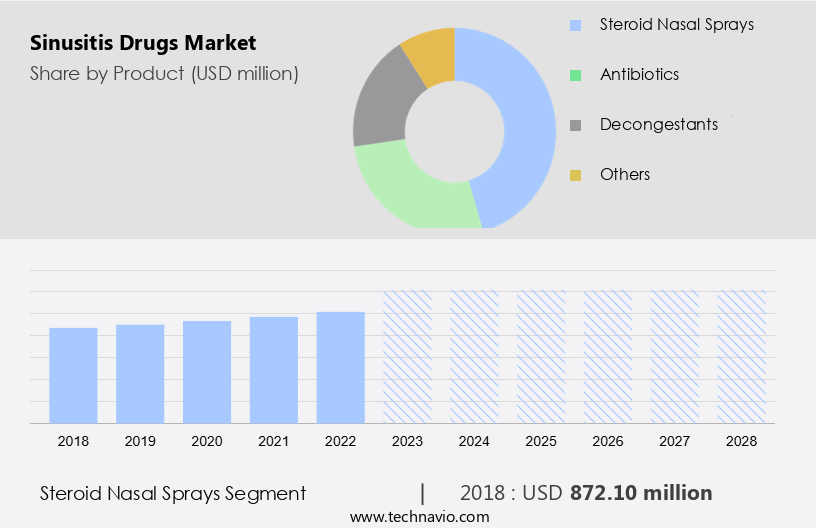
Get a glance at the Sinusitis Drugs Industry report of share of various segments Request Free Sample
The steroid nasal sprays segment was valued at USD 872.10 million in 2018 and showed a gradual increase during the forecast period.
Regional Analysis
- North America is estimated to contribute 39% to the growth of the global market during the forecast period.
Technavio's analysts have elaborately explained the regional trends and drivers that shape the market during the forecast period.
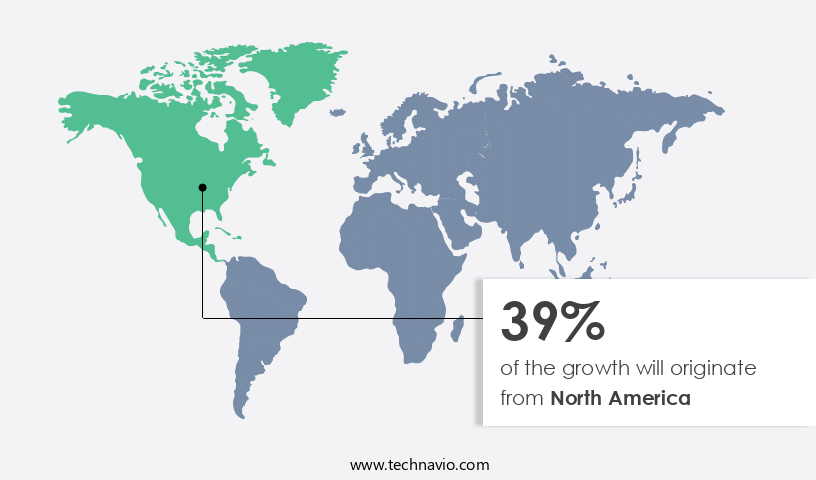
For more insights on the market share of various regions, Request Free Sample
The market in North America is currently the largest, driven by substantial R&D investments from major pharmaceutical companies and a well-established regulatory framework. For instance, Pfizer is conducting Phase I trials for PF-0681714, a potential treatment for chronic rhinosinusitis with nasal polyps and atopic dermatitis. Similarly, Optinose is advancing OPN-375 through Phase III trials for chronic sinusitis patients. Diagnostic techniques, such as sinus CT scans, nasal cytology testing, and ciliary function tests, play a crucial role in identifying sinusitis types, including acute, sub-acute, and chronic. Antibiotic development remains a significant focus due to the involvement of germs, viruses, and bacteria in sinusitis.
Market Dynamics
Our sinusitis drugs market researchers analyzed the data with 2023 as the base year, along with the key drivers, trends, and challenges. A holistic analysis of drivers will help companies refine their marketing strategies to gain a competitive advantage.
What are the key market drivers leading to the rise In the adoption of Sinusitis Drugs Industry?
Rising prevalence of sinusitis is the key driver of the market.
- Sinusitis, an inflammation of the sinuses, affects a significant number of adults and children In the US. According to the Centers for Disease Control and Prevention (CDC), viruses are the most common cause of sinusitis, with nine out of ten adults and five-seven out of ten children being affected. Bacterial sinusitis, on the other hand, affects one out of ten adults and three-five out of ten children. Other causes include allergies, pollutants, and fungal infections. Diagnostic techniques such as Sinus CT scans, nasal cytology testing, nasal implants, ciliary function tests, and blood tests are used to identify sinusitis. Antibiotic development is a key area of focus for medication makers in response to bacterial sinusitis.
- In addition, patient knowledge and the healthcare system's approach to sinusitis management are essential in ensuring positive patient outcomes. Several therapeutic approaches are available for sinusitis treatment, including decongestants, antibiotics, surgery, nasal corticosteroids, nasal sprays, and corticosteroids. Complications of sinusitis can include meningitis and brain abscess. Chronic sinusitis, sub-acute sinusitis, and acute sinusitis can affect individuals differently. Germs, viruses, and bacteria can cause sinusitis, and the nasal cavities can become swollen and congested with fluid. Air pollution, common colds, and mucus can exacerbate sinusitis symptoms. The immune system's response to pollutants, such as chemical pollutants and particulate matter, can contribute to sinusitis.
What are the market trends shaping the Sinusitis Drugs Industry?
Increasing investments in research and development by major players is the upcoming market trend.
- The market is experiencing significant growth due to increasing research and development expenditures by medication makers to create innovative therapies for both children and adults. For instance, Sanofi SA is leading the way with a USD29 million investment in its novel implant, LYR-210, designed for the treatment of chronic rhinosinusitis. This implant utilizes advanced technologies, such as a transmucosal therapeutic system, which allows for the delivery of approved steroids into the sinonasal tissues that are typically resistant to traditional treatments. The implant is inserted into the inflamed sinonasal region of patients with chronic rhinosinusitis. Sinusitis, an inflammation of the sinuses, affects millions of people worldwide, and its prevalence is increasing due to factors such as pollution levels and viral infections.
- Moreover, diagnostic techniques, including sinus CT scans, nasal cytology testing, ciliary function tests, and blood tests, are crucial in identifying the type and severity of sinusitis. The therapeutic approach to sinusitis management includes various treatment types, such as decongestants, antibiotics, nasal corticosteroids, nasal sprays, and surgery. The healthcare system's focus on improving patient outcomes and reducing errors and complications associated with sinusitis treatments has led to the development of new drugs and therapies. For example, Optinose XHANCE, a nasal spray, has been approved for the treatment of chronic sinusitis In the US. Air pollution, common colds, and mucus production can all contribute to sinusitis, making it essential to understand the role of the immune system, particularly T suppressor cells, In the body's response to sinusitis-causing germs, viruses, and bacteria.
What challenges does the Sinusitis Drugs Industry face during its growth?
Surgical intervention used for sinusitis management is a key challenge affecting the industry growth.
- Chronic sinusitis is a common health issue affecting both adults and children, characterized by inflammation of the sinuses and nasal passages. The diagnostic techniques for sinusitis include Sinus CT scans, nasal cytology testing, ciliary function tests, and blood tests. Antibiotic development is a significant focus in sinusitis management due to the involvement of germs, viruses, and bacteria. The healthcare system and medication makers invest substantial R&D expenditures to approve new medications and therapies. Functional endoscopic sinus surgery is the gold standard for treating chronic rhinosinusitis, with studies reporting improvement rates of up to 54.2%. This surgical approach aims to improve patient outcomes by addressing swelling and sinus congestion In the nasal cavities.
- Furthermore, complications, such as meningitis and brain abscess, are potential risks, and proper diagnostic techniques are crucial to minimize errors. Therapeutic approaches for sinusitis include decongestants, antibiotics, and surgery. Decongestants help reduce swelling, while antibiotics target bacterial infections. Nasal corticosteroids and nasal sprays are also common treatments. Newer therapeutic approaches, like Optinose XHANCE, are gaining popularity due to their effectiveness in addressing sinusitis symptoms. Air pollution, common cold, and mucus are environmental factors that can exacerbate sinusitis symptoms. Chemical pollutants and particulate matter can negatively impact the nasal mucosa, impairing the immune system's T suppressor cells. The World Allergy Organization prioritizes the importance of patient knowledge and early intervention to prevent complications.
Exclusive Customer Landscape
The sinusitis drugs market forecasting report includes the adoption lifecycle of the market, covering from the innovator's stage to the laggard's stage. It focuses on adoption rates in different regions based on penetration. Furthermore, the sinusitis drugs market report also includes key purchase criteria and drivers of price sensitivity to help companies evaluate and develop their market growth analysis strategies.
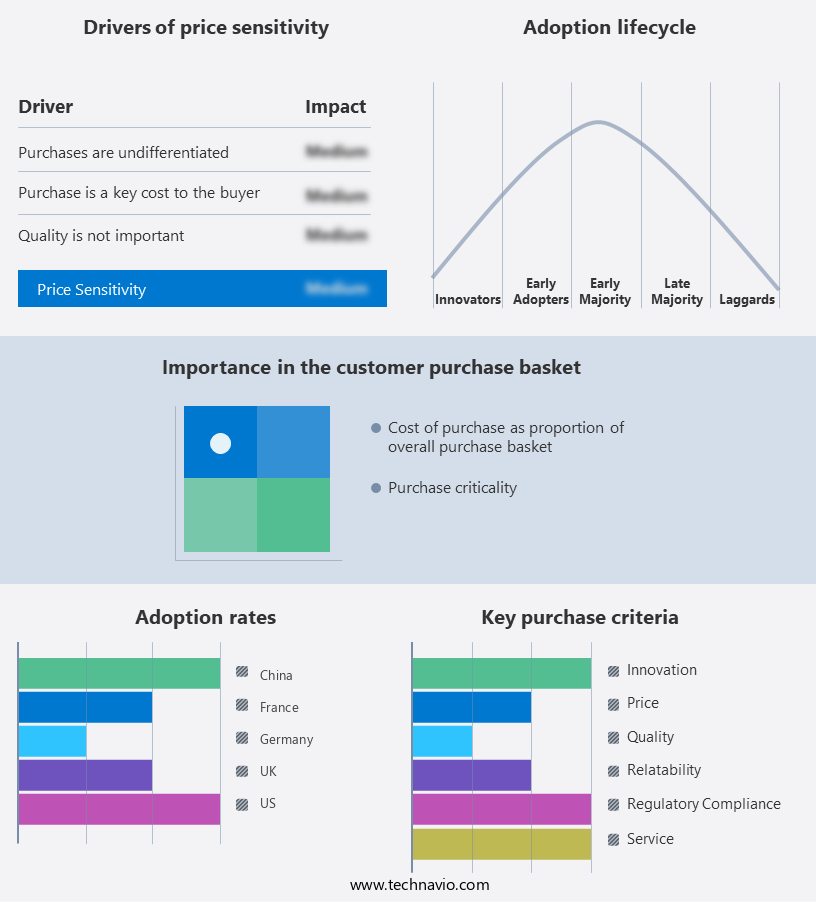
Customer Landscape
Key Companies & Market Insights
Companies are implementing various strategies, such as strategic alliances, sinusitis drugs market forecast, partnerships, mergers and acquisitions, geographical expansion, and product/service launches, to enhance their presence In the industry.
The industry research and growth report includes detailed analyses of the competitive landscape of the market and information about key companies, including:
- AbbVie Inc.
- Alembic Pharmaceuticals Ltd.
- Aurobindo Pharma Ltd.
- Bayer AG
- Bionpharma Inc.
- CHIESI Farmaceutici SpA
- Cipla Inc.
- Dr Reddys Laboratories Ltd.
- Fresenius SE and Co. KGaA
- GlaxoSmithKline Plc
- Hikma Pharmaceuticals Plc
- Johnson and Johnson Services Inc.
- Merck and Co. Inc.
- Neopharma Corp.
- Novartis AG
- Pfizer Inc.
- Sanofi SA
- Sun Pharmaceutical Industries Ltd.
- Teligent Inc.
- Teva Pharmaceutical Industries Ltd.
Qualitative and quantitative analysis of companies has been conducted to help clients understand the wider business environment as well as the strengths and weaknesses of key industry players. Data is qualitatively analyzed to categorize companies as pure play, category-focused, industry-focused, and diversified; it is quantitatively analyzed to categorize companies as dominant, leading, strong, tentative, and weak.
Research Analyst Overview
The sinusitis market encompasses a range of diagnostic techniques and therapeutic approaches aimed at managing sinusitis in both children and adults. Sinusitis is an inflammatory condition characterized by swelling of the mucosal lining In the nasal cavities and paranasal sinuses. This condition can result from various causes, including germs, viruses, and bacteria, as well as environmental factors such as air pollution and chemical pollutants. Diagnostic techniques play a crucial role In the accurate identification and classification of sinusitis. These may include imaging technologies such as sinus CT scans and 3D navigation technology, as well as nasal cytology testing, ciliary function tests, and blood tests.
Moreover, the healthcare system and medication makers have been investing heavily in R&D expenditures to develop more precise and less invasive diagnostic methods. Despite advancements in diagnostic techniques, sinusitis remains a significant healthcare challenge due to the potential for complications, including meningitis and brain abscess. The therapeutic approach to managing sinusitis varies depending on the severity and duration of the condition. Decongestants and antibiotics are commonly prescribed for acute sinusitis, while nasal corticosteroids and nasal sprays are often used for chronic sinusitis. The development of new medications and therapies for sinusitis is an ongoing process. Antibiotic development is a key focus area, as antibiotic-resistant bacteria continue to pose a threat In the treatment of sinusitis.
In addition, fresh therapeutic approaches, such as respiratory remedies and immunomodulatory agents, are also being explored. Patient knowledge and understanding of sinusitis are essential for effective management. Patients should be informed about the causes of sinusitis, diagnostic techniques, and treatment options. This can help reduce errors and complications associated with self-diagnosis and inappropriate use of medications. The use of dosage forms such as nasal sprays and corticosteroids has become increasingly common In the management of sinusitis. However, these medications can have side effects, and patients should be monitored closely for any adverse reactions. Surgery may be necessary in cases of chronic or sub-acute sinusitis that do not respond to medical treatment.
Moreover, air pollution and common cold are significant contributors to sinusitis, particularly in urban areas with high levels of particulate matter and chemical pollutants. The World Allergy Organization has prioritized the importance of addressing environmental factors In the prevention and management of sinusitis. Therefore, the sinusitis market is a dynamic and evolving field, driven by advancements in diagnostic techniques, therapeutic approaches, and medication development. The healthcare system and medication makers continue to invest in R&D to improve patient outcomes and reduce complications associated with sinusitis. Patient education and understanding are crucial components of effective sinusitis management.
|
Sinusitis Drugs Market Scope |
|
|
Report Coverage |
Details |
|
Page number |
178 |
|
Base year |
2023 |
|
Historic period |
2018-2022 |
|
Forecast period |
2024-2028 |
|
Growth momentum & CAGR |
Accelerate at a CAGR of 5.53% |
|
Market growth 2024-2028 |
USD 735.7 million |
|
Market structure |
Fragmented |
|
YoY growth 2023-2024(%) |
5.13 |
|
Key countries |
US, Germany, UK, China, and France |
|
Competitive landscape |
Leading Companies, Market Positioning of Companies, Competitive Strategies, and Industry Risks |
What are the Key Data Covered in this Sinusitis Drugs Market Research and Growth Report?
- CAGR of the Sinusitis Drugs industry during the forecast period
- Detailed information on factors that will drive the Sinusitis Drugs growth and forecasting between 2024 and 2028
- Precise estimation of the size of the market and its contribution of the industry in focus to the parent market
- Accurate predictions about upcoming growth and trends and changes in consumer behaviour
- Growth of the market across North America, Europe, Asia, and Rest of World (ROW)
- Thorough analysis of the market's competitive landscape and detailed information about companies
- Comprehensive analysis of factors that will challenge the sinusitis drugs market growth of industry companies
We can help! Our analysts can customize this sinusitis drugs market research report to meet your requirements.
 RIA -
RIA - 
