


Small Wind Turbine Market Size 2026-2030
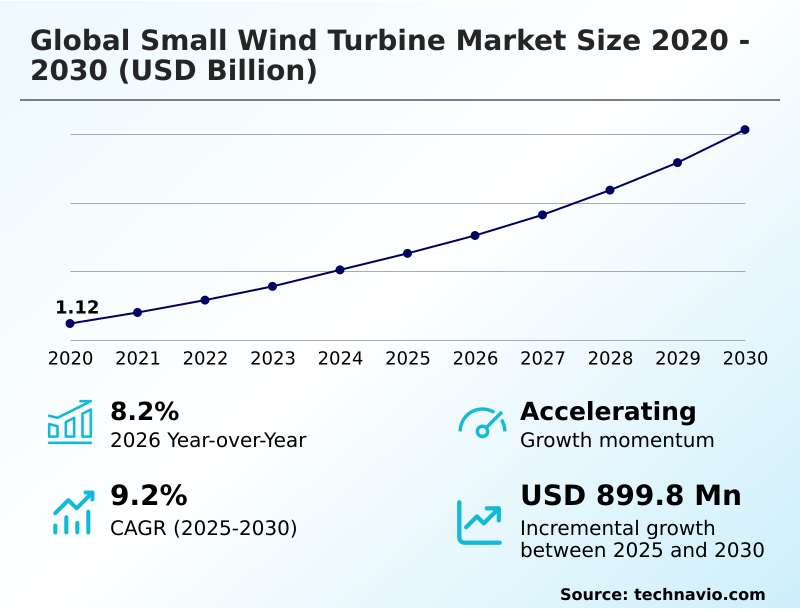
The small wind turbine market size is valued to increase by USD 899.8 million, at a CAGR of 9.2% from 2025 to 2030. Increasing demand for clean energy and supportive government policies will drive the small wind turbine market.
Major Market Trends & Insights
- APAC dominated the market and accounted for a 46.7% growth during the forecast period.
- By Type - Horizontal axis segment was valued at USD 1.02 billion in 2024
- By Installation Sites - Onshore segment accounted for the largest market revenue share in 2024
Market Size & Forecast
- Market Opportunities: USD 1.41 billion
- Market Future Opportunities: USD 899.8 million
- CAGR from 2025 to 2030 : 9.2%
Market Summary
- The small wind turbine market is pivotal in the global shift towards diversified and resilient energy portfolios. This expansion is propelled by the dual drivers of achieving energy independence and electrifying remote, off-grid locations where extending traditional infrastructure is unfeasible.
- Technological evolution is a core theme, with significant advancements in aerodynamic design and the widespread adoption of direct-drive systems enhancing both efficiency and reliability. For instance, an agricultural business can leverage a hybrid wind-solar system to power irrigation pumps, ensuring operational continuity and stable crop yields even during prolonged grid outages.
- This on-site power generation capability provides a hedge against volatile electricity prices. However, the market's trajectory is moderated by challenges such as complex local permitting regulations and intense economic pressure from the rapidly maturing solar PV sector.
- Success hinges on continued innovation in turbine performance, particularly in turbulent, lower-speed wind environments, and navigating the intricate landscape of public acceptance and policy support. The focus is shifting towards integrated solutions, where small wind is a critical component of a larger, intelligent energy ecosystem rather than a standalone product.
What will be the Size of the Small Wind Turbine Market during the forecast period?
Get Key Insights on Market Forecast (PDF) Get Free Sample
How is the Small Wind Turbine Market Segmented?
The small wind turbine industry research report provides comprehensive data (region-wise segment analysis), with forecasts and estimates in "USD million" for the period 2026-2030, as well as historical data from 2020-2024 for the following segments.
- Type
- Horizontal axis
- Vertical axis
- Installation sites
- Onshore
- Offshore
- Product type
- Single rotor
- Double rotor
- Multi-rotor
- Geography
- APAC
- China
- India
- Japan
- Europe
- Germany
- UK
- France
- North America
- US
- Canada
- Mexico
- South America
- Brazil
- Argentina
- Middle East and Africa
- South Africa
- UAE
- Saudi Arabia
- Rest of World (ROW)
- APAC
By Type Insights
The horizontal axis segment is estimated to witness significant growth during the forecast period.
The horizontal axis segment, or HAWT, is the most established configuration in the small wind turbine market.
This design's mature technology, featuring a rotor with blades spinning on a parallel axis to the ground, is a result of extensive operational refinement.
Its lift-based approach to aerodynamic design provides a significant performance advantage in consistent, non-turbulent wind flows, making it ideal for agricultural and open-land commercial applications.
Systems using this technology demonstrate up to a 15% higher capacity factor in optimal wind sites. Innovation focuses on advanced airfoil profiles and composite materials to enhance the power curve.
The segment's growth is driven by its proven reliability and superior energy yield, supported by a robust manufacturing ecosystem that includes advanced power electronics and standardized grid interconnection protocols for seamless on-site power generation.
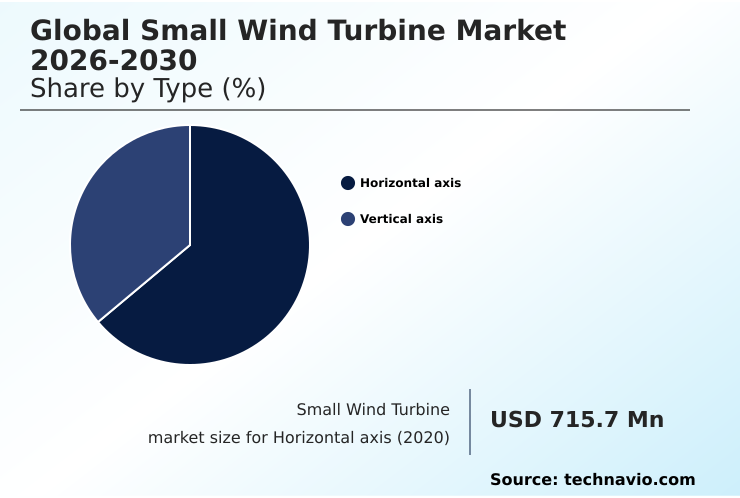
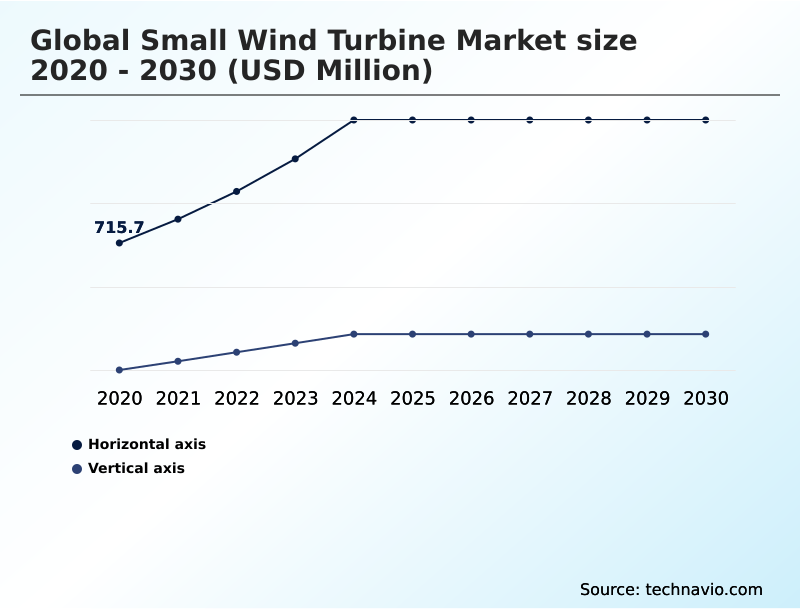
The Horizontal axis segment was valued at USD 1.02 billion in 2024 and showed a gradual increase during the forecast period.
Regional Analysis
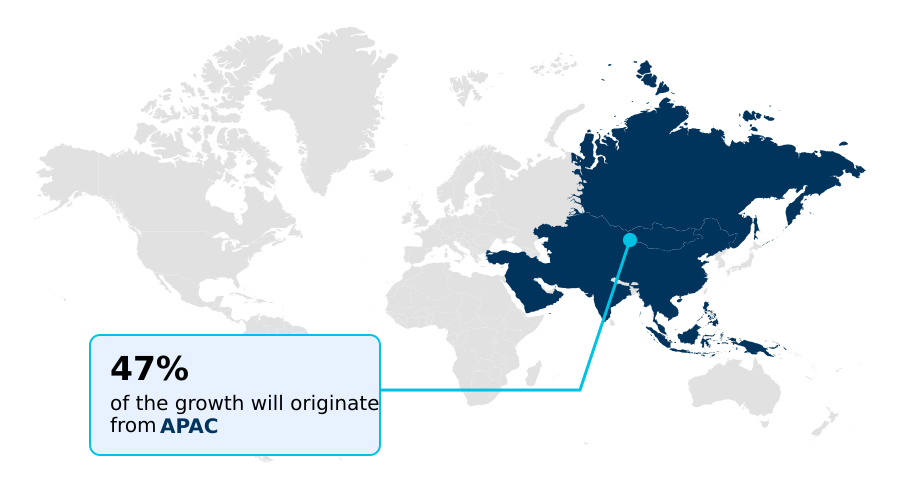
APAC is estimated to contribute 46.7% to the growth of the global market during the forecast period.Technavio’s analysts have elaborately explained the regional trends and drivers that shape the market during the forecast period.
See How Small Wind Turbine Market Demand is Rising in APAC Get Free Sample
The geographic landscape of the small wind turbine market is diverse, with APAC poised to contribute nearly 47% of the market's incremental growth, driven largely by rural electrification programs and a burgeoning manufacturing base.
In this region, hybrid wind-solar systems for remote power systems have improved energy access for over 60% of targeted off-grid communities. North America and Europe remain mature markets, focusing on enhancing grid resilience and promoting community-owned energy projects.
In these regions, advanced vertical axis wind turbines are being integrated into urban environments to support net-zero energy buildings. The emphasis is on deploying turbines with a low tip-speed ratio to minimize noise and improve public acceptance.
The integration of smart inverters and sophisticated power electronics has boosted grid-connected system efficiency by up to 12%, optimizing energy sales and self-consumption.
Market Dynamics
Our researchers analyzed the data with 2025 as the base year, along with the key drivers, trends, and challenges. A holistic analysis of drivers will help companies refine their marketing strategies to gain a competitive advantage.
- The decision-making process for adopting distributed wind technology involves a detailed evaluation of various factors, extending beyond initial costs. For an agricultural enterprise considering a small wind turbine for agricultural irrigation, the analysis must weigh the long-term benefits of energy independence against the initial investment.
- In parallel, a property developer exploring a vertical axis turbine for urban environments must prioritize low-noise operation and aesthetic integration. A critical step for any potential adopter is a thorough cost comparison of small wind vs. solar, considering site-specific resources to accurately project the system's payback period.
- The technical specifications, such as direct-drive turbine maintenance costs and advances in small wind turbine noise reduction technology, significantly influence the total cost of ownership. For off-grid applications, such as a small wind turbine for remote telecom sites, integrating small wind with battery storage is essential for ensuring a reliable power supply.
- This hybrid approach is also central to developing a small wind turbine for community microgrids, which enhances local grid resilience. Hybrid systems have demonstrated up to a 40% greater energy availability in regions with complementary wind and solar resources compared to single-source setups, a critical factor for operational planning.
- The market is also seeing growth in niche areas, with solutions like a small wind turbine for marine buoys gaining traction. Ultimately, leveraging government incentives for small wind turbines is crucial for improving project economics and accelerating the transition toward a small wind turbine for farm energy independence and broader decarbonization goals.
What are the key market drivers leading to the rise in the adoption of Small Wind Turbine Industry?
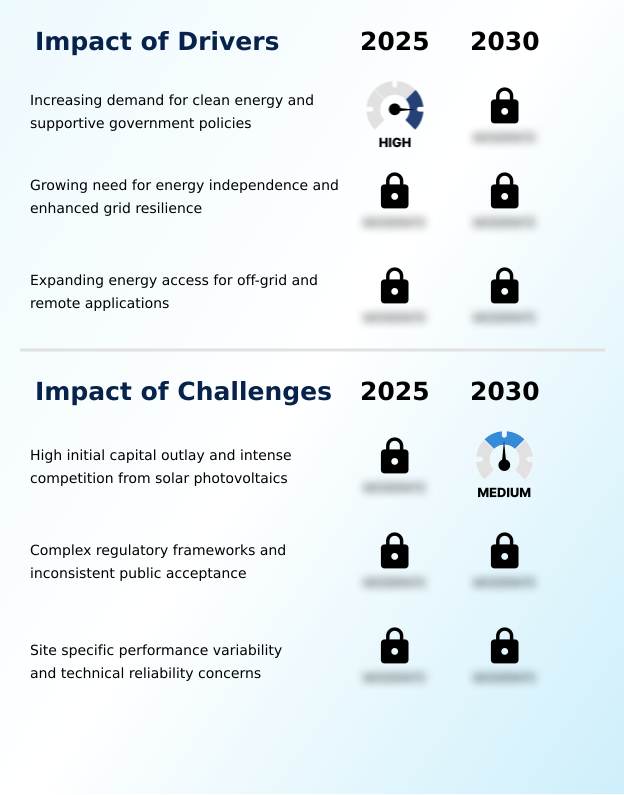
- The increasing demand for clean energy, coupled with supportive government policies, serves as a key driver for market growth.
- The market is fundamentally driven by the global pursuit of decentralized power generation and enhanced grid resilience.
- Frequent power outages from extreme weather have led businesses to adopt on-site power generation, with such systems preventing production losses that can exceed 15% of daily revenue.
- This demand for energy independence is reinforced by supportive government policies like renewable portfolio standards and feed-in tariffs, which improve the economic case for investment. Another major driver is the need for off-grid electrification in developing regions.
- Small wind turbines provide a scalable solution for rural electrification and are critical for powering remote telecom tower power infrastructure.
- The use of standalone systems in agriculture has been shown to boost farm productivity by over 20% by enabling reliable irrigation and processing.
What are the market trends shaping the Small Wind Turbine Industry?
- The integration with hybrid renewable systems and energy storage is a significant upcoming trend. This shift enhances the reliability and consistency of power supply from distributed wind energy sources.
- A key trend is the integration of turbines into hybrid systems with energy storage solutions. This approach addresses the intermittency of wind, with hybrid wind-solar installations achieving up to a 40% higher energy availability compared to single-source systems, enhancing energy self-sufficiency.
- This trend is accelerating the adoption of urban wind energy solutions, where compact vertical axis wind turbines are being designed for building architecture integration to support net-zero energy buildings. Innovations in turbine design and efficiency, particularly in blade aerodynamics and direct-drive generators, are making systems quieter and more reliable.
- Advanced control systems now allow for sophisticated demand response and peak shaving capabilities, reducing energy costs for commercial users by an average of 15% in certain markets. The market is capitalizing on this shift towards intelligent, multifaceted distributed energy ecosystems.
What challenges does the Small Wind Turbine Industry face during its growth?
- A key challenge affecting industry growth is the high initial capital outlay required for small wind turbines, compounded by intense competition from solar photovoltaics.
- A primary challenge is the high initial capital outlay and intense competition from solar PV. Complex regulatory frameworks and inconsistent public acceptance further restrain market growth, with permitting processes in some jurisdictions extending project timelines by over 200% compared to solar installations.
- Site-specific performance variability is another significant hurdle; turbines can underperform by as much as 30% if site assessments fail to account for local turbulence. Lingering concerns over technical reliability and maintenance requirements also create skepticism among potential buyers.
- Addressing these issues requires a focus on transparent performance data and designs optimized for lower wind speeds and turbulent wind flows, alongside advocacy for streamlined permitting and better community engagement to overcome aesthetic objections.
Exclusive Technavio Analysis on Customer Landscape
The small wind turbine market forecasting report includes the adoption lifecycle of the market, covering from the innovator’s stage to the laggard’s stage. It focuses on adoption rates in different regions based on penetration. Furthermore, the small wind turbine market report also includes key purchase criteria and drivers of price sensitivity to help companies evaluate and develop their market growth analysis strategies.
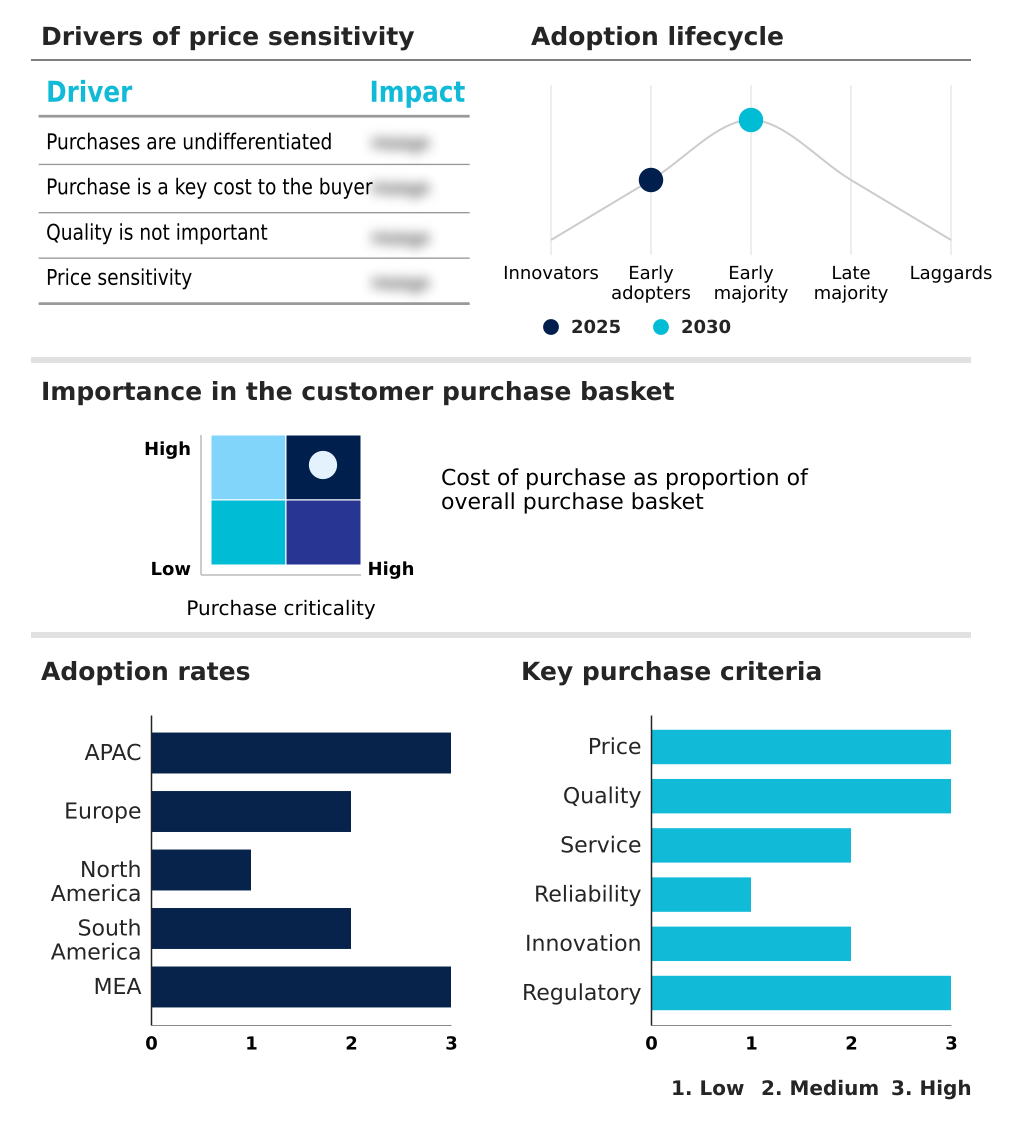
Customer Landscape of Small Wind Turbine Industry
Competitive Landscape
Companies are implementing various strategies, such as strategic alliances, small wind turbine market forecast, partnerships, mergers and acquisitions, geographical expansion, and product/service launches, to enhance their presence in the industry.
Aelius Turbina - Manufacturing wind turbines and generators, the company provides various wind energy solutions catering to diverse customer requirements.
The industry research and growth report includes detailed analyses of the competitive landscape of the market and information about key companies, including:
- Aelius Turbina
- Aeolos Wind Energy Ltd.
- ArborWind
- Chava Wind LLC
- City Windmills Ltd.
- EOCYCLE
- GRESA GROUP Co.
- Hi VAWT Technology Corp.
- Kingspan Group
- Kliux Energies International Inc.
- Oy Windside Production Ltd.
- Ryse Energy
- SD Wind Energy Ltd.
- Superwind GmbH
- TUGE Energia
- V Air Wind Technologies
- Viking Wind
Qualitative and quantitative analysis of companies has been conducted to help clients understand the wider business environment as well as the strengths and weaknesses of key industry players. Data is qualitatively analyzed to categorize companies as pure play, category-focused, industry-focused, and diversified; it is quantitatively analyzed to categorize companies as dominant, leading, strong, tentative, and weak.
Recent Development and News in Small wind turbine market
- In January 2025, the U.S. Department of Energy's National Renewable Energy Laboratory issued a request for proposals through its Competitiveness Improvement Project, making cost-shared grants available to manufacturers to optimize turbine designs and lower production costs.
- In January 2025, Colbun, a Chilean power company, announced a USD 700 million investment in the Horizonte wind farm, an initiative indicative of growing regional confidence that strengthens the local supply chain for the broader wind energy sector.
- In January 2025, the Energy Learning Network launched in the United Kingdom, backed by USD 2.025 million in funding, to foster community-led onshore wind projects by providing resources and peer mentoring to local groups.
- In December 2024, HYKIT, a joint venture involving JCB, was launched to produce hydrogen distribution and refueling infrastructure, signaling a move toward integrated renewable energy systems that can influence small wind strategies.
Dive into Technavio’s robust research methodology, blending expert interviews, extensive data synthesis, and validated models for unparalleled Small Wind Turbine Market insights. See full methodology.
| Market Scope | |
|---|---|
| Page number | 285 |
| Base year | 2025 |
| Historic period | 2020-2024 |
| Forecast period | 2026-2030 |
| Growth momentum & CAGR | Accelerate at a CAGR of 9.2% |
| Market growth 2026-2030 | USD 899.8 million |
| Market structure | Fragmented |
| YoY growth 2025-2026(%) | 8.2% |
| Key countries | China, India, Japan, Australia, South Korea, Indonesia, Germany, UK, France, Spain, Italy, The Netherlands, US, Canada, Mexico, Brazil, Argentina, Chile, South Africa, UAE, Saudi Arabia, Egypt and Kenya |
| Competitive landscape | Leading Companies, Market Positioning of Companies, Competitive Strategies, and Industry Risks |
Research Analyst Overview
- The small wind turbine market is defined by continuous technological refinement aimed at enhancing both performance and economic viability across diverse applications. Central to this evolution is the ongoing optimization of aerodynamic design, with advanced airfoil profiles and lightweight composite materials enabling greater energy capture from a given wind resource.
- A significant industry shift is the move toward direct-drive systems that utilize permanent magnet generators, a design that improves reliability by eliminating the gearbox. A key boardroom consideration is the integration of these assets into broader energy strategies; for instance, investing in building-integrated wind turbines is increasingly tied to corporate ESG goals and brand identity.
- This is particularly relevant as systems with vertical axis wind turbine architecture, known for their lower shadow flicker and suitability for turbulent wind flows, gain traction in urban settings. The technological ecosystem, encompassing everything from the nacelle and yaw system to sophisticated power electronics and smart inverters, is maturing.
- Systems featuring a high-quality drivetrain and rotor blades demonstrate a 25% reduction in annual maintenance costs, directly impacting operational budgets. The market offers solutions for both on-grid with grid interconnection and off-grid applications, with microgrid integration and pairing with energy storage solutions becoming standard for enhancing resilience.
- Both horizontal axis wind turbine and vertical axis models are being engineered to improve their capacity factor and lower the cut-in speed, expanding their viability and addressing the needs of a distributed energy resource landscape.
What are the Key Data Covered in this Small Wind Turbine Market Research and Growth Report?
-
What is the expected growth of the Small Wind Turbine Market between 2026 and 2030?
-
USD 899.8 million, at a CAGR of 9.2%
-
-
What segmentation does the market report cover?
-
The report is segmented by Type (Horizontal axis, and Vertical axis), Installation Sites (Onshore, and Offshore), Product Type (Single rotor, Double rotor, and Multi-rotor) and Geography (APAC, Europe, North America, South America, Middle East and Africa)
-
-
Which regions are analyzed in the report?
-
APAC, Europe, North America, South America and Middle East and Africa
-
-
What are the key growth drivers and market challenges?
-
Increasing demand for clean energy and supportive government policies, High initial capital outlay and intense competition from solar photovoltaics
-
-
Who are the major players in the Small Wind Turbine Market?
-
Aelius Turbina, Aeolos Wind Energy Ltd., ArborWind, Chava Wind LLC, City Windmills Ltd., EOCYCLE, GRESA GROUP Co., Hi VAWT Technology Corp., Kingspan Group, Kliux Energies International Inc., Oy Windside Production Ltd., Ryse Energy, SD Wind Energy Ltd., Superwind GmbH, TUGE Energia, V Air Wind Technologies and Viking Wind
-
Market Research Insights
- The market is defined by a dynamic push toward decentralized power generation, fundamentally altering how communities and businesses achieve grid resilience. This shift is reinforced by supportive renewable portfolio standards and feed-in tariffs in various regions.
- For instance, the adoption of on-site power generation has been shown to reduce operational downtime by over 95% for critical commercial facilities during grid failures. Concurrently, the focus on urban wind energy is expanding, with building architecture integration becoming a key consideration.
- Hybrid systems that combine wind with solar and battery storage are achieving over 40% greater energy self-sufficiency compared to standalone installations, improving the return on investment. The drive for rural electrification remains a cornerstone, where small wind turbines provide foundational power for remote communities, enhancing quality of life and enabling economic development with a high degree of reliability.
We can help! Our analysts can customize this small wind turbine market research report to meet your requirements.
 RIA -
RIA - 
