



Smart Baggage Handling Solutions Market Size 2025-2029
The smart baggage handling solutions market size is forecast to increase by USD 6.31 billion at a CAGR of 15.6% between 2024 and 2029.
-
The market is experiencing significant growth due to the increasing demand for efficient baggage operations at airports and railways. The integration of hyper-personalization technology in connected devices, along with advancements in luggage and robotics, is a key trend driving market expansion. These innovations enable real-time tracking, robotic handling, and automated sorting of luggage, significantly enhancing the overall travel experience for passengers. However, the high cost associated with these advanced solutions poses a challenge for market penetration. Regulatory hurdles and supply chain inconsistencies further temper growth potential.
-
Despite these challenges, opportunities abound for companies that can effectively navigate these obstacles and provide cost-effective, reliable, and secure smart baggage handling solutions powered by robotics and intelligent luggage systems. By focusing on innovation, collaboration, and operational efficiency, market players can capitalize on the growing demand for streamlined baggage handling processes and deliver value to their customers.
What will be the Size of the Smart Baggage Handling Solutions Market during the forecast period?
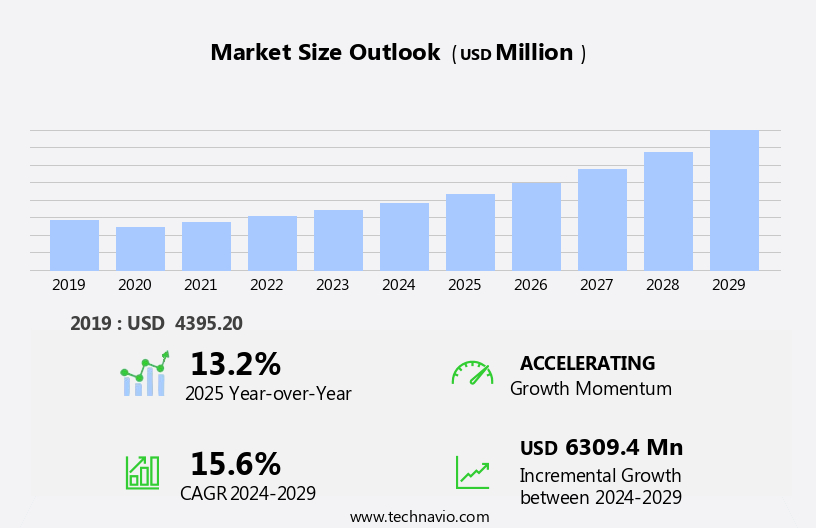
- The market is witnessing significant advancements with the integration of intelligent baggage routing and analytics-driven baggage handling. Baggage handling robotics and predictive baggage handling are revolutionizing airport operations, enabling real-time baggage data processing and autonomous baggage handling. Airport automation and smart airport technologies are at the forefront of these developments, with digital baggage tags and automated baggage sortation streamlining processes or smart baggage handling solutions.
- Biometric baggage authentication enhances security, while baggage tracking solutions ensure efficient passenger flow optimization. Remote baggage handling and connected baggage systems enable self-service bag drop and security checkpoint optimization. Cloud-based baggage management offers flexibility and scalability, shaping the future of efficient and secure baggage handling.
How is this Smart Baggage Handling Solutions Industry segmented?
The smart baggage handling solutions industry research report provides comprehensive data (region-wise segment analysis), with forecasts and estimates in "USD million" for the period 2025-2029, as well as historical data from 2019-2023 for the following segments.
- Type
- Assisted
- Self
- Technology
- Barcode system
- RFID
- Others
- Mode Of Transportation
- Airport
- Marine
- Rail
- Device
- Smart baggage and tracking devices
- Smart baggage screening devices
- Geography
- North America
- US
- Canada
- Europe
- France
- Germany
- UK
- Middle East and Africa
- UAE
- APAC
- China
- India
- Japan
- Singapore
- Rest of World (ROW)
- North America
By Type Insights
The assisted segment is estimated to witness significant growth during the forecast period. The market is experiencing notable progress in the assisted segment, driven by the integration of advanced technologies. This segment aims to optimize baggage handling processes through automated systems and real-time tracking solutions. Innovations like RFID tags, IoT devices, and AI analytics are gaining traction to streamline operations, minimize mishandling, and enhance passenger experience. These technologies facilitate effective communication between baggage handling systems and airport management, ensuring accurate tracking and delivery. The increasing focus on airport security and operational efficiency is fueling the adoption of intelligent baggage handling solutions in the assisted segment. Cloud computing, data analytics, and biometric identification are also integral components of these systems, contributing to cost optimization and improved passenger flow management.
Additionally, self-service baggage check-in, predictive maintenance, and remote monitoring further boost operational efficiency and passenger satisfaction. The travel industry's growing emphasis on energy efficiency and maintenance services is also driving the market's evolution. Machine learning and centralized control systems further refine baggage handling processes, ensuring real-time monitoring and baggage reconciliation. Air cargo and security screening are also benefiting from these advancements, with baggage diversion and automated sorting systems improving overall baggage management.
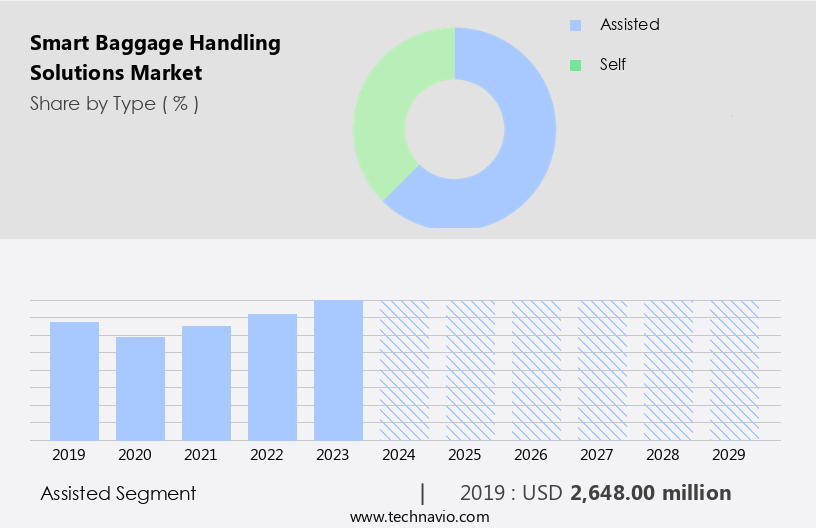
The Assisted segment was valued at USD 2.65 billion in 2019 and showed a gradual increase during the forecast period. The Smart Baggage Handling Solutions Market is revolutionizing airport operations with automated baggage systems, enhancing efficiency from cargo terminals to passenger terminals. RFID tagging and smart baggage tags streamline tracking, while self-service kiosks and mobile apps improve baggage claim processes, reducing lost baggage and baggage damage. Integrating biometric authentication and autonomous vehicles ensures passenger safety and smooth queue management. Cloud-based software optimizes operational optimization and cost reduction in freight handling. Advanced baggage weight and dimension measurement enhance logistics, supported by robust service level agreements, maintenance contracts, and installation services. Continuous infrastructure upgrades address environmental impact, ensuring sustainability and efficiency in modern travel, making smart baggage solutions indispensable in aviation growth.
Regional Analysis
APAC is estimated to contribute 40% to the growth of the global market during the forecast period. Technavio's analysts have elaborately explained the regional trends and drivers that shape the market during the forecast period.
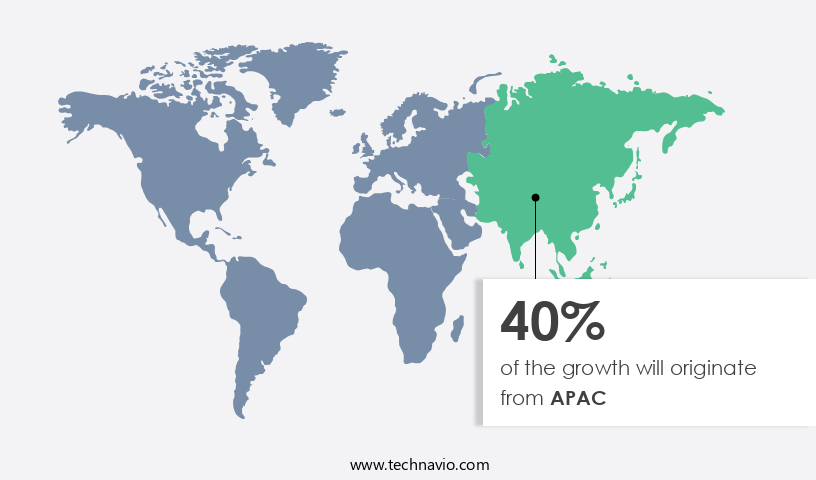
The market is experiencing significant growth, particularly in the APAC region. This expansion is fueled by the expanding aviation sector, increasing passenger traffic, and the demand for efficient baggage management systems. Advanced technologies, such as RFID tags, automated sorting systems, and real-time tracking, are increasingly being adopted to streamline processes, minimize lost or mishandled luggage, and enhance passenger experience. Airports in countries like China, India, and Japan are leading the charge, investing heavily in cloud computing, data analytics, and artificial intelligence to optimize costs, improve operational efficiency, and implement predictive maintenance. Biometric identification and self-service baggage check-in are also gaining popularity for their security enhancements and passenger flow management benefits.
The integration of machine learning and energy efficiency initiatives further strengthens the market's appeal. Maintenance services play a crucial role in ensuring the smooth operation of these advanced systems. Overall, the market is transforming airport operations, boosting passenger satisfaction, and setting new standards for baggage security protocols in the travel industry.
Market Dynamics
Our researchers analyzed the data with 2024 as the base year, along with the key drivers, trends, and challenges. A holistic analysis of drivers will help companies refine their marketing strategies to gain a competitive advantage.
What are the Smart Baggage Handling Solutions market drivers leading to the rise in the adoption of Industry?
- The increasing demand for streamlined baggage handling processes at airports and railways serves as the primary market catalyst. Baggage handling solutions, specifically smart baggage handling systems (SBH), are transforming the airport and railway ecosystem by enhancing operational efficiency and passenger satisfaction. From check-in to the entire baggage handling process, including screening and departure/arrival, SBH systems facilitate real-time data communication between ground support teams. This enables airlines and railways to achieve quick turnaround times. The growing number of mishandled baggage incidents necessitates the adoption of SBH solutions. These systems aim to minimize baggage delays, damage, and losses, which significantly impact airlines' economies and cause inconvenience to passengers. SBH systems utilize advanced technologies such as baggage identification tags, artificial intelligence (AI), intelligent baggage handling, and baggage management software.
- These technologies streamline the baggage handling process, ensuring that bags reach their intended destinations on time and in good condition. Moreover, SBH solutions adhere to stringent baggage security protocols, ensuring the safety and security of passengers' belongings. By implementing these systems, airports and railways can improve their overall baggage handling operations, ultimately leading to increased customer satisfaction and loyalty.
What are the Smart Baggage Handling Solutions market trends shaping the Industry?
- The trend in the market is toward the emergence of hyper-personalized connected devices. This means that technology is advancing to allow devices to be customized to an unprecedented degree for individual users. In the travel industry, airport operators and airlines aim to provide passengers with a seamless, efficient, and comfortable experience amidst increasing passenger traffic and baggage volume. Baggage mishandling is a significant challenge, particularly for transfer passengers, leading to discomfort and potential delays. To address this issue, innovative technologies are being integrated into baggage handling systems. The International Air Transport Association (IATA) is at the forefront of this effort, with Resolution 753 mandating real-time baggage monitoring at key points: check-in, loading onto the aircraft, transfers, and arrival at the delivery belt. This resolution aims to reduce aircraft delays and improve passenger satisfaction.
- Moreover, advanced technologies like RFID (Radio-Frequency Identification) are being employed to optimize costs, streamline airport operations, and ensure security enhancements. System integration of self-service baggage check-in and predictive maintenance further bolsters the efficiency and reliability of these systems. By focusing on these technological advancements, the travel industry can offer passengers a more enjoyable and hassle-free travel experience.
How does Smart Baggage Handling Solutions market faces challenges face during its growth?
- The high cost of SBH (Solar Boosters and Heaters) solutions poses a significant challenge to the industry's growth trajectory. This expense is a critical factor limiting the expansion and adoption of these technologies within various sectors. In the aviation industry, there is a significant push towards implementing advanced smart baggage handling solutions to enhance efficiency, security, and reduce mishandling. Centralized control systems with remote monitoring capabilities are becoming increasingly popular, enabling real-time baggage reconciliation and prevention of diversion. Baggage security screening using machine learning algorithms is another essential aspect of these systems. Air cargo operations also benefit from energy-efficient solutions and reliable maintenance services. The implementation of Internet of Things (IoT) technologies, such as sensors, beacons, and wearables, will further optimize baggage handling processes.
- However, the high cost of RFID tags and smart bags remains a challenge for some airlines and airports. To effectively utilize the data generated by these systems, sophisticated IT analysis is required to manage the high volume and complexity of messages.
Exclusive Customer Landscape
The smart baggage handling solutions market forecasting report includes the adoption lifecycle of the market, covering from the innovator's stage to the laggard's stage. It focuses on adoption rates in different regions based on penetration. Furthermore, the smart baggage handling solutions market report also includes key purchase criteria and drivers of price sensitivity to help companies evaluate and develop their market growth analysis strategies.
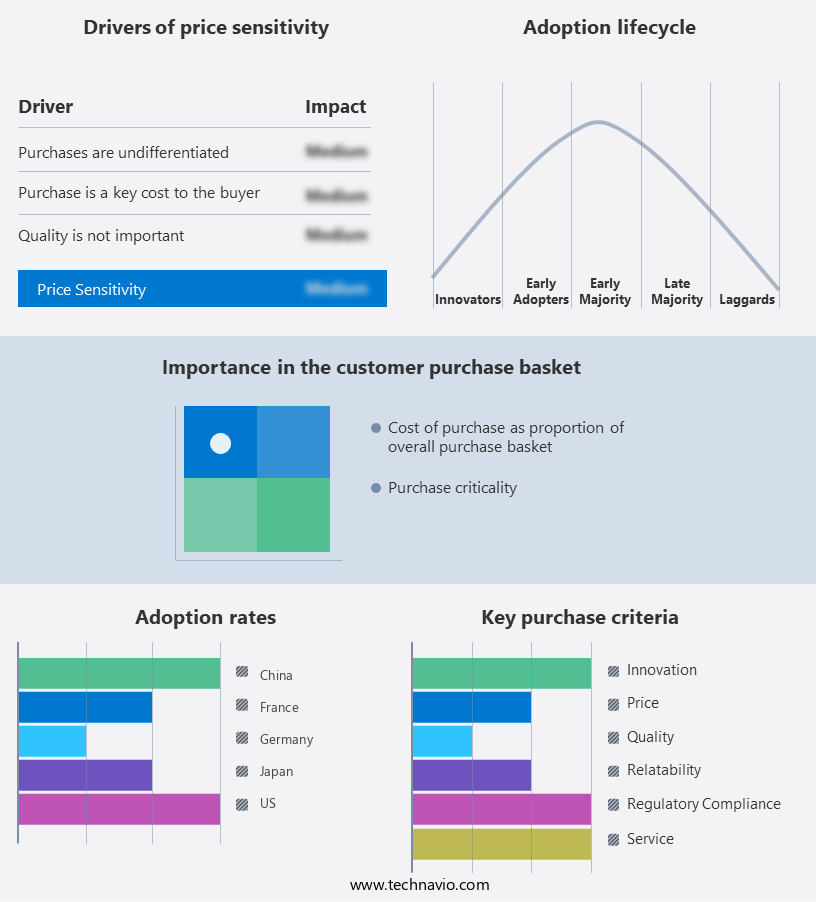
Customer Landscape
Key Companies & Market Insights
Companies are implementing various strategies, such as strategic alliances, smart baggage handling solutions market forecast, partnerships, mergers and acquisitions, geographical expansion, and product/service launches, to enhance their presence in the industry.
ADB Safegate BV - The company offers smart baggage handling solutions such as transport conveyors, sortation conveyors, early bag storage, Bagware software.
The industry research and growth report includes detailed analyses of the competitive landscape of the market and information about key companies, including:
- ADB Safegate BV
- Alstef Group SAS
- Amadeus IT Group SA
- BBHS AS
- Beumer Group GmbH and Co. KG
- Brock Solutions
- Collins Aerospace
- Daifuku Co. Ltd.
- FIVES SAS
- Intellimodus LLC
- Leidos Holdings Inc.
- Lenze SE
- Lyngsoe Systems AS
- SC SELF TRUST SRL
- Schneider Electric SE
- SEETEK SA
- Siemens Logistics GmbH
- SITA
- TAV Technologies
- Vanderlande Industries BV
Qualitative and quantitative analysis of companies has been conducted to help clients understand the wider business environment as well as the strengths and weaknesses of key industry players. Data is qualitatively analyzed to categorize companies as pure play, category-focused, industry-focused, and diversified; it is quantitatively analyzed to categorize companies as dominant, leading, strong, tentative, and weak.
Recent Development and News in Smart Baggage Handling Solutions Market
- In February 2024, Swissport International AG, a leading provider of ground and air cargo services, announced the launch of its new smart baggage handling solution, 'Swissport CargoControl 4.0'. This advanced system utilizes RFID technology and real-time data analytics to enhance baggage handling efficiency and improve passenger experience (Swissport International AG, 2024).
- In March 2025, Siemens Logistics announced a strategic partnership with Amsterdam Airport Schiphol to deploy its innovative baggage handling system, 'Siemens Sorter 300'. This collaboration aims to modernize the airport's baggage handling infrastructure and increase handling capacity by 30% (Siemens AG, 2025).
- In May 2024, Swiss-based company, BlueBotics, raised a Series C funding round of USD25 million to expand its production capacity and accelerate the development of its autonomous mobile robots for baggage handling. This investment will help BlueBotics meet the growing demand for smart baggage handling solutions in the aviation industry (Business Wire, 2024).
- In July 2025, Heathrow Airport, the UK's busiest airport, implemented a new baggage handling system in collaboration with Amadeus IT Group. This system, named 'SmartConnect', integrates real-time data from multiple sources to optimize baggage handling processes and improve overall airport efficiency (Amadeus IT Group, 2025).
Research Analyst Overview
The market continues to evolve, driven by advancements in technology and the ever-evolving needs of various sectors. RFID technology plays a significant role in enhancing operational efficiency and ensuring real-time baggage monitoring. Cost optimization is a key factor in airport operations, leading to the integration of automated baggage sorting and conveyor systems. Cloud computing and data analytics enable centralized control systems, allowing for predictive maintenance and remote monitoring. Self-service baggage check-in and biometric identification streamline passenger flow management, while security enhancements ensure passenger satisfaction and peace of mind. The travel industry's focus on passenger experience has led to the development of intelligent baggage handling systems that incorporate machine learning and artificial intelligence (AI).
These systems optimize baggage handling processes, prevent mishandling, and improve baggage reconciliation. Air cargo operations also benefit from smart baggage handling solutions, with real-time monitoring and automated sorting systems ensuring timely and accurate delivery. Energy efficiency and maintenance services are essential considerations, ensuring the sustainability and longevity of these advanced systems. Baggage security protocols are a critical aspect of smart baggage handling solutions, with security enhancements and baggage screening systems ensuring the safe and secure transport of baggage. The integration of these technologies and systems continues to unfold, with ongoing innovation and development shaping the future of the market.
The Smart Baggage Handling Solutions Market is evolving with automated guided vehicles (AGVs) and robotic baggage handling, enhancing efficiency and smart baggage routing. Increased baggage handling capacity and security screening technologies ensure seamless operations. Baggage claim optimization minimizes delays, reducing operational downtime and maintenance costs. Despite system integration challenges, digital transformation is driving innovation, supported by industry standards and strict regulatory compliance. Protecting data privacy is crucial with the expanding cloud computing infrastructure and big data analytics. Advanced analytics and real-time data visualization improve decision-making, while human-robot collaboration boosts efficiency. Prioritizing passenger convenience, operators focus on cost savings, technology adoption, and industry best practices to streamline baggage handling and improve travel experiences.
Dive into Technavio's strong research methodology, blending expert interviews, extensive data synthesis, and validated models for unparalleled Smart Baggage Handling Solutions Market insights. See full methodology.
|
Market Scope |
|
|
Report Coverage |
Details |
|
Page number |
227 |
|
Base year |
2024 |
|
Historic period |
2019-2023 |
|
Forecast period |
2025-2029 |
|
Growth momentum & CAGR |
Accelerate at a CAGR of 15.6% |
|
Market growth 2025-2029 |
USD 6.31 billion |
|
Market structure |
Fragmented |
|
YoY growth 2024-2025(%) |
13.2 |
|
Key countries |
US, China, UK, Germany, France, Canada, UAE, Japan, India, and Singapore |
|
Competitive landscape |
Leading Companies, Market Positioning of Companies, Competitive Strategies, and Industry Risks |
What are the Key Data Covered in this Smart Baggage Handling Solutions Market Research and Growth Report?
- CAGR of the Smart Baggage Handling Solutions industry during the forecast period
- Detailed information on factors that will drive the growth and forecasting between 2025 and 2029
- Precise estimation of the size of the market and its contribution of the industry in focus to the parent market
- Accurate predictions about upcoming growth and trends and changes in consumer behaviour
- Growth of the market across APAC, North America, Europe, Middle East and Africa, and South America
- Thorough analysis of the market's competitive landscape and detailed information about companies
- Comprehensive analysis of factors that will challenge the smart baggage handling solutions market growth and forecasting
We can help! Our analysts can customize this smart baggage handling solutions market research report to meet your requirements.
 RIA -
RIA - 
